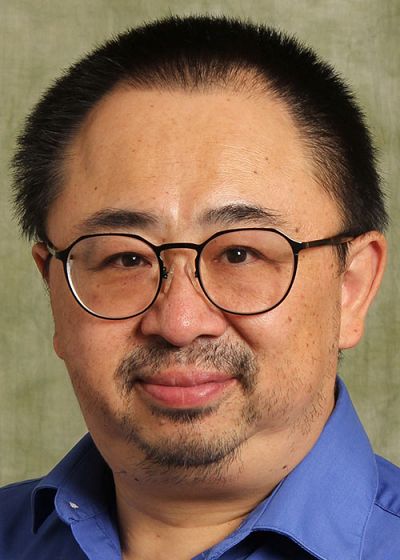
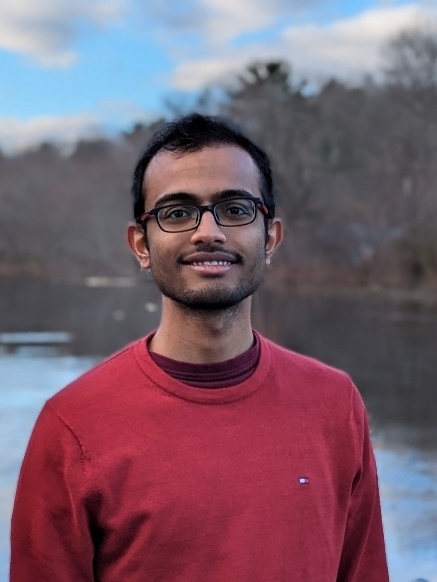
Silvia Jiménez Fernández is an Associate Professor in the Department of Signal Theory and Communications at Universidad Autónoma de Madrid. Her research focuses on optimization algorithms, smart grids, renewable energy systems, telemedicine, and machine learning applications. She holds a Ph.D. from Universidad Politécnica de Madrid (2009), supervised by Dr. Francisco del Pozo Guerrero and Dr. Paula de Toledo Heras. Her work integrates interdisciplinary approaches, such as combining evolutionary algorithms with engineering challenges in energy systems and healthcare. Key contributions include advancements in coral reefs optimization algorithms for energy management, machine learning for battery health estimation, and telemedicine systems for chronic disease monitoring. Recent research trends emphasize hybrid learning models in education, multi-objective optimization in renewable energy systems, and risk analysis in smart grids with electric vehicles. She is affiliated with the GHEODE Research Group (Modern Heuristics and Network Design).
Travis Allen O’Brien is an Associate Professor at the Department of Earth and Atmospheric Sciences, Indiana University Bloomington, in the College of Arts & Sciences. He holds a Ph.D. in Earth Science (2011) and an M.S. in Earth Science (2008) from the University of California, Santa Cruz, and a B.S. in Physics (2005) from the same institution. His research focuses on understanding weather and climate phenomena that impact human and natural systems, utilizing numerical models, novel data analysis techniques, and fundamental theory. Key research areas include the Coriolis Effect, marine stratocumulus clouds, and the physical characteristics of weather patterns such as fog and extremes. He investigates interannual variability in weather types, modeling approach accuracy, and anthropogenic climate change impacts on specific weather patterns. Education : B.S. Physics, University of California, Santa Cruz (2005) M.S. Earth Science, University of California, Santa Cruz (2008) Ph.D. Earth Science, University of California, Santa Cruz (2011) Research Interests : Climate science, atmospheric physics, numerical modeling, data analysis, weather extremes, and climate change impacts. Professional Background : Prior Research Scientist (2011–2019) at Lawrence Berkeley National Lab, followed by a transition to academia.
Kuljeet Kaur is a Professor in the Department of Electrical Engineering at École de technologie supérieure (ÉTS) in Montreal, Canada. Her research is conducted through the LACIME (Communications and Microelectronic Integration Laboratory), a renowned research unit focusing on communications and microelectronic integration. She maintains an active research program with numerous publications and student supervision activities. Professor Kaur's research spans multiple interconnected domains focused on next-generation computing and communication systems. Her primary research axes include Sensors, Networks and Connectivity; Intelligent and Autonomous Systems; and Software Systems, Multimedia and Cybersecurity. Within these broad areas, she specializes in Cloud Computing, Edge/Fog Computing, Internet of Things (IoT), Cybersecurity, Privacy, Federated Learning, and Energy Management. Her work bridges theoretical foundations with practical implementations in intelligent transportation systems, healthcare applications, and smart grid technologies. Analysis of Professor Kaur's recent publications reveals a strong focus on security and privacy challenges in emerging computing paradigms. A significant portion of her work addresses federated learning approaches that maintain data privacy while enabling collaborative AI model training. Her research also demonstrates expertise in edge computing architectures, particularly for IoT applications, with emphasis on energy efficiency and security. The publications show consistent interdisciplinary collaboration across computer science, electrical engineering, and transportation domains. Professor Kaur actively supervises multiple graduate students at various levels. Her supervision portfolio includes doctoral candidates working on topics like decentralized AI networks and secure federated learning, as well as master's students focusing on edge AI for IoT applications, sensor drift compensation, and zero trust architecture for IoT. She also guides project students working on practical implementations of AI for smart grid optimization and secure IoT protocols. Her research is conducted within the LACIME laboratory, which brings together researchers working on everything from micro- and nanofabrication processes to communication protocols and signal processing. The lab provides a transdisciplinary environment where Professor Kaur's work on cyber-physical systems and secure communications benefits from complementary expertise in integrated circuit design and microsystems.
Dr. Tyson Phillips serves as Senior Lecturer and Director of Teaching and Learning at The University of Queensland's School of Mechanical and Mining Engineering within the Faculty of Engineering, Architecture and Information Technology. He is an active Affiliate of the Future Autonomous Systems and Technologies research group, focusing on translating robotics innovations into practical mining applications. His academic leadership includes curriculum development for engineering programs and direct industry engagement with major mining equipment manufacturers. He earned his Doctor of Philosophy (PhD) from The University of Queensland in 2016, with thesis research centered on LiDAR-based perception systems for autonomous excavators. His doctoral work established foundational methods for object pose verification in mining contexts. Phillips' research specializes in robotics perception for extreme mining environments, developing LiDAR-centric solutions for autonomous equipment operation amid dust, fog, and unstructured terrain. Key contributions include evidential reasoning frameworks for uncertainty management, real-time pose estimation algorithms, and sensor fusion techniques for excavators and bulldozers. His work bridges theoretical computer vision with industrial deployment, targeting operational safety and efficiency in mineral extraction. Publication analysis reveals consistent focus on mining robotics since 2012, with recent works (2021-2024) emphasizing minimal-sensor configurations, probabilistic terrain mapping, and vibration-assisted gripper technology. His 14 scholarly outputs demonstrate evolution from sensor evaluation (2012-2015) toward integrated autonomy systems (2018-2024), predominantly in Journal of Field Robotics and Sensors . He actively supervises graduate researchers as Principal Advisor for a PhD on multimodal perception mapping and Associate Advisor for two PhD projects involving spreader systems and physics-informed neural networks. Completed supervision includes a 2024 PhD on bulldozer terrain mapping and a 2021 Master's on shovel/hopper interaction strategies. Research funding spans 14 projects from 2012-2026, including current Australian Coal Association Research Program support (2025-2026) and major Caterpillar Inc. collaborations for ERS self-protection and articulated truck automation. Phillips operates within The University of Queensland's Future Autonomous Systems and Technologies group, which develops field-deployable autonomy solutions for mining partners. This team conducts real-world testing of perception systems using Caterpillar and FMG operational sites as validation environments.
Cristiana Bolchini is a Professor at the Department of Electronics, Information and Bioengineering (DEIB) at Politecnico di Milano. She holds a PhD in Automation and Computer Science Engineering (1997) and a Laurea in Electronic Engineering (1993), both from Politecnico di Milano. Her research focuses on dependable systems, fault tolerance, and embedded systems design, with recent work on ICT solutions for smart buildings and energy efficiency. She coordinates projects such as the FP7 SAVE initiative and serves on technical committees for conferences like DATE and DAC. Education: PhD in Automation & Computer Science (1997), Laurea in Electronic Engineering (1993), both from Politecnico di Milano. Research interests span dependability (fault modeling, diagnosis), heterogeneous architectures, and sustainable smart environments. She collaborates with Prof. Giuliana Iannaccone on foresight for sustainable built environments and has led EU-funded projects like the SAVE initiative. Publications include over 150 refereed papers on dependability and context-awareness. She holds editorial roles for journals such as IEEE Transactions on Computer-Aided Design and ACM Transactions on Embedded Computing Systems. Awards include IEEE Senior Member status and two Cisco University Research Program Fund gifts (2012, 2014). Academic roles include Rector’s delegate for Southeast Asia relations and leadership of Technology Foresight workgroups. She teaches courses on computer science fundamentals and dependable systems, emphasizing problem-solving and programming in Python and C.
Amirhosein Taherkordi is a Professor in the Networks and Distributed Systems group at the Department of Informatics, University of Oslo, Norway. His research focuses on resource-efficiency, scalability, adaptability, dependability, mobility and data-intensiveness of distributed systems for emerging computing technologies including Internet of Things (IoT), Fog/Edge/Cloud Computing, and Cyber-Physical Systems (CPS). Dr. Taherkordi received his Ph.D. from the Informatics Department at the University of Oslo under the supervision of Prof. Frank Eliassen, with his thesis titled "Programming Wireless Sensor Networks: From Static to Adaptive Models." He holds an M.Sc. in Information Technology Engineering (Software Engineering) from University of Science and Technology and a B.Sc. in Computer Engineering from Sharif University of Technology. His research spans multiple domains of distributed systems with emphasis on practical applications. He investigates energy efficiency in wireless sensor networks, communication optimization in IoT systems, and adaptive resource allocation in edge computing environments. His work addresses critical challenges in network traffic classification, federated learning for vehicular networks, and data processing across heterogeneous platforms. Analysis of his recent publications reveals a strong trajectory toward communication-efficient federated learning techniques for vehicular networks, energy-aware protocols for IoT data collection, and advanced machine learning approaches for network traffic analysis. His research consistently focuses on optimizing resource usage while maintaining system performance and privacy in distributed architectures. Dr. Taherkordi actively contributes to several research initiatives including the CPS Lab at UiO for Cyber Physical Systems, DILUTE: Fluid Service Abstraction for Large-Scale Cloud IoT Systems, and the Gemini Centre on IoT at UiO. His work bridges theoretical advances with practical implementations in transportation systems, environmental monitoring, and industrial automation.
Robson E. De Grande is an Associate Professor in the Department of Computer Science at Brock University, Canada. He holds a PhD from the University of Ottawa (2012) and BSc/MSc degrees from the Federal University of São Carlos, Brazil. His research focuses on vehicular networks, intelligent transportation systems, distributed systems, and cloud computing. He serves on program committees for conferences like DS-RT, MobiWac, and MSWiM, and has organized multiple workshops and special sessions. Education: PhD in Computer Science, University of Ottawa, Canada (2012) MSc and BSc in Computer Science, Federal University of São Carlos, Brazil (2006, 2004) Research Interests: Vehicular Networks (5G, Handover Management) Edge Computing and IoT Performance Modeling/Simulation High-Performance Distributed Systems Intelligent Transportation Systems Publications: Over 100 peer-reviewed articles across journals like IEEE Transactions on ITS, Elsevier Internet of Things, and conferences like IEEE ICC and ACM MobiWac. Recent work emphasizes ML-driven vehicular network optimization and distributed simulation frameworks. Teaching: Teaches Advanced Computer Networks (COSC 4P14), Parallel Computing (COSC 3P93), and graduate-level Mobile Cloud Computing courses. Research Team: Supervises PhD/MSc students and undergraduate researchers in topics like vehicular edge computing, traffic prediction, and simulation systems.
Philippe Ciblat is a Professor at TELECOM Paris Tech, affiliated with the Department of Signal Processing and Communications. His research spans signal processing, wireless communications, and machine learning applications in networking. He has collaborated extensively with institutions like the University of Paris-Saclay and international researchers in areas such as cooperative communication protocols, resource allocation, and coding theory. Research Interests: Machine learning for signal processing, wireless channel modeling (Rician fading), lattice decoding, caching strategies, and distributed optimization. Notable Work: Pioneered transformer-based packet scheduling, neural network approaches to lattice decoding, and effective capacity analysis in fading channels. His contributions include over 170 publications in top venues (IEEE Trans. Signal Process., IEEE Trans. Wireless Commun.) and collaborations with industry partners on practical implementations like cache-aided polar coding. He has advised multiple researchers in distributed systems and wireless resource management.
Stavrakakis Ioannis is a Professor at the Department of Informatics and Telecommunications, School of Science, University of Athens, where he has served since 2002. He previously held academic positions at Northeastern University (1994-1999) and University of Vermont (1988-1994). Ph.D., Electrical Engineering (1988), University of Virginia Diploma, Electrical Engineering (1983), Aristotle University of Thessaloniki His research focuses on network resource allocation algorithms , cooperative content dissemination , mobile ad hoc networks , and privacy-aware protocols . He leads the Advanced Networking Research (ANR) Group. Recent publications highlight trends in AI-driven network optimization , edge computing for VR , drone-assisted sensor networks , and privacy in vehicular systems . Key themes include game theory applications, energy-efficient protocols, and distributed learning frameworks. Contact: ioannis@di.uoa.gr
Dr ASM Kayes serves as Senior Lecturer in Cybersecurity and Cyber Curriculum Lead at La Trobe University's Department of Computer Science and Information Technology, where he shapes cybersecurity education programs including Master's, Bachelor's, and Double Degrees. His academic journey began with a PhD from Swinburne University of Technology in 2015, followed by postdoctoral research at La Trobe before joining as Lecturer in 2019 and promotion to Senior Lecturer in 2022. His research spans critical cybersecurity domains including data security, privacy preservation, context-aware access control, malware/ransomware defense, and IoT/fog/cloud security leveraging AI/ML techniques. Dr Kayes has established himself as a leading voice in blockchain security frameworks, privacy policy analysis, and cyber incident response through publications in top-tier venues like ACM Computing Surveys, IEEE Internet of Things Journal, and Computers & Security. His recent publications reveal a strong trajectory toward integrating AI with traditional security frameworks, particularly in blockchain risk assessment (2025), cross-domain access control (2025), and IoT behavior prediction (2024). The research demonstrates consistent focus on practical security solutions addressing ransomware mitigation, privacy breaches, and emerging threats in decentralized systems. Over $880,000 secured as Chief Investigator for cybersecurity projects Australian Government Department of Social Services grant (2023-2026) for cyberbullying prevention AustCyber research funds with industry partners (2020-2023) SmartSat CRC and ASCRIN PhD scholarship grants (2021) Dr Kayes has successfully supervised 5 PhD candidates to completion and currently mentors 5 doctoral students across diverse topics including AI-driven threat hunting, satellite network security, and blockchain risk frameworks. His collaborative network spans UK, USA, Europe, and Asia, with active industry partnerships through Westpac, BHP, and Quantum Victoria. He serves on editorial boards for leading cybersecurity journals and has examined HDR dissertations globally, reflecting his significant standing in the academic community.
Yu Chen is a Professor in the Department of Electrical and Computer Engineering at Binghamton University, State University of New York. He leads the Ubiquitous Smart & Sustainable Computing (US2C) Lab and serves as Director of the Center for Information Assurance and Cybersecurity (CIAC). His research focuses on Trust, Security, and Privacy in Edge-Fog-Cloud Computing, IoT, and Smart Cities. Dr. Chen holds a PhD from the University of Southern California (2006), with prior research under Professors Kai Hwang and Anthony F. J. Levi. His work has been funded by NSF, DoD, AFOSR, and industrial partners, yielding over 200 publications. He is a Senior Member of IEEE and SPIE, and a member of ACM. Education: PhD in Electrical Engineering, University of Southern California (2006) Affiliations: Director, US2C Lab Associate Director, CIAC Research Interests: Smart Cities, Intelligent Surveillance, Edge-Fog-Cloud Computing, IoT Security, and Privacy-Preserving Technologies. His work emphasizes real-time systems, resilient edge architectures, and decentralized consensus protocols for IoT. Grants & Awards: Funded by NSF, DoD, AFOSR, NYS MDPI Computers 2019 Best Paper Award Best Student Poster Award (IEEE AIPR 2014) Students & Labs: Advised 19 students (PhD/Master’s). Key projects include secure edge video processing, ENF-based authentication, and blockchain for IoT. The US2C Lab explores smart city applications and edge computing resilience.
Tom Goethals is an FWO Junior Postdoctoral Fellow affiliated with the Department of Information Technology at Ghent University , where he conducts research in edge computing, container networking, and decentralized systems. Current role: IMEC Postdoctoral Researcher Research focus: Secure and intelligent edge service management for decentralized IoT applications His work explores edge intelligence , orchestration frameworks , and AI-driven network optimization , with trends in lightweight virtualization (e.g., Feather), Kubernetes adaptation for edge environments, and intent-based decentralized orchestration. Publications emphasize scalability, security, and energy efficiency in fog-native workflows. Scientific Awards : FWO Junior Postdoctoral Fellowship He collaborates with researchers like Bruno Volckaert and Filip De Turck on projects funded by the Research Foundation - Flanders (FWO) , including grants for edge container networking and decentralized learning frameworks. His projects align with Ghent University’s focus on smart city infrastructure and edge-to-cloud systems.
Akarsh Prabhakara is an Assistant Professor in the Department of Computer Sciences at the University of Wisconsin–Madison, with an additional affiliation in the Department of Electrical and Computer Engineering. He earned his Ph.D. from Carnegie Mellon University in 2024, where he worked under Professors Anthony Rowe and Swarun Kumar. Ph.D., Electrical and Computer Engineering, Carnegie Mellon University, 2024 B.Tech, Electronics and Communication Engineering, National Institute of Technology Karnataka, 2018 His research focuses on building high-fidelity wireless systems for perception and communication, particularly in cyber-physical and robotic applications. He explores machine learning-driven RF systems, novel communication paradigms, wireless-robotics integration, and embedded wireless sensing. His work aims to enable robust perception in challenging environments such as smoke or fog using millimeter wave radar and deep learning. His recent publications in CVPR, ICRA, MobiCom, and ICCV demonstrate a strong trend in using neural methods for radar simulation, super-resolution, and wireless intelligence. Key themes include implicit neural rendering for radar, end-to-end learning for perception, and high-resolution point cloud generation from low-cost sensors. His scientific contributions have been recognized through publications in top-tier venues, though specific awards are not mentioned in the provided text. He is actively involved in mentoring and recruiting students for research in wireless and robotics. He teaches courses such as Intro to Computer Networks and Big Ideas in Wireless: Perception and Communication . He leads research projects like RadarHD, which enables lidar-like perception from mmWave radar, and is developing tools and datasets for community use. His lab emphasizes practical, real-world applications of wireless systems in robotics and autonomous systems.
Prof. Dr.-Ing. Stefan Schulte is a Full Professor at Hamburg University of Technology, leading the Institute for Data Engineering and the Christian Doppler Laboratory Blockchain Technologies for the Internet of Things (CDL-BOT). He holds a diploma in Economics and a Bachelor's in Computer Science from the University of Oldenburg, followed by a Master's in Information Technology (with Merit) from the University of Newcastle. After completing his PhD at TU Darmstadt in 2010, he held roles as Postdoctoral Researcher at TU Wien, Assistant Professor (tenure-track), and eventually Associate Professor before joining TU Hamburg in 2021. His research focuses on data engineering, blockchain technologies applied to IoT, elastic computing, and quality-of-service (QoS) aspects in smart systems. Notable contributions include work on fog computing, federated learning, and cross-blockchain interoperability. He has published over 140 papers in top-tier venues like IEEE Transactions on Services Computing and ACM Computing Surveys. Key awards include Best Paper Awards at the IEEE International Conference on Blockchain (2020) and the European Conference on Service-Oriented and Cloud Computing (2023). Prof. Schulte chairs major conferences such as the IEEE International Conference on Fog and Edge Computing (ICFEC 2025) and serves on editorial boards for journals like IEEE Transactions on Services Computing. He leads CDL-BOT, a lab exploring blockchain applications in IoT and manufacturing. His industrial collaborations include projects like SIMPLI-CITY (smart mobility) and CREMA (cloud-based manufacturing). Current research emphasizes blockchain interoperability, federated learning frameworks, and edge-AI systems. He actively reviews proposals for the German Research Foundation, EU programs, and industry initiatives.
Sukhpal Singh Gill is an Assistant Professor (Lecturer) in Cloud Computing at the School of Electronic Engineering and Computer Science, Queen Mary University of London (UK). He holds a PhD, ME, and BE in Computer Science and is a Fellow of the Higher Education Academy (FHEA). His roles include Programme Director for MSc Advanced Computer Science and MSc Business Analytics, as well as Deputy Chair of the Main Misconduct Panel. He leads the GillNet Research Lab and is the Editor-in-Chief of the International Journal of Applied Evolutionary Computation (IJAEC) , with editorial roles in IEEE IoT, Nature Scientific Reports, and other journals. Education: PhD in Computer Science ME in Computer Science BE in Engineering Research Interests: Focus on Cloud Computing, Edge AI, IoT, Energy Efficiency, and Quantum Computing. His work bridges theoretical advancements with practical applications in healthcare, smart cities, and sustainable computing. Notable projects include AI-driven frameworks for carbon-neutral cloud resource management, blockchain-empowered healthcare systems, and quantum cloud computing models. Teaching: Teaches modules such as Cloud Computing (Postgraduate), Fundamentals of Web Technology (Undergraduate), and Semi-structured Data and Advanced Data Modelling (Postgraduate/Undergraduate). He emphasizes inclusive curriculum design and innovative teaching tools like the Q-Module-Bot for AI-supported learning. Awards & Grants: Recipient of 12,500+ citations and an H-index of 54 (Google Scholar). Secured grants for projects on edge AI, federated learning, and sustainable cloud computing. Winner of awards including the IEEE IT Professional Magazine Outstanding Reviewer Award (2024) and Elsevier's Best Paper Award (2023). Labs & Teams: Leads the GillNet Research Lab , focusing on cutting-edge research in cloud-edge computing, AI, and quantum systems. Collaborates with industry partners on projects like HealthEdgeAI and AIoT-driven smart healthcare systems .