Kenneth S. Breuer is a Professor of Engineering at Brown University, serving as Director of the Center for Fluid Mechanics. He holds appointments in the School of Engineering and collaborates across disciplines, including Biology and Physics. His research focuses on fluid mechanics, animal flight mechanics (particularly bats), bacterial motility, renewable energy, and turbulence. Breuer earned his Sc.B. from Brown University and M.Sc./Ph.D. from MIT, returning to Brown in 1999 after faculty service at MIT. Education: Sc.B. (Brown), M.Sc./Ph.D. (MIT). Awards include Fellowships from the American Physical Society and American Society of Mechanical Engineers, and the Harold and Esther Edgerton Chair at MIT. He has authored over 100 publications and edited books such as *Microscale Diagnostic Techniques*. Research Interests: Fluid mechanics at micro/nanoscales, bio-inspired flight mechanisms, energy harvesting, and vortex dynamics. Collaborations include Professors Sharon Swartz (Biology) and Thomas Powers (Engineering). Current projects explore bat wing aerodynamics, membrane hydrofoils, and aerosol transmission in vehicles. Awards: APS Division of Fluid Dynamics Chair (2012), Midwest Mechanics Lecturer, and multiple fellowships. Teaching includes courses in Fluid Mechanics, Transport Phenomena, and Renewable Energy Systems. His lab develops bio-inspired robotic systems and studies flow interactions in animal and engineered systems.
Dr. K. Max Zhang is a Professor in the Sibley School of Mechanical and Aerospace Engineering at Cornell University. He is the director of the Energy and the Environment Research Laboratory (EERL) and a fellow at the Atkinson Center for a Sustainable Future. His research is deeply interdisciplinary, focusing on sustainable energy systems, air quality, and environmental justice, with significant impacts on policy and community development in New York and beyond. Ph.D., Mechanical Engineering, University of California-Davis, 2004 B.S., Thermal Engineering, Tianjin University, 1998 B.A., English Language, Tianjin University, 1998 Dr. Zhang’s research centers on the integration of energy and environmental systems. He investigates air pollution dynamics using advanced numerical models like CTAG, with applications in near-source pollution, indoor air quality, and environmental justice. His work on renewable energy systems includes designing sustainable solar farms and managing distributed energy resources such as heat pumps to enhance grid flexibility. He also leads a pioneering initiative to create the first statewide public IoT network in the U.S., enabling hyperlocal weather forecasting and microclimate monitoring. His recent publications reflect a strong trend toward agrivoltaics, peer-to-peer energy markets, and IoT-based environmental monitoring. These works demonstrate a consistent focus on data-driven modeling, community-scale energy solutions, and the integration of social considerations into technical systems. The keywords across his articles highlight expertise in sustainability, machine learning, air quality, and energy transition. Cornell Town-Gown Achievement Award (2022) Engaged Scholar Prize, Cornell University (2017) People's Choice Sign of Sustainability Award, Sustainable Tompkins (2016) Scientific and Technological Achievement Award, Environmental Protection Agency (2015) Fellow of the American Society of Mechanical Engineers Dr. Zhang is actively involved in mentoring students and securing research grants from agencies such as the National Science Foundation (NSF) and the New York State Energy Research and Development Authority (NYSERDA). His projects often involve interdisciplinary collaboration across eight Cornell colleges and 16 academic departments. He has led initiatives such as the Cornell Atkinson Academic Venture Fund projects and the development of a county-level energy roadmap for Tompkins County. He also teaches courses in engineering thermodynamics, future energy systems, and air quality, emphasizing experiential and community-based learning. Dr. Zhang leads the Energy and the Environment Research Laboratory (EERL) and collaborates with the Atkinson Center for a Sustainable Future. His lab functions as a hub for innovation in sustainable communities, combining advanced modeling with real-world applications. Through partnerships with community organizations, government agencies, and industry, his team develops science-driven solutions to urban and rural sustainability challenges.
Prof. Alois Christian Knoll is a full professor at the Technical University of Munich (TUM) in the School of Computation, Information and Technology. His academic career includes roles at Bielefeld University and leadership in major EU initiatives like the Human Brain Project and ECHORD++. He specializes in robotics, AI, and autonomous systems, with a focus on medical robotics, sensor-based systems, and neuromorphic engineering. Knoll has supervised over 100 doctoral theses and authored/co-authored over 1,000 publications. Education: Diploma in Electrical Engineering (University of Stuttgart, 1985); PhD in Computer Science (Technical University of Berlin, 1988); Habilitation (TU Berlin, 1993). He has been at TUM since 2001, leading the Robotics, AI, and Real-Time Systems department. Research interests span autonomous systems, neuro-IT integration, and traffic simulation. Key projects include fortiss (Bavarian State Institute for Computer Science) and TUM-CREATE (Singapore collaboration). Awards include IEEE Fellow, University of Tokyo Fellow, and the Carl-Ramsauer-Prize (1990). Current roles include editorships in robotics journals, leadership in EU flagship projects, and teaching across multiple programs. His work bridges computer science, neuroscience, and engineering, with applications in healthcare, automotive systems, and urban mobility.
Dr. Liang Cheng is the Department Chair and Professor in the Department of Electrical Engineering and Computer Science at the University of Toledo. He leads a department with ~700 students across CS, CSE, and EE programs. His research focuses on Cyber-Physical Systems (CPS), IoT, AI/ML, and intelligent infrastructure, supported by over $30M in funding from NSF, DOE, DOT, and industry. Notable projects include CPS Breakthrough initiatives and underground sensing systems. He co-edited a multidisciplinary book on Underground Sensing and contributed to smart grid cybersecurity. Dr. Cheng has held leadership roles at Lehigh University, shaping faculty governance and equity policies. His 100+ publications span networking, real-time systems, and sensor networks. He advises on funded projects totaling $30M+ and has pioneered pedagogical approaches in computer science education. Research Interests: Cyber-Physical Systems (CPS): Focuses on autonomous drones, energy systems, and real-time infrastructure Networking: Expertise in TSN, DTN, and wireless protocols Cybersecurity: SCADA systems, PLC attack detection, and blockchain energy modeling Underground Sensing: Geo-sensing via wireless signals and subsurface tomography Grants & Projects: Over 20 sponsored projects including NSF CPS Breakthrough (2018-2023), ABB smart grid projects, and DARPA-funded EDIFY systems. Key contributions include reconfigurable wireless architectures and network calculus tools for real-time systems. Teaching: Courses span senior design, compiler design, parallel computing, and wireless sensor networks. Developed pedagogical patterns for non-CS programming education. Awards: Recognized for leadership in academic governance and interdisciplinary research collaboration.
Michael McAlpine is a Professor in the Mechanical Engineering department at the University of Minnesota . He also holds affiliations with the Biomedical Engineering and Electrical and Computer Engineering departments. His research focuses on 3D printing functional materials & devices , Nanoscale inks , Biomedical devices , Bioelectronics , and Flexible Microsystems . Research Interests : 3D Printing, Biomedical Engineering, Nanotechnology, Flexible Electronics, Microfluidics Labs : ME 361/363 Contact : mcalpine@umn.edu , (612) 626-3303, ME 117 Recent Research Trends include 3D Printed Biomedical Devices , Flexible Electronics , and Bioprinting Applications . His work spans from Spinal Organoid Formation to Programmable Drug Release Capsules . Scientific Award : Circulation Research 2020 Best Manuscript Award
Michael Baldea is an Associate Professor in the Department of Chemical Engineering at the University of Texas at Austin . He holds a Ph.D. in Chemical Engineering from the University of Minnesota (2006), with prior degrees from 'Babeş-Bolyai' University in Romania (M.Sc. 2001, Diploma 2000). His research group develops theoretical and computational methods for Process and Energy Systems Engineering , focusing on integrated decision-making, performance optimization, and process intensification with industrial validation. Education: Ph.D., Chemical Engineering, University of Minnesota (2006) M.Sc., Interface Process Engineering, 'Babeş-Bolyai' University (2001) Diploma, Chemical Engineering, 'Babeş-Bolyai' University (2000) Research Thrusts: Integrated decision-making in chemical/energy supply chains Process performance monitoring and optimization Process integration and intensification Key applications include grid-responsive chemical plants, intensified distillation/column designs, and renewable energy integration for building systems. Scientific Awards: Frank A. Liddell, Jr. Fellowship NSF CAREER Award (2015-2020) Moncrief Grand Challenges Faculty Award (2014) AIChE Outstanding Young Researcher Award (2017) Implementation : His group has translated research into commercial tools through partnerships with industrial test beds and is working to integrate methods into commercial simulators. They explore predictive approaches for building energy management and strategic capital investment analysis in next-generation energy systems.
Anthony Rollett is a Professor in the Department of Materials Science and Engineering at Carnegie Mellon University , where he has been a faculty member since 1995. He serves as the Principal Investigator and Co-Director of the NASA-supported Institute for Model-Based Qualification & Certification of Additive Manufacturing (IMQCAM) and co-director of the Next Manufacturing Center . Prior to CMU, he held leadership roles at Los Alamos National Laboratory (1991-1995). Education: Ph.D., Materials Engineering, Drexel University (1987) MA, Metallurgy and Materials Science, Cambridge University (1977) Research Interests: Rollett’s work focuses on microstructural evolution and microstructure-property relationships in 3D using experiments and simulations. His expertise spans additive manufacturing , metal 3D printing , materials for energy systems , grain growth , recrystallization , and stereology , with techniques like high-energy diffraction microscopy (HEDM) and dynamic x-ray radiography (DXR) . Scientific Contributions: He has over 320 peer-reviewed publications and an h-index >80 . His recent articles highlight machine learning for laser processing , fatigue analysis of additively manufactured alloys, and design optimization for heat exchangers in supercritical CO2 and solar thermal applications . Scientific Awards: Fellow of ASM International (1996) Fellow of the Institute of Physics (UK) (2004) Fellow of The Minerals, Metals & Materials Society (TMS) (2011) Cyril Stanley Smith Award (TMS, 2014) Member of Honor, French Metallurgical Society (2015) US Steel Professor (2017) Francqui International Professor (2020-2021) International FAME Award (2023) Leadership & Impact: Rollett co-led the development of a NASA Space Technology Research Institute for additive manufacturing and established a new master’s program in additive manufacturing (2018). His research group is funded by industry , federal agencies , and Pennsylvania state grants . He also serves on the Basic Energy Science Advisory Committee and Defense Programs Advisory Committee for the Department of Energy.
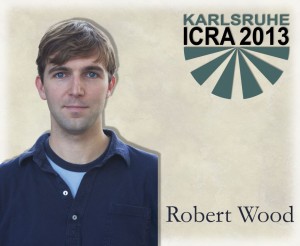
Robert Wood is the Charles River Professor of Engineering and Applied Sciences at Harvard University's School of Engineering and Applied Sciences and a founding core faculty member at the Wyss Institute for Biologically Inspired Engineering. He leads the Harvard Microrobotics Lab, focusing on the design and fabrication of biologically-inspired robots at the micro- to centimeter scale. His research spans microrobotics, microfabrication, soft robotics, and fluid mechanics of flapping wings . He develops novel manufacturing techniques and control systems for robots with extreme size and power constraints, notably advancing the field of insect-scale robotics. His work integrates principles from mechanical engineering, materials science, and biology to create morphable, autonomous systems. Wood's research has led to groundbreaking projects such as the NSF-sponsored RoboBees expedition, aiming to develop autonomous robotic bee colonies. His work emphasizes not only technological innovation but also broader impacts in STEM education, using robotics to inspire young learners. Scientific Awards: DARPA Young Faculty Award NSF Career Award ONR Young Investigator Award Air Force Young Investigator Award Technology Review TR35 Multiple Best Paper Awards Presidential Early Career Award for Scientists and Engineers (2010) Alan T. Waterman Award (2012) As principal investigator of major federally funded projects and leader of the Harvard Microrobotics Lab, Wood mentors students and researchers in cutting-edge robotics. His lab fosters interdisciplinary collaboration and innovation in biologically inspired engineering. While specific advisees are not listed, his role as a PhD advisor and research supervisor is central to his academic mission. The lab actively contributes to both fundamental science and practical applications, with future work likely expanding into swarm intelligence, environmental monitoring, and medical micro-robotics.
Justin A. Weibel is a Professor of Mechanical Engineering at Purdue University, affiliated with the School of Mechanical Engineering. He directs the Cooling Technologies Research Center (CTRC), a National Science Foundation Industry/University Cooperative Research Center. His research focuses on advanced electronics cooling, phase-change transport, additive manufacturing for thermal components, and machine-learning-driven design optimization. He has led projects funded by DARPA, ONR, ARPA-E, and industry partners, advancing cooling solutions for high-power electronics and energy systems. Research interests span thermal management, heat transfer, micro/nano-scale engineering, and sustainable energy. Key contributions include topology optimization for heat sinks, two-phase flow modeling, and embedded cooling systems for electric motors. His work integrates computational methods with experimental validation. Grants & Programs: DARPA TGP/ICECool, ONR NEPTUNE, ARPA-E ASCEND/COOLERCHIPS, SRC CHIRP Labs: Cooling Technologies Research Center (CTRC) Future Work: Expanding additive manufacturing applications, improving thermal efficiency in electrified transport, and advancing AI-driven thermal system design. Awards: Fellow of ASME (2023) Outstanding Faculty Mentor (2022) Multiple best paper awards from IEEE ITherm, ASME, and SEMI-THERM conferences
Dr. Yunjie Yang is an Associate Professor at the University of Edinburgh's School of Engineering, with affiliations at the Edinburgh Futures Institute (EFI), the Edinburgh Generative AI Laboratory (GAIL), and the Edinburgh Centre for Robotics. He previously held the Chancellor's Fellow in Data Driven Innovation (2018-2023) and Bayes Innovation Fellow (2023-2024) positions. His research focuses on AI-powered sensing and imaging, machine learning, and soft sensors & electronics for robotics. Yang received his PhD in Engineering Electronics from the University of Edinburgh, MSc in Control Science & Engineering from Tsinghua University, and BEng in Measurement & Control Engineering from Anhui University. After his PhD, he worked as a Postdoctoral Research Associate in Chemical Species Tomography before securing his lectureship. His research interests center on developing intelligent sensing systems that replicate human perception capabilities for robotics and intelligent systems. He pioneers flexible sensing and imaging technologies across various scales through innovative multi-modal sensors, soft electronics, and their modeling using machine learning approaches. His work aims to enable autonomous physical artificial intelligence by bridging the gap between robotic systems and human-like perception. Analysis of his recent publications reveals a strong focus on soft robotics perception, particularly through electrical impedance tomography (EIT) and transformer-based architectures. His research spans medical imaging applications, digital twin modeling for industrial processes, and machine learning approaches for sensor data interpretation. The trend shows increasing integration of physics-informed deep learning with traditional tomographic techniques to achieve higher accuracy and efficiency. European Research Council (ERC) Starting Grant (2024) IEEE J. Barry Oakes Advancement Award (2024) IEEE I&M Society Graduate Fellowship Award (2015) Multiple Best Paper Awards Senior Member of IEEE Fellow of the International Society for Industrial Process Tomography Fellow of the Higher Education Academy ESI highly cited papers Dr. Yang serves as Associate Editor for IEEE Transactions on Instrumentation and Measurement and holds editorial positions with Scientific Reports and IEEE Sensors Journal. His research has been licensed to overseas research institutes and industry partners and received wide media coverage including BBC, EFE, USA Today, and STV. He has secured significant grant funding including the prestigious ERC Starting Grant. He leads the Edinburgh SMART Lab (Sensing/imaging + Machine Learning + Robotics), which aims to replicate human perception capabilities for robotics and advance flexible sensing technologies through innovative multi-modal sensors and machine learning approaches. The lab focuses on enabling autonomous physical artificial intelligence with applications spanning medical diagnostics, industrial monitoring, and advanced robotics systems.
Dr. Yayun Du is an Assistant Professor in the Department of Electrical and Computer Engineering at Vanderbilt University School of Engineering. She holds a Ph.D. in Robotics and System Control (Minor: Solid Mechanics) from UCLA (2022) and was a postdoctoral scholar at Northwestern University's Rogers Group through 2024. Current faculty at Vanderbilt University Ph.D. from University of California, Los Angeles Postdoctoral experience at Northwestern University Her research integrates bioelectronics and robotics through three core directions: 1) Developing multimodal wearable/implantable sensors for health monitoring, 2) Creating human-in-the-loop interaction systems using brain-computer interfaces, and 3) Applying machine learning to medical environment robotics. She has deployed four sensor types across seven hospitals globally, serving users from neonates to elderly patients. Dr. Du's recent publications focus on wireless bioelectronic devices ( PNAS ), sustainable sensor materials ( ACS Sustainable Chemistry & Engineering ), and agricultural robotics ( ICRA , IROS ). She serves as Associate Editor for ICRA 2025 and has received two Best Paper Award final nominations at IROS 2021. Finalist - Best Paper Award in Agri-Robotics (IROS 2021) Finalist - Best Paper Award in Robot Mechanisms and Design (IROS 2021) As head of the Du Group, she leads interdisciplinary research with applications in both healthcare and agricultural contexts, collaborating with Vanderbilt Institute for Surgery and Engineering (VISE) and clinical partners. Her work emphasizes deployable systems that transition from academic research to real-world implementation in medical and industrial environments.
Prof. Dr. Mirko Hornung is a Professor of Aircraft Design at the TUM School of Engineering and Design, Technische Universität München. His research focuses on conceptual aircraft design, integration of propulsion systems, and evaluation of aviation technologies in operational contexts. Education and Career: PhD in Aeronautical Engineering from the University of the Bundeswehr (2003), awarded a research prize for work on reusable space transport systems. 2003–2009: Worked at Airbus Group (EADS) on military air systems, propulsion integration, and program management. Executive Director of Research & Technology at Bauhaus Luftfahrt, a think tank for long-term aviation developments. Research Interests: Aircraft design optimization, including hybrid energy systems, electric propulsion, and UAV technologies. Environmental sustainability in aviation, such as hydrogen-powered aircraft and lifecycle assessment. Aerodynamic and structural analysis, including flutter suppression and composite materials. Key Publications Highlight Trends: Focus on hybrid-electric and hydrogen propulsion for reducing environmental impact. Advancements in UAV design, including morphing wings and autonomous systems. Integration of AI-driven tools for propulsion optimization and lifecycle analysis. Scientific Awards: EADS Promotion Award (1995) Research Prize for Thesis on Reusable Space Transport Systems (2003) Advising & Grants: Directs research at Bauhaus Luftfahrt, collaborating on future aviation concepts. Engaged in interdisciplinary projects like FLEXOP UAV demonstrator and Ce-Liner eMobility studies. Labs/Teams: Active in the Aircraft Design Professorship at TUM and leadership roles at Bauhaus Luftfahrt, focusing on next-generation aviation technologies.
Professor Paul D. Sclavounos is a faculty member in the Department of Mechanical Engineering at the Massachusetts Institute of Technology (MIT). He earned his B.Sc. from the National Technical University of Athens in 1977 and Ph.D. from MIT in 1981. Research Interests : Marine hydrodynamics, stochastic control, offshore wind/wave/tidal/solar energy, machine learning applications, magnetohydrodynamic propulsion systems. Notable Contributions : Development of computational tools like SWAN and SML software suites; analysis of nonlinear wave dynamics; integration of AI/ML in marine hydrodynamics. Scientific Recognition : First Prize in National Mathematics Competition (1972), Georg Weinblum Memorial Lecturer (2010-2011), Best Paper Award at OMAE 2019, AEOLOS Scientific Award (2024). Leadership : Director of the Laboratory for Ship and Platform Flows since 1985; advisory roles for US Navy, US Department of Energy, and Det Norske Veritas (DNV). Teaching : Courses in Hydrodynamics (2.016), Advanced Fluid Mechanics (2.25), and Naval Architecture (2.701).
Peter Benner is a Professor and Director at the Max Planck Institute for Dynamics of Complex Technical Systems in Magdeburg, where he leads the Computational Methods in Systems and Control Theory group. He also holds an Honorarprofessor position for Mathematics at Otto-von-Guericke Universität Magdeburg since 2011. Benner has previously served as Managing Director of the Max Planck Institute during multiple periods (2013-2014, 2021-2022, and 2025-2026), demonstrating his leadership in the field. Benner's research focuses on Scientific Machine Learning, Numerical Linear and Multilinear Algebra, Model Order Reduction and Reduced-order Modeling, Numerical Methods in Systems and Control Theory, PDE Constrained Optimization, High-performance and Power-aware Computing, and Mathematical Software development. His work bridges theoretical mathematics with practical engineering applications, particularly addressing challenges in large-scale dynamical systems. Analysis of his recent publications reveals a strong emphasis on developing efficient computational methods for complex systems. Benner has pioneered approaches combining model order reduction with tensor methods to tackle high-dimensional problems in uncertainty quantification and PDE-constrained optimization. His work shows a consistent trend toward integrating data-driven techniques with traditional model-based approaches, particularly for nonlinear and parametric systems. Throughout his career, Benner has actively mentored students and collaborated with researchers worldwide, delivering numerous invited talks at prestigious institutions and conferences across Europe, North America, and Asia. His research has received significant funding, supporting the development of mathematical software and computational methods for industrial applications. Benner leads the Computational Methods in Systems and Control Theory department at the Max Planck Institute, which focuses on developing and implementing advanced numerical methods for large-scale dynamical systems. The group maintains strong connections with both theoretical mathematics and practical engineering applications, particularly in fluid dynamics, energy systems, and control theory.
Xianguo Li is a Professor in the Department of Mechanical and Mechatronics Engineering at the University of Waterloo, Canada. He holds prestigious fellowships including Fellow of the Canadian Academy of Engineering (FCAE), Fellow of the Engineering Institute of Canada (FEIC), and Fellow of the Canadian Society for Mechanical Engineering (CSME). His primary research focuses on thermal fluid science, energy systems, and fuel cell technology, with a strong emphasis on green energy solutions. **Education**: 1989: Doctorate in Mechanical Engineering, Northwestern University, USA 1986: Master's in Mechanical Engineering, Northwestern University, USA 1982: Bachelor's in Thermal Energy Engineering, Tianjin University, China **Research Interests**: His work spans fuel cells, spray dynamics, fluid dynamics, heat and mass transfer, power generation, and renewable energy systems. He leads the Fuel Cell and Green Energy Lab, advancing innovations in energy storage, propulsion systems, and sustainable technologies. **Awards**: Outstanding Performance Award (University of Waterloo, 2007) Frank Walk Service Award (2001) Best Paper Award (2003) Recipient of the Simpson Fellowship (1988) **Advising & Grants**: He supervises graduate students and research associates in projects funded by NSERC, Auto 21, CFI, and industry partners. His lab collaborates on fuel cell durability, thermal management, and green energy policy initiatives. **Editorial Roles**: Founding Editor-in-Chief of the International Journal of Green Energy , Field Chief Editor of Frontiers in Thermal Engineering , and serves on dozens of editorial boards. He chairs major conferences like the International Green Energy Conference and the World Fuel Cell Conference series.