Dr. Gaël Kermarrec is a researcher at the Boundary Layer Meteorology Group , part of the Institute of Meteorology and Climatology within the Faculty of Mathematics and Physics at Leibniz University Hannover . His work focuses on atmospheric turbulence, GNSS applications, and remote sensing for environmental monitoring. Boundary layer meteorology Turbulence theory GNSS signal processing Terrestrial laser scanning Climate change impacts Geodetic time series analysis His research integrates advanced mathematical models like LR B-splines and Matérn covariance with large eddy simulations to study: Atmospheric turbulence effects on optical/GNSS signals Hydrospheric mass loading Deformation analysis of terrain/port infrastructure Climatic sea-level changes Machine learning for remote sensing The 15 most recent articles (2025-2023) demonstrate his focus on: GNSS-based turbulence detection AI-enhanced climate mapping Advanced surface approximation techniques Multi-sensor data fusion Stochastic modeling of geodetic observations Environmental impacts on optical measurements He has developed tools like the Klimascanner QGIS plugin for urban climate resilience and contributes to: Understanding atmospheric scale lengths Improving TLS/GNSS deformation monitoring Analyzing hydrospheric changes Wavefront modeling Ionospheric corrections
Thomas Schlag is Professor of Practical Theology at the University of Zurich , with research foci in religious education, church theory, and pastoral theology . He directs the university-wide research focus "Digital Religion(s): Communication, Interaction and Transformation in the Digital Society" , exploring the intersection of theology and digital culture. His career includes roles as Chairman of the Center for Church Development (ZKE) and Dean of the Faculty of Theology (2014–2016). Key Research Areas : Digital religion, public theology, interreligious education, confirmation work, church development, and socio-political theology. Academic Leadership : Directed international studies on confirmation work, co-edited interdisciplinary theological compendiums, and contributed to debates on state religious education and digital ethics. Recent Publications (2024–2025) examine digital media in religious education, Swiss church reform, theological responses to polarization, and interfaith educational models. His "Digital Religion(s)" program analyzes church-state-civil society dynamics in digital societies. He teaches courses on existential religious education , digital transformation , and ecclesiological-practical semesters . Collaborations include the European Network for Confirmation Work , International Academy of Practical Theology , and projects with Swiss and international theological institutions. His work bridges digital innovation , democratic education , and pastoral care in virtual environments .
Lorenzo Melito is a Professor in the Faculty of Engineering at Università Politecnica delle Marche (UNIVPM) in Ancona, Italy. His research focuses on coastal engineering, fluid dynamics, and environmental modeling with particular emphasis on wave dynamics, tsunami inundation, and coastal adaptation to climate change in Mediterranean environments. Dr. Melito's research interests span several critical areas in coastal engineering and environmental fluid mechanics. His work on wave-current interactions, steady streaming, and infragravity dynamics provides fundamental insights into coastal processes. He has developed semi-empirical approaches for tsunami inundation mapping that have been applied to Italian coastlines. His research on munitions mobility in estuaries addresses important environmental contamination issues, while his work on coastal inundation modeling contributes to climate change adaptation strategies for the Marche Region and beyond. His publications demonstrate expertise in both theoretical modeling and experimental approaches to understanding complex coastal phenomena. Analysis of Dr. Melito's recent publications reveals a strong focus on coastal processes in the Adriatic Sea region, particularly in microtidal environments. His work combines theoretical modeling, numerical simulation, and experimental approaches to understand complex wave-bottom interactions, sediment transport, and coastal flooding mechanisms. A recurring theme is the application of fundamental fluid dynamics principles to solve practical coastal engineering problems, with emphasis on Italian coastal regions including the Marche Region and the Tyrrhenian and Adriatic coasts. His research bridges theoretical fluid dynamics with practical coastal management applications, particularly for hazard assessment and climate change adaptation.
Professor Donna Green is an internationally recognized environmental scientist at the University of New South Wales (UNSW), affiliated with the School of Biological, Earth & Environmental Sciences. She holds a PhD from the University of California, Berkeley (2004) and leads multidisciplinary research at the intersection of climate change, energy policy, and air pollution. Her work focuses on balancing improvements in indoor air quality against outdoor pollution sources such as traffic, bushfires, and industry, while addressing increasingly recognized risks from indoor air contaminants including airborne diseases. PhD, University of California, Berkeley (2004) Professor Green's research spans environmental science, climate change impacts, air pollution health effects, renewable energy policy, and environmental justice. Her work demonstrates particular expertise in the health impacts of climate change, with emphasis on vulnerable populations including Indigenous communities. She investigates the synergistic impacts of urban air pollution compounding climate emergencies, and has published extensively on environmental injustice in resource-rich Aboriginal Australia. Her research often bridges scientific findings with practical policy solutions, working collaboratively with engineers, legal practitioners, and public health experts to design evidence-based approaches to environmental challenges. The most recent publications reveal a strong focus on wildfire smoke impacts on health, indoor air quality in educational settings, climate litigation trends, and the intersection of renewable energy development with Indigenous rights. Her work shows increasing attention to the health consequences of climate change, particularly through the MJA-Lancet Countdown reports which document Australia's preparedness (or lack thereof) for climate-related health challenges. There's also a clear trend toward interdisciplinary collaboration, with publications spanning environmental science, public health, engineering, and social justice perspectives. Clean Air Society Australia & New Zealand Innovation & Excellence in Air Quality Award for CleanAir Schools program Professor Green leads the CleanAir Schools program and is currently implementing Fresh Air Innovators in 100 NSW school classrooms. She has secured significant research funding through collaborations with multiple institutions and has supervised numerous students, though specific advisees aren't listed in the provided text. Her research has informed policy discussions on air quality standards, climate adaptation strategies, and environmental justice frameworks. Professor Green directs research teams investigating indoor air quality solutions, climate-health interactions, and renewable energy policy frameworks. Her CleanAir Schools initiative represents a major practical application of her research, translating scientific findings into classroom interventions that protect children from air pollution. She collaborates extensively with engineers, public health experts, and policy practitioners to develop evidence-based solutions to environmental challenges.
Associate Professor Fangbao Tian is a distinguished researcher and academic at UNSW Canberra's School of Engineering and Technology, where he also serves as Deputy Head of School for Research since July 2023. Previously, he held positions as Senior Lecturer (2017-2021) and Lecturer (2014-2017) at the same institution after completing postdoctoral research at Vanderbilt University. His academic journey began with a BSc (2006) and PhD (2011) in Theoretical and Applied Mechanics and Engineering Mechanics from the University of Science and Technology of China. Dr. Tian's research focuses on Computational Fluid Dynamics (CFD) tools for complex flows and fluid-structure interaction, with particular emphasis on bio-inspired applications. His work spans modeling laryngeal aerodynamics and vocal-fold vibration, fluid-structure interaction of plates in viscous fluid, fish swimming and insect flight, blood flow dynamics, and non-Newtonian flow phenomena. Recent work has expanded into Martian atmosphere aerodynamics, showing his research's growing interdisciplinary nature. His extensive publication record demonstrates consistent contributions across fluid dynamics, with recent trends showing increasing focus on compressible flows, bio-inspired flight systems, heat transfer applications, and computational methods like Lattice Boltzmann approaches. The research shows strong connections between fundamental fluid mechanics and practical applications in aerospace, biomedical engineering, and environmental systems. UNSW Canberra Goldstar Award 2022 IEEE Outstanding SMCS Chapter Award 2021 Outstanding Volunteer Award 2021 UNSW Canberra Silverstar Award 2018 UNSW Canberra Silverstar Award 2017 Journal of Fluids and Structures Highly Cited Research 2017 ARC DECRA 2016 Dr. Tian actively supervises PhD students across diverse topics including bushfire-enhanced wind loads, bio-inspired flight on Mars, flow control optimization, and fluid-structure interactions in compressible flows. He has secured over $5 million in external funding as Chief Investigator, including significant Australian Research Council projects examining Martian atmosphere aerodynamics, bio-inspired flapping wings, and cardiovascular flow modeling. His editorial roles include Associate Editor for Journal of Fluids and Structures and Scientific Reports, reflecting his standing in the fluid dynamics research community.
Dr. Mauro Werder is a Lecturer at the Department of Civil, Environmental and Geomatic Engineering at ETH Zurich. His work focuses on glaciology, subglacial hydrology, and numerical modeling, combining computational methods with field measurements. He has developed widely used models such as GlaDS (Glacier Drainage System) and BITE (Bayesian Ice Thickness Estimation), and contributed to projects like SHMIP and 4D-Antarctica. Current Projects: Gladder (2025-2028), DIWING (2023-2026), LEAD (2020-2026), 4D-Antarctica (2019-2022), CORDS (2023-2024) Education: PhD in Glaciology (2009, Swiss National Science Foundation funded) His research spans subglacial drainage systems, sediment transport (SUGSET model), Bayesian inversion techniques, and field experiments involving artificial lakes and R-channels. He actively teaches courses on GPU-based PDE solving, applied glaciology, and reproducible scientific computing. Scientific Awards: Swiss National Science Foundation (SNF) Fellowship for Prospective Researchers (2010-2011) European Union (FP7) Marie Curie International Outgoing Fellowship (2011-2014) He collaborates with institutions like the Swiss Federal Institute for Forest, Snow and Landscape Research (WSL), and contributes to software development through packages like BITEmodel.jl and Parameters.jl. His fieldwork includes experiments on Greenland's Jakobshavn Isbræ and Switzerland's Plaine Morte glacier.
Dr. Sung Sik Lee serves as a Lecturer in the Department of Materials at ETH Zurich, Switzerland. Affiliated with ScopeM (Scientific Center for Optical and Electron Microscopy), he develops microfluidic platforms for real-time cellular analysis at the HPM C 52.2 facility (Otto-Stern-Weg 3, Zürich). His research bridges engineering and biology to investigate cellular responses to mechanical and chemical stimuli. His primary research domains include: Microfluidics : Design of microfabricated devices for cell stretching, particle separation, and dynamic stimulation Cellular Aging : Mechanisms of chromosome loss and nuclear pore complex reorganization in yeast models Nanotoxicology : Impact of nanoplastics on macrophage inflammation and intestinal barrier integrity Advanced Imaging : Application of holotomography and Raman spectroscopy for label-free cellular analysis His work consistently targets translational applications in disease modeling and diagnostics. Analysis of his 50+ publications reveals strong interdisciplinary integration, particularly the convergence of machine learning with microscopy (e.g., automated vacuole quantification in yeast) and the development of open-access resources like MicrobioRaman. Recent trends emphasize nanoparticle-cell interactions and microfluidic solutions for inflammatory conditions including IBD and acute kidney injury. Dr. Lee actively contributes to ScopeM's mission of advancing microscopy techniques, maintaining collaborations across ETH Zurich's research ecosystem. His laboratory focuses on microfluidic device fabrication, cellular mechanotransduction studies, and biophysical characterization of particles and cells, with ongoing projects extending through 2025.
Arnaud Bertsch is a Lecturer at the École Polytechnique Fédérale de Lausanne (EPFL) within the School of Engineering (STI) and the Department of Microengineering (IEM). He is affiliated with the Microsystems Laboratory 1 (LMIS1) and has been actively involved in teaching advanced microfabrication techniques and MEMS sensor/actuator practicals. His research spans microfluidics, nanofluidics, biomedical devices, and 3D microfabrication, with a focus on neural probes, drug delivery systems, and cell manipulation technologies. Microfluidic hydrodynamic and dielectrophoretic systems Nanovolcano microelectrode arrays for electrophysiology Thermal control of ionic transport in nanochannels 3D lipid microrobots for drug delivery MEMS-based intraocular pressure sensors Arnaud Bertsch has supervised PhD students including Torres Vila Pol, Zhang Tao, and past advisees like Clémentine Lipp, Nicolas Maïno, and Joan Teixidor. His work bridges fundamental research in nanofluidics with applied biomedical solutions, contributing to fields such as neuroscience, cancer therapy, and implantable medical devices. The articles listed demonstrate expertise in microsystem design, electrochemical sensing, and biofabrication technologies.
William Harbert is a Professor in the Department of Geology and Environmental Science at the University of Pittsburgh, where he leads research in geophysics and subsurface characterization. His work bridges fundamental geophysical principles with practical applications in energy and environmental systems. Education: MS in Exploration Geophysics from Stanford University PhD in Geophysics from Stanford University Research focuses on seismic analysis across multiple scales, from micro-CT to surface seismic. His group specializes in advanced processing of microseismic, reflection seismic, and VSP data to image subsurface structures and understand pore-scale dynamics. Current work integrates deep learning for geophysical object detection and classification, with emphasis on organic shale systems and CO 2 storage monitoring. Key areas include rock physics, microseismicity analysis, and environmental geophysics for water quality assessment. Publication trends show strong emphasis on energy-related geophysics, particularly hydraulic fracturing monitoring, CO 2 sequestration verification, and unconventional reservoir characterization. Recent work increasingly incorporates machine learning techniques and addresses environmental monitoring challenges in subsurface operations. Scientific recognition: DOE ORISE Research Associate Resident Institute Fellow of the NETL-Institute for Advanced Energy Solution Professional engagements include membership on the Altarock Review Board for DOE-funded geothermal projects and prior service on the Scientific Advisory Board for the In Salah CO 2 Injection Project. His research involves extensive collaboration with national laboratories and industry partners on subsurface monitoring technologies. His laboratory group develops advanced geophysical processing techniques for subsurface imaging across multiple scales, with current projects focusing on microseismic monitoring of shale reservoirs and CO 2 storage sites.
Leon Balents is a Professor at the Kavli Institute for Theoretical Physics (KITP) and holds the Yzurdiaga Chair of Theoretical Physics at the University of California Santa Barbara (UCSB). He is a leading theoretical physicist in quantum materials, with affiliations including co-director of the CIFAR Quantum Materials program, a Fellow of the American Physical Society, a member of the American Academy of Arts and Sciences, and the National Academy of Sciences. His work bridges theory and experiment in condensed matter physics, focusing on systems like quantum spin chains, twisted bilayer graphene, and magnetic 2D materials. Bachelor’s in Physics and Mathematics, MIT PhD in Physics, Harvard University (1994) Dr. Balents is renowned for pioneering the theory of Coulomb interactions in quantum wires, discovering 3D topological insulators, and establishing Weyl semimetals. His research spans quantum spin liquids, topological spintronics, Van der Waals materials, and non-equilibrium probes of quantum systems. He collaborates extensively with experimentalists at UCSB, including Stephen Wilson, Susanne Stemmer, and Andrea Young, and leads efforts in the UCSB Quantum Foundry and the Simons Collaboration on Ultra-Quantum Matter. Scientific Awards and Honors : Fellow, American Physical Society Member, American Academy of Arts and Sciences Member, National Academy of Sciences Co-Director, CIFAR Quantum Materials Program Students and Collaborators : Kasra Hejazi, Chunxiao Liu, Mitchell Bordelon, and postdocs like Wenjie Ji and Jong Yeon Lee contribute to his group’s work. He teaches graduate-level condensed matter physics and leads virtual workshops on quantum materials. His GitHub projects, including a covidSB repository , reflect his interdisciplinary interests beyond physics.
Guillaume Chiavassa is a Professor in Applied Mathematics at Ecole Centrale de Marseille, affiliated with the Laboratoire M2P2 (Mechanics, Modeling and Physical Processes Laboratory). He leads research in the Thermodynamics, Waves, Digital, Interfaces and Combustion team, focusing on advanced computational methods for complex physical phenomena. His research spans wave propagation in porous media, numerical modeling of plasma flows in Tokamak configurations, multilevel schemes for conservation laws, penalization methods for compressible flows, and wavelets in numerical analysis. Chiavassa's work demonstrates exceptional mathematical rigor applied to challenging physical systems, particularly in nonlinear wave dynamics and computational fluid mechanics. His methodologies bridge theoretical mathematics with practical engineering applications. Analysis of his recent publications reveals a strong focus on wave propagation phenomena across diverse media, with significant contributions to numerical methods for nonlinear systems. His work consistently addresses the mathematical challenges of modeling complex physical behaviors including material softening, fractional attenuation in porous media, and plasma dynamics in fusion devices. The interdisciplinary nature of his research connects applied mathematics with mechanical engineering, geophysics, and nuclear fusion technology. Chiavassa leads the PROSPERO Software project and participates in the ANR Espoir research initiative and the Consortium SEISCOPE. His teaching activities include courses on hyperbolic equations, finite elements, and heat transfer, with practical computational components developed for student instruction. He maintains an active research program through Laboratory M2P2, where his team develops advanced numerical methods for simulating complex physical phenomena with applications ranging from environmental engineering to nuclear fusion research.
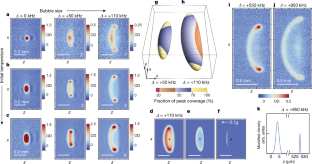
Smitha Vishveshwara is a Professor in the Department of Physics at the University of Illinois at Urbana-Champaign. She holds affiliations with the university’s Materials Research Laboratory and Beckman Institute. Her interdisciplinary work bridges quantum condensed matter theory, biophysics, and artistic expression. PhD in Theoretical Physics (University of California, Santa Barbara, 2002) Postdoctoral Researcher (2002–2005) in the Department of Physics at UIUC Her research focuses on quantum systems, including: Strongly correlated systems in low dimensions (Luttinger liquids, induced superconductivity in nanotubes) Topological order and Majorana fermions in superconductors Quench dynamics in spin chains and optical lattices Microgravity Bose-Einstein condensates and quantum bubbles Biophysics applications (protein networks via percolation theory) Gravitational parallels in quantum Hall systems Recent publications reveal trends in quantum Hall interferometry, Majorana detection schemes, and microgravity condensate dynamics. Awards include the NSF CAREER Award, Simons Fellowship, and APS Fellowship. She teaches courses like “Where the Arts Meets Physics” and has co-created art-science projects such as Quantum Voyages and Quantum Rhapsodies .
Chuanfei Dong is an Assistant Professor of Astronomy at Boston University's College of Arts & Sciences and of Electrical and Computer Engineering at the College of Engineering. His research focuses on understanding plasma physics and its applications to space science, planetary atmospheres, and fusion energy. Dong joined BU in January 2023 after working as a staff scientist at the Princeton Plasma Physics Laboratory. Education: B.S. in Space Science from University of Science and Technology of China M.S. in Earth and Atmospheric Sciences from Georgia Institute of Technology M.S.E. in Nuclear Engineering and Radiological Sciences from University of Michigan M.S. in Planetary and Space Sciences from University of Michigan Ph.D. in Scientific Computing from University of Michigan Research Interests: Dr. Dong's research spans multiple disciplines within space physics and plasma science. His primary interests include Star-Terrestrial Planet Interactions in our Solar System and beyond, magnetic reconnection and turbulence phenomena, wave-particle interactions in space plasmas, and applications of physics-informed machine learning to plasma problems. He also investigates high-intensity laser-plasma interactions with applications to fusion energy research. His work bridges the gap between theoretical plasma physics and observational space science, with particular focus on planetary atmospheres, solar wind interactions, and exoplanet habitability. Dong's interdisciplinary approach combines computational modeling, observational data analysis, and theoretical frameworks to address fundamental questions in space physics. Research Trends: Dong's recent publications demonstrate a strong focus on applying advanced computational techniques to space plasma physics problems. His work spans solar system bodies including Earth, Mars, Mercury, and the Moon, with increasing attention to exoplanet systems. A notable trend is the integration of machine learning approaches with traditional plasma physics modeling, particularly for complex phenomena like Landau damping and magnetic reconnection. His research has significant implications for understanding atmospheric evolution, space weather, and potential habitability of planetary bodies. Scientific Awards: DOE Early Career Research Award (2023) - $875,000 grant for plasma turbulence research Alfred P. Sloan Research Fellow (2024) Metcalf Travel Award Advising and Grants: Dr. Dong mentors undergraduate research assistants and plans to expand his research group with the support of his DOE Early Career Award, which will fund a graduate student and postdoctoral researcher. His research is supported by the Department of Energy and has connections to NASA missions including MAVEN (Mars) and BepiColombo (Mercury). Dong is also involved with the Mauve telescope project as BU institutional PI. His work has been featured in numerous media outlets including Phys.org, Science Daily, and German TV program zdf/3sat. Labs and Teams: Dr. Dong leads a research group focused on computational plasma physics at Boston University. He collaborates with researchers at Princeton Plasma Physics Laboratory and is involved with multiple NASA missions. His team develops advanced computational models to simulate space plasma phenomena, with particular expertise in magnetohydrodynamics (MHD), particle-in-cell methods, and physics-informed machine learning approaches. Dong is also affiliated with BU's Hariri Institute for Computing.
Dr. Martin Scanlon is a Professor and Dean of the Faculty of Agricultural and Food Sciences at the University of Manitoba. His work focuses on physical and structural changes in plant materials during food processing, particularly in oilseed-based systems and cereal products. Education: Operative Miller Certificate (with Distinction), City & Guilds (London), England PhD (Food Science), University of Leeds, England BSc Hons (Food Science), University of Leeds, England His research spans modeling process-ingredient interactions, aerated food materials, ultrasonic analysis, and grain-legume science. Recent projects include novel canola oil extraction methods and mitigating acrylamide precursors in wheat. Analysis of his publications reveals expertise in sustainable processing (supercritical CO₂, microemulsions), dough rheology, antioxidant recovery, and bubble dynamics in cereal systems. No scientific awards are explicitly mentioned. Dr. Scanlon is not currently accepting graduate students and has not disclosed specific grant funding or lab affiliations in the provided texts.
Dr. Andreas Zöttl is a physicist affiliated with the University of Vienna , currently serving as an Assistant Professor in the Computational and Soft Matter Physics department. His research focuses on computational modeling of active matter, microswimmers, and polymer dynamics, with applications in biophysics and soft materials. He teaches courses such as Computational Statistical Mechanics and Biological Physics , emphasizing theoretical and computational methods. His recent work explores reinforcement learning in microswimmer locomotion, chiral particle dynamics, and polymer behavior under shear flow. Research keywords include Machine Learning , Fluid Dynamics , and Soft Matter Physics . Themes span hydrodynamic interactions , active colloids , mesoscale simulations , and non-equilibrium systems . Contact: andreas.zoettl@univie.ac.at