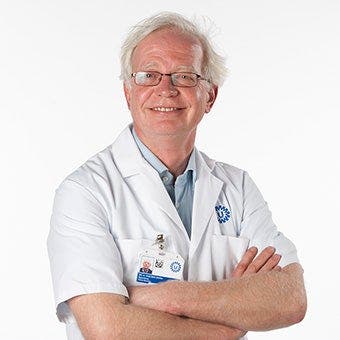
Prof. Bart van der Zwan serves as Professor of Vascular Neurology and Neurosurgeon at UMC Utrecht , Netherlands. With expertise in vascular neurosurgery and animal-free surgical education, he has pioneered alternatives to traditional training methods. Education: MD (1984), PhD (1991) from Utrecht University His research interests span: Neurosurgical techniques (ELANA/SELANA) Cognitive impacts of bypass surgery Intracranial aneurysm treatments Non-animal surgical training models Recent publications focus on medical simulation and cerebrovascular disease . He advocates for ethical surgical education using suture mats, flower petals, and noodles as training tools.
Camilo Fernando Silva Garzon is a Privatdozent (PD) and academic researcher at the Department of Thermofluid Dynamics at the Technical University of Munich (TUM). He holds the title of Dr. habil., indicating he has completed his habilitation, the highest academic qualification in the German system. Working under the supervision of Prof. Wolfgang Polifke, he is actively involved in cutting-edge research in thermoacoustics and combustion dynamics. Dr. Garzon's research spans multiple areas of thermo-fluid dynamics with a particular focus on thermoacoustic instabilities, flame modeling, and combustion dynamics. His work combines theoretical approaches with computational methods to address complex problems in energy systems. He has developed innovative techniques for modeling flame response, thermoacoustic interactions, and entropy wave generation in combustion systems. His research has significant applications in gas turbine design, aero-engine development, and sustainable combustion technologies. Analysis of his recent publications reveals a strong trend toward integrating machine learning with traditional combustion modeling approaches. His work increasingly focuses on uncertainty quantification, nonlinear dynamics, and the development of reduced-order models for complex thermo-fluid systems. He has made significant contributions to understanding intrinsic thermoacoustic instabilities and developing new methodologies for flame response modeling. His research shows a clear progression from fundamental theoretical work toward practical applications in gas turbine and aero-engine technologies. Dr. Garzon has established a robust collaborative network, frequently publishing with researchers from TUM and international institutions. His work appears in top journals including Combustion and Flame, Journal of Engineering for Gas Turbines and Power, and Proceedings of the Combustion Institute. He has contributed significantly to advancing the understanding of thermoacoustic phenomena and combustion dynamics through both theoretical developments and practical applications.
Dr. Vijay Kumar is a faculty member in the Faculty of Biology at Bielefeld University, specifically affiliated with the Department of Biochemistry and Plant Physiology. His office is located at UHG W5-122 with contact number +49 521 106-5586. As a research-active academic, he contributes to multiple scientific domains through his extensive publication record. Dr. Kumar's research spans an exceptionally broad spectrum of scientific inquiry. His work in biochemistry and plant physiology forms the foundation of his departmental affiliation, with significant contributions to agricultural science including nanofertilizer applications for rice cultivation and habitat mapping for endangered fish species. His research extends into nanotechnology with investigations into nanofluids, nanocomposites, and photonic crystal fiber-based biosensors. The publication record also reveals substantial work in environmental science , particularly sustainable ethanol production and CO2 emission analysis. Analysis of his recent publications shows a remarkable interdisciplinary approach that bridges traditional biological sciences with computational methods, medical applications, and social sciences. His work demonstrates strong methodological diversity, employing techniques ranging from proteomic analysis to geographic information systems, and from computational fluid dynamics to social media-based educational models. This cross-disciplinary approach positions his research at the intersection of multiple scientific fields, addressing complex problems through integrated perspectives. His publication portfolio indicates active engagement with contemporary global challenges including pandemic response, climate change impacts, sustainable agriculture, and medical diagnostics. The consistent appearance of Indian contexts in many studies (particularly regarding migration patterns, rice cultivation, and regional health issues) suggests ongoing research collaborations with institutions in India alongside his primary affiliation at Bielefeld University.
Dr. Domenic Boos serves as a Lecturer at the Chair and Institute for Advanced Mining Technologies in Aachen, Germany, focusing on industrial monitoring solutions for mining and heavy machinery operations. His work bridges academic research with practical engineering applications through industry collaboration. His research expertise spans critical domains in modern resource extraction: Mining Technology and Equipment Acoustic Emission Analysis Condition Monitoring and Predictive Maintenance Vibration Analysis and Sensor Fusion Material Characterization and Flow Dynamics Analysis of Dr. Boos' publications from 2012-2018 reveals a cohesive research trajectory centered on acoustic emission and vibration technologies. Key innovations include defect parameter development for slow-rotating bearings, rock cutting force measurement, and integrated monitoring systems for wind turbine gearboxes. His work consistently targets industrial pain points like conveyor speed control and pitch bearing diagnostics, demonstrating how multi-sensor fusion enhances reliability in harsh operational environments. No scientific awards were mentioned in the source materials. Information regarding student supervision or research grants was not provided in the available documentation. The Chair and Institute for Advanced Mining Technologies operates at the intersection of academia and industry, with Dr. Boos' thyssenkrupp.com email indicating direct collaboration with heavy machinery manufacturers for real-world technology implementation.
Nicolas Bridiau is a Lecturer-researcher at La Rochelle University , affiliated with the BCBS team and collaborating with institutions like University of Nantes and LIENSs UMR 6250 CNRS-ULR. He holds a Doctoral thesis (2005-2008) and a Research Master's in Biochemistry (option: Biochemistry, Molecular and Cellular Biology, and Bio-organic Chemistry, 2004-2005). Doctoral thesis: 2005-2008 Research Master's: Biochemistry, Molecular and Cellular Biology, and Bio-organic Chemistry (2004-2005) His research focuses on Chemoenzymatic synthesis of tumor antigens and glycopeptides , particularly SLex analogs linked to tyrosine analogs for potential anti-metastatic applications . He investigates glycosyl-hydrolases and lipases in unconventional environments for synthesizing immunomodulatory carbohydrates . Collaborations include Michel Dion (University of Nantes) and Laurent Picot (La Rochelle University). Recent publications highlight his work on marine-derived polysaccharides with anti-heparanase properties, bioactive ulvans for skin regeneration, and enzyme immobilization techniques. Patents involve marine polysaccharide-based cosmetics and anticoagulant agents . His work bridges biochemical synthesis , marine biotechnology , and biomedical applications . Collaborations span multiple institutions, with key contributions to marine bioproducts and enzyme engineering for industrial applications.
Louis Fradette is a Full Professor at the Department of Chemical Engineering , Polytechnique Montréal. He holds a Ph.D. from Polytechnique Montréal and INP Lorraine. Education : B.Sc., M.Sc.A. from Laval University; Ph.D. from Polytechnique Montréal and INP Lorraine. Research Interests focus on emulsification , CO2 capture processes , and agitation/mixing systems for complex fluids and multiphase systems. He leads the Valorisation Carbone Québec project, demonstrating industrial-scale CO2 utilization technologies. Publication Trends emphasize Pickering emulsions for rare earth separation, CO2 capture using hydrates/absorption heat pumps, and solid-liquid mixing with advanced modeling techniques like CFD-DEM. Scientific Awards : Co-holder of the NSERC-Total Chair (2011–2016); 6 invention patents. Advising includes 2 postdoctoral researchers, 1 Ph.D., 1 research Master’s, 3 professional Master’s students, and 14 completed theses. He contributes to industrial ecology projects and green steel research.
Professor Francesca Cordeiro holds dual appointments as Professor of Retinal Neurodegeneration and Glaucoma Studies at University College London's Institute of Ophthalmology and Professor of Ophthalmology at Imperial College London. She serves as an Honorary Glaucoma Consultant Ophthalmologist at the Western Eye Hospital, Imperial College Healthcare NHS Trust, where she directs the Clinical Trials Research Unit and chairs the Imperial College Ophthalmic Research Group (ICORG). Professor Cordeiro earned her Bachelor of Medicine/Bachelor of Surgery from St Bartholomew's Hospital (1987), became a Member of the Royal College of Physicians (1990), a Fellow of the Royal College of Ophthalmologists (1992), and completed her PhD at University College London (1998). She finished her ophthalmology training at Moorfield's Eye & St Thomas' Hospitals in London in 2003. Her research focuses on molecular mechanisms in retinal neurodegenerative diseases including glaucoma, Alzheimer's, and diabetic eye conditions. She heads the Glaucoma and Retinal Neurodegeneration Research Group at UCL, developing innovative diagnostic methods for early disease detection and novel therapeutic approaches. Her groundbreaking DARC (Detection of Apoptosing Retinal Cells) technology enables real-time imaging of retinal cell death, potentially revolutionizing early glaucoma diagnosis before vision loss occurs. Her work extends to exploring the eye as a 'window to the brain' for monitoring neurodegenerative processes in conditions like Alzheimer's disease. Professor Cordeiro's extensive publication record demonstrates her leadership in applying advanced technologies like AI, machine learning, and novel imaging techniques to ophthalmic research. Her work spans from microglia characterization in aging to microfluidic sensors in contact lenses for tear analysis, consistently focusing on translating laboratory findings to clinical applications. Her significant contributions have been recognized with prestigious awards including the Research to Prevent Blindness International Research Scholar Award USA (2014), Allergan Glaucoma Achievement Award (2010), Lewis Rudin Glaucoma Prize (2005), International Glaucoma Review Award (2000), and the Moorfields Research Gold Medal (1998). As an educator, Professor Cordeiro has served as Graduate Tutor at UCL, teaches on the Clinical Ophthalmology MSc Course, and supervises PhD, MSc, and iBSc students. She mentors clinical scientists at both UCL and Imperial College and oversees trainee research projects as Research Lead at the Western Eye Hospital. Her research has been continuously funded by the Wellcome Trust since 1996, including a Vision Research Fellowship, University Award, and Wellcome Translational Award for the DARC Project. Professor Cordeiro actively contributes to the scientific community through service on international committees including the European Glaucoma Society and EVER. She chairs the EGS Neuroprotection SIG and serves on editorial boards of Investigative Ophthalmology, Experimental Eye Research, and Scientifica, bridging clinical practice, translational research, and education in her impactful career.
Yuriko Suzuki is a Royal Academy of Engineering Research Fellow in the Nuffield Department of Clinical Neuroscience at the University of Oxford, leading the Neurovascular Imaging research group. Her work bridges biomedical engineering and clinical neuroimaging to develop advanced MRI methodologies. Her research centers on non-invasive dynamic MR Angiography using Arterial Spin Labelling (ASL) MRI, with breakthroughs in vessel-selective visualization that enable exclusive imaging of vascular territories from specific arteries. This approach eliminates contrast agent requirements while achieving superior spatial and temporal resolution compared to conventional methods. Her work spans medical imaging physics, neurovascular diagnostics, and AI-enhanced reconstruction techniques. Recent publications (2023-2025) reveal a strong trajectory in methodological standardization and translational innovation. She has driven community consensus through ISMRM OSIPI initiatives while advancing deep learning applications for intracranial artery visualization and quantitative perfusion mapping. Scientific recognition includes: Royal Academy of Engineering Research Fellowship Funding from her prestigious fellowship supports an active research program focused on clinical translation of non-contrast vascular imaging. The Neurovascular Imaging Group maintains strong international collaborations, particularly through the ISMRM OSIPI consortium, and seeks to transform diagnostic neuroimaging practices through reproducible, open-science methodologies. Her laboratory pioneers techniques that could replace contrast-dependent procedures in cerebrovascular diagnostics, with emphasis on clinical applicability and rigorous methodological standards.
Davis Seelig is a Professor in the Department of Veterinary Clinical Sciences at the University of Minnesota's College of Veterinary Medicine, with additional affiliation at the Masonic Cancer Center. His research spans veterinary oncology, molecular pathology, and comparative medicine, focusing on translating findings between animal and human cancers. Dr. Seelig's research interests center on veterinary oncology with a particular emphasis on canine cancers including lymphoma and hemangiosarcoma. His work explores molecular subtypes, early detection methods, and comparative approaches to cancer biology. He applies advanced techniques including flow cytometry, molecular profiling, and animal models to investigate cancer mechanisms and potential therapeutic approaches. His research bridges veterinary and human medicine, contributing to the understanding of cancer across species. His publication record shows consistent output with 104 research outputs since 2006, demonstrating expertise across veterinary pathology, cancer biology, and translational medicine. Recent publications focus on machine learning applications in drug delivery, single-cell analysis of immune responses in liver cancer, and precision techniques for tissue preservation. His work demonstrates a strong translational focus, connecting veterinary clinical findings with broader cancer research implications. Dr. Seelig is actively involved in multiple significant research projects, including the Cancer Center Support Grant from the National Cancer Institute, research on canine lymphoma detection and prevention funded by the Morris Animal Foundation, and studies on molecular subtypes in canine hemangiosarcoma. He also contributes to educational initiatives like the Veterinary Summer Scholars in Comparative Medicine program. His collaborative network extends across veterinary medicine, oncology, and biomedical engineering, working with researchers investigating everything from prion diseases to advanced drug delivery systems. His work contributes to Sustainable Development Goals related to good health and well-being through cancer research and improved veterinary medical practices.
Fiona Malone is a Lecturer in the Department of Mechanical & Industrial Engineering at the University of Galway, Ireland, where she also serves as a Principal Investigator for both the Engineering Research Group (ERG) and the Medical and Engineering Technologies Gateway (MET). Her research bridges mechanical engineering principles with medical applications, focusing on cardiovascular mechanics and stroke-related phenomena. Dr. Malone's research interests center on the intersection of biomedical engineering and cardiovascular mechanics, with particular emphasis on embolism, atrial fibrillation, and aortic arch hemodynamics. She employs patient-specific modeling approaches to investigate blood flow patterns and emboli trajectory paths under various physiological conditions. Her work combines experimental in vitro studies with computational methods to better understand stroke mechanisms and develop potential interventions. Analysis of Dr. Malone's publications reveals a consistent focus on cardiovascular biomechanics with increasing integration of machine learning techniques in recent years. Her earlier work concentrated on mechanical characterization of embolus analogues and hemodynamics in patient-specific models, while her more recent publications incorporate computational methods like gradient boosting algorithms to address class imbalance problems in medical data analysis. Dr. Malone has achieved significant recognition in her field with an h-index of 78 according to Scopus metrics. Her publications have garnered citations across multiple disciplines, demonstrating the interdisciplinary impact of her research. As a Principal Investigator, Dr. Malone leads research initiatives within the Engineering Research Group and the Medical and Engineering Technologies Gateway. Her collaborative network spans multiple institutions and disciplines, with frequent co-authorship with researchers specializing in both engineering and medical fields. Her research has practical implications for understanding stroke mechanisms and developing improved diagnostic and therapeutic approaches.
Claudio Chiastra is an Associate Professor at the Department of Mechanical and Aerospace Engineering (DIMEAS) at the Polytechnic of Turin, where he is also a member of the Interdepartmental Center PolitoBIOMed Lab - Biomedical Engineering Lab. His academic career spans multiple institutions including the Polytechnic University of Milan and Erasmus Medical Center, demonstrating his expertise in cardiovascular biomechanics and medical device development. Dr. Chiastra's research focuses on biomechanics, cardiovascular system modeling, computational approaches to coronary artery disease, digital twin technology, endovascular device design, and multiscale modeling of vascular systems. His work integrates optical coherence tomography with stent technology to advance cardiovascular interventions. His research lines include multiscale modeling of vascular adaptation processes, design and optimization of endovascular devices, 3D reconstruction of vascular geometries through multimodal imaging integration, and studying relationships between morphometric, mechanical and hemodynamic descriptors in vascular diseases. His recent publications reveal a strong emphasis on computational modeling of coronary interventions, stent design optimization, plaque analysis, and hemodynamic assessment. These works demonstrate his leadership in applying advanced computational techniques to solve clinical cardiovascular challenges, particularly in coronary artery disease treatment and prevention. GNB (National Bioengineering Group) Doctoral Award (2014) Dr. Chiastra actively mentors PhD students including Francesca Rossi, Mariachiara Arminio, Graziana Maria Ragonese, and Sara Zambon. He leads significant research projects including RESET (REthinking femoral artery Stents) and PREDICT (Adverse cardiovascular events in coronary Plaques), demonstrating his leadership in securing competitive research funding. His editorial roles as Associate Editor for Frontiers in Medical Technology, Frontiers in Cardiovascular Medicine, and Scientific Reports highlight his recognition in the field. As a member of the PolitoBIOMed Lab, Dr. Chiastra contributes to a collaborative research environment focused on biomedical engineering solutions. His work bridges engineering principles with clinical cardiovascular applications, particularly in the development and optimization of endovascular devices and computational models for personalized medicine approaches.
Diego Gallo is an Associate Professor in Industrial Bioengineering at the Department of Mechanical and Aerospace Engineering (DIMEAS), Politecnico di Torino, and a member of the PolitoBIOMed Lab - Biomedical Engineering Lab. With a PhD in Biomedical Engineering from Politecnico di Torino and a Marie Sklodowska-Curie Global Fellowship at the University of Toronto's Biomedical Simulation Laboratory, Gallo focuses on the interplay between blood fluid mechanics, vascular morphometry, and cardiovascular disease development/diagnosis. He has authored 120+ publications and holds 4 patents in cardiovascular device optimization. Editorial Roles: Associate Editor for Frontiers in Pediatrics and Frontiers in Cardiovascular Medicine , Associate Editor for Cardiovascular Engineering and Technology , Topic Editor for Fluids (MDPI). Research Themes: Computational hemodynamics, digital twins, vascular biomechanics, helical flow analysis, and clinical translation of cardiovascular devices/surgical techniques. Scientific Awards: Jack Perkins Prize (2018) Elsevier Highly Cited Research (2016) ISMRM Awards (2014) TERMIS Travel Award (2012) Premio Enzo Belardinelli (2012) Teaching Activities: Courses in fluid biomechanics, bioimaging processing, and cardiovascular surgical strategies for Bioengineering programs. Supervises PhD students in cardiovascular device design, hemodynamic modeling, and computational medical technology.
Professor David Steel is a leading ophthalmology researcher at Newcastle University specializing in vitreoretinal surgery and medical retina. His work focuses on optimizing treatments for diabetic retinopathy, macular edema, and macular holes through rigorous evidence synthesis and surgical innovation. His research spans three interconnected domains: Diagnostic & Predictive Innovation : Developing AI-driven OCT analysis for treatment outcome prediction and identifying critical biomarkers Surgical Optimization : Engineering-based analysis of vitrectomy systems, trocar efficiency, and fluid dynamics Evidence-Based Guidelines : Leading international consensus development through systematic reviews and meta-analyses Professor Steel's 2025 publications demonstrate exceptional productivity with 15 high-impact studies, including society-endorsed guidelines and multicenter international collaborations. His work consistently applies advanced methodological approaches including individual participant data meta-analysis and biomechanical modeling to solve clinically significant problems in retinal disease management.
Jeroen van Oijen is Full Professor in the Power & Flow group at the Department of Mechanical Engineering of the Eindhoven University of Technology (TU/e). His expertise lies in theoretical and numerical modeling of combustion, with a focus on engines and energy converters and his teaching covers mechanical engineering, chemically reacting flows, combustion modeling, and interfacial transport phenomena. His research interests include: Theoretical and numerical modeling of combustion Development of computational methods for chemically reacting flows Design of clean and efficient combustion devices for sustainable fuels Flamelet-Generated Manifold (FGM) method development Reduced chemical mechanisms for engineering applications Professor van Oijen's publications demonstrate a strong progression from fundamental flame theory to practical applications in complex combustion systems. His work focuses on flamelet-based chemical reduction techniques, particularly the Flamelet Generated Manifold approach for modeling premixed and partially-premixed flames. The research shows increasing sophistication in handling flame stretch, curvature, and preferential diffusion effects while maintaining computational efficiency for engineering applications. His scientific awards include: Fellow of The Combustion Institute (2021) Chairman of the Dutch Association for Flame Research Professor van Oijen has coordinated several national and international research projects on development of reduced models for turbulent combustion and emissions. His models are widely used for the design of clean and efficient engines, boilers, furnaces and gas turbine combustors. He has been actively involved in the Power & Flow research group, which focuses on developing new models for devices employing new combustion concepts and future sustainable fuels for the energy transition.
Einar Heiberg is a Senior Lecturer at Lund University , Faculty of Medicine, Department of Clinical Physiology. He serves as Project Manager of the Lund Cardiac MR Group and Director of the 3D Centre at Skåne University Hospital. His academic appointments include Associate Senior Lecturer at WCMM (Wallenberg Centre for Molecular Medicine) and affiliation with the LTH Profile Area 'Engineering Health.' Senior Lecturer, Clinical Physiology (Lund University) Project Manager, Lund Cardiac MR Group Director, 3D Centre @ Skåne University Hospital Associate Senior Lecturer, WCMM Research Interests : Heiberg specializes in medical image processing , combining classical image analysis with deep learning techniques. His work focuses on cardiovascular MRI applications, particularly software development for cardiac modeling and segmentation. Key areas include: Deep learning for 3D medical imaging Cardiac MRI feature tracking Tricuspid/right ventricle flow dynamics AI in surgical planning Segmentation of cardiovascular structures Modeling left ventricular mechanics Scientific Contributions : Heiberg's 160+ research outputs show expertise in: Cardiac Magnetic Resonance Imaging Left Ventricle and Myocardial Analysis Deep Learning in Clinical Applications 3D Printing for Medical Use Awards & Appointments : Clinical Fellow, WCMM Labs & Collaborations : He leads the 3D Centre (LinkedIn, website) and contributes to AI research through Lund's AIML@LU network and AI Lund: Lund University AI Research .