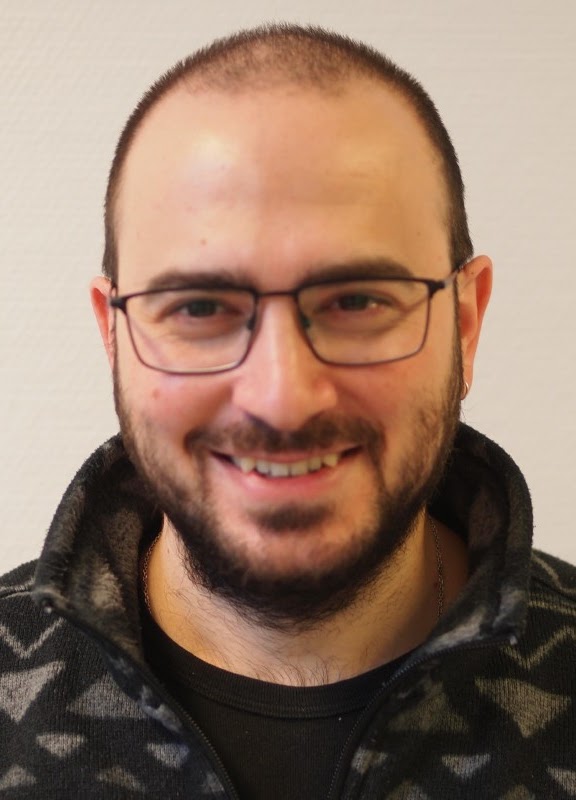
Davide Cassi serves as Associate Professor of Physics of Matter at the University of Parma's Department of Mathematical, Physical and Computer Sciences since 2001, following his appointment as Researcher in Theoretical Physics (1995-2001). With over 30 years of academic service, he teaches Condensed Matter Physics, Soft Matter Physics, and Physics Applied to Gastronomy across undergraduate and graduate programs in Physics and Gastronomic Science. His educational background includes: Ph.D. in Physics, University of Parma (1988-1992) Master’s degree in Materials Science and Technology, University of Parma (1986-1988) Degree in Physics, University of Parma (1982-1986) Cassi's research integrates statistical mechanics with real-world applications through two primary lenses: complex network theory for ecological and social systems, and soft matter physics applied to culinary processes. His work on biodiversity loss prediction in agricultural networks and food preservation technologies demonstrates exceptional interdisciplinary reach. Recent publications reveal a strategic pivot toward AI-driven biodiversity conservation and network robustness modeling. Analysis of his 15 most recent publications (2023-2025) shows dominant themes in network vulnerability analysis (68% of works) and food-physics applications (27%), with emerging focus on machine learning integration for ecological modeling. His research bridges theoretical physics with practical solutions in food safety and ecosystem management. Key recognitions include: Grand Prix de la Science de l'Alimentation from Académie Internationale de la Gastronomie (2012-2013) Dual National Scientific Qualifications for Full Professorship (2022) in Theoretical Physics of Fundamental Interactions and Matter Cassi's academic contributions extend beyond publications to two international patents in food preservation technology and editorial leadership since 2007 for World Scientific's Series on Advances in Statistical Mechanics . His research program demonstrates consistent translation of theoretical physics into practical applications across gastronomy and ecology, with growing emphasis on AI-enhanced network analysis for sustainability challenges.
Mahler András , Associate Professor at the Faculty of Engineering (Budapest University of Technology and Economics), specializes in Geotechnical Engineering and Soil Mechanics within the Department of Engineering Geology and Geotechnics . His research integrates numerical modeling and empirical testing to address geotechnical challenges in infrastructure and construction materials. Department: Engineering Geology and Geotechnics Email: mahler.andras@emk.bme.hu Courses: Soil Mechanics, Geotechnical Finite Element Analysis, Numerical Methods in Geotechnics Research Focus Mahler's work emphasizes: Geotechnical Testing : CPT-Vs correlations, hypoplastic parameter calibration, and permeability studies. Material Behavior : Analysis of rolled asphalt, concrete seepage, and collapsible soils. Seismic Applications : Liquefaction hazard assessment and seismic fragility of embankments. His recent publications highlight advancements in soft clay characterization , asphalt modeling , and sustainable soil stabilization using sewage sludge ash. Awards Építő250 Scholarship
Christian Bonatti is a CNRS Researcher at the Mathematical Institute of Burgundy (IMB), University of Burgundy, and a member of the Geometry, Algebra, Dynamics, and Topology team. His work focuses on dynamical systems, particularly hyperbolic dynamics, partially hyperbolic systems, and singular hyperbolicity. Institute: Institute of Mathematics of Burgundy (UMR 5584 CNRS) Location: Mirande Building, Wing A, Office 307, Dijon Contact: christian.bonatti@ube.fr / christian.bonatti@u-bourgogne.fr Bonatti’s research investigates chaotic systems through geometric frameworks. He has contributed to understanding Anosov flows, Morse-Smale diffeomorphisms, and robust properties of dynamical systems in dimensions 2 and 3. His work often bridges topology and dynamics, exploring phenomena like homoclinic tangencies and singular hyperbolicity. His recent publications include studies on Anosov flows, prelaminations, and Morse-Smale classifications. Despite the absence of explicit student lists in the provided texts, he is known for mentoring postdocs and students in dynamical systems. Outside academia, Bonatti engages in painting and appreciates music, particularly works by Mahler and Stravinsky. He also practices culinary arts, passing down family recipes like his father’s meringue pie.
Elijah Van Houten is a Full Professor at Université de Sherbrooke , Canada, specializing in Biomedical Engineering and Medical Imaging . His research focuses on Magnetic Resonance Elastography (MRE) , inverse problems, and nonlinear optimization for tissue mechanical property characterization. He is affiliated with the Centre de recherche du CHUS and leads international collaborations, including the Netherlands-funded VICI project Seismology of the Brain and NIH-funded High-Resolution, Anisotropic MR Elastography of the Brain . Doctorate in Engineering Science, Dartmouth College (2001) Bachelor's in Music and Mechanical Engineering, Tufts University (1997) Van Houten’s work integrates computational modeling, finite element analysis, and advanced imaging to study brain and liver tissue mechanics. Recent publications highlight applications of transversely isotropic models , poroelasticity , and multi-frequency MRE for improved diagnostic imaging. His research has been supported by grants from NIH , NWO , CIHR , and NSERC , totaling over $7 million. Scientific awards include the ISMRM Summa Cum Laude award . He has supervised projects on diabetic foot ulcers , breast cancer detection via wearable technology , and ultrasound-based liver disease diagnostics . Van Houten collaborates with institutions in the Netherlands, USA, France, and Mexico, advancing MRE techniques for clinical applications.
Travis B. Thompson, Ph.D. is an Assistant Professor in the Department of Mathematics and Statistics at Texas Tech University, leading the TM4 (Texas Tech Translational and Theoretical Mathematical Modeling and Machine Learning in Medicine) research group. His academic journey includes postdoctoral work at Rice University, Simula Research Laboratory, and the University of Oxford, focusing on mathematics applied to neurodegenerative diseases. Education: Ph.D. in Mathematics from Texas A&M University (2013) Dr. Thompson develops theoretical mathematical models and applies scientific computing and machine learning to study neurological pathologies, particularly Alzheimer’s disease. His work explores complex biological processes on networks, translational healthcare applications, and nutritional security implications. Current research trends integrate neuroimaging data with finite element simulations to model tau progression , amyloid beta dynamics , and glymphatic clearance in age-related diseases. Scientific awards and honors were not explicitly mentioned in the provided materials. Dr. Thompson’s interdisciplinary approach connects computational neuroscience with biomedical engineering , utilizing techniques like diffusion tensor imaging and level set methods to analyze pathological protein spread and brain tissue mechanics . The TM4 research group focuses on network neurodegeneration , personalized medicine , and machine learning diagnostics . Their work spans from microfluidic cancer detection to computational modeling of brain clearance mechanisms , addressing challenges in both neurodegenerative diseases and biomedical engineering through rigorous mathematical frameworks.
Lieven Vandenberghe is a Professor in the Electrical and Computer Engineering Department and Department of Mathematics at the University of California, Los Angeles (UCLA). His research focuses on convex optimization, semidefinite programming, and applications in signal processing, system identification, and control theory. Books: Co-author of Convex Optimization (2004) and Introduction to Applied Linear Algebra (2018) Courses: Teaches graduate-level courses in linear programming, convex optimization, and numerical computing (ECE236A/B/C, ECE133A/B) Software: Developer of CVXOPT, CHOMPACK, and SMCP for optimization algorithms His research group has produced significant work in sparse matrix computations, operator splitting methods, and applications to machine learning and control systems. Publications span topics like Bregman splitting, proximal gradient methods, and semidefinite programming for signal processing. His advisees include PhD students in optimization and postdoctoral researchers in applied mathematics.
Edwin Cowen is a Professor in the Department of Civil and Environmental Engineering at Cornell University's College of Engineering. He serves as Director of the DeFrees Hydraulics Laboratory and previously held the Kathy Dwyer Marble and Curt Marble Faculty Director for Energy position at the Atkinson Center for Sustainability (2013-2018). Cowen joined Cornell in 1997 after earning a B.S. in Civil Engineering from Brown University (1987) and M.S. (1991) and Ph.D. (1997) in Civil Engineering from Stanford University. His research focuses on experimental and observational studies in environmental fluid mechanics, with five core themes: environmental transport processes, water wave dynamics, lake hydrodynamics, energy harvesting, and quantitative imaging techniques. He develops novel experimental methods and facilities to study phenomena like scale-dependent dispersion, wave-structure interactions, sediment suspension, and kinetic energy harvesting. Key application areas include sustainability, renewable energy systems, and water resource management. His recent projects analyze San Francisco Bay Delta surface turbulence for juvenile fish transport, optimize turbine arrays for energy harvesting, explore pre-tensioned wave-like ribbons for mechanical energy capture, and investigate environmental DNA transport in Cayuga Lake. Scientific Awards: James and Mary Tien Excellence in Teaching Award (2013) Graduate and Professional Student Assembly Teaching/Advising Award (2012) Chi Epsilon Professor of the Year (2010) Guggenheim Memorial Foundation Fellow (2004) NSF CAREER Award (2001) As an NSF-sponsored collaborator with Avangrid, Cowen works on residential electric storage systems for grid flexibility and renewable integration. He also contributes to Cornell's sustainability initiatives through the Lake Source Cooling Technical Advisory Committee and Earth Source Heat project steering team.
Dr. Robert D. Moser is a Professor at the University of Texas at Austin and holds the W.A. "Tex" Moncrief, Jr. Chair in Computational Engineering and Sciences I. He is affiliated with the Thermal and Fluid Systems program, the Institute for Computational Engineering and Sciences (ICES), and serves as Director of the DOE-funded Center for Predictive Engineering and Computational Sciences (PECOS). Ph.D. in Mechanical Engineering from Stanford University (1984) His research focuses on computational methods for turbulence modeling, cardiovascular fluid mechanics, and uncertainty quantification in complex physical simulations. He develops large-eddy simulation techniques for aerospace applications and biological flow analysis, while pioneering methods to characterize uncertainties in reentry vehicle simulations and turbulence modeling. Dr. Moser leads interdisciplinary research at PECOS and ICES, combining computational engineering with biomedical applications. His work spans theoretical turbulence physics, numerical methods for Navier-Stokes equations, and practical implementations for aerodynamic and medical device design.
Donatella Strangio serves as Professor of Economic History and Director of the Department of Methods and Models for the Economy, Territory and Finance (Memotef) at Sapienza University of Rome. She also holds the position of Deputy Rector for Chile and Brazil in the Latin America and Caribbean region. Her academic leadership extends to directing international research projects including the European Project PNRR Changes 5 and the Jean Monnet Project EUMCHA. Her research spans economic development and underdevelopment, financial history, tourism economics, international migration patterns, and colonial-decolonization processes. She examines these topics through historical lenses, particularly focusing on pre-industrial economic systems, 20th century European history, famines, food policies, and institutional evolution. Her work often bridges historical analysis with contemporary policy challenges. Professor Strangio's recent publications demonstrate strong thematic coherence across economic history, with particular emphasis on resilience mechanisms during crises, migration as knowledge transmission, and tourism's economic dimensions. Her scholarship shows consistent engagement with both Italian and global contexts, especially regarding Mediterranean and Latin American connections. She actively mentors through multiple master's programs including the Master in Migration and Development and the Master in Tourism Economics and Management. Her leadership in the Civis short-term courses on Crisis Sustainability and Cultural Heritage Enhancement demonstrates commitment to innovative teaching approaches. Professor Strangio directs significant research initiatives including the Spoke9 of PNRR Cultural Heritage and coordinates the Scientific Guarantee Committee for the 'Repertory of Italian banks from 1861 to today.' Her international collaborations span Columbia University, Universidad de Quilmes, University of Adelaide, London School of Economics, and numerous Latin American institutions.
Anne-Laure Dalibard is a Professor at Sorbonne University's Faculty of Science and Engineering, affiliated with the Jacques-Louis Lions Laboratory (UMR CNRS 7598). She also serves as a Junior member of the Institut Universitaire de France (2020-2025) and was previously a part-time professor at the École Normale Supérieure in Paris (2021-2024). Her research focuses on mathematical analysis of fluid mechanics with applications to geophysical and oceanographic phenomena. Education: Student at ENS Ulm (2001-2005) PhD at CEREMADE, Paris-Dauphine University (defended October 8, 2007) Dalibard's research centers on geophysical fluids, boundary layers in fluid mechanics, congestion models, roughness models, scalar conservation laws, and homogenization theory. She specializes in asymptotic analysis of fluid equations relevant to oceanographic models, particularly those involving rotating fluids and boundary layer phenomena. Her work bridges rigorous mathematical analysis with practical applications in environmental fluid dynamics. Her recent publications demonstrate a consistent focus on boundary layer phenomena in fluid mechanics, with particular emphasis on geophysical applications. She has made significant contributions to understanding boundary layers in rotating fluids, congestion models in Navier-Stokes systems, and wave phenomena in stratified fluids. Her mathematical approach typically involves rigorous analysis of partial differential equations with singular perturbations, often using asymptotic methods, homogenization theory, and kinetic formulations. Scientific Awards: Junior member of the Institut Universitaire de France (2020-2025) Principal Investigator for ERC Starting grant BLOC (2015-2020) Leader of ANR BOURGEONS project (2023-2027) Dalibard leads substantial research initiatives including the ANR BOURGEONS project (2023-2027), which involves over 30 researchers, PhD students, and post-docs working on fluid dynamics aspects relevant to geophysical flows. She has supervised several PhD students including Jean Rax and Gabriela Lopez-Ruiz, and mentored post-doctoral researchers such as Frédéric Marbach, Marc Briant, and Matthew Paddick. Her research has been supported by prestigious grants from the European Research Council and the French National Research Agency. She is actively involved with the Jacques-Louis Lions Laboratory at Sorbonne University and collaborates extensively with researchers across France and internationally. Her work often intersects with oceanographic applications, connecting mathematical theory with environmental fluid dynamics problems.
Xiaotao Bi is a Professor in the Department of Chemical and Biological Engineering at the Faculty of Applied Science, University of British Columbia. He is a Fellow of The Canadian Academy of Engineering, recognized for his significant contributions to the field of chemical engineering, particularly in biomass energy systems and environmental technologies. Dr. Bi's research focuses on developing environmental systems analysis and life cycle assessment tools to model and evaluate biomass energy systems. His work encompasses Canadian wood pellets, animal wastes, agricultural residues, and integrated impacts assessment of various biomass conversion processes including combustion, gasification, torrefaction, and pelletization. Current research interests include electrostatic charging of dielectric particles in gas-solids fluidized beds, dual fluidized bed for biomass steam gasification, and novel i-CFB reactors for catalytic NOx reduction. His extensive publication record demonstrates expertise across multiple domains of sustainable energy and environmental engineering. Recent work shows a strong emphasis on biomass conversion technologies, particularly microwave-assisted processes, fluidized bed systems, and waste valorization. There's a clear trend toward developing more efficient and environmentally friendly processes for converting various biomass feedstocks into energy and valuable products, with particular attention to addressing technical challenges like tar formation in gasification and electrostatic issues in particle handling. Dr. Bi has been recognized with the prestigious honor of being named a Fellow of The Canadian Academy of Engineering, which acknowledges his significant contributions to engineering research and practice in Canada. As a research leader, Dr. Bi has supervised numerous graduate students and secured funding for his research team to investigate innovative approaches to biomass conversion and environmental engineering challenges. His work bridges fundamental research with practical applications for sustainable energy systems. Dr. Bi leads a research team focused on developing advanced technologies for biomass conversion and environmental protection. His laboratory facilities likely include specialized equipment for fluidized bed operations, biomass processing, and analytical tools for characterizing biofuels and byproducts.
Georgios Arvanitidis is an Associate Professor at the Technical University of Denmark (DTU) in the Department of Applied Mathematics and Computer Science, specifically within the Section for Cognitive Systems (CogSys). He has established himself as a leading researcher in geometric machine learning, focusing on the application of differential geometry principles to enhance machine learning models. His work bridges theoretical mathematics with practical applications in artificial intelligence, with particular emphasis on understanding the geometric structure of data manifolds and latent spaces. Dr. Arvanitidis completed his educational journey with a Bachelor's degree from the Department of Informatics at the Aristotle University of Thessaloniki, followed by a Master's degree in Computer Science from Saarland University supported by the Max Planck Institute for Informatics. He earned his PhD at DTU's Cognitive Systems section under the supervision of Søren Hauberg, with additional research experience at Philipp Hennig's Probabilistic Numerics group. Prior to his current position as associate professor, he was a PostDoc at the Max Planck Institute for Intelligent Systems working with Bernhard Schölkopf. Dr. Arvanitidis's research primarily focuses on differential geometry in machine learning , where he explores how geometric structures can enhance representation learning and statistical modeling. His work in generative models investigates how learning the geometry of data manifolds can improve deep learning architectures. In the domain of deep learning theory , he examines why deep learning models generalize effectively on unseen data, with particular attention to the curvature properties of loss landscapes. His research in approximate Bayesian inference applies geometric principles to improve uncertainty quantification in neural networks. Through his innovative approaches, Dr. Arvanitidis has established himself as a leading researcher in geometric machine learning, contributing to both theoretical foundations and practical applications across various domains including robotics and life sciences. The publication trends of Dr. Arvanitidis reveal a consistent and evolving focus on geometric approaches to machine learning problems. His recent work (2023-2025) demonstrates increasing sophistication in applying Riemannian geometry to deep learning architectures, with particular emphasis on latent space geometry, optimization on manifolds, and geometric interpretations of neural network behavior. A notable pattern is the progression from foundational work on geometric representations to more applied research in areas like robotics and causal inference. His publications span top-tier conferences including NeurIPS, ICML, ICLR, and AISTATS, reflecting the high impact of his research. The interdisciplinary nature of his work is evident in collaborations across mathematics, computer science, and robotics domains, with recent papers addressing challenges in multimodal sampling, safety guarantees for dynamical systems, and counterfactual explanations. Dr. Arvanitidis has received several notable scientific awards and recognitions: Sapere Aude starting grant from the Independent Research Fund Denmark (DFF) GADL funding i-Rase, Pathfinder, and EIC (European Innovation Council) funding Best reviewer award for NeurIPS 2019 Best reviewer award for NeurIPS 2018 Best student paper award at Robotics: Science and Systems (R:SS) 2021 Dr. Arvanitidis actively mentors PhD students and researchers, currently supervising Alejandro Valverde, Johanna Gegenfurtner, and Albert Kjøller Jacobsen. He has previously co-supervised Alison Pouplin's PhD and worked with research assistant Georgios Pantis. His group receives substantial funding through multiple prestigious grants including the Sapere Aude starting grant from the Independent Research Fund Denmark, as well as European Innovation Council funding. He has been instrumental in creating opportunities for students interested in geometric machine learning, offering BSc and MSc thesis projects focused on generative models, deep learning theory, and optimization techniques. Dr. Arvanitidis also contributes significantly to the academic community as a reviewer for top conferences including ICLR and TMLR, and as an area chair for NeurIPS, ICML, AISTATS, and UAI. He co-organized the Machine Learning Summer School 2020 in Tübingen, further demonstrating his commitment to education and community building. Dr. Arvanitidis leads a vibrant research group focused on geometric machine learning within the Cognitive Systems section at DTU. His team includes multiple PhD students working on cutting-edge research at the intersection of differential geometry and artificial intelligence. The group has developed notable software tools, including the "geometric_ml" GitHub repository with over 70 stars, which contains implementations for applying Riemannian geometry in machine learning. His research has practical applications in robotics, where geometric approaches enable more robust motion planning, as evidenced by his work on "Reactive Motion Generation on Learned Riemannian Manifolds" which received a best student paper award. Additionally, his methodologies have found applications in life sciences, as mentioned in his 2022 AISTATS paper. The collaborative nature of his work is evident through extensive partnerships with researchers at institutions including the Max Planck Institute for Intelligent Systems, University of Cambridge, and various European universities. His recent news items indicate active engagement with the academic community through talks, conference presentations, and ongoing supervision of new PhD students joining his group.
Kirill Serkh is an Assistant Professor in the Department of Mathematics at the University of Toronto, with a cross-appointment to the Department of Computer Science. His research focuses on advanced numerical methods for solving complex mathematical problems. Key Research Areas: Numerical analysis, Scientific computing, Partial differential equations, Numerical linear algebra, Quadrature and approximation theory, Special functions His recent work explores high-order numerical schemes for PDEs on non-smooth domains, adaptive methods for oscillatory integrals, and efficient evaluation of Newtonian potentials. He has contributed to the development of hybrid boundary integral methods and spectral techniques for challenging computational problems. While no specific scientific awards are mentioned in the provided text, his publications demonstrate expertise in computational mathematics and interdisciplinary applications in fluid dynamics, wave propagation, and machine learning. His methodological innovations span both theoretical and applied domains.
Chris Matzner is a Professor and Associate Graduate Chair at the University of Toronto's Department of Astronomy and Astrophysics, affiliated with the Dunlap Institute for Astronomy & Astrophysics. He earned his Ph.D. from UC Berkeley in 1999. His research focuses on astrophysical fluid dynamics, particularly star formation processes (protostellar disks, molecular clouds, energy feedback) and stellar explosions (supernovae, gamma-ray bursts), employing analytical, numerical, and observational approaches. His research encompasses: Dynamics of protostellar outflows and molecular cloud interactions Models for supernova shocks and gamma-ray burst mechanisms Fragmentation in star and planet formation Massive black hole accretion processes Evolution of giant molecular clouds Stellar feedback in galactic environments Analysis of his 15 most recent publications reveals strong emphasis on supernova dynamics (particularly Type Ia explosions), star formation mechanisms in clusters and molecular clouds, shock wave physics in astrophysical contexts, and the development of astronomical instrumentation. The works demonstrate consistent focus on explosive transients, fluid dynamics in cosmic environments, and observational constraints on theoretical models. As Associate Graduate Chair, he oversees academic programs and student development. His laboratory affiliations include the Dunlap Institute's computational astrophysics and instrumentation groups. Current work involves modeling star cluster-galaxy interactions, tidal disruption events, and developing next-generation UV/IR detectors.
Charu Sharma is an Associate Professor in the Department of Electrical Engineering at UiT The Arctic University of Norway, specializing in power systems and smart grid technologies. Her work focuses on reactive power control, voltage stability, and optimization of renewable energy-integrated networks. Research on cyber-physical co-simulation frameworks for real-time grid management Development of hybrid renewable energy microgrids for rural and industrial applications Expertise in optimization algorithms (e.g., BFOA-PSO, ANFIS) for energy systems Recent publications highlight her contributions to DER-enriched distribution networks, low-inertia system stability, and intelligent load frequency control. She actively collaborates with researchers on projects like Cooperative Isolated Renewable Energy Systems and arcICE , addressing reliability and sustainability challenges.