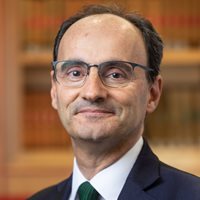
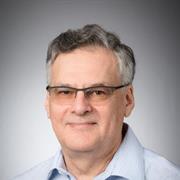
Eduardo Baistrocchi is an Associate Professor of Law at the LSE Law School, part of the London School of Economics and Political Science. He specializes in international and corporate taxation, with a focus on tax treaty disputes, global tax governance, and transfer pricing. His research has been published in leading journals and has authored a seminal treatise on tax treaty disputes in the G20. Prior to academia, he served as a Law Clerk to Argentina’s Supreme Court Chief Justice Petracchi and practiced tax law in Buenos Aires and São Paulo. He is a Chevening Scholar and Fulbright Scholar, and held Distinguished Visiting Professorships at FGV Direito São Paulo, Northwestern University, and the University of Toronto. Education: Law degrees from Universidad de Buenos Aires Harvard Law School London School of Economics Research interests include analyzing tax treaty mechanisms, global tax hubs, and the evolution of international tax regimes. His recent work explores structural reforms to global tax governance, the role of the G7 in international taxation, and theoretical frameworks for corporate income taxation. He has contributed to understanding tax dispute resolution patterns across jurisdictions, particularly in emerging economies. His articles highlight themes such as the impact of tax hubs on global competitiveness, the need for modernized tax treaties, and the interplay between economic power shifts and tax policies. Awards include prestigious fellowships that underscore his academic contributions. His work bridges legal frameworks with economic realities, influencing both policy and practice in international taxation.
Sharon Lubkin is a Professor in the Department of Mathematics at North Carolina State University (NCSU). Her research focuses on modeling biological systems, continuum mechanics of tissues, and morphogenesis. She is affiliated with the Quantitative and Computational Developmental Biology research cluster and the NCSU/UNC Department of Biomedical Engineering. Dr. Lubkin holds roles such as SIAM representative to the Joint Committee on Women in Mathematics (2017-23) and former Publications Chair of the Society for Mathematical Biology (2004-2016). Education: Ph.D. in Applied Mathematics from Cornell University (1992). Research Interests: Modeling biological systems Continuum mechanics of soft tissues Mechanobiology and drug delivery Biomechanics of morphogenesis Collaborations with experimental biologists and engineers Funding: Supported by the Simons Foundation, NSF, and NIH. Advises students in Biomathematics, Applied Mathematics, Biomedical Engineering, and Mechanical Engineering. Professional Activities: National SIAM committee roles Leadership in mathematical biology organizations Active in promoting interdisciplinary collaborations
A/Professor Dong Ngoduy is the Head of Transport Engineering and an Associate Professor in Transport Engineering at Monash University's Department of Civil and Environmental Engineering. He holds a PhD in Traffic Flow Theory from TU Delft (Netherlands) and an MSc from Linköping University (Sweden). His research focuses on Connected and Autonomous Vehicles (CAVs), Traffic Flow Theory, Data Fusion, and Urban Network Optimization. He received the EPSRC Advanced Fellow Award (2011-2016) and chairs the Connected Traffic Systems Lab. His current work aims to develop smart city platforms for multi-modal transport infrastructure management. Education: MSc in Traffic Engineering, Linköping University PhD in Traffic Flow Theory, Delft University of Technology Research Expertise: Traffic Flow Theory Data Fusion Techniques Urban Network Optimization CAV Dynamics Grants & Awards: EPSRC Advanced Fellow Award (2011-2016) EU Horizon 2020 Project (~$1.2M) Australian Research Council (ARC) Assessor Teaching: Courses include Transport and Traffic Engineering (CIV2282) and Autonomous Vehicle Systems (CIV4100). Labs & Teams: Leads the Connected Traffic Systems Lab and collaborates on projects like Digital Twins for urban networks.
Professor Mattias Jakobsson is a faculty member at Uppsala University's Department of Organismal Biology (Human Evolution), holding a PhD and Docent title. His research focuses on population genetics, human evolution, and genomic analysis of modern and ancient human populations. Jakobsson leads a lab using computational methods to study genomic variation, migration patterns, and adaptation in Stone Age Eurasia and sub-Saharan Africa. Key projects include investigations into hunter-gatherer populations, plague infections in Neolithic farmers, and genetic continuity in Scandinavia. Education: PhD (exact field unspecified), Docent Lab: Jakobsson Lab (website: jakobssonlab.iob.uu.se ) Research interests emphasize applying genomic data to understand human migration, admixture, and adaptation. Recent work highlights studies on HLA diversity in Thai hunter-gatherers, ancient European genetic shifts, and plague dynamics in Neolithic communities. Collaborations span global archaeological and genomic projects.
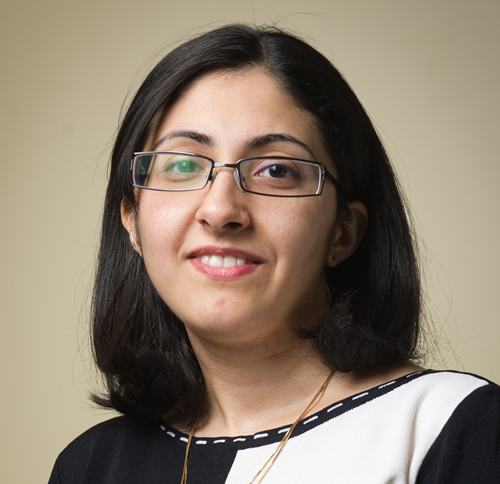
Shabnam Raayai is an Assistant Professor in the Department of Mechanical Engineering at Boston University. Her research focuses on fluid mechanics, aerodynamics, and flow control, particularly exploring bio-inspired designs such as riblet surfaces and V-formation dynamics. She holds a PhD and MS in Mechanical Engineering from MIT. Education: PhD (MIT, 201?), MS (MIT, 201?) Her research integrates experimental, theoretical, and computational approaches to study drag reduction techniques and fluid dynamics in nature-inspired systems. Key interests include fluid-solid interactions, laser diagnostic methods, and complex geometric boundary analyses. Her recent work examines riblet-covered surfaces for drag reduction, bio-inspired formations, and multi-propeller flow dynamics. She has pioneered techniques like double-light-sheet PIV for studying opaque object flows and volume-controlled cavity expansion for soft material analysis. Awards: Rowland Fellowship (2019-2025) Andreas Acrivos Dissertation Award (2018) Rising Stars in Mechanical Engineering (2018) Her grants and advising activities are not detailed here, but her research team actively explores nature-inspired fluid dynamics applications in engineering systems.
Prof. Kathrin Greiff is a University Professor at the Chair of Anthropogenic Material Cycles and Institute of Processing, Coking, and Briquetting at RWTH Aachen University's Faculty of Georesources and Materials Engineering. Her work focuses on advancing circular economy principles through innovative recycling technologies, sensor-based material flow analysis, and sustainability assessments. She leads research initiatives like the DACE Academy and the Material Assessment Lab, which explore sensor integration, waste valorization, and decarbonization strategies in industrial processes. Her research interests include optimizing mechanical recycling processes for plastics and construction materials, developing machine learning-driven sorting systems, and evaluating environmental impacts across material lifecycles. Recent projects highlight applications in lightweight packaging waste, steel forging decarbonization, and polystyrene insulation recycling. She collaborates closely with industry to translate research into scalable solutions for sustainable material management. Prof. Greiff’s publications emphasize technical feasibility studies, life cycle assessments, and cross-disciplinary approaches to circular economy challenges. Her work contributes to policy frameworks for sustainable resource use and eco-design principles in manufacturing.
Alejandro Henao is a Researcher in Civil Engineering at the National Renewable Energy Laboratory (NREL), specializing in on-demand mobility systems. His work focuses on optimizing emerging transportation modes, curb management, and performance metrics for mobility and energy efficiency. He has presented extensively at national and international conferences. Current Research Areas: On-demand mobility, ride-sourcing, ride-hailing (e.g., Uber/Lyft), curb management, mobility optimization, energy efficiency metrics Geographic Focus: Texas (Houston, Arlington, Austin), Denver, Colorado Methodologies: Case studies, spatial-temporal modeling, behavioral analysis, policy frameworks His publications and presentations demonstrate a consistent focus on understanding transportation network companies' impacts on urban mobility, vehicle ownership, and energy consumption. Henao also explores sustainable public transport solutions using clean energy technologies. Recent research outputs (2023-2025) emphasize automated and electrified on-demand mobility, curb space allocation optimization, and energy productivity metrics for transit systems. Key trends include integration of renewable energy in transportation, resilience planning for mobility networks, and behavioral responses to shared mobility services. Henao's work combines empirical studies with analytical modeling to provide actionable insights for cities seeking to reduce auto dependence and improve mobility efficiency. His collaborations span academic institutions, municipal governments, and transportation agencies across the United States. At NREL, he leads technical reports and presentations on mobility innovation, focusing on sustainable infrastructure adaptation for evolving transportation needs. His research often involves multi-disciplinary approaches to transportation challenges.
Professor Asif Gill is Head of Discipline for Software Engineering at the School of Computer Science, University of Technology Sydney (UTS), where he was promoted to Professor of Computer Science in January 2024. He also serves as Director of the DigiSAS Research and Innovation Lab and is actively involved in the Global Big Data Technologies Centre at UTS. As a founder of both the DigiSAS Lab and the Future Generation Enterprise Architecture Community of Practice (FGEA CoP), he has established integrated teaching-research-engagement frameworks that translate academic research into practical applications while enhancing graduate employment opportunities. Professor Gill's research interests span Adaptive Enterprise Architecture , Agile Software Development , and Design Science Research & Innovation , with a particular focus on architecting large-scale data-intensive enterprise software systems. His work addresses challenges across academia, industry, government, and society, with significant contributions to AI systems architecture, digital identity management, and enterprise knowledge graphs. His applied research has resulted in numerous collaborations with organizations including the Reserve Bank of Australia, Revenue NSW, Capsifi, Data Zoo, and the NSW Department of Planning, Industry and Environment. His publication record includes 3 books and over 190 articles in major academic journals such as IEEE Transactions on Professional Communication, Information and Management, and Information Systems. His recent work demonstrates a consistent focus on cutting-edge topics in enterprise architecture, AI systems, and digital identity, with multiple publications appearing in 2024-2025. His research trajectory shows a clear evolution from foundational work in agile software development toward more sophisticated integration of AI, enterprise architecture, and data governance. Fellow of the Australian Computer Society (ACS) Fellow of DSE (ESCP Center for Design Science in Entrepreneurship) Senior Member IEEE Associate Editor, IEEE Transactions on Technology & Society Associate Editor, Springer Nature Discover Data journals Member, Data Sharing Committee, IFIP Technical Committee 8.1 Member, Standards Australia Software and Systems Engineering Committee IT-015 Professor Gill has successfully secured numerous research grants from 2019-2026, totaling significant funding for projects related to digital identity, enterprise architecture, and AI systems. His approach emphasizes industry-academia collaboration, with many projects involving direct partnerships with government agencies and industry organizations. He has supervised multiple PhD and Master's students through industry-sponsored scholarships and maintains active collaborations with researchers across multiple institutions. Leading the DigiSAS Research and Innovation Lab, Professor Gill has created an environment that bridges theoretical research with practical implementation. The lab focuses on developing frameworks and tools for adaptive enterprise architecture, with particular emphasis on AI-enabled systems, data governance, and digital identity solutions. His work on the Data Satellite Architecture represents a significant contribution to combating data pollution in federated digital ecosystems.
Steve Oney is an Associate Professor at the University of Michigan School of Information and Computer Science and Engineering (by courtesy). His research focuses on enabling and encouraging more people to write and customize computer programs by creating new programming tools and exploring usability issues in programming environments. With a strong background in Human-Computer Interaction, he bridges the gap between theoretical research and practical applications in programming education, accessibility, and developer tool design. Dr. Oney completed his Ph.D in Human-Computer Interaction at Carnegie Mellon University's Human-Computer Interaction Institute under Professor Brad Myers and Dr. Joel Brandt. He also earned an M.Eng in Computer Science and SB degrees in Computer Science and Mathematics from MIT. His research spans multiple interconnected areas with a unifying theme of making programming more accessible and understandable. Key focus areas include programming education tools that help instructors understand student code at scale, web automation systems that simplify repetitive tasks, accessibility research addressing challenges faced by visually impaired programmers, and innovative VR programming environments. His work consistently emphasizes the human aspects of programming, exploring how tools can better support diverse programming needs and contexts. Dr. Oney's research output shows a strong trajectory toward increasingly sophisticated tools that integrate AI capabilities while maintaining a focus on human-centered design principles. Recent publications demonstrate growing emphasis on inclusive design, educational applications, and the integration of generative AI in programming environments. L@S 2024 Best Paper Award for CFlow CHI 2023 Honorable Mention for VizProg UIST 2024 Best Short Paper (EdCode) VL/HCC 2019 Best Short Paper Recognition for Contribution to Diversity and Inclusion (CSCW 2021) UMSI Excellence in Instruction Award (2021) University of Michigan President's Postdoctoral Fellowship (2015) As a mentor, Oney advises multiple Ph.D. students and postdoctoral researchers, with several successful graduates including Dr. Lei Zhang (June 2024). His research has secured over $1 million in funding from the National Science Foundation, Google, and Adobe, supporting projects that address critical challenges in programming education, accessibility, and developer tool design. He leads the Programming Tools Lab at the University of Michigan, where his team develops innovative tools that help programmers work more effectively. Current projects focus on AI-enhanced programming education, web automation, accessibility for diverse user groups, and next-generation programming environments for virtual and augmented reality.
Dr. Vivian Tunn is an Assistant Professor in Innovation Studies at the Copernicus Institute of Sustainable Development, Faculty of Geosciences, Utrecht University, a position she has held since January 2022. Her work bridges academic research and practical policy implementation in sustainability transitions, leveraging extensive experience in Dutch circular economy policy through roles at Statistics Netherlands and collaborations with organizations including UNICEF, DHL, Mercedes-Benz, and Shell. Education PhD in Circular Business Models for Consumer Markets, Technical University Delft (2020), funded by H2020 Marie Curie Innovative Training Network Circ€uit MSc in Innovation and Technology Management, University of Bath (2015) Research Interests Tunn specializes in circular economy dynamics with emphasis on consumer behavior in circular business models, rebound effects, and sustainable innovation. Her research investigates how business models contribute to genuine sustainability, consumer adoption barriers, and the integration of behavioral insights into environmental assessments. She examines practical implementations across sectors including packaging, fashion, and mobility services, focusing on the tension between theoretical sustainability claims and real-world consumer practices. Publication Trends Her 2022-2025 publications reveal a cohesive research trajectory centered on consumer-level impacts of circular systems. Key patterns include systematic analysis of rebound effects across multiple contexts (product care, clothing libraries, B2B sharing), methodological innovation combining life cycle assessment with behavioral data, and policy-relevant frameworks for monitoring circular transitions. Her work consistently bridges business strategy, environmental science, and social practice theory, with increasing emphasis on gender dimensions and systemic policy interventions. Scientific Awards No scientific awards were documented in the provided sources. Advising and Grants While specific current advising responsibilities aren't detailed, her role involves supervising students within Utrecht University's sustainability programs. Her research has been supported by significant grants including the Dutch national circular economy monitoring program at Statistics Netherlands and the EU H2020 Marie Curie Circ€uit network during her doctoral studies, demonstrating consistent success in securing competitive public funding for sustainability research. Labs and Teams Tunn operates within the Innovation Studies group at Utrecht University's Copernicus Institute, contributing to the Pathways to Sustainability (PtS) research theme focused on circular economy transitions. She maintains active collaborations with Statistics Netherlands for policy-relevant monitoring and participates in international networks connecting academic researchers with industry partners across the circular economy ecosystem.
Yoram Cohen is a Professor in the Department of Chemical and Biomolecular Engineering at the University of California, Los Angeles (UCLA). He leads the Polymer and Separations (PolySep) Research Laboratory, focusing on advanced water treatment technologies. Ph.D. in Environment and Sustainability D.Env. in Environmental Science and Engineering B.S. in Environmental Science His research spans membrane technology , surface nano-structuring , and environmental impact analysis . Key areas include: Reverse osmosis and ultrafiltration membrane design Surface crystallization and fouling mitigation Electroactive polymers for contaminant removal Nanoinformatics for environmental health Mathematical modeling of contaminant transport Recent publications emphasize machine learning integration in desalination systems, high-recovery water treatment , and sustainable membrane technologies . His work addresses challenges in decentralized water systems for disadvantaged communities. Pritzker Emerging Environmental Genius Award The PolySep Lab has pioneered innovations in: Surface-modified membranes with polymer brush layers Real-time scaling detection methods Self-adaptive control systems for water treatment
Jonathan T. Fingerut serves as Professor and Chair of the Department of Biology at Saint Joseph's University in Philadelphia, where he also directs the Environmental Science and Sustainability Program. His research integrates hydrodynamics and behavioral ecology to investigate spatial distribution patterns of aquatic invertebrates, with dual focus on black fly larvae in stream ecosystems and invasive spotted wing drosophila in agricultural contexts. His academic foundation includes: BA in Biology (1994) from Cornell University PhD in Biology (2003) from the University of California, Los Angeles Dr. Fingerut's research program examines how flow environments shape invertebrate ecology through two primary avenues: (1) silk-mediated dispersal mechanisms in Simulium tribulatum larvae that enable habitat selection in turbulent streams, and (2) population dynamics of Drosophila suzukii affecting soft fruit crops. His work bridges fluid mechanics, entomology, and ecological theory to address fundamental questions about larval settlement while providing applied insights for invasive species management. Laboratory exercises developed in his biomechanics research demonstrate his commitment to innovative science education. Analysis of his 14 publications (2003-2015) reveals consistent emphasis on hydrodynamic-biological interactions across freshwater and marine systems. Key contributions include elucidating silk's role in larval dispersal, quantifying flow effects on invertebrate behavior, and developing novel methods for studying aquatic ecosystems. His collaborative approach—evident in partnerships with the McRobert lab on drosophila research—produces transdisciplinary insights spanning from molecular tagging techniques to ecosystem engineering. He leads an active research laboratory investigating silk production mechanisms in black flies and overwintering strategies of invasive drosophila. Current projects combine field observations with controlled experiments to understand how climate change may alter hydrodynamic constraints on aquatic invertebrates while developing sustainable management approaches for agricultural pests through population genetics studies.
Nikolaos Kourentzes is a Professor of Informatics at the University of Skövde , specializing in forecasting and operations research. His work bridges theoretical advancements in time series analysis with practical applications in supply chain management, tourism demand, and renewable energy forecasting. Academic Rank: Professor Department: Department of Information Technology Research Interests: His research focuses on hierarchical and temporal forecasting methodologies, integrating macroeconomic indicators into demand planning, inventory optimization, and machine learning applications. He explores forecast reconciliation, shrinkage estimators, and the role of expert judgment in predictive analytics. Recent Publications: Highlights include advances in hierarchical forecasting with leading indicators, probabilistic forecasts during crises like the pandemic, and complex smoothing techniques. His work spans journals such as Omega , International Journal of Forecasting , and European Journal of Operational Research . Collaborations: Kourentzes collaborates with researchers globally, including George Athanasopoulos, Rob Hyndman, and Robert Fildes, across domains like tourism analytics, tire industry forecasting, and public health modeling.
Alan Wassyng is a Professor in the Department of Computing and Software at McMaster University's Faculty of Engineering. With over four decades of academic contributions, he specializes in formal methods, safety-critical systems, and software assurance cases. Key research intersections: Automotive software safety Medical device software certification Cyber-physical systems engineering Model-driven development with domain experts His scholarly work emphasizes rigorous methodologies for software verification, particularly through tabular expressions and Workflow+ models. Recent projects include a $2M GM Canada partnership to advance automotive safety systems. Teaching leadership spans interdisciplinary capstone projects in biomedical engineering, covering software design, safety-critical development, and mechatronics applications.
James Millington is a Senior Lecturer in the Department of Geography at King's College London, specializing in spatial ecological and socio-economic processes through bespoke modelling tools. Appointed Lecturer in 2013 and promoted to Senior Lecturer in 2017, he previously held a Leverhulme Early Career Fellowship at King's and was a Visiting Postdoctoral Associate at Michigan State University's Center for Systems Integration and Sustainability. PhD in Geography, King's College London (2007) MSc in Environmental Monitoring, Modelling and Management (with Distinction), King's College London BSc (Hons) in Geography (First class), King's College London Millington's research centers on landscape ecology and spatial socio-ecological systems , employing advanced modelling to analyze interactions between human activities and environmental processes. His work addresses critical challenges in biodiversity conservation , deforestation dynamics , and sustainable food systems , with significant focus on Amazonian regions and global trade impacts. Recent studies integrate geographical information systems with socio-economic data to develop actionable conservation strategies. His 2023 publications reveal a cohesive research trajectory examining Brazil's agricultural trade-deforestation nexus, highlighting systemic failures in private land conservation and complex soybean trade relationships. These works demonstrate interdisciplinary convergence of environmental policy , trade economics , and ecosystem management , establishing patterns of spatial vulnerability in tropical conservation efforts. Fellow of the Royal Geographical Society Leverhulme Early Career Fellowship Millington serves as Associate Editor for Plant Ecology and Land journals, reflecting his scholarly influence. While specific grant details aren't provided, his Leverhulme Fellowship indicates success in competitive funding acquisition. His editorial roles and society fellowship demonstrate active contribution to academic discourse and peer review processes. Previously affiliated with Michigan State University's Center for Systems Integration and Sustainability, Millington's current work operates within King's College London's Geography Department infrastructure, leveraging institutional resources for spatial modelling research though specific contemporary lab affiliations aren't detailed.