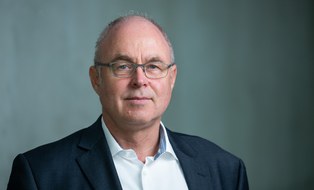
Jochen Fröhlich is a Professor at the Department of Fluid Mechanics, Technische Universität Dresden (TUD), College of Engineering. His research focuses on computational fluid dynamics (CFD), fluid-structure interaction, and multiphase flows. University: Technische Universität Dresden Department: Fluid Mechanics Academic Rank: Professor His recent work emphasizes large-eddy simulation (LES) , direct numerical simulation (DNS) , and turbulent flow analysis in systems like aquatic canopies, compressor cascades, and sediment transport. Key applications include industrial cleaning processes , bubble dynamics , and microfluidic particle migration . The 15 most recent publications highlight his expertise in fluid-structure interaction , collision modeling , and CDF-driven process optimization . Subfields span turbulent boundary layers , non-spherical particle dynamics , hydrodynamic drag prediction , and flexible structure simulations .
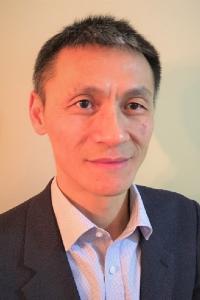
Weiguo Xie is a Professor at the Swenson College of Science and Engineering , University of Minnesota Duluth. With a PhD in Chemical Engineering from UMIST (UK), he has held academic/research positions at City University London, University of Manchester, University of Queensland, and University of Exeter. Education : Ph.D. (UMIST), M.S. & B.S. (Tsinghua University) Expertise : Mathematical modeling, simulation, optimization, and control in chemical/mineral processing His research focuses on mathematical modeling and computational simulation for chemical engineering systems, including optimization of large-scale processes , real-time measurement techniques , and separation processes . Recent work spans nanocrystalline metal production , flotation cell turbulence analysis , and nonlinear MPC systems . Scientific awards include the 2017 UCLA Smart Manufacturing Fellowship and 2008 Green Gown Award. He teaches courses on thermodynamics, particle technology, and minerals processing.
Andrés Perales Agüera serves as a Full Professor at the Polytechnic University of Cartagena (UPCT), Spain, with primary affiliation to EICIM. His academic work focuses on structural development and quality assurance systems for engineering degree programs, including relational mapping of academic titles and optimization of teaching guides at institutional level. Research interests include: Curriculum Development and Academic Program Structuring Quality Assurance Frameworks in Technical Education Safety Protocols for Engineering Laboratories Mineral Processing Techniques Publication analysis reveals a distinct career evolution: early technical contributions in mineral processing (1987) and laboratory safety (2000) transitioned toward educational administration, with recent works (2020-2023) establishing systematic approaches for degree program organization and teaching material quality at UPCT. This shift reflects broader trends in engineering education leadership. No information regarding student advisement, research grants, scientific awards, or laboratory teams was present in the source material.
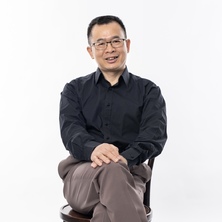
Dr. Naras Hanumanth Rao is a Senior Research Associate and ARC DECRA Fellow at the Algae & Organic Matter Lab (AOM Lab) within the Enviro Lab Cluster at the School of Chemical Engineering, University of New South Wales (UNSW). He holds a PhD in Chemical Engineering from UNSW and has previously worked as a Marie Curie Fellow at KU Leuven, Belgium. Education: BE in Chemical Engineering (UW-Madison, India), PhD in Chemical Engineering (UNSW, 2018) Current Position: ARC DECRA Fellow and Senior Research Associate at UNSW Previous Role: Marie Curie Fellow at KU Leuven, Belgium (2021-2024) Rao’s research focuses on optimizing resource reuse through advanced particle separation techniques in water treatment, mining, and biotechnology. His work addresses polymer/nanomaterial design for algal separation, DOM characterization, climate impacts on catchments, and novel online monitoring tools. He has attracted over $1.5 million in competitive funding and authored numerous peer-reviewed articles. His recent publications emphasize flocculation, dissolved air flotation (DAF), and plasma-activated water for algal/cyanobacterial separation. Grant highlights include the 2024 UNSW Research Infrastructure Grant for FlowCAM Nano and the 2023 ARC DECRA project on multifunctional polymers. Key Awards: 2023 ARC DECRA 2021 Marie Curie Fellowship 2018 Dean's List for Outstanding PhD Thesis 2016 UNSW PRSS Award Rao has co-supervised 12 PhD, undergraduate, and master’s students, including Dr. Xiaoran Chu and Angelina. He collaborates with water industry partners like Sydney Water and SPARC Technologies and serves as a Marie Curie Ambassador for female researchers in Europe. Teaching includes Transport Phenomena and Chemical Engineering Design.
Professor Yongjun Peng is a Professor at the School of Chemical Engineering, University of Queensland. He holds a PhD from the University of South Australia (2002) and has expertise in froth flotation, mineral processing chemistry, and electrochemistry. His research focuses on optimizing low-quality mineral processing using saline water and addressing challenges in particle interactions, slime coating, and froth destabilization. Key appointments: COREM Research Centre (Canada, 2002–2006), BHP Billiton Perth Technology Centre (2006–2009) Technologies commercialized: GoldRecover (Kinetic Group), de-aerating froth products (DADI Engineering), rapid coal oxidation measurement (Interchem) His research interests include galvanic interactions in grinding, sulfidization processes for oxidized ores, and green flotation chemistry using biopolymers. Peng has developed patented technologies to improve flotation recovery rates and reduce reagent consumption. He leads projects funded by ARC, ACARP, and industry partners like Newmont and Newcrest. Major awards include the ACARP Research Excellence Award (2022) and NSERC Industry Fellowship. He actively supervises PhD and Master’s students focusing on froth dynamics, reagent interactions, and particle behavior in flotation systems.
Professor Anh Nguyen is a faculty member at the School of Chemical Engineering, University of Queensland, holding the former BMA Chair (2007–2017). He has held academic positions at the University of Newcastle (Australia), University of Utah (USA), and Technical University of Kosice (Czechoslovakia). His research focuses on colloid and interfacial science, mineral processing, saline water applications, and gas hydrates. He leads the Mineral Processing and Interfacial Processes group and has published over 350 journal articles, including a research book on flotation colloidal science. Research interests include bubble-particle interactions, surfactant adsorption, and applications in coal/mineral processing, foliar fertilizers, and environmental technologies. His funding comes from industry partners (BHP Billiton, Rio Tinto) and agencies (ARC, ACARP). Teaching focuses on colloid chemistry, flotation, and process modeling. Awards include the ARC Queen Elizabeth II Fellowship and Alexander von Humboldt Fellowship. Recent articles emphasize flotation mechanisms, nanobubble effects, and gas hydrate formation. He supervises numerous PhD students and has led over 50 funded projects. His work bridges fundamental science and industrial applications, addressing global resource efficiency and sustainability challenges.
Marissa Gray is an Assistant Professor (Research) in the School of Engineering at Brown University and serves as the Director of the Biomedical Engineering Master's Program. She holds affiliations with the departments of Molecular Pharmacology, Physiology and Biotechnology and Radiation Oncology. Her research focuses on integrating electrical engineering principles with clinical applications, including wearable sensor technology for anxiety detection in cancer patients and DoD-sponsored projects like dry EEG electrode headsets and smart personal flotation devices. Dr. Gray earned her B.S. in Biomedical Engineering from Worcester Polytechnic Institute (2009), and her M.E. and Ph.D. from Stevens Institute of Technology (2014). She previously held roles as Teaching Assistant Professor and Associate Chair of Graduate Programs at Stevens. Her research interests span clinical engineering, wearable devices, and sensor technology. She collaborates with experts in computer science, radiation oncology, and emergency medicine. Teaching responsibilities include courses like ENGN 0030 (Introduction to Engineering) and ENGN 0931L/1931L (Biomedical Engineering Design and Innovation II). Professional affiliations include the Biomedical Engineering Society and IEEE. Gray’s work emphasizes translating engineering innovations into clinical solutions. Current projects explore expanding wearable sensor applications beyond anxiety monitoring. She actively contributes to biomedical engineering education through curricular innovation and industry partnerships.
Charles Maldarelli is a Professor in the Department of Chemical Engineering at the City College of New York (CCNY), with affiliations at the Levich Institute. His research spans colloid science, interfacial phenomena, rare earth element recovery, and eco-friendly separation technologies. He has pioneered work in peptide-surfactant interactions for environmental remediation, foam stabilization, and microfluidic applications. University: City College of New York Department: Chemical Engineering Affiliations: Levich Institute Research Interests: His work focuses on molecular-level engineering of interfaces for sustainable processes. This includes: Design of lanthanide-binding peptides for eco-friendly rare earth recovery via foam fractionation Mechanistic studies of nanoparticle-peptide synergy in interfacial separations Development of colloidal motors and self-propelled systems for targeted transport Investigations into foam stability, coarsening prevention, and CO2 capture technologies Environmental applications of surfactants and sacrificial amphiphiles for oil spill mitigation Publications: Recent articles highlight advancements in rare earth recovery using peptide surfactants, nanoparticle-assisted foam separations, and colloidal hydrodynamics. His work bridges fundamental interfacial science with practical environmental and biomedical applications.
Claude Nambaje serves as a Postdoctoral Fellow in the Department of Earth Sciences at the University of New Brunswick's Fredericton campus, focusing on critical metal resources and tectonic processes across global geological settings including Rwanda, Canada, and India. His research spans multiple interconnected domains in economic geology: Mineral System Analysis : Investigating lithium, tin, tantalum, and niobium mineralization in pegmatites and hydrothermal systems, with emphasis on structural controls and deposit genesis Geochemical Processes : Applying advanced techniques like SHRIMP U-Pb dating and micro-characterization to understand crustal evolution and ore formation Sustainable Resource Development : Developing novel mineral processing methods using biopolymers for cassiterite beneficiation and tailings reclamation Tectonic Frameworks : Reconstructing Precambrian to Neoproterozoic geological events through studies of Archean crust and oxygenation triggers Publication trends (2018-2025) reveal consistent focus on East African geology (particularly Rwanda's Karagwe-Ankole Belt) and Canadian mineral systems, with growing emphasis on critical metals for clean energy technologies. His work integrates field geology, laboratory experimentation, and theoretical modeling to address mineral exploration challenges. No scientific awards or grant funding details are documented in the current sources. Academic advising responsibilities and laboratory facilities are not specified in available materials, though collaborative research with Rwandan and Canadian institutions is evident through publication contexts.
Professor Sarah Harmer is a leading applied physicist at Flinders University's College of Science and Engineering, affiliated with the Physical Sciences department. She holds academic roles as Director of Flinders Microscopy and Microanalysis and Deputy Director of the Flinders Institute for Nanoscale Science and Technology. Her research focuses on surface spectroscopic analysis using advanced techniques including Photoemission Electron Microscopy (PEEM) and Synchrotron X-ray Photoelectron Spectroscopy (SXPS). Education: BAppSci (UniSA, 1999), PhD (Ian Wark Research Institute, UniSA, 2003). Professional milestones include establishing Australia's first Photoemission Electron Microscope (NanoESCA III) and securing major grants totaling over $30M. Notable awards include the 2024 Vice-President's Excellence in Teaching Award and 2022 Winnovation SA Science Award. Research interests span mineral surface interactions, biomining, and nanotechnology applications. Key grants include CRC TiME Mine Closure ($10.2M), ARC LIEF Spectromicroscopy Facility ($920k), and ARC Future Fellowship ($648k). Supervised students have received accolades such as best poster awards and thesis competitions. Labs/Teams: Leads Flinders' microscopy facilities and contributes to national synchrotron initiatives. Engaged in policy roles including the Premier's Science and Innovation Council and Australian Synchrotron committees.
Kerry McPhedran is a Professor and Saskatchewan Centennial Enhancement Chair in the Department of Civil, Geological and Environmental Engineering at the University of Saskatchewan's College of Engineering. She also serves as the Graduate Chair for her department. Her research focuses on municipal and environmental engineering challenges, particularly Indigenous water projects, wastewater treatment optimization, stormwater management, and biochar-based contaminant remediation. Education: PhD in Environmental Engineering, University of Windsor (2006–2012) MSc in Biology, University of Windsor (1999–2001) BSc (Honours) in Biology, University of Windsor (1994–1999) BASc in Environmental Engineering, University of Windsor (2002–2005) BSc in Biology, University of Western Ontario (1995–1996) Research Interests: Dr. McPhedran’s work addresses critical environmental issues such as municipal wastewater treatment innovations, biogas production enhancement, and the fate of emerging contaminants like PFAS and pharmaceuticals. She develops sustainable technologies using biochar and advanced oxidation processes, with a focus on cold-climate applications. Her Indigenous-focused projects emphasize equitable water infrastructure solutions. Public Health Contributions: Her recent work uses wastewater surveillance to track SARS-CoV-2 variants and inform public health strategies, demonstrating interdisciplinary impact. She also explores viral distribution in wastewater systems and antibiotic resistance mitigation. Infrastructure and Policy: Dr. McPhedran advocates for socially inclusive infrastructure, particularly for Indigenous communities, and evaluates the economic and environmental costs of water systems in First Nations regions.
Corby Anderson is a Professor of Mining Engineering and holds a joint appointment in the Department of Metallurgical and Materials Engineering at the Colorado School of Mines. He serves as Director of the Kroll Institute for Extractive Metallurgy and previously held the Harrison Western Professorship from 2009 to 2019. His expertise spans extractive metallurgy, mineral processing, waste minimization, and recycling, with a focus on critical minerals like rare earth elements, cobalt, and copper. He has led the development of advanced mineral processing technologies, including the Center for Advanced Mineral and Metallurgical Processing at Montana Tech. His research emphasizes sustainable resource utilization, such as automotive paint sludge recycling for magnetite pelletization and innovative approaches to rare earth beneficiation. He has contributed to industry-relevant studies on ore characterization, hydrometallurgical leaching, and environmental-friendly processing methods. Key projects include optimizing cobalt recovery from Idaho’s Iron Creek deposit and developing methods for recycling lithium-ion battery materials. His work bridges academic research with industrial applications, addressing global challenges in mineral supply chains and waste management. Anderson collaborates extensively with industry partners to advance technologies such as solvent extraction, flotation, and pelletizing systems. His contributions have shaped strategies for domestic critical mineral production and circular economy initiatives. The Kroll Institute under his leadership focuses on solving complex metallurgical challenges related to resource scarcity and sustainability.
Mark Bowron is a Lecturer at the South Dakota School of Mines & Technology in the Department of Mining Engineering and Management. He holds a B.S. in Civil Engineering from Purdue University and an M.S. in Mineral Economics from the Colorado School of Mines. With over 40 years of experience in engineering, operations, management, and consulting across surface and underground mining, flotation mineral processing, and cyanide heap leach projects, he emphasizes practical knowledge in mentoring new mining engineers. B.S. , Purdue University M.S. , Colorado School of Mines in Mineral Economics His research and teaching focus on integrating hands-on industry experience with academic preparation, covering areas such as mining operations, mineral economics, and engineering management. Notably, he has served on the Board of Directors of a publicly traded gold mining company and advocates for learning through real-world application of engineering principles. Scientific Award: John & Jeane Hull Professor Bowron’s teaching philosophy centers on bridging academic training with practical industry challenges, drawing from his career progression from underground miner to VP & General Manager in mining companies. He highlights the importance of experiential learning and professional readiness for aspiring engineers.
Hakan Bakir is a Research Fellow at the Centre for Tropical Crops and Biocommodities (CTCB) within the School of Mechanical, Medical and Process Engineering at Queensland University of Technology (QUT). With over 18 years of professional experience across government and private sectors, including 8 years of specialized research and consulting in the sugar industry, Bakir focuses on colloidal and solution chemistry within Separation Technologies. His educational background includes a Bachelor of Chemical Engineering from The University of Melbourne Bakir's research spans process engineering systems with expertise in Process Flow Diagrams, Heat and Mass Balances, Process and Instrumentation Diagrams, and equipment design. His work has led to significant advancements in sedimentation and flotation clarifiers for sugar mills worldwide, including installations in Australia, India, Indonesia, Taiwan, Myanmar, and South American countries. He has also developed new clarifier designs and provides training for sugar technologists in clarification and mud filtration. Analysis of his publication record reveals consistent focus on sugar processing optimization, with recent work emphasizing sensor technologies for centrifugal operations, clarifier performance improvements, bagasse processing, and environmental sustainability. His research demonstrates strong industry collaboration, particularly with sugar mills across multiple continents, addressing practical engineering challenges in juice clarification, evaporation, and filtration systems. Bakir has been instrumental in numerous research projects funded by Australian Competitive Grants, including Advanced Computer Simulation of Sugar Factories, Supervisory/Advisory Control systems, bagasse storage optimization, and mud filtration technology evaluation. His work bridges theoretical engineering principles with practical industrial applications, resulting in tangible improvements for sugar manufacturing operations globally.
Prof. Dr. Andreas Meister is a full Professor in the Institute of Mathematics at the University of Kassel, Germany, where he leads research in the numerics of partial differential equations. He is affiliated with Department 10 and actively contributes to the Analysis and Applied Mathematics working group. His work bridges theoretical numerical analysis with practical applications in engineering, environmental modeling, and public health. His primary research interests include: Numerical methods for partial differential equations Finite volume and discontinuous Galerkin methods Iterative solvers and preconditioning techniques High-order time integration, especially Patankar-type and Runge-Kutta methods Scientific computing and parallelization Modeling of fluid dynamics, phase transitions, and pandemic processes Although no individual publications are listed, his extensive involvement in DFG and third-party funded projects indicates a strong research output in computational mathematics and applied numerical analysis, particularly in time integration schemes and high-performance simulation algorithms. Prof. Meister has been actively involved in teaching and knowledge transfer through numerous international compact courses and workshops, including at institutions like the University of Stuttgart’s HLRS, Leibniz Supercomputing Center, University of Maryland, and Universidad de la Frontera. These courses focus on iterative solvers, parallelization, and numerical fluid mechanics, reflecting his expertise in scalable computational methods. He leads a research team and supervises doctoral students, though specific advisees are not named. His leadership extends to large collaborative projects funded by DFG, DAAD, BMBF, Fraunhofer Society, and industrial partners such as Volkswagen AG and K+S AG. These projects include: Modeling pandemic processes in Ghana Numerical methods for Schrödinger equations Simulation of viscoelastic and particle-laden flows Optimization of flotation processes in mining Development of digital tools for mathematics teacher training He is also engaged in educational innovation and international collaboration, particularly with Chile, the USA, and Indonesia. His work emphasizes bridging university mathematics with school-level education and promoting student mobility.