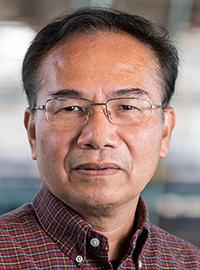
Wenrui Huang is a Professor in the Department of Civil & Environmental Engineering at Florida A&M University-Florida State University (FAMU-FSU). He holds a Ph.D. (1993), M.S. (1986), and B.S. (1982) in Civil Engineering from the University of Rhode Island and Hohai University. His research focuses on Coastal & Estuarine Hydrodynamics, Surface Water Quality Modeling, and Neural Network Applications in Hydrology. Professional Affiliations: Licensed Professional Engineer (PE), Chair of the Professional Development Committee at FAMU-FSU. Key Contributions: Published in coastal hazards, hurricane modeling, and storm surge assessment. Edited the book Coastal Hazards (2010). Research emphasizes numerical modeling of extreme events, including tsunami propagation and hurricane-induced wave dynamics. His work integrates computational methods with environmental systems analysis.
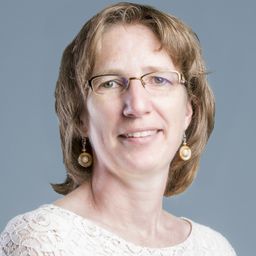
Pascale Biron is a Professor in the Department of Geography, Urban Planning and Environment at Concordia University, Montreal. She holds a Ph.D. in Geography from Université de Montréal (1995) and has been with Concordia since 1998. Her research focuses on river dynamics, stream restoration for fish habitat, flood modeling, and climate change impacts. She specializes in hydrogeomorphology, river management in agricultural watersheds, and numerical modeling of fluvial processes. Research Interests: Her work includes river restoration strategies, flood risk assessment using LiDAR technology, and the 'river freedom' concept promoting ecosystem resilience. She collaborates closely with government agencies to translate research into practical river management policies. Professional Affiliations: Canadian Geomorphology Research Group, Canadian Association of Geographers, American Geophysical Union, GRIL (Limnology Research Group), and RIISQ (Quebec Flood Risk Network). Publications & Research: Recent studies address global salmonid biomass patterns, fluvial hazard detection via machine learning, and large-scale flood modeling. She supervises 19 graduate students in Ph.D./M.Sc. programs in Geography and Environmental Studies, focusing on topics like river confluence hydraulics and agricultural stream restoration. Grants & Funding: Active projects include river dynamics in fish habitats, flood modeling for road infrastructure vulnerability, and computational fluid dynamics simulations of river flows. She also leads research on societal dimensions of river restoration and policy frameworks for flood resilience.
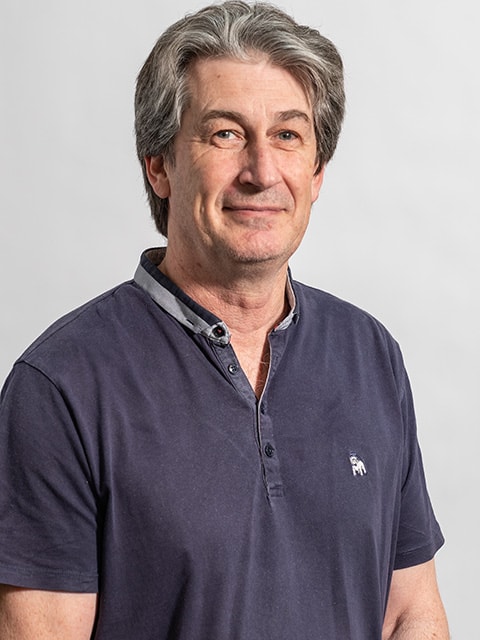
Professor Graham Sander is a Professor of Hydrology at Loughborough University, affiliated with the School of Civil and Building Engineering. His research focuses on mathematical modeling of soil erosion, unsaturated soil flow, contaminant transport dynamics, and nonlinear diffusion-convection equations. He leads the NERC-funded project on multi-dimensional soil erosion and chemical transport, collaborating with Lancaster University’s Department of Environmental Science. His academic qualifications include a BSc (Hons) and PhD. Recent research emphasizes integrating particle size-selective models to predict sediment and contaminant delivery to water bodies, supported by lab and field experiments. He has also pioneered pseudospectral methods for infiltration modeling and explored flood risk management through nature-based solutions like leaky barriers. Key contributions include advancing understanding of rainfall-driven erosion dynamics, including splash effects and rock fragment coverage impacts. His work spans experimental hydrology, numerical simulation, and interdisciplinary approaches to environmental challenges. He co-edits hydrology journals and advocates for rigorous scientific communication in the field. Grants: NERC-funded soil erosion project, Australian Research Council project on unsaturated soil flow. Labs/Teams: Collaborator with Lancaster University’s Environmental Science Department.
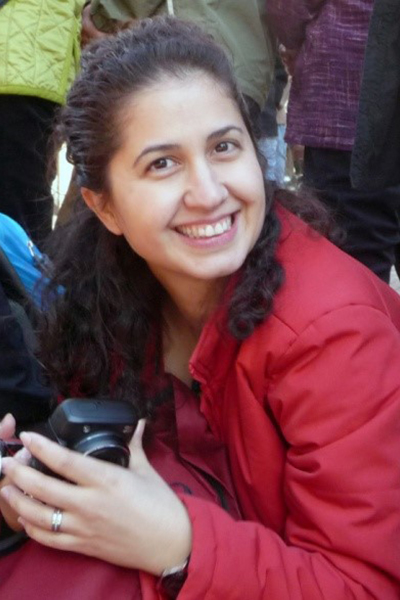
Meltem ŞENOL BALABAN is an Associate Professor in the Department of City and Regional Planning at Middle East Technical University (METU), Ankara, Turkey. She holds a dual PhD in City and Regional Planning (METU, 2009) and Urban Engineering (University of Tokyo, 2012). Her academic career includes roles as Director of METU Disaster Management Implementation and Research Center (since 2018), Minor Program Coordinator, and Board Member of the Applied Ethic Research Center. She specializes in disaster risk management, urban resilience planning, GIS-based modeling for evacuation/shelter optimization, and climate change adaptation in urban contexts. Her research focuses on flood risk mitigation in riverine cities, institutional frameworks for cultural heritage protection (e.g., UNESCO sites), and earthquake resilience strategies. Notable projects include developing Turkey's provincial risk reduction guidelines, a climate change risk assessment framework (CRAFT) for cultural heritage, and international cooperation initiatives like the UK-funded CRAFT and NET projects. She has authored over 40 peer-reviewed publications and supervised 10+ theses. Key contributions include GIS-based evacuation models for Istanbul, comparative studies of UK/Japan/Turkey disaster policies, and post-disaster resilience assessments. Awards include JICA Scholarship (2009-2012), ProVention Research Grant (2007-2008), and multiple international recognitions for her work on urban risk reduction. Her teaching portfolio includes courses on GIS in planning, disaster management principles, and urban resilience strategies.
Knut Tore Alfredsen is a Professor in the Department of Civil and Environmental Engineering at NTNU. His research focuses on cold climate hydrology, environmental impacts of hydropower, river ice dynamics, and water resource management. He leads projects like Trygg Elv (flood detection tools) and Hydro Connect (climate change mitigation in hydropower). He supervises numerous PhD and master’s students and teaches courses in hydrology, hydropower engineering, and environmental design. His work combines field measurements, data analysis, and advanced modelling, often using LiDAR and remote sensing technologies. Key projects include Sagelva research catchment studies and evaluations of environmental impacts from hydropeaking and reservoir operations. He is an active contributor to international conferences and collaborates with organizations like NVE and the IAHR. Education: Not explicitly stated in the provided text. Affiliations: HydroCen, Center for Renewable Energy (FME), NTNU’s Civil and Environmental Engineering Department. Grants: Involved in projects like HydroFlex (turbine development) and Klima 2050 (runoff estimation). Awards: None explicitly mentioned. Labs/Teams: Leads research groups in ecohydraulics, river modelling, and cold climate hydrology. Research Highlights: Focuses on ice-jam flood hazards, hydropeaking effects on fish, and sustainable hydropower practices. Recent work includes LiDAR-based river bathymetry and historical river development analysis using AI.
Erhan Kutanoglu is an Associate Professor in the Operations Research and Industrial Engineering Graduate Program at The University of Texas at Austin's Cockrell School of Engineering. He joined the faculty in 2002 and received a National Science Foundation Early Career Development Award that year. His research focuses on integrating predictive models with stochastic optimization to address challenges in disaster resilience, humanitarian logistics, and semiconductor manufacturing. Key areas include hurricane mitigation, power grid resilience, and supply chain optimization. Education: PhD in Industrial Engineering from Lehigh University (1999). Research Interests: Applied operations research for manufacturing/service logistics, disaster resilience decision-making, semiconductor cycle time optimization, and inventory modeling. Recent work emphasizes hurricane evacuation planning, flood mitigation for critical infrastructure, and equity considerations in grid resilience. Publications: Over 50 peer-reviewed articles in journals like IEEE Transactions, European Journal of Operational Research, and Annals of Operations Research. Notable work includes models for power grid resilience, patient evacuation strategies, and semiconductor manufacturing efficiency. Awards: NSF CAREER Award (2002), recognized for contributions to service logistics optimization and stochastic modeling. Advising & Grants: Advised graduate students on projects involving hurricane preparedness and semiconductor scheduling. Active in collaborative research with industry partners to streamline manufacturing processes and enhance disaster response systems. Labs/Teams: Engaged with the Cockrell School's infrastructure resilience research groups and interdisciplinary teams addressing climate adaptation challenges.
Hyuck Jin Park is a Full Professor in the Department of Energy Resources and Geosystems Engineering at Sejong University, South Korea, where he has been teaching and conducting research since 2003. With a Ph.D. in Engineering Geology from Purdue University, his expertise spans geotechnical engineering, landslide analysis, and geospatial technologies. Professor Park has built a distinguished career in landslide hazard assessment, combining traditional geotechnical approaches with modern machine learning techniques to improve prediction accuracy and risk management. His educational background includes: B.S. in Geology from Yonsei University (1990) M.S. in Geophysics from Yonsei University (1993) Ph.D. in Engineering Geology from Purdue University (2011) Professor Park's research focuses on the spatial and temporal probability of landslide occurrence, utilizing fuzzy logic, probabilistic analysis, GIS, Monte Carlo simulation, and machine learning for landslide hazard assessment. His work integrates physically based models with statistical approaches to better understand landslide mechanisms and improve prediction capabilities. He has made significant contributions to the development of methodologies that account for geological uncertainties in hazard assessment, with applications ranging from rock slope stability to rainfall-induced shallow landslides. His recent publications demonstrate a clear trend toward integrating explainable artificial intelligence with traditional geotechnical approaches for natural hazard assessment. Professor Park's work increasingly focuses on making machine learning models transparent and interpretable while maintaining high predictive accuracy. The research spans multiple hazard types including landslides, earthquakes, and floods, with a growing emphasis on climate change impacts and data-scarce environments. With an h-index of 28 and over 3,421 citations, Professor Park has established himself as a leading researcher in his field. His work has been published in high-impact journals including Engineering Geology, Landslides, and Catena, reflecting the significance and quality of his contributions to geotechnical engineering and natural hazard assessment. Professor Park has mentored numerous researchers through collaborative projects and has secured funding for his innovative work in landslide prediction and hazard assessment. His research has involved significant international collaboration, particularly with researchers from Malaysia, Australia, and Yemen, addressing landslide and flood risks in diverse geographical contexts. He leads research activities within the Department of Geoinformation Engineering at Sejong University and has contributed to the development of specialized tools like DEWS (Distance, Elevation, Watershed, and Slope unit) for landslide early warning systems.
Craig A. Bond is a Professor at the RAND School of Public Policy, a Senior Economist at RAND Corporation, and Editor-in-Chief of the RAND Journal of Economics. His work bridges military resource allocation and environmental economics through advanced econometric modeling. Current Roles: Research QA Manager (RAND Arroyo Center), Senior Economist Methodological Expertise: Stochastic dynamic programming, discrete choice modeling, non-market valuation Key Research Themes: Military readiness, coastal resilience, green infrastructure, post-disaster recovery Research Interests: Craig Bond specializes in natural resource economics , environmental economics , and applied welfare economics , with recent work focusing on: Risk modeling for defense acquisitions and personnel strategy Resilience dividend valuation frameworks Green infrastructure cost-benefit analysis Climate adaptation in coastal communities Publication Trends: His 15 most recent works (2017-2025) show interdisciplinary focus across: Military Economics: Recruiting optimization, training requirements, economic multipliers Environmental Policy: Coastal land loss, invasive species impact, water management Resilience Modeling: Disaster recovery frameworks, adaptive systems
Dr. Lisa Wang is a tenure-track Assistant Professor in the Department of Civil & Environmental Engineering at Old Dominion University (ODU). She holds a Ph.D. and Postdoctoral Fellowship in Structural Engineering from Colorado State University (CSU), with additional research at NIST’s Center for Risk-Based Community Resilience Planning. She is a licensed California Professional Engineer (PE) and has expertise in multidisciplinary community resilience assessment, mitigation strategies, and policy analysis. Her research focuses on integrating physical, socio-economic, and infrastructural systems to enhance disaster resilience in coastal and hazard-prone communities. Education: Ph.D. and Postdoc (CSU, 2022-2024), M.S. in Structural Engineering (University of Colorado Denver & Jilin University, 2015), B.S. in Civil Engineering (Jilin University, 2012). Professional licenses include CA PE #94251 and CO EIT #007558. Research Interests: Community resilience under multi-hazards (tornadoes, floods, climate change), resilience-based design of structural systems, data fusion across disciplines, and equitable decision-making for disaster resilience. Recent grants include $31k for AI-driven coastal resilience strategies and $10k for minimum building portfolio development. Grants & Awards: Principal Investigator (PI): Trustworthy AI in Coastal Resilience (ICAR, $31k), AI-Driven Building Portfolios (ODU PURS, $10k) Awards: O. H. Ammann Fellowship (ASCE), ICAR Travel Grant, AGU NSF Travel Grant, Jack E. Cermak Fellowship Labs & Teams: Wang Research Group and Structural Engineering Research Laboratory at ODU.
Alessia Ferrari is a fixed-term researcher in the Department of Engineering and Architecture at the University of Parma, Italy. She lectures on Hydrology within the Bachelor’s degree programme in Civil and Environmental Engineering and serves as the reference teacher for the same programme across multiple academic years (2020/2021 – 2025/2026). Research Focus Ferrari’s research integrates advanced numerical modelling with real-world flood-risk management. Key themes include: High-resolution 2-D shallow-water simulations using GPU-parallel codes. Porosity-based approaches for large-scale urban flood modelling. Levee-breach hydraulics and emergency-action planning. Calibration of hydraulic models using tools such as PEST. Integration of machine-learning techniques with physics-based flood forecasting. Publication Trends Across more than 25 peer-reviewed works (2015-2025), Ferrari has concentrated on computational hydraulics applied to extreme flood events in Northern Italy (e.g., Parma 2014, Lamone 2024). Her papers consistently advance numerical schemes (ADER, HLLEM Riemann solvers) and GPU acceleration while validating models against field data, thereby bridging theoretical development and practical flood-mitigation strategies. Contact & Office E-mail: alessia.ferrari@unipr.it Office: Science and Technology Campus – Pavilion 10, Engineering Scientific Headquarters, Parco Area delle Scienze 181/A, 43124 Parma, Italy.
Venkatesh Merwade is a Professor in the Lyles School of Civil Engineering at Purdue University , where he has been since 2007. His research focuses on GIS applications in water resources engineering , surface water hydrology , river hydraulics , and cyberinfrastructure for hydrology , with regional interests in water management in developing countries . PhD in Civil Engineering (University of Texas at Austin, 2004) MSc in Engineering Hydrology (National University of Ireland, Galway, 2000) B.Engg. in Environmental Engineering (Shivaji University, India, 1997) His work includes floodplain mapping , hydrological modeling , and cyber-enabled hydrology education via tools like RWater and SWATShare . He has received awards such as the 2022 Purdue Individual Graduate Student Mentorship Award and 2018 Seed for Success for securing major research grants. Merwade collaborates with students and colleagues on flood prediction , soil moisture assimilation , and hydro-climatic impact analysis . His projects emphasize data-driven modeling , uncertainty quantification , and GIS integration for watershed management. He is affiliated with the Burke Hydraulics and Hydrology Lab and Purdue's Center for the Environment .
Seth Blumsack is a Professor at the Pennsylvania State University in the Department of Energy and Mineral Engineering and serves as Director of the Center for Energy Law and Policy . He holds an Adjunct Research Professor position at the Carnegie Mellon Electricity Industry Center and is affiliated with the Santa Fe Institute as an External Faculty member. His research spans energy economics , power grid reliability , and complex infrastructure networks . Key projects include: Interdependent natural gas and electricity systems analysis Governance of regional transmission organizations Smart grid consumer behavior studies Power grid reliability tools development He has secured funding from the U.S. National Science Foundation , Department of Energy , Environmental Protection Agency , and private industry. His Best paper award at Hawai’i International Conference on System Sciences (2011) and John T. Ryan, Jr. Fellowship (2011-17) highlight his scientific recognition. Publications emphasize electricity market deregulation , energy infrastructure resilience , and consumer response to smart grid technologies . His work has been cited in major media outlets like The New York Times and The Los Angeles Times , and he has consulted for National Renewable Energy Laboratory , U.S. Department of Energy , and other industry stakeholders.
Kunhee (KC) Choi is a Professor in the Department of Construction Science at Texas A&M University, holding the History Maker Homes Endowed Professorship and serving as a Chancellor EDGES Fellow. His research focuses on enhancing transportation systems through cyber-enabled solutions, including digital twinning, artificial intelligence, and data-driven modeling. B.E. in Architectural Engineering, Korea University (1999) M.S. in Construction Science, Texas A&M University (2002) Ph.D. in Civil and Environmental Engineering, University of California, Berkeley (2008) Dr. Choi’s work addresses four key areas: (1) AI-powered mobility and safety solutions for highway projects, (2) cost-time-risk tradeoff analyses under alternative contracting methods, (3) infrastructure sustainability through life-cycle assessment, and (4) stochastic modeling for civil planning and management. His research has been funded by NSF, USDOT, NCHRP, and TxDOT. Recent publications highlight his emphasis on predictive analytics, flood resilience, pavement engineering, and AI-driven disaster recovery frameworks. The i²dEAS Lab, which he directs, has produced 130+ peer-reviewed publications and secured $500k+ in annual research funding. Chancellor EDGES Fellow (2022) NSF Grant Recipient for Road Safety Research Texas Sea Grant Program Award (NOAA Funding) for AI-based evacuation route modeling Dr. Choi’s teaching philosophy emphasizes integrative learning and interdisciplinary critical thinking in construction management. His lab collaborates with academia, government, and industry to optimize transportation infrastructure performance through safer, more efficient management strategies.
Hans Bihs is a Professor in the Department of Civil and Environmental Engineering, Faculty of Engineering. His research focuses on computational fluid dynamics (CFD), wave hydrodynamics, and wave-structure interaction using the open-source framework REEF3D. Key Research Areas: CFD simulations, wave modeling, floating body dynamics, ocean wave energy, aquaculture hydrodynamics, sediment transport, and high-performance computing. Projects: ERC Consolidator Grant PARTRES (2023-2028), EEA Grants Portugal SurfWave (2023), NFR KPN IPIRIS (2021-2025), EEA Baltic SolidShore (2021-2024), NTNU's MAPLE (2022-2025), and DigiCoast (2021-2024). Email: hans.bihs@ntnu.no His recent publications (2025-2020) analyze fluid-structure interaction, ship-induced waves, floating offshore wind turbines, submerged vegetation, and coastal structures using advanced CFD techniques. Topics include wave hydrodynamics, turbulence, and numerical modeling for marine and aquaculture systems.
Dr. FARKAS Dávid is an Assistant Professor in the Department of Hydraulic and Water Resources Engineering, Faculty of Civil Engineering, Budapest University of Technology and Economics (BME). His office is located in Building K, basement level, room 12/7, and he holds weekly consultation hours on Mondays from 1–3 pm. Educational contributions include teaching core courses in hydrogeology and groundwater engineering: Groundwater (BMEEOVVMV63) Hydrogeology (BMEEOGMMG62) Infrastructural Design Project (BMEEODHAI41) Research activities concentrate on quantitative hydrogeology, with a special emphasis on karstic groundwater systems, seepage hydraulics, and the safety of flood-protection levees. He couples field investigations in iconic Hungarian cave systems (Buda Castle Cave, Molnár János Cave) with laboratory sandbox experiments and numerical modelling to advance understanding of flow and transport processes in fractured carbonates. Over the past decade his work has evolved from fundamental hydrogeological mapping toward the design and deployment of automated monitoring networks that integrate classical hydrological instruments with modern sensor technologies. This progression is evident in his most recent publications (2024-2025) that document the establishment of high-resolution cave monitoring systems capable of capturing rapid responses to precipitation events. Scientific awards currently listed: none. Advising and grants: no specific student names, grant numbers, or funded project titles are provided in the supplied text. Laboratories and teams: while no dedicated laboratory name is stated, his affiliation with the Department of Hydraulic and Water Resources Engineering implies access to the faculty’s hydraulics and hydro-environmental laboratories, including sandbox and seepage modelling facilities.