Michael K. Thomas is an Associate Professor in the Department of Educational Psychology at the University of Illinois at Chicago. His research focuses on cultural dimensions of technology implementation in learning environments, emphasizing culturally grounded design and the role of stakeholders in technology adoption. He has expertise in qualitative research methodologies, particularly grounded theory, and has explored topics such as game-based learning, cybersecurity education, and flipped classrooms. Previously, Thomas taught at the University of Oklahoma, University of Wisconsin-Madison, and University of North Carolina, Charlotte. He has also served as an ESL/EFL teacher in New York City Public Schools and internationally. His current research interests include the philosophical dimensions of educational research and the design of technology-rich innovations for learning. Key grants include an NSF-funded project on a cybersecurity collectable card game for children. His work has been published in journals like Educational Technology Research and Development and Journal of Formative Design Learning , with a focus on cultural dynamics in educational technology. Thomas teaches courses in Qualitative Research, Inquiry Methods, and Qualitative Data Analysis. His research bridges cultural studies, educational technology, and design theory, advocating for context-sensitive innovation in learning technologies.
Roles and Affiliations: Currently holds the rank of Professor at Vilnius University Šiauliai Academy, within the Faculty of Education's Department of Education. Previously served as Dean of the Faculty of Education at Šiauliai University (2008–2013) and held academic roles such as Associate Professor and Head of various departments related to education and mathematics didactics. Education: Earned a Doctor of Social Sciences (Education) degree. Extensive academic background in educational theory and practice, with specialization in mathematics education and pedagogical methodologies. Research Interests: Focuses on teaching and learning processes, early mathematical education, self-directed and personalized learning, and educational quality management. Her work emphasizes sustainable education practices, teacher training innovations, and the integration of critical thinking in digital contexts. Key areas include social media literacy for educators, flipped classroom models, and interdisciplinary mathematics curricula. Publications Trends: Recent work explores the impact of social media on teacher education, critical thinking development, and sustainable educational practices. Prominent contributions include co-authored books on self-directed learning systems and methodological guides for educators. Research often addresses teacher well-being, resilience, and systemic challenges in education quality. Consulting and Grants: Played a pivotal role in creating Lithuania's pre-school education programs and competence frameworks. Involved in EU-funded projects like 'INTERPEARL' (teacher education innovation) and 'CTIS' (critical thinking in education). Active in national and international educational networks, including the Lithuanian Educational Research Association (LERA) and European Educational Research Association (EERA). Professional Networks: Board member of LERA and Chair of the General Education Network. Member of global organizations such as the World Education Research Association (WERA) and European Alliance for Social Sciences and Humanities (EASSH). Engaged in strategic educational initiatives like Researchers' Excellence Network (RENET).
Jessica Marie Blythe is an Associate Professor of Agricultural and Extension Education at the School for Community and Economic Development, West Virginia University. She serves as Director of the School for Community and Economic Development and focuses on advancing agricultural education through innovative pedagogical approaches. Education: B.S. in Ornamental Horticulture, University of Connecticut (2005) M.S. in Agricultural Education, University of Florida (2007) Ph.D. in Agricultural Education and Communication, University of Florida (2013) Research Interests: Dr. Blythe's work bridges agricultural education with STEM integration and teacher professional development. Her research emphasizes contextualized learning, curriculum innovation, and global education systems. She has explored experiential learning methodologies, flipped classroom models, and international agricultural education frameworks. Publication Trends: Her recent work (2013–2015) focuses on enhancing agricultural education through evidence-based practices. Topics include inquiry-based instruction, experiential learning in laboratories, flipped classroom pedagogy, and comparative analyses of agricultural education systems. These studies reflect her commitment to improving teaching efficacy and expanding STEM relevance in agricultural contexts. Scientific Awards: National Association for Agricultural Educators Teacher Turn the Key Award Florida Association for Agricultural Education Outstanding Middle/High School Program (shared with co-teacher) Advising and Grants: Dr. Blythe prepares future secondary agriculture teachers and conducts impactful research on pedagogical development. While specific grant details are not provided, her work on curriculum innovation and teacher training demonstrates sustained engagement with educational reform.
Eric D. Rubenstein is an Associate Professor at the University of Georgia, affiliated with the College of Agricultural & Environmental Sciences and the Department of Agricultural Leadership, Education & Communication. His work focuses on teacher education, experiential learning, and supervised agricultural experience (SAE) programs. He teaches courses in program development, community development, teaching theory, and agricultural education history. Contact him at erubenstein@uga.edu. Doctor of Philosophy in Agricultural Education & Communication – Teacher Education (University of Florida, 2014) Master of Science in Agricultural Education and Communication (University of Florida, 2012) Bachelor of Science in Agricultural & Extension Education (Pennsylvania State University, 2007) Dr. Rubenstein's research centers on school-based agricultural education, non-formal education, and experiential learning. He specializes in SAE program development and implementation, particularly in rural and urban contexts. His work explores pedagogical tools like vee maps, flipped classrooms, and animal-based education to enhance teaching effectiveness and student engagement. Recent publications span SAE program evaluation, flipped classroom methodologies, and the use of animal ambassadors in education. His 2014 article on SAE programs was recognized as the Journal of Agricultural Education Outstanding Article. Dr. Rubenstein's work emphasizes practical application and critical analysis in agricultural education. Scientific Award: Journal of Agricultural Education Outstanding Article (2014)
Angel Joy Gonzalez is a Professor at the Department of Food Hygiene and Technology, Faculty of Veterinary Medicine, University of León. Her career focuses on food microbiology and safety, particularly in dairy products and antimicrobial resistance. PhD in Microbiology (University of Oviedo, 2013) Research Interests: • Food microbiology and safety • Antimicrobial resistance in foodborne pathogens • Starter cultures and traditional fermented foods • Molecular techniques for microbial analysis Publication Trends: Recent work addresses antimicrobial resistance (ESBL, colistin resistance), bacteriophage applications, and advanced molecular techniques like MALDI-TOF and next-generation sequencing in food systems. Earlier studies focus on microbial characterization of traditional cheeses and stress physiology of lactic acid bacteria. Laboratory: Member of the SAMA Food Safety and Food Microbiology research group.
Robert Talbert is a mathematician and educator affiliated with the mathematics department at Grand Valley State University. His professional work focuses on innovative teaching methodologies, educational technology integration, and assessment systems in higher education. His primary research interests include cryptology, computer science, STEM education, flipped learning, specifications grading, inquiry-based learning, and educational technology . Talbert has been particularly active in exploring how technology can enhance teaching practices, with significant contributions to the understanding of flipped classroom models and alternative grading systems. An analysis of his recent publications reveals a strong emphasis on practical applications of educational theory. His work consistently addresses challenges in mathematics education while developing transferable strategies for broader STEM disciplines. Talbert's research shows particular innovation in specifications grading systems and the adaptation of flipped learning models for online environments. Talbert has been actively involved in academic discussions around the Legacy of R. L. Moore and Inquiry Based Learning Conference, connecting flipped classroom methodologies with traditional inquiry-based approaches. His work bridges theoretical educational frameworks with practical classroom implementation. As an academic, Talbert has explored productivity systems for faculty, notably applying the Getting Things Done (GTD) methodology to academic work. His writings demonstrate a commitment to both scholarly rigor and practical applicability, often sharing insights from his own classroom experiences.
Elizabeth Sargent serves as an Assistant Professor in the School of Marine Science and Policy within the College of Earth, Ocean and Environment at the University of Delaware. Her office is located in 112B Robinson Hall on the Newark campus, with primary contact through esargent@udel.edu. Her academic credentials include: Ph.D. in Biological Oceanography from the University of Southampton, National Oceanography Centre (2014) B.A. in Marine Biology from Roger Williams University (2009) Dr. Sargent's research spans Scholarship of Teaching and Learning (SoTL), biogeochemistry, phytoplankton ecophysiology, and algal ecology. Her recent scholarship demonstrates a strategic pivot from marine biogeochemistry toward educational innovation, with concentrated focus on developing and evaluating Course-based Undergraduate Research Experiences (CUREs) and the Remote Mentoring of Undergraduate Research Students (ReMentURS) framework. She investigates pedagogical effectiveness across instructional modalities while maintaining connections to marine science through earlier foundational work. Publication trends reveal a distinct transition from marine biogeochemistry (2011-2016) to educational research dominance (2018-2023), particularly in forensic chemistry CURE development, remote mentoring infrastructure, and assessment of flipped instruction techniques. Current work emphasizes evidence-based STEM education practices with strong focus on accessibility and mentorship scalability. Scientific Recognition: No formal awards documented in provided materials Dr. Sargent actively cultivates undergraduate research capacity through structured mentoring initiatives and curriculum innovation. Her ReMentURS program addresses critical gaps in remote research guidance, while forensic chemistry CURE development expands authentic research opportunities at primarily undergraduate institutions. She contributes significantly to faculty development through workshop series on mentoring best practices and evidence-based teaching strategies.
Lisa Bartenhagen is a Professor and Charles R. O'Malley Endowed Chair in the Department of Clinical, Diagnostic, & Therapeutic Sciences at the University of Nebraska Medical Center (UNMC). She serves as Program Director for the Radiation Therapy program and chairs the department, roles she has held since 2000. Her academic background includes a BS in Biology (University of Nebraska-Lincoln, 1990), BS in Radiography/Radiation Therapy (UNMC, 1993), and MS in Radiation Science Education (Midwestern State University, 2005). She is ARRT-certified in Radiography and Radiation Therapy. Her research focuses on educational methodologies in healthcare, including flipped-classroom models, e-learning platforms, and interprofessional collaboration. She also investigates patient education in oncology and occupational health risks for healthcare workers exposed to radiation. Notable work includes studies on redox dysregulation in radiation-exposed professionals and anxiety mitigation strategies for head and neck cancer patients. Bartenhagen's contributions to medical education reform include pioneering the use of virtual learning environments and 3D printing in radiation therapy training. Her programmatic leadership has emphasized quality improvement in oncology care and adherence to accreditation standards like ASTRO's APEx. She maintains active roles in UNMC's College of Allied Health Professions and collaborates with clinical and academic teams across the institution. Endowed Position: Charles R. O'Malley Endowed Chair Key Contributions: Developed Therapy Physics Education in a Virtual Learning Environment and Flipped-Classroom Medical Physics Course Labs/Teams: Oversees the Radiation Therapy Program and collaborates with the Department of Clinical, Diagnostic, & Therapeutic Sciences on interdisciplinary initiatives.
Dr. Anna Wood is a Research Associate at the University of Edinburgh's School of Mathematics, focusing on educational technology and STEM pedagogy. She holds a PhD in Physics (University of Durham, 2000) and an MSc in Digital Education (2013). Her work emphasizes leveraging data and technology to enhance teaching practices, particularly in large classes and flipped learning environments. She developed the FILL tool for analyzing classroom activities and contributed to projects like 'Asking the Right Question' exploring student-teacher dialogue. Her research spans active learning strategies, technology integration, and inclusive education for students with chronic illnesses. She blogs at The Science of Scientific Learning and tweets @Annakwood. Key projects include applying observation frameworks to STEM education and designing accessible online mathematics courses. Her articles highlight trends in classroom reflection tools, large-class pedagogy, and hybrid learning models. While no scientific awards are noted, her work bridges physics education research with broader educational technology challenges. She collaborates with Digital Education colleagues at the University of Edinburgh, contributing to initiatives like the IAD Learning and Teaching Conference.
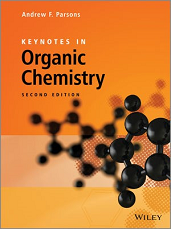
Andrew Parsons is Professor of Chemistry at the University of York, specializing in synthetic organic chemistry with a focus on radical reactions and their applications in polymerization and oxidation processes. His educational leadership includes redesigning undergraduate teaching laboratories and authoring key textbooks like Chemistry3 . Parsons developed the MOOC 'Exploring Everyday Chemistry,' reaching over 23,000 learners globally, and delivered a TEDx talk on chemistry's societal impact. His research integrates innovative teaching methodologies, including gamified learning (Organic Fanatic app) and flipped classroom approaches for retrosynthetic analysis. Recent work explores digital tools for chemical education and sustainable synthesis routes for pharmaceuticals. Parsons received numerous accolades for teaching excellence, including the Royal Society of Chemistry Higher Education Teaching Award (2005) and National Teaching Fellowship (2018). As Deputy Head of Department (2008-2016), he managed a £29M infrastructure project, and as Head of Vanbrugh College (2016-2018), he enhanced student community engagement. Award highlights: VC Silver Award for Outstanding Achievement (2011) YUSU 'Most Enthusiastic' Lecturer commendation (2016) Times Higher Education Outstanding Admissions Team nomination (2011)
Prof. Dr. Martin Gartmeier is a full-time Professor at the TUM School of Social Sciences and Technology at the Technical University of Munich. His expertise focuses on medical didactics, teaching development, and educational research with an emphasis on clinical communication skills and teaching innovation. He leads research on simulation-based learning, bedside teaching methodologies, and medical trainee development. Research interests include: - Digital transformation in medical education - Competency assessment via video-based methods - Error learning in healthcare contexts - Professional identity formation in medical students - Flipped classroom models in clinical education Recent work explores the impact of formative experiences with death on medical trainees, the effectiveness of video-based e-learning for communication skills, and the structural analysis of bedside teaching through videographic studies. His research consistently addresses bridging theoretical knowledge with practical clinical communication competencies. Key contributions include development of the VA-MeCo video assessment framework for medical communication competence and validation studies on flipped classroom approaches. His work emphasizes translating educational research into actionable improvements for medical training programs.
Dr. Rosanne English is a Principal Teaching Fellow in the Department of Computer and Information Sciences at the University of Strathclyde, UK. She serves as Deputy Head of Department with a focus on teaching strategy and cybersecurity education. English is also Vice Chair of the ACM UK Special Interest Group on Computer Science Education (SIGCSE). Her research interests center on advancing computational thinking through student-centered pedagogy, including active learning, flipped classrooms, and interactive windows. She explores innovative assessment methods, generative AI integration in education, and inclusive practices for diverse learners, particularly those with dyslexia. Her work aligns with the UN Sustainable Development Goals (SDGs) and impacts cybersecurity education frameworks. Recent publications highlight trends in generative AI for assessment, inclusive cybersecurity pedagogy, and active learning strategies. Her projects analyze privacy-by-design technologies, dyslexia in programming education, and re-engaging learners through subject-specific resources. Senior Fellowship (2024) Nominated four times for student teaching awards including 'Best Feedback' and 'Most Innovative' English mentors PhD students like Catriona Weir and leads interdisciplinary projects such as AP4L (Adaptive PETs to Protect & Empower People during Life Transitions), with £686K in-kind contributions. She advocates for embedding generative AI in computing curricula to prepare students for evolving tech landscapes.
Dr. Kimon Krenz is a Senior Research Fellow at the Bartlett School of Architecture, University College London, where he works at the Space Syntax Laboratory. As a spatial data scientist and urban health researcher, his work focuses on the spatial determinants of health and inequality. He has developed novel methodologies to measure individual-level environmental exposures and link them to large-scale health datasets, resulting in internationally recognized publications. With over £9 million secured in research funding, he bridges architecture, urban planning, and public health through interdisciplinary collaboration. Doctorat, University College London (2018) Master of Science, University College London (2013) Bachelor of Science, University of Applied Sciences (2012) Recognized by the HEA as a Fellow (2017) Dr. Krenz's research centers on using computational methods to quantify and analyze the built environment to study how space shapes human behavior, particularly focusing on how spatial data science can uncover social, health, and spatial inequalities. His expertise lies in spatial data science and space syntax, with particular emphasis on advanced computational methods to analyze and model the built environment and its use. His work informs evidence-based planning and public health interventions, often working with cohort studies, primary and secondary health data, and in data anonymization and secure research environments. His research spans urban morphology, environmental exposure, network analysis, and the intersection of architecture with public health. Analysis of Dr. Krenz's recent publications reveals a consistent focus on the relationship between urban form and health outcomes. His work employs sophisticated spatial analysis techniques to measure environmental exposures across multiple domains including air quality, road traffic, greenness, public transport, food environment, and street centrality. He frequently works with the Born in Bradford cohort study, examining how spatial factors influence mental health, social isolation, childhood obesity, and common mental disorders. His methodological contributions include developing innovative approaches to measure individual-level environmental exposures and creating taxonomies of urban form. ATQ03 - Recognised by the HEA as a Fellow (2017) Dr. Krenz has extensive teaching experience since 2014 as a Course Coordinator, Tutor, and Teaching Fellow for MSc programmes at UCL, specializing in spatial analysis, GIS, and urban health. He has supervised student projects including field trips to Rio de Janeiro and Venice, with a focus on informal settlements. His research funding includes projects such as ActEarly – Healthy Places, Connected Bradford Health and Environment, Migrant Mobility and Access to Public Urban Resources, and the Urban Dynamics Lab. He combines a flipped classroom approach with active learning and real-world applications in his teaching methodology. Dr. Krenz leads and participates in the Space Syntax Laboratory seminars series and is actively involved in the Urban Dynamics Lab at UCL, which is part of a five-year EPSRC-funded research project exploring questions at the intersection of city and regional economic development and urban modeling.
Dr. Diane Horton is a Teaching Professor in the Department of Computer Science at the University of Toronto. She co-leads the Embedded Ethics Education Initiative, a cross-disciplinary effort integrating ethics into computer science curricula. Her research focuses on educational pedagogy, particularly in ethics integration and online learning effectiveness. Leadership roles include: Former Associate Chair, Undergraduate (Department of Computer Science) Acting Director, University of Toronto Centre for Teaching Support and Innovation Co-chair, President's Teaching Academy Research highlights include: Longitudinal studies on embedded ethics education impact Co-designer of the Blocky game-based learning assignment Investigations into inverted classroom models and online CS education Awards include the 2015 President's Teaching Award (UofT's highest teaching honor), 2016 OCUFA Teaching Award, and 2024 Northrop Frye Team Award for the Embedded Ethics Initiative. She co-hosts the In the Loop podcast for CS undergraduates. Current projects include: Leadership in the Schwartz Reisman Institute for Technology and Society Development of ethics modules for CS curricula Professional development programs for educators
Hosam Al-Samarraie is an Associate Professor in Digital Innovation Design at the School of Design, University of Leeds. He holds a PhD in Philosophy and specializes in Human-Computer Interaction (HCI), Digital Education, and Machine Learning. His research focuses on enhancing user-centered design in education and healthcare through adaptive interfaces, emotional intelligence analysis, and EEG/eye-tracking methodologies. Key areas of expertise include: User modeling and social computation Machine learning applications in UI design and health analytics Cultural and social aspects of immersive technologies His work has produced over 100 peer-reviewed publications and earned recognition such as the 2020 Silver Medal Award from the Market Research Society. He serves as a Program Chair/Editorial Board member for international conferences and supervises PhD/Master’s students in topics like generative AI and digital health. Current projects explore: Emotional responses to UI design Cultural impacts on mHealth adoption XR applications in occupational safety As XLAB Manager, he leads interdisciplinary research integrating HCI, psychology, and technology to address real-world challenges in education and healthcare.