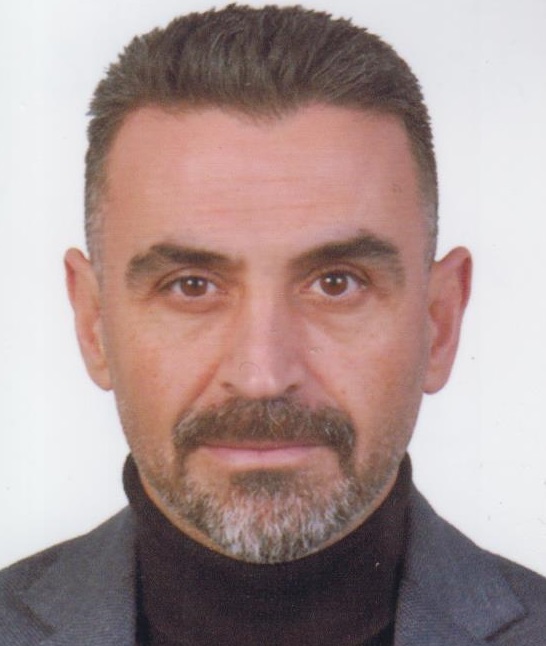
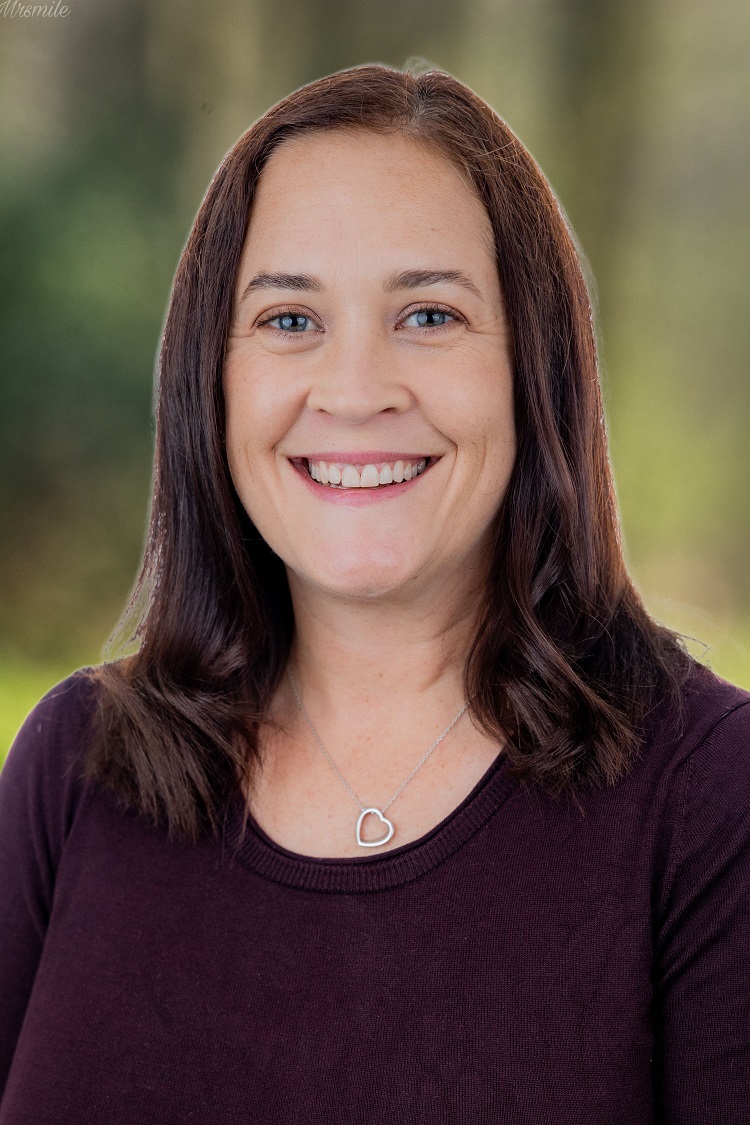
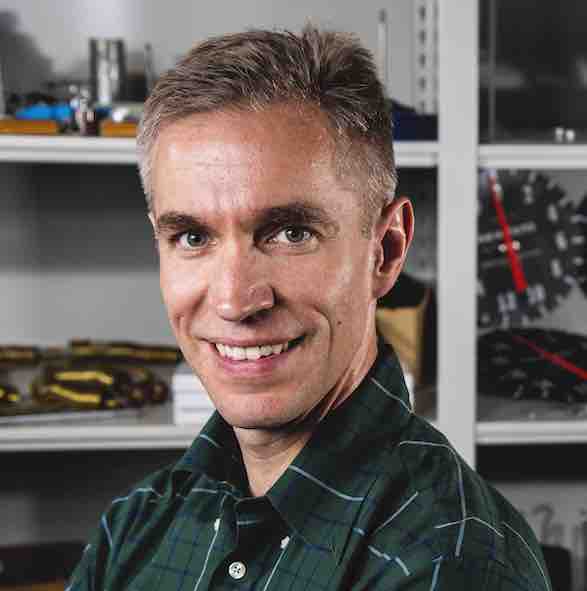
Mehmet Bardakçı is a Professor in the Department of Foreign Languages Education at Gaziantep University's Education Faculty. With a PhD in English Education (2010) and MA in English Teaching (2005) from Turkish universities, he specializes in English Language Teaching (ELT), vocabulary acquisition, and digital pedagogy. His research examines teacher professional development, assessment literacy, and intercultural sensitivity in language learning. Education: PhD (2010), MA (2005), BA (2000) in English Education Leadership: Former Dean Assistant (2018-2020), Department Head (2012-2013), Institute Deputy Director (2015-2018) Research Trends include e-learning models like e-FLIP (2021-2023) and digital education tools. His 21 peer-reviewed articles and 14 book chapters focus on vocabulary depth/breadth, grammar instruction, and teacher-student dynamics. Supervision spans 19 graduate theses on topics ranging from flipped classroom effectiveness to assessment literacy. He collaborates internationally through projects like e-FLIP and ExBEdu , both EU-funded initiatives completed between 2021-2023.
Morgane Chevalier is an Associate Professor at Vaud Teacher Training College (HEP Vaud) working within the Media, Digital Uses and Computer Science Teaching unit (UER MI). She specializes in multimedia pedagogical engineering, combining project management with e-learning scripting. Her work bridges educational theory and practical implementation of digital technologies in classroom settings, with particular focus on primary education. With prior experience teaching in primary schools in Seine-Saint-Denis (France), working in human resources in Montreal (Canada), and teaching in the Canton of Vaud, Chevalier brings diverse perspectives to her academic work. She holds a Master's degree in e-learning from IPM, Lille 1 and is currently pursuing a MAS in 'Theories, practices and training devices for teachers' to refine her understanding of institutional and social contexts of teacher training in French-speaking Switzerland. Her research interests focus on three complementary areas: online homework implementation in blended learning environments and fostering teacher communities of practice; how e-learning supports teacher professionalization; and robotics as a medium for knowledge, specifically examining how classroom robot integration impacts student learning and teaching practices. She is particularly interested in emerging communities of practice around educational technology. Analysis of her recent publications reveals a strong emphasis on educational robotics as a vehicle for developing computational thinking in primary education. Her work consistently explores scaffolded learning approaches, intervention methods, and teacher perspectives on implementing robotics in classrooms. A recurring theme is the development of models to help teachers identify relevant computational thinking concepts during different phases of educational robotics activities. Chevalier serves in several organizational roles including as an Associate HEP Professor, delegate of the intermediate body to the HEP Council, delegate of the Specialized Pedagogy Study Commission, and scientific collaborator at EPFL's LSRO. She is also a member of the educanet2 Community. Her teaching spans Bachelor primary programs, MASPE education, and continuing education courses covering image creation and processing, media education, Thymio II robotics, and flipped classroom methodologies. She collaborates extensively with EPFL researchers, particularly on projects involving the Thymio educational robot, and has developed frameworks for creative computational problem solving through robotics. Her work demonstrates a commitment to translating research into practical classroom applications while supporting teacher development in the digital age.
Thomas Menkhoff is a Professor of Organizational Behaviour and Human Resources (Education) at the Lee Kong Chian School of Business, Singapore Management University (SMU), where he has been a full-time faculty member since 2001. He earned his Ph.D. and M.A. in Sociology and Development Planning from the University of Bielefeld, Germany. His academic journey at SMU includes promotion from Associate Professor (2001–2011) to full Professor (2012–present), with additional roles such as Area Coordinator for OBHR and Curriculum Director for the iLEAP Non-Profit Leadership Programme. Ph.D. in Sociology and Development Planning, University of Bielefeld (1990) M.A. in Sociology and Development Planning, University of Bielefeld (1987) His research centers on entrepreneurial leadership in ethnic Chinese business, knowledge and innovation governance, and technology-enhanced teaching and learning. He explores how digital tools like chatbots, microblogging, and UAVs can transform higher education pedagogy, particularly in experiential and blended learning contexts. His work also investigates innovation in Chinese family businesses, the Belt and Road Initiative, and smart city development. His recent publications reflect a strong trend in educational innovation and knowledge management, with a focus on practical, technology-driven teaching methods. Articles such as 'Assessing the Effectiveness of a Chatbot Workshop' and 'Future-proofing Students with UAV Technology' demonstrate his commitment to integrating emerging technologies into business education. His research also spans cross-cultural leadership, sustainability, and Asian business networks. Notable scientific awards and recognitions include: Winner of SMU's Most Innovative Teacher Award (2009) SMU Faculty/Staff Contribution to Student Life Award (2017) Emerald Literati Network Award for Excellence as Outstanding Reviewer (2012) Multiple nominations for Distinguished and Innovative Teaching Awards Dean's Teaching Honour List (2007) Thomas Menkhoff actively mentors doctoral students, including Norman Buertzle (DBA) and Wong Siew Loong (PhD in Business). He has secured research funding and contributed to curriculum innovation, particularly in global experiential learning and sustainability education. He has also served as a Fellow at SMU Academy and led initiatives in non-profit leadership development. He is involved in research teams and editorial projects focused on smart cities, sustainable urban development, and Chinese business networks. As editor of multiple volumes including 'Living in Smart Cities' and 'China’s Belt and Road Initiative,' he collaborates with scholars across Asia and Europe to advance knowledge on innovation and sustainability.
Professor Jeremy Bagg is Professor of Clinical Microbiology and Head of Glasgow Dental School at the University of Glasgow since January 2005. He also serves as Deputy Head of the School of Medicine, Dentistry & Nursing. With a distinguished career spanning over four decades, Professor Bagg has made significant contributions to oral microbiology, infection control, and public health dentistry. Professor Bagg qualified BDS (Hons) from the University of Edinburgh in 1979 and was awarded a PhD in 1982 for research on bacterial adhesion mechanisms. He served as Lecturer in Oral Medicine & Oral Pathology at Cardiff Dental School from 1983-1991, gaining the FDS diploma and MRCPath in oral microbiology in 1987. Joining the University of Glasgow in 1991 as Lecturer in Oral Microbiology, he was awarded a Personal Professorship in Clinical Microbiology in 1999. His research focuses on the role of oral micro-organisms in systemic disease, oral infections in medically compromised patients, infection control in dental surgery, and public health microbiology. As a member of the Infection & Immunity Research Group, Professor Bagg has co-authored two textbooks and published over 160 papers. His work spans dental microbiology, infection control practices, oral-systemic health connections, and global oral health policy development, with particular expertise in denture microbiology, blood-borne virus management, and the oral health of medically compromised patients. Professor Bagg holds significant leadership positions including Chairman of the National Dental Advisory Committee at the Scottish Government Health Department and Chair of the Steering Group of the Scottish Dental Clinical Effectiveness Programme. He is also a member of the UK Advisory Panel for Health Care Workers Infected with Blood-borne Viruses. In 2004, he was awarded the Fellowship of the Faculty of Public Health for his contribution to public health microbiology. His recent work demonstrates continued excellence across multiple domains including dental infection control, global oral health policy, dental education innovation, and the microbiology of oral diseases. Professor Bagg's research has particular relevance to denture care, blood-borne virus management in dental settings, and the connection between oral health and systemic conditions. Professor Bagg has contributed to major initiatives including the Scottish Oral Health Research Strategy and serves as one of two Scottish representatives on the Oral & Dental Specialty Group of the UK Clinical Research Network. His work has influenced dental practice guidelines and public health policy in Scotland and beyond.
Bridget Tombleson is a Senior Clinical/Professional Fellow at Curtin University, located in Perth, Western Australia. She holds positions within the School of Management and Marketing (Faculty of Business and Law) and contributes to the Office of the Provost. Her academic career spans over 20 years across government, corporate, and consultancy roles in public relations and communications. Bridget holds a Bachelor of Arts in English Literature and postgraduate degrees in Business and Public Relations. She is currently completing her PhD, further enriching her expertise in academic research and teaching. Her teaching focuses on transmedia and digital storytelling for brands, incorporating innovative platforms like Curtin.Edge and MOOCs. Her research interests emphasize the intersection of technology and education within public relations. Key areas include transmedia storytelling's impact on student engagement, participatory culture's influence on cross-cultural communication, flipped learning pedagogy, and sustainable tourism communication strategies. She also explores narrative evolution and semiotics in digital contexts, bridging theory with practical applications in brand management. Bridget has been recognized with numerous teaching awards, including the 2022 Curtin Excellence in Teaching Award, 2022 PRIA Education Awards (Gold), and 2018 EdX Prize Finalist status. Her work often involves collaboration, notably with Katharina Wolf on sustainable tourism and transmedia learning projects. Her advising and grants narrative highlights expertise in curriculum design and cross-cultural communication. She teaches across multiple disciplines at Curtin, including the Centre for Aboriginal Studies, Business and Law, Health Sciences, Humanities, and Science and Engineering, demonstrating a commitment to interdisciplinary education. Her research and teaching frequently address ethical storytelling, cultural sensitivity, and leveraging technology to enhance learning experiences. Bridget’s contributions extend beyond traditional classrooms through her creative works, such as designing EdX courses like *Curate Your Personal Brand*, and exploring MOOCs as transformative educational tools. She actively engages with global campuses and First Nations perspectives in her academic work, reflecting Curtin University’s institutional values.
Dr. Budi Zhao is a Lecturer/Assistant Professor in the School of Civil Engineering at University College Dublin since August 2020. He holds a PhD from City University of Hong Kong (2017) and has held academic positions at Imperial College London (Research Associate, 2019–2020) and King Abdullah University of Science and Technology (Postdoctoral Fellow, 2017–2019). His research focuses on multi-physics processes in soil and rock, employing advanced techniques like X-ray micro-tomography (μCT), microfluidics, and numerical modeling (e.g., DEM and CFD-DEM). Key areas include crushable sands, desiccation cracking, fines migration, and energy geotechnics. He serves on ISSMGE committees TC105 and TC308, and is a member of the editorial board of the Journal of Rock Mechanics and Geotechnical Engineering . His research outputs span topics such as 3D printed composites, microplastic transport, and internal erosion mechanisms. Notable projects include grants on multi-scale analysis of clays and salt precipitation effects. Dr. Zhao coordinates modules like Geotechnical Engineering and Soil Mechanics at UCD, emphasizing innovative teaching methods like flipped classrooms. His work bridges fundamental science and engineering applications, with a focus on sustainable geotechnical solutions. Education: PhD (City University of Hong Kong, 2017), B.Eng (Chongqing University), Professional Certificate in University Teaching (UCD). Grants: Includes funding for offshore wind energy anchors and carbon geological storage projects. Advising: Supervises multiple PhD students in geomechanics and energy geotechnics. Labs/Teams: Leads research using state-of-the-art facilities for μCT imaging and microfluidics.
Erik Rosolowsky is a Professor of Physics and Associate Chair in the Faculty of Science at the University of Alberta. He holds a PhD from the University of California, Berkeley (2005), MA from UC Berkeley (2001), and BA from Swarthmore College (1998). His research focuses on understanding the recycling of stellar matter in galaxies, using radio and submillimeter telescopes alongside algorithmic methods. Key interests include star formation, interstellar medium dynamics, and molecular gas properties in nearby galaxies. He teaches graduate and undergraduate courses in astronomy and physics, emphasizing flipped classrooms and problem-solving skills. Notable courses include PHYS 144 (Newtonian Mechanics) and PHYS 574 (Data Analysis in Physics). Rosolowsky is a core member of the PHANGS collaboration, leveraging JWST and ALMA for high-resolution galaxy studies. He also leads efforts in data science for astrophysics, developing tools like CARTA and CIRADA. Recent work includes analyzing molecular gas in NGC 6822, modeling starburst galaxies, and processing JWST data. His research bridges observational techniques with computational methods to explore galaxy evolution and stellar lifecycle connections. Despite no listed awards, his contributions to astrophysical data pipelines and collaborative surveys highlight his academic impact.
Zuocheng Zhang is an Associate Professor in the School of Education at the University of New England (UNE), Australia, where he is part of the English, Literacies and Language Education team. He previously held the position of full professor in applied linguistics at the University of International Business and Economics in China and played a pivotal role in establishing the nationally accredited Business English Major in China. At UNE, he leads the Interculturality and Education Strategic Research Group and teaches in TESOL, disciplinary literacies, and cultural diversity education. His educational background includes a BA from Xi'an International Studies University (XISU), an MA from Northwestern Polytechnical University (NPU), and a PhD from the University of Sydney. Zuocheng Zhang's research centers on disciplinary literacies, ESP teacher development, multimodal discourse analysis, interculturality in education, and the experiences of international students. He investigates how professional identities are constructed in educational and workplace contexts, particularly in Business English and international education settings. His work often employs critical discourse and multimodal analysis to examine university communications, curriculum design, and student transitions. His recent publications (2019–2025) reveal a consistent focus on international student education, TESOL pedagogy, and professional identity formation. He frequently publishes in journals such as English for Specific Purposes , Discourse & Communication , and Ibérica , and with publishers like Routledge and Springer. His research often involves comparative and multimodal methods, particularly in analyzing university websites and digital media. He has received research funding from both Chinese national agencies and internal UNE sources, supporting projects on international student transitions, multimodal inclusivity, and digital pedagogy. Notable grants include a National Office of Philosophy and Social Sciences grant in China and multiple UNE internal funding awards. Zuocheng Zhang has supervised numerous higher degree research students to completion, including PhD and EdD candidates, with topics ranging from ESL classroom anxiety to rhetorical agency in political texts. His current HDR student is Jennifer Kompara, researching subject literacy in legal studies. He is actively involved in research teams, including projects on international graduates’ transition to regional workplaces and multimodal construction of diversity. He is a member of professional associations such as the Asia-Pacific Rim LSP and Professional Communication Association, Australian Council of TESOL Associations, and the International Association for the Psychology of Language Learning.
Christian Decker is Professor of International and Corporate Finance at the Department of Economics, Hamburg University of Applied Sciences (HAW Hamburg). His research focuses on corporate and structured finance, corporate and investment banking, and methodical aspects of research. He specializes in competency-based instructional design, integrating e-learning, blended learning, and flipped classroom models into higher education. Decker has contributed extensively to academic research and writing methodologies, with a particular emphasis on digital education and educational media. University of Hamburg (Dipl.-Kfm., 1994) University of Bremen (Dr. rer. pol., 2007) University of Hamburg (M.H.Ed., 2020) His research spans corporate finance, educational innovation, and digital learning strategies. Recent publications analyze case-based assessments, poster conferences, and the Scholarship of Teaching and Learning (SoTL), reflecting his commitment to advancing pedagogical practices. Decker has supervised doctoral theses, including J. Beck's 2021 work on fintech financing for SMEs. He has received the Hamburg Teaching Award twice (2012, 2017) for his contributions to e-learning and team teaching. Hamburg Teaching Award 2012 Hamburg Teaching Award 2017 Decker's professional roles include leadership in curriculum reform and departmental governance. He has conducted workshops on inverted classroom models and digital mastery learning, collaborating with institutions like FH St. Pölten and RWTH Aachen. His educational media projects emphasize individualized learning through videos, webinars, and interactive labs.
Annemette Kjærgaard is an Associate Professor at Copenhagen Business School's Department of Management, Society and Communication. Her work focuses on pedagogical innovation, particularly in blended learning, flipped classrooms, and gradeless learning frameworks. Primary Affiliation: Copenhagen Business School Research Interests: She explores tensions in educational practices, including student resistance to pedagogical reforms, organizational identity dynamics in academic settings, and the role of subtle activism in reshaping institutional norms. Her studies often employ experimental methodologies and autoethnographic approaches. Publication Trends: Recent work emphasizes blended learning's face-to-face components, gradeless assessment's paradoxical effects, and the interplay between pedagogical interventions and student outcomes. Collaborative projects with The Kintsugi Collective and other researchers highlight interdisciplinary approaches. Media & Outreach: Frequently cited in discussions about academic well-being, digital teaching, and curriculum reforms, including contributions to public discourse on CBS's educational strategies during the pandemic.
Shuyin Jiao is an active Associate Teaching Professor in the Department of Computer Science at North Carolina State University's College of Engineering. She serves as course coordinator for CSC 111 Introduction to Computing: Python and teaches multiple core undergraduate courses including CSC 116 (Java) and CSC 246 (Operating Systems), with extensive teaching experience spanning over 9 years at both NC State and the College of William & Mary. Her educational background includes a Ph.D. from the University of Houston (2015), a Diplôme d'Ingénieur from Ecole Central de Lyon, France, and a B.S. from Beihang University, China. She previously held positions as Assistant Teaching Professor (2020-2025) and Lecturer at NCSU, and taught as Lecturer and Adjunct Lecturer at William & Mary from 2015-2020. Dr. Jiao's research focuses on computing education and program analysis, with particular emphasis on developing tools to enhance student learning in computer science. Her work explores pedagogical methods to address diverse learning styles in increasingly large CS classrooms and investigates code inefficiencies through memory profiling and performance analysis. She leads the CERES lab at NCSU and serves as Publications Co-Chair for SIGCSE TS 2026. Her publication record shows consistent output in top venues including SIGCSE, CGO, MobiCom, and ICSE, with recent work spanning from 2025 back to 2012. Her research trajectory demonstrates a clear evolution from materials science (early career) to software engineering and computer science education, with current work heavily focused on educational technology and program analysis tools. Dr. Jiao has secured significant funding including as PI for NSF Grant DUE-#2417469 (2024-2027), NCSU Data Science Academy Seed Grant (2023-2024) as Co-PI, and NCSU GEARS Grants (2023-2024) as PI. She also serves as Co-PI for NSF Grant OAC-#2411136 (2025-2028) focused on computer system research. She actively involves undergraduate students in research through COE REU and CSC 498/499 projects, recruiting at CSC Undergraduate Research Lightning Talks each semester. Her course redesign projects include enhancing operating systems education through multimedia and redesigning CSC 111 with DELTA funding to address challenges in large-class instruction.
Juan Ramon Moreno Vera is a Professor of Social Sciences Education at the University of Murcia , affiliated with the Faculty of Education and Department of Didactics of Mathematical and Social Sciences . PhD in Educational Research (University of Alicante, 2011) Masters in Research and Management of Historical, Artistic and Cultural Heritage His research focuses on didactics of history , historical awareness , democratic values , and gender education , often integrating art history and digital technologies (QR codes, gamification, flipped-classroom). His work emphasizes critical thinking , heritage education , and innovative teaching methods . He has led international projects like HistoryLab and Erasmus+ KA2 initiatives. Recent publications analyze fake news detection in history education , democratic consciousness in curricula , and climate change perception among trainee teachers . Awards include the Teaching Excellence Award (University of Murcia), Sexenio de Investigación (CNEAI), and Magisterio Award Special Mention .
Vassilis P. Plagianakos is an Associate Professor at the Department of Computer Science and Biomedical Informatics, University of Thessaly, Greece. He has held visiting academic roles at the University of the Aegean, University of Patras, and University of Central Greece. He currently serves as the Department Head and Director of the postgraduate program Informatics and Computational Biomedicine in the School of Sciences. His research focuses on machine learning, neural networks, bioinformatics, and parallel computing with applications in healthcare and education. Education : Bachelor’s in Mathematics (1996), University of Patras Ph.D. in Mathematics (2003), University of Patras Research Interests : Plagianakos explores neural networks, evolutionary algorithms, and machine learning applications in bioinformatics, medical diagnosis, and educational technology. His work bridges computational methods with real-world challenges in healthcare (e.g., precision medicine) and STEM education (e.g., flipped classrooms, AI integration). Recent Trends in Publications : Recent work emphasizes predictive precision medicine using big data, blockchain scalability solutions, and AI ethics in automated content detection. He has pioneered methods like the HCER hierarchical clustering-ensemble regressor and developed tools for analyzing single-cell RNA sequencing data. Professional Activities : Member of IEEE Neural Networks Society, IEEE BBTC, and former Board Member of the Hellenic AI Society. Active in collaborative projects like CrowdHEALTH for policy-driven health data analytics.
Cary D. Troy is a Professor of Civil Engineering at Purdue University's Lyles School of Civil and Construction Engineering. He specializes in environmental fluid mechanics, with a focus on hydrodynamic processes in lakes and coastal systems, particularly Lake Michigan. His research integrates field experiments, numerical modeling (e.g., SUNTANS), and analytical methods to study circulation, thermal structure, and mixing in aquatic environments. Education: Ph.D. (2003), M.S. (1997), and B.S. (1995) in Civil Engineering from Stanford University, University of Illinois Urbana-Champaign, and Purdue University, respectively. Research interests include benthic boundary layer processes, river plume characterization, and the impacts of invasive species (e.g., quagga mussels) on water quality. His pedagogical work emphasizes active learning in engineering education, including flipped classrooms and writing-to-learn strategies. He has mentored over a dozen graduate students and received multiple teaching awards, including the Purdue University Bravo Award (2015) and Exceptional Early Career Teaching Award (2014). Awards include the Roy E. & Myrna G. Wansik Teaching Leadership Award (2016) and the American Society of Civil Engineers ExCEED Teaching Fellow designation (2009). His lab, the Burke Hydraulics and Hydrology Lab, focuses on advancing understanding of coastal and limnological systems through interdisciplinary approaches.
Dr. Ahmed Taiye Mohammed holds a Postdoctoral research fellowship at Linnaeus University's Department of Cultural Sciences, Faculty of Arts and Humanities in Växjö, Sweden. He earned his Master's and PhD from Northern University of Malaysia (UUM) with a thesis on text anomaly detection. His research focuses on Digital Humanities (DH), AI applications in education, and computational thinking for non-engineers. He teaches courses like Digital Humanities Research Methods, Programming for DH, and AI in Healthcare. Key research projects include InKuiS (innovative cultural entrepreneurship) and AI for ISP (supporting academic writing via ChatGPT). He collaborates with Linnaeus University Centre for Data Intensive Sciences (DISA) on e-health initiatives. Recent publications explore AI in K-12 education, automated library classification, and text mining for archaeology. His work spans AI ethics, DH methodologies, and interdisciplinary applications of computational tools. Teaching responsibilities include over 10 courses at undergraduate/master's levels, emphasizing practical skills in DH technologies. Active in developing AI-based educational tools like CHAT4ISP-AI and exploring generative AI for academic writing support. Research also involves social media ecosystems, data mining practices, and satellite image classification using SVM techniques.