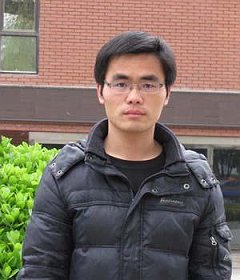
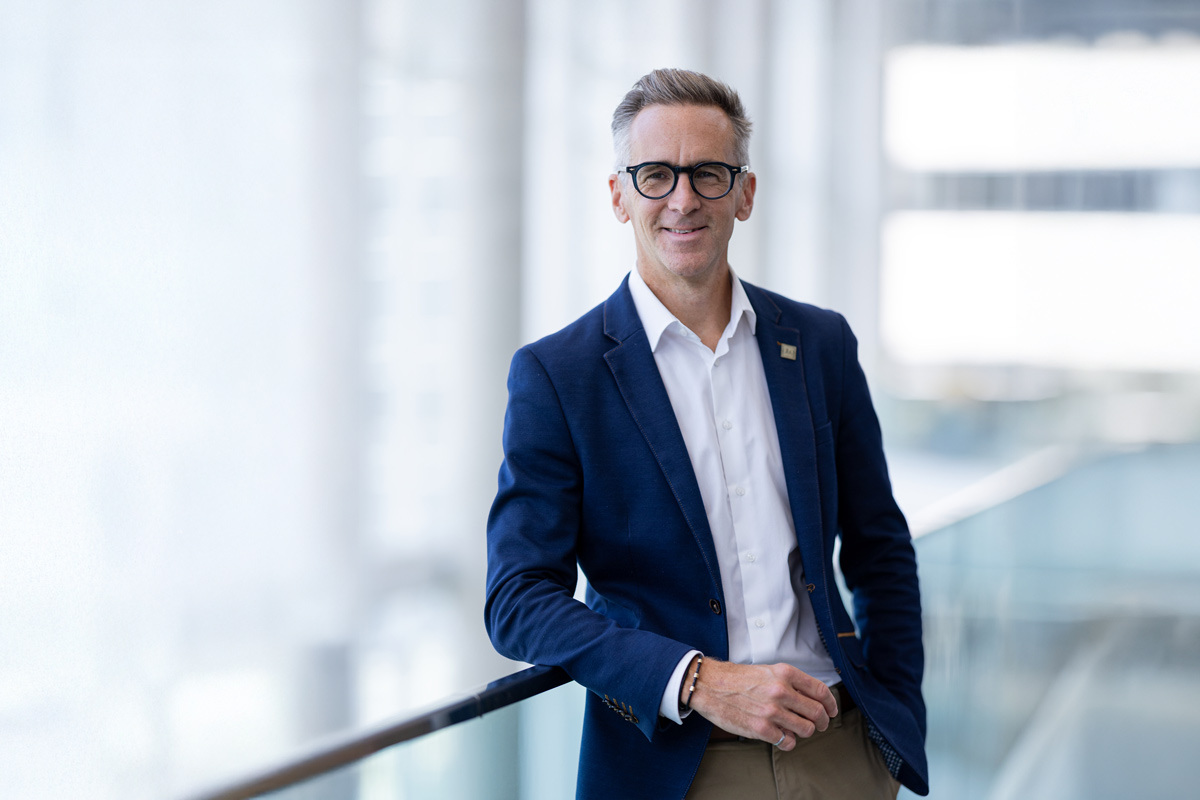
Dr. Rytis Kazakevičius is a Researcher at Vilnius University's Institute of Theoretical Physics and Astronomy (ITPA), focusing on statistical physics, anomalous diffusion, and 1/f noise in physical and socio-economic systems. He has published extensively on nonlinear stochastic differential equations and agent-based modeling. His work includes collaborations with colleagues like J. Ruseckas and A. Kononovicius, funded by the European Union (project No 09.3.3-LMT-K-712-19-0017). He also teaches undergraduate seminars on laboratory work preparation using software tools. Publications reveal expertise in Lévy flights, time-subordinated Langevin equations, and power-law statistics in nonhomogeneous environments. He serves as a reviewer for journals like Europhysics Letters and Physica A: Statistical Mechanics and its Applications.
Associate Professor Abdullah Akpolat is affiliated with Gaziantep University in the Faculty of Engineering, Department of Mechanical Engineering . He has been active in academic roles since 1983, with a focus on Machine Design and Machine Elements in mechanical engineering. PhD in Mechanical Engineering (1997) from Gaziantep University Master’s degree in Mechanical Engineering (1988) from Middle East Technical University Bachelor’s in Mechanical Engineering (1983) from Middle East Technical University His research explores gear design , finite element analysis , and composite materials , with a particular emphasis on reducing stress in mechanical components. His recent work includes graphene nanoplatelet applications in hybrid composites and dual asymmetry in gear tooth profiles. Abdullah Akpolat has published extensively on spur gears, asymmetric tooth design, and thermophysical properties of construction materials. His work intersects machine design , finite element modeling , and material science , with collaborations across Turkey and international institutions. He has received TUBITAK Publication Encouragement Awards in 2015 and 2018. His academic career includes leadership roles such as Deputy Head of Department and Faculty Board Membership . Advised PhD and Master’s theses on gear stress analysis, torque coupling design, and composite optimization Managed research projects on asymmetric gears, semi-active suspension, and olive oil production systems Contributed to industry through ÇİLTUĞ Heating Industry Trade Inc. (1984–1986)
Fausto Francesco Lizzio is a Fixed-term Researcher at the Department of Mechanical and Aerospace Engineering (DIMEAS) within the College of Mechanical, Aerospace and Automotive Engineering at the Polytechnic University of Turin . His work focuses on consensus protocols , distributed control , and unmanned aerial systems (UAVs) . Research Interests: Multi-agent systems, time-delay networks, robotics, and aerospace engineering. Teaching Roles: Course instructor for advanced flight dynamics and collaborator in courses on spacecraft control, flight mechanics, and aerospace simulation. His recent research explores stability-switching properties in multi-agent systems, decentralized target estimation for UAV swarms, and digital twin applications for prognostic health management. These studies intersect aerospace engineering, control theory, and networked robotics. Scientific Contributions: He has been recognized with an open badge for participating in research funding calls through the Rimini School 2025. His publications span journals like IEEE Control Systems Letters , Drones , and conference proceedings for SICE and EASN events.
Prof. Dr. Luciano Sarperi is a Lecturer at the ZHAW School of Engineering ’s Institute of Signal Processing and Wireless Communications , focusing on applied R&D with industry partners. His work spans Wireless Communication Systems , Mobile Networks (NR, LTE, NB-IoT), and Software Defined Radio . Expertise in GNSS Localization , Wireless Time-Synchronization , and Interference Cancellation for MIMO systems. Active in UAV navigation, RFI detection, and LoRa/Wi-Fi applications. Research Trends (2025–2004): Peer-reviewed work on MIMO Pre-coding , GNSS for Drones , Blind Signal Processing , and Wireless Standards . Patents in Multi-Cell MIMO and Channel Feedback . Education : PhD in Digital Signal Processing for MIMO-OFDM from the University of Liverpool (2007), M.Sc. in Microelectronic Systems and Telecommunications (2002). Experience : 2010–2017 at Swisscom (Research Engineer), 2007–2010 at Fujitsu Laboratories (U.K.).
Dennis Krupke is a Researcher at the Department of Informatics, University of Hamburg, affiliated with the Human-Computer Interaction (HCI) group and the Technical Aspects of Multimodal Systems (TAMS). His work bridges robotics, virtual reality, and human-computer interaction, focusing on natural interfaces for human-robot cooperation. Education: Diploma in Informatics (2014), University of Hamburg Research Interests: Human-Robot Interaction (HRI) Bio-inspired Robotics and Sensor Systems Modular Robotics and Low-cost Prototyping Mixed Reality for Immersive Scenarios Scientific Awards: Finalist, IROS KROS Best Paper Award on Cognitive Robotics (2018) Highly Commended Paper, Industrial Robot Innovation Award (2017) CLAWAR Association Best Technical Paper Award (2015) Best Innovative Robot Award, CLAWAR (2014) Publications & Projects: Co-developed a printable modular robot with Florens Wasserfall Contributed to ROS-Unity integration for VR-based robotics Explored locomotion techniques for modular robots using reinforcement learning
Associate Professor Petar Žugec is affiliated with the Department of Experimental Physics at the Faculty of Natural Sciences and Mathematics , University of Zagreb. He actively contributes to both undergraduate and graduate teaching , covering core topics in Physics 1, Physics 2, Symbolic Programming , and specialized courses in Nuclear Physics and Particle Physics . As a member of the CERN n_TOF collaboration , he focuses on neutron cross-section measurements critical for astrophysics and nuclear reactor applications . His research involves experimental nuclear physics using advanced detector systems , including Segmented Total Energy Detectors (sTED) and Compton gamma cameras . He participates in projects like PRECIOUS and SAT-PHENO , aiming to improve neutron capture data for stellar nucleosynthesis modeling . Recent publications emphasize machine learning applications in resolution function parametrization and event classification for high-precision experiments. His work at the CERN n_TOF facility addresses challenges in high count rate scintillation detectors and neutron-induced fission studies , particularly for 235U and 239Pu . He contributes to gamma-ray polarization research in positron emission tomography and has co-authored technical guidelines for detector setup characterization . No scientific awards or student advisement details were explicitly mentioned in the provided texts.
Arthur G Richards serves as Professor of Robotics and Control within the Dynamics and Control department at the University of Bristol's School of Engineering Mathematics and Technology. His research specializes in trajectory optimization for aerospace applications, focusing on UAV autonomy, spacecraft rendezvous, and air traffic management through advanced optimization techniques. His educational foundation includes an M.Eng. from the University of Cambridge and S.M./Ph.D. degrees from MIT. Research interests center on solving complex aerospace challenges through: Non-convex optimization for obstacle avoidance in cluttered environments Robust model predictive control for real-time disturbance compensation Distributed optimization enabling large-scale vehicle cooperation Scalable algorithms for high-traffic scenarios with minimal fuel consumption Analysis of his 132 research outputs reveals evolving emphasis on reliability-aware UAV path planning, interpretable reinforcement learning for aircraft control, and swarm robotics with real-world validation. Recent work increasingly integrates machine learning with traditional control theory while addressing practical constraints like sensor noise and system failures. Professor Richards has supervised 22 research students and secured funding for 11 projects, including the active Aerial Robotics for Search and Rescue (2022-2026) and PORTAL (2022-2024) initiatives. His industry collaborations with Thales and focus on technology transfer demonstrate strong academic-industrial integration. He actively contributes to the Smart Networks for Sustainable Futures and Robotics research groups, developing frameworks for multi-robot systems that balance theoretical rigor with practical deployment requirements in conservation, inspection, and exploration scenarios.
Kürsat Yurt, M.Sc., serves as a Research Associate at the Institute for Rotorcraft and Vertical Flight, Technical University of Munich (TUM), based at Boltzmannstr. 15, 85748 Garching, Germany. His role encompasses advanced computational research in vertical flight systems, thesis supervision, and participation in multiple national and international projects targeting next-generation rotorcraft technologies and urban air mobility solutions. Yurt's research spans High Performance Computing, Performance Portable Programming, Rotor and Wake Aerodynamics, and Aeroelasticity. He develops GPU-accelerated meshless methods for large eddy simulations, creates real-time guidance algorithms for urban obstacle avoidance, and investigates morphing airfoil dynamics through fluid-structure interaction frameworks. His work bridges computational mechanics with practical rotorcraft design challenges, emphasizing energy efficiency and flight safety in complex environments. His 2022-2025 publications reveal a cohesive trajectory in computational rotorcraft aerodynamics, featuring innovations in meshless GPU simulations, partitioned coupling techniques, and urban air mobility guidance systems. These works integrate computational fluid dynamics, high-performance computing, and aerospace engineering to address vertical flight challenges including wake modeling, morphing rotor blades, and rotor-airframe interactions. Yurt actively supervises Master's and Bachelor's theses on vortex particle methods, rotorcraft simulation frameworks, and morphing rotor technologies. His research is funded through key projects: ENGEL - Energy Efficient Flight Guidance VARI-SPEED II ARCTIS LaBouR complemented by completed initiatives like InteReSt II and TEMA-UAV. The Institute provides critical infrastructure for his work through specialized facilities: Whirl Tower for rotor dynamics testing Flight Simulator Facilities for pilot-in-loop studies Unmanned Rotorcraft Testbed (AREA) High-performance GPU/CPU clusters for computational workloads These resources enable experimental validation of his computational models and support the institute's mission in vertical flight innovation.
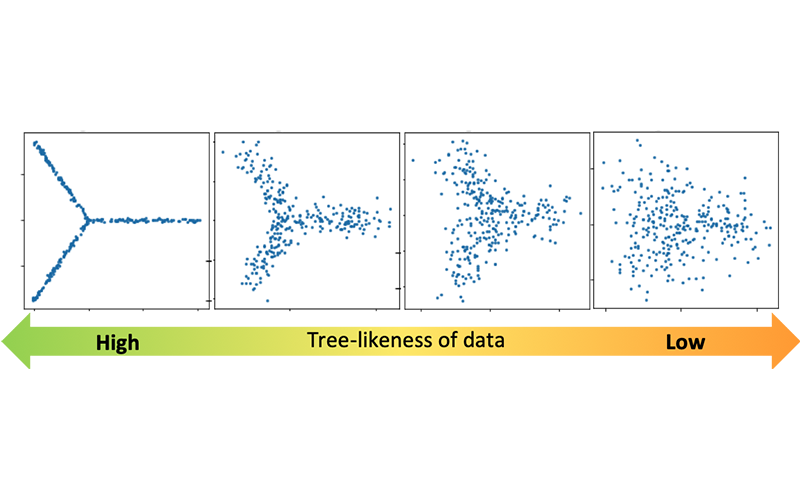
Momoko Hayamizu is an Associate Professor at Waseda University's Faculty of Science and Engineering, Department of Applied Mathematics . Her work bridges discrete mathematics with computational biology , focusing on phylogenetic tree/network analysis, single-cell RNA-seq trajectory inference, and algorithm development. She holds a Ph.D. in Mathematical Sciences from The University of Tokyo and an M.D. from SOKENDAI. Research Interests : She specializes in combinatorics, graph theory, and discrete algorithms for modeling biological processes like cell differentiation and viral evolution. Her research emphasizes phylogenetic network theory , tree-based models , and software development (e.g., Treefit). Academic Contributions : Her work includes structure theorems for phylogenetic networks , algorithms for network orientation , and quantitative trajectory analysis methods . Publications span journals like SIAM Journal on Discrete Mathematics and IEEE/ACM Transactions on Computational Biology . Awards & Recognition : Recipient of MEXT's Young Scientists’ Prize , multiple WASEDA e-Teaching Awards , and international scholarships like the Anita Borg APAC . She actively contributes to educational outreach via YouTube lectures and high school collaborations. Leadership & Collaboration : Organized ICIAM 2023 Mini-symposium on phylogenetics, collaborated with institutions like IMI Kyushu University and RIKEN , and developed open-source tools like Treefit for single-cell data analysis.
Dr. Elans Grabs is an Associate Professor at Riga Technical University's Institute of Information Technology, specializing in machine learning, network traffic analysis, and telecommunications. His work bridges digital signal processing and unmanned aerial vehicle navigation. Current research focuses on AI-driven network optimization Expertise in sensor fusion for autonomous systems Active in open RAN and wireless communication protocols His publications span topics from IoT performance modeling to laser communication algorithms for moving platforms. Recent works emphasize real-time signal processing, video traffic classification, and drone cooperation systems. While no formal awards are listed, his contributions to network traffic simulation and embedded systems design demonstrate technical depth. Articles show specialization in convolutional neural networks for streaming video analysis and wireless sensor network optimization.
Dr. Laxima Niure Kandel is an Assistant Professor in the Department of Computer, Electrical, and Software Engineering at Embry–Riddle Aeronautical University. Her research spans wireless security, UAV detection, and cybersecurity, with a strong focus on AI-driven solutions for aviation and IoT systems. Her core research interests include: Wireless sensing and localization Machine learning applications in cybersecurity GPS spoofing detection for aviation RF fingerprinting for device authentication Adversarial resilience in deep learning models Recent publications (2025) demonstrate a dominant focus on transformer-based security models, UAV protection systems, and explainable AI. Over 80% of her latest work involves deep learning techniques applied to real-world threats like GPS spoofing, ADS-B attacks, and adversarial patches in autonomous vehicles.
Jean-Marc Robert is an Associate Professor in the Department of Mathematics and Industrial Engineering at Polytechnique Montréal. He is an active researcher affiliated with the Poly-Industries 4.0 Laboratory, focusing on human-centered design and future technologies. His work bridges academic rigor and industrial applications, with strong collaborations in aviation and ergonomics. Robert's research interests center on: Human-Computer Interaction : UX evaluation, task analysis, and interface design Prospective Ergonomics : Anticipating human interactions with emerging technologies Aviation Systems : Passenger comfort, cockpit interfaces, and flight safety Engineering Education : Creativity development and cognitive skill enhancement His publication trends show a focus on empirical validation of UX methodologies (2020s), aviation ergonomics (2014-2016), and educational innovation (2018). Recent articles emphasize quantitative scale development and systematic reviews of HCI practices. Robert has advised 52 graduate students (17 PhD, 35 Master's), with theses covering UX design, virtual reality, mobile interaction, and aviation human factors. Student projects frequently involve industry partnerships and prototype development. He contributes to the Poly-Industries 4.0 Laboratory, which explores Industry 4.0 applications through human factors research. The lab addresses challenges in manufacturing, automation, and human-machine collaboration.
Zhen Dong is an Associate Professor at Fudan University, China, specializing in software engineering with a focus on software reliability and security, particularly in mobile computing. Previously, he was a PostDoc and Senior Research Fellow at the National University of Singapore under the guidance of Abhik Roychoudhury. His educational background includes: PhD in Computer Science from Heidelberg University (2017), advised by Prof. Artur Andrzejak Dr. Dong's research centers on developing techniques and tools for improving software reliability and security. His work spans mobile application testing, Android security, flaky test detection, and vulnerability localization. He has made significant contributions to the field of software testing and analysis, with a particular emphasis on practical applications for mobile systems. His research bridges theoretical foundations with real-world software engineering challenges. Analysis of Dr. Dong's recent publications reveals a strong focus on leveraging AI/ML techniques for software engineering tasks, particularly using LLMs for test automation and program analysis. His work consistently addresses critical challenges in mobile computing, especially Android application reliability and security. There's a clear trajectory toward more sophisticated analysis techniques, from traditional testing methods to AI-driven approaches. His notable scientific achievements include: ACM Distinguished Paper Award at ICSE'20 Best Paper Award at AsiaCCS'21 (1/370 submissions) ASE'22 Distinguished Reviewer Award Dr. Dong serves on the Board of Distinguished Reviewers for ACM Transactions on Software Engineering and Methodology and has been an active member of numerous program committees for top software engineering conferences including ICSE, ASE, and ISSTA. His service to the academic community extends to reviewing for prestigious journals such as IEEE Transactions on Software Engineering and Methodology and ACM Transactions on Software Engineering and Methodology. His research has been supported through various academic channels, enabling him to maintain an active lab focused on software testing and analysis, particularly for mobile platforms. The lab has produced numerous tools and techniques that have influenced both academic research and industrial practice in software reliability.
Jean-François Boland is a Professor in the Department of Electrical Engineering at École de technologie supérieure (ÉTS), where he leads research in aerospace systems and embedded technologies through the LASSENA Laboratory. His expertise spans avionics, autonomous systems, digital design methodologies, and functional verification. Research Interests: Aeronautics & Aerospace : Flight control systems, radiation-hardened avionics, integrated modular architectures Intelligent Systems : Bipedal robot control, adaptive algorithms, autonomous navigation Digital Design : RTL verification, fault modeling, high-level synthesis His recent publications emphasize fault-tolerant aerospace systems , with 60% focused on radiation effects mitigation, 25% on autonomous robotics, and 15% on design methodologies. Key trends include AI-enhanced verification (2019), SEU-resistant flight controls (2013–2016), and bipedal locomotion control (2021–2022). Awards and Honors: Ambassadeur Honoraire (ÉTS, 2020) CNESST Safety Award & GREPCI Finalist (2017) CRIAQ Project Excellence Award (2012) Two ÉTS Teaching Excellence Awards (2011, 2013) He actively advises graduate students, with 16+ supervisees working on projects like fault-tolerant avionics and quadcopter control systems. Laboratory work at LASSENA emphasizes resilient embedded systems and aerospace-grade validation platforms.
Professor Kristina Schädler is a faculty member at the West Coast University of Applied Sciences (FH Westküste), where she serves as Professor of Data Processing within the School of Technology. She has been with the university since 2005 and also served as Dean of the Department of Technology. Her academic background includes a PhD in machine learning from TU Berlin, where she was awarded the Chorafas Research Prize for young scientists. West Coast University of Applied Sciences (since 2005) TU Berlin, Institute of Computer Science (1994-1999) Martin Luther University Halle/Wittenberg (1990-1994) Professor Schädler's research focuses on artificial intelligence and machine learning applications, particularly in image processing and data analysis. Her work spans multiple domains including industrial automation, agricultural technology, renewable energy, and animal husbandry. She has led numerous research projects that bridge academic theory with practical industrial applications, with particular emphasis on developing robust image processing systems that can be deployed in real-world settings. Her research portfolio demonstrates a consistent pattern of applying advanced machine learning techniques to solve practical problems across diverse industries. The ANIMET project, which developed facial recognition for horses, and the MaviSeg system for multichannel image segmentation represent her innovative approach to adapting computer vision technologies for specialized applications. Her work often involves close collaboration with industry partners to ensure practical relevance and implementation. Chorafas Research Prize for young scientists Innovationspreis at Equitana (2013) for the ANIMET project Professor Schädler has supervised numerous student theses that have resulted in practical applications across various domains. Her research group has secured funding from multiple sources including the European Commission, BMBF, and regional development agencies. She has established the CICAD project as a sustainable competence center for industrial image processing, which has trained multiple doctoral students through cooperative programs with the University of Lübeck. Her work demonstrates strong industry connections with companies like HIT Hinrichs Innovation + Technik, MBJ Solutions, and Fischer und Tausche Kondensatoren. Her research laboratory focuses on industrial image processing applications, with specialized equipment for 2D/3D imaging, spectral analysis, and machine learning implementation. The CICAD project established a dedicated competence center that continues to develop new applications of image processing technology across multiple industries.