Christina Ivler is an Associate Professor of Mechanical Engineering at the University of Portland's College of Engineering. Her expertise lies in simulation modeling and automatic control of flight vehicles, including helicopters, drones, and aircraft. She focuses on developing standards for unmanned aerial systems through flight controller research, hexacopter testing, and collaborations with NASA on electric multi-rotor vehicles for air-taxi applications and planetary rotorcraft. Undergraduate researchers assist her in simulations, flight tests, data analysis, and technical communication.
Dr. Jonathan Potts is a Senior Lecturer and Course Leader for the BSc (Hons) Product Design Engineering at Sheffield Hallam University's Department of Engineering and Mathematics. His expertise includes experimental aerodynamics, UAV systems, and sports equipment aerodynamics. Research interests focus on flow control systems, wind tunnel development, and aerodynamics of sports projectiles. Publications primarily explore aerodynamic phenomena in hypersonic flows, shuttlecock dynamics, and UAV autonomy.
Ashok Vardhan Raja is an Assistant Professor of Cybersecurity in the Department of Computer Information Technology and Graphics at Purdue University Northwest's College of Technology. His research focuses on securing AI-integrated Cyber-Physical Systems (CPS), particularly Unmanned Aerial Vehicles (UAVs), to enhance robustness against cyber threats. He holds a Ph.D. in Engineering and Applied Science (Computer Science) from the University of Massachusetts Dartmouth (2023), an M.S. in Cybersecurity Engineering from Embry-Riddle Aeronautical University (2019), and a B.S. in Software Engineering from Rose-Hulman Institute of Technology (2017). His expertise spans AI-enabled UAV cybersecurity, Cyber-Physical Systems security, machine learning applications in defense mechanisms, and sensor-driven anomaly detection. Raja's work emphasizes developing hybrid algorithms and experimental platforms like the UAV Cybersecurity Laboratory Platform (UCLP) to simulate and counteract adversarial attacks. Research trends in his publications highlight a strong focus on UAV security through machine learning, adversarial attack mitigation, and infrastructure protection. He explores both theoretical frameworks and practical implementations, such as real-time anomaly detection and synthetic data generation for cyberattack modeling in critical systems. Raja teaches courses on cybersecurity and AI, and his lab facilities at PNW support hands-on experimentation with UAV cybersecurity challenges. His contributions address emerging threats in autonomous systems, emphasizing the intersection of AI and physical infrastructure resilience.
Paul R. Ohmann is a Professor in the Physics Department at the University of St. Thomas specializing in computational physics. His research focuses on numerical simulation and computer modeling of complex physical systems, including particle dynamics, collective behavior in biological systems, and physics education. He teaches courses such as Classical Physics II and Foundations of Modern Physics, integrating computation with experimental physics throughout the curriculum. His research interests span computational physics, numerical simulation techniques, complex system modeling, physics education innovation, and particle system dynamics. Ohmann develops and applies computational tools to study diverse phenomena from herd behavior to aerospace principles. Analysis of Ohmann's recent publications reveals strong focus on interdisciplinary applications of computational physics, with themes including biological systems modeling, physics education research, aerospace engineering principles, and theoretical particle physics. His work consistently bridges theoretical concepts with practical computational approaches.
Echo Theohar is an Assistant Professor in Applied Computer Science - Media Arts at Woodbury University, located in Los Angeles. She previously earned her BA in Design | Media Arts from UCLA and holds an MFA in Fine Art with an emphasis in Art + Technology from UCSB, supported by Chancellor and Levitan Fellowships. Her work bridges art and technology, focusing on generative visualization, computational literature, surveillance studies, and interdisciplinary performance. Research interests include exploring the impact of technology on societal structures, algorithmic creativity, and the intersection of digital tools with artistic expression. Her projects often critique surveillance mechanisms and military-industrial complexes through generative text and immersive media. She has collaborated with UCLA's World Arts and Cultures department and utilized software like Processing 3, Rita, WordNet, Blender, and Maya. Notable achievements include the VoidLab initiative (2015–2017) and the Critical Coding Cookbook. Awards include both Chancellor and Levitan Fellowships during her MFA. She has presented at institutions like LACMA, The College Art Association, and AUP (Paris), alongside exhibitions internationally. Her teaching includes a Beginning Processing educational web series tailored for young women. Her projects Roleplay Americana (2018–2019) and 3D Sketchbook (2015–2018) showcase her technical versatility and thematic depth, blending generative art with social critique. The Panopticon performance (2017) merges choreography and live video to address anxieties in networked environments. No formal graduate advisees are listed, but her work engages collaboratively with students and interdisciplinary teams.
Dr. Yanghong Huang is a Lecturer in Applied Mathematics at the University of Manchester's School of Mathematics since July 2015. Previously, he held a Chapman Fellowship at Imperial College London (2012–2015) and was a Postdoctoral Fellow at Simon Fraser University (2010–2012). His education includes a PhD in Applied and Computational Mathematics from UCLA (2010), an MA in Mathematics from UCLA (2006), and a BSc in Mathematics from Hong Kong Baptist University (2004). His research focuses on applied analysis for differential and integral equations, particularly in mathematical biology and collective behavior of particle systems. He investigates asymptotic analysis of steady states, solutions near blowup, numerical methods for gradient flow systems, and fractional Laplacians. Key areas include nonlocal interactions, stability analysis, and numerical schemes for complex systems. Dr. Huang contributes to the UN Sustainable Development Goals through his work on Digital Futures. His expertise spans pattern formation, finite volume methods, self-similar solutions, and kinetic theory. He leads research groups in Industrial and Applied Mathematics and Numerical Analysis and Scientific Computing. His publications explore topics like ground states of nonlocal variational problems, fragmentation equations, and aggregation-diffusion models. Collaborations span global institutions, addressing challenges in mathematical physics, computational methods, and nonlinear dynamics.
Raja Sengupta is a Professor at the Department of Civil and Environmental Engineering, University of California, Berkeley. He has been actively involved in research spanning automated cars, drones, wireless networking, and control theory , with a focus on translating academic work into market-ready solutions through industry collaborations. Education : Ph.D. and M.S. in Systems Engineering from the University of Michigan; B.S. in Electrical Engineering from Jadavpur University, India Research Expertise : Transportation systems, wireless communication protocols, and inertial navigation for autonomous vehicles His recent work emphasizes Urban Air Mobility (UAM) , including vertiport network design and eVTOL fleet dynamics. He has also pioneered autonomous UAV structural inspection systems and developed patented technologies for vehicle-to-vehicle communication with Toyota and BAE Aerospace. Notably, he co-founded the successful startup Automatic.com and currently serves as CEO of Responsiblerobotics.com . Key awards include: USDOT’s Connected Vehicle Technology Award (2011) UC Berkeley Energy and Climate Lectures Innovation Award (2014) His research has been standardized by SAE international as J2945 for car-to-car networking , demonstrating significant industry impact.
Dr Ellen Sirks is an academic researcher affiliated with the School of Physics at the University of Sydney. Her work focuses on astrophysical phenomena such as dark matter dynamics, gravitational lensing, and high-altitude astronomical observations. She contributes to projects like the SuperBIT (Super Pressure Balloon-borne Imaging Telescope), advancing stratospheric telescope technology and data retrieval systems. Her research integrates computational simulations with observational data, particularly in galaxy cluster mergers and self-interacting dark matter studies. Recent work includes analyzing weak gravitational lensing effects and improving balloon-borne instrument performance. She has published extensively in journals like Monthly Notices of the Royal Astronomical Society and the Astronomical Journal. Sirks collaborates on international initiatives involving NASA and academic consortia, emphasizing next-generation telescope design and data analysis techniques. Her contributions bridge theoretical astrophysics with engineering solutions for observational astronomy.
Steven Kangisser is an Instructor and Ph.D. student at the School of Building Construction, Georgia Institute of Technology. He holds a B.S. in Environmental Science from the University of Kentucky and an M.S. in City and Regional Planning from Clemson University. With over four decades of professional experience in regional planning and heavy industrial/construction management roles, Steven has transitioned into academia to explore emerging technologies in construction. His research focuses on drone applications, AR/VR, laser scanning, and digital twins in construction education and infrastructure monitoring. His work bridges technical innovation with practical workforce considerations, such as ergonomic solutions for an aging workforce. Key research areas include UAV-based highway maintenance systems, AI-driven infrastructure monitoring, and immersive technologies for construction training. Steven’s contributions aim to modernize construction practices through technology integration and experiential learning. His recent publications emphasize the transformative impact of digital tools in construction education and infrastructure management, with a focus on automation, real-time data analysis, and human factors. His articles highlight advancements in drone-assisted operations, thermal imaging for pavement defects, and semantic segmentation for highway monitoring. Steven has no listed scientific awards but continues to advance industry-relevant research through hands-on, experiential methodologies. His advisory and grant activities are tied to his Ph.D. research, though specific details are pending further publication.
Professor David Russell-Jones is a Vice-Chancellor's Fellow in Diabetes and Endocrinology at the University of Surrey's School of Biosciences, part of the Faculty of Health and Medical Sciences. His research focuses on diabetes management, particularly insulin therapy and its applications in specialized contexts like aviation. He leads studies on glucose monitoring systems for pilots with diabetes, aiming to improve patient wellbeing and safety standards. His research interests include advancing insulin analogues, aviation medicine, and clinical diabetes care. Recent work explores the efficacy of long-acting insulin and glucose monitoring technologies in extreme conditions. Collaborations involve institutions like Atlanta Diabetes Associates and the University of Alberta. No scientific awards or grants are listed. He has not reported any advisees. His lab's work contributes to regulatory frameworks for medical aviation standards and diabetes treatment protocols.
Professor A. Margot Umpleby is a faculty member in the School of Biosciences at the University of Surrey, holding the title of Professor of Human Metabolism since 2005. She earned a BSc in Biochemistry from the University of Cambridge and a PhD from the University of London. Her research focuses on metabolic mechanisms underlying diabetes, obesity, metabolic syndrome, and non-alcoholic fatty liver disease using stable isotope techniques and mass spectrometry. Collaborations include clinicians at the Royal Surrey County Hospital and the pharmaceutical industry to develop new treatments. Recent studies include investigations into glucose monitoring in aviation environments and ethnic disparities in metabolic responses to meals. Her work integrates translational strategies to bridge basic science and clinical applications.
Professor Jonathan England is a faculty member at the University of Surrey's School of Computer Science and Electronic Engineering, holding the title of Professor of Ion Implantation Technology since 2017. With over 25 years in the semiconductor industry, he specializes in ion implantation technology, advanced materials science, and quantum computing. His research focuses on ion beam processing, semiconductor device fabrication, and isotopic layer enrichment for quantum computing. Education: Earned degrees in physics and nuclear physics from the University of Manchester. Early career involved ion beam applications in isotope mass spectrometry at Vacuum Generators and Columbia University. Research interests include modeling ion beam interactions with nanostructures, advanced metrology techniques, and applying these to diverse fields such as quantum materials and optoelectronics. Notable projects include developing isotopically pure silicon layers for quantum computers and investigating resistive random-access memory (ReRAM) devices. Publications (2024 highlights): Explored hydrogen's role in ReRAM operation, atomic dispersion in nanoparticle systems, and crystallization kinetics for quantum-grade silicon. Active in 3D materials characterization using ensemble RBS and TOF-ERD systems. Awards: No specific prizes mentioned, though his contributions to ion implantation and quantum materials research are recognized in the field. Grants and collaborations: Industrial mentor for EU SPIRIT Programme and projects at Surrey, Southampton, and Cambridge Universities. Active in semiconductor industry partnerships. Labs: Leads research at the UK National Ion Beam Centre, focusing on advanced ion beam applications and materials analysis.
Hampus Gavel is an Adjunct Associate Professor and Docent at Linköping University's Department of Management and Engineering (IEI). His work focuses on aerospace systems engineering, simulation methodologies, and validation techniques. He contributes to the Product Realisation (PROD) research group within the university's organizational structure. Research interests include aircraft systems design, system simulation integration, uncertainty quantification in engineering models, and validation frameworks for complex systems. His publications span topics like flight simulation development, environmental control systems validation, and early-stage model validation methodologies. Recent work emphasizes connecting system simulation to aircraft concept development (2021) and analyzing scientific software aspects in flight simulation (2021). Earlier contributions include validation techniques applied to the Saab Gripen fighter jet (2015) and uncertainty utilization in model validation (2012). No specific awards or grants are listed, but his research demonstrates sustained engagement with aerospace systems engineering challenges. Advising/mentoring details and lab affiliations are not explicitly mentioned in available data.
Prof. Volkmar Schulz is a Professor at RWTH Aachen University, holding the Chair of Imaging and Computer Vision. He also serves as Principal Scientist at Fraunhofer MEVIS and is CEO/CTO of Hyperion Hybrid Imaging Systems GmbH. His career includes positions at Philips Research Laboratories and Draeger Medical. His research specializes in advanced medical imaging technologies, particularly Positron Emission Tomography (PET) and Magnetic Particle Imaging (MPI), with focus areas in detector design, image reconstruction, and system optimization. Recent work explores time-of-flight detection, depth-of-interaction measurement, and hardware innovations for improved imaging performance. Publications demonstrate his leadership in developing novel ASICs for PET systems, optimizing MPI hardware configurations, and applying machine learning for detector calibration. His work bridges fundamental physics with clinical applications in cancer diagnosis and treatment monitoring. He leads research teams at RWTH Aachen and Fraunhofer MEVIS, focusing on translating imaging innovations into clinical practice through industry collaborations.
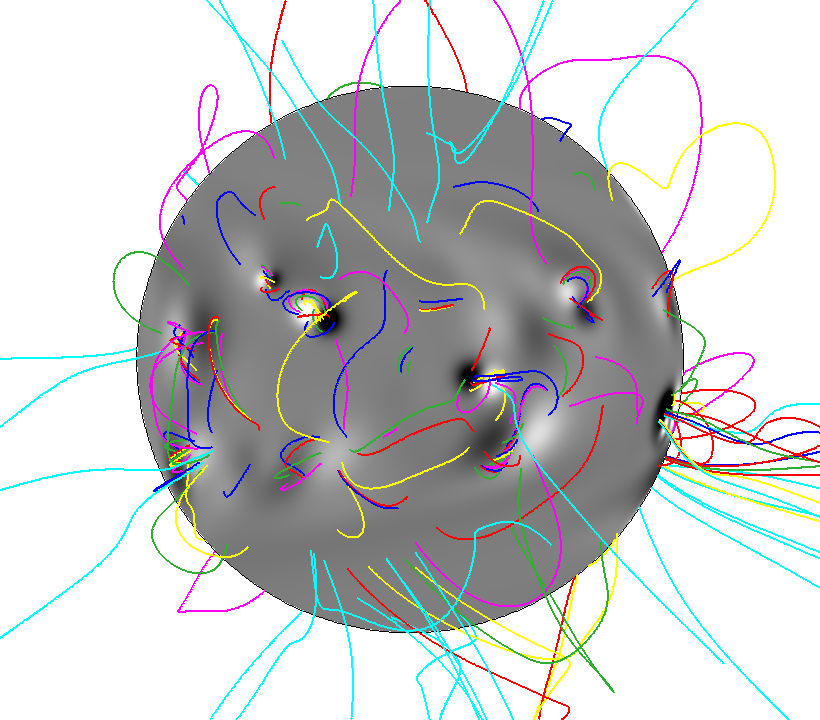
Jack Reid is a Research Fellow in the Department of Applied Mathematics at the University of St Andrews' School of Mathematics and Statistics. His research focuses on solar magnetohydrodynamics, specifically investigating the evolution of the Sun's global magnetic field, coronal heating via nanoflares, and 3D magnetic reconnection diagnostics. He holds a PhD from the University of St Andrews (2020) and an undergraduate degree in Mathematics. Reid collaborates with institutions globally, including the University of Warwick, Imperial College London, and NASA Goddard Space Flight Centre. His work addresses key challenges in heliophysics, such as understanding how plasma interacts with solar magnetic fields to produce observed phenomena. Recent studies include analyzing the benefits of wider observational fields for solar modeling and validating MHD avalanches as coronal heating mechanisms. Reid’s research combines numerical simulations with observational data to advance our knowledge of coronal dynamics and magnetic topology. He has contributed to over 14 peer-reviewed publications and developed computational models linking plasma heating mechanisms. His collaborations emphasize multi-institutional efforts to solve unresolved problems in solar physics, such as diagnosing reconnection sites and modeling global magnetic field evolution.