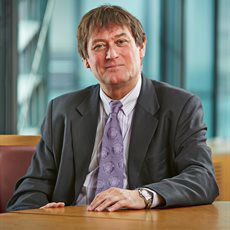
Manuel Fernando Soler Arnedo is a Full Professor in the Aerospace Engineering Department at Carlos III University of Madrid's College of Engineering. His research focuses on Aerospace Engineering with specialization in Optimal Control Theory , Climate Impact Mitigation , and Artificial Intelligence applications for air traffic systems. He leads the Aerospace Engineering Research Group and has contributed extensively to Flight Trajectory Optimization , Weather-Induced Uncertainty , and Network-scale Conflict Resolution . Principal Researcher on EU-funded projects like F4EClim (2024-2027) and KAIROS (2023-2026) Key international collaborations with NEXTOR (UC Berkeley) and ETH Zurich Developed tools like CLIMaCCF V1.0 and ROOST V1.0 for climate-aware flight planning His work integrates Artificial Intelligence with Climate Modeling to address 4D Trajectory Planning , Thunderstorm Avoidance , and Non-CO2 Emission Reduction in aviation. Recent publications emphasize Robust Optimization under meteorological uncertainty and Deep Learning for traffic flow management. He has supervised theses on Data Science for Weather Mitigation and Multi-objective Space Mission Design , with grants from European Commission , Boeing , and Spanish government agencies .
Rauno Cavallaro serves as Associate Professor in the Department of Aerospace Engineering at University Carlos III of Madrid, where he conducts research in aeroelasticity, aircraft design, structural optimization, airborne wind energy systems, and sustainable aviation technologies including hybrid-electric and hydrogen propulsion. His work bridges theoretical aerodynamics with practical aircraft design, focusing on novel configurations like joined-wing systems and delta kites for renewable energy applications. Cavallaro's research portfolio centers on minimizing aircraft environmental impact through innovative configurations. He has pioneered minimum induced drag theorems for nonplanar wing systems and developed advanced aeroelastic models for flexible wings. Current investigations target hydrogen-powered regional aircraft, distributed electric propulsion architectures, and airborne wind energy harvesting systems, with emphasis on noise reduction, emissions mitigation, and structural efficiency. His publication record shows consistent focus on sustainable aviation solutions since 2021, with increasing emphasis on hydrogen propulsion and airborne wind energy. Recent works integrate computational fluid dynamics with structural optimization to address dynamic stall phenomena in delta kites and optimize strut-braced wing configurations for reduced noise and emissions, reflecting industry's shift toward zero-carbon aviation. Cavallaro leads significant research initiatives including INDIGO (European Commission, 2023-2026) on low-emission aircraft technologies and CETACEO with Airbus (2023-2025). He has supervised doctoral research on delta kite aerodynamics for airborne wind energy and aerostructural optimization of next-generation aircraft, demonstrating strong mentorship in sustainable aviation technologies. As a core member of UC3M's Aerospace Engineering Research Group, he contributes to experimental testbed development including visual motion tracking systems for airborne wind energy validation and participates in collaborative projects with European aerospace leaders like Airbus and CIRA on hydrogen propulsion and digital aircraft design frameworks.
Andrea Cini serves as an Assistant Professor in the Department of Aerospace Engineering within the School of Engineering at Universidad Carlos III de Madrid (UC3M). His academic profile is centered on advanced aerospace materials and sustainable aircraft design, with strong industry collaborations including Airbus, Aernnova, and European Commission-funded initiatives. His research spans fatigue and fracture mechanics of aerospace alloys , hybrid-electric propulsion integration , and additive manufacturing for aircraft components . Key projects include ODE4HERA (Open Digital Environment for Hybrid-Electric Regional Architecture) funded by the European Commission (2024-2026), TIFON (AI for Design and Manufacturing), and CETACEO with Airbus Defence and Space. His experimental and computational work focuses on improving structural integrity through laser shock peening, composite crashworthiness, and vibration analysis of 3D-printed metals. Dr. Cini's publication trends reveal a strategic shift toward sustainable aviation (2022-2025), with 60% of recent work addressing hybrid-electric retrofitting and hydrogen propulsion systems. Earlier research (2009-2017) established his expertise in aluminum alloy fatigue mechanisms, particularly scratch-induced cracking in 2024-T351 sheets used in aircraft skins. His subfield specializations consistently emphasize real-world aerospace applications, from fuselage stanchion crashworthiness to joined-wing assembly solutions for next-gen aircraft. Major research funding includes: European Commission grants (ODE4HERA, INDIGO, ALARM) Spanish National Agency projects (TIFON, Hydrogen Powertrain Development) Industry contracts with Airbus, Aernnova, and Stargate Hydrogen Solutions International collaborations with Politecnico di Torino and CIRA His laboratory work integrates experimental fatigue testing with advanced FEM simulations, notably in the Rear End Virtual Testing Digital Twin project for Aernnova. Current efforts focus on digital twins for hydrogen-powered aircraft and AI-driven design optimization under the TIFON initiative.
Carlo Joseph Graziani is a Research Associate Professor in the Department of Astronomy & Astrophysics at the University of Chicago and is currently affiliated with Argonne National Laboratory, part of the Mathematics and Computer Science division, specifically the Laboratory for Applied Mathematics, Numerical Software, and Statistics. His work bridges computational science, applied mathematics, and theoretical astrophysics. His research interests focus on computational science , applied mathematics , and theoretical astrophysics , with recent applications in Bayesian evaluation of clinical trial data for vaccine efficacy. His expertise lies in developing and applying advanced numerical methods and mathematical models to complex scientific problems across disciplines. Graziani has contributed to major scientific projects, including the international High-Energy Transient Explorer (HETE) mission, and has held research positions at NASA's Goddard Space Flight Center and the Enrico Fermi Institute. His interdisciplinary work reflects a strong integration of physics, statistics, and high-performance computing. He is actively engaged in research at Argonne National Laboratory, with no indication of retirement or part-time status. His work continues to impact both astrophysical modeling and data-driven scientific evaluation methods.
Anjo Vahldiek-Oberwagner is a Research Scientist at Intel Labs and an Adjunct Lecturer at TU Munich, where he contributes to both industrial R&D and academic education in systems and security. His work bridges hardware and software security, focusing on confidential computing, in-process isolation, and secure cloud deployments. PhD in Computer Science, Max Planck Institute for Software Systems & Saarland University, 2019 B.Sc. in Applied Computer Science, Cooperative University State University Baden-Wuertemberg, 2009 His research centers on system security, particularly techniques for protecting data confidentiality and integrity at rest, in-flight, and in-memory. He explores operating systems, distributed systems, and hardware-assisted security mechanisms such as Intel MPK and SGX. His work on ERIM, HFI, Endokernel, and Graphene has advanced secure in-process isolation and trusted execution environments. He has published extensively in top venues like USENIX Security, ASPLOS, and IEEE S&P. His recent publications reflect a strong trend toward practical, deployable security solutions for modern computing environments, including secure AI/ML deployments, efficient in-process isolation, and hardware-accelerated sandboxing. Themes include memory safety, performance optimization, and real-world applicability of security primitives. Scientific awards include: Distinguished Paper Award and Internet Defense Prize, USENIX Security 2019 (ERIM) Distinguished Paper Award, ASPLOS 2023 (HFI) IEEE Micro Top Picks 2024 (HFI) Intel Hardware Security Academic Award (Honorable Mention) DARPA Riser 2022 Intel Labs Gordy Award Honorable Mention He actively mentors and serves on program committees (EuroSys, USENIX Security, ASPLOS), chairs artifact evaluation (USENIX Security, EuroSys, SC), and is an Associate Editor for ACM TOPS. He has advised no formal students listed, but collaborates widely across Intel and academia. His work is supported by Intel and DARPA, and he holds multiple patents in secure computing and TEEs. He leads research on memory-safe architectures and secure cloud deployments at Intel Labs. He is involved in several research projects, including: Secure In-Process Memory Isolation, Shielding Applications in Untrusted Clouds via SGX, Memory-Safe Hardware and Software Architecture, and Research Artifacts and Evaluation. He is also a key contributor to the Graphene Library OS and works on validation and endorsement services for confidential computing.
Elias Zea Marcano is an Assistant Professor of Engineering Acoustics at the Marcus Wallenberg Laboratory for Sound and Vibration Research (MWL) at KTH Royal Institute of Technology. His research focuses on noise source separation, aeroacoustics, room acoustics, sparse signal processing, and data-driven methods. He reviews for prominent journals like the Journal of the Acoustical Society of America and serves as a Guest Editor for the Journal of Theoretical and Computational Acoustics. His work is supported by the Swedish Research Council and the European Commission. He teaches courses such as Room Acoustics and Spatial Audio and has supervised numerous graduate students and postdocs in areas like sustainable aviation noise reduction and acoustic material characterization. He actively participates in international conferences and publishes cutting-edge research on topics such as fan noise measurement and data-driven speech enhancement.
Carmen Dasilva is a Research Fellow at Macquarie University's School of Natural Sciences. She previously held a Research Fellow position at Monash University (2020-2022). Her primary research focuses on evolutionary physiology, specifically organismal and ecosystem resilience to climate change, with an emphasis on insect pollinators like bees and butterflies. She investigates how these species adapt to climate shifts through evolution, plasticity, and range shifts, and how such changes impact ecosystem function. Education: PhD in Biological Sciences from The University of Queensland (2015–2019), specializing in thermal adaptation in intertidal gobies. Bachelor of Science (Honours) in Biological Sciences from Flinders University (2011–2014). Research Interests: Climate change impacts on pollinators, thermal physiology, ecological vulnerability, and biodiversity conservation. She leads projects such as 'Before the brink: sublethal effects of climate warming on native bee ecology' (2024–2027) and collaborates on studies like 'Understanding the diversity and virulence of common virus pathogens in Australian honeybees' (2023–2024). Her publications emphasize climate adaptation in insects, physiological constraints on species distribution, and the ecological consequences of climate shifts. Key themes include thermal tolerance, evolutionary rates, and ecosystem resilience. Grants/Projects: Active funding includes a 2024–2027 project on native bee ecology and a 2023–2024 study on honeybee pathogens. Her work bridges lab-based physiology with field ecology, addressing both applied and theoretical questions in climate biology.
Troy Allen is a Professor and Chair in the Aviation Technology department at the Bailey College of Engineering & Technology, Indiana State University. He holds a Ph.D. in Curriculum and Instruction from Indiana State University (2006), an M.S. in Aeronautical Science from Embry-Riddle Aeronautical University (1999), and a B.S. in Aviation Administration from Indiana State University (1989). He has served in key administrative roles including Associate Dean and Acting Dean, reflecting his leadership and institutional commitment. Ph.D., Curriculum and Instruction, Indiana State University, 2006 M.S., Aeronautical Science, Embry-Riddle Aeronautical University, 1999 B.S., Aviation Administration, Indiana State University, 1989 His research focuses on aviation education, pilot training, airport governance, aviation safety, and curriculum development. He explores training needs for airport board members, flight school incident analysis, and interdisciplinary aviation teaching modules. His work bridges academic theory with practical aviation policy and operations. Allen's recent publications and presentations span aviation safety, regulatory compliance, environmental performance at small airports, wildlife hazard management, and historical aviation research. His scholarly output reflects a blend of empirical research, policy guidance, and community engagement, with a strong emphasis on improving aviation education and operational standards. Frank E. Sorenson Research Award (2011) BCET Certificate of Distinction (2023) Multiple teaching and service recognitions from ISU and professional organizations Nominated for Caleb Mills Distinguished Teaching Award (2010) He has led and participated in numerous grants, including projects funded by the Transportation Research Board, National Science Foundation, and ISU Center for Global Engagement. His consulting work extends to academic publishers and aviation organizations. He actively mentors students and contributes to curriculum development and faculty training initiatives. Allen is also engaged in public outreach through book presentations, historical aviation talks, and community education. He leads or participates in several university committees including the University Assessment Council, Honors Advisory Committee, and Faculty Center for Teaching Excellence. He also serves on the Terre Haute Airport Advisory Committee and contributes to local aviation events such as airshows and career fairs.
David Dickinson is a Professor of Economics in the Department of Economics at the Birmingham Business School, University of Birmingham. He holds a PhD from Sheffield University and a BA (Econ) from Manchester University. His primary research affiliations include the Money, Macroeconomics and Finance research group, the Birmingham-Nankai Joint Interdisciplinary Research Institute, and the 'Pollution Solutions' theme of the Institute of Global Innovation. PhD, Sheffield University BA (Econ), Manchester University David Dickinson's research focuses on financial markets and institutions, behavioural economics and finance, the Chinese economy, green finance and investment, monetary policy, and energy economics. His work bridges theoretical and empirical analysis, often utilizing advanced econometric techniques to explore critical issues in both developed and emerging markets. He has made significant contributions to understanding financial regulation, systemic risk, and investment behavior, particularly within the context of China's evolving financial system. His recent work also extends into sustainability and climate-related economic challenges. His recent publications span top-tier journals in finance and economics, revealing a strong trend toward analyzing financial decision-making under institutional constraints, behavioural influences, and macroeconomic shocks. Key themes include equity fund management strategies, credit risk in banking, cross-border financial contagion, and the economic impacts of infrastructure and environmental policy. His work frequently employs time-series econometrics, panel data analysis, and policy evaluation methods. David Dickinson is actively engaged in interdisciplinary research addressing global innovation and pollution solutions, reflecting a growing emphasis on sustainable economic development. His collaborations with researchers across China and the UK underscore his international impact. He has not been publicly recognized with specific scientific awards in the provided text, but his publication record in high-impact journals indicates significant scholarly recognition. There is no information available about students he has supervised or grants he has led. However, his leadership in major research themes and joint institutes suggests active mentorship and research direction. David Dickinson contributes to interdisciplinary research through the Birmingham-Nankai Joint Interdisciplinary Research Institute and the 'Pollution Solutions' initiative, positioning him at the intersection of economics, finance, and global sustainability challenges.
Ramón García Alarcia is a Research Associate and Doctoral Candidate at the Chair of Spacecraft Systems, Technical University of Munich (TUM), under Prof. Alessandro Golkar. He holds dual Bachelor's degrees in Aerospace and Telecommunication Systems Engineering from the Polytechnic University of Catalonia (UPC), and a Master's in Aerospace Engineering (Space Systems specialization) from ISAE-SUPAERO. His research focuses on applying Large Language Models (LLMs) to streamline space mission design, particularly in requirements generation and high-level documentation. This work aims to reduce costs and democratize access to space. Key areas include generative AI for complex systems, autonomous space systems, and federated satellite networks. Ramón teaches courses on spacecraft systems, including 'Design and Simulation of Microsatellites' and 'Systems Engineering – Advanced.' He has authored/co-authored over a dozen peer-reviewed publications, covering topics like AI-driven mission design tools, event-based cameras for situational awareness, and telecommunication network analysis. His doctoral project involves developing a prototype AI-assisted mission design tool, leveraging generative models to enhance efficiency in early-stage spacecraft planning. Collaborations span institutions like ISAE-SUPAERO and UPC, with a focus on interdisciplinary aerospace challenges.
Emőke Lőrincz is an Honorary Professor in the Department of Atomic Physics at Budapest University of Technology and Economics (BME). Her research focuses on advanced optical and nuclear technologies, including scintillator materials for medical imaging (PET), laser physics, and holographic data storage. She has contributed to the development of high-resolution PET detectors, digital photon counter systems (SPADnet), and novel optical memory technologies using azobenzene polymers. Her work bridges fundamental material science with applied engineering solutions for biomedical and data storage applications. Key research areas include optimizing light-sharing modules for PET detectors, measuring optical properties of scintillator crystals, and advancing polarization-based holographic storage systems. Her interdisciplinary approach combines experimental validation with computational modeling to enhance detector performance and data density in optical systems. Publications span from 1985 to 2017, reflecting her long-term contributions to optics, nuclear instrumentation, and materials science. Notable collaborations include studies on LYSO:Ce scintillators, SiPM arrays, and phase-modulation techniques for holography. While no specific awards are listed, her extensive publication record underscores her influence in these fields. Her work often addresses practical challenges such as improving detector spatial resolution, optimizing light collection efficiency, and ensuring material durability in extreme conditions. This research has direct applications in medical imaging systems and next-generation optical storage technologies.
Tim McLain is a Professor in the Department of Mechanical Engineering at Brigham Young University (BYU), College of Engineering. He has been a core faculty member since 1995, advancing from Assistant to Associate and full Professor by 2007. He served as Department Chair from 2007 to 2013 and continues to lead research in unmanned aircraft systems and control theory. Research Interests: His work centers on the dynamics, guidance, control, and autonomy of unmanned aircraft systems (UAS). Key areas include cooperative control, vision-based navigation, state estimation, and precision landing for UAVs. His research integrates control theory with practical implementation in aerial robotics. The recent publications reflect a strong trend in autonomous UAV operations, particularly in GPS-denied environments, vision-based navigation, and cooperative mission planning. His work spans theoretical control design, real-time estimation, and experimental validation on small aerial platforms. He has also contributed to MEMS sensor integration and modeling. Scientific Awards: No specific awards are listed in the provided text. Advising and Grants: Dr. McLain has advised over 25 graduate students, primarily on UAV-related thesis topics. His research has likely been supported by grants from agencies such as AFRL and NSF, inferred from collaborations and research topics, though specific grants are not listed. Labs and Teams: He is affiliated with UAV research teams at BYU, collaborating closely with R. Beard and others on autonomous flight projects, including formation control, search missions, and cooperative surveillance.
Alex Zanotti is an Associate Professor of Fluid Dynamics at the Department of Aerospace Science and Technology of Politecnico di Milano, where he also earned his M.Sc. and Ph.D. in Aerospace Engineering and Rotary Wing Aircraft, respectively. He leads key research and teaching initiatives in experimental and computational aerodynamics, serving as Scientific Coordinator of the Aerodynamics Laboratory and Deputy Head of the Scientific Council of the Politecnico di Milano Wind Tunnel. Ph.D. in Rotary Wing Aircraft, Politecnico di Milano (2012) M.Sc. in Aerospace Engineering, Politecnico di Milano (2006) His research focuses on the fluid dynamics of Advanced Air Mobility (AAM) vehicles , particularly eVTOLs, with emphasis on interactional aerodynamics and aeroacoustics . He investigates phenomena such as propeller-propeller, propeller-wing, blade-vortex interactions, and vortex ring state across the flight envelope. His work integrates wind tunnel experiments with mid-fidelity simulations using DUST, a vortex-particle-method based solver he coordinates. The recent articles reflect a consistent trend in multi-propeller aerodynamic interactions , noise prediction , and validation of computational tools against experimental data. Topics span from fundamental vortex dynamics to applied urban air mobility vehicle design, with strong emphasis on performance, safety, and regulatory compliance . The integration of simulation and testing is a hallmark of his research approach. Scientific Roles and Leadership: Scientific Coordinator, Aerodynamics Laboratory, Politecnico di Milano Deputy Head, Scientific Council, Politecnico di Milano Wind Tunnel Scientific Coordinator, DUST mid-fidelity aerodynamic solver Instructor, Experimental Fluid Dynamics and Aerodynamics of Transport Vehicles (M.Sc. Aeronautical Engineering) While no formal awards or student names are mentioned, his leadership in lab operations, software development, and advanced teaching suggests an active supervisory role in graduate research. His work supports the development of next-generation urban air mobility systems through rigorous aerodynamic and acoustic analysis. He is involved in advanced research infrastructure and is likely engaged in national and international collaborations related to AAM certification and design. His future work may focus on scaling simulation capabilities, integrating machine learning for flow prediction, and expanding experimental databases for regulatory frameworks.
Vicente González Millán is a full Professor in the Department of Electronic Engineering at the School of Engineering, University of Valencia. His work bridges electronics technology and nuclear physics, with strong involvement in international collaborations such as CERN, AGATA, and NEDA. His research focuses on the development of advanced radiation-hard semiconductor sensors, particularly the MALTA series of monolithic active pixel sensors, for applications in high-energy and nuclear physics experiments. He is actively involved in detector design, signal processing, FPGA-based data acquisition systems, and real-time data analysis techniques. His work supports cutting-edge experiments in nuclear structure, particle detection, and medical physics instrumentation. The recent publications show a consistent focus on detector development, sensor characterization, and data acquisition systems. Key themes include radiation hardness, timing performance, charge calibration, and the use of machine learning for event reconstruction in neutron detection arrays. The work is highly experimental and closely tied to large-scale facilities like CERN and GANIL. He leads or is a core member of two research groups: i2N (Electronic Instrumentation in Medical and Nuclear Physics) and IRIMED (Research in Radiophysics and Nuclear Instrumentation in Medicine), highlighting the dual application of his work in both fundamental physics and medical technology. While no specific awards are listed, his sustained publication record and leadership in major detector projects indicate significant recognition in the field. He also contributes to the development of real-time trigger systems, digital front-end electronics, and FPGA-based solutions for gamma and neutron spectroscopy.
Erlend Magnus Lervik Coates is an Associate Professor in the Automation and Intelligent Systems (AIS) department at the Department of ICT and Science, Norwegian University of Science and Technology (NTNU) in Ålesund. He serves as Head of the Cyber-Physical Systems Laboratory (CPS-Lab) and coordinator for research on autonomous ships, one of three focus areas at CPS-Lab. Additionally, he is affiliated with SFI AutoShip and supervises 4 PhD candidates. Research Focus: Motion control, autonomy, power and energy management systems, autonomous ships, drones, cyber-physical systems, robotics, and control technology. Academic Leadership: Involved in study program councils for the master's program in mechatronics and automation, teaching control engineering and artificial intelligence. His recent publications focus on autonomous systems, control algorithms for UAVs and marine vessels, and implementation of geometric and reinforcement learning methods in dynamic environments. No scientific awards or lab details are explicitly mentioned in the available text.