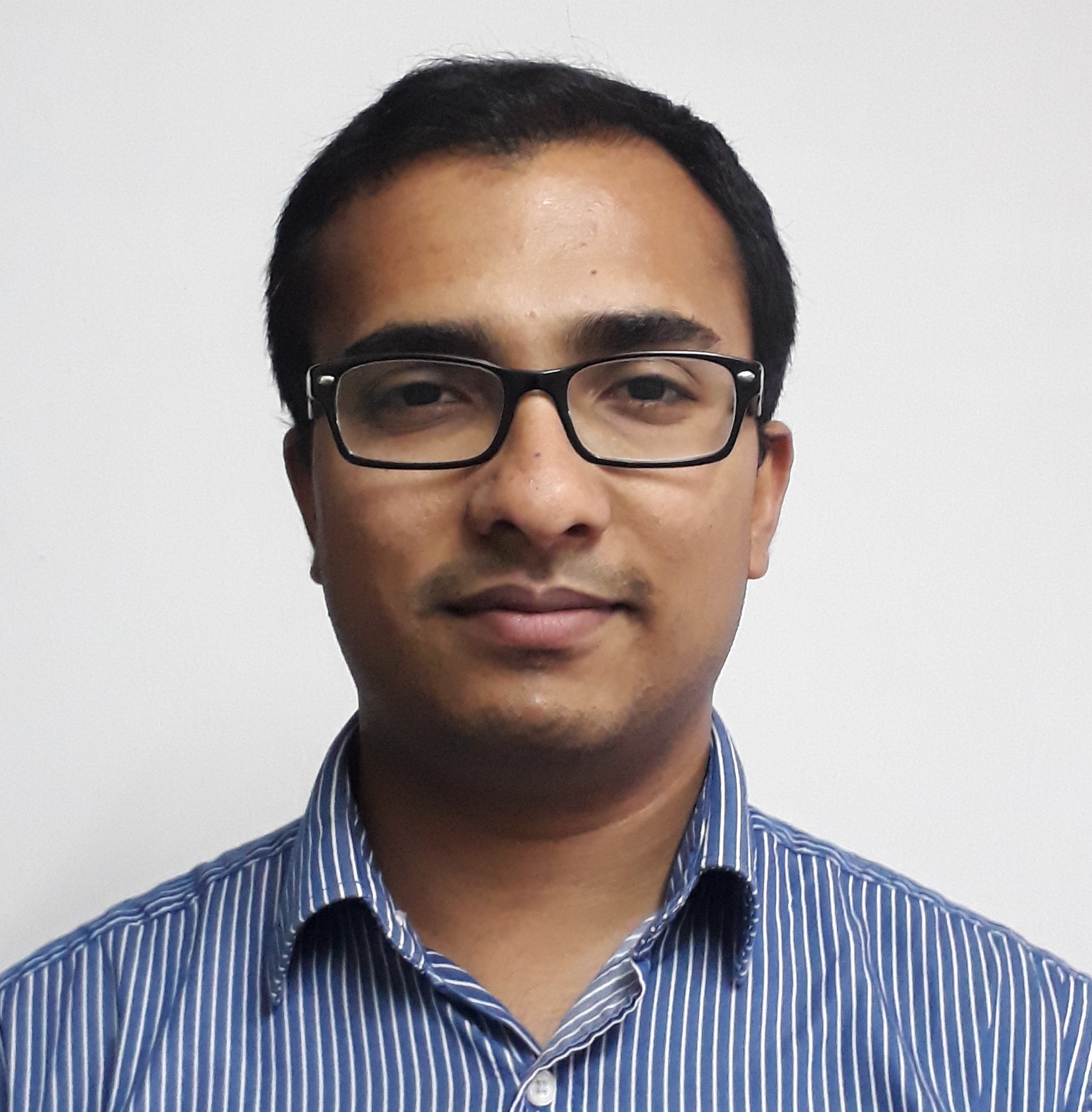
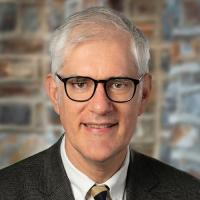
Anirban Mazumdar is an Assistant Professor at the Georgia Institute of Technology's College of Engineering, specifically within the Woodruff School of Mechanical Engineering. He directs the Dynamic Adaptive Robotic Technologies (DART) Lab, focusing on agile robot mobility in unstructured environments. His research integrates biomechanics, robotics, and machine learning to develop energy-efficient systems. Position: Assistant Professor of Mechanical Engineering Institution: Georgia Institute of Technology Laboratory: Dynamic Adaptive Robotic Technologies (DART) Lab Email: anirban.mazumdar@me.gatech.edu His work spans multiple specialized subfields including: Autonomous drilling systems and sensor fusion Exoskeleton design for human performance enhancement Deep learning applications in biomechanics tracking Adaptive motion planning algorithms Energy-efficient robotic actuators Current research trends emphasize the integration of machine learning with physical robotic systems, particularly for: Human-centric adaptive technologies Mobile robot payload transportation Subsurface drilling automation Underwater inspection robotics Wearable sensor development Maneuverability in constrained environments Contact Information Email: anirban.mazumdar@me.gatech.edu Phone: 404.385.8061 Office: Callaway Building 432
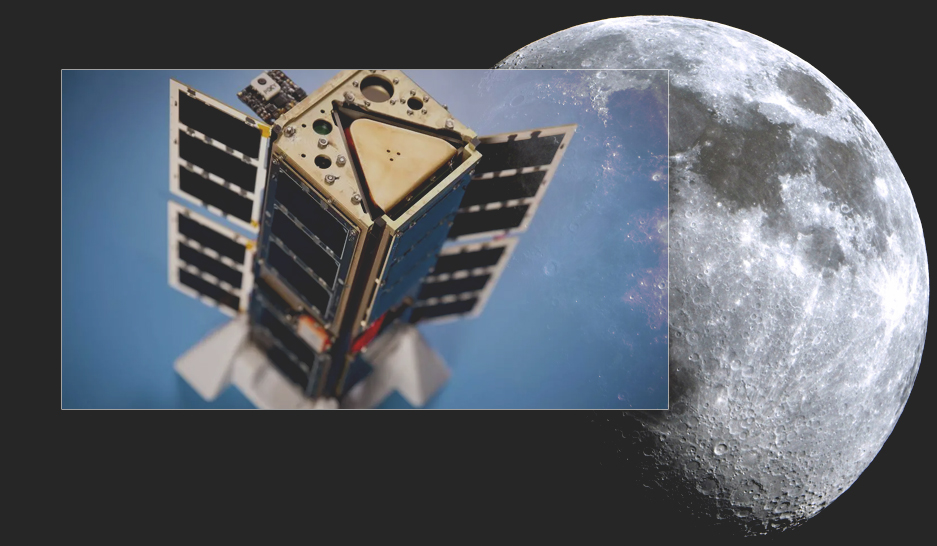
Glenn Lightsey, the John W. Young Chair Professor at Georgia Institute of Technology's Daniel Guggenheim School of Aerospace Engineering, specializes in small satellite technology, space exploration, propulsion systems, and Earth monitoring. As former director of the Space Systems Design Laboratory (2016-2023) and Georgia Tech’s Center for Space Technology and Research (2019-2023), he has led groundbreaking projects like the BioSentinel propulsion system for NASA’s Artemis I mission. Ph.D. in Aeronautics and Astronautics, Stanford University M.S. in Electrical Engineering, Johns Hopkins University B.S.E. in Mechanical & Aerospace Engineering, Princeton University His research spans guidance, navigation, and control systems for spacecraft, with a focus on lunar exploration and sustainable space missions. He has authored over 200 technical articles and patents, and serves as Associate Editor-in-Chief of the Journal of Small Satellites . Key projects include: Green Propellant Dual Mode (NASA, 2023) Low-Gravity Water Electrolysis (ESA, 2023) Lunar Dust Mitigation (NASA, 2023) SWARM-EX Space Weather Experiment (NSF, 2020) Scientific honors include: AIAA Fellow (2016) Mechanics and Control of Flight Award (2019) Tycho Brahe Award (2005) Halliburton Young Faculty Excellence Award (2000) As a visionary in space systems, Lightsey advocates for sustainable lunar habitation and interplanetary exploration, emphasizing interdisciplinary collaboration and systems engineering principles.
Lu Gan is an Assistant Professor at the Daniel Guggenheim School of Aerospace Engineering at the Georgia Institute of Technology, where she joined in January 2024. She leads the Lu's Navigation and Autonomous Robotics (Lunar) Lab and serves as core faculty for the Institute for Robotics and Intelligent Machines (IRIM) at Georgia Tech. Dr. Gan earned her educational degrees from prestigious institutions: B.S. in Automation from the University of Electronic Science and Technology of China (2013), M.S. in Control Engineering from Beihang University (2016), and both M.S. and Ph.D. in Robotics from the University of Michigan, Ann Arbor (2021, 2022). Prior to her appointment at Georgia Tech, she completed a two-year postdoctoral fellowship at the Graduate Aerospace Laboratories of the California Institute of Technology (GALCIT) and the Center for Autonomous Systems and Technologies at Caltech. Her research focuses on robot perception, robot learning, and autonomous navigation, exploring the integration of computer vision, machine learning, estimation, probabilistic inference, kinematics, and dynamics to develop autonomous systems for ground, air, and space applications. Her work addresses challenges in highly unstructured environments under harsh sensing conditions for tasks including search and rescue, daily housework, and scientific exploration. Dr. Gan's recent publications demonstrate strong trends in applying advanced machine learning techniques, particularly graph neural networks and multi-modal fusion approaches, to robotics challenges. Her work spans multiple subfields including legged locomotion, semantic scene understanding, contact perception, and thermal imaging applications for robotic systems operating in challenging environments. DAAD AInet Fellowship (2023) Rising Star in Data Science, University of Chicago (2022) National Graduate Scholarship of China (2015) IROS Best Paper Award on Agri-Robotics (Finalist, 2023) Dr. Gan actively mentors students in the Lunar Lab, with current advisees working on cutting-edge robotics research. She serves as an Associate Editor for IEEE Transactions on Robotics (T-RO) and IEEE Robotics and Automation Letters (RA-L), and is Associate Co-Chair of the IEEE RAS Technical Committee for Computer & Robot Vision. Her lab has secured various research grants supporting their work in robotics and autonomous systems. The Lunar Lab maintains strong collaborations with leading institutions and researchers in the robotics community, hosting seminars and participating actively in major conferences like ICRA. The lab's research directions include physics-informed learning for robotics, multi-modal 3D scene understanding, and heterogeneous multi-robot active SLAM.
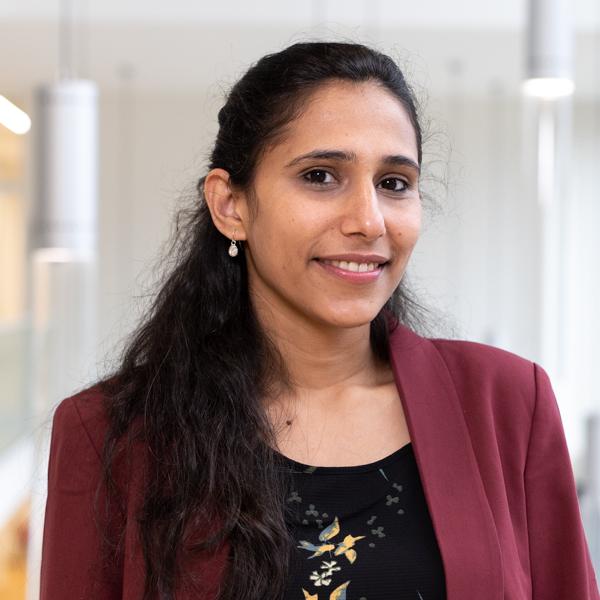
Dr. Mridula Singh is a tenure-track faculty member at the CISPA Helmholtz Center for Information Security in Saarbrücken, Germany, affiliated with the Secure Networked and Mobile Systems research group. Her work bridges wireless system security and autonomous cyber-physical systems. Education : Master's in Computer Science from IIIT-Delhi, India; PhD in System Security from ETH Zurich, Switzerland. Her research focuses on secure distance measurement and proximity-based positioning systems , particularly through physical-layer innovations like Message Time of Arrival (MTA) Codes . These underpin secure passive keyless entry systems in automobiles and explore future applications in LiDAR sensors and LEO satellite positioning . Recent publications highlight trends in GNSS relay attacks , 5G secure ranging , and CAN bus security . Her work often addresses practical vulnerabilities in autonomous systems and mobile networks . Scientific Awards : Busy Beaver Award in 'Wireless and Mobile Security' (2023). She co-founded the startup Trishulam (2012–2014) and held roles at Xerox Research Center India (2014–2016). Current efforts target scalable positioning systems and LEO satellite security .
Marie-Paule Cani is a Professor of Computer Science at Ecole Polytechnique (IP Paris), where she serves as Dean of the Master of Science and Technology program. She is a member of the Académie des sciences and leads research in the LIX laboratory (CNRS/Ecole Polytechnique, IP Paris). Her career spans several prestigious institutions including Grenoble INP and Collège de France. Dr. Cani earned her M.Sc. in Computer Science from Ecole Normale Supérieure & University Paris XI in 1987, followed by a Ph.D. in Computer Graphics from University Paris XI in 1990 under advisor Claude Puech. She completed her Habilitation in Computer Science from Institut National Polytechnique de Grenoble in 1995. Professor Cani's research focuses on advancing user-centered, creative 3D modeling and animation systems. Her work aims to develop intelligent systems that help users express shapes in motion they have in mind, whether they are computer artists, engineers, or scientists from other disciplines. She pioneered methodologies that provide expressive, gesture-based control (such as sketching, deformation, copy-pasting) while augmenting graphical models with knowledge from priors or statistics learned from examples. Her research spans multiple areas including implicit surfaces, developable surfaces, procedural models, physically-based animation, and sketch-based modeling. Her recent publications demonstrate a continued focus on innovative approaches to 3D modeling, animation, and simulation. Her work bridges computer graphics with applications in geology, biology, and virtual environments. Recent trends show increasing integration of machine learning techniques with traditional graphics approaches, particularly in procedural modeling and animation control. ACM Siggraph Steven A. Coons Award (2023) Member of the ACM Siggraph Academy (2019) Member of Academia Europaea (2013) Silver medal from CNRS (2012) EUROGRAPHICS award for Outstanding Technical Contributions (2011) Irène Joliot Curie national award, mentorship category (2007) Junior member of the Institut Universitaire de France (1999) Professor Cani has supervised numerous students throughout her career and has led multiple significant research projects funded by prestigious organizations. Her ERC Advanced Grant EXPRESSIVE (2012-2017) focused on EXPloring RESponsive Shapes for the creation of Interactive Virtual Environnements. She created and led the STREAM Team at LIX from 2016-2019. More recently, she has been Principal Investigator in the chair between Google and Ecole Polytechnique on Artificial Intelligence & Visual Computing (2018-2021), and in the International Training Network CLIPE (2020-2024), funded by the European Research Council. She currently leads the interdisciplinary project Paleomob-3D (2023-2026) between LIX and HNHP, funded by CNRS 80-Prime. Professor Cani has led several research teams throughout her career, including the Imagine joint team (Inria/LJK lab, 2011-2016) and the Evasion joint team (Inria/GRAVIR lab, 2003-2010). She currently leads research in the LIX laboratory at Ecole Polytechnique, where she was the leader of the "Modeling Simulation and Learning" pole from 2019 to 2023.
Prof.dr.ir. J.M. Hoekstra is a Professor in the Department of Aerospace Engineering at Delft University of Technology. His research focuses on advancing air traffic management systems through computational methods and AI applications. Research Focus: Hoekstra leads investigations in aircraft engineering, air traffic optimization, and autonomous systems. His work integrates reinforcement learning for conflict resolution in drone operations and develops trajectory generation algorithms for urban airspace. Recent projects examine safety systems for high-density air traffic and optimal flight path modeling under environmental constraints. Honors and Awards: Best Paper Award at ICRAT 2024 Best Paper Award (2022) for contributions to air transportation research Academic Leadership: He co-founded the BlueSky research community and organized its 10th-anniversary symposium. Hoekstra supervises graduate research (13+ supervised works) and chairs program committees for major conferences including SESAR Innovation Days.
Associate Professor Sridhar Ravi is Deputy Head of the School of Engineering and Technology at UNSW Canberra and leads the Bio-Engineering Research Group . He holds a Bachelors of Engineering (Aerospace) and PhD from RMIT University (2007 & 2011), where his doctoral research focused on wind turbulence effects on wing aerodynamics. Postdoctoral stints at Harvard University (2012-2014), Chiba University (JSPS Fellowship), and University of Bielefeld (Alexander von Humboldt Fellowship) expanded his expertise in insect/bird flight and bio-inspired design. Research Interests span Bioinspired Robotics Biomechanics of Flight Fluid-Structure Interactions Neuroethology of Navigation Unsteady Aerodynamics Autonomous Systems His work integrates biological principles into engineering solutions, particularly for miniature aerial/underwater vehicles. Recent Publications emphasize fluid dynamics in bio-inspired propulsion, obstacle avoidance, and swarm robotics. Key trends include passive wing rotation mechanisms, ground effect optimization, and sensory integration for autonomous control. Scientific Honors include JSPS Fellowship (Chiba University) Alexander von Humboldt Fellowship (University of Bielefeld) His teaching at UNSW Canberra includes Rotorcraft Engineering and Fundamentals of Flight , reflecting his technical depth.
Associate Professor Sean O'Byrne is a faculty member at UNSW Canberra within the School of Engineering and Information Technology. With a Ph.D. in Physics from the Australian National University, his career spans hypersonics research, laser diagnostics development, and academic leadership in aerospace engineering. His work bridges fundamental physics with practical aerospace applications, particularly in high-speed flow measurement and scramjet technology. Dr. O'Byrne's research focuses on hypersonics and re-entry physics, laser spectroscopy applications for flow diagnostics, thermal and chemical nonequilibrium in high-speed flows, and aviation safety concerns. His laboratory specializes in advanced optical measurement techniques including tunable diode laser absorption spectroscopy, laser-induced fluorescence, and Doppler-shift velocimetry for characterizing extreme flow conditions. Current projects address hypersonic boundary layer interactions, scramjet combustion diagnostics, and novel sensor development for aerospace applications. His publication record demonstrates consistent contributions to hypersonics research since the late 1990s, with recent work emphasizing high-speed flow diagnostics, plasma-assisted ignition, and rarefied gas dynamics. The research shows strong interdisciplinary connections between fluid mechanics, optics, and aerospace engineering, with increasing focus on computational-experimental integration for hypersonic flow characterization. 2015 AIAA Award for best paper in plasmadynamics and lasers 2015 Best pitch at ACT Innovation awards for a knee implant pressure sensor 2013 Spitfire Defence Fellowship 2013 Best New Innovation at New South Innovation Awards for metallic 3D printing technology 2010 UNSW Canberra Rector's Teaching Award Dr. O'Byrne maintains active collaborations with NASA Langley Research Center, international defense organizations, and industry partners in aerospace development. His teaching emphasizes research-led, project-based learning in hypersonics and microcontroller-based instrumentation. As a Senior Member of both the American Institute of Aeronautics and Aerospace and Optica society, he contributes to professional community development while maintaining strong industry connections through consulting in laser-based diagnostics and hypersonic technologies.
Deepak Vasisht is an Assistant Professor in the Department of Computer Science at the University of Illinois Urbana-Champaign (UIUC), with affiliate appointments in Electrical and Computer Engineering and the Coordinated Sciences Laboratory. He leads the rural connectivity thrust at the Center for Digital Agriculture and directs a research group focused on next-generation mobile computing and wireless networking systems. Dr. Vasisht earned his Ph.D. in Computer Science and Engineering from MIT in 2019, advised by Professor Dina Katabi, following an S.M. in Computer Science from MIT in 2015 and a B.Tech. in Computer Science and Engineering from IIT-Delhi in 2013, where he received the President of India Gold Medal for highest CGPA across all departments. His research spans four primary thrusts: Low Latency Satellite Connectivity for near-realtime Earth observation; Machine Learning for Next Generation Networks focusing on robust and verifiable ML models; Localization and Sensing using radio signals for applications in smart homes, healthcare, and indoor navigation; and Rural Connectivity and Data-driven Agriculture for digital farming solutions. His work has resulted in numerous high-impact publications at top venues including SIGCOMM, MobiCom, NSDI, and MobiSys. Dr. Vasisht's research has demonstrated significant trends toward space-Earth connectivity, with multiple papers on satellite networking in recent years, alongside continued innovation in wireless sensing and privacy protection systems. His team has developed novel approaches for satellite traffic scheduling, constellation-aware medium access, and radar-based localization. NSF CAREER Award (2023) Best Community Contribution Paper Award at ACM MobiCom (2024) Systems Research Award by VMWare (2023) ACM SIGCOMM Doctoral Dissertation Award (2020) Multiple Best Paper Awards across top conferences List of Teachers Ranked as Excellent by Students at UIUC (2021-2024) Dr. Vasisht has successfully advised numerous Ph.D. students including Jay Shenoy, Zikun Liu, Bill Tao, and Emerson Sie, with several receiving prestigious fellowships such as the Qualcomm Innovation Fellowship and Rambus Computer Engineering fellowship. His research is generously funded by NSF (including CAREER and RINGS awards), USDA, Microsoft, Cisco, and IBM, supporting his work on satellite networks, wireless sensing, and rural connectivity solutions. He leads the Connected Systems Lab at UIUC, which has developed influential systems including FarmBeats (now a Microsoft product) and innovative approaches to satellite networking, RF privacy, and in-body communication.
Luis Enrique Díez Blanco is an Assistant Professor at the University of Deusto's Faculty of Engineering, Department of Mechanics, Design and Industrial Management. He holds a PhD in Engineering for the Information Society and Sustainable Development (2019), a Master's in Communications Technologies from Polytechnic University of Madrid (2012), and a Telecommunications Engineering degree from Deusto (2005). His research focuses on signal processing and data fusion for intelligent transport systems, ambient assisted living, and wearable-based navigation. His work advances localization technologies through inertial sensors, UWB systems, and machine learning, with applications in healthcare, mobility, and resource-constrained environments. Research trends show consistent focus on hybrid positioning systems, error mitigation in wearable sensors, and practical implementations of IoT solutions. Awards: Best PhD Thesis Award (2020) First Prize in Pedestrian Dead Reckoning Competition (2016) Research recognition (Sexenio 2015-2020) He currently supervises two doctoral theses in localization systems and has led over 10 research projects including EU-funded initiatives (e.g., REACH, Modelling Emerging Transport Solutions) and industry collaborations with Mercedes-Benz and E PROCESS MED. As principal investigator of Deusto Smart Mobility research group, he coordinates work on intelligent transport and wearable technologies.
Dr. Wrik Mallik is a Lecturer in Aerospace Engineering at the School of Engineering, University of Glasgow, joining in September 2022. His research focuses on computational modeling of fluid dynamics, fluid-structure interaction, and acoustics for sustainable applications in aeronautics, wind engineering, and marine sectors. Education: BTech in Civil Engineering from Jadavpur University, PhD in Aerospace Engineering from Virginia Tech, Postdoctoral Fellow at University of British Columbia Collaborations: Marine Directorate Scotland, National Manufacturing Institute of Scotland, University of Strathclyde, University of Salford, University of British Columbia, Indian Institute of Technology Delhi Key research areas include: Aeroacoustic modeling of bio-inspired fliers Transonic aeroelasticity of transport vehicles Energy harvesting from urban aerodynamics Underwater noise in offshore wind farms Data-driven additive manufacturing Recent publications (2025-2017) span fluid-structure interaction, shape optimization, and sustainable energy systems. Grants include EPSRC ILN+ funding and international partnership awards.
Dr. Ye Yuan is a Lecturer in Flight Sciences (Autonomous Systems & Connectivity) at the University of Glasgow. His research focuses on advancing next-generation aerial systems through computational modeling and optimization techniques. Research Interests: Aircraft flight dynamics and handling qualities Rotorcraft, eVTOL, and UAV system design Model-based optimization for aerospace systems Uncertainty quantification in aerodynamics Autonomous systems and sustainable aviation His publications demonstrate consistent focus on tiltrotor aircraft, coaxial helicopters, and flight control strategies, with recent work emphasizing uncertainty quantification and aerodynamic optimization for improved aircraft safety and performance. Research Funding: Research in Residence Fellowship (2024-2026, £50k): Advanced UAV-embedded wind turbine inspection technology Transportation Research Innovation Grant (2021-2022, £30k): Safety evaluation of Urban Air Mobility systems
Ali Hajimiri is the Bren Professor of Electrical Engineering and Medical Engineering at the California Institute of Technology (Caltech), where he has been a faculty member since 1998. He also serves as Co-Director of the Space-Based Solar Power Project and previously held leadership roles such as Executive Officer for Electrical Engineering and Director of Information Science and Technology. B.S. in Electronics Engineering, Sharif University of Technology (1994) M.S. and Ph.D. in Electrical Engineering, Stanford University (1996, 1998) Hajimiri's research focuses on integrated electronics and photonics systems, spanning applications in wireless power transfer, quantum communication, biomedical devices, and flexible antenna arrays. His work bridges theoretical analysis with practical implementations in silicon-based technologies across RF, mm-wave, and optical frequencies. Hajimiri's recent publications emphasize RF/Microwave Circuit Design , Quantum Photonics , and Flexible Electromagnetic Surfaces , with a notable trend toward space-based wireless ecosystems and reconfigurable phased arrays. His 15 most recent articles (2025–2024) highlight innovations in power transfer, quantum wavefunction manipulation, and deployable satellite systems. Scientific Awards : Feynman Prize for Excellence in Teaching (Caltech’s highest honor) Fellow of the National Academy of Inventors and IEEE TR35 Top Innovator Three-time ASCIT Teaching Award winner ISSCC Jack Kilby Outstanding Paper Award NSF CAREER Award Okawa Foundation Award Hajimiri teaches foundational courses like EE 44: Deterministic Analysis of Systems and EE/MedE 114: Analog Circuit Design . He leads the Caltech Holistic Integrated Circuit (CHIC) Laboratory, mentoring a team developing technologies for space-based solar power , quantum receivers , and ultra-thin cameras . His lab has produced groundbreaking patents (over 180 issued) and spin-offs like Axiom Microdevices (acquired by Skyworks).
John H. Mott serves as Professor and Director of the Advanced Aviation Analytics Center of Research Excellence (A3IR-CORE) at Purdue University's School of Aviation and Transportation Technology. A distinguished academic with engineering expertise across multiple disciplines, he holds formal education from the University of Alabama (B.S. and M.S. in Electrical Engineering) and Purdue University (Ph.D. in Civil Engineering). Doctor of Philosophy, Civil Engineering, Purdue University, 2017 Master of Science, Electrical Engineering, University of Alabama, 1988 Bachelor of Science, Electrical Engineering, University of Alabama, 1986 Dr. Mott's research focuses on transportation process measurement and improvement through distributed data acquisition and analysis, with particular emphasis on aviation applications of Bayesian inference. His work bridges theoretical mathematical modeling with practical transportation safety and efficiency solutions. As Director of A3IR-CORE, he leads interdisciplinary research that transforms raw operational data into actionable insights for improving transportation systems. His publication portfolio reveals strong trends in applying computational methods to aviation safety challenges, particularly through ADS-B data analysis, UAS applications, and noise impact assessment. Recent work increasingly incorporates machine learning approaches to flight trajectory reconstruction and temporal data representation. Major Scientific Recognition: V. L. Laursen Award for Teaching Excellence (2022) President's Award for Excellence, University Aviation Association (2019) Best Dissertation Award, Lyles School of Civil Engineering (2017) Frank E. Sorenson Award for Aviation Research (2016) FLAIR Faculty Fellow at Purdue University (2020) As an advisor, Dr. Mott has guided multiple award-winning student teams in national competitions including the Airport Cooperative Research Program University Design Competition and IEEE Autonomous Drone Challenge. His research has attracted significant funding through Transportation Research Board programs and industry partnerships with United Airlines, Delta Air Lines, and the U.S. Air Force. Current projects focus on runway incursion prevention systems, UAS bridge inspection optimization, and airport operations counting technology. Dr. Mott leads the A3IR-CORE research team, which operates the Operations Control Center and develops real-time analytics infrastructure for transportation systems. The center maintains strong industry connections through its work with the FAA PEGASAS program and active participation in Transportation Research Board committees.
Henri Gavin is a Professor in the Department of Civil and Environmental Engineering. His research focuses on developing innovative solutions for structural resilience, control systems, and earthquake engineering. He leads interdisciplinary projects integrating sensor technology, IoT systems, and machine learning for real-world applications such as earthquake early warning systems. Research Interests: Professor Gavin's work spans earthquake engineering, structural dynamics, vibration isolation, robotics, optimization, and machine learning applications in civil infrastructure. His signature project—Pilot Earthquake Early Warning in Kathmandu (Data+, 2022)—demonstrates his approach to combining AI models with geophone sensors and IoT networks for on-site seismic alerts. Publication Trends: His recent articles (2020-2024) emphasize structural reliability, decentralized control of robotic systems (UAVs/swarms), optimization algorithms, and seismic protection strategies. This reflects a consistent focus on theoretical rigor applied to practical engineering challenges, particularly in nonlinear dynamics and multi-agent coordination. Projects and Advising: He mentors students through Duke's Data+ program, guiding projects in energy data analytics and earthquake early warning systems. Notable funded initiatives include instrumentation and modeling of seismic isolation systems (EAGER, 2012) and performance analysis of base-isolated structures during seismic events.