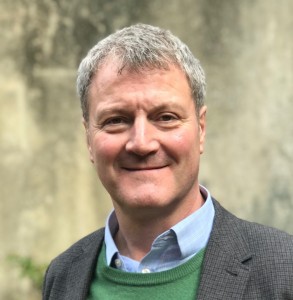
François Henrotte is a Professor at the University of Liège, affiliated with the Montefiore Institute of Electrical Engineering and Computer Science within the Department of Electrical Engineering, Electronics and Computer Science. He leads research in Applied and Computational Electromagnetics (ACE), focusing on electromagnetic modeling, magnetic materials, and computational methods. His work bridges theoretical electromagnetics with practical engineering applications in electrical machines and materials processing. Henrotte's research interests center on computational electromagnetics, with particular expertise in magnetic hysteresis modeling, iron losses computation, and electromagnetic force calculation. His recent work has increasingly incorporated machine learning techniques, especially neural networks, to enhance the accuracy and efficiency of electromagnetic simulations. He has made significant contributions to the modeling of ferromagnetic laminated cores in electrical machines, developing innovative homogenization techniques combined with neural network approaches. His research also extends to flash sintering of ceramics, electromagnetic levitation of molten metals, and cryogenic actuators, demonstrating the breadth of his expertise across multiple domains of applied electromagnetics. Over the past decade, Henrotte's publication record reveals a clear evolution toward integrating artificial intelligence with traditional electromagnetic modeling. His recent work (2022-2025) increasingly features neural network applications for material modeling and loss prediction in electrical machines. This represents a significant shift from his earlier focus on classical finite element methods and hysteresis modeling. His research maintains strong connections with industrial applications, particularly in electrical machine design and advanced materials processing. François Henrotte has mentored numerous researchers who have become his primary collaborators, including Florent Purnode, Jonathan Velasco, and Kevin Jacques. His research group actively collaborates with the Belgian Ceramic Research Centre and SUPRATECS (Services Universitaires pour la Recherche et les Applications Technologiques de Matériaux Électro-Céramiques, Composites, Supraconducteurs). These collaborations have resulted in significant contributions to both theoretical electromagnetics and practical engineering applications, particularly in the areas of electrical machines, magnetic materials, and advanced ceramic processing techniques.