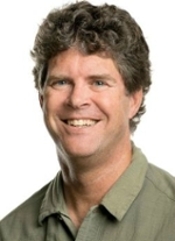
Mark Lewis is the Kennedy Chair in Mathematical Biology at the University of Victoria, holding joint appointments in the Departments of Mathematics and Statistics and Biology. His research focuses on spatial ecology and mathematical modeling, addressing ecological challenges such as animal movement, invasive species, and disease dynamics. Lewis earned his D.Phil. in Mathematical Biology from the University of Oxford and has been elected a Fellow of the Royal Society UK. His work integrates mathematical analysis, field studies, and interdisciplinary approaches to solve ecological problems. Current projects include modeling polar bear populations, cyanobacteria dynamics, and the impact of climate change on wildlife. Lewis supervises students across both UVic and his former University of Alberta lab. Education: D.Phil. in Mathematics (Mathematical Biology), University of Oxford Awards: Royal Society Fellowship, CRM-Fields-PIMS Prize, and Okubo Prize Key Research Areas: Animal movement modeling, aquatic ecology, wildlife disease, and invasive species management Publications highlight his contributions to understanding disease spread, parasite dynamics, and ecological responses to environmental changes. Lewis collaborates widely, applying mathematical tools to real-world conservation and health challenges.
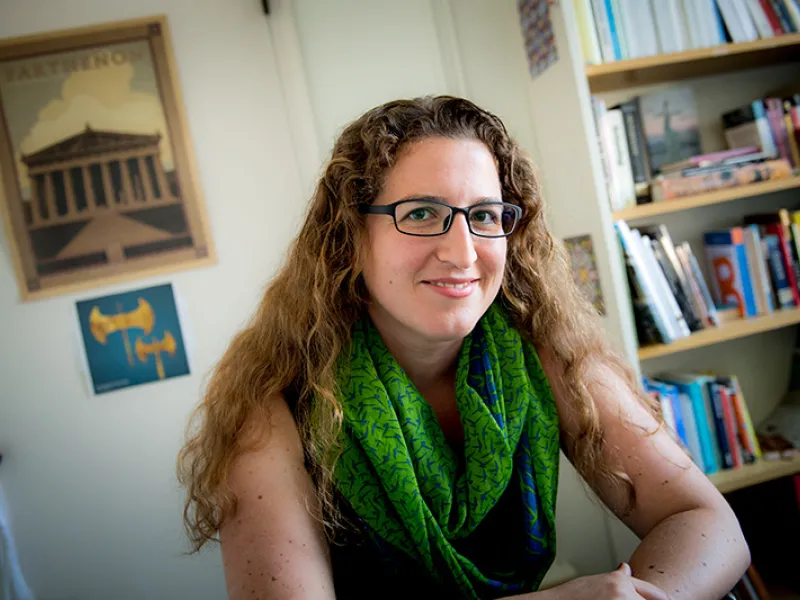
Emilia Oddo is an Associate Professor of Greek Archaeology in the Department of Classical Studies at Tulane University. She holds a Ph.D. in Classics from the University of Cincinnati (2016), an M.A. in Classics from the University of Cincinnati (2010), and an M.A. from Katholieke Universiteit Leuven, Belgium (2007). Her research focuses on the archaeology of Bronze Age Crete, particularly the Late Bronze Age (Neopalatial period), with a specialization in pottery styles and their social implications. She leads excavations at Knossos, analyzing pottery from Sir Arthur Evans’ early 20th-century excavations to understand ritual practices and architectural functions. In 2024, she will lead a student field trip through the Greek Islands organized by the American School of Classical Studies at Athens. Her publications include Knossos: The House of the Frescoes (2022) and South by Southeast: The History and Archaeology of Southeast Crete (2022), which explore Minoan social dynamics and regional identity. Her work highlights how pottery styles reflect communal identity and ritual behaviors. Recent research reinterprets Evans’ archival materials to reveal new insights into Knossos’ urban context and ritual spaces. Teaching courses like CLAS-2320 (Greek Religion) and CLAS-3170 (Greek Art and Archaeology), Oddo bridges academic scholarship and pedagogy. Her field projects emphasize interdisciplinary methods, such as ceramic regionalism and contextual analysis, to reconstruct Bronze Age Cretan society. She actively contributes to archaeological discourse through edited volumes and peer-reviewed articles.
Lucien Castaing-Taylor is the John Cowles Professor of Art and Anthropology at Harvard University and Director of the Sensory Ethnography Lab (SEL), currently on leave for Fall 2025. His work bridges anthropology and artistic practice through sensory ethnography, engaging critically with ecological crises and political challenges while maintaining an ethnographic commitment to lived experience. His research spans sensory ethnography, phenomenology, media anthropology, and post-human/multi-species relations, with deep engagement in cultural and political ecology across the Franco-Creole Caribbean, Europe, and American West. Castaing-Taylor interrogates intellectual history and reason while developing methodologies that merge artistic negative capability with ethnographic rigor to capture life's flux without imposing conventional narrative structures. Castaing-Taylor's creative output demonstrates a consistent trajectory from early works like In and Out of Africa (1992) to recent projects such as De Humani Corporis Fabrica (2022), evolving from representational ethnography toward immersive sensory experiences. His filmography and installations increasingly address the Anthropocene, human-animal relations, and embodied knowledge through experimental audiovisual techniques that challenge documentary conventions and expand ethnographic possibilities. His major awards include: Alpert Award in the Arts (2013) True Vision Award (2013) Los Angeles Film Critics' Circle Douglas Edwards Independent and Experimental Film Award (2012) FIPRESCI Award (2012) As Director of the SEL, Castaing-Taylor cultivates a collaborative environment where anthropology converges with experimental filmmaking and installation art. The lab functions as an incubator for boundary-pushing audiovisual research that engages with urgent planetary issues through sensory immersion, fostering new modes of ethnographic inquiry that transcend traditional academic publishing.
Lara Ferry is the Vice President of Research at Arizona State University (ASU), holding the title of President’s Professor. She is affiliated with the New College of Interdisciplinary Arts and Sciences, specifically the School of Mathematical and Natural Sciences, and serves as graduate faculty in the School of Life Sciences. Her roles include advancing research strategies, fostering interdisciplinary collaborations, and enhancing partnerships with institutions, communities, donors, and industry. Ferry is also a PLuS Alliance Fellow, a Senior Global Futures Scientist at the Global Institute of Sustainability and Innovation, and affiliated with the Biodesign Institute and Global Security Initiative. She holds honors faculty status in ASU’s Barrett Honors College. Her academic background includes a B.S. in Biology from Cal Poly State University, M.S. in Marine Science from San Francisco State University, Ph.D. in Ecology and Evolutionary Biology from UC Irvine, and postdoctoral work at UC Davis. Her research focuses on functional morphology, particularly the evolution of jaws and skeletal materials in aquatic organisms. She has contributed to understanding prey capture mechanisms in fish and the biomechanics of cartilage in elasmobranchs. Ferry’s awards include the 2016 Outstanding Faculty Mentor Award, 2014 Outstanding Research/Creative Activity Award, and the 2018 President’s Professor title. She has led initiatives in equity, diversity, and inclusion (JEDI) and served on boards of professional societies like the American Elasmobranch Society and Society for Integrative and Comparative Biology. Her editorial roles include Senior Executive Editor of Functional Ecology and editorial board memberships in journals like Integrative & Comparative Biology . Her research activity spans functional morphology, biomechanics, and marine physiology, with grants focused on interdisciplinary education and diversity in STEM. Notable projects include studies on cartilage strength in sharks and collaborations on cultural change in professional societies.
Benedict King is a postdoctoral researcher in the Department of Linguistic and Cultural Evolution at the Max Planck Institute for Evolutionary Anthropology, where he contributes to the Comparative Oceanic Linguistics (CoOL) team. His research focuses on constructing phylogenetic trees of language relationships using Bayesian methods to explore language origins, spread, and evolutionary dynamics. He holds a BA in Natural Sciences from the University of Cambridge (UK), a PhD in Evolutionary Biology from Flinders University (Australia), and previously worked as a Postdoctoral Research Associate at Naturalis Biodiversity Center (Netherlands). King’s research interests bridge evolutionary biology, paleontology, and linguistics. He investigates evolutionary transitions in early vertebrates (e.g., placoderms, coelacanths) and applies computational models to study language evolution. His work emphasizes improving phylogenetic methodologies and integrating fossil evidence with statistical frameworks. Notable projects include analyzing Philippine language migrations and reconfiguring actinistian phylogenies through Devonian fish fossils. His publications reflect interdisciplinary strengths, combining vertebrate paleontology with linguistic phylogenetics. Recent work supports rapid Austronesian expansions and hybrid Indo-European language origins. Awards include the Oxford University Press Prize for Biosciences and recognition for his PhD publication. King actively engages in public science communication through platforms like The Conversation and GitHub repositories.
Josiah Hester is Associate Professor of Interactive Computing and Computer Science at Georgia Tech's College of Computing, where he also directs the Center for Advancing Responsible Computing and the Ka Moamoa – Ubiquitous and Mobile Computing Lab . His research focuses on sustainable, battery-free computing systems for health, conservation, and education, informed by his Native Hawaiian heritage. Education: Ph.D. in Computer Science, Clemson University, 2017 B.S. in Computer Science, Clemson University Honors College, 2011 Research Interests: Hester’s group pioneers intermittent computing —devices that harvest ambient energy (solar, radio, thermal, microbial) and operate reliably despite frequent power loss. Applications span: Large-scale conservation sensing with Indigenous communities Battery-free health wearables (smart masks, implantables) Educational tools for sustainable design Carbon-aware IoT and recyclable robotics Recent Work & Trends: His 2024–2025 publications unveil soil-powered sensors, recyclable electronics, and culturally-grounded CS education tools. A consistent theme is co-design with underserved communities and embedding sustainability metrics at every layer—from hardware to curriculum. Scientific Awards: Presidential Early Career Award for Scientists and Engineers (PECASE) – 2025 Alfred P. Sloan Fellowship – 2022 NSF CAREER Award – 2022 Popular Science “Brilliant 10” – 2021 3M Non-Tenured Faculty Award – 2021 Multiple best-paper & best-presentation awards Grants & Teams: Hester’s lab is supported by >$50 million in active funding from NSF, NIH (ARPA-H), DARPA, DoD, Sloan, VMware, and 3M. He leads interdisciplinary teams on projects such as: $35 million ARPA-H bioelectronics initiative for diabetes and cancer $5 million NSF “Coastlines and People” Hub for Manoomin conservation $2 million NSF-DELPHI sustainable edge device design Laboratory & Mentorship: The Ka Moamoa Lab (named with Hawaiian meaning “lamp of the moamoa fish”) hosts graduate, undergraduate, and post-doctoral researchers. Hester actively recruits Native and Indigenous students and has mentored award-winning advisees such as Nivedita Arora (ACM Doctoral Dissertation Award 2024).
Dr. Giulia Donati is a Researcher at Eawag – Swiss Federal Institute of Aquatic Science and Technology, affiliated with the Department of Environmental Social Sciences. She holds a PhD from ETH Zürich and has extensive experience in conservation biology, inter/transdisciplinary research, and project management. Her work focuses on social-ecological systems, ecological connectivity, and biodiversity conservation in aquatic and terrestrial ecosystems. Education: PhD (2016–2020, ETH Zürich), MSc (2013–2015, University of Lausanne), BSc (2010–2013, University of Lausanne). Notable roles include postdoctoral research on BlueGreenNet (2021–2024) and Connect-HDL (2020), and leadership in the Save Our Seas Foundation project (2019–2020). Research emphasizes social-ecological networks, blue-green infrastructure, and amphibian connectivity in human-dominated landscapes. Projects like BlueGreenNet and Connect-HDL integrate ecological modeling with stakeholder collaboration to enhance biodiversity. Her work bridges ecology, policy, and urban planning to address global conservation challenges. Publications span topics from clownfish genetics to urban biodiversity frameworks, reflecting interdisciplinary approaches. Active in science communication and policy-relevant research, she collaborates across sectors to foster sustainable solutions. Current affiliations include Eawag’s PEGO research group and the Department of Environmental Social Sciences.
Jennifer Smith is a faculty researcher at the Scripps Institution of Oceanography, University of California, San Diego, where she leads the Smith Lab within the Center for Marine Biodiversity and Conservation. Her work focuses on coral reef ecosystems, integrating ecology with conservation, restoration, and sustainability. Her research explores how human activities such as nutrient pollution, invasive species, and climate change affect benthic marine communities. She has pioneered the use of large-area imaging and structure-from-motion technology to monitor long-term changes in Maui's coral reefs, including responses to sequential bleaching events and wildfire impacts. Her lab investigates microbial interactions with corals and the role of algae in reef degradation and resilience. Dr. Smith’s publication record reveals a strong focus on coral-algal interactions, nutrient dynamics, invasive seaweeds, and ecosystem-scale analyses. Her work spans tropical regions including Hawaii and the Great Barrier Reef, contributing to global understanding of reef resilience. She mentors graduate students and collaborates widely across marine science disciplines. Scientific Awards: No awards mentioned in the provided text. Advising and Grants: Dr. Smith advises graduate students such as Orion McCarthy and Morgan Winston. Her lab conducts long-term monitoring supported by institutional and likely federal funding, though specific grants are not listed. She leads field campaigns in Hawaii and publishes in high-impact journals. Labs and Teams: The Smith Lab is actively engaged in coral reef research, focusing on resilience, restoration, and human impacts. The team includes researchers and volunteers who conduct field surveys, analyze imagery, and produce outreach materials such as the 'Underwater Gardens' film.
Konstantinos Anastassiadis is a Professor at the Center for Molecular and Cellular Bioengineering (CMCB) of Dresden University of Technology , leading the Stem Cell Engineering group at the Biotechnology Center (BIOTEC) . His research focuses on unraveling molecular pathways regulating stem cell self-renewal and lineage commitment, with a strong emphasis on genetic engineering tool development and epigenetic mechanisms during cellular reprogramming. The lab utilizes mouse and human embryonic stem cells, neural stem cells, mesenchymal stromal cells, and induced pluripotent stem cells (iPSCs) in their investigations. Core Research Areas: Molecular regulation of stem cell fate Epigenetic mechanisms (e.g., UTX/UTY histone demethylases) Genetic engineering tool development (Flp, Dre, Vika recombinases, CRISPR protocols) Conditional immortalization systems for rare cell expansion Publications highlight his contributions to understanding: Role of histone methyltransferases (MLL1, MLL2, Setd1b) in hematopoiesis and cancer Epigenetic regulation during mouse development and spermatogenesis Genetic tools for protein tagging, transposon-mediated BAC transgenesis Interactions between stem cells and niche microenvironments Transcriptional and mechanical markers during reprogramming Collaborations span immunology , developmental biology , and bioinformatics . The lab actively participates in teaching activities at CMCB and maintains a focus on translational applications of stem cell research.
Habib Ullah is an Associate Professor in Data Science at the Norwegian University of Life Sciences (NMBU), Norway, where he conducts research at the intersection of computer vision and machine learning. He is affiliated with the Institute of Data Science under the Faculty of Science and Technology. He has previously held academic positions at COMSATS University Islamabad, Pakistan, and the University of Ha'il, Saudi Arabia, and served as a postdoctoral researcher at The Arctic University of Norway. Educational Background: PhD in Information and Communication Technology (Computer Vision), University of Trento, Italy (2011–2015) MSc in Electronics and Computer Engineering, Hanyang University, South Korea (2007–2009) BSc in Computer Systems Engineering, NWFP University of Engineering and Technology, Pakistan (2002–2006) Habib Ullah's research is primarily focused on computer vision and machine learning, with applications in aquaculture, agriculture, and human behavior analysis. He investigates underwater fish feeding sounds using audio classification, develops zero-shot learning models for recognizing unseen classes, and applies deep learning to detect stress in salmon via skin dot patterns. He also explores AI-driven controlled environment agriculture, leveraging sensors and automation for optimal crop growth. His work emphasizes practical AI solutions for real-world challenges in environmental and biological domains. The recent publications highlight a strong trend in leveraging deep learning for zero-shot and semi-supervised learning, particularly in computer vision tasks such as sea ice classification, crowd anomaly detection, and agricultural monitoring. His research spans remote sensing, biomedical signal processing, and human activity recognition, demonstrating interdisciplinary versatility. The keywords reflect a focus on robust feature representation, knowledge transfer, and model generalization. Scientific Awards and Funding: Industrial PhD grant 'Advancing Controlled Environment Agriculture AI' from The Research Council of Norway (Project number 354125, 2 million NOK, 2024) Team member (Coordinator-Participant) in the Battery Cell Assembly Twin (BatCAT) project funded by Horizon Europe (7 mEuro, 2023–2027) Development of an AI-Based Image Analysis System for Monitoring Plant Status (Funding: 1.8 mNOK, starting 2025) Habib Ullah actively supervises PhD projects and contributes to academic service through editorial and organizational roles. He has served as an Associate Editor for IEEE Access, Guest Editor for MDPI Remote Sensing, and Editor of the Springer book Machine Learning Techniques and Sensor Applications for Human Emotion, Activity Recognition, and Support (ML-SHEARS) . He has also been a Track Chair and Program Committee Member for several international conferences, reflecting his leadership in the academic community. His research is supported by significant grants and collaborative projects, indicating strong institutional and international engagement. He is involved in multiple research teams and projects, including the BatCAT project on battery manufacturing and AI applications in controlled environment agriculture with RIFT LABS AS. His lab work integrates deep learning, sensor fusion, and data analytics for environmental and biological monitoring systems.
Johan Eklöf is a Professor at Stockholm University within the Department of Ecology, Environment and Plant Sciences . His research emphasizes marine ecology , focusing on interactions between marine biodiversity, environmental conditions (including climate), and societal impacts . He teaches courses such as Management of Aquatic Resources in the Tropics , Marine Ecology for the Biogeo Program , and Ecology II . Research Focus: Causal relationships between biodiversity and ecosystem resilience Foundation species as drivers of ecosystem services Optimizing resource management under climate change Projects: Principal Investigator for FORCE (2023-present), a transdisciplinary Baltic Sea recovery project Contributor to NordSalt (climate impacts on Nordic salt marshes) and PlantFish (Baltic Sea vegetation-fish interactions) Scientific Leadership : Supervises 2 current PhD students and co-supervises 6 additional PhD/postdocs Formerly mentored 4 PhD graduates and >40 MSc students Environmental Context: His work spans Baltic Sea and Western Indian Ocean ecosystems, using seagrass beds , mussel beds , and coastal benthic systems as primary models. Recent publications highlight climate change impacts on trophic cascades , habitat connectivity , and policy frameworks for marine conservation .
Santiago F. González is a Group Leader at the Institute for Research in Biomedicine (IRB) in Bellinzona, Switzerland, and an extraordinary professor at the University of Italian Switzerland (USI). He earned dual PhDs in microbiology (University of Santiago de Compostela, Spain) and immunology (University of Copenhagen, Denmark), followed by postdoctoral work (2007–2011) at Harvard Medical School's Immune Disease Institute under Michael Carroll. PhD in Microbiology, University of Santiago de Compostela PhD in Immunology, University of Copenhagen His research focuses on immune system dynamics during respiratory viral infections, vaccination, and cancer metastasis. Key areas include influenza recognition , lymph node inflammation , and immune cell behavior in vivo. He pioneered studies on C-type lectin receptors (e.g., SIGN-R1) in viral immunity and epigenetic modulators for inflammation. Recent publications highlight his work in epigenetic drug development , nanovaccines , and computational tools for immune cell tracking. His group uses two-photon intravital microscopy and spatial-temporal modeling to dissect immune responses. Scientific awards include three EU Marie Curie Fellowships (2004–2013), enabling his transition to independent research. His collaborations span Harvard, USI, and European institutions, with grants from the EU and Swiss research bodies. His lab at IRB, established via the 2013 Marie Curie Career Integration Grant , develops novel imaging approaches and therapeutic strategies for infectious and immune-mediated diseases.
Dr. Megan Bailey is an Associate Professor and Canada Research Chair (Tier II) in Integrated Ocean and Coastal Governance at Dalhousie University's Marine Affairs Program, part of the Faculty of Science. She holds a PhD from the University of British Columbia (UBC) and has conducted postdoctoral research at Wageningen University in the Netherlands. Her work focuses on global fisheries governance, combining market and state approaches to achieve sustainable outcomes, particularly in transboundary fisheries and tuna governance. Bailey’s research integrates game theory, global value chain analysis, and informational governance to address challenges in seafood sustainability. She emphasizes collaboration among governments, NGOs, and industry to enhance transparency and equity in fisheries management. Her projects often center on Indigenous rights, Arctic char fisheries in Nunatsiavut, and the impacts of market mechanisms like eco-labels and trade policies. Key areas of research include: cooperative management of shared fish stocks, traceability systems, food security, and equitable allocation in fisheries. She leads the Bailey Lab, which supports interdisciplinary projects such as the North Atlantic Right Whale conservation initiative and the Sustainable Nunatsiavut Futures Project. Bailey has supervised numerous PhD and Master’s students, fostering the next generation of marine governance researchers. Her scientific contributions include over 50 peer-reviewed publications, with recent work addressing Indigenous data sovereignty, decolonizing research methodologies, and the socio-ecological impacts of climate change on coastal communities. Bailey is a principal investigator for the Nippon Foundation Ocean Nexus Center, furthering global ocean equity initiatives.
Mike Willis is an Associate Professor of Cryospheric Science, Geodesy & Remote Sensing at the Department of Geosciences, Virginia Tech's College of Science. His research focuses on advancing remote sensing techniques to study Earth's cryosphere, coastal environments, and natural hazards. He leads projects on glacial dynamics, sea level rise impacts, landslide monitoring, and the application of GNSS and InSAR technologies. His work combines field instrumentation (e.g., OrangePi-GNSS systems) with satellite data analysis to address climate and geohazard challenges in polar regions and coastal communities. Education background: Not explicitly stated in provided text. Research interests include cryospheric science, geodetic monitoring, and environmental remote sensing applications. His lab group maintains a dedicated website at https://sites.google.com/view/4datvt/ . Key research themes include: Glacier and ice shelf mass balance Coastal vulnerability to sea level rise Disaster monitoring using GNSS-IR and InSAR High-resolution digital terrain modeling Recent projects highlight work in Greenland (landslide monitoring, sea level measurements), the Pacific Northwest (subduction zone hazards), and the Dominican Republic (coastal inundation modeling). His interdisciplinary approach bridges geophysical observations with computational geospatial analysis.
Richard DUNCAN is a Professor in Conservation Biology at the University of Canberra's Science School and Department of Centre for Conservation and Ecology Genetics. His research focuses on the ecology of invasive species, particularly understanding how introduced species arrive, establish, and spread in new environments. Key areas include invasive weeds and pests, ecological community structure, and applying quantitative methods to address both fundamental and applied ecological questions. Education: PhD in Forest Ecology, University of Canterbury (1989, award date noted as 2024 in text) Research Interests: His work spans invasive species ecology, population dynamics, and restoration strategies. He employs diverse methods including field experiments, modeling, and genomics, with recent focus on grasslands and aquatic systems. Current projects address amphibian chytrid fungus, carp invasions, and rodent control. Articles Trends: Recent publications emphasize invasive species impacts on ecosystems, pathogen-driven niche contractions, and conservation tools like geospatial modeling and genomic simulations. Themes include species distribution modeling, pest management, and restoration ecology. Awards & Grants: Lead investigator on 35+ projects, including ARC Plant Biosecurity Training Centre and chytrid fungus mitigation efforts Associate Editor for Proceedings of the Royal Society B and Diversity and Distributions Advising: Accepting PhD students in invasive species ecology, with focus on using biological invasions to explore ecological theory and management applications. Labs/Teams: Collaborates widely on conservation genetics, aquatic invasions, and biosecurity, including work with the Biological Heritage Science Challenge and Indigenous Grasslands Trust.