Changchun Zhang serves as Senior Lecturer of Chinese and Director of Chinese at Bryn Mawr College's Department of East Asian Languages and Cultures, where he leads the Chinese language program and teaches comprehensive Mandarin instruction. His academic credentials include: M.A. from Villanova University M.A. from Xi'an Foreign Languages University Zhang specializes in Chinese language pedagogy with research interests spanning second language acquisition methodologies, Mandarin proficiency development, and cultural dimensions of East Asian language education. His teaching philosophy emphasizes consistent skill-building through the proverb: 'A thousand-li journey begins with the first step,' focusing on integrated development of listening, speaking, reading, and writing abilities for students navigating Mandarin's complexities. As program director, he oversees curriculum design and instructional strategies for Chinese language courses while mentoring undergraduate students in their language acquisition journey within Bryn Mawr's liberal arts framework.
Kristina Mullamaa is a Lecturer in English and Swedish language at the University of Tartu's College of Foreign Languages and Cultures, Institute of Germanic, Romance and Slavonic Languages and Literatures, Department of English Language and Literature. She also serves as the Head of the Scandinavian Studies Department. Her academic career spans over two decades with a focus on Scandinavian languages, cultural communication, and educational methodologies. Dr. Mullamaa earned her Doctoral Degree in 2006 from the University of Tartu with a dissertation titled "Towards a dynamic role conception of liaison interpreters: An ethnographic study of self-descriptions of practising liaison interpreters in Estonia," supervised by Krista Vogelberg and Stig Örjan Ohlsson. Her research interests focus on Scandinavian Studies , Language Teaching , Cultural Communication , Educational Leadership , Bilingualism , and Interpreting Studies . Dr. Mullamaa has extensively examined the nuances of Estonian-Swedish cultural communication patterns, Nordic business cultures, and student-centered teaching approaches. Her work bridges linguistic theory with practical applications in language education and cross-cultural understanding. Dr. Mullamaa has secured significant research funding, including the ETF post-doc grant (2011-2015), Kultuurimälu grant (2015), and as Principal Investigator for projects such as "Teacher training programme and web-based materials pool for teachers of Swedish as the general language in Estonia and on Iceland" (2019-2022) and "The development of dialogue interpreting in Estonia: reflections of a transition society" (2012-2015). Her publications reveal a consistent focus on educational innovation, cultural communication patterns between Nordic and Baltic countries, and language teaching methodologies. Her scientific contributions include numerous publications in international journals and conference proceedings, with recent work examining empathetic leadership across Nordic and Baltic countries, online language learning approaches, and cultural consciousness in educational settings. Dr. Mullamaa has supervised Master's students, including Inna Leiman's research on "Bilingualism And Interpreters: The Influence of The First Language on Bilingual Interpreters." She has also contributed to international academic cooperation through her work with Stockholm University's Translation Institute as a guest researcher (2010/2011).
Prof. Dr. Christoph U. Schmid, Ph.D. (EUI Florence) holds a W3 Professorship for European Private, Commercial, Economic Constitutional and Comparative Law at the University of Bremen's Law Faculty. He directs the Centre of European Law and Politics (ZERP) and coordinates the Hanse Law School program with universities in Oldenburg and Groningen. His roles include Erasmus representative and former examining board chairman (2013-2018). Education: Habilitation (post-doctoral lecturing qualification) in 2004 Ph.D. from European University Institute Florence (1995-1999) Second State Examination in Law (1995) First State Examination in Law (1991) Studies at Ludwig-Maximilians-University Munich (1989-1991) Specialized foreign language training in English/French/Italian at University of Passau (1986-1991) Research Focus: Specializes in European economic constitutional law, private law harmonization, and judicial governance. Current projects examine the European Court of Justice's role in private law development and comparative housing law across Europe. Interdisciplinary work connects legal theory with political science and EU integration studies. Scientific Contributions: Recipient of Bavarian Habilitation and Doctoral Awards Marie Curie Research Fellow (1997-1999) Organized EU-funded comparative research projects ORCID ID: 0000-0002-2321-5069 Academic Service: Active in international legal cooperation through teaching at universities in Croatia, Serbia, Spain, and Italy. Served as expert advisor to the European Parliament's Legal Affairs Committee and directed research forums at EUI Florence. Regularly teaches courses like International Private Law, Comparative Contract Law, and European Housing Law.
Dagmar Haumann is a Professor of English Linguistics at the Department of Foreign Languages at the University of Bergen. Her research focuses on historical linguistics, syntax, morphology, and language acquisition, with a particular emphasis on diachronic processes such as reanalysis, grammaticalization, and syntactic change in English. She has extensively studied adverbial structures, tough-constructions, and corpus-based methodologies. Haumann’s academic contributions include over 30 publications, including monographs, edited volumes, and peer-reviewed articles. Notable works include The Development of Speaker-Oriented Adverbs in English (2025) and Digitally-assisted Historical English Linguistics (2023). Her research often combines theoretical frameworks with empirical corpus data, addressing topics like argument structure changes, modal particles, and multilingualism. She has supervised numerous master’s theses and doctoral dissertations on topics ranging from Norwegian L2 learners’ challenges to historical syntactic phenomena. Her work frequently collaborates with scholars like Kristin Killie and Matthias Eitelmann, exploring reanalysis mechanisms and diachronic variation in English. Haumann’s teaching and supervision emphasize cognitive linguistic principles and practical applications of corpus linguistics in language education. She is an active participant in international conferences, contributing to discussions on language change methodologies and digital humanities approaches in linguistics.
Lourdes Sánchez-López is a Professor of Spanish and Department Associate Chair at the University of Alabama at Birmingham (UAB), where she directs the Spanish for Specific Purposes (health and business) program. She holds a BA in English Philology from the University of Granada, an MA in Spanish Linguistics from the University of Southern Mississippi, and a PhD in Applied Linguistics and Second Language Acquisition from the University of Jaén. Her research focuses on Spanish for Specific Purposes, applied linguistics, second language acquisition, and community service-learning. She co-authored textbooks such as El mundo hispanohablante contemporáneo and Pueblos, Intermediate Spanish in Cultural Contexts , and co-developed the Transnational Classroom methodology. She founded UAB’s Spanish for Specific Purposes program (2001) and the Children’s Spanish Summer Camp (2003). Her teaching spans Spanish language courses, cultural studies, and service-learning initiatives. She mentors students through programs like Manos Juntas and co-founded the Spanish And Latino Student Association (S.A.L.S.A.). She organized the First International Symposium on Languages for Specific Purposes (2012) and served as president of the Alabama chapter of the American Association of Teachers of Spanish and Portuguese. Her recent work emphasizes innovative pedagogy, curriculum design for professional needs, and the integration of service-learning into language education. She actively contributes to academic discourse on language for specific purposes and its societal applications.
Xian Zhang is an Associate Professor at the College of Information, University of North Texas. He holds a PhD in Applied Linguistics from Penn State University (2014), an MA in Education from Columbia University (2003), and a BA from Guangdong University of Foreign Studies (China). His research focuses on Second Language Acquisition (SLA), Sociocultural Theory, neurolinguistics, and language assessment. He teaches courses such as Psycholinguistics, Corpus Linguistics, and ESL Writing. His work explores topics like L2 vocabulary acquisition, foreign language anxiety, and the application of corpus linguistics in education. Education: PhD, Applied Linguistics, Penn State University, 2014 MA, Education, Columbia University, 2003 BA, Guangdong University of Foreign Studies, China Research Interests: Second Language Acquisition Sociocultural Theory fMRI and neurolinguistics Language assessment and testing Corpus linguistics Awards: No specific awards mentioned Grants/Advising: Advises graduate students in SLA and language assessment Labs/Teams: Developed a Chinese spoken corpus analyzing learner vs. native speaker language patterns
Christoph Bürgel is a Professor for Didactics of French and Spanish at the Institute of Romance Studies within the Faculty of Cultural Studies at the University of Paderborn since October 2015. He has previously held academic positions at the Universities of Osnabrück (as Junior Professor), Regensburg, and Hamburg. His research primarily focuses on foreign language didactics, particularly lexico-grammar and the development of dialogic speaking competence in French and Spanish language learning. His educational background includes studies in French, Politics, Sociology, and Pedagogy at the University of Hannover, where he completed his first state examination for teaching French and Politics at Gymnasium level. He also pursued studies at the University Charles-de-Gaulle–Lille III in France and earned his PhD on "Generalizations in Language and Texts. Generalization, Globalization, Conceptualization in French" from the University of Hannover. Bürgel's research interests center around the didactics of French and Spanish, with a particular emphasis on lexico-grammar (the interface between vocabulary and grammar), phrasemes (fixed expressions), and construction-based language learning. His work explores how these linguistic elements can be effectively taught to develop learners' communicative competence, particularly in dialogic speaking situations. He has developed approaches for teaching time expressions in appointment dialogues and strategies for promoting natural language use through phrasemes. His recent publications focus on comprehensive grammars of spoken and written French, the acquisition of socio-cultural knowledge through texts (particularly related to Belgium), and methods for developing dialogic speaking competence. These works reflect his consistent interest in bridging theoretical linguistics with practical language teaching applications. Award from University of Hannover for outstanding scientific achievements (1995) Bürgel is actively involved in teacher training, regularly conducting workshops for French and Spanish teachers across Germany on topics such as lexico-grammar and the use of phrasemes for natural language production. He has organized numerous scientific symposia connecting linguistics with foreign language didactics, including the ongoing "Lexikalische Kompetenz" (Lexical Competence) network symposia. He serves as a member of several professional organizations including the German Romanist Association, the General Association for Modern Foreign Languages, and various subject-specific teacher associations. At the University of Paderborn, he teaches courses related to the observation and analysis of French lessons, research-based learning in practical semesters for French and Spanish, and the didactics of lexico-grammar, emphasizing practical application of linguistic theory to language teaching methodology.
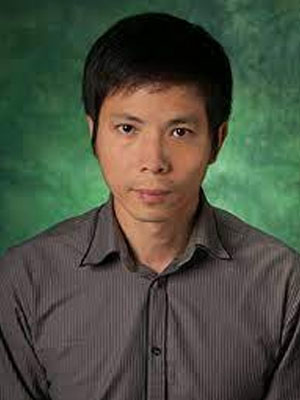
Dr. Yeji Han is a Senior Lecturer in Korean and Linguistics at York St John University's School of Education, Language and Psychology, where she serves as Programme Lead for the BA Korean degree. With qualifications including a BA from South Korea, MA from the US, and PhD from Canada, she holds Fellowship of the Higher Education Academy (FHEA) status. Her research interests center on applied linguistics, particularly second language learning and use. Her PhD dissertation focused on motivation and its influence on language use among Vietnamese learners of Korean. She has continued to explore topics including motivation, foreign language enjoyment, mobile communication, multimodal language use, study abroad experiences, and intercultural communication. Currently, she is Co-Investigator on two externally-funded projects: 'Mobile-assisted language learning among Korean language learners' (funded by Academy of Korean Studies with USD 20,000) and 'Mental health suffering due to English fever in South Korea' (funded by Academy of Medical Sciences with GBP 22,600). Dr. Han's recent publications demonstrate strong trends in understanding emotional factors in language learning, particularly examining foreign language enjoyment in relation to cultural contexts, and investigating motivational profiles of Korean language learners. Her work spans multiple subfields including regulatory focus theory, L2 self-concept, and the psychological aspects of language acquisition. She is an active member of the academic community, serving as: Member of British Association for Applied Linguistics (BAAL) Board member of The Korea Contents Association (KoCon) Proposer of BAAL's Asian Language Education in Global Contexts SIG Ad-hoc reviewer for multiple journals including Journal of Second Language Writing and Journal of Multilingualism and Multilingual Development Reviewer of book proposals for major academic publishers Dr. Han has significant experience in educational impact activities, having served as an editorial board member for government-authorized English textbooks for South Korean secondary schools (2012-2014), and regularly participating as a plenary speaker and seminar leader for English teacher societies in South Korea. In the UK, she has hosted externally-funded public engagement events focused on Korean language and cultural artifacts.
Professor Vaclav Brezina at Lancaster University's School of Social Sciences is a leading scholar in corpus linguistics, statistics, and their applications in second language acquisition research. His work spans sociolinguistic variation analysis, collocation networks, and corpus tool development. MA in English Linguistics & Philosophy (Charles University, Prague) PhD in Linguistics (University of Auckland) Research focuses on: Corpus design innovations for spoken/written L2 English Statistical methodologies for learner corpus analysis Vocabulary acquisition and phraseological patterns Sociolinguistic variation in the British National Corpus Current projects include the Written British National Corpus and Trinity Lancaster Corpus developments. His recent publications examine EMI academic writing challenges, collocational processing mechanisms, and epistemic stance markers in digital communication. Brezina supervises PhD students William Platt and Emil Tangham while directing multiple ESRC-funded initiatives.
Elisabeth Heiszenberger is a researcher at the University of Vienna , Department of Romance Studies, and PhD student at the University of Vienna and University Grenoble Alpes . Her academic work focuses on French phonology and phonetics , particularly the acquisition of French liaison consonants in monolingual and bilingual contexts, with emphasis on orthographic influence and cross-linguistic interference. Her research includes: Longitudinal studies on French liaison development in school-age learners Corpus-based analysis of phonological representations Empirical investigations of German-French bilingual language acquisition Acoustic analyses of sociolinguistic variation Key scientific achievements include: First Jury Prize and Audience Prize at MT180 2024 National Competition (Austria) , and representation in the international final in Ivory Coast. She has contributed to multiple peer-reviewed publications and presented at major phonology conferences. Her teaching portfolio includes linguistics seminars for French teacher candidates at all academic levels, covering corrective phonetics , phonological variation , and corpus linguistics . She actively collaborates with the Austrian Academy of Sciences' Acoustics Research Institute and participates in educational initiatives like the Young Science Ambassadors program.
Gertrude Marilyn Tinker Sachs is a Professor of TESOL, Language and Literacy in the Department of Middle and Secondary Education at Georgia State University’s College of Education & Human Development. She specializes in transformative, culturally responsive pedagogies for low-income communities, with a focus on English as a first/additional language. Her research integrates activist approaches to literacy and teacher professional development through international collaborations. Education: Ph.D., Department of Curriculum, University of Toronto (1989) M.A., Department of Curriculum, University of Toronto (1984) M.Sc., University of Miami (1981) B.Ed., University of Miami (1979) Teachers Certificate, College of the Bahamas/University of the West Indies (1974) Research Interests: Dr. Tinker Sachs explores intercultural education, community literacy initiatives, and critical praxis in multilingual contexts. She advocates for pedagogies that center marginalized voices, such as her work with the Comic Book Club ATL Housing Project and the African Diaspora Coming Together Research Project. Her scholarship bridges theory and practice through projects in the Bahamas, Canada, Hong Kong, and the U.S. Publications & Leadership: She authored/co-edited books including *Critical Mass in the Teacher Education Academy* (2014) and *Action Research in English Language Teaching* (2002). As a former Department Chair (2015–2024), she became the first person of color to lead a department in CEHD and the second African-descendant leader in GSU’s education schools. She also holds editorial roles in journals like *Ubiquity* and the upcoming *Tradewinds Journal of Education for the African Diaspora Community*. Community Engagement: Her projects include the Intergenerational Family Project (Bahamas) and Atlanta-based initiatives like the People in the Parks Literacy Project, emphasizing literacy as a tool for social justice.
Sandra Watts is a Teaching Professor of Spanish at the University of North Carolina at Charlotte, where she serves as Coordinator of Lower Division Spanish. She oversees first and second-year Spanish language programs in traditional and hybrid formats, supervises the Spanish Individualized Instruction program, and trains graduate teaching assistants and part-time instructors. Education: PhD in Spanish (University of Michigan, 2012) MA in Spanish (University of Michigan, 1998) BA summa cum laude in Comparative Literature (Cornell University, 1992) Her research focuses on Second Language Acquisition , Foreign Language Teacher Training , and Contemporary Spanish Literature and Culture . She specializes in K-20 educational integration, Peninsular literature, and pedagogical methodologies in the Scholarship of Teaching and Learning. Her publications span textbook contributions, literary translations, and peer-reviewed book reviews. Key themes include Spanish feminist narratives, educational resource development, and cultural integration in language instruction. She has collaborated with publishers like McFarland and Houghton Mifflin on Spanish language materials. Professional Affiliations: American Association of Teachers of Spanish and Portuguese (AATSP) American Council on the Teaching of Foreign Languages (ACTFL) American Association of University Supervisors and Coordinators (AAUSC) Foreign Language Association of North Carolina (FLANC) As President of the North Carolina Chapter of AATSP since 2012, she contributes to statewide language education policies and standards. Her peer-review work includes Foreign Language Annals , Hispania , and Letras Peninsulares .
Sara Wohlschläger is a Lecturer at the Faculty of Humanities, School of Languages, Linguistics and Cultures at Leipzig University, specializing in German as a Second Language education and digital teaching tools. BA in English Studies from Leipzig University MA in Global British Studies from Leipzig University First State Examination for Secondary School Teaching (2024) Her research integrates cognitive literary studies and digital humanities to explore narrative absorption, unreliable narration, and integrative language education approaches. She has contributed to pedagogical frameworks through empirical research on feedback mechanisms in higher education. The 2024 publication Using Student Feedback to Improve Teaching Practice reflects her focus on optimizing teaching through digital feedback systems. Her work spans interdisciplinary domains including language acquisition , literary theory , and technology-enhanced learning .
Fatma KİMSESİZ is a lecturer in the Department of Foreign Language Education at the Faculty of Education, Kirsehir Ahi Evran University. She holds a PhD in English Language Education from Atatürk University (2017) and has over 15 years of experience in EFL instruction and curriculum development. PhD: English Language Education (Atatürk University, 2014-2017) MSc: English Language Education (Atatürk University, 2009-2012) BA: English Language Education (Atatürk University, 2003-2007) Her research focuses on digital language learning tools, vocabulary acquisition strategies, intercultural communication in language education, and comparative analysis of translation accuracy. She has published extensively on topics including: Digital mind mapping techniques Infographic-based grammar instruction Project-based learning (PBL) Authentic material implementation Proverb equivalence analysis Rebus storytelling applications Key trends in her publications show increasing emphasis on technology-integrated language pedagogy, with 2023-2024 works focusing on digital storytelling, vlog-based intercultural learning, and AI translation comparisons. Scientific Recognition: 2211 Domestic Doctorate Scholarship from TÜBİTAK (2014) She currently serves as Department Head at Kirsehir Ahi Evran University while maintaining active teaching roles in both undergraduate and preparatory programs.
Dr. Małgorzata Jedynak is a distinguished academic at the University of Wrocław's Institute of English Philology, Department of Glottodidactics, specializing in language education for visually impaired learners. With a PhD in applied linguistics obtained in 2004, she has established herself as a leading expert in typhlopedagogy and typhlopsychology. As chair of the TYFLO Research Group since 2016, she coordinates interdisciplinary research on language learning for blind and partially sighted students. Her administrative roles include serving as coordinator of cooperation between the Institute of English Philology and the Center for Foreign Language Teaching in Wrocław since 2020, and chairwoman of the Lower Silesian Chapter of the Polish Society of Modern Languages. Dr. Jedynak's research focuses on the intersection of visual impairment and language acquisition, exploring how blind and partially sighted learners develop linguistic competence. Her work examines affective factors in language learning, pronunciation acquisition challenges, vocabulary strategies, and the impact of EU language education policies on special needs education. She has edited multiple publications addressing specific needs of higher education students with visual impairments, including the comprehensive 'Language education of students with special educational needs' and 'Current Research in Bilingualism and Bilingual Education' with Springer. Her scholarly contributions reveal consistent trends in adapting language teaching methodologies for visually impaired learners, with particular attention to sensory compensation strategies, emotional factors in language acquisition, and the implementation of European language frameworks in special education contexts. Dr. Jedynak's research bridges theoretical linguistics with practical classroom applications, emphasizing the importance of inclusive language education policies across the European Union. As an active member of the academic community, Dr. Jedynak serves on the Scientific Board of the Neophilolog journal since 2018 and has organized numerous scientific conferences, including the annual INJO (Innovations in Foreign Language Teaching) conference series. Her leadership in the TYFLO Research Group has fostered collaborations across disciplines to address the complex challenges faced by visually impaired language learners. Dr. Jedynak's work extends to developing specialized teaching materials and strategies for blind and partially sighted learners, including tactile and auditory approaches to vocabulary acquisition and pronunciation training. Her research on the 'Listen and touch' project critically examines various methods of teaching foreign language vocabulary to students with vision deficits, pioneering innovative techniques that have influenced special language education practices in Poland and beyond.




/prod01/yorksjacuk/media/content-assets/staff-profile-images/Yeji-Han.jpg)