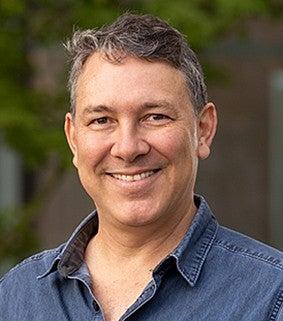
Jose Ignacio Arroyoمشاهده پروفایل
پژوهشگر ارشد
Jose Ignacio Arroyo is a Research Fellow at the Santa Fe Institute (SFI), collaborating with Professors Chris Kempes and Geoffrey West on metabolic scaling theory to analyze biological complexity across scales from cellular systems to urban environments. His work integrates theoretical frameworks with computational modeling to address fundamental questions in biological organization. Arroyo's research centers on identifying emergent quantitative principles in biological systems through physical and complex systems perspectives. Key interests include theoretical ecology, molecular evolution, and microbial community dynamics, with emphasis on deriving mechanistic models from first-principles physics and chemistry. His approach focuses on statistical pattern recognition, hypothesis testing of biological theories, and developing predictive frameworks for real-world applications in conservation, restoration, and urban planning. Notable contributions include mechanistic models for temperature dependence in biological systems based on thermodynamic theory and chemical kinetics. His publication record demonstrates consistent integration of statistical mechanics with biological complexity, particularly in scaling law phenomena across hierarchical systems. Recent work bridges biophysical principles with ecosystem-level modeling, showing strong interdisciplinary connections between theoretical physics, evolutionary biology, and systems ecology. Arroyo actively mentors early-career researchers through the SFI Undergraduate Complexity Research (UCR) program and Complex Systems Summer School tutorials. Previously, he served five years as Professor of Practice in Biostatistics, teaching undergraduate courses in Evolution and Biostatistics while developing pedagogical approaches for quantitative biological sciences. At SFI, he operates within a collaborative research ecosystem focused on complex systems theory, contributing to projects that model biological organization from molecular to societal scales through computational simulations and theoretical synthesis.