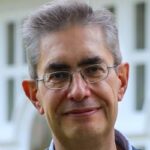
Scott Hopkins is a Professor in the Department of Chemistry at the University of Waterloo, specializing in Physical Chemistry. His research integrates machine learning with experimental techniques to study ion mobility, mass spectrometry, and spectroscopic analysis. He directs the Hopkins Laboratory, focusing on computational predictions of chemical behaviors and molecular interactions. His work addresses fundamental questions in gas-phase chemistry, cluster formation, and analytical method development. Research interests span physical chemistry, computational modeling, and analytical instrumentation, with a strong emphasis on developing predictive tools for complex chemical systems. Recent investigations explore ion-solvent dynamics, fragmentation mechanisms, and machine-learning applications for spectral interpretation.
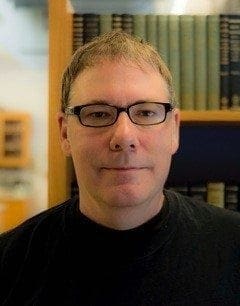
Professor Emilio Artacho is a faculty member in the Department of Physics at the University of Cambridge, based at the Cavendish Laboratory. He transitioned from the Department of Earth Sciences in 2011, where he was granted a Professorship in 2006. His research focuses on computational simulations of non-equilibrium processes in condensed matter, particularly using first-principles molecular dynamics and density-functional theory. He co-developed the SIESTA program for linear-scaling electronic structure calculations, widely utilized in computational materials science. Artacho’s work spans far-from-equilibrium phenomena in irradiated matter, multiferroics, nanoconfined water systems, and surface chemistry. His contributions include studies of electronic stopping power in materials, 2D electron gas formation at ferroelectric interfaces, and the structural dynamics of water under confinement. His academic roles include adjunct positions at Ikerbasque (Nanogune, Spain) and visiting professorships at institutions like the University of California, Berkeley, and École Normale Supérieure de Lyon. Research interests are anchored in theoretical condensed matter physics, with applications to nanomaterials, radiation effects, and interfacial phenomena. His computational methods bridge quantum mechanics and classical dynamics, enabling insights into complex systems like proton-irradiated solar cells and confined water films.
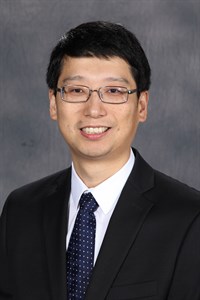
Gunnar Kusch is a Senior Research Associate at the Department of Materials Science & Metallurgy, University of Cambridge. His research focuses on defects in semiconductors, porous AlGaN materials, and advanced characterization techniques like cathodoluminescence (CL) and atom probe tomography (APT). He holds a PhD from the University of Strathclyde and leads projects on UV-B LED optimization, nanoscale defect behavior analysis, and semiconductor device design. His work bridges materials synthesis, characterization, and device performance, with applications in energy-efficient lighting and solar cell technology. Key research areas include: Defect engineering in III-nitride semiconductors Porous AlGaN templates for high-efficiency UV emitters Correlative microscopy techniques (CL, EBSD, APT) Composition-structure-property relationships in photovoltaic materials Notable contributions include developing CL-based methods for nanoscale defect analysis and demonstrating improved Cu(In,Ga)S₂ solar cell efficiencies through compositional engineering. His laboratory focuses on translating microscopic insights into macroscopic device improvements.
Steve Mann is a Professor in Applied Linguistics at the University of Warwick, where he has been affiliated since 2007. His work focuses on English Language Teacher Education (ELTE), teacher development, and qualitative research methodologies. He holds a PGCE from the University of Warwick (1984) and has extensive experience in ELT across Hong Kong, Japan, and Europe. Mann’s research group investigates reflective practice, teacher beliefs, mentoring, and technology integration in education. Notable contributions include co-editing the Routledge Handbook of English Language Teacher Education (2019) and pioneering studies on video-based teacher reflection. He has supervised numerous PhD students exploring aspects of teacher development, though he is currently not accepting new PhD candidates. Education: PGCE, University of Warwick (1984) Pre-service teaching in English and Drama in England (1980s) British Council Teaching Scheme in Hong Kong (1980s) Research Interests: Teacher education, reflective practice, qualitative interview methodologies, and the role of technology in professional development. His work emphasizes bridging theory and practice in ELT, particularly through collaborative dialogue and action research. Grants & Projects: Supporting Sustainable English Teacher Professional Development in Yunnan Province (British Council, 2022–2023) China Course Research: Postgraduate Curriculum Design (2019–2022) Video in Language Teacher Education (British Council, 2016–2018) Labs/Teams: Leads a research group focused on teacher development, mentoring, and blended learning strategies. Collaborates with institutions like the British Council on global teacher education initiatives.
Susan Holmes is Professor at the School of Media, Language and Communication Studies at the University of East Anglia (UEA), where she joined as Reader in Television in 2007 and was appointed to Professor in 2018. She is an active member of several research groups including Media Equality, Film, Television and Media, Gender and Its Intersections Steering Committee, and HealthUEA. Her work spans television studies, celebrity culture, and feminist approaches to eating disorders. Professor Holmes received her academic training at the University of Sussex (BA in English and Media Studies), followed by an MA in Film from the University of Southampton, and completed her PhD on British film and television in the 1950s at the same institution. Prior to joining UEA, she taught Media and Cultural Studies at the Southampton Institute (now Southampton Solent University) and television and film at the University of Kent. Her research focuses on several interconnected areas that challenge traditional disciplinary boundaries. In television studies, she has made significant contributions to understanding British television history, particularly through her books 'British TV and Film in the 1950s' and 'Entertaining TV: the BBC and Popular Programme Culture in the 1950s,' where she challenges canonical ideas about early BBC television. Her work on reality TV examines historical development, generic labeling, and celebrity. Since 2014, she has conducted important empirical research on feminist approaches to eating disorders, analyzing media representations and working directly with people with lived experience. A key focus of this research examines how feminist approaches are neglected in contemporary eating disorder treatment, with implications for both clinical practice and cultural understanding. She co-founded the influential Celebrity Studies journal in 2010 and edited it for the first eight years of its publication. Analysis of Professor Holmes' recent publications reveals a clear trajectory where her expertise in media and television studies converges with her feminist scholarship on eating disorders. Her most recent work (2023-2025) increasingly focuses on cross-cultural applications of feminist approaches to eating disorders (including work in China), the use of innovative methodologies like Photovoice, and examinations of therapeutic alliance in treatment settings. Simultaneously, she continues to analyze contemporary media representations, particularly focusing on motherhood, true crime television, and reality TV through feminist lenses. This dual focus demonstrates how media representations shape cultural understandings of both celebrity and health conditions. Professor Holmes' significant contributions to academia have been recognized with several prestigious awards: Senior Fellowship from Advance HE (2024) UEA engagement award (2017) ALPSP award nomination for Celebrity Studies as best new journal (2011) She currently runs the Feminist Media Studies research cluster at UEA and is actively supervising postgraduate research in areas including popular television, television/film history, British TV history, stardom/celebrity, and feminist approaches to eating disorders. Her current major research project is the 'ALLIANCE study' (2024-2026), funded by the National Institute for Health and Care Research, which aims to develop practice and policy recommendations to support effective therapeutic alliance in inpatient treatment for eating disorders. This builds on her earlier British Academy-funded research on 'Entertaining Television: British TV, the BBC and Popular Programme Culture in the 1950s' (2007-2008). Professor Holmes plays a significant role in the academic community through her editorial work, serving on the boards of journals including Archives of Psychology, Big Data & Society, and Critical Studies in Television, and previously as co-founder and editor of Celebrity Studies. She has also been active in media engagement, contributing expert commentary on topics ranging from Netflix's portrayal of eating disorders to Celebrity Big Brother.
Francis Bach is a Professor and researcher at INRIA, leading the SIERRA project-team since 2011, which is part of the Computer Science Department at Ecole Normale Supérieure (ENS) within PSL Research University. His work bridges CNRS, ENS, and INRIA as a joint research effort. Elected to the French Academy of Sciences in 2020, he currently runs the ERC project SEQUOIA following his previous ERC project SIERRA (2009-2014). His research spans statistical machine learning with focus on optimization, sparse methods, kernel-based learning, neural networks, graphical models, and signal processing. Bach completed his Ph.D. in Computer Science at U.C. Berkeley under Professor Michael Jordan, followed by work at Ecole des Mines de Paris and the WILLOW project-team at INRIA/ENS/CNRS (2007-2010). His recent book "Learning Theory from First Principles" was published by MIT Press in December 2024. Bach's publication record shows consistent high-impact contributions across machine learning theory and applications, with recent work focusing on conformal prediction, diffusion models, optimization theory, and learning theory foundations. His research demonstrates strong connections between theoretical guarantees and practical algorithms, with applications spanning generative modeling, robust optimization, and statistical inference. Elected to French Academy of Sciences (2020) ERC project SIERRA (2009-2014) ERC project SEQUOIA (current) Author of "Learning Theory from First Principles" (MIT Press, 2024) Bach actively mentors numerous PhD students and postdocs, with many alumni now holding faculty positions at institutions like EPFL, Ecole Polytechnique, University of Washington, and University of Montreal. His teaching includes advanced courses on learning theory at ENS's Master's programs. He regularly presents tutorials at major conferences including COLT, NeurIPS, and ICML, demonstrating his leadership in the theoretical machine learning community.
Thomas Lectka is the Jean and Norman Scowe Professor in the Department of Chemistry at Johns Hopkins University, where he has been a faculty member since 1994. His research focuses on synthetic and physical organic chemistry, particularly in the area of organofluorine chemistry. PhD, Cornell University Postdoctoral Fellow, Heidelberg (Alexander von Humboldt Fellow) Postdoctoral Fellow, Harvard University (NIH Fellow) Dr. Lectka's research is centered on developing novel synthetic methods, especially for fluorination, and understanding the physical organic principles underlying reactivity. His work spans radical fluorination , catalytic asymmetric synthesis , and the design of fluorinated bioactive molecules . Using a combination of experimental and computational techniques, his lab investigates C-F bond formation , reaction mechanisms , and the biological applications of fluorinated compounds. His recent work, as reflected in publications from 2010 to 2024, shows a consistent trajectory in advancing fluorination methodologies, with increasing emphasis on site-selectivity , enantiocontrol , and biomedical relevance . Themes include the development of new reagents, mechanistic studies, and the synthesis of fluorinated natural product analogs and peptidomimetics. Dr. Lectka has received numerous honors and awards, including: ACS Arthur C. Cope Scholar (2024) ACS Maryland Chemist of the Year (2017) John Simon Guggenheim Memorial Fellowship Dreyfus Teacher-Scholar Award Sloan Fellowship NSF CAREER Award NIH First Award Eli Lilly Grantee Award He actively mentors graduate and undergraduate students in his research group, contributing to education and training in organic chemistry. His lab, The Lectka Group , is supported by grants from the NIH and NSF, enabling cutting-edge research in synthetic methodology and physical organic studies. The group fosters a collaborative environment focused on innovation in fluorine chemistry. The Lectka Group is an active research laboratory at Johns Hopkins University dedicated to pushing the boundaries of synthetic organic chemistry through the exploration of fluorine's unique properties. Current projects include site-selective radical fluorination and the synthesis of unusual fluorinated species, aiming to provide new tools for drug discovery and materials science.
Olle Eriksson is a Professor in the Department of Physics and Astronomy at Uppsala University, specifically affiliated with the Materials Theory division. His research focuses on theoretical and computational approaches to understanding magnetic materials and their properties. His primary research interests include first principles calculations of bulk materials and surfaces, with particular emphasis on magnetism and chemical bonding. His methodological expertise spans full-potential implementations of density functional theory, dynamical mean-field theory, and self-interaction correction. He also conducts calculations of finite temperature magnetism using Monte Carlo simulations and atomistic spin-dynamics simulations, as well as investigations into lattice dynamics and finite temperature effects on phase stability. Professor Eriksson's recent work demonstrates a strong focus on magnetocaloric materials for magnetic refrigeration applications, two-dimensional magnetic materials including van der Waals magnets, topological magnetic textures such as skyrmions, and computational methods for improving density functional theory. His research has significant implications for energy-efficient cooling technologies, next-generation spintronic devices, and fundamental understanding of quantum magnetic phenomena. Materials Science : Magnetocaloric materials, battery materials, 2D materials Computational Physics : Density functional theory, Monte Carlo simulations, spin dynamics Magnetism : Topological textures, chiral magnets, ultrafast dynamics His extensive publication record shows consistent contributions to high-impact journals across physics and materials science, with a notable increase in interdisciplinary work connecting computational physics with materials design for energy applications.
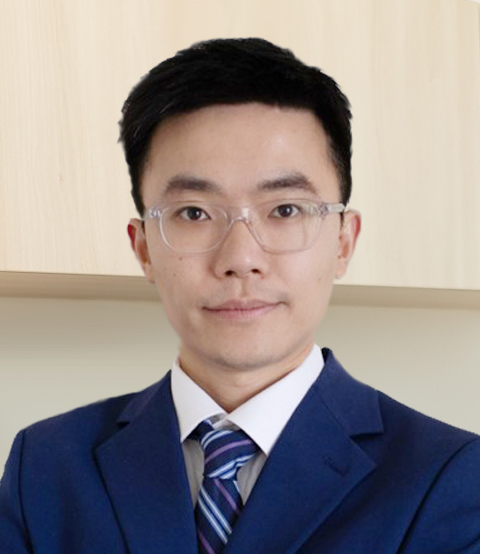
Dr. Xiaofeng Qian is an Associate Professor in the Department of Materials Science & Engineering at Texas A&M University, with joint appointments in Physics and Astronomy, and Electrical & Computer Engineering. His research focuses on materials theory , quantum materials design , and high-throughput computational discovery , particularly for 2D materials and energy applications . Educational Background: Ph.D., Nuclear Science and Engineering, Massachusetts Institute of Technology (2008) B.S., Engineering Physics, Tsinghua University (2001) Research spans first-principles electronic structure methods , nonlinear optical responses , and multiscale modeling of electronic, thermal, and ionic transport. Key areas include quantum spin Hall effect , ferroelectric switching , and machine learning for materials prediction . Notable Awards: Dean of Engineering Excellence Award (2024) Engineering Genesis Multidisciplinary Award (2024) AZZ Faculty Fellow (2021) NSF CAREER Award (2018) Manson Benedict Fellowship (2006) Actively recruiting PhD, MS, and UG researchers with backgrounds in physics, materials science, or computational methods. Collaborates extensively on hybrid AI-materials projects and topological device concepts .
Asst. Prof. OU Pengfei is an Assistant Professor and NUS Presidential Young Professor in the Department of Chemistry at the National University of Singapore, Faculty of Science. He leads the AI for Chemistry (AI4Chem) research group, focusing on computational catalysis, machine learning, and materials science. Previously, he was a Research Associate at Northwestern University and a Postdoctoral Fellow at the University of Toronto under Prof. Edward H. Sargent, and earned his Ph.D. from McGill University. Education: Ph.D., McGill University, 2020 M.Eng., Central South University, 2015 B.Eng., Central South University, 2012 Research interests include catalyst design for electrochemical reactions using ab initio DFT, molecular dynamics simulations, and AI-driven methods. He develops dynamic simulations of chemical processes under reaction conditions and machine learning tools for accelerated catalyst discovery. His work addresses challenges in energy and environmental applications such as CO2 reduction and hydrogen evolution. Notable awards include the NUS Presidential Young Professorship (2024), Climate Positive Energy Postdoctoral Fellowship (2021), and Chinese Government Award for Outstanding Self-Financed Students Abroad (2020). Labs/Teams: The AI4Chem group integrates theory-guided and data-driven approaches to advance computational catalysis, with three core research directions: (1) reaction mechanism exploration and catalyst optimization, (2) dynamic structure-performance relationships under reaction conditions, and (3) machine learning algorithms for high-throughput screening.
Joachim Weickert is a Professor of Mathematics and Computer Science at Saarland University where he heads the Mathematical Image Analysis Group since 2001. He received his diploma and Ph.D. in mathematics from the University of Kaiserslautern (1991, 1996), and a habilitation degree in computer science from the University of Mannheim (2001). Prior to his current position, he worked as a research assistant at the University of Kaiserslautern, as a post-doctoral researcher at the universities of Utrecht and Copenhagen, and as an assistant professor at the University of Mannheim. His research focuses on image processing, computer vision, and scientific computing, with special emphasis on techniques based on partial differential equations, variational principles, wavelets, morphological and nonlocal methods, as well as neuroexplicit approaches. He has developed mathematical models and efficient numerical algorithms for image restoration, enhancement, segmentation, compression, optic flow computation, stereo reconstruction, shape from shading, and signal processing methods for tensor fields. These ideas have been successfully applied in industry, biomedical image analysis, and other fields. Analysis of his recent publications reveals a strong trend toward combining traditional PDE-based methods with modern deep learning approaches, particularly in the areas of image inpainting and compression. His work increasingly explores the connections between numerical algorithms for partial differential equations and neural network architectures, demonstrating how mathematical foundations can inform cutting-edge AI techniques while maintaining strong theoretical guarantees. Gottfried Wilhelm Leibniz Prize (2010), considered the most important research award in Germany ERC Advanced Grant (2017) for "Inpainting-based Compression of Visual Data" Elected member of Academia Europaea - The Academy of Europe Jan Koenderink Prize for Fundamental Contributions in Computer Vision (2014) Multiple DAGM Prizes and Best Paper Awards throughout his career AAIA Fellow (2021) and Highly Ranked Scholar (2024) distinctions Professor Weickert has supervised over 250 bachelor's and master's theses and initiated the Master Programme in Visual Computing at Saarland University, the first of its kind in Germany taught in English. He has established numerous interdisciplinary collaborations with colleagues from medicine, bioinformatics, pharmacy, physics, mechatronics, and mechanical engineering. As Principal Investigator for Visual Computing within the Multimodal Computing and Interaction Cluster of Excellence, and former dean of the Faculty of Mathematics and Computer Science (2008-2010), he has played a significant leadership role in advancing visual computing research and education. He heads the Mathematical Image Analysis Group, which has been at the forefront of developing mathematical methods for image analysis. The group maintains strong connections with both theoretical mathematics and practical applications, bridging the gap between fundamental research and real-world implementation across various domains including medical imaging, industrial inspection, and multimedia processing.
Victoria Lemieux is a Professor at the University of British Columbia (UBC) Faculty of Arts, School of Information, and Cluster Lead for Blockchain@UBC, Canada’s largest research cluster focused on blockchain technology. Her research centers on risks to trustworthy records in blockchain systems and their impact on transparency, financial stability, and human rights. She has pioneered Canada’s first research-oriented graduate blockchain training program and organized multiple interdisciplinary summer institutes. Education: Ph.D. in Archival Studies from University College London (2002), Certified Information Systems Security Professional (CISSP, 2005). Affiliated with UBC’s Peter Wall Institute for Advanced Studies, Sauder School of Business, and Institute for Computers, Information and Cognitive Systems (ICICS). Research interests span blockchain technology , trustworthy records , risk management , information governance , and visual analytics , with recent work addressing healthcare data frameworks, Web3 AI integration, and socio-cultural dynamics of decentralized systems. She has published extensively on blockchain applications in archives, land transactions, and privacy-preserving technologies. Scientific Awards : 2015 Emmett Leahy Award 2015 World Bank Big Data Innovation Award 2016 Emerald Literati Award 2016 Emerald Literati Outstanding Paper Award Supervision: Currently accepts doctoral students in Computational Archival Science and blockchain-related archival research. Affiliated with the Blockchain@UBC cluster and multidisciplinary research teams exploring decentralized systems for social good.
Dr. Huaxiang Fu is a Professor in the Department of Physics at the University of Arkansas' College of Arts & Sciences, where he has been since 2002. His research focuses on first-principles computational studies of bulk and nanomaterials, particularly ferroelectric materials, quantum dots, and organic-inorganic hybrid materials. Education: Ph.D., Fudan University, China (1994) Postdoctoral Associate, National Renewable Energy Lab, Colorado (1995–1998) Postdoctoral Associate, Geophysical Lab, Carnegie Institution of Washington, DC (1999–2000) Dr. Fu's research spans five key areas: phase transitions in low-dimensional ferroelectrics, finite electric fields in solids, defect physics in ferroelectrics, hyperferroelectricity, and organic-inorganic hybrid materials. His work often employs density functional theory and computational modeling to explore polarization behavior, strain effects, and electronic structure. His recent publications highlight trends in ferroelectricity under strain , defect-induced polarization changes , and spin-orbit coupling effects . Notable collaborations include researchers at Carnegie Institution and University of Arkansas. Teaching: Undergraduate: General Physics, Statics, Mechanics of Materials, University Physics II, Electromagnetism, Fortran Programming, Computational Physics in C++, Physics for Architects II, Thermal Physics. Graduate: Statistical Mechanics, Solid State Physics, Optical Properties of Materials, Advanced Solid State Physics, Physics at the Nanoscale, Quantum Mechanics, Mathematical Methods. Research Contributions: 2004: Nature publication on ferroelectric nanodisks 2000: Nature paper on polarization rotation in piezoelectrics 2013: Pioneering work on electromechanical angular momentum coupling
Ravid Shwartz-Ziv is an Assistant Professor and Faculty Fellow at NYU's Center for Data Science, with a dual role as Senior Research Scientist at Wand AI. His research bridges theoretical foundations and practical applications in artificial intelligence, focusing on Large Language Models (LLMs), information theory, and neural network interpretability. Ph.D. in Computational Neuroscience, Hebrew University of Jerusalem (2021) B.Sc. in Computer Science and Computational Biology, Hebrew University of Jerusalem (2014) His research spans: Developing min-p sampling for LLM text generation Preventing representation collapse in Transformers Creating contamination-free LLM benchmarks like LiveBench Advancing information-theoretic frameworks for neural networks Exploring representation learning and model adaptation Recent publications demonstrate expertise in LLM efficiency, self-supervised learning, and multi-agent systems. Notable awards include the Google PhD Fellowship, Moore-Sloan Fellowship, and multiple best paper recognitions. He has led research initiatives at Intel and Google AI, focusing on neural network compression, XGBoost comparisons for tabular data, and innovative benchmarking frameworks.
James S. Kim is a Professor of Education at Harvard University's Graduate School of Education, where he conducts policy-relevant research focused on improving literacy outcomes for low-income students and struggling readers. With an Ed.D. from Harvard University (2002), he leads the READS Lab (Research Enhances Adaptations Designed for Scale in Literacy), a research team that partners with school districts to solve literacy challenges through evidence-based interventions. Dr. Kim's research centers on understanding how building students' domain knowledge and reading engagement can foster long-term improvements in reading comprehension. His work emphasizes experimental design and evidence-based interventions, with a particular focus on addressing educational inequality. His research interests include early education, education policy, evidence-based intervention, human development, inequality and education gaps, informal and out-of-school learning, language and literacy development, and teachers and teaching. Kim's most significant contribution is the Model of Reading Engagement (MORE), a spiraled and sustained content literacy intervention co-developed with schoolteachers that has been shown to improve first to third-grade students' reading comprehension in science, English language arts, and math. Notably, research on MORE meets WWC (What Works Clearinghouse) standards without reservation, and long-term follow-up suggests the intervention's impact persists through fourth grade. His publications reveal a consistent focus on content literacy, domain knowledge development, and transfer effects in reading comprehension. Research on MORE meets WWC standards without reservation Long-term effects of MORE persist through fourth grade Commitment to Open Science principles (open data, open materials, preregistration) As a servant leader, Kim builds long-term partnerships with school districts to implement literacy interventions at scale. His READS Lab promotes open science practices while developing practical solutions to literacy challenges. His research on summer reading interventions, parental text messaging, and classroom-based content literacy approaches demonstrates his commitment to translating research into practice. Kim's current work includes scaling the MORE intervention to improve reading comprehension for high-needs students in moderate to high poverty schools through a Department of Education-funded project (2024-2028).