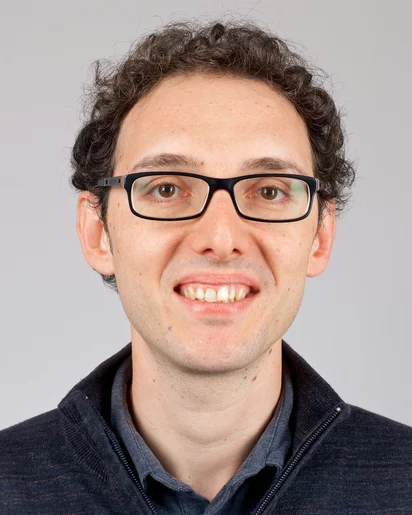
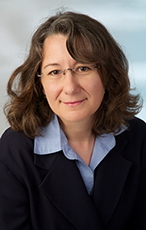
Nicola Colonna is a Tenure Track Scientist (mapped to Researcher) at Paul Scherrer Institute's Laboratory for Materials Simulations. Focuses on Koopmans spectral functionals and electronic structure theory. Research develops computational methods for predicting electronic properties of quantum materials, perovskites, and nanoporous systems using orbital-density-dependent functionals. Recent publications (2021-2024) demonstrate: 60% focus on Koopmans functional methodology development, 25% on perovskite electronic structures, and 15% on quantum material characterization. Common themes include spectral accuracy, high-throughput screening, and validation against experimental benchmarks. Software Development: Contributed to open-source koopmans package for spectral property prediction.
Antonio Javier Morales Rondán is an Associate Professor of Egyptology in the Department of History and Philosophy at the University of Alcalá (UAH), Spain. He is the director of the University of Alcalá archaeological expedition to Egypt, known as the Middle Kingdom Theban Project, focused on Deir el-Bahari and Asasif. He earned his PhD from the University of Pennsylvania in 2013 under the supervision of David P. Silverman, James P. Allen, and Harold Hays. PhD, Near Eastern Languages and Civilizations, University of Pennsylvania (2013) Postdoctoral Fellow, Heidelberg Universität (2013–2014) Lecturer, Institute of Egyptology, Freie Universität Berlin (2014–2017) Ramón y Cajal Fellow, University of Alcalá (2017–) Associate Professor, University of Alcalá (current) His research centers on the history, religion, language, and literature of Old and Middle Kingdom Egypt, with a focus on the First Intermediate Period and early Middle Kingdom. His expertise includes the transmission and adaptation of mortuary texts, particularly the Pyramid Texts, kingship ideology, ritual theory, and the socio-political transformations of the period. He combines traditional philological methods with archaeological fieldwork and digital approaches to textual analysis and reconstruction. His recent publications and projects reflect a strong trend in interdisciplinary Egyptology, integrating excavation reports, digital modeling, and textual criticism. The Middle Kingdom Theban Project has produced annual preliminary reports in Studien zur Altägyptischen Kultur , alongside studies on virtual reconstruction and ritual theory. His work spans from early dynastic textual fragments to Ptolemaic funerary practices, demonstrating a comprehensive chronological and methodological range. He has received research funding from institutions such as the Fundación Palarq and the Asociación Española de Egiptología. He has served as principal investigator for multiple projects, including The Middle Kingdom Theban Project: excavación, documentación y publicación de tumbas de las dinastías XI y XII en Asasif y Deir el-Bahari (2023–2024). He supervises graduate students in Egyptology and Ancient History, including Begoña Gugel Gironés and Beatriz Noria Serrano. He is also a co-editor of the Monografías de Oriente Antiguo (MOA) series and has contributed to digital Egyptology through projects like the Handbook of Digital Egyptology: Texts . His research group, CIARQ - Ciencias en la Arqueología , focuses on innovative resources in architecture, botany, geology, medicine, and chemistry for recovering the past, reflecting his interdisciplinary approach to archaeology and heritage management.
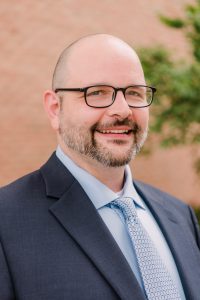
Joseph Bennett is an Assistant Professor in the Department of Chemistry & Biochemistry at the University of Maryland, Baltimore County (UMBC), where he leads computational research in functional materials design. His work bridges inorganic chemistry, materials science, and computational methods to address challenges in energy, environmental sustainability, and cultural heritage preservation. His academic background includes: B.S. in Chemistry, Drexel University (1998-2003) Ph.D. in Chemistry, University of Pennsylvania (2003-2009) Postdoctoral Fellowship, Rutgers University (2010-2012) Research Specialist, University of Iowa (2016-2019) Professor Bennett's research employs density functional theory (DFT), database mining, and thermodynamics to discover novel materials for energy storage, water treatment, and art conservation. His group investigates structure-property relationships across diverse material classes—including oxides, chalcogenides, and two-dimensional systems—focusing on how atomic composition and environmental conditions affect bulk and surface properties. This computationally driven approach enables targeted exploration of nature's 'missing materials' for transformative technological applications. Analysis of his 12 recent publications (2021-2025) reveals a strong interdisciplinary focus on two-dimensional materials, surface science, and art conservation applications. Key themes include van der Waals layered phosphochalcogenides, stability of aqueous-exfoliated nanomaterials, and molecular interactions on mineral surfaces relevant to cultural heritage. His work consistently integrates fundamental electronic structure calculations with real-world environmental and conservation challenges. Professor Bennett actively mentors students through undergraduate research courses (CHEM 399/499) and doctoral research (CHEM 898/899), including the Baltimore SCIART virtual research program that merges computational chemistry with art conservation. His teaching portfolio spans Inorganic Chemistry (CHEM 405/605), Solid State Materials Chemistry (CHEM 490/684), and laboratory instruction. Bennett Labs, based in Meyerhoff 250, utilizes a chemically guided strategy combining periodic table elements, informatics, and DFT to map energy landscapes and stabilize intermediate structures for novel material synthesis. The lab's approach targets atomistic interactions that govern functional properties in energy, environmental, and cultural heritage contexts, with active exploration of phase transformations and tunable bonding environments.
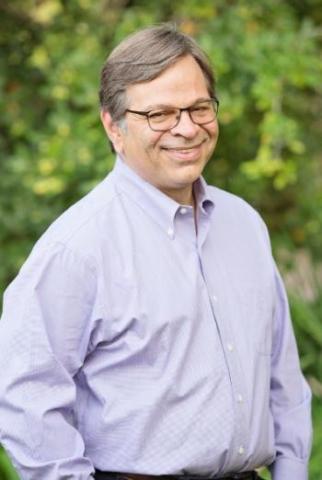
Todd Martinez is the David Mulvane Ehrsam and Edward Curtis Franklin Professor of Chemistry and Professor of Photon Science at Stanford University, affiliated with SLAC National Accelerator Laboratory. His research focuses on theoretical and computational chemistry, with emphasis on photochemistry, mechanochemistry, and quantum mechanical methods. He earned his PhD in Chemistry from UCLA in 1994, followed by postdoctoral work at UCLA and the Hebrew University in Jerusalem before joining Stanford in 2009. His group develops novel simulation tools, including GPU-accelerated quantum chemistry software (e.g., TeraChem) and virtual reality interfaces (InteraChem and MolAR) for interactive molecular modeling. Key interests include predicting molecular behavior under light and mechanical force, designing self-healing materials, and advancing reaction discovery through first-principles methods. Awards include the MacArthur Fellowship and recognition as a Fellow of the American Academy of Arts and Sciences. Education: PhD in Chemistry (UCLA, 1994); Postdoctoral Studies at UCLA and Hebrew University (Jerusalem) Research Themes: Molecular modeling, excited-state dynamics, mechanochemical reactions, and computational tools Publications span ultrafast spectroscopy, quantum mechanical modeling, and algorithm development for large-scale simulations. The Martinez Group’s work bridges theory and application, aiming to make molecular design predictive and accessible through interdisciplinary collaborations.
Giulia A. Disanto is Associate Professor of German Literature at the Department of Humanities, University of Salento, Italy. Affiliated with institutions like Freie Universität Berlin, Technische Universität Berlin, and Pavia's La Grande Illusion, she bridges German studies with international academic networks. Education: Doctorate (2006) from University of Bari, with formative periods at University of Münster and Peter Szondi Institute (Berlin) Research: Interdisciplinary exploration of German literature from 19th century to contemporary, focusing on war/exile narratives, avant-garde movements, and ecocritical frameworks Publications: 15+ peer-reviewed articles, including 2025 studies on Dadaist ambiguity and 2023 translation analyses Her work bridges literary theory with fractal aesthetics , interwar cultural dynamics , and German-Italian poetic translations . Key article clusters examine: Dadaism and Kurt Schwitters' experimental forms Ecocritical perspectives in German-language literature Exile linguistics through Paul Celan and Osip Mandel'štam Scientific recognition includes DAAD research fellowships (2007, 2010) Robert Bosch Stiftung and Deutscher Übersetzerfonds fellowships (2018) Editorial roles in Ecozon@ and Lingue e Linguaggi journals As Principal Investigator for PRIN 2022's "Ecocritical Perspectives" project and former head of PRIN 2017's IMAGO research unit, she leads literary-geographic collaborations with University of Pisa, Foggia, and Salerno.
Philipp Schnabl is Professor of Finance and the Martin J. Gruber Professor in Asset Management at the New York University Leonard N. Stern School of Business, where he has been a faculty member since 2008. He also serves as the Sidney Homer Director of the Salomon Center for the Study of Financial Institutions. Schnabl is a Research Associate at the National Bureau of Economic Research (NBER) and a Research Affiliate at the Centre for Economic Policy Research (CEPR), underscoring his prominent role in academic finance and policy research. B.A./M.A., Vienna University of Economics and Business Administration M.P.A., Harvard University Ph.D., Economics, Harvard University His research centers on financial intermediation, monetary policy, corporate finance, and banking . Using both theoretical and empirical approaches, Schnabl investigates how monetary policy affects credit markets, how banks manage risk, and the evolving role of FinTech in lending. His work often leverages detailed regulatory and firm-level data, particularly from international contexts such as Peru, to draw broad insights about financial system dynamics. The recent articles highlight a consistent research trajectory focused on monetary policy transmission, bank funding models, and financial innovation . A key theme is the role of the deposit franchise in allowing banks to hedge interest rate risk and how this creates vulnerabilities during periods of rising rates. Another major line of work examines how FinTech lenders and non-bank financial institutions have reshaped small business and mortgage lending, particularly in the aftermath of the 2008 financial crisis. Marshall Blume Prize in Financial Research (First Prize), 2020 Brattle Group Prize (First Prize), Journal of Finance, 2023 Amundi Pioneer Prize (Distinguished Paper), 2018 SFS Cavalcade Best Paper in Corporate Finance, 2015 Glucksman Institute Research Prize, multiple years Schnabl has advised or collaborated with numerous researchers and doctoral students, though specific advisees are not listed. His work has been supported by institutional affiliations and research centers such as the Salomon Center and NBER. He teaches courses in empirical corporate finance at the PhD level and corporate finance at the MBA and undergraduate levels. He has no known active grants listed, but his prolific publication record suggests sustained research funding. He leads and contributes to research at the Salomon Center for the Study of Financial Institutions , where he directs initiatives on financial stability, banking, and monetary policy. His recent working papers and public commentary, especially on the 2023 banking turmoil, indicate an active role in shaping policy-relevant financial research.
Dr. Marta Kaczanowicz is a researcher affiliated with the Department of Archaeology of Egypt and Nubia at the Faculty of Archaeology, University of Warsaw. Her work focuses on the archaeology of Egypt during the first millennium BCE, with a particular emphasis on monument reuse, gender roles in ancient Egypt, and the history of Egyptology. Specializes in First Millennium BCE Egyptian archaeology Investigates the symbolic and functional reuse of monuments and objects Advocates for recognition of women’s contributions to Egyptology Conducts interdisciplinary research on plant cultivation in ancient Egypt Her recent publications highlight trends in Theban Necropolis studies, Kushite-Egyptian interactions, and the historiography of archaeological work. She has extensively analyzed tomb reuse patterns, early excavation records, and material culture from Third Intermediate and Late Period sites. Dr. Kaczanowicz contributes to the academic community through her research on underrepresented female pioneers in archaeology, such as Dorothy Mackay and Agatha Christie’s Egyptological connections. Her fieldwork centers on West Thebes, with ongoing projects documenting unrecorded tombs and artifacts.
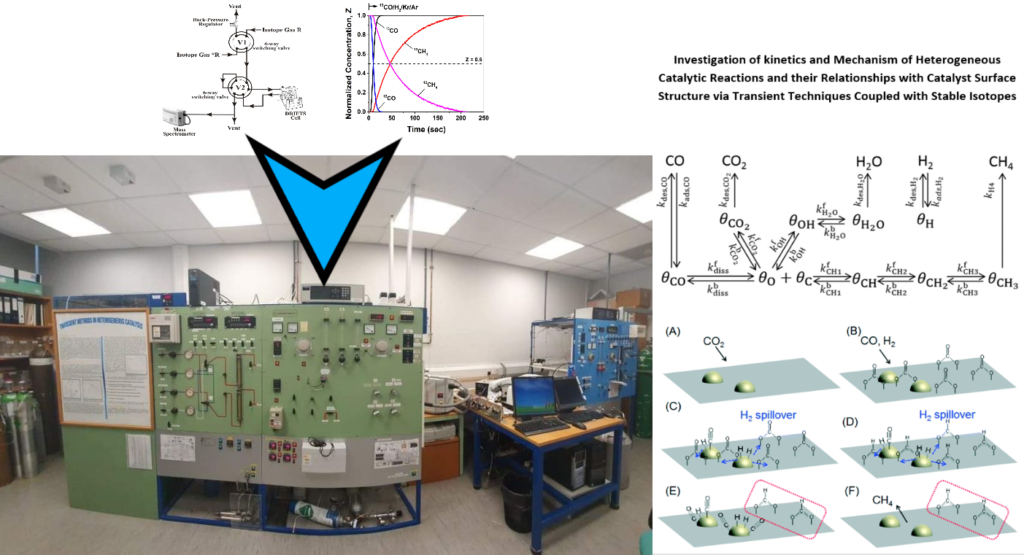
Professor Angelos Efstathiou is a distinguished faculty member in the Department of Chemistry at the University of Cyprus, where he has served since 1997. He currently holds the position of Professor and previously served as Associate Dean of the School of Natural and Applied Sciences (2011-2014). His academic journey includes a Diploma in Chemical Engineering from NTUA (1981), M.Sc. (1985), and Ph.D. (1989) from the University of Connecticut, followed by postdoctoral research at UConn and the University of Patras. Diploma in Chemical Engineering, National Technical University of Athens (1981) M.Sc. in Chemical Engineering, University of Connecticut (1985) Ph.D. in Chemical Engineering (Heterogeneous Catalysis), University of Connecticut (1989) Postdoctoral Fellow, University of Connecticut (1989-1991) Postdoctoral Fellow, University of Patras (1991-1995) Efstathiou's research focuses on heterogeneous catalysis, specializing in environmental catalysis and reaction kinetics. His laboratory pioneered transient isotopic techniques (SSITKA) and operando methodologies (DRIFTS-MS, UV-vis-MS) to study reaction mechanisms under real conditions. Key research areas include solid catalyst design, pollution control technologies, catalytic hydrogen production, and in situ characterization of catalysts. His work establishes critical links between kinetic parameters (k's, θ's) and catalyst performance metrics like activity, selectivity, and stability. Analysis of his recent publications reveals strong emphasis on dry reforming of methane, NOx reduction technologies (H2-SCR, NH3-SCR), CO2 capture, and methanation reactions. His group frequently employs isotopic labeling (13CO2, 18O2, D2) to map carbon pathways and reaction mechanisms, with particular expertise in ceria-based catalysts and bimetallic systems. The interdisciplinary nature of his work bridges catalysis, materials science, and environmental engineering. CATSA Eminent Visiting Award 2019 (prestigious international recognition) Royal Award for Sustainable Technology Transfer 2008 Research Performance Index: h-index 52 (Scopus), 58 (Google Scholar) Citations: 7,390 (Scopus), 9,200 (Google Scholar) as of 2023 Efstathiou actively mentors doctoral students and maintains extensive editorial roles, including Editor of Catalysis Communications and board membership for Applied Catalysis B: Environmental. His laboratory has trained Cyprus's first catalytic chemistry Ph.D. scientists and maintains strong international collaborations, particularly with South African and European research groups. Current projects focus on ship exhaust De-NOx technologies, CO2 capture materials, and advanced biofuel production processes.
Georgia Barker is an Honorary Postdoctoral Fellow in the Department of History and Archaeology at Macquarie University, specializing in ancient Egyptian funerary art of the Old and Middle Kingdom periods. Her recent postdoctoral project investigated political instability's impact on funerary customs at Asyut during Egypt's First Intermediate Period and early Middle Kingdom. Her academic credentials include: Bachelor of Ancient History (2015) from Macquarie University Master of Research (2017) from Macquarie University Doctor of Philosophy (2021) from Macquarie University Barker's research centers on comparative analysis of funerary models and wall scenes in elite Egyptian tombs, demonstrating their distinct functional roles despite visual similarities. She examines how First Intermediate Period political turmoil reshaped burial practices, with Asyut tombs revealing persistent military iconography in inscriptions and art even after Middle Kingdom reunification, highlighting regional responses to instability. Her publications reveal a cohesive focus on Middle Kingdom funerary archaeology through integrated analysis of artistic, textual, and material evidence. Key themes include tomb owner representation, eternity concepts, and regional adaptations to political change, with primary case studies at Meir, Deir el-Bersha, Beni Hassan, and Asyut demonstrating methodological rigor in cross-source comparison. Her scholarly recognition includes: Vice-Chancellor's Commendation for Academic Excellence (2020) Barker has served as an Egyptology tutor and lecturer at Macquarie University while maintaining active research roles. She currently contributes as Associate Investigator to the Sir Douglas Newbold Archival Project (2024-present) on Eastern Sudan's archaeology, and has collaborated with major institutions including the Metropolitan Museum of Art and Sydney Living Museums. She actively shapes the Australasian Egyptology community through conference organization (6th Australasian Egyptology Conference, 2022) and leverages museum collections at Macquarie University History Museum for interdisciplinary research on Egyptian mortuary traditions.
Timothy Duff is Professor of Greek at the University of Reading, Department of Classics, within the Faculty of Arts, Humanities and Social Sciences. He serves as Director of Postgraduate Research, Director of the Centre for Hellenic Studies, and Coordinator of Modern Greek in the Department of Languages and Cultures. He is also the University’s academic lead for Arts and Humanities Research Council (AHRC)-funded doctoral awards. His academic qualifications include an MA and PhD from the University of Cambridge, Christ's College. He is a Fellow of the Royal Historical Society (FRHistS) and a Senior Member of Wolfson College, Cambridge. Professor Duff's research centers on Greek history, historiography, and prose literature of the Roman Imperial period, with a particular focus on Plutarch. His work explores narrative structure, intertextuality, generic enrichment, moral philosophy, and the educational function of ancient biography. He examines how Plutarch constructs character, uses language, and engages with philosophical and literary traditions to shape the reader's moral and political understanding. His recent publications reveal a sustained scholarly engagement with Plutarch’s narrative techniques, ethical aims, and literary complexity. Themes such as the role of comparison (syncrisis), the construction of the reader, the use of tense and aspect, and the blending of genres are recurrent in his work. His research demonstrates a deep command of both philological detail and broader literary theory. Visiting Professorship at Shanghai University (2016) Visiting Professorship at Princeton University's Seeger Center for Hellenic Studies (2016) Research Fellowship at Freie Universität Berlin (2007–2009, Alexander von Humboldt Foundation) Research Fellowship at the Australian National University (2006) Visiting Fellowship at Wolfson College, Cambridge (2005) Research Fellowship at Harvard University's Center for Hellenic Studies (2004) Research Fellowship at the University of Cincinnati (2002) UK AHRC Research Leave Award (1999–2000) Fellow of the Royal Historical Society Senior Member of Wolfson College, Cambridge Professor Duff actively supervises postgraduate research students in his areas of expertise. He has held significant leadership roles in research funding and academic coordination. His work bridges classical scholarship with contemporary literary and philosophical inquiry, contributing to both specialized and interdisciplinary audiences. He is associated with the Centre for Hellenic Studies at the University of Reading, which promotes research and public engagement in Greek language, history, and culture across periods. His collaborative projects and editorial work reflect a commitment to advancing the field through international scholarly networks.
Cedric Van Dijck is an Assistant Professor of English Literature at Vrije Universiteit Brussel (VUB), affiliated with the Linguistics and Literature Study Center and the Study Center for Literary and Intermedial Crossings. He serves as Editor-in-Chief of the Journal of European Periodical Studies and was elected to the Flemish Young Academy in 2024. His research focuses on media history, modernism, colonial book history, and the role of periodicals in British Empire contexts. Key projects include the ERC-funded AFROPRESS initiative examining Sub-Saharan Africa’s cultural magazines (1918–68) and the FWOTM1097 project on modernism and bureaucracy in colonial Africa. Van Dijck’s work spans author studies (Virginia Woolf, E.M. Forster), material culture, and transnational periodical networks. He has authored Modernism, Material Culture and the First World War (2023) and co-edited major companions on World War I periodicals. His recent publications analyze African diaspora journals, Black internationalism, and modernist bureaucracy in colonial contexts. He has received awards including the ESPRit Prize (2024) and fellowships from the Flemish Research Foundation and Belgian American Educational Foundation. Key Projects: AFROPRESS (ERC-funded, 2025–29) Paperwork: Modernism and Bureaucracy (2022–24) Diaspora Journals in Western Europe (2025–29) Recent Articles: Out of Africa: Nat Nakasa's Exit Paperwork (2025) Empire (Brill Handbook, 2024) Happy Returns? E.M. Forster's Centenaries (TLS, 2024) Awards: ESPRit Prize (2024) Essay Prize, British Association for Modernist Studies (2015) Labs/Teams: Leads AFROPRESS research group and collaborates with international institutions like Yale University and the Norwegian University of Science and Technology.
Lukas Etter is a researcher in the Department of English Studies at the Faculty I of the University of Siegen, Germany. He holds a doctorate and is actively involved in teaching and publishing in the fields of American literature, comics studies, and intermediality. He has taught courses at the University of Siegen, University of Bern, and University of Zurich, demonstrating a transnational academic presence. His research focuses on literary and cultural studies , particularly 19th-century American poetry , literature and science , and critical race theory . He also explores comics and graphic narratives through lenses of seriality, transnationalism, and autobiography. His work often examines the intersection of visual and verbal storytelling, especially in alternative and autobiographical comics. The analysis of his recent publications reveals a strong trend toward intermedial and transnational narratives , with a particular emphasis on how comics function across cultural and media boundaries. His scholarship frequently addresses formal aspects of graphic storytelling such as layout, seriality, and abstraction, while also engaging with social and political themes like race, identity, and subjectivity. While no formal awards are listed, his editorial work on significant volumes such as Distinctive Styles and Authorship in Alternative Comics (De Gruyter, 2021) and special issues in leading journals highlights his standing in the academic community. Lukas Etter has advised or collaborated with several scholars, though no formal students are listed. His collaborative research projects and co-edited volumes suggest active engagement in academic networks. He has contributed to major reference works like the Routledge Handbook to Culture and Media of the Americas and the Cambridge History of the Graphic Novel , indicating recognition as a specialist in his field. He is affiliated with research groups focused on comics and graphic narratives , often working in interdisciplinary teams with scholars such as Daniel Stein, Gabriele Rippl, and Jan Noël Thon. These collaborations span institutions and contribute to a vibrant research environment in transnational and intermedial studies.
Anil Seth is a Professor in the Department of Physics & Astronomy at the University of Utah, where he has been employed since 2017 (as Associate Professor until 2022). His research focuses on galaxy formation and evolution, particularly the detection of black holes in low-mass galaxies and the study of nuclear star clusters. BA in Physics, Astronomy & Music from Wesleyan University (1998) PhD in Astronomy from the University of Washington (2006) Postdoctoral fellow at Harvard-Smithsonian Center for Astrophysics His work has led to the discovery of over 10 new black holes in low-mass galaxies, including the first dynamical measurement of black holes below a million solar masses. He utilizes telescopes such as Gemini, VLT, ALMA, Hubble, and JWST for his research. Additionally, he contributes to citizen science projects and serves on the James Webb Space Telescope Time Allocation Committee. He advocates for dark sky preservation and founded the Bryce Canyon National Park Astronomy Outreach Internship , which has trained 20+ undergraduates since 2014. He also co-created the University of Utah's Dark Sky Studies minor and a Capitol Reef National Park internship program.
Dr. Caroline Arbuckle MacLeod is an Assistant Professor at St. Thomas More College , University of Saskatchewan . Her research focuses on Ancient Egyptian Archaeology , with specialized interests in Woodworking Practices , Coffin Construction , and Digital Games in Archaeology Education . She teaches courses on Egyptology, Near Eastern Archaeology, and the Archaeology of Wood . Education : Ph.D. from UCLA, M.Phil. from Oxford, and First Class B.A. from UBC Research Projects : Examines carpenter priests in coffin creation, coffin reuse patterns, and the Database of Religious History as a pedagogical tool Publications include studies on coffin production, digital gaming in education, and gender dynamics in Egyptian archaeology Her recent articles analyze coffin construction timelines, digitization of historical narratives, and material economy in ancient Egypt. She serves on the Editorial Board of the Database of Religious History.
Bettina Bader is a Professor and Group Leader at the Austrian Archaeological Institute (ÖAI) within the Austrian Academy of Sciences. She holds a PhD (2004) and Habilitation (2019) from the University of Vienna’s Institute for Egyptology. Her research focuses on material culture, cultural interaction between Egypt and the Levant, and settlement archaeology of the First Intermediate Period to New Kingdom (2176–1450 BCE). Key projects include the START-project ‘Beyond Politics: Material Culture of Second Intermediate Period Egypt and Nubia’ and the ‘Foreigners in Ancient Egypt’ initiative. She has led excavations at Tell el-Daba, Herakleopolis Magna, Dahshur, and Deir el-Ballas, collaborating with institutions like the Metropolitan Museum of Art and the University of Cambridge. Awards include a Marie Curie Fellowship and FWF grants. Her work integrates interdisciplinary methods, emphasizing pottery analysis, ceramic provenance studies, and re-evaluation of historical excavation records. Education: MA in Egyptology, University of Vienna (1998) PhD in Egyptology, University of Vienna (2004) Habilitation in Archaeology, University of Vienna (2019) Research Interests: Funerary archaeology, material culture distribution patterns, culture contact studies, identity archaeology, Egyptian-Levantine relations, and pottery typology. Current projects explore the Second Intermediate Period’s material culture beyond political frameworks. Publications: Over 30 peer-reviewed articles and monographs analyzing Egyptian ceramics, settlement patterns, and cultural interaction. Recent work includes Material Culture and Identities in Egyptology (2021) and Tell el-Dabʿa XXIV (2021). Grants & Awards: FWF START Project (Y754-G19) FWF Project (V147-G21) Marie Curie Fellowship (2007–2009) Labs/Teams: Heads the research group ‘Material Culture in Egypt and Nubia’ at the ÖAI, coordinating international collaborations in fieldwork and lab analysis.