معرفی
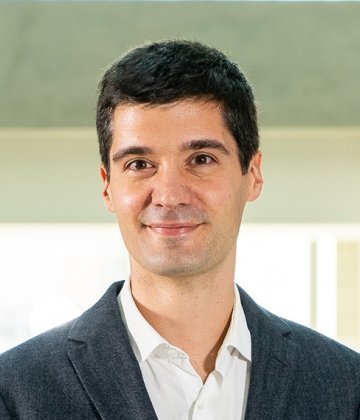
Philipp Schnabl is Professor of Finance and the Martin J. Gruber Professor in Asset Management at the New York University Leonard N. Stern School of Business, where he has been a faculty member since 2008. He also serves as the Sidney Homer Director of the Salomon Center for the Study of Financial Institutions. Schnabl is a Research Associate at the National Bureau of Economic Research (NBER) and a Research Affiliate at the Centre for Economic Policy Research (CEPR), underscoring his prominent role in academic finance and policy research.
- B.A./M.A., Vienna University of Economics and Business Administration
- M.P.A., Harvard University
- Ph.D., Economics, Harvard University
His research centers on financial intermediation, monetary policy, corporate finance, and banking. Using both theoretical and empirical approaches, Schnabl investigates how monetary policy affects credit markets, how banks manage risk, and the evolving role of FinTech in lending. His work often leverages detailed regulatory and firm-level data, particularly from international contexts such as Peru, to draw broad insights about financial system dynamics.
The recent articles highlight a consistent research trajectory focused on monetary policy transmission, bank funding models, and financial innovation. A key theme is the role of the deposit franchise in allowing banks to hedge interest rate risk and how this creates vulnerabilities during periods of rising rates. Another major line of work examines how FinTech lenders and non-bank financial institutions have reshaped small business and mortgage lending, particularly in the aftermath of the 2008 financial crisis.
- Marshall Blume Prize in Financial Research (First Prize), 2020
- Brattle Group Prize (First Prize), Journal of Finance, 2023
- Amundi Pioneer Prize (Distinguished Paper), 2018
- SFS Cavalcade Best Paper in Corporate Finance, 2015
- Glucksman Institute Research Prize, multiple years
Schnabl has advised or collaborated with numerous researchers and doctoral students, though specific advisees are not listed. His work has been supported by institutional affiliations and research centers such as the Salomon Center and NBER. He teaches courses in empirical corporate finance at the PhD level and corporate finance at the MBA and undergraduate levels. He has no known active grants listed, but his prolific publication record suggests sustained research funding.
He leads and contributes to research at the Salomon Center for the Study of Financial Institutions, where he directs initiatives on financial stability, banking, and monetary policy. His recent working papers and public commentary, especially on the 2023 banking turmoil, indicate an active role in shaping policy-relevant financial research.