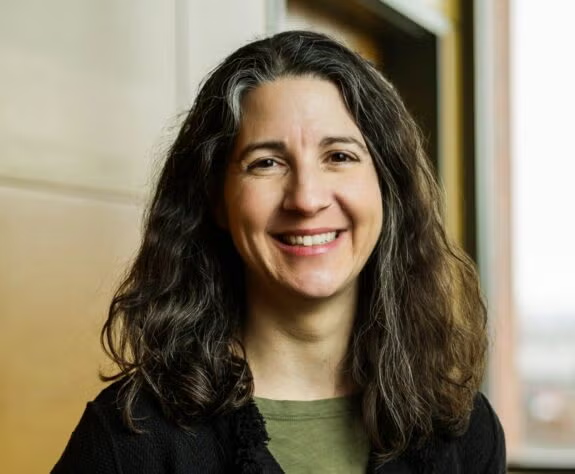
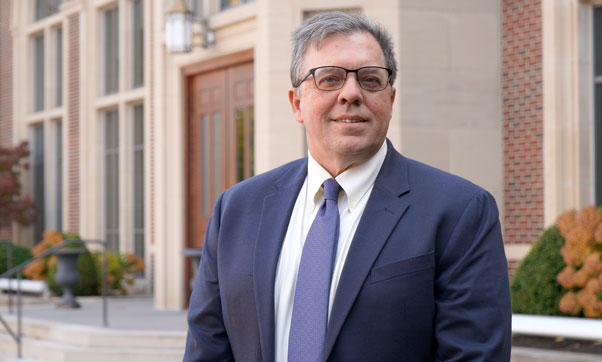
Nathan J. Brown is a Professor of Political Science and International Affairs at George Washington University and a Nonresident Senior Fellow with the Middle East Program at the Carnegie Endowment for International Peace. For the 2023-24 academic year, he held a fellowship at the Hamburg Institute for Advanced Study in Germany. He also serves on the board of trustees of the American University in Cairo, demonstrating deep institutional engagement across the Middle East. His educational credentials include a BA from the University of Chicago and MA/PhD degrees from Princeton University. This foundation underpins his rigorous academic approach to Middle Eastern governance. Professor Brown specializes in Islam and politics, Arab constitutional law, and governance dynamics in Egypt and Palestine. His research uniquely bridges religious jurisprudence and statecraft, examining how Islamic legal traditions interact with modern constitutional frameworks. Recent work focuses on post-conflict institutional design in Syria and Gaza, revealing how constitutional processes become tools for both authoritarian consolidation and democratic aspiration in the Arab world. His publications since 2023 reveal three dominant trajectories: constitutional crises in Arab states (Syria, Kuwait), Gaza's catastrophic governance vacuum, and the weaponization of academic discourse in U.S. campus protests. These works consistently analyze how legal frameworks either enable or obstruct political transitions, with particular attention to the gap between formal institutions and actual power structures. His major honors include: Guggenheim Fellow (2013) Carnegie Scholar (2009) Woodrow Wilson International Center for Scholars Fellowship Fulbright Scholar designation for research across Egypt, Israel, Qatar, and Kuwait Professor Brown has served as a critical policy advisor for the Palestinian constitution drafting committee, USAID, UNDP, and multiple NGOs. His grant portfolio reflects elite recognition through Guggenheim and Carnegie Corporation funding. As president of the Middle East Studies Association (2013-2015), he shaped the field's scholarly direction during pivotal regional upheavals. Through Carnegie's Middle East Program, he leads collaborative research initiatives like the Gaza Compendium and Arab Peace Initiative II, convening experts to analyze conflict trajectories. His current Hamburg Institute fellowship supports comparative work on religion-state relations across Islamic contexts, building on decades of field research in Arab governance structures.
Professor Carys J. Craig is a faculty member at York University's Osgoode Hall Law School , where she holds the rank of Professor . She serves as the Director of IP Osgoode , Academic Director of the Professional LLM Program in Intellectual Property Law , and Associate Dean (Research & Institutional Relations). Prior to her current role as Full Professor (2024–present), she served as Associate Professor (2007–2024) and Assistant Professor (2002–2007). LLB (First Class Honours) – University of Edinburgh (1999) LLM – Queen’s University (2000) SJD – University of Toronto (2006) Her research focuses on intellectual property law through critical theoretical lenses, including feminist legal theory , critical race theory , and cultural theory . Key areas include copyright and trademark law , users’ rights , freedom of expression , technological neutrality , and artificial intelligence . Recent projects explore racially disparaging trademarks , AI authorship , and dialogic approaches to IP . From 2021–2024, her publications address AI copyright challenges , gendered IP dynamics , and trademark user rights , reflecting her interdisciplinary approach. Her work has been cited by the Supreme Court of Canada and earned multiple teaching accolades, including the President’s University-Wide Teaching Award (2015) . President’s University-Wide Teaching Award (2015) Institute of International Education Outstanding Service Award MacCormick Research Fellowship (University of Edinburgh, 2018) She supervises graduate research in domestic and international IP law , with a focus on copyright and trademark law , and has directed PhD theses for students including Amanda Turnbull , Giuseppe Tarantino , and Justice Ogoroh .
David L. Franklin is an Associate Professor of Law at DePaul University College of Law, where he teaches Constitutional Law, Administrative Law, First Amendment, Conflict of Laws, and Torts. Education: BA, Yale College (summa cum laude) JD, University of Chicago Professor Franklin's research focuses on constitutional and administrative law, with specialized expertise in First Amendment jurisprudence, interstate legal conflicts, and tort theory. His scholarship bridges theoretical legal frameworks and practical appellate advocacy, informed by extensive government experience. Prior to academia, he served as Illinois Solicitor General (2016-2019), arguing two cases before the U.S. Supreme Court. His professional trajectory includes clerkships with Justice Ruth Bader Ginsburg and Judge Stephen F. Williams, plus litigation experience at Covington & Burling. His publications span elite law journals including Yale Law Journal and Iowa Law Review, alongside commentary in The New Republic, Slate, and major national newspapers.
Sarah Light holds the Mitchell J. Blutt and Margo Krody Blutt Presidential Professorship and serves as Professor of Legal Studies & Business Ethics at the University of Pennsylvania's Wharton School. She is faculty co-director of the Wharton Climate Center, driving interdisciplinary climate research and policy initiatives. Her research critically examines environmental law's intersection with corporate structures and market dynamics, analyzing how corporate governance frameworks function as environmental regulation. She investigates private environmental governance mechanisms including corporate carbon pricing systems and financial sector decision-making in banking/insurance, while addressing First Amendment implications in greenwashing regulation. This work bridges legal theory, business ethics, and sustainability innovation. Professor Light's scholarship appears in premier law journals including Stanford Law Review, Columbia Law Review, Duke Law Journal, UCLA Law Review, and University of Pennsylvania Law Review. Her teaching excellence has been formally recognized through multiple Wharton Teaching Excellence Awards across both undergraduate and MBA programs. As an active climate policy contributor, she participates in Penn's Climate Seminar series and has presented on energy ethics, ESG frameworks, and green energy transition politics at university events through 2025.
Neda Zdraveva is a Full Professor at the Department of Civil Substantive Law, Law Faculty "Justinian I" in Skopje, part of Ss. Cyril and Methodius University in Skopje. She teaches Obligation Law in the first cycle of legal studies, while her second-cycle instruction includes Contract Law, Civil Law - Applied Program, Law of Insurance and Securing Transactions, Tort Law, Consumer Law, and Internet Law. For third-cycle studies, she leads courses on Law of Obligations and Intellectual Property Law. Her research concentrates on Civil Law, Contract Law, Tort Law, Consumer Law, Intellectual Property Law, and Alternative Dispute Resolution (ADR), with emphasis on consumer protection legislation in North Macedonia and the Western Balkans. She investigates EU law implementation in Macedonian consumer contract frameworks, digital content regulation, civil liability for privacy breaches, and intellectual property enforcement mechanisms. Her work bridges theoretical civil law principles with practical applications in emerging digital markets and regional legal harmonization efforts. Analysis of her 2017-2025 publications reveals dominant themes in consumer dispute resolution (particularly ADR systems), EU-Macedonian legal alignment, and intellectual property protection. Regional focus on Western Balkans permeates her scholarship, alongside contributions to legal education modernization through the MELE project. Her research consistently addresses evolving challenges in digital commerce, freedom of assembly, and moral rights within civil law frameworks.
Gary Huey is a Professor of History at Ferris State University within the College of Arts, Sciences and Education. He holds a PhD in History from Washington State University, an MS in History from Illinois State University, and an MA in Secondary Education alongside a BS in History from Bradley University. Huey has previously taught at Texas State University and Louisiana State University at Eunice. Research interests include civil rights, Southern liberalism, voting rights, First Amendment studies, and the historical intersections of media, politics, and social justice. His work critically examines themes such as political corruption, public discourse, and the historiography of the Civil Rights Movement. Academic contributions include a widely recognized book, Rebel With a Cause: P.D. East, Southern Liberalism and the Civil Rights Movement, 1953-1971 , and numerous presentations on topics like Fake News, Dirty Politics, and Voting Rights. These works reflect his engagement with 20th-century American political and social history. Scientific Awards: 2014 Distinguished Teacher Award Louisiana Alumni Federation Distinguished Faculty Fellowship Award Huey has also demonstrated leadership in academic service, serving as coordinator/organizer for the Michigan Academy of Science, Arts, and Letters. His career spans over three decades, blending teaching excellence with research on civil rights and political activism.
Eric Alden is a full-time Professor of Law at Salmon P. Chase College of Law, Northern Kentucky University. He has been a faculty member since 2011, contributing to legal scholarship in securities regulation, corporate governance, and contract law. His career spans roles as a partner in Silicon Valley law firms, attorney fellow at the SEC, and adjunct professor at UC Hastings College of Law. Education: Juris Doctor (Columbia Law School), Master of Arts in Modern History (Freie Universität Berlin), Certificat d'Etudes Politiques (Institut d'Etudes Politiques de Paris), Bachelor of Arts in Economics (Harvard University). Professor Alden's research focuses on contract law, securities regulation, and corporate governance. His forthcoming book from Cambridge University Press (2024) re-examines promissory estoppel's role in contract law. His journal articles, appearing in publications like the Harvard Journal of Law and Public Policy and the Berkeley Business Law Journal, often address regulatory compliance and doctrinal shifts in corporate and contract law. His publications include analyses of promissory estoppel (2016-2018), shareholder activism (2007-2010), and regulatory reforms (2003-2014). These works emphasize intersections between legal theory, financial markets, and corporate compliance, with several ranking among SSRN's top downloads in contract and corporate law categories. He has delivered speaking engagements on securities crowdfunding, Dodd-Frank's impact, and SEC disclosure rules, reflecting his expertise in evolving regulatory landscapes. His professional background includes roles at the SEC, Berkeley Center for Law and Business, and Mayer Brown teleconferences, underscoring practical experience in securities compliance and corporate governance.
Professor and Associate Dean John Bickers, affiliated with the Salmon P. Chase College of Law at Northern Kentucky University since 2006, is a constitutional law scholar and former Army Judge Advocate General (JAG) Corps officer. His teaching combines the Socratic method and mock appellate arguments, earning him recognition as Professor of the Year by multiple graduating classes. Education: Bachelor of Arts in History, Cornell University Juris Doctor, University of Michigan Law School LL.M (Master of Laws), Georgetown Law Center Bickers’ research focuses on constitutional law, particularly the Establishment Clause and military jurisprudence. His scholarship explores intersections between legal history, national security, and constitutional amendments. Notable works analyze military commissions, punitive damages in legal malpractice, and the Emancipation Proclamation. He has presented at conferences such as LegalED Igniting Law Teaching and contributed to debates on anti-terrorism law, the Smoke-Free Kentucky Act, and voting rights. His publications span 1998–2021, reflecting sustained engagement with constitutional interpretation and military legal systems. Scientific Awards: 2013 Faculty Award for Sustained Excellence in Teaching (NKU) Professor of the Year (multiple graduating classes) Bickers’ grants and affiliations include collaborations with the TRICARE Military Health System and participation in human rights conferences. He mentors students through practical legal education and has served as an academic leader in faculty development.
Lisa Davis serves as an Associate Teaching Professor in the Communication Department at Santa Clara University, bringing over 20 years of professional journalism experience to her role. She teaches diverse journalism courses and communication law, bridging academic theory with real-world media practice. Her research focuses on Investigative Journalism , Media Law , and Religious Institutions in Public Discourse , exemplified by her book The Sins of Brother Curtis: A Story of Betrayal, Conviction and the Mormon Church . This work critically examines accountability mechanisms within religious organizations through the lens of journalistic ethics and legal frameworks. Professor Davis emphasizes practical application in her pedagogy, integrating courtroom procedures, First Amendment challenges, and ethical dilemmas in modern reporting. Her expertise in communication law provides students with foundational knowledge for navigating legal complexities in digital and traditional media environments.
Christine Kiracofe is a Professor and Department Head of Educational Studies at Purdue University , West Lafayette. She is a leading scholar in education law and finance , with a focus on school funding litigation , constitutional rights in education , and mediation in educational settings . Education: Ed.D. in Education Administration, University of Georgia (2004) M.P.A. in Public Administration, Purdue Global (2022) M.A. in Art History, University of Georgia (2000) B.A. in Art History & Health Sciences, Kalamazoo College (1997) Research Interests: Dr. Kiracofe’s research centers on the intersection of education law and finance , particularly school funding litigation and the constitutional and statutory rights of students, teachers, and administrators. She also explores mediation and conflict resolution as tools for educational leadership. Publications: Her work spans books , book chapters , and peer-reviewed articles , with a strong emphasis on policy reform , legal analysis , and equity in education . Recent publications address critical race theory in funding , service animals in higher education , and dress code litigation . Awards and Honors: Fellow, National Education Finance Academy Will Myers Memorial Scholarship Recipient, American Educational Finance Association Member, Phi Beta Kappa Heyl Scholarship Recipient, Kalamazoo College Teaching and Courses: Dr. Kiracofe teaches undergraduate and graduate courses including: EDST 20010 – Education Policies and Laws (Undergraduate) EDST 64000 – Higher Education Law (PhD) EDST 64300 – Economics and Finance of Higher Education (PhD) EDST 64700 – History of American Colleges & Universities (PhD) EDST 60900 – Legal Aspects of American K-12 Education (MEd) Professional Role: Since 2024, she has served as Department Head of Educational Studies at Purdue University, where she continues to lead in both academic scholarship and administrative excellence .
Michael L. Coulter serves as Professor of Political Science and Humanities at Grove City College, teaching core courses in political theory and American government within the Department of Political Science. His educational background includes: Ph.D. in Politics, University of Dallas M.A. in Politics, University of Dallas B.A. in Political Science, Grove City College Research focuses on the intersection of religious traditions with political systems, particularly Catholic social doctrine's application to modern governance and early modern philosophical foundations. Coulter examines how theological concepts inform policy debates while analyzing canonical political texts from the Renaissance through Enlightenment periods. His publication pattern reveals consistent engagement with Catholic intellectual tradition through editorial leadership on the Encyclopedia of Catholic Social Teaching and targeted analyses of church-state tensions in education. Recent works increasingly connect classical philosophical frameworks with contemporary American political challenges, especially regarding educational freedom and community-based governance models. Practical political experience includes eight years on Grove City Council and regional campaign involvement, complementing his academic focus on bridging theoretical political philosophy with civic engagement.
Mark Schroeder is an Associate Professor of Legal Skills and Associate Dean for Academic Affairs at Quinnipiac University's School of Law and Education . He teaches courses including "LAWS 115 Bar Pass: Capstone" and focuses on legal research, writing, and communication. Education: BA, Williams College JD, University of Connecticut His research explores intersections between free speech , social media , and educational policy , notably examining legal protections for teacher-student communication outside traditional school settings. He has published in law reviews, including a 2012 article on teacher speech rights in the digital age.
Christine Ma-Kellams is an Assistant Professor in the Department of Psychology at San Jose State University , within the College of Social Sciences. Her research bridges cultural psychology, evolutionary psychology, and social neuroscience to explore how cultural contexts shape human behavior, decision-making, and emotional experiences. Her research interests focus on cross-cultural differences in self-construal, particularly among East Asians, Southeast Asians, European Americans, and Latinx Americans. She investigates how cultural upbringing and intersectional identities (e.g., race, gender) influence mental health disparities, social cognition, and attitudes. Additionally, she examines mindfulness interventions for stress regulation and the role of cultural psychology in understanding global health behaviors. Recent research trends highlight her commitment to advancing cross-cultural measurement tools (e.g., self-construal scales), exploring the psychological impacts of multicultural identities, and analyzing the interplay between cultural norms and health outcomes. Her work often employs multi-site collaborations to ensure robust, replicable findings across diverse populations. Christine is proficient in Spanish and contributes to academic discourse through peer-reviewed publications and presentations. Her personal background as a first-generation Asian American woman informs her approach to studying bicultural individuals and their navigation of cultural contexts.
Wolfgang Römer, born 1936 in Düsseldorf, has been an Honorary Professor at the University of Cologne Faculty of Law since 2000 while simultaneously serving as Germany’s first Insurance Ombudsman (2001-2008). Earlier he spent 1990-2001 as a judge at the Federal Court of Justice (Bundesgerichtshof) in the IV. Civil Senate specialising in insurance matters, and was a member of the Federal Ministry of Justice commission that drafted the 2008 reform of the German Insurance Contract Act (VVG). Education & Career: 1954 – Commercial apprenticeship 1954-1965 – Employed in private industry 1965-1970 – Law & economics studies, University of Bonn 1970 – First state law exam, Cologne 1973 – Entered judicial service, North Rhine-Westphalia (focus: banking, commercial & company law) 1974 – Second state law exam, Düsseldorf 1990-2001 – Judge, Bundesgerichtshof (IV. Civil Senate, insurance law) 1996-2000 – Lecturer, University of Cologne Faculty of Law 2000-present – Honorary Professor, University of Cologne 2001-2008 – First Ombudsman for private insurance, Germany Advisory board member, Federal Financial Supervisory Authority (BaFin) Member, Federal Ministry of Justice reform commission on insurance contract law Research & Policy Focus: Römer’s writing and legislative work centre on insurance contract law, consumer protection in financial services, supervision of insurers, and civil-procedure aspects of coverage disputes. He has co-authored the authoritative commentary on the German Insurance Contract Act (6 editions 1997-2019) and has published extensively on disclosure duties, policy conditions, reform of disability insurance, and the role of alternative dispute resolution in insurance. Publication Trends: Across more than two decades his articles analyse the evolution of German insurance jurisprudence after market deregulation, critique consumer-protection weaknesses, and propose legislative fine-tuning. Recurrent themes are transparency obligations, fairness in life and disability products, and the practical functioning of the insurance ombudsman scheme he helped shape. Honours & Roles: Honorary Professor, University of Cologne First Insurance Ombudsman of Germany Member, reform commission for the Insurance Contract Act 2008 Advisor to Federal Financial Supervisory Authority (BaFin) Advising & Grants: While no formal doctoral students are listed, Römer has influenced generations of practitioners through his judicial opinions, commentaries, and policy papers. He has participated in numerous government, industry and consumer forums tasked with drafting or evaluating insurance legislation, although specific grant records are not provided. Labs & Teams: No dedicated research laboratory is mentioned; his scholarly output stems from honorary academic engagement, judicial experience, and policy commissions rather than an institutional research group.
Professor Małgorzata Wąsek-Wiaderek is a distinguished legal scholar and jurist affiliated with the Catholic University of Lublin (KUL), where she serves as a Professor at the Department of Criminal Procedure within the Faculty of Law, Canon Law and Administration. Simultaneously, she holds the position of Supreme Court Judge in the Criminal Chamber since November 2018, bringing together academic expertise and practical judicial experience at the highest level of Poland's justice system. Professor Wąsek-Wiaderek's academic journey began with her graduation from the 3rd Union of Lublin High School, followed by studies at KUL's Faculty of Canon and Secular Law (1989-1995), where she earned her Master's degree. She further expanded her expertise with a postgraduate program in European law at the Catholic University of Leuven, Belgium (1995-1996), obtaining an LL.M. degree. Her academic progression continued with a doctoral dissertation defense in January 2002 and habilitation in legal sciences in June 2013. She completed a research internship at the Jagiellonian University in March 2000, demonstrating her commitment to comparative legal studies. Her research primarily focuses on the intersection of European law and Polish criminal procedure, with particular emphasis on the impact of Council of Europe standards and European Union integration on national criminal justice systems. Professor Wąsek-Wiaderek has made significant contributions to understanding judicial cooperation mechanisms, particularly the European Arrest Warrant system, and the protection of human rights within criminal proceedings. Her scholarly work consistently addresses the practical implementation of international legal standards in domestic contexts, bridging theoretical frameworks with real-world application. She has authored numerous publications examining temporary detention regulations, procedural fairness, and constitutional guarantees in criminal proceedings. Professor Wąsek-Wiaderek's extensive publication record demonstrates a clear trajectory of deepening expertise in European criminal procedural law. Her recent works increasingly examine the practical challenges of implementing European legal standards within Polish criminal justice, with particular attention to pre-trial detention, judicial cooperation across borders, and the protection of defendants' rights. The interdisciplinary nature of her research connects criminal procedure with European Union law, human rights protection, and constitutional guarantees, reflecting the complex legal landscape of contemporary European justice systems. Her scholarship shows a progression from foundational comparative analyses to nuanced examinations of specific implementation challenges in the Polish context. Professor Wąsek-Wiaderek has received several prestigious awards recognizing her contributions to legal scholarship and the justice system: Bronze Medal for Long Service, awarded by the President of the Republic of Poland (2012) Commemorative Medal for Merit to the Administration of Justice, awarded by the Minister of Justice (2013) John Paul II Rector's Award of the Catholic University of Lublin (2013) Individual first-degree award granted by the Minister of Science and Higher Education for scientific achievements Throughout her career, Professor Wąsek-Wiaderek has held significant positions that demonstrate her expertise and influence in Polish legal circles. She served as a member of the Supreme Court's Office of Studies and Analysis from 2004 to November 2018, and was appointed as a Supreme Court Judge in the Criminal Chamber in November 2018. She has also contributed to legal reform as a member of the Criminal Law Codification Commission during multiple terms (2009-2013, 2013-2017, and since April 2024). Her international experience includes serving as an ad hoc judge of the European Court of Human Rights during the 2014-2016 term and participating in numerous international research projects, including collaboration with Tilburg University and KU Leuven on administrative approaches to combat crime within the EU. She has received research grants, including one from the Ministry of Science and Higher Education (No. NN110 235935) on changes in criminal court jurisdictional autonomy following Poland's EU accession. Professor Wąsek-Wiaderek is an active member of several prestigious scholarly organizations, including the International Penal and Penitentiary Foundation based in Switzerland (since September 2014), the Faculty of Legal Sciences of the Scientific Society of the John Paul II Catholic University of Lublin (corresponding member since March 2015), and the Research Society of European Law. Her scholarly influence extends through her regular participation in national and international conferences, where she presents on cutting-edge issues in criminal procedure and European legal cooperation. Her extensive publication record, spanning multiple languages and prestigious academic venues, demonstrates her significant contribution to the field of criminal procedure law both nationally and internationally.