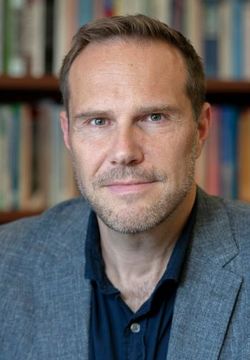
Albrecht Fuess is a Professor of Islamic Studies at Philipps University of Marburg since 2010, specializing in Middle Eastern History (13th–17th centuries), Mamluk socio-cultural dynamics, and contemporary European Islamic discourses. His research spans historical continuity in Ottoman-Mamluk-Safavid interactions, Islamic youth cultures, and Mediterranean geopolitics. Research Focus: Medieval Islamic history, Transottomanica mobility studies, Islam in Europe, and cultural integration of Muslim migrants. Awards: Le Studium Fellowship (2007–2009) at Université de Tours. His publications emphasize military-economy interplay, legitimacy through religious narratives, and resource management in empires, with a focus on Mamluk and Ottoman transformations. He has advised on doctoral projects covering topics like Islamic welfare, Arabic ʾAmālī literature, and Cypriot-Ottoman relations. Leadership: Co-coordinator of Transottomanica (DFG-SPP 1981), member of ANR and DAAD committees, and liaison professor for the German National Academic Foundation. Editorial Roles: Co-editor of 'Transottomanica' and 'Muslim Worlds' series, and advisory board member for journals in Cairo, Paris, and Leuven.
Rasha Baruni is an Assistant Professor in the Department of Psychology at the University of Manitoba's Faculty of Arts. She teaches courses including Seminar in Behaviour Modification (PSYC 4540/8240) and Seminar in Basic Operant Research (PSYC 4540/8270). Her academic background includes a PhD in Applied Behaviour Analysis from the University of South Florida (2023), an MS in Applied Behaviour Analysis from St. Cloud State University (2012), and a BA Honours in Psychology from York University (2007). PhD (Applied Behaviour Analysis), University of South Florida, 2023 MS (Applied Behaviour Analysis), St. Cloud State University, 2012 BA Honours (Psychology), York University, 2007 Baruni's research focuses on applied behavior analysis for child safety , particularly in digital environments. She develops and evaluates behavioral skills training (BST) and conjugate reinforcement schedules to address physical and digital safety threats (e.g., firearms, social media risks). Her work extends to staff training methodologies and procedural fidelity in intervention implementation. Recent publications analyze conjugate reinforcement dynamics, remote safety training efficacy, and BST adaptations. Research trends show emphasis on digital safety threats , cross-cultural interventions , and technology-assisted training for both children and practitioners. She actively explores ways to improve stakeholder accessibility to safety programs. Currently accepting Master’s and PhD students, Baruni collaborates with international institutions on behavioral safety initiatives and maintains active research connections through platforms like Google Scholar and ResearchGate.
Daniel Webster is Bloomberg Professor of American Health in the Department of Health Policy and Management at the Johns Hopkins Bloomberg School of Public Health. He is also affiliated with the Urban Health Institute, the Johns Hopkins Center for Gun Violence Solutions, the Johns Hopkins Center for Injury Research and Policy, and the Center for Mental Health and Addiction Policy Research. Dr. Webster is one of the nation’s leading experts on firearm policy and the prevention of gun violence. His research interests include violence and violence prevention, firearm injuries, gun policy, policy evaluation, domestic violence, youth violence, and opioid abuse. He has led extensive research on the effects of firearm and alcohol policies, policing strategies, street outreach, conflict mediation, and school-based curricula. His recent publications focus on public health approaches to gun violence, the impact of purchaser licensing and background check laws, firearm injury hospitalizations, police shootings, and the deregulation of civilian gun carrying. These works reveal a strong trend in evaluating state-level firearm policies using longitudinal data and mixed-methods designs to inform public health and criminal justice policy. Inaugural Bloomberg Professor of American Health, 2018 Johns Hopkins University Distinguished Alumni Award, 2017 Baltimore City Health Equity Leadership Award, 2016 David Rall Award for Science-Based Advocacy, American Public Health Association, 2015 Finalist, Marylander of the Year, The Baltimore Sun, 2013 Delta Omega Honorary Society in Public Health – Alpha Chapter, Faculty induction, 2005 Educator of the Year, Maryland Network Against Domestic Violence, 2004 Dr. Webster has led numerous federally and foundation-funded research projects, including evaluations of city-level gun violence prevention initiatives, the Lethality Assessment Program, California’s domestic violence firearm intervention, and Baltimore policing strategies. He has advised on national and state-level policy and is a sought-after expert in public health advocacy. He teaches Understanding and Preventing Violence and Crafting Effective Solutions to Gun Violence: A Problem-Solving Seminar. He is a Distinguished Scholar at the Johns Hopkins Center for Gun Violence Solutions, where he continues to lead research and policy engagement efforts. His work is supported by interdisciplinary teams and collaborations across public health, criminology, law, and social work.
Dr. Dean G. Kilpatrick is a Distinguished University Professor in the Department of Psychiatry and Behavioral Sciences at the Medical University of South Carolina (MUSC). He holds leadership roles as Director of the National Crime Victims Research and Treatment Center and Director of the Charleston Consortium Clinical Psychology Internship Program. His career spans over 50 years with continuous NIH funding since 1985 and extensive extramural grants from agencies like CDC, NIMH, and NIJ. His research focuses on traumatic stress, particularly PTSD prevalence, sexual violence epidemiology, and mental health impacts of mass violence. He pioneered rape crisis advocacy in South Carolina and has authored over 300 peer-reviewed publications (h-index 109), with eight papers cited over 1,000 times. His work influences policy through roles in IOM committees and testimony to U.S. Congress. Key areas of expertise include posttraumatic stress disorder, trauma exposure measurement, and disaster mental health interventions. His recent studies address mass violence community responses, lead exposure screening, and mobile health apps for PTSD mitigation. He has directed major initiatives like the Bounce Back Now intervention trial and the National Survey of Adolescents. Awards include the Presidential Award for Victims of Crime (1990) and the South Carolina Order of the Palmetto (2020). Professional service includes Editor-in-Chief of the Journal of Traumatic Stress (1997-2005) and ISTSS presidency (2005-2006). His grants total millions, funding projects on sexual assault policy, disaster preparedness, and trauma genetics. He advises federal agencies on victim services and has trained generations of psychologists through MUSC's clinical programs.
Dr. Kristian Gustafson is a Reader in Intelligence & War at Brunel University London's College of Business, Arts and Social Sciences , Department of Politics and History. He serves as Deputy Director of BCISS and leads the Distance Learning MA in Intelligence and Security Studies program. PhD in History from Cambridge University MA in History from University of Alberta BA (Hons) in History from Royal Military College of Canada His research focuses on practical intelligence analysis, structured analytical tools, and military doctrine. He has worked on improving counter-poaching outcomes in Africa and reducing gun crime through intelligence methods. Recent publications analyze intelligence failures in Kabul (2021), Ukraine war intelligence (2024), and structured analytic techniques across nations (2025). His work spans both academic journals and policy-oriented publications. Scientific recognition includes: CIA’s Walter L. Pforzheimer Award (2003) for outstanding contribution to intelligence history Co-editor of 'Intelligence Elsewhere' (2013), establishing comparative research agendas Teaching highlights: Convenor of MA Intelligence and Security Studies (Distance Learning) Module convenor for Contemporary Threats & Intelligence Analysis Director of Studies for MA Intelligence & Security Studies Professional experience includes senior lecturer at Royal Military Academy Sandhurst, military service in Canadian and British armies, and consultancy roles with UK MOD and Cabinet Office.
Clifford W. Bogue, MD , is the Waldemar Von Zedtwitz Professor of Pediatrics, Chair of the Department of Pediatrics at Yale School of Medicine, and Chief of Pediatrics for the Yale New Haven Health System. He has been a faculty member at Yale since 1993 and has held numerous leadership roles, including Interim Chairman of Pediatrics, Chief Medical Officer of Yale-New Haven Children’s Hospital, and Director of Pediatric Critical Care programs. Education: BA and MD from the University of Virginia; Residency and Chief Residency at Vanderbilt University; Fellowship in Pediatric Critical Care at Yale. Dr. Bogue is a pediatric critical care specialist whose research centers on the molecular mechanisms of organ development, particularly the role of the Hhex gene in liver, cardiovascular, and lung organogenesis. His lab used mouse models to uncover critical genetic pathways in embryonic development, with implications for regenerative medicine. His recent work also extends into pediatric public health, critical care infrastructure, and health equity. An analysis of his recent publications reveals a sustained focus on developmental genetics, with increasing engagement in clinical and policy-oriented research in pediatrics. His work spans molecular biology, translational models, and national health initiatives, reflecting a broad scholarly impact. His scientific honors include: President of the American Pediatric Society (2024–2025) Norman J. Siegel Faculty Award Marna P. Borgstrom Lifetime Achievement Award Consistent recognition in Best Doctors in America since 2004 Honorary M.A. from Yale University Dr. Bogue has been deeply involved in training the next generation of physician-scientists, serving as PI of an NIH T32 program, Training Director of the Yale Child Health Research Center (K12), and mentor in the MD/PhD program. He has contributed to national pediatric research policy through roles in the American Academy of Pediatrics, NIH advisory committees, and the Charles H. Hood Foundation. He leads or has led significant research initiatives, including an NIH-funded program on cardiopulmonary development and the Bedside to Bench seminar for medical students. His leadership extends to national boards and editorial roles, including Section Editor for Current Opinion in Pediatrics .
Kenneth C. Wilbur is a Professor of Marketing and Analytics at the University of California, San Diego's Rady School of Management. He holds the Sheryl and Harvey White Chair in Management Leadership and serves as Associate Editor for Marketing Science and the Journal of Marketing Research. Research focuses on quantitative marketing, customer analytics, and digital platform phenomena 18 award-winning papers across marketing, economics, and interdisciplinary journals Organizer of the Workshop on Platform Analytics with YouTube archives His work bridges empirical analysis with practical applications in advertising, blockchain technology, and regulatory compliance. Recent publications examine digital advertising inefficiencies, platform pricing algorithms, and policy impacts on consumer behavior. Scientific Awards John D. C. Little Award Finalist Don Morrison Long-Term Impact Award Finalist Frank M. Bass Award Winner Multiple Best Paper Finalists Teaching materials include UCSD courses: Customer Analytics and Introduction to Marketing Analytics. Publicly shares Quarto source files for educational reuse.
Jonathan Rodden is a Professor of Political Science at Stanford University and a Senior Fellow at the Hoover Institution and Stanford Institute for Economic Policy Research. His research focuses on the comparative political economy of institutions, particularly federalism and fiscal decentralization, with significant contributions to understanding the urban-rural political divide and its implications for representation and policy. PhD from Yale University BA from the University of Michigan Fulbright student at University of Leipzig His research spans several domains: Comparative Federalism: Analyzed fiscal decentralization mechanisms, budgetary transfers, and institutional design in federations globally. Political Geography: Developed computational methods for redistricting analysis and demonstrated how geographic voter distribution creates inherent electoral biases. Policy Uncertainty: Co-authored foundational work linking economic uncertainty to political polarization and fiscal cycles. Public Health: Conducted epidemiological studies on firearm-related mortality and suicide patterns in California. Scientific awards include: Gregory Luebbert Prize for best book in comparative politics (2007) Michael Wallerstein Award for best paper in political economy (2015) He has advised PhD students like Jowei Chen and directed policy projects with international institutions including the World Bank, IMF, and OECD. His work on redistricting simulations has been cited in U.S. Supreme Court amicus briefs and congressional testimony.
Jon Vernick is a Professor and Associate Chair for Educational Programs in the Department of Health Policy and Management at the Johns Hopkins Bloomberg School of Public Health. He is also affiliated with the Johns Hopkins Center for Gun Violence Solutions and the Johns Hopkins Center for Injury Research and Policy, where he conducts interdisciplinary research at the nexus of law and public health. MPH, Johns Hopkins Bloomberg School of Public Health, 1994 JD, George Washington University, 1989 His research centers on the use of legal and regulatory interventions to improve public health, particularly in injury and violence prevention. He has extensively studied firearm policy, motor vehicle safety, opioid prescribing laws, and the role of litigation in preventing consumer product injuries. His work employs epidemiological and legal analysis to evaluate the impact of legislation on public health outcomes. The recent trend in his publications shows a strong focus on evaluating the effects of state-level policies on firearm fatalities, drug-impaired driving, and occupational safety. His research combines legal scholarship with public health data to inform evidence-based policymaking. American Public Health Association, ICEHS Section Public Service Award, 2013 Golden Apple Teaching Award (student-given) SCC Teaching and Advising Award, 2000 and 2011 Advising, Mentoring, and Teaching Recognition Award (AMTRA), 2005, 2013, 2020 Cum Laude Law School Graduate, 1989 Delta Omega Public Health Honor Society, 1994 Vernick has been consistently recognized for excellence in teaching and mentoring. He has led educational initiatives and advised students in public health policy. His research is supported by major grants focused on gun violence prevention and injury control. He collaborates widely with experts in epidemiology, law, and policy. He is a key member of the Johns Hopkins Center for Gun Violence Solutions and the Center for Injury Research and Policy, where he contributes to multidisciplinary teams conducting high-impact research to reduce preventable injuries and deaths.
Elizabeth Brown is an Associate Professor in the Department of Sociology at the University of Massachusetts Boston, where she has served since 2014 after previously teaching in Niagara University's Criminology and Criminal Justice department. Born in Senegal, Zaire (now DRC), and Bangladesh, she attended high school in Amherst, MA and holds a B.A. in Psychology from Tufts University (2000) and a Ph.D. in Criminal Justice from SUNY Albany (2009). Her educational background includes: B.A. in Psychology, Tufts University, 2000 Ph.D. in Criminal Justice, State University of New York at Albany, 2009 Dr. Brown's research expertise spans law and society, moral politics, and the social determinants of public opinion regarding crime and justice. She investigates punishment mechanisms, societal precarity, and U.S. state-level penal policy evolution, with current work examining how meritocratic beliefs and personal economic insecurity shape public perceptions of social class. Her scholarship reveals deep engagement with the moral and political foundations of punitive attitudes in American society. Analysis of her 15 publications (2009-2025) demonstrates consistent focus on criminological methodology and public opinion dynamics. She employs experimental designs and longitudinal analysis to study collateral consequences, gun ownership metrics, and political rhetoric's impact on crime control policies. Key trends include historical examination of presidential platforms (1968-2020), racial bias in punitive views (1974-2014), and economic influences on incarceration during the Great Recession. Information regarding Dr. Brown's graduate student mentoring, grant funding, laboratory affiliations, or research teams is not documented in the available sources.
Geoffrey S. Corn is a Professor at the Texas Tech University School of Law , holding the George R. Killam Jr. Chair of Criminal Law . He also serves as Director of the Center for Military Law & Policy . Previous Affiliation: Gary A. Kuiper Distinguished Professor of National Security at South Texas College of Law Houston (2005–2024) Army Career: Served 21 years as officer + 1 year as civilian legal advisor (retired Lt. Col.) Education: B.A., Hartwick College (1983) J.D., George Washington University Law School (1992) LL.M., U.S. Army Judge Advocate General’s School (1997) Research Focus: His work bridges law of armed conflict , national security law , and criminal procedure , with emphasis on modern warfare ethics , prosecutorial accountability , and constitutional implications of counterterrorism . Publications address operational compliance with international law and civilian risk mitigation in military operations. Article Trends (2019–2022): Recent scholarship critically examines human shielding , Miranda warnings , and firearms regulation , reflecting interdisciplinary work in criminal law , military law , and constitutional interpretation . Expert Testimony: Acted as expert witness for Military Commission in Guantanamo, International Criminal Tribunal for Former Yugoslavia, and federal courts.
Monika Gabriela Bartoszewicz is an Associate Professor at the Department of Technology and Security , UiT The Arctic University of Norway. Her research spans terrorism, political violence, international security, and migration policy with a focus on societal security and resilience. Email: monika.bartoszewicz@uit.no Office Location: Teknologibygget Tromsø 4.008 Her research interests include: Religion and politics Political and religious radicalisation Culture and identity in political processes Hybrid threats in Arctic regions Epistemic security and knowledge monopolies Recent publications explore dystopian migration discourses, firearm policy impacts, and NATO’s evolving security strategies. She contributes to interdisciplinary projects like Global Security: North–South Partnership and Cultural Heritage in Crisis .
Peter N. Salib is an Assistant Professor at the University of Houston Law Center and Associate Faculty in Public Affairs. He serves as Law and Policy Advisor to the Center for AI Safety in San Francisco and co-Director of the Center for Law & AI Risk. University of Houston Law Center Public Affairs Faculty Center for AI Safety Center for Law & AI Risk His research combines constitutional law and economic analysis to address AI governance challenges. Current work focuses on legal frameworks for mitigating catastrophic AI risks through regulatory innovation. Publications appear in top law reviews including University of Chicago Law Review, Virginia Law Review, and Texas Law Review. Recent scholarship trends indicate expertise in: Algorithmic discrimination in health equity Constitutional implications of AI rights Jury nullification theories in abortion cases AI arms race international law Computational law applications As former Climenko Fellow at Harvard Law School and attorney at Sidley Austin LLP, he brings both academic and practical legal experience. Judicial clerkship with Hon. Frank H. Easterbrook informs his constitutional analysis approach.
Steven Dyer serves as an Instructor of Criminal Justice at Thomas College, where he contributes to the Department of Criminal Justice with expertise spanning human trafficking, financial crimes, and practical firearms instruction certified by the NRA and USCCA. His interdisciplinary background bridges academic theory with field application in criminal justice education. His educational foundation includes an ABD in Criminal Justice/Behavioral Science, an MS in Criminal Justice, an MS in Pastoral Ministry, and a BS in Economics/Finance. This diverse training informs his holistic approach to criminology and victim-centered research. Dr. Dyer's research concentrates on human trafficking victimology and financial crime intersections , with Maine-specific case studies. His work employs phenomenological methodologies to analyze trafficking networks, detection systems, and prevention frameworks, emphasizing regional policy implementation and victim support systems. His 2017-2018 publications reveal a cohesive trajectory: from theoretical explorations of human rights frameworks to actionable state policy roadmaps. Key themes include financial crime integration in trafficking cases, victim-centered intervention models, and cross-agency collaboration strategies for combating trafficking in rural contexts. No scientific awards or major fellowships are documented in available sources for Dr. Dyer. While student advising details remain unreported, his collaborative work with Maine state agencies on the 2017 anti-trafficking roadmap indicates applied research engagement. No external grant funding specifics are publicly available. Dr. Dyer actively participates in regional anti-trafficking networks through presentations like the Vision New England Faith and Justice Summit. His partnerships with Maine state entities and non-profits demonstrate practical implementation of research, though formal laboratory structures are not documented.
Arturo J. Carrillo serves as Professor of Law, Director of the Civil and Human Rights Law Clinic, and Co-Director of the Global Internet Freedom & Human Rights Project at the George Washington University Law School. He simultaneously holds the position of Human Rights Lead at Global Action on Gun Violence (GAGV), where he has pioneered research, litigation and advocacy strategies aimed at promoting firearms industry accountability. In 2024, he was appointed to the prestigious Lancet Commission on Global Firearm Violence and Health. Professor Carrillo's educational background includes a BA from Princeton University, a JD from the George Washington University, and an LLM from Columbia University. His previous academic positions include acting director of the Human Rights Clinic at Columbia Law School, where he was also Lecturer in Law and the Henkin Senior Fellow with Columbia's Human Rights Institute. Prior to academia, he worked as a legal advisor for the United Nations Observer Mission to El Salvador (ONUSAL) and for NGOs in Colombia. His research focuses on public international law with specialization in human rights and humanitarian law. Professor Carrillo's work spans two primary domains: Information and Communication Technologies (ICTs) and human rights (particularly Internet freedom), and advancing the practical application of the United Nations Guiding Principles on Business & Human Rights to both firearms and ICT sectors. His scholarly output demonstrates consistent engagement with digital rights, net neutrality, corporate accountability, and transitional justice mechanisms. Professor Carrillo's publications reveal a clear trajectory addressing contemporary legal challenges, from digital rights frameworks to corporate accountability for violence. His recent work examines GDPR's impact in Latin America, ICT companies in armed conflict, and anti-terrorism measures through a human rights lens, showing how international legal frameworks can be applied to emerging technological and security challenges. Lancet Commission on Global Firearm Violence and Health (2024) Professor Carrillo's media presence demonstrates the real-world impact of his work, with citations in UPI regarding international human rights and gun violence (2023), The Guardian on DC statehood as a human rights issue (2021), and Religion News Service on digital blasphemy prosecutions (2021). His clinical practice involves active litigation of civil rights cases in U.S. courts and before international human rights tribunals, bridging theoretical scholarship with practical advocacy.