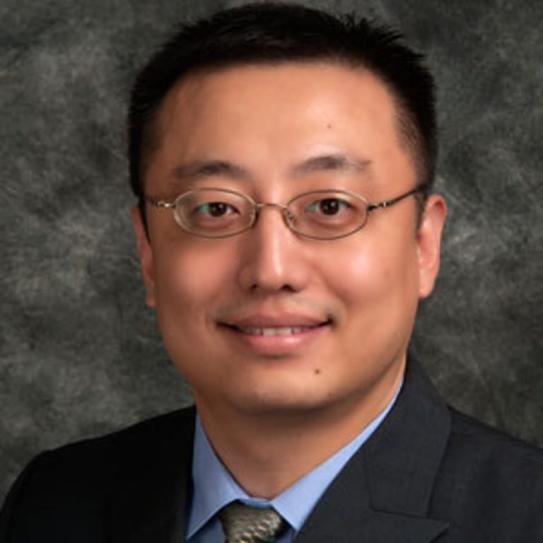
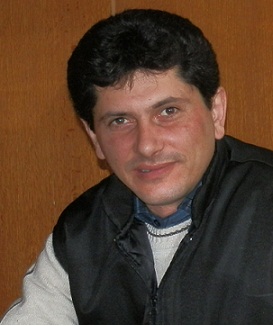
Frank Markert is an Associate Professor at the Technical University of Denmark (DTU) , Department of Civil and Mechanical Engineering, specializing in Structures and Safety. His research focuses on fire safety engineering, hydrogen safety, computational fluid dynamics (CFD), and risk assessment, with applications in tunnel safety, hydrogen refuelling stations, and emergency response systems. Education: While specific degrees are not listed, his role as Associate Professor and extensive research output suggest advanced qualifications in fire safety engineering or related fields. Research Interests: Fire safety and fire dynamics in structures Hydrogen safety, especially in confined spaces like tunnels Risk assessment and quantitative risk analysis (QRA) Computational modeling of fires and explosions Emergency response and crisis management systems Research Trends: His recent publications (2023–2025) emphasize hydrogen safety in transport systems, tunnel fire mitigation, and innovative fire suppression techniques. He actively explores the risks associated with hydrogen-powered vehicles and infrastructure, including boil-off gas management and explosion mitigation strategies. Scientific Awards: No specific awards are mentioned in the provided text. Advising and Grants: Main supervisor for PhD student Liu, W. in the project "Advanced fire engineering tool for integrated analysis of structural design parameters" (2020–2024). Principal Investigator (PI) for projects like FIRE21 (Nordic Fire and Rescue Services) and HyTunnel-CS (hydrogen safety in tunnels). Participant in EU projects such as K-FORCE (Knowledge FOr REsilient society) under Erasmus+. Labs and Teams: He is affiliated with the DTU Construct research group, focusing on civil and mechanical engineering structures and safety.
Vladimir Molkov is Professor of Fire Safety Science at Ulster University's Belfast School of Architecture and the Built Environment. A graduate of Moscow Institute of Physics and Technology (1977) with a PhD in Chemical Physics (1984) and DSc in Fire and Explosion Safety (1997), he previously headed the Fire Modelling Department at All-Russian Research Institute for Fire Protection. Since joining Ulster in 1999, he founded the Hydrogen Safety Engineering and Research Centre (HySAFER) in 2008, a globally recognized hub for hydrogen safety research. His research focuses on: Computational modeling of hydrogen-related hazards Cryogenic storage safety Flame dynamics and blast wave propagation Infrastructure risk assessment He secured £8M in external funding (2004-2019) for projects like HyTunnel-CS and leads safety education initiatives including the world's first MSc in Hydrogen Safety Engineering. Recent publications demonstrate strong emphasis on: Computational fluid dynamics (CFD) validation for hydrogen systems Cryogenic temperature safety mechanisms Infrastructure risk modeling for hydrogen vehicles Experimental validation of explosion phenomena Prof. Molkov contributes to international standards through: European Hydrogen Safety Panel ISO/TC197 Hydrogen Technologies committee IEA HIA Task 37 on Hydrogen Safety Education Committee chair at International Association for Hydrogen Safety
Stefan Nowak serves as Professor in the Department of Management and Innovation in Healthcare at Jerzy Kukuczka Academy of Physical Education in Katowice, Poland. His academic credentials include PhD and DSc (habilitation) degrees, with teaching responsibilities spanning Quality Management, Strategic Management, and Sustainable Development Engineering courses through 2025. His educational qualifications: PhD in Management Sciences DSc (habilitation) in Healthcare Systems Professor Nowak's research focuses on: Quality Management systems in tourism and healthcare Sustainable Development in supply chains Tourism Logistics optimization Waste Management innovation ERP/CRM system integration Religious pilgrimage infrastructure His work bridges theoretical frameworks with practical applications in public sector management, emphasizing environmental sustainability and operational efficiency. Analysis of his recent publications reveals consistent themes in sustainable tourism development, with increasing emphasis on digital transformation in waste management systems and pilgrimage site operations since 2015. His research demonstrates strong regional focus on Central European contexts while addressing global sustainability challenges. No scientific awards were documented in available sources. Professor Nowak actively supervises Master's and Diploma theses through coordinated seminars across multiple academic programs. While specific grant funding isn't referenced, his research output indicates sustained scholarly activity supported by institutional resources. He operates within standard university infrastructure without dedicated laboratory facilities, focusing on theoretical and applied management research through course development and thesis supervision.
Dr. Victor Petrov is the Lead Research Scientist and Lab Director at the Nuclear Systems and Multiphase Flows Laboratory (NS-ECML) at ETH Zurich. His work bridges experimental and computational methodologies in fluid dynamics, with a focus on nuclear power plant applications. Education: M.Sc. in Nuclear Engineering, Bauman Moscow State Technical University (BMSTU) M.Sc. in Investigation and Modeling of Explosions and Fires, Bauman Moscow State Technical University (BMSTU) Ph.D. in Engineering (Systems Analysis), Institute of Engineering Physics (IIF) and Moscow State Industrial University, Russia Research Interests: Dr. Petrov's research spans experimental fluid dynamics and high-resolution imaging techniques such as gamma-tomography and X-ray radiography. He specializes in multiphysics modeling of CRUD deposition on reactor fuel rods and liquid metal-filled heat pipes , advancing safety and efficiency in nuclear systems. Laboratory Leadership: As director of the NS-ECML lab, Dr. Petrov oversees cutting-edge studies in multiphase flows and nuclear thermal hydraulics .
Marina Clerico is an Associate Professor at the Politecnico di Torino in the Department of Environmental, Land and Infrastructure Engineering (DIATI) . She serves as a Member of the Joint Committee for Teaching and contributes to doctoral education in Civil and Environmental Engineering and Peace Studies . Her academic profile spans 20 years of teaching and research experience. Research Interests: Air quality monitoring, environmental noise, occupational safety and health, climate change adaptation, particulate matter analysis, environmental impact assessment ERC Sectors: Atmospheric chemistry, climatology, environmental health, sustainable design, industrial ergonomics SDGs: Good health and well-being, quality education, sustainable cities, climate action Academic Output Trends are dominated by: particulate matter analysis (PM1-PM10), temperature inversion effects , indoor-outdoor pollution correlation , and noise risk assessment . Her work bridges environmental engineering and occupational health , with methodologies integrating low-cost sensor networks , spatial analysis , and data-driven pollution modeling . Notable Projects: LIBRA (2024-2026) - Environmental awareness through air quality libraries PROBEST (2020-2022) - Circular economy in wood-energy chains ECOLOG (2024-2025) - Environmental monitoring systems Supervised Students: Davide Gallione - Air quality measurement systems Nicole Mastromatteo - Urban pollution analysis Labs: DIATI Safety Laboratory focusing on: excavation safety , noise pollution , and occupational risk assessment
Emilijan Mohora is affiliated with Singidunum University, where he holds the role of Researcher. His academic background includes a Bachelor's in Physics (1988-1994), Master's in Environmental Engineering (2000-2002), and a Doctorate in Chemistry/Biochemistry (2010-2013) from the University of Novi Sad. His research focuses on environmental engineering, particularly arsenic removal from groundwater and water treatment technologies using electrocoagulation and advanced materials. He has contributed to over a dozen peer-reviewed studies since 2003, addressing topics ranging from electrochemical processes to pollutant modeling in aquatic systems. Key research interests include: environmental sustainability, electrochemical technologies for water purification, and innovative sorbent materials. His work emphasizes practical solutions for contaminated water systems, particularly in regions with high arsenic or organic matter concentrations. Collaborative projects often involve interdisciplinary approaches combining engineering, chemistry, and environmental science. Publications since 2012 highlight advancements in continuous electrocoagulation systems and low-cost biosorbents for arsenic removal. Earlier contributions (2003-2004) explored statistical modeling of diffusion in materials and fire/explosion risk mitigation using D'Alambert's principle. Despite no explicitly listed awards or grants, his sustained publication record reflects active engagement in environmental research and technological innovation.
Qian Wang is an Industry Professor in the Department of Civil and Urban Engineering at New York University. With expertise in structures, mechanics and materials, their work focuses on reliability analysis, design optimization, resilient and sustainable infrastructures, crash and impact analysis, and engineering education. Ph.D. in Structures, Mechanics and Materials from University of Iowa Research interests span structural reliability, blast-resistant design, transportation infrastructure resilience, and educational psychology. Their publications from 2015-2023 cover finite element modeling, RBF-HDMR optimization, and code-compliant concrete/steel design. Recent research includes: Blast-resistant design of aging steel structures Fire analysis of curved weathering steel bridges Crashworthiness of roadside barriers Reliability modeling for tunnels and RC buildings Scientific honors include: UTRC Grant 49198-21-28 UTRC Grant 49198-28-26 Professional Engineer (PE) license LEED AP certification PMP certification Active in both structural engineering research and engineering education studies, they contribute to advancing infrastructure resilience, optimization methodologies, and pedagogical practices.
Dr Shawn Nielsen is the Manager of the Australasian Transformer Innovation Centre at the School of Electrical Engineering and Computer Science, The University of Queensland. His research focuses on advanced electrical engineering topics, including superconductivity, transformer technology, dielectric materials, and condition monitoring of power systems. His work addresses critical issues in power transformer safety, insulation systems, and the application of advanced measurement techniques such as frequency domain spectroscopy and dielectric response analysis. He collaborates on projects related to improving transformer reliability, mitigating fire/explosion risks, and enhancing condition assessment methods under harmonically distorted conditions. Publications span journals like IEEE Transactions on Applied Superconductivity and IET Science, Measurement and Technology, as well as conferences such as CMD and ICPADM. Key themes include modeling critical currents in superconductors, analyzing polluted insulator performance, and developing innovative diagnostic tools for power equipment. No scientific awards are explicitly listed in the provided text. His role as a research manager indicates active involvement in applied engineering research, though specific grants or advisory roles are not detailed here.
Ali S. Rangwala is a professor in the Department of Fire Protection Engineering at Worcester Polytechnic Institute (WPI), with an affiliation to the Chemical Engineering department. He directs WPI's pioneering master's program in Explosion Protection Engineering, focusing on industrial fire and explosion risks associated with emerging technologies like electric vehicles and hydrogen fuel cells. Education: BS in Electrical Engineering from Government College of Engineering, India MS in Fire Protection Engineering from University of Maryland PhD in Mechanical and Aerospace Engineering from University of California, San Diego Research Interests: Combustion science, industrial fire protection, explosion dynamics, oil spill cleanup technologies, wildfire behavior, and thermal hazard mitigation. Notable projects include in-situ burning of oil spills, deflagration of combustible dust clouds, and flame propagation analysis. Key Contributions: Developed Flame Refluxer technology for enhanced oil spill cleanup efficiency Co-authored textbooks like Explosion Dynamics: Fundamentals and Practical Applications and Mechanism of Fires: Chemistry and Physical Aspects Recipient of NSF CAREER Award (2009) and Sigma Xi Outstanding Senior Faculty Research Award (2017) Media Engagement: Provided expert analysis to The Wall Street Journal and Business Insider on lithium-ion battery fire risks. Featured in MassLive and Boston Globe for wildfire research using WPI's wind tunnel facility. Grants & Patents: Holds patents on flame arrestors, in-situ burning systems, and dust accumulation sensors. Active in multi-disciplinary projects funded by NSF and industry collaborators. Labs/Teams: Leads the Combustion Lab at WPI, focusing on experimental and computational fire dynamics. Collaborates with industry partners to advance explosion protection engineering solutions.
Dr. Zoltán Siménfalvi serves as Dean of the Faculty of Mechanical Engineering and Informatics at the University of Miskolc, Hungary, holding the academic rank of Professor. His leadership encompasses oversight of academic programs, research initiatives, and administrative functions within the faculty, positioning him at the forefront of mechanical engineering education and innovation in Central Europe. His research spans explosion protection, biogas technology, combustion engineering, and sustainable energy systems. Key focus areas include computational fluid dynamics (CFD) simulations for hazardous area classification, flash point determination of flammable mixtures, hydrogen/methane dispersion modeling, and optimization of anaerobic digestion processes. His work bridges theoretical analysis with industrial applications in energy safety and renewable resource utilization. Analysis of his 15 most recent publications (2022-2024) reveals dominant themes in explosion hazard analysis (60% of works), particularly 2D/3D hazardous area modeling, gas detector performance in ammonia environments, and FLACS-CFD simulations for hydrogen-methane mixtures. Biogas technology constitutes 25% of output, emphasizing mixing efficiency in anaerobic digesters and process optimization. Remaining research addresses sustainable engineering through carbon capture strategies for V4 countries, coal gasification efficiency, and propane leakage dynamics. No scientific awards were documented in the available materials. Information regarding student advising, research grants, or laboratory supervision was not provided in source materials. His administrative role as Dean suggests strategic oversight of research funding and academic programs, though specific grant details remain unreported. No dedicated research laboratories or specialized teams were explicitly referenced, though his publications indicate collaboration with computational modeling groups and industrial safety partners for experimental validation of CFD simulations.
Professor Marian Gieras is a distinguished faculty member at Warsaw University of Technology's Faculty of Power and Aeronautical Engineering, where he serves in the Department of Aircraft Engines. His academic career spans several decades with significant contributions to combustion engineering and industrial safety. His research focuses on combustion processes , explosion suppression , and computer modeling of engine processes , with particular expertise in turbine engine combustion chambers and dust explosion dynamics. His work bridges theoretical research with practical industrial applications, especially in hazardous environments requiring explosion prevention systems. Professor Gieras' publication record demonstrates consistent research productivity, with notable contributions in combustion engineering and safety systems . His work shows increasing focus on computational modeling techniques applied to explosion dynamics and turbine engine design, with publications appearing in leading journals like Journal of Loss Prevention in the Process Industries and Combustion Science and Technology. Major scientific awards include: Silver Medal for Long Service awarded by the President of Poland (2010) Multiple Rector's Awards from Warsaw University of Technology (2006-2011) Chief Labour Inspectorate (PIP) Awards for occupational safety research (1996, 2002) As an educator, Professor Gieras has contributed significantly to academic programs, serving as Quality Assurance Delegate for the Dean and participating in numerous scientific committees. He has supervised doctoral research and contributed to major projects including the EU MINFIREX initiative focused on explosion risk reduction in underground coal mining. His laboratory work centers on combustion dynamics testing, with specialized facilities for studying explosion parameters in controlled environments. He maintains active collaboration with industry partners through research contracts with organizations like Shell Technology Centre and Komag.
Dr. Eng. Piotr Tomasz Mitkowski is a faculty member at the Faculty of Chemical Technology , Poznań University of Technology, affiliated with the Department of Chemical Engineering and Equipment . His academic career spans over 15 years, with expertise in mixing processes, process modeling, and industrial safety. PhD in Chemical Engineering (2008, Technical University of Denmark) MSc in Chemical Technology (2004, Poznań University of Technology) His research interests focus on: Hydraulic and mechanical mixing processes Membrane-assisted reaction-separation systems Process safety and risk analysis in chemical industry Computer-aided design of industrial facilities Extensional viscosity measurements of complex fluids 3D plant design integration Recent publications highlight innovation in membrane technology , cosmetic emulsion production , and remote teaching challenges . Key awards include no explicit honors, but his work on hydraulic mixers and process safety has received significant citations. As E-learning Coordinator and member of academic committees, he contributes to curriculum development and recruitment processes. Collaborations include institutions like Lodz University of Technology and Poznań University of Life Sciences.
NEDYU DIYANOV NEDEV is a Senior Assistant (Chief Assistant Professor) at the Technical University - Gabrovo, working in the Faculty of Electrical Engineering and Electronics within the Department of Fundamentals of Electrical Engineering and Power Engineering. He has been with the university since 2010 and holds a Doctorate in Technical Sciences with a focus on sensor technology. Education: Graduated from the State University of Applied Sciences - "P. Volov" in Shumen in 2001, majoring in "Communication Engineering and Technology" Doctoral studies from December 2011 to September 2014 at the Technical University - Gabrovo in the scientific specialty "Elements and Devices of Automation and Computing" Doctoral dissertation: "Ceramic and Layer Sensors for Humidity and Temperature" NEDYU DIYANOV NEDEV's research primarily focuses on sensor technology , particularly in the development and characterization of humidity and temperature sensors. His work spans multiple areas including thin film technology, materials science, and electrical measurements. He has made significant contributions to the understanding of how different materials and doping elements affect sensor performance, with a particular emphasis on metal oxide-based sensors using titania, silica, and various dopants like cerium, zinc, vanadium, and bismuth. His research also extends to piezoelectric transformer-based sensors and environmental monitoring systems. An analysis of his 15 most recent publications reveals a consistent research trajectory focused on humidity sensing elements. His work demonstrates a progression from fundamental material studies to practical sensor system development. The majority of his publications deal with thin film humidity sensors using various metal oxide combinations, with a particular focus on titania-silica composites. His research has evolved to address practical challenges such as temperature compensation in humidity sensors and the development of mathematical models for sensor characteristics. Recent work shows increasing sophistication in material composition, incorporating graphene and multi-element doping to enhance sensor performance. Professional Activities and Teaching: Teaches laboratory exercises in Electrical Measurements and Measurement of Non-Electrical Quantities Teaches seminar exercises in Theoretical Electrical Engineering I and II Also teaches specialized courses in Occupational Safety, Technical Safety of Explosive Production Facilities, and Fire Protection Requirements NEDYU DIYANOV NEDEV has successfully supervised four diploma works, demonstrating his commitment to student mentorship and education. His advisees have worked on practical safety applications including fire safety in administrative buildings, inspection of fire safety in commercial facilities, technical safety in marine environments, and automotive service safety.
Associate Professor Stewart Walker is a faculty member in the College of Science and Engineering at Flinders University, specializing in advanced analytical techniques with applications across forensic, environmental, industrial, and medical domains. He serves as Director of the Centre of Expertise in Energetic Material (DSTO/Flinders) and coordinates multiple topics including Forensic Chemistry and Chemistry of Energetic Materials. His extensive collaborations span industrial companies (BP Research, BHP), universities worldwide, and government agencies (CSIRO, DSTO, AFP). Dr. Walker's educational background includes: B.Sc.(Hons) Chemistry from University of St Andrews, Scotland (1985) Ph.D. Chemistry from University of St Andrews, Scotland (1989) Graduate Business Qualification (1/3 MBA) from Curtin University (2000) Graduate Certificate in Education (Higher Education) from Flinders University (2016) His research focuses on the design, development, and application of advanced analytical techniques, particularly mass spectrometric, chromatographic, and spectroscopic methods. Dr. Walker specializes in combining ICP-MS, LA-ICP-MS, and HR-MC-ICP-MS for multi-elemental fingerprinting, as well as GC-MS and LC-MS for compound and impurity detection. His work applies these techniques to identify and determine the provenance of materials including glass, paint, paper, ink, wine, food-stuffs, drugs, and condoms. A significant portion of his recent research addresses methamphetamine contamination, environmental exposure, and forensic investigation methodologies. Analysis of his recent publications reveals a strong focus on methamphetamine contamination and its forensic implications, representing approximately 40% of his recent work. His research shows progression from fundamental analytical techniques to applied environmental and forensic investigations, with increasing emphasis on public health implications. The interdisciplinary nature of his work bridges chemistry, forensics, environmental science, and public health, demonstrating practical applications of analytical chemistry to real-world problems. Dr. Walker has received numerous scientific awards and recognitions: Vice Chancellor's Award for Excellence in Teaching, Flinders University (2004) Australian and New Zealand Forensic Science Society - SA Branch Service Award (2014) South Australian Unsung Hero - Science Communication (2011) National Institute for Forensic Science Awards for Best Paper (multiple years) Invited Keynote Presentations at major conferences including ANZSMS and ANZFSS Best Poster/Presentation awards from RACI and Australian Coral Reef Society As an academic advisor, Dr. Walker has successfully supervised numerous students whose work has received national recognition, including multiple National Institute of Forensic Science awards. His professional engagement includes leadership roles as long-serving committee member and former President of the SA Branch of the Royal Australian Chemical Institute, and current President of the South Australian Branch of the Australian and New Zealand Forensic Science Society. He serves as an expert consultant for AFP, SafeworkSA, SA Police, and as an 'International Expert' for IAEA/UN Environmental Analysis Projects in Asia. His expertise in analytical chemistry, particularly mass spectrometry applications, has secured various research grants supporting his work in forensic and environmental analysis. Dr. Walker directs the Centre of Expertise in Energetic Material (a collaboration between DSTO and Flinders University) and coordinates the annual Flinders/RACI 'Chemical Murder Mystery' event, which demonstrates his commitment to innovative teaching methods and public engagement with science. His laboratory work focuses on advanced analytical techniques for forensic investigations, particularly the application of mass spectrometry to identify and characterize materials in forensic contexts.
Yasin Arslanoglu is a Professor at Istanbul Technical University's Department of Fundamental Sciences. His work bridges materials science, maritime engineering, and risk assessment with over 20 publications and 6 led projects. His research focuses on phthalocyanine-based materials, nanotechnology, and maritime safety systems. Education details not explicitly listed. Research Interests Dr. Arslanoglu's research spans: Phthalocyanine synthesis and photophysical properties Risk assessment in maritime operations AI-driven ship power grid analysis Environmental sustainability in marine transport Maintenance optimization for machinery systems Recent Article Trends Recent works emphasize maritime decarbonization strategies (dual-fuel engines, alternative fuels) and predictive maintenance systems using AI. He also explores nanomaterials for catalytic applications. Awards Recipient of the 2013 Best Poster Award. Grants/Advising PI on projects including 'Risk Prediction Modeling for Container Terminals' (2020-2022) and 'AI in Ship Power Grids' (2019-2022). No formal advisee list available.