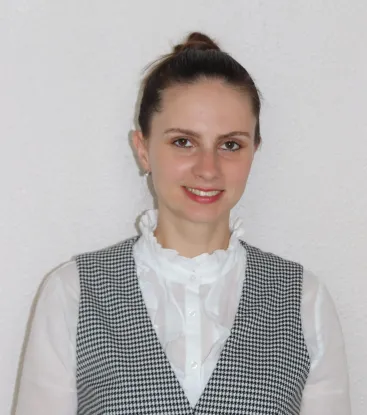
Assoc. Prof. Müge Ensari Özay is an Associate Professor at the Faculty of Social Policies, Üsküdar University, specializing in Occupational Health and Safety. She holds a PhD in Chemistry from Boğaziçi University (2005), with prior degrees in Environmental Sciences and Chemistry. Her roles include Director of ARGEYEP, Board Member of FİHADEK, and Deputy Head of the Health Sciences Institute. She teaches courses such as Ergonomics, Occupational Health Safety I, and Fire Safety Systems at undergraduate and graduate levels. Her research focuses on occupational safety in high-risk industries, AI-driven safety systems, and disaster management. Notable projects include the Kahramanmaraş Earthquake dust analysis and IoT-based substance use monitoring. She has supervised over 15 theses on topics like nuclear safety AI, construction ergonomics, and fire safety in hospitals. Prof. Özay’s work spans 34 publications in peer-reviewed journals, covering risk assessment, chemical safety, and pandemic management. She actively participates in national/international conferences and chairs symposiums on occupational safety innovations. Her contributions emphasize integrating technology and policy to enhance workplace safety and environmental sustainability.
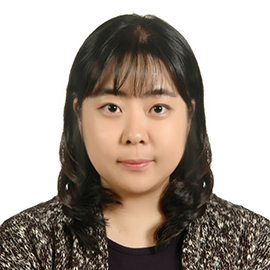
Dr. Sohee Kim is an Assistant Professor in the Instructional Design and Development Program at the University of South Alabama’s Department of Counseling and Instructional Sciences. She holds a Ph.D. in Educational Psychology (Research, Evaluation, Measurement, and Statistics) from Oklahoma State University (2019), following earlier degrees from Sungshin Women’s University in South Korea. Her research focuses on Item Response Theory (IRT), multidimensional models, linking/equating, and assessment methodologies, combining simulation studies with empirical data to address both theoretical and practical challenges in educational measurement. She collaborates with institutions like Oklahoma State University and the University of Georgia on projects involving psychometrics and structural equation modeling. B.S., Education & Korean Literature (2009), Sungshin Women’s University M.A., Measurement and Evaluation (2013), Sungshin Women’s University Ph.D., Educational Psychology (2019), Oklahoma State University Her recent work explores social media’s impact on mental health, AI literacy among educators, and cross-cultural education equity. She emphasizes collaborative learning in her teaching of quantitative methods and research design. Though no awards are listed, her interdisciplinary research bridges educational statistics with societal issues like disordered eating and doomscrolling. Dr. Kim’s advising and grants involve graduate-level mentorship and partnerships on large-scale surveys. She contributes to initiatives such as the Samsung Dream Scholarship’s educational support programs. While no specific labs are mentioned, her collaborations span universities and disciplines, reflecting her commitment to applied and theoretical research.
Alexander Gundlach-Graham is an Assistant Professor at Iowa State University, specializing in advanced mass spectrometry techniques and nanoparticle analysis. His work focuses on developing novel methodologies using inductively coupled plasma time-of-flight mass spectrometry (ICP-TOFMS) for characterizing engineered nanoparticles, environmental pollutants, and geological materials. He has pioneered techniques such as single-particle ICP-TOFMS for multi-element fingerprinting and online microdroplet calibration, enabling high-precision quantification of nanoparticles in complex matrices. His research bridges environmental science, materials science, and analytical chemistry, with applications in forensic analysis, water quality monitoring, and semiconductor material characterization. Dr. Gundlach-Graham’s educational background includes expertise in geochemistry and analytical instrumentation. He has contributed to instrument development, including digital quadrupole systems and capillary electrophoresis-ICP-MS interfaces. His work frequently integrates machine learning for data analysis and classification of nanoparticle populations. His research portfolio includes over 50 peer-reviewed articles, with recent emphases on wildfire-induced nanoparticle emissions, 3D printer aerosol toxicity, and nanomaterial fate in wastewater systems. He collaborates with environmental agencies and industrial partners to advance real-world analytical solutions.
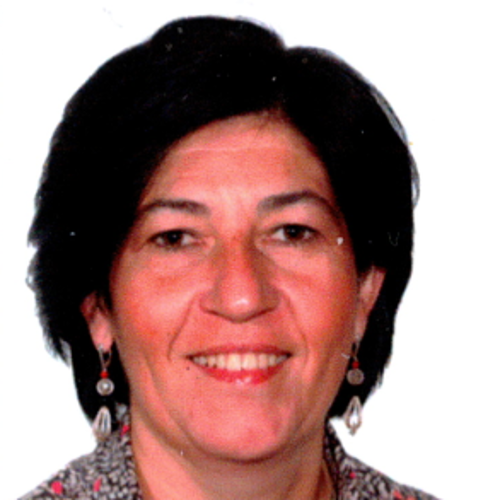
Maria Covadonga Palencia Coto is a Professor at the University of León , affiliated with the Faculty of Biological and Environmental Sciences and the Department of Applied Chemistry and Physics . She leads research in machine learning applications for sustainable engineering as part of the INGEMACHINES research group, with prior involvement in INGEOMAT (Geological and Materials Engineering). Research Focus : Sustainable concrete materials, erosion control, meteorological analysis, and educational technologies. Education : PhD in Applied Physics (2011) from the University of León, thesis on hail measurement using hail meters. Her work bridges engineering and environmental science , utilizing machine learning and computational modeling to optimize material properties (e.g., tensile/compressive strength of recycled concrete) and address ecological challenges like soil erosion and stone heritage conservation . She has also contributed to STEM education methodologies and interdisciplinary forest fire research via projects like #MOOCINCENDIOS.
Harald Oseland is an Assistant Professor at Østfold University College since 1995, affiliated with the Department of Natural Sciences, Practical-Aesthetic, Social and Religious Studies. His academic interests focus on sports and exercise physiology, emphasizing lifelong training for performance and health. He leads testing at the University’s Sports Medicine Test Laboratory (IMTL) in Fredrikstad, evaluating athletes and exercisers across ages. Education: Cand.mag in Sport Lecturer and Sports Physiology from the Norwegian University of Sport Sciences. Roles: Safety representative for teacher education (2003–present), university representative in Østfold Sports Committee (2014–2017). His research explores children’s physical activity foundations for social and motor skill development, advocating for diverse play environments in kindergartens and schools. Collaborations include Western Norway University of Applied Sciences, the National Institute of Occupational Health, and Nord University. Key publications analyze firefighter fitness testing protocols, workplace safety, and exercise interventions for healthcare employees. He has contributed to ergonomic studies on firefighting tasks and soccer/Zumba-based wellness programs for female workers. Awards: None explicitly mentioned. Labs/Teams: Leads IMTL, part of interdisciplinary initiatives between education and health sciences departments.
Leroy Gardner is Professor of Structural Engineering in the Department of Civil and Environmental Engineering at Imperial College London, Faculty of Engineering. He leads a major research group focused on steel structures and is actively involved in teaching, industry training, and advisory roles. He is a Fellow of the Royal Academy of Engineering, the Institution of Civil Engineers (FICE), and the Institution of Structural Engineers (FIStructE). His research centers on structural testing, numerical modeling, and the development of design methods for steel structures, with a strong emphasis on innovative techniques such as wire arc additive manufacturing (WAAM), 3D printing, and advanced analysis. Key materials under investigation include stainless steel, high-strength steel, cold-formed steel, and aluminum alloys. His work spans structural stability, fire performance, composite systems, and sustainable construction. The recent body of publications (2023–2025) reveals a consistent focus on metal additive manufacturing, structural performance under extreme conditions, and advanced design methodologies such as the Continuous Strength Method (CSM) and geometrically nonlinear analysis (GMNIA). Topics include residual stresses, buckling, fatigue, and hybrid construction, indicating a highly active and forward-looking research program. Fellow of the Royal Academy of Engineering IABSE Prize (2017) ASCE Shortridge Hardesty Prize (2021) Fellow of the Institution of Civil Engineers (FICE) Fellow of the Institution of Structural Engineers (FIStructE) Imperial President's Excellent Research Team Prize (2024) Prof. Gardner leads the Steel Structures Group at Imperial, comprising about 20 doctoral and post-doctoral researchers. He has co-authored over 400 technical papers and four textbooks. He serves as Editor-in-Chief of two international journals and on the editorial boards of five others. He chairs multiple IStructE and BSI committees and is the UK National Representative on the European Working Group for EN 1993-1-1. His research is supported by industry collaboration and national funding, contributing directly to design standards and codes. Future work continues to focus on digital fabrication, sustainability, and resilience in steel construction. The Steel Structures Group is a leading research team in structural engineering, recognized with the 2024 Imperial President's Excellent Research Team Prize. The group conducts experimental, numerical, and theoretical research on steel and composite structures, with a strong focus on innovation in manufacturing, design, and sustainability. Projects include metal 3D printing, fire-safe design, and hybrid structural systems.
Ofodike Ezekoye is a Professor and holds multiple endowed chairs at the University of Texas at Austin's Cockrell School of Engineering, Department of Mechanical Engineering. His research focuses on combustion, heat transfer, and fire safety engineering, particularly in high-temperature systems like combustion engines, furnaces, and structure fires. He has led over 200 peer-reviewed publications and secured funding from agencies including the Department of Commerce, Air Force Office of Scientific Research (AFOSR), and Department of Energy (DOE). His current work addresses thermal runaway in lithium-ion batteries, fire risk modeling, and energy-efficient furnace optimization. Research Interests: Ezekoye’s expertise spans combustion fundamentals, fire dynamics, and energy systems. He leads the UT Fire Research Group, investigating fire safety in residential and industrial contexts, including firebrand ignition mechanisms, battery failure analysis, and smoke transport in high-rise buildings. His interdisciplinary approach combines experimental methods with computational modeling (e.g., CFD, Bayesian inference) to address practical challenges in fire forensics and sustainable engineering. Awards: He holds prestigious chairs such as the Cockrell Family Dean's Chair in Engineering Excellence and the John T. MacGuire Professorship. His funded projects include smart manufacturing for steam-methane reformers and multi-objective optimization of insulation materials for sustainable designs. Key Contributions: Developed methodologies for fire origin determination via Bayesian inference, ultrasonic inspection of lithium-ion batteries, and reduced-order models like Fire-STORM for high-rise fire simulations. Collaborates with industry partners on real-world applications like furnace heat integration and battery safety standards. Labs/Groups: UT Fire Research Group, with active projects in battery thermal management, fire plume modeling, and acoustic-based fire detection systems.
Dr. Mark Grosvenor is a Research Associate at King's College London's Department of Geography, affiliated with the School of Global Affairs. He is part of the Earth Observation and Wildfire (NCEO) research group and the Leverhulme Centre for Wildfires, Environment and Society. His work focuses on wildfire emissions analysis, remote sensing applications, and paleoenvironmental studies. He holds a PhD in Geography from the University of Exeter, where he studied Mesolithic/Neolithic vegetation changes in the English Lake District. Research interests include wildfire emissions, climate change impacts, and the use of satellite and drone technologies for environmental monitoring. Recent studies address Indonesian peatland fires' health impacts, Indigenous land-use legacies in the Amazon, and methodologies for measuring biomass burning emissions. Notable collaborations include work with NASA/ESA on wildfire sensor design and interdisciplinary projects on fire smoke effects on insects. He contributes to King's Climate Research Hub and leads the Fire Emissions Testing Chamber (FETCh) project. Publications span 2017–2024, emphasizing atmospheric chemistry, wildfire dynamics, and paleoenvironmental reconstructions. He serves as a guest editor for Frontiers in Earth Science and collaborates internationally on wildfire research and policy.
Andrew Gerhart is a Professor in the Department of Mechanical Robotics and Industrial Engineering at Lawrence Technological University . He holds a Ph.D. in Mechanical Engineering from the University of New Mexico, with prior degrees from the University of Evansville and the University of Wyoming. Educational leadership roles include directing the Minor in Aeronautical Engineering and advising student teams like AIAA and SAE Aero Design. His research spans fluid dynamics , thermal systems , and innovative engineering education methodologies. Publications highlight projects on turbulent flows, helium plumes, and curriculum enhancements through project-based learning. Scientific awards include the 2016 Mary and Richard Marburger Faculty of the Year Award and the 2010 Henry and Barbara Horldt Excellence in Teaching Award . He served on ASME’s Performance Test Code 30.1 committee and chaired the Engineering Society of Detroit’s Young Engineer and Student Award Selection Committee. Gerhart’s work integrates experimental fluid mechanics with pedagogical innovation , emphasizing creativity and leadership development in engineering students. He has authored textbooks and collaborated on interdisciplinary research projects involving energy systems and mechanical design.
Dr. Kegong Diao is a Lecturer in Engineering and Sustainable Development at De Montfort University, affiliated with the School of Engineering and Sustainable Development within the Faculty of Computing, Engineering and Media. He is a researcher at the Centre for Engineering Science and Advanced Systems (CESAS), focusing on complexity science-based methodologies for urban infrastructure systems, particularly water distribution networks. Research Interests: Dr. Diao specializes in scientific methods for urban water systems analysis, including smart water systems, topological and behavioral complexity decoding, resilience and vulnerability assessment, optimal sensor and actuator placement, DMA planning, model calibration, and advanced hydraulic simulation. His work bridges theoretical innovation with practical applications in sustainable urban development. The analysis of his recent publications reveals a consistent focus on enhancing the reliability, efficiency, and resilience of water distribution systems through computational modeling, network decomposition, and data-driven diagnostics. His research leverages graph theory, optimization algorithms, and parallel computing to solve real-world challenges in leakage management, system design, and operational control. Scientific Awards: Technology Innovation Awards (2015) 2015 Outstanding Reviewer Award for Water Research Advising and Grants: Dr. Diao serves as second supervisor for three PhD students working on leakage management, pump control, and utility benchmarking. He has contributed to 14 research and consulting projects, including EU FP7 PREPARED, EPSRC Safe & SuRe, and Clean Water for All. His methods have enabled successful collaborations with leading water utilities such as Severn Trent Water and Shenzhen Water Utility, resulting in submitted project proposals and knowledge transfer initiatives. Labs and Research Groups: He is an active member of the Centre for Engineering Science and Advanced Systems (CESAS), where he develops and applies cutting-edge computational tools for infrastructure analysis. His research has been disseminated through International Innovation and invited presentations at elite forums including the American Chemical Society National Meeting.
Paul Anderson is a Lecturer in the Department of Fire Protection Engineering at the University of Maryland's A. James Clark School of Engineering. His work focuses on advanced combustion technologies, particularly the blue whirl phenomenon, aiming to develop fuel-flexible and soot-free combustion systems. Anderson's research integrates fluid dynamics, thermodynamics, and chemical kinetics to optimize energy extraction processes while minimizing environmental impact. His research interests span combustion dynamics, flame stabilization mechanisms, and soot oxidation processes. He has extensively studied the thermal and chemical behavior of blue whirls, exploring their potential for clean energy applications. Anderson's investigations often combine experimental diagnostics with computational modeling to understand complex combustion phenomena. Publications consistently highlight his focus on fuel flexibility, emission reduction technologies, and the optimization of combustion systems. Though no specific grants or awards are noted in the provided texts, his work demonstrates significant contributions to sustainable combustion science. Anderson has advised no listed students in the provided data, though his department's focus suggests involvement in graduate training related to fire protection and energy systems.
Dr. Tianhua He serves as an Adjunct Research Fellow at the School of Molecular and Life Sciences within the Faculty of Science and Engineering at Curtin University, Perth, Australia. His research activities are centered in Room 224 of the Applied Science Building (Building 311) on the Curtin Perth campus, where he maintains active laboratory and computational research operations. His research portfolio spans multiple interconnected domains: Evolutionary adaptations to fire in Proteaceae and other fire-prone ecosystems Genomic architecture of crop adaptation, particularly in barley Plant ecology and community assembly in biodiversity hotspots Statistical and methodological approaches in ecological research Conservation genetics of endangered plant species Recent publications (2022-2025) reveal a strategic research trajectory integrating classical plant ecology with cutting-edge genomics. His work demonstrates consistent leadership in elucidating fire adaptation mechanisms across geological timescales while simultaneously applying genomic insights to contemporary crop improvement challenges. Notable trends include increasing international collaboration networks, methodological innovations in statistical ecology, and translational applications of basic research to agricultural sustainability. Dr. He maintains extensive research partnerships across global institutions, particularly with Australian universities and international consortia focused on plant genomics and ecological resilience. His collaborative approach is evidenced by frequent multi-institutional publications with large author teams addressing complex questions in plant evolution and crop science.
Peijun Wang is a Professor and PhD Tutor at the Department of Civil Engineering, Shandong University's School of Civil Engineering. His research focuses on steel structure fire resistance, large-span space steel structures, and special steel structure analysis methods. His publications since 2012 examine: Fire behavior of cellular/castellated steel beams Buckling mechanics in aluminum alloy columns Thermal stability of corrugated web beams Pressure dynamics in silo structures Wang has co-authored over 25 papers in journals like Journal of Constructional Steel Research and Thin-Walled Structures , often collaborating with researchers such as Mei Liu and Xudong Wang. He serves as a vice dean at the School of Civil Engineering and has published the 2012 monograph Advanced Analysis and Design of Steel Structures in Fire with Springer Press.
Nonna Algourdin is a Lecturer in Civil Engineering and Materials at the National School of Engineers of Saint-Étienne (ENISE) since 2018, affiliated with the Laboratory of Tribology and Systems Dynamics (LTDS) at Centrale Lyon. Her work bridges academic research and practical sustainable construction applications through cross-institutional collaborations. Her doctoral training in Civil Engineering was completed at CY Cergy Paris University, establishing her expertise in material science for infrastructure. Research interests focus on ecological material behavior under extreme conditions, with specific emphasis on recycled concrete systems, fire resilience, and carbon-negative construction technologies. Her methodology integrates experimental mechanics with computational modeling and machine learning for structural analysis. Recent publications reveal a cohesive research trajectory centered on circular economy principles in construction, with dominant themes in recycled aggregate performance, accelerated carbonation processes, and AI-enhanced damage detection in composite materials. This work directly addresses industry challenges in sustainable infrastructure resilience. Scientific awards: None documented in source materials. Dr. Algourdin actively supervises research talent and secures competitive funding through regional and national programs: Primary supervisor for Junaid Khan's TRM composites research (AC2M2 project) Lead researcher for Auvergne Rhône-Alpes Region-funded initiatives: RECYFEU (fire behavior of recycled concrete) and carbon-negative materials valorization Project carrier for CNRS-funded CO2NCRETE initiative targeting CO2 emission recovery via recycled concrete She operates within the LTDS research ecosystem at Centrale Lyon while maintaining ENISE's Saint-Étienne Campus presence, with active collaboration networks including the University of Sherbrooke for transnational sustainable construction research.
Flávio Alexandre Matias Arrais is a researcher affiliated with the Faculty of Natural Sciences, Engineering and Technology. His work focuses on structural and materials engineering, particularly in fire-resistant stainless steel systems. Key Research Areas: Stainless Steel, Elevated Temperatures, Fire Resistance, Structural Integrity Methodologies: Finite Element Modeling, Experimental Testing Recent publications highlight his contributions to understanding the thermal and mechanical behavior of stainless steel hollow sections under fire conditions, with cross-sectional studies of circular, elliptical, and rectangular geometries. Collaborative work spans structural performance analysis of laser-welded, hot-rolled, and extruded steel sections.


/prod01/channel_3/media/images/non-standard-dimensions/241114_10X5_wind_tunnel_ai_truck_AI4NZ_002.jpg)