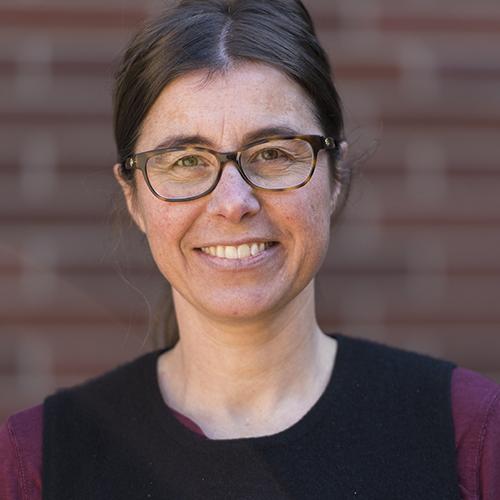
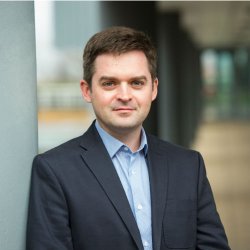
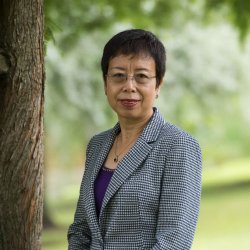
Meg Krawchuk is an Associate Professor in the Department of Forest Ecosystems & Society at Oregon State University’s College of Forestry. Her research integrates landscape ecology, fire ecology, biogeography, and conservation science to study ecological disturbances, particularly wildland fire dynamics, across local to global scales. Education: Ph.D. (2007) and Post-doctoral Fellow (2011) from the University of Alberta and University of California, Berkeley Courses Taught: FES 341 Forest Ecology, FES 440/540 Wildland Fire Ecology Her lab, the Landscape Fire and Conservation Science Research Group, investigates the biotic and abiotic conditions shaping fire distribution, post-fire ecological outcomes, and human-cultural drivers of fire regimes. She serves as a Graduate Major Advisor and has mentored students including Jennifer Drake, Aatreyee Nath, and Sven Rodne. Recent publications highlight her focus on fire refugia, ecosystem resilience, invasive species interactions, and climate change impacts. Articles explore topics like delayed canopy loss, beetle communities in post-fire forests, and fire severity modeling using multi-sensor data.
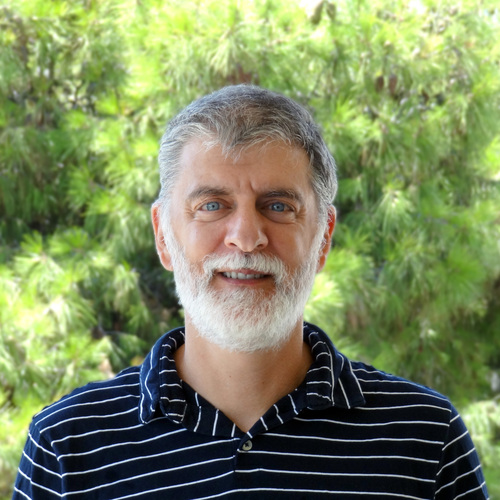
Woodam Chung serves as Professor and Stewart Professor of Forest Operations in the College of Forestry at Oregon State University. He leads research in forest operations planning and management, specializing in harvesting systems, biomass utilization, and wildland fire management. His work integrates engineering solutions with sustainable forestry practices. Research interests include forest management planning, steep slope harvesting, tethered equipment applications, biomass logistics, and fuel treatment optimization. Current projects focus on reducing wildfire risks through strategic fuel break networks and enhancing operational efficiency in challenging terrains. Publications demonstrate consistent focus on operational efficiency, environmental impacts, and technological innovation in forestry. Recent work emphasizes tethered harvesting systems, soil disturbance mitigation, computer vision applications, and wildfire risk management strategies. Currently advises seven graduate students on topics spanning forest operations, biomass utilization, and wildfire management. Maintains active collaborations with industry partners and land management agencies.
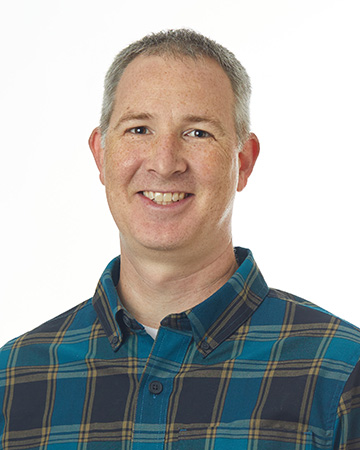
Zack Ward serves as a Lecturer in the Department of Physics, Applied Physics & Astronomy at Rensselaer Polytechnic Institute (RPI), teaching Physics I (PHYS 1110/1100) and Physics II (PHYS 1200) across Summer 2025, Spring 2025, and Fall 2024 semesters. His office is located in J-ROWL 3C06, with contact email wardz3@rpi.edu and phone 845-453-1829. Ward's research spans two primary domains: defects in nanomaterials and physics education innovation. In nanomaterials, he investigates single photon emitters and develops predictive models for defect energy/stability in 2D materials. His recent educational focus targets introductory physics courses, emphasizing curriculum redesign through enhanced lab manuals, Discord-based communication systems, and refined lecture materials to improve student comprehension and engagement. His publication record (2021-2024) reveals strong interdisciplinary work at the intersection of materials science and computational methods, with emphasis on defect engineering in hexagonal boron nitride for batteries, optical properties of transition metal dichalcogenides, and machine learning applications for perovskite bandgap tuning. Ward's recognition includes: Walter Eppenstein Award (2020) - Best graduate teaching assistant in Physics at RPI As an instructional-focused lecturer, Ward concentrates on classroom innovation rather than traditional research advising. His current initiatives include developing comprehensive Physics I lab manuals with visual enhancements, implementing Discord channels for real-time student-instructor interaction, and designing assessment questions that capture nuanced conceptual understanding across engineering and physical science disciplines. He actively shapes the Physics I/II instructional labs at RPI, with recent work centering on restructured lab manuals featuring detailed imagery, highlighted critical variables, and activity sequences designed to optimize experimental learning outcomes for diverse student cohorts.
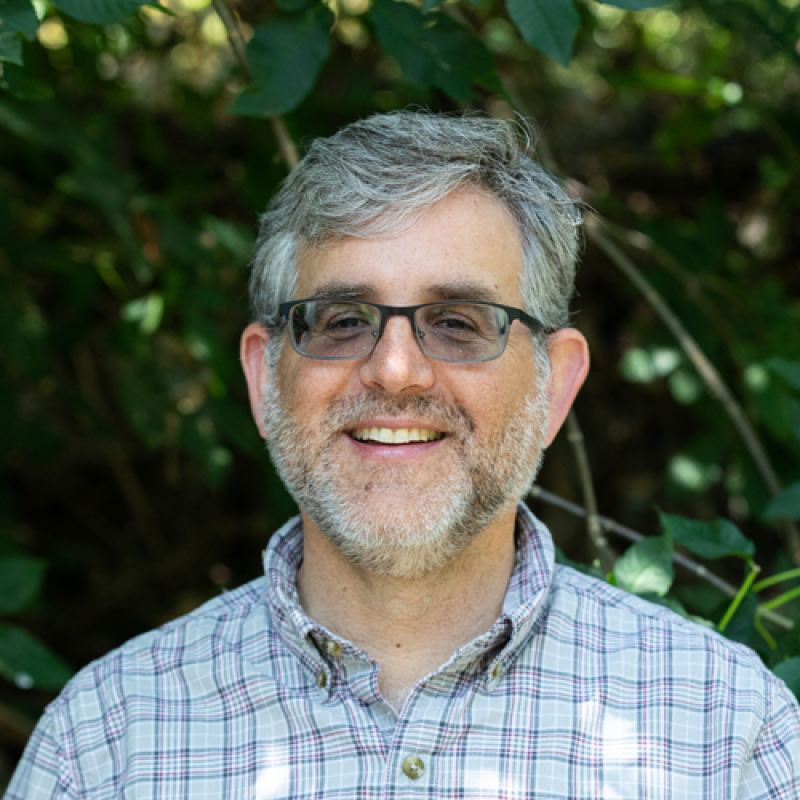
Lazaros Filippidis is a Senior Lecturer in Evacuation Modelling at the University of Greenwich's School of Computing and Mathematical Sciences , part of the Faculty of Engineering and Science . He joined the institution in 1996 and is a core member of the Fire Safety Engineering Group . His work focuses on advancing EXODUS evacuation models and understanding human behavior during emergencies. Education: Holds a BSc (Hons) and MSc, though specific institutions are not detailed in the provided text. Research Interests: Specializes in human behavior in emergencies , adaptive decision-making , and large-scale evacuation trials . His projects include EU-funded initiatives such as SAFEGUARD , IN-PREP , and GETAWAY , addressing aviation, maritime, and urban evacuation challenges. He has pioneered methodologies for collecting human performance data and validating evacuation models. Publications & Awards: Authored/co-authored over 100 publications, including influential works on signage effectiveness, ship evacuation, and wildfire response. Recognized with the Jack Bono Engineering Communications Award (2008) and two Hodgson Prizes (1998, 2002) for exceptional contributions to fire safety engineering. Advising & Grants: Led major EU projects involving collaboration with industrial partners, managing tight schedules and delivering impactful outputs. Advised on the Horizon 2020 FIRE-IN project. Organized annual Principles and Practice of Evacuation Modelling courses and developed e-learning platforms for international audiences. Labs & Teams: Integral to the Fire Safety Engineering Group, contributing to software development (e.g., airEXODUS , urbanEXODUS ) and live trial protocols for evacuation scenarios. His work bridges academic research with real-world crisis management strategies.
Piero Colajanni is a Full Professor of Engineering at the University of Palermo, specializing in structural and seismic engineering. His research develops innovative solutions for seismic protection, including dissipative devices and hybrid structural systems. Current projects investigate friction-based connections for earthquake-resilient buildings, tsunami vulnerability of masonry structures, and applications of geopolymer recycled concrete. Recent publications demonstrate expertise in seismic retrofit design methods and hybrid beam-column joint behavior. Teaching includes Construction Technique Laboratory and Design of Structures in Seismic Areas. International collaborations span universities in France, Romania, and Spain through Erasmus agreements. Supervised student research addresses seismic vulnerability assessment of municipalities and innovative structural systems.
Erik Van Vleck is a Professor of Mathematics at the University of Kansas, affiliated with the College of Liberal Arts & Sciences. His research focuses on applied mathematics, numerical analysis, and numerical methods for partial differential equations (PDEs), with particular emphasis on data assimilation and reaction-diffusion systems. His work bridges theoretical advancements and practical applications in computational dynamics, environmental modeling, and ecological systems. Van Vleck’s research interests include multi-scale data assimilation techniques, adaptive mesh methods, and the numerical analysis of traveling wave solutions in discrete and continuous systems. He has contributed to understanding pattern formation in ecological models, particularly in savanna ecosystems and fire-driven dynamics. His methodological innovations span numerical methods for PDEs, reduced-order modeling, and stochastic filtering approaches for complex systems. His recent work highlights trends in developing robust adaptive frameworks for data assimilation, integrating advanced numerical techniques with real-world applications in geophysics and environmental science. This includes projects on metric tensor-based mesh adaptation and projected data assimilation using sliding window methods. His contributions to theoretical foundations include spectral stability analyses for discrete dynamical systems and bifurcation studies in reaction-diffusion equations. Van Vleck has collaborated extensively across disciplines, applying mathematical tools to ecological, climatological, and biomedical systems. His research often addresses computational challenges in high-dimensional spaces, emphasizing efficiency and accuracy in modeling complex phenomena. Despite the breadth of his contributions, no specific grants or advising roles are detailed in the provided materials.
Jochen A. G. Jaeger is an Associate Professor at Concordia University's Department of Geography, Planning and Environment since 2007. He earned his PhD from ETH Zurich (Swiss Federal Institute of Technology) in 2000 and has affiliations with the Department of Biology and Loyola Sustainability Research Centre (LSRC). PhD: Environmental Sciences, ETH Zurich (2000) Postdoctoral Fellow: Landscape Ecology Laboratory, Carleton University (2001) Research Associate: ETH Zurich (2003-2007) His research focuses on landscape ecology , road ecology , urban sprawl quantification , and ecological modeling . Current projects examine road mortality patterns in the Laurentians, forest fire impacts under climate change, and greenbelt effectiveness against urban sprawl. Recent publications explore wildlife fencing effectiveness using individual-based models, urban sprawl in Europe, and environmental assessment uncertainties. His lab's work has been featured in Conservation Biology , Landscape Ecology , and PNAS . Notable scientific awards include: Dean's New Scholar Award (2010) IENE Project Award (2011) Sustainable Champion Award (2022) He supervises numerous MSc, PhD, and Honours students across diverse projects involving fieldwork, GIS analysis, and simulation modeling. His lab statement emphasizes urgent climate action through research and sustainable practices.
Dr. Kenneth Petersen is an Adjunct Assistant Professor at the University of Utah's School of Environment, Society & Sustainability since 2009. His academic journey includes a BA in Anthropology from the Unversity of Utah (1970), MA (1975) and PhD (1981) in Anthropology from Washington State University and Washington State Unverstiy. Specializing in palynology and archaeology, his research bridges climate science, environmental geoscience, and archaeology. Key areas include reconstructing Holocene climates, understanding prehistoric human-environment interactions, and applying paleoclimatic data to modern challenges like nuclear waste disposal. His work spans the American Southwest, Egypt, and the Rocky Mountains. Research highlights include studies on the Little Ice Age, Anasazi migrations, and climate impacts on ancient maize agriculture. He has contributed to interdisciplinary projects such as the Hanford Site Protective Barrier Development Program, focusing on long-term environmental sustainability. His publications span over four decades, emphasizing paleoenvironmental reconstruction, climate change effects, and cultural adaptation strategies. Notable contributions include climate reconstructions from pollen records in the La Plata Mountains and Dolores River region, as well as environmental assessments for low-level waste management. Petersen's work underscores the interplay between past climates, human societies, and modern environmental policy.
Colin Belby serves as Professor and Dean of the College of Science & Health at the University of Wisconsin-La Crosse . With expertise in Geomorphology, River Systems, Water Resources, Environmental Contamination, Geospatial Field Mapping, and GIS , he leads the Geography and Environmental Science department while maintaining active research programs. Education: B.A. in Geography & Mathematics (2002) - Augustana College M.S. in Geography - Fluvial Geomorphology (2005) - University of Wisconsin-Madison Ph.D. in Geography - Fluvial Geomorphology (2009) - University of Wisconsin-Madison His research emphasizes river systems and environmental contamination , particularly in the Driftless region of Wisconsin. Recent projects focus on sediment dynamics , channel migration , and fire history reconstruction using lake sediment cores. He frequently collaborates with students on UAV photogrammetry and geospatial analysis applications. Colin actively mentors students in field methods and geospatial technologies, with recent work spanning from the Mississippi River to the Himalayas . He has contributed to institutional development through the River Studies Center and maintains partnerships with organizations like the J.F. Brennan Company for hands-on hydrographic surveying experiences.
Matthew Clark is a Professor and Director of the Center for Interdisciplinary Geospatial Analysis (CIGA) in the Department of Geography, Environment, and Planning at Sonoma State University. He holds a PhD in Geography from UC Santa Barbara (2005) and prior degrees from UC Berkeley and the University of Washington. His research focuses on conservation, remote sensing, and geospatial technologies applied to biodiversity monitoring, wildfire impacts, and environmental change. Key projects include drone-based canopy fuel analysis, acoustic biodiversity surveys, and satellite remote sensing of forest structure. He has secured over $4M in grants from NASA and Cal Fire for projects like Soundscape-to-Landscapes biodiversity monitoring and GEDI-based wildfire impact studies. Clark’s work appears in top journals like Remote Sensing of Environment and Frontiers in Remote Sensing. He advises students on geospatial analysis and leads the CIGA lab, collaborating internationally on South African acoustic biodiversity projects and Latin American forest conservation efforts. His teaching and research emphasize practical solutions for coupled human-environment systems, integrating citizen science with advanced technologies like lidar, hyperspectral imaging, and machine learning. Clark’s office is Stevenson Hall 3503, with hybrid advising hours via Zoom and in-person.
Shohini Kundu is an Assistant Professor of Finance at the UCLA Anderson School of Management and holds a courtesy appointment at UCLA School of Law. Her research focuses on financial intermediation, macroeconomics, corporate finance, and regulation, with a particular interest in emerging markets, especially India. She earned a PhD in Finance and MBA from the University of Chicago Booth School of Business, and a B.A. in Economics (Magna Cum Laude) from Cornell University. Education: Ph.D. Finance, 2021, University of Chicago Booth School of Business MBA, 2020, University of Chicago Booth School of Business B.A. Economics (Magna Cum Laude), 2016, Cornell University Her research investigates financial fragility, including how covenants in CLOs amplify systemic risks through fire sales, and their impact on asset prices and corporate decisions. She explores topics like deposit insurance expansion, banking network effects, and historical institutions’ role in economic outcomes. Her work has been recognized with awards such as the BlackRock Applied Research Award and Forbes 30 Under 30. Key Research Themes: Security design and contractual externalities Financial intermediation and macroeconomic linkages Emerging market finance and policy relevance Her recent articles analyze banking sector dynamics, deposit insurance reforms, and the geographic impact of liquidity shortages. She collaborates with institutions like the Centre for Economic Policy Research (CEPR) and engages in policy-oriented research to strengthen financial systems.
Professor Raylene Cooke is a distinguished academic at Deakin University, serving in the School of Life and Environmental Sciences within the Faculty of Science Engineering and Built Environment. As Course Director for the Bachelor of Environmental Science (Wildlife and Conservation Biology), she champions experiential learning through field studies, work-integrated opportunities, and global mobility programs. Her leadership extends to faculty working groups focused on enhancing work-integrated learning and student global engagement. Doctor of Philosophy, Deakin University Bachelor of Education, Deakin University Bachelor of Science, Deakin University Professor Cooke's research passion centers on wildlife conservation, particularly focusing on how disturbance processes like urbanization, rodenticides, fire, and invasive species impact ecosystems and wildlife. Her pioneering work with powerful owls has transformed understanding of how apex predators adapt to urban environments. She employs spatial modeling and GPS tracking technologies to study predator movements and habitat use across urban-forest gradients. Her recent research investigates rodenticide prevalence in native wildlife across Australia and the Asia-Pacific, and she contributes to long-term studies on fire and climate change impacts on small mammals in the Grampians National Park. Professor Cooke's publication record reveals a strong focus on apex predator ecology, particularly powerful owls, across urbanizing landscapes. Her work integrates spatial ecology, toxicology, and conservation biology to address pressing environmental challenges. Recent publications highlight increasing concern about rodenticide exposure in native wildlife, urban habitat fragmentation effects on predators, and climate change impacts on small mammal communities. Her research consistently bridges theoretical ecology with practical conservation applications, often involving multi-institutional collaborations and field-based approaches. 2020 Australian Award for University Teaching - National Programs Award for Programs that Enhance Learning 2017 Vice Chancellors Award for Teaching Excellence 2016 Nancy Millis Award for Science in Parks 2015 Vice Chancellors Award for Outstanding Contributions to Global Experiences 2007 Carrick Citation for Outstanding Contributions to Student Learning (National award) 2005 Vice-Chancellors Award for Distinguished Teaching 2005 Deakin University Award for Teaching Excellence Professor Cooke maintains an active supervision portfolio with multiple current doctoral and masters students investigating topics ranging from rodenticide impacts to climate change refugia. Her extensive grant portfolio demonstrates strong industry and government partnerships, with recent projects funded by Parks Victoria, Melbourne Water Corporation, and various local councils. These grants support field research on powerful owl ecology, post-fire small mammal recovery, and rodenticide exposure across diverse Australian landscapes. Her research team includes honors students and postgraduates working collaboratively on urban processes, raptor ecology, invasive species, and conservation ecology. Professor Cooke leads a dynamic research group focused on wildlife conservation biology, with particular emphasis on apex predators in changing landscapes. Her team collaborates with Parks Victoria, local councils, and environmental organizations to translate research into practical conservation management. The group maintains long-term monitoring programs in the Grampians National Park and across Melbourne's urban fringe, employing cutting-edge technologies including GPS tracking, spatial modeling, and ecotoxicology to address contemporary conservation challenges.
Dr. Oleksiy Klymenko is a Senior Lecturer in Chemical Process Engineering at the University of Surrey, affiliated with the School of Chemistry and Chemical Engineering and the Institute for Sustainability. He holds a DPhil and specializes in model-based process design, mathematical modeling, and uncertainty quantification. Research Interests: Model-based design and optimization of process systems Mathematical modeling in natural and life sciences Uncertainty quantification, particularly global sensitivity analysis Teaching: Module leader for three M-level modules: ENGM071 Process and Energy Integration (MSc) ENGM214 Process Modelling and Simulation (MSc/Year 4 MEng) ENGM256 Technology, Business and Research Seminars (MSc/Year 4 MEng) Contributes to a Year 2 BEng/MEng module. Research Trends: Publications focus on antimicrobial technologies, energy systems optimization, and electrochemical simulations. Recent work includes 3D modeling of microbial dynamics, sustainable energy design, and the development of tools like KISSA software for electrochemical analysis. Advising & Grants: No explicit student advisees or grant details provided in texts. Research collaborations likely underpin his work in interdisciplinary areas like food safety and energy systems. Labs/Teams: Part of the Institute for Sustainability at Surrey, collaborating on projects aligning with sustainable development goals, particularly in energy and food systems.
Dr Lian Liu is a Professor in the Department of Chemical and Process Engineering at the University of Surrey, UK. She also holds visiting roles as a Visiting Professor at Zheng Zhou University and Chinese University of Mining and Technology in China, and an Honorary Senior Fellow at the University of Queensland, Australia. Her academic career spans over three decades, with significant contributions to chemical and pharmaceutical engineering. Prior to her current position, she worked at Carrier Transicold in Singapore and spent most of her academic career at the University of Queensland before joining Surrey in 2016. Dr. Liu’s research focuses on pharmaceutical formulation engineering, materials science, and chemical process modeling. Key areas include milling/grinding characterization, powder flow dynamics, flame-retardant epoxy composites, and topical formulations for wound healing and anti-aging. She has led projects such as 'Novel formulations for effective and stable skin delivery of anti-aging nutrients.' Her recent publications reflect a trend toward integrating machine learning for materials design and optimizing flame-retardant systems. She also explores sonochemical techniques and dynamic modeling of tumbling mills. Her work bridges fundamental process understanding and industrial applications, emphasizing sustainable and efficient technologies. Awards: None explicitly listed. Advising & Grants: No formal advisee records or grant details provided, but her roles indicate active research leadership in areas like pharmaceutical formulation and materials engineering. Liu’s affiliations include collaborations with institutions in Australia and China, reflecting a global academic network. Her research projects and honorary roles highlight expertise in both academic and applied industrial contexts.
Edward Bork is a Professor in the Department of Agricultural, Food and Nutritional Sciences at the University of Alberta, affiliated with the Faculty of Agricultural, Life and Environmental Sciences. He holds a PhD from Utah State University and specializes in rangeland ecology and management. His major research focuses on improving productivity and sustainability of rangeland ecosystems, including invasive species control (e.g., Canada thistle), agroforestry systems, riparian grazing management, and the impact of disturbances like fire and herbivory. Dr. Bork teaches courses such as AFNS 506/ENCS 406 on Rangeland Plant Communities and AFNS 572/ENCS 471 on Practical Case Studies in Rangeland Management. His work integrates field studies with remote sensing technologies, emphasizing applied solutions for ecosystem management challenges in Alberta and beyond. Key research areas include: Invasive species management and pasture restoration Agroforestry practices for sustainable land use Climate change impacts on grassland ecosystems Riparian and forest ecosystem dynamics Wildlife-livestock grazing interactions His publications span topics from plant community responses to environmental stressors to innovative techniques in vegetation mapping using LIDAR and multispectral imagery. He actively collaborates on projects addressing both academic and applied challenges in rangeland science.