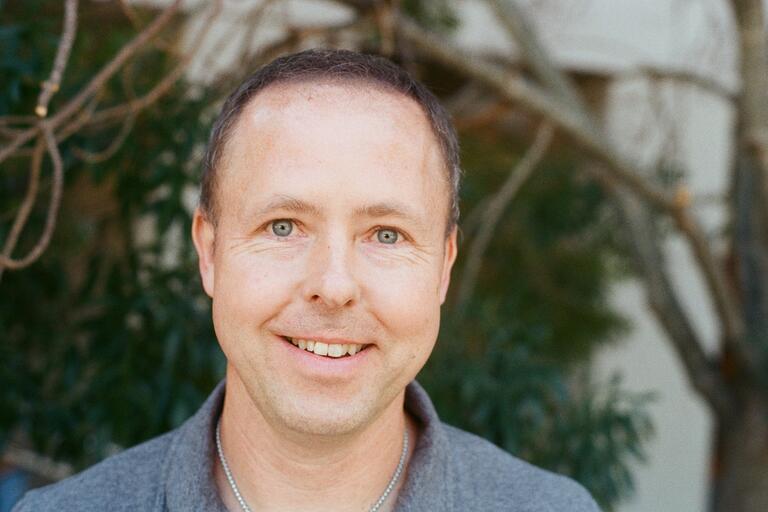
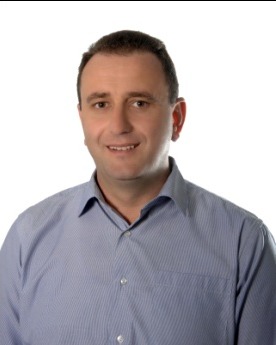
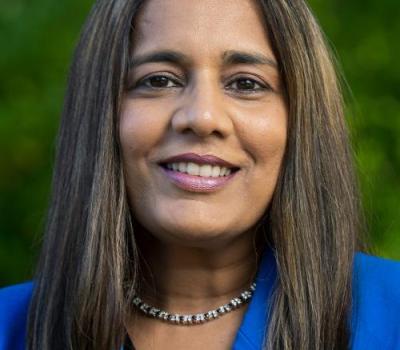
Per-Olof Persson is a Professor in the Department of Mathematics at the University of California, Berkeley . He is also a Senior Scientist at the Lawrence Berkeley National Laboratory , where he contributes to applied mathematics and computational physics research. Research Interests: Applied Mathematics Numerical Methods Computational Fluid and Solid Mechanics Discontinuous Galerkin Methods High-Order Discretizations Mesh Generation Recent Publications (2023-2025) demonstrate expertise in geometric multigrid, shock capturing, solution transfer between curved meshes, and optimization techniques. Key trends include advancements in high-order accuracy for fluid dynamics, implicit-explicit time-stepping, and interdisciplinary applications in aerospace and biomedical engineering. Advising: Supervised multiple PhD and Master’s students in topics spanning shock tracking, fluid-structure interaction, and computational solvers. Collaborates with institutions like MIT, KTH Royal Institute of Technology, and Lawrence Berkeley National Lab.
Hasan Aksoy is an academic faculty member at Koc University and Turk Hava Kurumu University, affiliated with the Department of Software Engineering. His research focuses on bridging software engineering with computational mathematics, digital signal processing, and biomedical applications. Digital Power Estimation Automatic Gain Control Heart Rate Variability Modeling Radial Basis Functions Laplace Transform Methods Recent publications highlight his work on subsampling digital power estimation for integrated receivers, numerical inverse Laplace transforms for advection-diffusion modeling, and heart rate variability analysis using time-frequency representations. These studies address challenges in reducing process, voltage, and temperature spreads in analog circuits, improving numerical stability in computational methods, and enhancing physiological signal analysis techniques.
Taras Lakoba is a Professor in the Department of Mathematics and Statistics at the University of Vermont's College of Engineering and Mathematical Sciences. His research focuses on the stability of numerical methods , nonlinear wave phenomena , and fiber optics , with additional interests in perturbation theory and quantum physics . Education: Ph.D. from Clarkson University. Courses Taught: Calculus III, Applied Linear Algebra, Ordinary Differential Equations, and Independent Study. His recent publications (2012–2024) span topics including numerical method stability, nonlinear Schrödinger equations , all-optical signal regeneration , and quantum phases in 2D materials . These works emphasize computational techniques, optical engineering, and condensed matter physics.
Thomas Leavitt is an Assistant Professor in the Department of Public Affairs at Baruch College's Marxe School of Public and International Affairs. His research bridges causal inference, Bayesian statistics, and design-based methodologies, with applications to racial/ethnic politics and comparative policy analysis in the U.S. and South Africa. Ph.D., Political Science, Columbia University M.Phil., Political Science, Columbia University M.A., Political Science, Columbia University M.A., Committee on International Relations, University of Chicago B.A., Political Science, DePauw University His work focuses on developing robust statistical frameworks for causal analysis, including averaged prediction models for pre-post policy evaluation, sensitivity analysis for racial disparity studies, and randomization-based Bayesian inference. He investigates methodological challenges in audit experiments, observational studies, and proprietary data's impact on meta-analysis. Recent publications include advancements in difference-in-differences methodology, causal mediation analysis, and algorithmic auditing techniques. His research integrates design-based rigor with Bayesian flexibility to address counterfactual assumptions and model uncertainty. Leavitt leads courses in advanced quantitative methods, causal analysis, and data-driven policy evaluation at both graduate and undergraduate levels, emphasizing practical applications for public service.
Bao Xueyang is an Assistant Professor at the Department of Earth and Space Sciences (Faculty of Science) of Southern University of Science and Technology (SUSTech) , where he has worked since January 2019. His academic background includes a Ph.D. in Geology from the University of Missouri-Columbia (2011) , M.S. and B.S. degrees in Geophysics from the University of Science and Technology of China . Ph.D., Geological Sciences, University of Missouri-Columbia (2011) M.S., Earth and Space Sciences, University of Science and Technology of China (2005) B.S., Earth and Space Sciences, University of Science and Technology of China (2001) His research focuses on seismological full-waveform inversion , seismic wave attenuation measurement , and geophysical studies of tectonically active regions such as the Tibetan Plateau and Tethys domain. Methodologically, he develops techniques for: 3D full-waveform inversion Joint seismic-gravity inversion Seismic wave attenuation anisotropy Background noise tomography Wavefield simulation on complex topographies Seismic source parameter inversion Analysis of his recent publications reveals expertise in full-waveform sensitivity kernel development , ocean-bottom seismology , and cratonic lithosphere thermal structure through Rayleigh wave attenuation studies. His work spans both theoretical advancements in inversion algorithms and practical applications in energy resource characterization and tectonic studies. Scientific recognition includes: 2019 Shenzhen Overseas High-Level Talent 2022 Excellence Awards in Reviews of Geophysics and Planetary Physics He leads multiple National Natural Science Foundation projects while co-leading international research initiatives. His teaching portfolio includes undergraduate and graduate courses on geophysical inversion theory, covering both linear and nonlinear inversion methods with machine learning applications.
Kenneth Aksel Hvistendahl Karlsen is a Professor in the Department of Mathematics at the University of Oslo. His research focuses on nonlinear partial differential equations (PDEs) and stochastic PDEs , with applications to porous media flow (oil recovery), sedimentation processes, traffic flow, water waves, finance, and biomedical modeling. Key research questions: Solution existence/uniqueness, stability, numerical computation Editorial roles: SIAM Journal on Mathematical Analysis (2021–), SIAM Journal on Numerical Analysis (2007–) Research trends from recent publications show emphasis on stochastic conservation laws on manifolds, nonlocal traffic flow models, dynamic capillarity equations with noise, and well-posedness analysis of peakon systems. His work bridges theoretical PDE analysis with numerical methods for real-world applications. Computational projects include the NASTRAN initiative (Numerical Analysis of Stochastic Transport), with extensive contributions to finite difference/volume schemes for degenerate equations.
Hans van Dommelen is Associate Professor of Micromechanics at Eindhoven University of Technology (TU/e), Department of Mechanical Engineering, where he leads the Group Van Dommelen . His research couples microstructure to mechanical and functional behaviour of materials spanning nuclear fusion, additive manufacturing, polymers, and biomechanics. Education PhD in Mechanical Engineering, TU/e (2003) – Micromechanics of particle-modified semicrystalline polymers Visiting researcher, MIT (1999–2000), University of Virginia (2003–2004), and Cambridge University (2010–2012) Research Interests Van Dommelen’s work focuses on multi-scale mechanics and structure–property relationships . Using microstructural modelling and homogenization techniques, he links phenomena at the microscale to macroscopic response in: Crystalline and heterogeneous materials Nuclear fusion reactor materials (tungsten, liquid-metal shields) Additive manufacturing (wire-arc, selective laser sintering, vat photopolymerization) Semi-crystalline polymers and short-fiber composites Traumatic brain injury biomechanics Scientific Output He has authored over 230 peer-reviewed publications (h-index > 40) in leading journals such as Journal of the Mechanics and Physics of Solids , Biomechanics and Modeling in Mechanobiology , Nuclear Fusion , and Additive Manufacturing . Recent trends include viscoelastic-viscoplastic metamaterials, anisotropic food printing, recrystallization kinetics of tungsten under fusion loads, and multiscale fracture of additively manufactured metals. Teaching & Supervision Van Dommelen coordinates and lectures in: Structure and Properties of Materials Computational and Experimental Micro-mechanics Fusion Reactor Materials and Plasma-Wall Interaction He has supervised >85 MSc and PhD theses to date. Laboratory & Collaborations He heads the Group Van Dommelen within the Mechanics of Materials section, maintaining strong collaborations with DIFFER, ITER, and international partners on liquid-metal technologies for fusion blankets and advanced additive manufacturing processes.
Maria del Carmen Vazquez Pampin is a researcher at the Faculty of Economic and Business Sciences within the Department of Mathematics at the University of Vigo , Spain. She holds a PhD in Mathematics from the University of Vigo (1995) with a dissertation on Uniform Preferences in Banach Lattices , supervised by Dr. Manuel Besada Morais. Fields of Research: Game theory, mathematical economics, numerical analysis, utility theory, and optical modeling in biophysics. Publications: 12 peer-reviewed works since 1998, primarily in Mathematical Social Sciences and Journal of Mathematical Economics , addressing preference ranking systems, model risk quantification, and light propagation algorithms. Key Research Trends include: Preference axiomatization in infinite economic spaces Mathematical modeling of ocular optics Computational finance and semiconductor physics simulations Notable Collaborations with economists like Ricardo Arlegi and Miguel Ballester, and physicists such as Jorge Pérez-Velasco and David Mas. Technical Expertise spans Banach lattice theory, Fourier transforms, and finite difference methods for PDEs.
Vahidin Hadžiabdić is a full professor in the Department of Mathematics at the Faculty of Mechanical Engineering, University of Sarajevo. Born on October 30, 1980, in Olovo, Bosnia and Herzegovina, he has built a distinguished academic career spanning nearly two decades. Beyond his primary appointment, he collaborates with multiple faculties at the University of Sarajevo including the Faculty of Natural Sciences and Mathematics, Faculty of Traffic and Communications, Faculty of Electrical Engineering, Faculty of Forestry, and Faculty of Economics. He also maintains academic connections with the University of Zenica and University Džemal Bijedić in Mostar. Hadžiabdić completed his educational journey at the University of Sarajevo, earning his bachelor's degree in Mathematics in 2004 with exceptional grades (10/10, average 8.44). He continued with postgraduate studies, completing his master's thesis titled 'Retraction method in qualitative analysis of differential equations and its application to some linear and nonlinear problems' in 2010, and defended his doctoral dissertation 'Invariant curves and global dynamics of certain quadratic fractional systems of differential equations in the plane' in 2016. His research primarily focuses on differential equations, difference equations, and dynamical systems, with significant contributions to qualitative analysis and mathematical modeling. His work spans theoretical mathematics with applications in engineering, ecology, and various scientific domains. Hadžiabdić has developed sophisticated methods for analyzing stability, bifurcations, and global behavior of nonlinear systems, particularly those with quadratic and polynomial nonlinearities. Analysis of his 15 most recent publications reveals a consistent research trajectory centered around discrete dynamical systems, particularly rational difference equations. His work demonstrates increasing sophistication in analyzing global behavior, stability properties, and bifurcation phenomena. Recent publications show expansion into interdisciplinary applications including biomechanics, energy systems, and educational technology, while maintaining strong theoretical foundations in mathematical analysis. University of Sarajevo award for scientific work results (2021) Hadžiabdić has mentored numerous graduate students across mathematics and engineering disciplines, guiding research on topics ranging from hyperbolic geometry to injection molding tools. He has led multiple research projects including 'Application of nullcline method to a model of competitive species' (2018), 'Optimization of the distribution of electric stresses within medium voltage cable terminals' (2019), and 'Research on air pollution in the Sarajevo Canton' (2020). His collaborative approach is evident in the diverse range of co-authors from mathematics, engineering, and environmental science backgrounds. While not explicitly detailed in the provided materials, his extensive work on mathematical modeling, differential equations, and interdisciplinary applications suggests active involvement in research groups focused on applied mathematics and computational modeling at the University of Sarajevo. His publications in engineering journals indicate strong connections with mechanical engineering research teams, particularly in areas requiring sophisticated mathematical analysis.
Dr. Vrushali A. Bokil is a Professor of Mathematics and currently serves as Executive Associate Dean of the College of Science at Oregon State University (October 2024 - Present). Previously, she served as Interim Dean of the College of Science (August 1, 2022 - October 30, 2023) and Associate Dean for Research & Graduate Studies (October 2020 - July 2022; November 2023 - September 2024). She earned her Ph.D. in Mathematics from the University of Houston in 2003 under Professor Roland Glowinski and completed postdoctoral research at North Carolina State University under Professor H.T. Banks. Her research spans applied mathematics with focus on numerical methods for wave propagation problems, particularly Maxwell's equations using finite difference and finite element methods, and mathematical ecology involving deterministic and stochastic models for population dynamics, epidemiology, and spatial ecology. She has secured significant funding including NSF grants for computational mathematics and mathematical biology projects. Dr. Bokil's recent publications demonstrate expertise in virtual element methods for magnetohydrodynamics, convergence analysis of numerical schemes for Maxwell's equations, and optimal control of plant disease epidemics. Her work bridges computational mathematics with biological applications, particularly in plant virus modeling and control strategies. Scientific Awards: Champion of Science award (2022) Inclusive Excellence Award (2019) ELATES Fellow (2021-2022) ADVANCE Faculty Fellowship Thomas Jefferson Fund award recipient As an advisor, Dr. Bokil has mentored several Ph.D. students including Sebastian Naranjo Alvarez, Brady Bowen, and Puttha Sakkaplangkul. She has served as PI or co-PI on multiple major grants including NSF DMS #1720116 (Collaborative Research: Compatible Discretizations for Maxwell Models in Nonlinear Optics), NSF DMS #2012882 (Computational and Multi-Scale Methods for Nonlinear Electromagnetic Models), and FACE Foundation funding for mathematical epidemiology of plant viruses. Dr. Bokil leads initiatives in diversity, equity, and inclusion as Chair of the SIAM Career Opportunities Committee, member of the AMS-MAA-SIAM Committee on Employment Opportunities, and past member of OSU's President's Commission on the Status of Women. She co-organized the AWM Aligning Actions at Crossroads Workshop to improve culture in mathematical sciences.
Bahodir Siddikov serves as Professor in the Department of Mathematics within Ferris State University's College of Arts, Sciences and Education. His academic foundation includes dual doctoral qualifications: a PhD in Mathematics from the University of Wisconsin and a PhD in Applied Mathematics from Kiev University, complemented by BS and MS degrees in Applied Mathematics from Kiev University. His educational credentials are detailed as follows: PhD in Mathematics, University of Wisconsin PhD in Applied Mathematics, Kiev University MS in Applied Mathematics, Kiev University BS in Applied Mathematics, Kiev University Siddikov's research centers on numerical methods for partial differential equations with engineering applications, particularly in magnetic refrigeration systems and hydroacoustic signal processing. His work bridges theoretical mathematics with thermal physics and fluid dynamics, evidenced by publications spanning computational simulations of regenerators, heat capacity modeling in magnetic materials, and inverse problem solutions for wave propagation. Analysis of his publication timeline reveals evolving research trajectories: early work (1989) addressed hydroacoustic signal inversion, while mid-career research (2002-2005) focused on magnetic regenerator simulations. His most recent publications (2010-2012) demonstrate advanced numerical techniques for singular perturbation problems and material property modeling, alongside pedagogical contributions to calculus education through computational software development. He maintains active scholarly engagement through presentations at major international forums including SIAM's 50th Anniversary Conference, International Conference on Mathematics in Istanbul, and IEOM conferences across Asia and Hawaii, covering topics from Mathematica-based numerical analysis instruction to magnetic refrigeration advancements.
Dr. Andrius Čiginas is a Senior Researcher at the Interdisciplinary Statistical Research Group , part of the Institute of Data Science and Digital Technologies (VU DMSTI) at Vilnius University . His work focuses on advancing survey statistics, small area estimation, and the integration of non-probability samples into official statistics. Research Focus Dr. Čiginas specializes in developing statistical methodologies for improving the accuracy and efficiency of population estimates, especially in small domains. His research includes: Composite estimation techniques Non-probability sample integration Real-time prediction using social media and administrative data Bootstrap and Edgeworth approximations for finite populations Doctoral Supervision He currently supervises two doctoral students: Akvilė Vitkauskaitė – Informatics (2024–2028): Parameter estimation and forecasting in population domains using non-probability samples. Ieva Burakauskaitė – Mathematics (2022–2026): Use of additional information in estimating parameters in population domains. Scientific Contributions Dr. Čiginas has published extensively in top-tier journals such as Journal of Official Statistics , Statistics , and Nonlinear Analysis: Modelling and Control . His recent work explores the integration of non-probability data sources into official statistics, consumer confidence estimation, and small area estimation techniques.
Tzavelas Georgios is an Associate Professor at the Department of Statistics and Actuarial Science, School of Finance and Statistics, University of Piraeus. With a distinguished academic career spanning several decades, he has established himself as a prominent researcher in statistical theory and methodology, with particular expertise in estimation theory, characterization problems, environmental statistics, and biostatistics. His educational background includes a Ph.D. in Mathematical Statistics (1994), Master of Arts (1991), both from the University of Maryland at College Park, and a Bachelor's Degree in Mathematics (1984) from the University of Patras. His academic journey began with exceptional promise, as he ranked in the top 5% of students throughout his undergraduate studies. Professor Tzavelas' research focuses on advanced statistical methodologies with applications across multiple domains. His work in estimation theory has produced significant contributions to understanding parameter estimation in complex models, particularly with biased and size-biased samples. His research in environmental statistics has addressed critical issues related to environmental monitoring and assessment, while his biostatistics work has contributed to medical research methodology. Recent research trends show a strong emphasis on weighted distributions, characterization theorems, and the application of statistical methods to biomedical and environmental data. His scholarly output demonstrates consistent productivity with numerous publications in prestigious journals including Journal of Applied Statistics, Biometrical Journal, Metrika, and Journal of Statistical Computation and Simulation. His work often bridges theoretical developments with practical applications, particularly in healthcare and environmental contexts. Exemplary Teaching Award, University of Maryland at College Park (1993) Ranked in the top 5% of students at University of Patras (1981-1983) Throughout his career, Professor Tzavelas has participated in numerous research programs funded by various institutions, addressing diverse topics from healthcare quality assessment to environmental statistics. His collaborative approach is evident in his extensive co-authorship with researchers across different disciplines. He has also contributed significantly as a reviewer for international journals including Applied Statistics, Journal of Statistical Computation and Simulation, and Communication in Statistics. His teaching portfolio spans both undergraduate and graduate levels, with courses in sampling methods, statistical estimation, clinical trials, and biostatistics. His research program continues to advance statistical methodology while addressing real-world problems in healthcare, environmental science, and social research.
Arti Agrawal is an Adjunct Associate Professor in the School of Electrical and Data Engineering at the University of Technology Sydney (UTS). She has been associated with UTS since 2018, initially joining with time split between her academic role and as Director of the Women in Engineering and IT programme. She is also the CEO of Vividhata Pty Ltd, a startup focused on diversity and inclusion. Dr. Agrawal earned her PhD in Physics from the Indian Institute of Technology Delhi in 2005, following an MSc (1999) and BSc Physics (Hons) (1997) from the same institution. Prior to UTS, she worked at City, University of London from 2005-2017, progressing from Research Fellow to Senior Lecturer in the Department of Electrical Engineering. Her primary research focuses on optics and photonics, specifically modeling photonic components such as solar cells, optical fibers, sensors, and lasers using numerical methods like the Finite Element Method (FEM). She is an expert in computational photonics, having authored a book on FEM and edited a book on trends in computational photonics. She serves as an Associate Editor for the IEEE Photonics Journal. Dr. Agrawal's recent publications demonstrate a strong focus on nanophotonics, particularly involving graphene and silicon carbide materials for mid-infrared applications, as well as research on diversity and inclusion in engineering education. Her work spans both fundamental photonics research and practical applications in sensor technology and optical devices. Chartered Engineer (Institution of Engineering and Technology, 2013-present) Chartered Physicist (Institute of Physics) Senior Member IEEE Senior Member Optical Society of America Board of Directors, Optical Society of America (2018) Dr. Agrawal has received research funding including a scholarship from the Defence Science and Technology Group of the Department of Defence for 'Graphene based Nanophotonics for Polarization and Photodetection Filter Design' (2019-2022). She is passionate about mentoring students and has supervised PhD and Master's students in photonics research. Her teaching interests include electromagnetics, optics, and numerical methods, and she has taught first-year undergraduate Physics, Signal Processing, and Biomedical Optics. She leads significant initiatives in diversity and inclusion in STEM, using virtual reality for training and developing evidence-based approaches for managing diverse teams. She has organized workshops including the first Pride in Photonics workshop at CLEO for LGBTQI+ scientists and allies.
PD Dr. Olga Shishkina is a Max Planck Research Group Leader at the Laboratory for Fluid Physics, Pattern Formation and Biocomplexity (LFPB) within the Max Planck Institute for Dynamics and Self-Organization in Göttingen, Germany. Her research focuses on turbulent thermal convection, numerical simulations, and heat/momentum transport in complex fluid systems. Fields of Interest : Turbulent Convection, Fluid Dynamics, Heat Transfer, Numerical Simulations, Thermal Boundary Layers, Scientific Computing Dr. Shishkina's work explores turbulent Rayleigh-Bénard convection, magnetoconvection, and rotating/centrifugal convection through direct numerical simulations (DNS). Key themes include scaling relations, boundary layer dynamics, and the impact of geometric constraints, magnetic fields, and buoyancy forces on flow structures. Her recent publications (2024–2025) analyze scaling laws in sheared/rotating convection, heat transport in annular/cylindrical geometries, and machine learning applications for cosmological simulations. The group also investigates liquid metal convection, subcritical chaos, and superstructures in confined turbulent flows. Contact : +49 551 5176-335 | +49 551 5176-302 | olga.shishkina@ds.mpg.de Address : Room 2.124, Max Planck Institute for Dynamics and Self-Organization, Am Faßberg 17, 37077 Göttingen, Germany