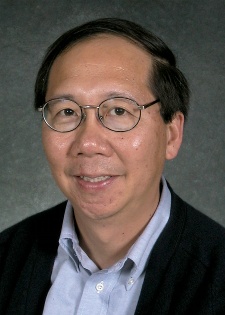
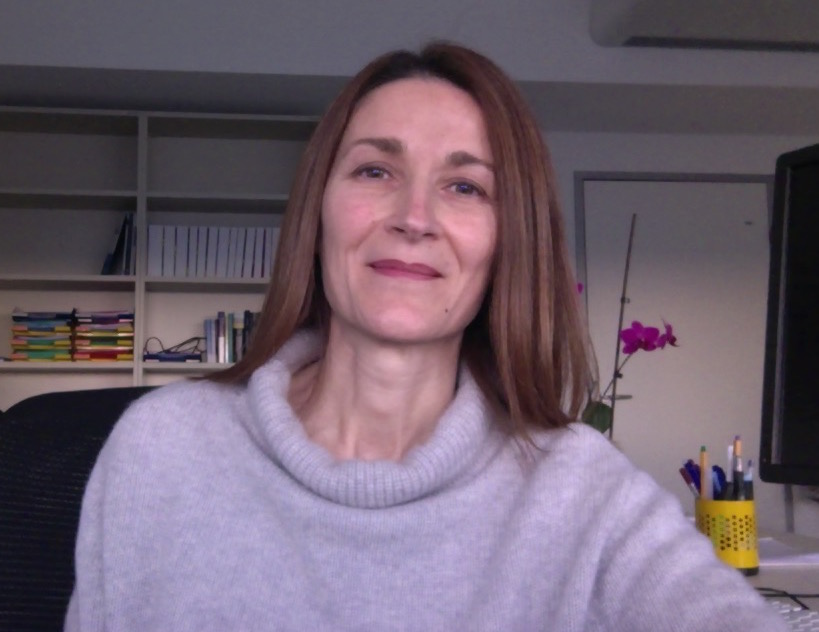
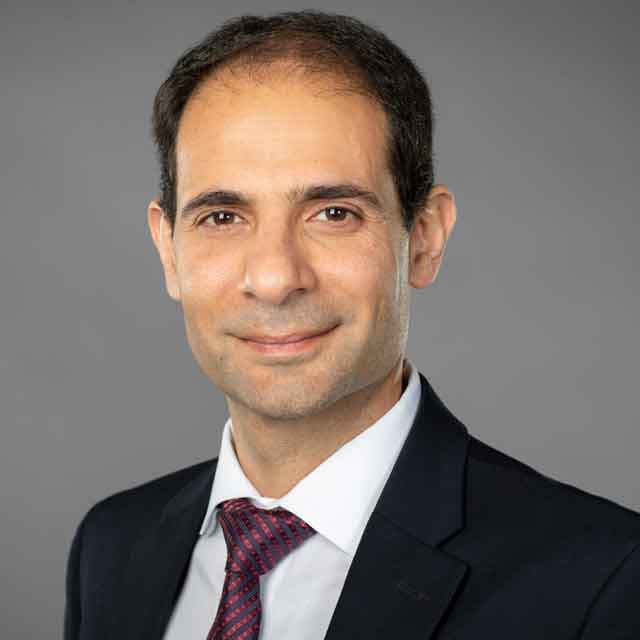
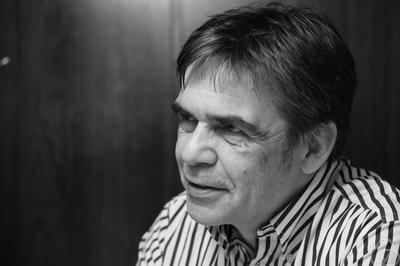
Dr. Hossein Alizadeh Otorabad is a Research Fellow at the Department of Engineering, School of Computing and Engineering, University of Huddersfield. He joined the Institute of Railway Research (IRR) in 2019 and was promoted to Research Fellow in 2022. His work focuses on finite element analysis, railway engineering, and thermal dynamics in wheel-rail interactions. BSc in Solid Mechanics, Tehran Polytechnic University MSc in Applied Mechanics, Khajeh Nasir Toosi University (2002) PhD in Railway Engineering (2018), focusing on wheel-flat fatigue crack initiation His research expertise spans Railway Engineering , Finite Element Analysis , and Thermal Modeling , with a particular focus on wheel-flat dynamics and fatigue analysis. He has contributed to studies on dynamic load effects in railway crossings, temperature evolution during wheel flat formation, and elasto-plastic behavior in railway wheels. Recent publications show a strong emphasis on Railway Systems (2018-2024), covering topics like: Dynamic load prediction in crossings Thermal analysis of wheel-rail sliding Contact mechanics in flatted wheels Fatigue life evaluation under transient loads His work aligns with UN Sustainable Development Goals for sustainable infrastructure and transportation systems. Scientific Recognition: h-index of 31 (Scopus metrics) 16+ citations for elasto-plastic wheel analysis Contributions to key railway engineering conferences At IRR, he conducts FE analysis, laboratory/field testing of railway assets, hammer testing, and signal processing. He previously received funding from Iran's Ministry of Science for sabbatical research at TU Delft's Material Science and Engineering department.
Jan Martin Nordbotten is a full-time Professor at the Department of Mathematics, University of Bergen (UiB), with adjunct positions at Princeton University and NORCE. His research focuses on applied mathematics, particularly in porous media, CO2 storage, fluid dynamics, and interdisciplinary applications in hydrology, biomedicine, and ecology. He completed his PhD at UiB in 2004 and became Norway's third youngest professor in 2007. His work emphasizes numerical methods, multiscale modeling, and experimental validation. Affiliations: UiB (full-time), Princeton (adjunct), NORCE (adjunct) Research Group: Center for Sustainable Subsurface Resources Research interests span mathematical modeling of subsurface processes, including flow in fractured media, geomechanics, and phase-field fracture. Notable contributions include analytical and numerical solutions for CO2 leakage, multiphase flow, and development of tools like DarSIA for image processing in porous media. Publications highlight advancements in mixed-dimensional models, finite element methods, and experimental validation of CO2 storage forecasts. His work bridges theoretical mathematics with practical applications in energy and environmental systems.
Kurt Maute is a Professor and Palmer Engineering Chair at the University of Colorado Boulder’s College of Engineering and Applied Science (CEAS). He currently serves as Associate Dean for Undergraduate Education. His academic journey includes a PhD in Civil Engineering (University of Stuttgart, 1998) and a Dipl.-Ing. in Aerospace Engineering (University of Stuttgart, 1992). He has held progressively senior roles at CU Boulder, including Associate Dean for Research (2012–2014), Associate Professor (2006–2012), and Assistant Professor (2000–2006). Maute’s research focuses on structural topology optimization, multi-disciplinary optimization, and aeroelastic systems. He has pioneered methods integrating XFEM, level-set techniques, and isogeometric analysis for complex engineering problems. His work spans fluid-structure interaction, hypersonic vehicle design, and additive manufacturing. His notable contributions include advancements in immersed boundary methods, multi-material optimization, and uncertainty quantification. Awards include the NSF Career Award (2004) and Palmer Endowed Chair (2016–present). Maute’s lab (Aerospace Mechanics Research Center, AMREC) addresses challenges in computational mechanics and multi-physics systems. He has advised numerous students and led grants in battery modeling, topology optimization, and aerospace systems. His research bridges theory and application, emphasizing industrial relevance and computational innovation.
Dr. Masoumeh Dashti is an Associate Professor in Mathematics at the University of Sussex, UK, affiliated with the School of Mathematical and Physical Sciences. She holds a PhD in Mathematics from the University of Warwick (2008) and prior degrees in Mechanical Engineering from Sharif University of Technology and Tehran Polytechnic. Her research focuses on Partial Differential Equations, Inverse Problems, Bayesian Inference, and their applications in fluid dynamics and epidemiology. Key research interests include: Bayesian approaches to inverse problems, sparsity-promoting estimators, uncertainty quantification, and mathematical modeling of epidemics on networks. She has contributed to foundational work on Besov priors and MAP estimator consistency in nonparametric Bayesian frameworks. Her publications span topics like network inference from epidemic data, contraction rates of posterior distributions, and fluid-structure interaction problems. She has secured grants including 'Two-dimensional stochastically perturbed shallow water equations' (2019-2023) and 'Confronting High Dimensional Network Models With Data' (2018-2022). Currently, she serves as an Associate Editor for SIAM-ASA Journal on Uncertainty Quantification and AIMS Foundations of Data Science . Teaching expertise includes Functional Analysis, Partial Differential Equations, and Calculus of Several Variables at both undergraduate and postgraduate levels.
Nicolas Joly is a Researcher at the Le Mans University 's Institute of Acoustics , affiliated with the Transducers team. His work focuses on numerical modeling of acoustics and vibroacoustics, particularly thermoviscous diffusion phenomena in boundary layers. Research Areas : MEMS Transducers, Thermoviscous Fluid Dynamics, Inverse Methods, Composite Material Analysis Recent Contributions : Modeling micro-scale acoustic devices, homogenization of complex elastic moduli in curved beams, and fluid-loaded microbeam dynamics. Scientific Production Trends : Recent publications highlight advanced numerical simulations for miniaturized transducers, inverse methods in material characterization, and thermoviscous effects in MEMS devices. His work bridges acoustics with structural mechanics and sensor design.
Dr. Martin Rohde is a Professor and Group Leader at the Radiation Science & Technology department within the Faculty of Applied Sciences at Delft University of Technology (TU Delft) in the Netherlands. He leads the Transport Phenomena & Nuclear Applications research group, focusing on advanced nuclear reactor technologies, particularly molten salt reactors, and their associated transport phenomena. Professor Rohde's research interests span across several critical areas in nuclear engineering and fluid dynamics. His work primarily focuses on understanding transport phenomena in nuclear applications, with particular emphasis on molten salt reactors for sustainable and safe nuclear power generation, innovative production techniques of medical isotopes, and advanced energy storage systems like flow batteries. His research group actively investigates complex physical phenomena occurring under extreme conditions such as high pressures, high temperatures, and interactions with radioactive processes. His publication record demonstrates a strong focus on computational methods for nuclear applications, particularly the Lattice Boltzmann Method (LBM), which is used to model fluid flow, heat transfer, and phase change phenomena in nuclear systems. Recent work has concentrated on freezing and melting processes in molten salt reactors, microfluidic separation techniques for medical isotopes, and advanced modeling of flow batteries. His research shows a clear progression toward increasingly sophisticated numerical methods applied to real-world nuclear engineering challenges. Professor Rohde has secured significant funding through multiple European Commission projects including ENDURANCE, MIMOSA, and ReZilient, demonstrating the international recognition of his research. He has supervised numerous PhD and MSc students, many of whom have gone on to complete theses on topics related to molten salt reactors, microfluidics, and flow battery technology. His research group includes several technicians, post-doctoral researchers, and PhD candidates working collaboratively on cutting-edge nuclear technology. The Transport Phenomena & Nuclear Applications laboratory operates several specialized facilities including the ESPRESSO facility for measuring melting and solidification under convective boundaries, and experimental setups for studying molten salt behavior, microfluidic purification, and flow battery technology. The group maintains strong collaborations with international partners including TRIUMF (Canada), NRG, and URENCO (The Netherlands).
Leon Shpanin is a Senior Lecturer in Electronic and Electrical Engineering at Sheffield Hallam University, where he serves as Course Leader for MSc Automation Control and Robotics. He holds an MSc in Radio Frequency Engineering and a PhD in Electrical Engineering from the University of Liverpool. His research focuses on electrical engineering applications including renewable energy systems, HVDC circuit interruptions, and electromagnetic techniques for current interruption. He received the RAEng Award (2020) for developing next-generation circuit breakers for rail networks. Key projects: Development of Novel Energy Efficient Magnetic Scroll Air Motor (EPSRC) Smart control of multirotor drone propellers for vibration energy harvesting
Prof. David Ham is a Professor of Computational Mathematics at the Department of Mathematics, Faculty of Natural Sciences, Imperial College London. His research focuses on high-level abstractions for scientific computation, particularly in geophysical fluids and numerical software. He leads the Firedrake project and co-developed the dolfin-adjoint framework, which received the 2015 Wilkinson Prize for Numerical Software. Ham holds a BSc (Mathematics) and LLB from The Australian National University, and a PhD from TU Delft. His career includes roles as a NERC Independent Research Fellow and Grantham Research Fellow at Imperial College. He is affiliated with the Grantham Institute, Mathematics of Planet Earth, and Software Performance Optimisation groups. His research spans computational science, including finite element methods, adjoint-based inversion, and parallel computing. Recent work emphasizes differentiable programming integration with machine learning and geophysical modeling. Ham has contributed to numerous grants and projects, including EPSRC and NERC-funded initiatives. He leads development of software tools like Firedrake and Thetis, advancing computational methods for oceanography and geodynamics.
Teng-Fong Wong is a Research Professor in the Department of Geosciences at Stony Brook University, where he has been a faculty member since 1982. His research focuses on the intersection of rock mechanics, earthquake processes, and environmental applications, making significant contributions to understanding deformation mechanisms in geological materials. Education: Sc.B., Brown University, 1973 M.S., Harvard University, 1976 Ph.D., Massachusetts Institute of Technology, 1981 Research Interests: Professor Wong's research centers on rock mechanics with emphasis on earthquake mechanics, energy resources, and environmental applications. He investigates both phenomenological and micromechanical aspects of rock deformation and fluid flow using an integrated approach combining high-pressure deformation experiments, quantitative microstructure characterization, and theoretical analysis. His work spans brittle-ductile transitions in porous rocks, permeability evolution, strength properties of fault zone materials from SAFOD and TCDP drilling projects, and submarine groundwater discharge systems. Publication Trends: Wong's recent publications (2006-2008) demonstrate a consistent focus on strain localization mechanisms in porous rocks, particularly examining compaction bands and deformation bands in sandstones. His work integrates advanced imaging techniques (X-ray radiography, CT scanning) with mechanical testing to understand the micromechanics of rock failure. A significant thread connects his research on fault zone properties from major drilling projects (SAFOD, TCDP) with fundamental rock deformation processes. Scientific Recognition: U.S. Patent 6,874,371 for Ultrasonic Seepage Meter (2005) U.S. Patent 7,107,859 for Ultrasonic Seepage Meter (2006) Co-author of "Experimental Rock Deformation - The Brittle Field" (2nd Edition, Springer-Verlag, 2005) Professional Activities: Professor Wong maintains an active international research profile with numerous visiting appointments including at Australian National University, MIT, ETH Zurich, and institutions in China and France. His work involves extensive collaboration with USGS and international research teams on major fault zone drilling projects. He has developed specialized equipment like the ultrasonic seepage meter for measuring submarine groundwater discharge. Research Infrastructure: Wong's laboratory utilizes advanced capabilities including high-pressure deformation equipment, 3D visualization through laser scanning confocal microscopy and synchrotron microCT, and integrates these with analytic modeling and numerical simulation techniques (finite element and discrete element methods) to investigate micromechanics of dilatant and compactant failure in geological materials.
Dr. FARKAS Dávid is an Assistant Professor in the Department of Hydraulic and Water Resources Engineering, Faculty of Civil Engineering, Budapest University of Technology and Economics (BME). His office is located in Building K, basement level, room 12/7, and he holds weekly consultation hours on Mondays from 1–3 pm. Educational contributions include teaching core courses in hydrogeology and groundwater engineering: Groundwater (BMEEOVVMV63) Hydrogeology (BMEEOGMMG62) Infrastructural Design Project (BMEEODHAI41) Research activities concentrate on quantitative hydrogeology, with a special emphasis on karstic groundwater systems, seepage hydraulics, and the safety of flood-protection levees. He couples field investigations in iconic Hungarian cave systems (Buda Castle Cave, Molnár János Cave) with laboratory sandbox experiments and numerical modelling to advance understanding of flow and transport processes in fractured carbonates. Over the past decade his work has evolved from fundamental hydrogeological mapping toward the design and deployment of automated monitoring networks that integrate classical hydrological instruments with modern sensor technologies. This progression is evident in his most recent publications (2024-2025) that document the establishment of high-resolution cave monitoring systems capable of capturing rapid responses to precipitation events. Scientific awards currently listed: none. Advising and grants: no specific student names, grant numbers, or funded project titles are provided in the supplied text. Laboratories and teams: while no dedicated laboratory name is stated, his affiliation with the Department of Hydraulic and Water Resources Engineering implies access to the faculty’s hydraulics and hydro-environmental laboratories, including sandbox and seepage modelling facilities.
Clint N. Dawson is a full-time Professor and Department Chair of the Department of Aerospace Engineering and Engineering Mechanics at the University of Texas at Austin . He also serves as the Director of the Computational Hydraulics Group within the Oden Institute for Computational Engineering and Sciences . His research focuses on numerical methods for partial differential equations, computational engineering, and scientific computing. Education Ph.D. , Mathematical Sciences, Rice University (1988) M.S. , Mathematics, Texas Tech University (1984) B.A. , Mathematics, Texas Tech University (1982) Dr. Dawson specializes in computational modeling of shallow water systems , groundwater flow , and discontinuous Galerkin methods , with applications in hurricane storm surge prediction and subsurface hydrology. His work bridges numerical analysis, parallel computing, and environmental science. Dr. Dawson has received numerous honors, including: Southeastern Conference Achievement Award (2025) President’s Research Impact Award, UT Austin (2024) SIAM Geosciences Career Prize (2013) SIAM Fellow (2016) ICES Distinguished Research Excellence Award (2011) He has served as Chair of the SIAM Activity Group on Geosciences and Managing Editor of Computational Geosciences , with leadership roles in editorial boards and conference organizing committees.
Bernardo Cockburn is a Distinguished McKnight University Professor in the School of Mathematics at the University of Minnesota. He has been a faculty member since 1987, progressing from Assistant Professor to Associate Professor in 1992, and achieving full Professor status in 1997. He also held positions as an Affiliate Professor at the University of Delaware (2019-2020) and Chair Professor of Mathematics at King Fahd University of Petroleum and Minerals in Saudi Arabia (2012-2014). Education: Ph.D. from University of Chicago (1986), Doctorat de 3eme Cycle from University of Paris VI/INRIA (1983), Masters and Licenciatura from Universidad Nacional de Ingenieria in Lima, Peru Research Focus: Numerical methods for partial differential equations, particularly discontinuous Galerkin methods Cockburn's research primarily centers on the devising and analysis of efficient methods for numerically solving linear and nonlinear partial differential equations . His most significant contribution has been in the development and analysis of discontinuous Galerkin methods , particularly the hybridizable discontinuous Galerkin (HDG) methods which he pioneered. His work spans error estimation for hyperbolic problems, continuous dependence for Hamilton-Jacobi equations, and numerous applications across fluid dynamics, structural mechanics, and electromagnetics. He has developed theoretical frameworks for superconvergence properties and created practical algorithms for a wide range of engineering applications. Analysis of his recent publications reveals a strong focus on hybridizable discontinuous Galerkin methods , with significant contributions to superconvergence theory, error estimation, and applications to diverse physical problems including Stokes flow, linear elasticity, Timoshenko beams, and convection-diffusion problems. His work demonstrates a clear trajectory from theoretical foundations to practical implementation, with increasing emphasis on curved domains, adaptive methods, and coupling techniques between different numerical approaches. Doctor Honoris Causa from Universidad Nacional de Ingenieria, Lima, Peru (2013) Invited Speaker at the International Congress of Mathematicians, Numerical Analysis Section (2010) Distinguished McKnight University Professor, University of Minnesota (2007) Cockburn has supervised an impressive 23 PhD students throughout his career, many of whom have gone on to become professors at major universities worldwide including the University of Puerto Rico, Purdue University, and University of Concepcion in Chile. His advisees have produced significant research in discontinuous Galerkin methods, particularly in applications to structural mechanics, fluid dynamics, and Hamilton-Jacobi equations. His research has been supported by numerous grants from the National Science Foundation and other funding agencies, enabling extensive collaboration with researchers across the United States and internationally. Cockburn leads a vibrant research group focused on computational mathematics, with particular emphasis on developing and analyzing discontinuous Galerkin methods. His work has fostered significant collaboration between mathematicians and engineers, with applications spanning aerospace, civil engineering, and materials science. The research group maintains strong connections with institutions worldwide, including regular collaborations with researchers in Peru, Chile, and Europe, reflecting Cockburn's international background and influence.
Ilaria Perugia is a University Professor (Univ.-Prof.) and Chair of Numerics of PDEs at the Department of Mathematics, Faculty of Mathematics, University of Vienna. She also serves as Deputy Head of the Research Platform Erwin Schrödinger International Institute for Mathematics and Physics. Her research focuses on numerical methods for partial differential equations with applications in computational physics and engineering. Professor Perugia's primary research interests include: Numerical methods for PDEs Finite element methods Discontinuous Galerkin methods Trefftz methods Virtual element methods Space-time methods Computational electromagnetics Wave propagation problems Nonlinear reaction-diffusion problems Her work spans theoretical analysis, algorithm development, and practical implementation of numerical methods for solving complex physical phenomena. Her recent publications demonstrate a strong focus on space-time methods, virtual element methods, and structure-preserving discretizations for wave equations, heat equations, and other PDEs. She has made significant contributions to the development of stable and efficient numerical schemes that preserve important physical properties of the underlying continuous problems, particularly in the context of wave propagation and computational electromagnetics. Professor Perugia leads a research group comprising several researchers and students including Mattia Corti, Matteo Ferrari, Monica Nonino, Andrea Scaglioni, Paul Stocker, Enrico Zampa, and Marco Zank. Her group actively collaborates on projects related to numerical analysis and scientific computing, with particular emphasis on developing novel discretization techniques for challenging PDE problems.
Elie Hajj is a Professor in the Department of Civil & Environmental Engineering at the University of Nevada, Reno (UNR), serving as Associate Director of the Western Regional Superpave Center. His research focuses on asphalt pavement engineering, sustainable materials, and infrastructure resilience. He specializes in pavement rehabilitation, numerical modeling of dynamic load impacts, and economic analysis of pavement preservation strategies. Dr. Hajj has received recognition for his 2016 ASTM award for outstanding work on pavement rehabilitation economics. He actively engages in professional service, including TRB webinars and academic seminars on topics like pavement damage assessment and vehicle operating costs. His teaching spans graduate and undergraduate courses in pavement design, materials engineering, and advanced pavement analysis. His research integrates experimental and computational methods to address challenges in pavement performance under superheavy loads, recycled material utilization, and energy-efficient construction practices. Collaborations with industry and government agencies enhance the practical applicability of his findings.
Endre Süli is a Professor of Numerical Analysis at the University of Oxford, affiliated with Worcester College and Linacre College. He has held various academic roles since 1985, including Fellowships and Tutorships in Mathematics. University Education: B.Sc. in Mathematics, University of Belgrade (1974-1978) M.Sc. in Mathematics, University of Belgrade (1978-1980) Ph.D. in Mathematics, University of Belgrade (1985) M.A., University of Oxford (1985) British Council Visiting Student, Reading University and University of Oxford (1983/84) Süli's research focuses on numerical methods for partial differential equations (PDEs), with expertise in finite element methods, adaptive algorithms, error control, and computational modeling of fractures and non-Newtonian fluids. His work bridges mathematical theory and practical applications in fluid dynamics and material science. His recent publications emphasize finite element approximations, nonlinear PDEs, and stochastic models for polymer dynamics. Themes include multiscale methods, tensor-sparsity for high-dimensional problems, and compressible flow simulations. Scientific Awards: Fellow of the Royal Society (2021) London Mathematical Society Naylor Prize and Lectureship (2021) Pro Urbe Prize, City of Subotica (2021) SIAM Fellow (2016) Member, Academia Europaea (2020) Foreign Member, Serbian National Academy of Sciences and Arts (2009) IMA Service Award (2011) Fellow, European Academy of Sciences (EurASc) (2010) Fellow, Institute of Mathematics and its Applications (2007) London Mathematical Society/New Zealand Mathematical Society Forder Lecturer (2015) Professor Hospitus, Charles University, Prague (2012) Distinguished Visiting Chair Professor, Shanghai Jiao Tong University (2013) Invited Speaker, International Congress of Mathematicians, Madrid (2006) Süli has supervised numerous research projects and held visiting appointments globally. His contributions to numerical analysis span foundational work on error estimation, nonlinear stability, and advanced computational frameworks for complex physical systems.