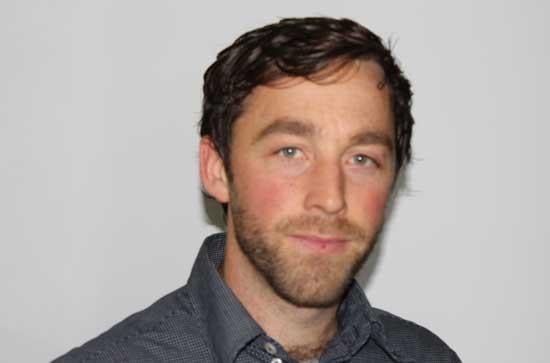
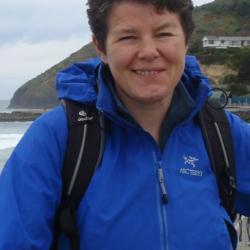
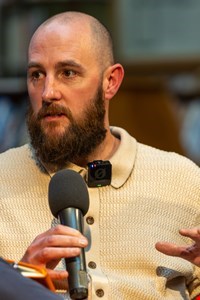
Eagle Zhang is a Senior Lecturer in the Discipline of Accounting at the University of Sydney. He specializes in financial accounting and critical accounting research, with a PhD from the University of Wollongong. His work examines the socio-political dimensions of accounting, particularly in China's economic transitions. Research interests focus on: Political economy of financial accounting practices and regulation Globalization of International Financial Reporting Standards (IFRS) and China's role Neoliberalism and financialization in accounting frameworks Historical analysis of Chinese accounting systems since 1949 Critical perspectives on accounting's role in capitalism His publications predominantly explore accounting history, neoliberalism in financial frameworks, and China's regulatory evolution. Recent works analyze comparative accounting traditions, public sector reforms, and conceptual framework critiques, reflecting a consistent focus on accounting's socio-political impact. Awards: Accounting History 2014 Manuscript Award for significant contribution to accounting history literature No information is available regarding student advising, grants, labs, or research teams.
Matthew Sparkes is an Assistant Professor in Sociology at the University of Cambridge and a Director of Studies and Fellow in Human, Social, and Political Sciences (HSPS) at Lucy Cavendish College. His work focuses on social inequalities, neoliberal political economy, and financialisation, with a strong emphasis on class, gender, and cultural dynamics. Joined Cambridge in 2014 Course organiser for Global Social Problems (SOC3) and Sociology Dissertations Organiser of the Social Class Reading Group Matthew's research explores the intersections of debt markets, social stratification, and policy responses during crises. His recent work examines mortgage prisoners, credit payment holidays during the pandemic, and the cultural narratives shaping economic policies. Key trends in his publications include: analyzing debt as a social stratification mechanism (2018–2024), critiquing neoliberal financialisation (2019–2024), and interdisciplinary approaches combining sociology, economics, and cultural studies. His articles frequently address UK-specific debt policies and their mental health impacts. Tier 2 Cambridge Humanities Research Grant (2024) Dame Anne Warburton Award (2024) Matthew's advocacy for equality, diversity, and inclusion is rooted in his working-class upbringing in Wakefield, England. He integrates his lived experiences into research on classism and initiatives promoting inclusivity at Lucy Cavendish College.
Dr. Luke Hawksbee is a Teaching Professor in Sociology at the University of Cambridge, specializing in the Political Economy of Biomedicine within the Faculty of Human, Social, and Political Science. He has taught in the Sociology Department since 2014 with appointments at King's College. His academic credentials include: BA and MPhil in Philosophy from the University of Cambridge focusing on social and political philosophy, feminist thought, and cultural appropriation PhD in Sociology with thesis titled 'The role of financial and intangible assets in pharmaceutical business models in the financialised pharmaceutical sector' Hawksbee's research critically examines pharmaceutical business models through Marxist political economy frameworks, analyzing how financialization impacts healthcare systems and drug pricing. His work bridges theoretical political economy with practical health policy concerns, particularly regarding intellectual property rights during global health crises. He investigates power dynamics between pharmaceutical corporations, healthcare systems, and patients within global capitalism. His publication trajectory shows consistent focus on pharmaceutical economics and health policy, with increasing emphasis on global equity issues as evidenced by his 2022 BMJ article addressing Covid-19 intellectual property waivers. Both publications demonstrate rigorous analysis of market structures affecting healthcare accessibility. As an educator, Hawksbee teaches across sociology and medical curricula including Global Capitalism, Health Medicine and Society, and Social and Ethical Context of Health and Illness modules. He convenes interdisciplinary workshops and supervises graduate students in Political and Economic Sociology.
Sonia Arbaci Sallazzaro is an Associate Professor in Spatial Planning at The Bartlett School of Planning, University College London. Her academic career spans both education and professional practice in urban planning across multiple countries including Italy, Spain, Portugal, the UK, and USA (New York). She has held academic positions at UCL since 2003 and was previously a Marie Curie Research Fellow at Universitat Pompeu Fabra in Barcelona. Current Position: Associate Professor, The Bartlett School of Planning, UCL (2013-present) Previous Positions: Marie Curie Research Fellow (2012-2014), Lecturer (2006-2013), Teaching Fellow (part-time, 2003-2006), Visiting Lecturer (part-time, 2003-2006) Education: PhD from University College London (2007), Master of Architecture from Politecnico di Milano (1995) Sonia's research focuses on international comparative studies of urban processes, particularly in Southern European cities. Her work examines the role of the state in producing urban inequality and ethnic residential segregation through the lens of European housing systems and welfare regimes. She investigates how urban policies and regeneration programs impact mechanisms of redistribution and marginalization, with specific attention to gentrification, peripheralization, and the financialization of social housing. Her current research includes leading a UK-European collaborative project on 'ReHousIn: Contextualized pathways to reduce housing inequalities in the green and digital transition' (2024-27), funded by UKRI/EU-Horizon RIA Programme. Her scholarly contributions demonstrate consistent engagement with Sustainable Development Goals 11 (Sustainable Cities and Communities) and 10 (Reduced Inequalities). Her publication record shows an evolving research trajectory from early work on ethnic residential segregation in European cities to more recent studies on housing financialization, with particular attention to Southern European contexts including Italy, Spain, and Portugal. Her work bridges theoretical frameworks with policy-relevant analysis, often challenging conventional wisdom about urban regeneration and social mixing policies. Commendation - Sir Peter Hall Award for Research Excellence (2020) UCLU Student Choice Awards for Inspiring Teaching Delivery (2018, 2017) UCLU Student Choice Awards for Excellent Personal Tutoring (2017-2018) Sonia has been actively involved in teaching at both undergraduate and postgraduate levels, currently serving as Director of the MSc in International City Planning at the Bartlett School of Planning. She has developed and taught courses on strategic planning projects, production of the built environment, and comparative housing studies. Her professional activities include extensive conference presentations, keynote speeches, and editorial roles, demonstrating her leadership in the field. She has collaborated with numerous European universities through international research networks including EU URBAN INNOVATIVE Action, COST Action, and Horizon programs.
Rory Hearne is an Associate Professor in Social Policy at Maynooth University's Department of Applied Social Studies within the Faculty of Social Sciences. He holds a PhD in political and economic geography from Trinity College Dublin (2009). His work focuses on housing policy, economic inequality, human rights, and climate justice. He teaches courses on social policy, housing rights, and the welfare state at both undergraduate and postgraduate levels. Education: PhD in Political and Economic Geography, Trinity College Dublin, 2009 Research Interests: Housing crises, financialisation of housing, homelessness, human rights-based approaches, neoliberalism, spatial justice, public policy reform, and social movements. His landmark books Housing Shock (2020) and Gaffs (2022) address Ireland’s housing crisis and advocate for constitutional rights to housing. His work has influenced national policy debates and been recognized by the Irish presidency and international scholars. Articles Trends: Recent publications analyze housing financialisation, participatory policy approaches (e.g., PAHRCA methodology), and post-neoliberal social policy. His research bridges academic and activist spheres, emphasizing community engagement and systemic change. Awards: His book Housing Shock was honored by the President of Ireland for its policy contributions. Peer reviews acclaim his work for its interdisciplinary rigor and practical impact. Grants & Projects: Co-developed the Participatory Action Human Rights and Capabilities Approach (PAHRCA) during the EU-funded Re-InVEST project (2017–2018). Lead author of influential TASC reports on inequality and housing. Labs/Teams: Active in Maynooth University’s Social Sciences Institute and collaborates with NGOs like the Irish Human Rights and Equality Commission. Engages in public advocacy through media, podcasts, and conferences.
Professor Emma Mawdsley is a leading scholar in Human Geography at the University of Cambridge, where she contributes to the Geographies of Knowledge Research Group . As a Fellow of Newnham College and Director of the Margaret Anstee Centre for Global Studies , her work bridges academic rigor with practical engagement in global development politics. BA in Geography (St. John’s College, Cambridge, 1989-1992) PhD in Geography (St. John’s College, Cambridge, 1992-1996) Academic trajectory: Lecturer (1996-2003), Senior Lecturer (2009-2014), Reader (2014-2022), Professor (2022-present) Her research interrogates the politics of global development , focusing on South-South Cooperation (especially India-Africa dynamics), financialisation of aid, and the UK’s shifting development agendas. She leads the ESRC-funded project ‘Development Consultants and Contractors’ , analyzing private-sector roles in ‘Aidland’. Recent publications highlight trends in South-South partnerships , innovative finance, and decolonial approaches. Awards include the Leverhulme Research Fellowship and recognition as a Royal Geographical Society medalist. She supervises PhD students on topics like Sino-Indian development cooperation and postcolonial governance. As Director of the Margaret Anstee Centre, she fosters interdisciplinary global studies, connecting academia to policy through initiatives like the India-UK Development Partnership Forum .
Imogen T. Liu is an Assistant Professor of International Political Economy at Vrije Universiteit Amsterdam, affiliated with the Faculty of Social Sciences and Humanities and the Multi-layered Governance in Europe and Beyond (MLG) research group. Her work focuses on the politics and governance of finance, production, and energy systems in contexts of geopolitical competition, particularly analyzing transnational firms' roles in industrial development trajectories across Europe, China, and the Global South. Education: PhD (2023): Maastricht University - Investing for the state: A finance-sensitive reading of the transnationalisation of Chinese state capital in Europe Master’s (2018): Leiden University - Political Science and Public Administration (cum laude) Bachelor’s (2010): University of Auckland - Economics and Statistics Research Interests: Liu’s research examines state capitalism, financialization, China-EU relations, and geoeconomics. She explores how geopolitical competition shapes global economic governance, with a focus on infrastructure investment, transnational firms, and the Belt and Road Initiative. Her book project, Financialising Global China and the Remaking of Liberal Economic Order , investigates China’s evolving role in global financial systems. Recent Contributions: Her work appears in journals like New Political Economy , Journal of Economic Geography , and Finance and Space . Recent articles analyze foreign investment screening, private equity’s role in state-led markets, and the geopolitical implications of China’s infrastructure projects in Serbia. Awards: Els de Witte Annual Prize in Political Science (2024) FINGEO Doctoral Dissertation Prize (2024) Paul Benneworth PhD Student Award (2023) Professional Activities: Liu co-leads the Finance and Money working group of the China in Europe Research Network and serves as an Early Career Representative for the Regional Studies Association. She also contributes to initiatives like the Second Cold War Observatory and FINGEO network, focusing on global financial and geopolitical dynamics.
Dr. Mihika Chatterjee is Lecturer in International Development and Co-Director of the Centre for Development Studies at the University of Bath. Her research examines the political economy of late-industrialization through two interconnected strands: land dispossession/rural industrialization in Western India, and finance's role in global food systems affecting agrarian communities. She co-convenes the 'Land, Labour, and Food' study group for DSA-EADI and has been featured in Al Jazeera and BBC World Service. Her work addresses political economy transformations in BRICS nations, rural manual labor, and food security systems. Chatterjee holds a doctorate in International Development and MPhil in Development Studies from the University of Oxford.
Thomas F. Purcell is a Senior Lecturer in International Political Economy at King’s College London’s Department of European & International Studies since 2019. He holds a PhD from the University of Manchester and has held roles including Deputy Director at Ecuador’s National Strategy Centre for the Right to Territory (CENEDET) and Senior Lecturer at Leeds Beckett University. His research focuses on Latin American political economy, agrarian studies, financialization of urban infrastructure, and Marxist critiques of global capitalism. Key projects include a monograph on Venezuela’s Bolivarian Revolution and collaborations on Chile’s agro-food systems and Spain’s solar energy transition. Research interests include territorial power relations in value production, financialization dynamics, and global commodity chains. Recent work critiques assetization theory and explores landed property’s role in climate change. He teaches modules on global political economy, development, and Marxist theory. Purcell’s interdisciplinary approach integrates political ecology and critical global capitalism studies, engaging with activist-oriented research collectives at King’s. His peer-reviewed articles span journals like Review of International Political Economy and Antipode . He co-founded King’s Critical Global Capitalism Studies Collective and contributes to public discourse via The Conversation . His current research includes Venezuela’s political economy, Chilean agricultural logistics, and UK land value capture mechanisms.
Tim White is a Visiting Fellow in Sociology at the London School of Economics and Political Science (LSE), and a Leverhulme Early Career Fellow at Queen Mary, University of London. He is also affiliated with the Technical University of Vienna and the Free University of Berlin. He holds a PhD in Sociology from LSE (2023) and previously worked at LSE Cities. His research focuses on housing, land, property, and power dynamics, examining how financial logics and digital technologies shape inequality and social relations. Key areas include the political economy of land ownership, wealth distribution, and the role of housing in capital accumulation. His interdisciplinary approach integrates urban studies, economic sociology, and critical political economy. Publications appear in Economy and Society , EPA: Economy and Space , and media outlets like The Guardian . Current projects explore digital technologies' impact on housing markets and emerging forms of socio-economic injustice. Tim has received a Leverhulme Early Career Fellowship to support his research. Affiliations include LSE's Department of Sociology, Queen Mary University of London, TU Vienna, and FU Berlin.
Dr Mimoza Shabani is an Associate Professor in Economics at the University of East London (UEL), affiliated with the Royal Docks School of Business and Law and the Centre for the Study of States, Markets and People (STAMP). She holds a Master's in Business Economics from City University and a PhD in Economics from SOAS, University of London. Her research focuses on international banking, offshore financial centers, the Japanese economy, financialisation, and developing economics. She teaches Behavioural Economics, Research Methods, and Ethics in Banking. Her work examines global banking networks, financial systems dynamics, and the impact of crises on banking sectors. Recent contributions include co-editing International Banking in Global Perspective (2024) and analyzing US global banks' spatial dependence and Japanese banking expansion. Her research highlights topics like FinTech's role in sustainable banking, liquidity creation in emerging economies, and dividend distributions in Latin America. She supervises PhD students such as Michael Harrison, focusing on financial market microstructures. Dr Shabani’s work bridges theoretical economics with practical policy implications, particularly in crisis contexts and cross-border financial flows.
Dr. Luke Heslop is a Senior Lecturer in Anthropology and Global Challenges at Brunel University London's College of Business, Arts and Social Sciences. His work focuses on South Asian development, infrastructure, and kinship systems across Sri Lanka, Maldives, and the Indian Ocean region. As founding member of the South Asia Studies Research Group and Director of Research at PRISA, he bridges academic and policy domains through ethnographic approaches to global challenges. Education: PhD in Social Anthropology, University of Edinburgh (2015) MSc(res) in Social Anthropology, University of Edinburgh (2010) BA(Joint Hons) Anthropology and Development Studies, Sussex University (2009) Introduction to Project Management, City University of London (2020) His research examines how macro-economic shifts manifest in everyday life through three interconnected strands: mercantile kinship networks in Sri Lankan business families; infrastructure development (particularly roads and connectivity in the Maldives); and evolving 'advice ecosystems' in South Asian business development. Recent work analyzes Chinese infrastructure projects in island nations, financial architectures of development, and the social life of work in emerging economies. His ethnographic approach centers on lived experiences of political and economic transformation, with emphasis on labor, mobility, and financialization. Heslop's publications reveal consistent focus on South Asian political economy through infrastructure studies (40%), business anthropology (35%), and kinship dynamics (25%). His 2021-2024 work increasingly addresses climate vulnerability in island contexts and decolonial approaches to development advice. Key journals include Journal of the Royal Anthropological Institute , Current Anthropology , and Journal of South Asian Development . PhD Supervision: First Supervisor: Matthew Adams (Metaverse ethnography), Ramish Chohan (Pakistan brick kiln workers) Second Supervisor: Bandana Adhikary (Nepalese education), Veronika Senkyrova (Policing/obesity) Research Development Advisor: Kat Lacey, Mercy Brown Heslop directs the MSc Global South Asia Studies program and convenes 'Practising Anthropology' while contributing to modules on South Asian societies, religion, and development. His 'Migration Menu' podcast and public exhibitions translate research into accessible formats, demonstrating commitment to impact beyond academia. Current projects include 'South Asia in West London' exploring diaspora communities through food, education, and entrepreneurship lenses.
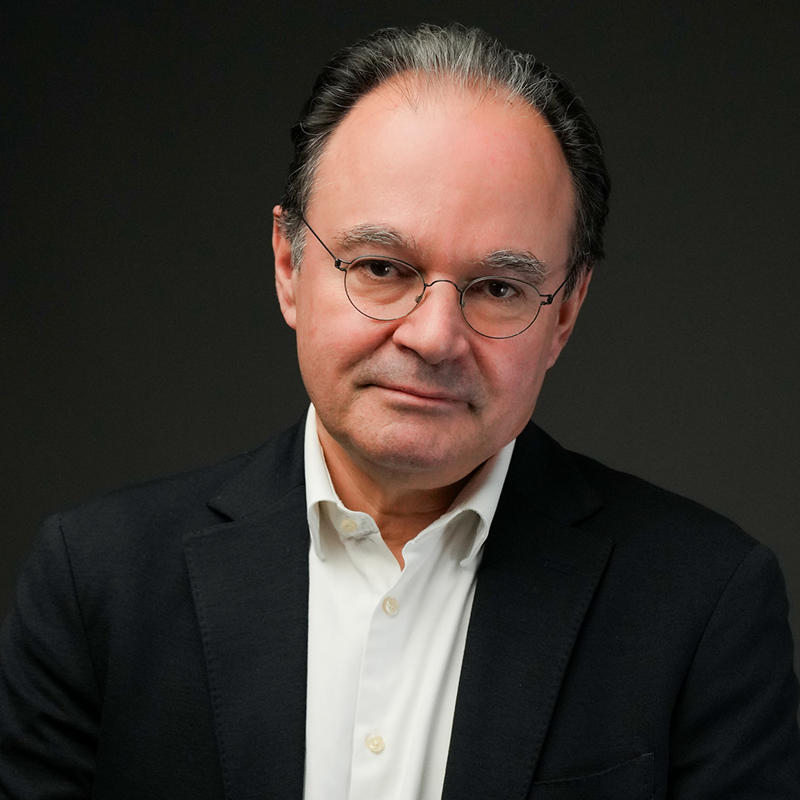
Georgios Papakonstantinou serves as Full-time Professor and Chair of International Political Economy at the Florence School of Transnational Governance (STG), European University Institute. He concurrently holds the position of Academic Director for the EUI Global Executive Master, with prior high-level government experience including Greece's Finance Minister during the Eurozone crisis and Minister of Environment and Energy overseeing green economy transitions. Education: PhD in Economics from the London School of Economics His research centers on the intersection of economic crises and governance systems, specializing in how geopolitical rivalries reshape global cooperation frameworks. Key interests include European integration dynamics, financialization impacts on public finances, and institutional responses to economic shocks. Work consistently examines transnational policy coordination challenges through political economy lenses. Recent publications reveal concentrated focus on EU budgetary architecture and global governance adaptation to multipolarity. The 2025 work with Marco Buti addresses citizen engagement in EU fiscal processes, while the multilingual 2024 book 'New World, New Rules' analyzes how geopolitical competition affects collective action on global public goods and economic interdependence mechanisms. Scientific awards: No scientific awards documented in provided materials Advising and grants: As Academic Director of the Global Executive Master, he oversees program development and curriculum strategy. Teaching includes core courses like 'Economics for Policy II' and 'The Crisis Seminar', though specific advisees or grant funding details are absent from the text. His governance reform expertise likely informs policy-oriented research funding. Labs and teams: Primary affiliation is with STG's research ecosystem focused on transnational governance challenges. While no named lab or team is specified, his work intersects with EUI initiatives on European integration and crisis management through institutional channels.
Dr. Lauren Martin is an Associate Professor in Political Geography at Durham University's Department of Geography , specializing in the spatial dimensions of migration control, carceral geographies, and critical security studies. Her research bridges political geography with feminist and critical migration theories. 2020–present: Associate Professor, Durham University 2016–2020: Assistant Professor/Lecturer, Durham University 2016–2019: Associate Editor, Environment & Planning D: Society and Space Research Focus : Border and migration policing Carceral geographies Political-economic analysis of detention systems Techno-humanitarian transformation in refugee governance Key Projects : Economies of Exclusion (2020–present): Analyzes value creation through immigration detention practices GLiTCH (2020–2022): Investigates financial and digital technologies' impact on refugee governance Scientific Awards : Independent Social Research Foundation Fellowship (2020) ESRC Standard Grant (2020–2022) Publications demonstrate theoretical contributions to carceral geographies, migration control political economy, and spatial governance practices. Her work connects with broader debates in feminist geography and critical security studies.
Vinh-Kim Nguyen is a Professor at the Graduate Institute of International and Development Studies in Geneva, where he teaches Social Theory and Medical Anthropology. He also holds appointments in Anthropology and Global Health at the École de Santé publique de l’Université de Montréal and the Fondation Maison des Sciences de l’Homme in Paris. A medical anthropologist and physician, he practices Emergency Medicine at the Montréal Jewish General Hospital and has extensive experience in pandemic management, including leading the development of COVID-19 treatment units in 2020. His work spans global health, biopolitics, and the intersection of science and politics in disease eradication. Education : MD and PhD in Anthropology Languages : English, French Vinh-Kim Nguyen's research focuses on medical anthropology , global health , and HIV/AIDS prevention strategies, particularly through pre-exposure prophylaxis (PrEP). He examines the social and organizational networks enabling PrEP efficacy in clinical trials and its implementation in African contexts. Other projects include the Inserm/NIH Prevac Ebola Vaccine trial and studies on conflict-driven antimicrobial resistance. His work bridges science and technology studies with health policy , emphasizing equity and ethics. His publications highlight trends in pandemic response , therapeutic citizenship , and the financialisation of pharmaceuticals . Key works include the award-winning An Anthropology of Biomedicine and The Republic of Therapy , which analyze biomedicine’s societal impacts. Recent projects explore the psychedelic renaissance in Switzerland and its global health implications. Scientific awards and honors include the ERC Consolidator Grant for his research on HIV eradication. He also co-founded the Medicine, Anthropology, Theory journal, the first open-access publication in Medical Anthropology. Nguyen has advised the World Health Organization’s Blueprint and Médecins Sans Frontières’ CRASH humanitarian research unit. He coordinates the social science team of the Inserm/NIH Prevac Ebola Vaccine trial and is part of the decentralized LOST research network (Law, Organization, Science and Technology), focusing on critique in global health ethnography.