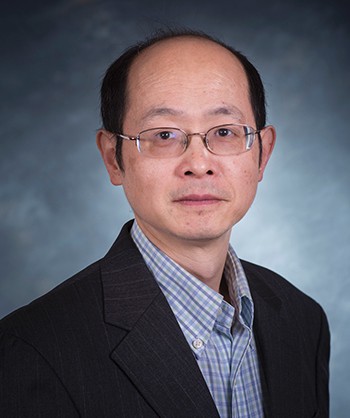
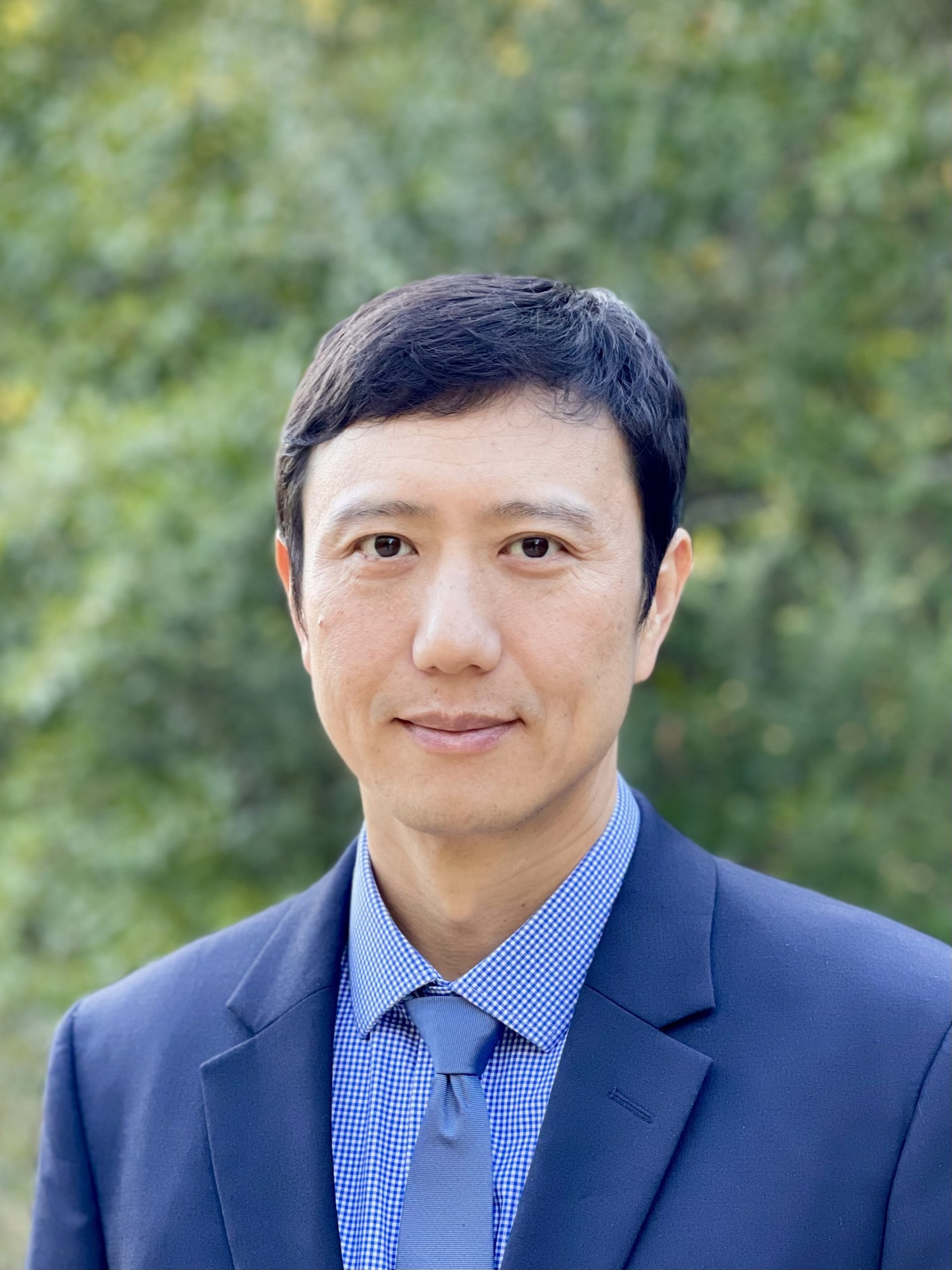
Gang Chen is an Associate Professor in the Department of Public Administration & Policy at the University at Albany's Rockefeller College of Public Affairs and Policy. He co-founded and co-directs the State and Local Government Finance Project (SLGF) at the Center for Policy Research. His research specializes in public budgeting, financial management, and fiscal policy, with emphases on pension systems, disaster resilience, and governmental transparency. Education: PhD, Public Administration, University of Nebraska at Omaha MA, Public Administration, Sun Yat-sen University, China BA, Public Administration, Sun Yat-sen University, China Research Focus: Dr. Chen investigates fiscal risks in public pensions, disaster response financing, transparency reforms, and local government financial practices. His work integrates empirical analysis with policy applications to address systemic challenges in public sector finance. Grants and Leadership: He has secured funding from the Governmental Accounting Standards Board, Society of Actuaries, Pew Charitable Trusts, and others, leading projects on pension governance and fiscal resilience. Teaching: Courses include Public Budgeting, Applied Statistics, Public Financial Management, and Advanced Quantitative Analysis. He also contributes to international capacity-building as an instructor for Zimbabwe's Parliamentary Strengthening Program.
Pekka Abrahamsson is a Professor at the Faculty of Information Technology and Communication Sciences at Tampere University , Finland. He actively contributes to research in Software Engineering , Artificial Intelligence , and AI Ethics , with recent work focusing on generative AI, multi-agent systems, and ethical software design. Published over 42 research outputs (2016–2025) Editorial roles in multiple international conferences (2016, 2019, 2022–2024) His research emphasizes practical applications of AI in software development, including tools like ChatGPT for full-stack coding, multi-agent systems for requirements engineering, and frameworks for AI ethics in software practices. He also explores challenges in continuous software engineering and quantum computing architecture. Key publication trends (2024–2025) include: Agile methodologies enhanced by AI Ethical alignment in AI systems Autonomous software development platforms AI tool adoption in programming education Quantum software architecture reviews Technical debt in embedded systems Awards and recognitions : PlumX Metrics highlight 1 scientific prize (unspecified) High readership on platforms like Mendeley (up to 211 readers) Multiple citations in Scopus (up to 53 citations for quantum computing work) Grants and collaborations include global studies on work-from-home impacts, AI tool usage in programming courses, and projects like CodePori for autonomous development. His work influences policy and industry practices, particularly in AI ethics and multi-robot systems.
Jungbin Hwang is an Associate Professor in the Department of Economics at the University of Connecticut. He specializes in econometrics theory, with a focus on improving the accuracy and robustness of Generalized Method of Moments (GMM) methods in handling time series and panel data with dependence and heterogeneity. His research also extends to financial econometrics, Bayesian methods, and cointegration analysis. Education: Ph.D., Economics, University of California, San Diego (2016) M.A., Economics, Seoul National University (2010) B.A., Economics, Seoul National University (2008) Research Interests: Efficiency and approximation in GMM estimation Cluster-robust inference and bootstrap methods Cointegration in non-stationary systems Applications to financial markets and policy analysis Teaching: Courses include Empirical Methods in Economics, Econometrics I, and advanced topics in panel data analysis. Key Contributions: His work addresses challenges in GMM inference for time series and panel data, including finite-sample corrections and robust variance estimation. Recent studies explore low-frequency cointegration and quantile regression in dynamic settings. Grants & Collaborations: Collaborations with scholars like Yixiao Sun and Gonzalo Valdés have produced influential methods for accurate econometric testing and inference. Contact: Located in 333 Herbst Hall, Storrs, CT. Office hours: Wednesdays 3:00-4:00 PM or by appointment.
Jeffrey Schatzberg serves as Professor of Accounting and Frances McClelland Chair of Accounting at the University of Arizona's Eller College of Management, concurrently holding the position of Interim President for Executive Education. A Certified Public Accountant licensed in Arizona and Iowa, he maintains active membership in the American Institute of Certified Public Accountants, American Accounting Association, and Economic Science Association. His educational foundation includes a PhD in Business Administration from the University of Iowa (1987), preceded by professional experience as an audit and tax staff accountant at Peat, Marwick, Mitchell & Co. His scholarly trajectory demonstrates consistent engagement with experimental methodologies applied to core accounting questions. Professor Schatzberg's research program centers on auditing issues , behavioral accounting , and managerial/cost accounting , characterized by rigorous experimental designs investigating ethical decision-making, opportunistic behavior, and institutional influences. His work frequently examines how moral reasoning interacts with economic incentives in audit markets, while exploring budgetary processes and IPO-related auditor selection through controlled laboratory settings. This interdisciplinary approach bridges accounting theory with experimental economics to address real-world professional challenges. Analysis of his 15 most recent publications (1998-2024) reveals persistent focus on audit communication in private debt contracts, auditor pricing strategies under varying liability regimes, and behavioral responses to organizational incentives. The research consistently employs experimental economics frameworks to dissect auditor-client dynamics, with emerging attention to healthcare financing applications through his Center for Management Innovations in Healthcare affiliation. His scholarly contributions have been recognized through significant awards: McLaughlin Prize for ethics-focused accounting research (2003) Two-time recipient of MBA Faculty of the Year Award at Eller (1998, 2002) Arizona Society of CPAs Excellence in Teaching Award (1997) Professor Schatzberg maintains active research leadership through the Economic Science Laboratory, where he designs experimental protocols investigating market behaviors, while contributing to executive education initiatives through Eller Executive Education. His professional trajectory demonstrates seamless integration of academic scholarship, professional practice, and institutional leadership within the accounting discipline. He directs research activities through the Economic Science Laboratory and contributes to healthcare management innovation via the Center for Management Innovations in Healthcare, fostering cross-disciplinary collaborations that translate experimental findings into practical organizational applications.
George C. Papanicolaou is the Robert Grimmett Professor of Mathematics at Stanford University , affiliated with the Mathematics Department and the Institute for Computational Mathematics and Engineering (ICME). His research focuses on waves in random media, multi-scale phenomena, imaging techniques, and financial mathematics. He has authored influential books on passive imaging, stochastic volatility in finance, and asymptotic analysis. Research Interests: Mathematical analysis of electromagnetic and acoustic wave propagation in complex environments Applications in underwater acoustics, seismology, and porous media Imaging systems using time reversal and ambient noise Stochastic modeling of financial markets and systemic risk in multi-agent systems Key Contributions: Co-authored Passive Imaging with Ambient Noise (Cambridge, 2016) Lead author of Wave Propagation and Time Reversal in Randomly Layered Media (Springer, 2007) Revised classic text Asymptotic Analysis for Periodic Structures (AMS, 2011) Advising: Supervised numerous PhD students whose records are documented on his academic page. His work spans theoretical mathematics and applied problems in engineering and finance.
Zhijie Xiao is a Professor of Economics at Boston College, affiliated with the Morrissey College of Arts and Sciences. His expertise lies in econometrics and empirical finance, with a focus on quantile regression, financial markets analysis, and statistical inference. Xiao holds a Ph.D. from Yale University, along with multiple advanced degrees from Yale and the University of China. B.Sc., University of China M.Sc., University of China M.A., Yale University M.Ph., Yale University Ph.D., Yale University Xiao's research emphasizes methodological advancements in econometrics, particularly in quantile autoregression and tail risk modeling. His work bridges theoretical econometrics with practical applications in finance, addressing issues like market volatility and asset pricing dynamics. Key contributions include improving kernel estimation efficiency in nonparametric models and developing inference frameworks for quantile regression processes. Selected publications highlight his engagement with financial market tail risks and structural econometric modeling. Though no awards or grants are explicitly listed, his extensive publication record underscores sustained academic impact. Xiao teaches econometrics and contributes to the department’s research initiatives through collaborative projects.
David Lozinski is an Associate Professor in the Department of Mathematics and Statistics at McMaster University, Faculty of Science. His research spans combustion science, fluid dynamics, and financial mathematics. He has published extensively on topics like smoldering combustion, flame stability, and quantitative risk modeling. Teaching responsibilities include courses on risk management, actuarial mathematics, financial markets, and applied statistics. Research interests combine theoretical and applied mathematics with practical applications in combustion engineering and financial systems. Key contributions include studies on reverse smoldering mechanisms (1995), vapor diffusion flames (1995), and modern financial risk models (2024). Teaching spans undergraduate and graduate programs, covering mathematical finance, probability, and statistical inference. No scientific awards are listed in the profile. Active in curriculum development for financial mathematics programs, instructing courses like MFM 714 (Risk Management) since 2025 and STATS 3G03 (Actuarial Mathematics I) since 2024.
Kannan Srinivasan is the H.J. Heinz II Professor of Management, Marketing and Business Technology at Carnegie Mellon University's Tepper School of Business, a position he has held since 1999. Prior to joining CMU, he taught at the business schools of the University of Chicago and Stanford University. His academic career spans over three decades with significant contributions to marketing science and data analytics. His educational background includes: Ph.D. in Management from University of California Los Angeles (1986) MBA in Marketing/Finance from Xavier School of Management, Jamshedpur, India (1980) BA in Engineering from University of Madras, Chennai, India (1978) Srinivasan's research focuses on advanced data analytics models applied to marketing problems, with particular expertise in internet-generated large-scale data analysis. His work bridges the gap between theoretical marketing models and practical business applications, especially in the areas of algorithmic pricing, consumer behavior analysis, and AI-driven marketing strategies. He has pioneered research in dynamic pricing systems, location-aware marketing technologies, and the economic implications of AI in consumer markets. Analysis of his recent publications reveals a strong trend toward examining the intersection of artificial intelligence, consumer welfare, and market dynamics. His work increasingly focuses on ethical implications of AI in marketing, algorithmic bias, and the socioeconomic impacts of digital platforms across various sectors including real estate, social media, and e-commerce. His scientific achievements include: Elected Fellow of the Informs Society of Marketing Science (2013) for lifetime contribution to the field Served as President of the Informs Society of Marketing Science Holds multiple patents related to time and location aware dynamic push content, dynamic pricing, and online advertising Srinivasan has advised numerous doctoral students whose careers have led them to faculty positions at top institutions including Duke, Harvard, Columbia, Yale, University of Chicago, Wharton, University of Michigan, and Indian Institute of Management Bangalore. He has extensive consulting experience with large firms and startups, translating academic research into practical business applications. His professional service includes editorial roles at prestigious journals including Management Science, Marketing Science, and Quantitative Marketing and Economics, as well as significant committee service within CMU including the Elliott D. Smith Award Committee and various Dean's Advisory committees. His research is organized around several key initiatives focused on applying advanced analytics to solve complex marketing problems, with particular emphasis on developing interpretable AI models that balance business objectives with consumer welfare considerations.
Virginia Young is the Cecil J. and Ethel M. Nesbitt Professor of Actuarial Mathematics at the University of Michigan's Department of Mathematics, within the College of Literature, Science, and the Arts. She holds a Ph.D. from the University of Virginia (1984). Her research focuses on actuarial and financial mathematics, particularly decision-making processes for individuals and insurance companies in financial and insurance contexts. This includes topics like optimal reporting strategies, reinsurance mechanisms, and risk management under uncertainty. Her work addresses modern challenges such as defined contribution pension plans and strategic insurance product design. Key research areas include stochastic control theory, game-theoretic models in insurance markets, and optimization under model ambiguity. She explores how insurers and individuals make decisions under risk, with applications to annuities, reinsurance chains, and lifetime financial planning. Recent studies investigate Stackelberg games in reinsurance, optimal deductible insurance, and minimizing lifetime ruin probabilities through strategic annuitization. Virginia Young has no listed scientific awards in the provided texts. She advises no formally documented students, though her role likely involves mentoring within the Mathematics Department. Her work contributes to both theoretical advancements and practical applications in actuarial science and financial risk management.
Professor Danilo Mandic is a leading academic in Machine Intelligence and Signal Processing at Imperial College London's Department of Electrical and Electronic Engineering. He holds roles including President of the International Neural Network Society and Distinguished Lecturer for IEEE Computational Intelligence and Signal Processing Societies. His research spans Statistical Learning, Wearable Sensing (Hearables), Financial Signal Processing, and Tensor Networks for Big Data. Key contributions include pioneering in-ear physiological sensing and developing quaternion-based adaptive filters. He has authored over 600 publications, including seminal monographs on neural networks and complex-valued signal processing. Education: PhD in Nonlinear Adaptive Signal Processing from Imperial College (1999). Professional accolades include the 2019 Dennis Gabor Award and multiple IEEE Best Paper Awards. His labs include the Financial Signal Processing & Machine Learning Lab and collaborations with the Centre for Neurotechnology. He advises numerous students and leads projects on AI ethics, graph signal processing, and biomedical applications. His work emphasizes translating research into educational curricula via participatory sensor-based learning.
Associate Professor Antonio Peyrache is a Deputy Head of School at the School of Economics, University of Queensland, within the Faculty of Business, Economics and Law. His research focuses on applied economics, econometrics, and productivity/efficiency analysis with particular emphasis on production systems, public sector efficiency, and systemic risk modeling. He leads the Centre for Efficiency and Productivity Analysis (CEPA), driving advancements in efficiency measurement methodologies. Key research interests include judicial system efficiency, banking systemic risk, and multilevel production networks. Recent work explores homothetic production technologies and optimal organizational structures for public institutions. Featured projects include analyzing productivity in Australian horticulture and European judicial systems. His expertise spans both theoretical contributions (e.g., decomposition frameworks) and applied policy analysis (e.g., healthcare delivery efficiency). Publications span journals like European Journal of Operational Research and Omega, with a focus on operational research techniques and their policy applications. He has directed projects funded by the Asian Productivity Organization and collaborated on EU-KLEMS growth accounting initiatives. Professional roles include editorial contributions and leadership in academic productivity analysis.
Joaquin Vespignani is an Associate Professor of Finance at the Tasmanian School of Business and Economics, University of Tasmania. His research focuses on financial economics, critical mineral markets, artificial intelligence in finance, environmental economics, and education quality analysis. He has supervised 9 doctoral students, including completed projects on topics such as financial inclusion, commodity prices, and economic growth drivers. His funded projects include a 2014 grant examining the impact of unconventional monetary policy on commodity prices. Recent research highlights include analyzing geopolitical risks in critical mineral markets and exploring AI's role in mitigating supply chain risks. He has presented at conferences like 'Teaching Matters - Education that makes a difference' in 2024, emphasizing sustainable finance education. Key publications cover critical mineral market fragility, environmental performance in West African economies, and the link between education quality and economic growth. His work often integrates macroeconomic analysis with policy implications for sustainability and global resource management.
Prof. Francesca Biagini is a Full Professor of Applied Mathematics at the University of Munich (LMU), leading the Department of Mathematics within the Faculty of Mathematics, Computer Science, and Statistics. She holds additional roles as Vice President for International Affairs and Diversity at LMU since 2019, and served as President of the Bachelier Finance Society (2022–2023). Her academic career includes professorships at LMU (since 2009) and prior roles at the University of Bologna and Leibniz University Hannover. She specializes in financial and insurance mathematics, focusing on asset pricing, systemic risk, and model uncertainty. Education: PhD in Mathematical Finance (Scuola Normale Superiore, 2001), Laurea in Mathematics (University of Pisa, 1997). She has advised over 14 PhD students and 180+ master/bachelor students, collaborating with institutions like Allianz, MunichRe, and SwissRe. Research: Biagini’s work bridges financial and actuarial mathematics, including stochastic processes, systemic risk modeling, and insurance frameworks. Notable contributions include modeling asset bubbles, xVA calculations, and liquidity-based frameworks. She has published extensively in journals like *Finance and Stochastics* and *Mathematical Finance*. Awards and Activities: Recipient of the Prinzessin Therese von Bayern Preis (2019) and Zonta Clubpreis (2015). She organizes international conferences, serves on editorial boards (e.g., *Mathematical Finance*), and chairs the Munich Risk and Insurance Center. Her research is funded by grants from BayernLB and LMU Excellence programs.
Yong Liu is an Assistant Professor in the Department of Agricultural Economics at Texas A&M University. His research focuses on applied econometrics, Bayesian methodologies, machine learning, and agricultural policy with emphasis on crop insurance and risk management. He holds a Ph.D. in Agricultural Economics from the University of Guelph (2016), preceded by dual M.S. degrees in Economics and Agricultural Economics from Yunnan University and the University of Guelph, respectively, and a B.S. in Chemistry from Yunnan University. His research explores econometric techniques for agricultural policy evaluation, including causal inference methods and behavioral economics applications. Recent work analyzes climate change impacts on crop yields, the efficacy of insurance subsidies, and the integration of weather data into risk assessment models. Liu’s publications demonstrate a strong focus on improving crop insurance mechanisms through statistical innovations like Bayesian model averaging and spatial-temporal forecasting. His academic contributions span theoretical advancements in density estimation and practical applications in agricultural finance. While no specific awards or grants are listed, his active publication record indicates sustained research engagement in agricultural economics and quantitative methods.
Umut Cetin is a Professor of Statistics at the Department of Statistics, London School of Economics and Political Science (LSE). He holds a PhD in Applied Mathematics from Cornell University and has been affiliated with LSE since 2004, progressing through roles as Assistant Professor (2004–2010), Associate Professor (2010–2017), and full Professor since 2017. His research focuses on stochastic analysis, market microstructure, and mathematical finance, with an emphasis on equilibrium models under asymmetric information and liquidity risk. He contributes to editorial boards of journals like Market Microstructure and Liquidity and Frontiers of Mathematical Finance . Key research areas include stochastic filtering, Markov processes, and applications to financial economics. Notable achievements include the 2008 Europlace Institute of Finance Best Paper Award for work on insider trading models. He advises PhD students and teaches advanced courses such as Stochastic Processes and Markov Processes and Their Applications . Professional roles include Director of the LSE PhD Programme, member of the Steering Committee for the London Graduate School of Mathematical Finance, and external examiner for City University’s MSc Financial Economics. His recent work addresses power laws in market microstructure, equilibrium models with legal risk, and numerical methods for killed diffusions.