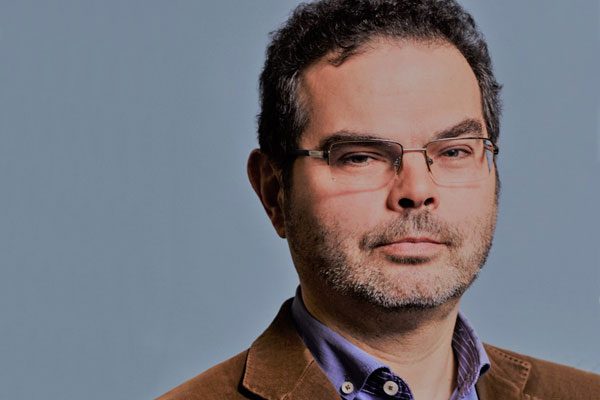
Ghassen Bouslama is an Associate Professor in the Finance department at NEOMA Business School. He holds a DEA in Management Sciences from the University of Toulouse I and a Doctorate in Management Sciences from the University of Reims Champagne-Ardenne. Education: DEA from University of Toulouse I, PhD from University of Reims Champagne-Ardenne His research focuses on bank-SME relationships, financing international growth for SMEs, capital structure, and Islamic finance. He has published in journals such as Revue Française de Gestion and Research in International Business and Finance , with recent work on sovereign Sukuk as infrastructure financing tools in Africa. Notable scientific contributions include studies on organizational architecture impacts on SME lending and Islamic finance frameworks in Western education. He actively participates in international conferences and has authored case studies on corporate valuations and mergers.
Dr. María Yanotti serves as a Senior Lecturer in Economics at the Tasmanian School of Business and Economics (TSBE) within the University of Tasmania. Her academic appointment is based at the Rivers Edge Building, Inveresk campus in Launceston, Tasmania. With a specialization in housing finance, banking, and household economics, Dr. Yanotti has established herself as an expert in mortgage markets and residential property investment, frequently sought for media commentary on these subjects. Dr. Yanotti's research interests span housing finance, mortgage markets, residential property investment, banking economics, and household financial decision-making. Her work frequently examines the intersection of financial systems and housing markets, with particular attention to Australian market dynamics. She has published extensively on mortgage choice determinants, financial inclusion, and the relationship between housing finance systems and economic outcomes. Her research methodology often combines economic theory with sophisticated statistical analysis to address practical questions in housing finance. Analysis of Dr. Yanotti's publication record reveals a strong focus on housing economics and mortgage markets, with significant contributions to understanding residential investment patterns, mortgage choice determinants, and housing finance systems. Her research spans both theoretical and applied economics, with numerous publications in leading domestic and international journals. She has also expanded her research interests to include environmental economics topics such as marine plastic pollution valuation and climate change impacts, demonstrating interdisciplinary reach while maintaining her core expertise in housing finance. Dr. Yanotti has received research funding from the Australian Housing and Urban Research Institute (AHURI) and is affiliated with the Economic Society of Australia and the Women in Economics Network. Her work on residential property investment, particularly the phenomenon of investors favoring properties near their own residence, has received significant attention in both academic and policy circles. At the University of Tasmania, Dr. Yanotti teaches across multiple economics and finance subjects including microeconomics, statistics and quantitative methods, economics for managers, finance for managers, and data analysis for managers. Her teaching reflects her research expertise, connecting theoretical economic concepts with practical applications in housing and financial markets.
Chris F. Kemerer is the David M. Roderick Professor of Information Systems and Professor of Business Administration at the University of Pittsburgh's Katz School. He previously served as an associate professor at MIT Sloan School of Management and as a principal at American Management Systems Inc. PhD in Systems Sciences (Information Systems), Carnegie Mellon University BS (magna cum laude) in Economics and Decision Sciences, Wharton School, University of Pennsylvania His research spans management and measurement issues in information systems and software engineering, including technical debt, software metrics, network effects, and technology adoption. He has made significant contributions to software design metrics and empirical analysis of IT markets. His publications over the last 15 years emphasize technical debt management, software reliability, standards competition, and economic dynamics in microcomputer software. These works bridge software engineering economics with real-world applications in enterprise systems and global markets. ISI/Thomson Reuters Highly Cited Researcher in Computer Science INFORMS Information Systems Society Distinguished Fellow He has secured grants from the National Science Foundation and IBM for software evolution research. His consulting includes expert testimony in landmark cases like Microsoft antitrust litigation and Oracle v. Google. He has taught courses in economics of information systems, software design, and technology diffusion at the PhD, Executive DBA, MBA, and EMBA levels.
Associate Professor Jonathan Ziveyi is an academic at the UNSW Business School , where he serves as an Associate Head in the School of Risk and Actuarial Studies . He holds a PhD in Quantitative Finance from the University of Technology Sydney and has published extensively in journals like Insurance: Mathematics and Economics and Quantitative Finance . Education PhD in Finance, University of Technology Sydney Graduate Certificate in University Learning and Teaching, UNSW Sydney BSc (Hons) in Applied Mathematics, National University of Science and Technology, Zimbabwe His research focuses on longevity risk management , valuation of guarantees in variable annuities , and option pricing under stochastic volatility . Recent work includes pooled annuity smoothing, hybrid insurance-product designs, and mortality forecasting with stacked regression ensembles. His publications span affine mortality models , regime-switching frameworks , and machine learning applications in actuarial contexts. Key topics include guaranteed minimum withdrawal benefits, longevity bonds, and tax implications in insurance contracts. Grants & Awards Australian Research Council Grant (2021–2023, AUD386,139) Society of Actuaries Grant (2017–2020, US$248,278) Multiple UNSW Business School linkage and research grants Vice Chancellor’s Prize for First-Class Degree (2005) International Postgraduate Research Scholarship (2007) He supervises PhD students including Samuel Thirurajah , Gayani Thalagoda , and Yawei Wang . His teaching includes courses on Asset-Liability Models and Financial Economics for Insurance .
Stéphane Rousseau is a Full Professor at the University of Montréal's Faculty of Law and an affiliated professor in the Finance Department at HEC Montréal. He serves as Academic Co-Director of the Ethics and Compliance Certification program at École des dirigeants and Director of the Centre de droit des affaires et du commerce international (CDACI). Education: S.J.D. (University of Toronto), LL.M. (Université Laval), LL.B. (Université Laval) His research focuses on corporate governance, financial market regulation, and ESG (Environmental, Social, Governance) integration into legal frameworks. Recent work examines climate risk management by financial institutions, SPACs (Special Purpose Acquisition Companies), and sustainable finance in post-pandemic contexts. Stéphane has authored 10+ peer-reviewed articles since 2018, including analyses of short selling regulation, ESG tech challenges, and SPAC longevity. His research projects explore corporate purpose, responsible innovation, and securities market compliance. Scientific Awards: Avocat émérite (Ad. E.) - Barreau du Québec (2018) Paul-André Crépeau Medal - Canadian Bar Association (2019) He supervises doctoral and master's students in topics like securities law, corporate governance, and compliance. Grants from FRQSC, AMF, and CRSH support his research on ESG factors, financial regulation, and corporate accountability.
Prof. Dr. Alexander Meyer-Gohde is a Professor of Financial Markets and Macroeconomics at Goethe University Frankfurt’s Faculty of Economics and Business, and a key figure at the Institute for Monetary and Financial Stability (IMFS). His research spans macroeconomic theory, macro-finance, numerical methods, and econometrics, focusing on DSGE models, nonlinear dynamics, and the impact of risk and uncertainty on monetary policy. Education : PhD in Economics (Technische Universität Berlin), MA in Economics and Management (Humboldt-Universität zu Berlin), BA in Language, Literature & Culture (Colorado State University). Research Interests : Macroeconomics, macro-finance, numerical methods, recursive preferences, stochastic volatility, and model uncertainty. Grants : DFG Individual Research Grant (2021-2024) and MatlabMakro DigiTeLL Grant (2022-2023). Publications : Focus on DSGE model solution methods, numerical stability, term premia, and nonlinear dynamics in macroeconomics. Students : Supervises job market candidates Johanna Saecker and Mary Tzaawa-Krenzler. Leadership : Chair of Financial Markets and Macroeconomics at Goethe University (2018–present) and coimplementation of the IMFS “Project Monetary and Financial Stability”.
Senior Professor Song-Ping Zhu is a faculty member at the School of Mathematics and Applied Statistics, University of Wollongong (2022–present). He earned a B.E. in Engineering Mechanics (1982) from Huazhong University of Science & Technology, followed by M.S. in Applied Mechanics (1985), M.S. in Applied Mathematics (1988), and Ph.D. in Fluid Mechanics (1987) from the University of Michigan. His career includes roles as Lecturer (1991), Senior Lecturer (1995), Associate Professor (1997), and Professor (2007) before becoming Senior Professor in 2015. Expertise : Mathematical and Computational Finance, Nonlinear Waves, Renewable Energy Key Contributions : Development of numerical techniques for pricing exotic options, modeling wave interactions in renewable energy systems, and advancing boundary element methods. Recent research trends focus on stochastic volatility models, regime-switching derivatives, and machine learning applications in finance. His computational methods span integral equations, finite element analysis, and neural networks.
Tim Doran is Professor of Health Policy at the University of York, where he leads research into the impacts of health and social policies on health inequalities, and the effects and unintended consequences of quality improvement initiatives in healthcare. His academic career spans institutions including the Universities of Liverpool, Manchester, and Harvard School of Public Health, where he previously held academic positions before joining York. Professor Doran studied biochemistry and medicine at the University of Edinburgh and subsequently trained in psychiatry and public health in the North West of England. He moved into academia in 2000, establishing a distinguished career focused on health policy evaluation and health inequalities research. His educational background combines clinical medicine with public health expertise, providing a strong foundation for his policy-oriented research. Tim Doran's primary research interests center on health policy and health inequalities, with particular focus on the wider social determinants of health and the effectiveness of healthcare services. His work examines how health and social policies impact health inequalities, investigates quality improvement initiatives in healthcare, and analyzes the unintended consequences of policy interventions. He has led major research projects funded by organizations including the Wellcome Trust, National Institute for Health Research, and the Department of Health. His methodological approach often combines quantitative analysis of large health datasets with policy evaluation frameworks to assess real-world impacts of healthcare interventions. His recent publication record demonstrates a sustained focus on critical issues in health policy, particularly the intersection of mental health and physical health conditions, health inequalities measurement, and healthcare system evaluation. Much of his work utilizes large-scale health datasets including Electronic Health Records to investigate population health patterns and healthcare utilization. His research has increasingly focused on methodological innovations for measuring equity impacts of health policies, as evidenced by his Wellcome Trust Senior Investigator Award project. Senior Investigator Award from Wellcome Trust for "Re-engineering Health Policy Research for Fairer Decisions and Better Health" Multiple research grants from National Institute for Health Research Funding from Danish Institute for Local and Regional Government Research Support from Department of Health for policy analysis initiatives Professor Doran is actively involved in supervising PhD students in health inequalities, quality improvement, and financial incentives in healthcare. His research group, the Health Services and Policy group at the University of York, conducts significant work on healthcare financing, quality improvement initiatives, and the evaluation of health policy interventions. Current major projects include the Wellcome Trust-funded "Re-engineering Health Policy Research for Fairer Decisions and Better Health," which develops rigorous methods for measuring policy impacts on equity, and multiple studies examining diabetes management for people with severe mental illness. He also serves on external committees and provides expert advice to government bodies through collaborations like the "Supporting Policy Development and Evaluating Change" analytical facility.
José Tavares is Professor of Economics at NOVA University Lisbon and Research Fellow at the Centre for Economic Policy Research (CEPR) in London. He earned his doctorate from Harvard University specializing in Political Economy and Macroeconomics, with prior teaching appointments at Harvard University, UCLA, and Universidade Católica Portuguesa. His educational background includes: Ph.D. in Economics, Harvard University Tavares' research centers on Political Economy and Macroeconomics, with seminal contributions to understanding democracy's impact on economic growth, quantifying gender discrimination's macroeconomic costs, and analyzing globalization's societal consequences. His methodological rigor combines empirical field experiments, cross-national datasets, and theoretical modeling to address critical policy questions at the intersection of institutions and economic outcomes. Recent publications demonstrate interdisciplinary breadth—from climate-violence linkages in Russia to gender quota efficacy in political representation—while maintaining focus on institutional drivers of economic performance. His work consistently bridges academic theory and real-world policy challenges through experimental and quasi-experimental designs. Though no formal scientific awards are documented in the source text, his research has garnered significant media attention from Time Magazine , The New York Times , Handelsblatt , La Repubblica , Expresso , and Público , reflecting policy relevance. He actively contributes to high-impact policy initiatives including co-authoring After The Crisis: Reform, Recovery, and Growth in Europe (Oxford University Press, 2016), leading the 'Orçamento, Economia e Democracia' institutional architecture project with Francesco Franco, and directing assessments of cultural heritage's socioeconomic value and European fund allocation frameworks. Tavares operates within NOVA University Lisbon's Economics for Policy research ecosystem and the international CEPR network, where he shapes agenda-setting work on fiscal credibility, democratic resilience, and inclusive growth through collaborative scholarly and policy-oriented teams.
Dr. Esther H. Chen is a Professor of Emergency Medicine at the University of California, San Francisco (UCSF) School of Medicine. She provides clinical care at both UCSF Medical Center and Zuckerberg San Francisco General Hospital and Trauma Center. Additionally, she serves as the associate program director for UCSF's residency program in emergency medicine, playing a key leadership role in graduate medical education. Dr. Chen earned her undergraduate degree in biological sciences from Stanford University, followed by her medical degree from the Renaissance School of Medicine at Stony Brook University. She completed her emergency medicine residency at the University of Pennsylvania and has since established herself as a prominent educator and researcher in the field. In 2017, she completed UCSF's Diversity, Equity, and Inclusion Champion Training, reflecting her commitment to advancing equity in medicine. Dr. Chen's research spans multiple critical areas in emergency medicine and medical education. Her work on gender disparity in analgesic treatment for abdominal pain has been widely cited (over 92 citations), establishing her expertise in identifying and addressing bias in clinical practice. She has made significant contributions to medical education methodology, developing innovative approaches to residency training including flipped classroom models and game-based learning for high-risk obstetric emergencies. Her research also focuses on diagnostic imaging utilization, shared decision-making in time-constrained settings, and quality improvement initiatives with a particular emphasis on sustainability and financial incentives for resident engagement. More recently, Dr. Chen has emerged as a leader in addressing systemic issues in academic medicine, with publications examining racism in emergency medicine research and practice, reporting of race and ethnicity in medical literature, and strategies for handling microaggressions in the workplace. Her work on the Standardized Letter of Evaluation has shed light on how quiet students are perceived in residency applications, contributing to more equitable evaluation practices. As associate program director, Dr. Chen mentors numerous residents and fellows while implementing educational innovations that have influenced emergency medicine training nationwide. Her scholarly work demonstrates a consistent commitment to improving both clinical practice and educational methodologies in emergency medicine through rigorous research and thoughtful application of findings to real-world settings.
Alberto Gambino serves as Full Professor of Private Law (IUS/01) and Deputy Vice-Rector at the European University of Rome. He holds multiple prestigious positions including Commissioner of the European Commission against Racism and Intolerance (ECRI) of the Council of Europe in Strasbourg, Member of the National Bioethics Committee, and Judge of the Patent and Trademark Appeals Commission at the Ministry of Enterprise and Made in Italy (MIMIT). Additionally, he is President of the Science & Life Study Center, CEI, and the Italian Academy of the Internet Code (IAIC). As a civil cassation lawyer, he owns the Gambino law firm and participates in managing research organizations and implementing national and international research projects. Professor Gambino's research spans numerous legal domains with particular emphasis on Civil Law, Corporate Law, Mergers and Acquisitions, Corporate Governance, and Intellectual Property. His work bridges traditional legal frameworks with emerging digital and technological challenges, particularly in the areas of bioethics, data protection, and internet governance. He has made significant contributions to understanding the intersection of law with information technology, media, telecommunications, and consumer protection in both national and European contexts. His scholarly output reveals a consistent focus on evolving legal challenges in the digital age, with recent publications examining antitrust issues in digital markets, sports governance, intellectual property in AI systems, and data protection frameworks. His work demonstrates a sophisticated understanding of how traditional legal principles must adapt to contemporary technological and social realities while maintaining core legal values. Commissioner of the European Commission against Racism and Intolerance (ECRI) of the Council of Europe Member of the National Bioethics Committee Judge of the Patent and Trademark Appeals Commission at MIMIT President of the Science & Life Study Center President of CEI President of the Italian Academy of the Internet Code (IAIC) Professor Gambino actively contributes to legal practice through his law firm while maintaining a robust academic profile. His editorial work with prestigious scientific journals and involvement in national and international research projects demonstrate his commitment to advancing legal scholarship. His expertise in both theoretical and applied law positions him as a key figure in shaping contemporary legal discourse, particularly in the intersection of traditional legal frameworks with emerging digital challenges.
Giorgio Ottonello is a tenure-track Assistant Professor of Finance at NOVA School of Business and Economics (NOVA SBE), part of NOVA University Lisbon in Portugal. His research focuses on empirical asset pricing in fixed-income markets, with emphasis on institutional investor behavior, OTC market dynamics, and credit-liquidity risk interactions. Education: PhD in Finance, Vienna Graduate School of Finance (2019) M.Sc. in Quantitative Finance, Vienna University of Economics and Business (2014) Bachelor of Business Administration, University of Genoa (2012) Research Focus: Ottonello's work employs large-scale empirical methods to investigate institutional investor behavior in fixed-income markets, particularly examining OTC market microstructure and the interplay between credit risk and liquidity risk . His research demonstrates how regulatory changes alter credit rating informativeness and how macroeconomic shocks create reverse causality in credit markets, revealing novel transmission channels between real economy developments and financial markets. Publication Trends: His 10 most recent publications (2019-2024) appear in top finance journals including the Journal of Finance and Review of Corporate Finance Studies, showing consistent focus on fixed-income market anomalies. Key themes include inventory constraints in underwriting, benchmarking effects, and cyber risk transmission, with methodology emphasizing causal identification through natural experiments and high-frequency data analysis. Scientific Recognition: RAPS Best Paper of the Year Award (2022) for groundbreaking work on underwriter inventory constraints Academic Leadership: Ottonello supervises Master's theses at NOVA SBE in empirical asset pricing and sustainable finance, while teaching core investments courses. His exceptional teaching evaluation (5.3/6) reflects effective pedagogy in quantitative finance, building on prior experience teaching at WU Vienna where he received perfect scores (1.0/6) for finance paper writing instruction. He actively contributes to academic discourse through frequent presentations at major finance conferences including FIRS, EFA, and SGF.
Tim Leung is the Boeing Endowed Chair Professor of Applied Mathematics and Director of the Computational Finance & Risk Management (CFRM) Program at the University of Washington. He also serves as core faculty in the Quantitative Ecology and Resource Management (QERM) Program and is affiliated with the Center for Quantitative Science. His research focuses on Financial Mathematics, Optimal Stochastic Control, and Algorithmic Trading, with over 70 publications and multiple books. He has held professorships at Johns Hopkins University (2008-2011) and Columbia University (2011-2016). Education: Ph.D. in Operations Research & Financial Engineering from Princeton University (2008), B.S. in Operations Research & Industrial Engineering from Cornell University (2003). His work has been funded by the National Science Foundation and recognized by the Emerald Literati Network Award (2016). He leads the CFRM program, which trains professionals in computational finance, and co-edits the Modern Trends in Financial Engineering book series. He serves on editorial boards of journals like Applied Mathematical Finance and SIAM Journal on Financial Mathematics . Research interests include derivatives pricing, ETF dynamics, and risk management strategies. He has pioneered frameworks for mean reversion trading, futures portfolio optimization, and statistical arbitrage. His recent work explores regime-switching models, multiscale volatility analysis, and applications of machine learning in financial signal processing. Awards: Emerald Literati Network Award (2016) Leadership Roles: Chair of INFORMS Finance Section, Vice Chair of SIAM Activity Group on Financial Mathematics & Engineering Advisory Roles: AI for Finance Institute His research spans theoretical advancements and practical applications, with a focus on bridging stochastic control theory and real-world financial markets.
Nerissa Brown is the Associate Dean of Graduate Programs , Professor of Accountancy , and Chief Learning Innovation Officer at the Gies College of Business , University of Illinois Urbana-Champaign. She holds the Josef and Margot Lakonishok Faculty Fellow and PwC Faculty Fellow titles. Her work bridges auditing, financial reporting, and technology, with a focus on investor behavior, non-GAAP disclosures, and AI-driven financial practices. Located at 515 Gregory Dr, Champaign, she is accessible via nerissab@illinois.edu. Research interests include auditing ethics, cross-border reporting requirements, SEC enforcement impacts, and AI applications in earnings forecasting. Recent studies highlight topics like corruption detection via Google Document analysis and investor responsiveness to non-GAAP metrics. Key Awards: Lakonishok and PwC Faculty Fellowships. Labs/Teams: Leads innovation initiatives as Chief Learning Innovation Officer, integrating educational technology advancements.
Mike Mariathasan is an Associate Professor at the Faculty of Economics and Business (FEB) at KU Leuven, affiliated with the Finance Research Group. His research focuses on banking regulation, systemic risk, financial stability, and the impact of regulatory policies on financial markets. He explores topics such as derivatives market reforms, bank risk-modelling practices, and the effects of monetary policies like negative interest rates. Key research interests include regulatory arbitrage, capital adequacy, and the real effects of banking policies. His work bridges theoretical frameworks with empirical analysis, addressing challenges in global financial systems and policy design. His articles highlight trends in understanding unintended consequences of global financial reforms, strategic risk-modelling by banks, and the interplay between regulatory frameworks and market behaviors. Recent work emphasizes the importance of coordinated global policies to mitigate systemic risks arising from interconnected financial systems. While no scientific awards are explicitly listed, his contributions to understanding systemic risks and banking practices reflect significant scholarly impact. Advising and grants details are not detailed in the provided texts, though his affiliation with the Finance Research Group suggests active involvement in collaborative projects. He is part of the EFI Network and has an ORCID profile (0000-0002-0475-6150), indicating academic engagement beyond KU Leuven. His research spans from 2011 to 2024, with a focus on post-crisis regulatory challenges and their real-world implications.