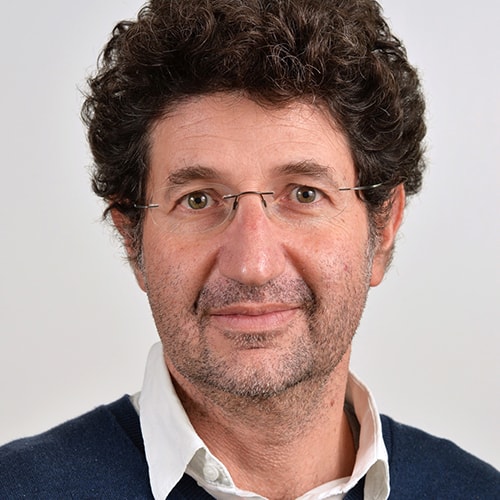
Sascha Struwe serves as a Postdoctoral Researcher at Aalborg University Business School within the Faculty of Social Sciences and Humanities, actively contributing to the International Business Research Group. Based at Fibigerstræde 11 in Aalborg Øst, Denmark, Struwe operates at the intersection of service innovation theory and business practice with international focus. Research expertise centers on service innovation , value co-creation , and digital servitization , particularly examining B2B contexts and open banking ecosystems. Work consistently explores institutional influences through German-Chinese case studies, addressing how cultural and regulatory frameworks shape service design. Recent trajectories reveal evolution from foundational service design challenges (2019-2021) toward digital transformation implications (2022-2023), with emphasis on value co-destruction mechanisms in financial ecosystems. Struwe led the PhD project Innovating the Invisible and Intangible: Value Creation in B2B service (2018-2021) investigating co-creation capabilities across industrial sectors. Academic engagement includes conference participation at EIBA and CICALICS events, plus a visiting researcher appointment at Fudan University's Nordic Centre (2019-2020). Current work continues through the International Business Research Group, focusing on digital literacies and service ecosystem resilience.
Timo Minssen is Professor of Law at the University of Copenhagen (UCPH) and the Founding Director of UCPH's Center for Advanced Studies in Bioscience Innovation Law (CeBIL). He also holds affiliations as an LML Research Affiliate at the University of Cambridge and an Inter-CeBIL Research Affiliate at Harvard Law School's Petrie-Flom Centre. With extensive expertise in Intellectual Property, Competition, and Regulatory Law, Minssen focuses on the legal aspects of emerging health and life science technologies, including genome editing, big data, artificial intelligence, and quantum technology. His educational background includes a German law degree (Staatsexamen) from Georg-August-University in Göttingen, and Swedish biotech & IPR related LL.M., LL.Lic., and LL.D. degrees from Lund University and Uppsala University. His PhD thesis on the patentability of biopharmaceutical technology in the US & Europe received the prestigious Swedish King Oscar award. 2024: TUM Global Visiting Professor, Technical University of Munich (Germany) 2016: Visiting Research Fellow, University of Cambridge (UK) 2014: Visiting Research Fellow, University of Oxford (UK) 2013-14: Visiting Scholar, Harvard Law School (US) 2012: LL.D. - Doctor of Laws (Swedish "juris doktor"), EU/US patent law, Lund University, Sweden Minssen's research spans AI & Big Data in Health & Life Sciences, Sustainable and responsible innovation & tech transfer, Pharmaceutical-, Life Science- & Biotech Law, Comparative European & US Patent Law, Intellectual Property Law & Open Innovation, and EU Competition- & US Antitrust Law. His work addresses legal issues throughout the lifecycle of health and life science products and processes, from R&D regulation to technology transfer and commercialization. His extensive publication record includes 7 books and over 200 articles and book chapters published in leading journals such as Science, Nature Biotechnology, JAMA, and Harvard Business Review. His research has been featured in The Economist, Financial Times, and other major media outlets. Minssen's recent work shows a strong focus on AI regulation, quantum technology law, and data governance in health contexts, reflecting the evolving landscape of technology and law. Scientific Awards and Recognition King Oscar award for best Jur. Dr. thesis (2014) Jorcks Fonds Forsknings Pris (Jorck's Foundation Research Prize) (2017) Awapatent Research Prize (2009) Max Planck Research Scholarship (2005) Visiting Scholar appointments at Harvard Law School, University of Oxford, and University of Cambridge Recipient of a Novo Nordisk Foundation Grant for a "Collaborative Research Program in Biomedical Innovation Law" (2018) As an advisor, Minssen serves international organizations including the WHO, WIPO, and EU Commission. He has supervised numerous PhD students in areas including pharmaceutical law, biotechnology patents, and antimicrobial resistance. His current research projects include the Novo Nordisk Foundation's International Collaborative Bioscience Innovation & Law (Inter-CeBIL) Programme (50 million DKK), CLASSICA: EU Horizon Project on AI-assisted surgery, and AI@Care: Law and Ethics and Algorithmic Bias in Healthcare. Minssen leads the Center for Advanced Studies in Bioscience Innovation Law (CeBIL), which serves as a hub for interdisciplinary research on the intersection of law, technology, and innovation in the health and life sciences. The center collaborates with institutions worldwide to address pressing legal challenges in emerging technologies.
Henrik Hansen is a Professor and Head of Department at the Department of Economics , University of Copenhagen , where he has held various academic and administrative roles since 1995. He is associated with the Development Economics Research Group (DERG) and affiliated with the Copenhagen Center for Disaster Research (COPE) network. Education : MSc in Economics (1991) and PhD in Economics (1995) from University of Copenhagen. His research focuses on development economics , with emphasis on development aid effectiveness , applied econometrics , and education research . He has conducted extensive fieldwork in Myanmar and Vietnam , analyzing enterprise surveys, household data, and policy impacts. Recent publications highlight productivity in manufacturing sectors, gender wage gaps, and credit access determinants. He teaches "Applied Research Methods" in the Global Development program and supervises development economics and applied econometrics students. Professional roles include editorial positions at Review of Development Economics and Asia & The Pacific Policy Studies , alongside advisory work for Statistics Denmark and Vietnamese Academy of Social Sciences . He has organized international conferences and contributed to 25+ media discussions on topics like corruption in Africa and development financing .
Jesper Rangvid is a Professor of Finance and Director of the Pension Research Centre (PeRCent) at Copenhagen Business School (CBS), where he also serves as Associate Dean of the Executive MBA program . His research focuses on financial markets, macroeconomics, financial crises, household finance, and mutual funds. He has authored influential works such as How Low Interest Rates Change the World (Oxford University Press, 2025) and From Main Street to Wall Street (Oxford University Press, 2021), exploring topics like interest rate trends, economic growth, and policy impacts. He chairs the Council for Return Expectations and holds board positions at Formuepleje, Advantage Investment Partners, and Finansiel Stabilitet, among others. His advisory roles include Levring & Levring and projects for Danish institutions like Forenet Kredit and BankInvest. Recent research highlights include analyzing Denmark’s pension system reforms, fiscal-monetary policy interactions, and the implications of low interest rates on global economies. Rangvid’s publications combine rigorous academic analysis with policy relevance, addressing topics like dividend predictability, economic growth’s impact on asset returns, and the behavior of professional investors. His work often bridges theoretical frameworks with empirical data, offering insights into macro-financial linkages and policy design.
Jesper Lund Pedersen is an Associate Professor at the Department of Mathematical Sciences , University of Copenhagen , specializing in applied probability theory with applications in financial mathematics and insurance mathematics . His research spans stochastic processes, optimal stopping time problems, and stochastic control. Education : PhD in Mathematics (2000, Aarhus University) His work addresses: (Nonlinear) optimal stopping time problems Stochastic control and filtering Multidimensional point processes Levy processes in finance Key publications reveal expertise in Bayesian changepoint detection , random drift identification , and mean-variance portfolio optimization , with interdisciplinary applications in neuroscience (V-ATPase dynamics) and epidemiology. Scientific awards : Villum Experiment Grant (2018-2020) Steno Research Fellowship (2002-2005) His research collaborations span Denmark, the UK, Germany, and the USA, focusing on probability theory, financial mathematics, and biomedical applications.
Jan Damsgaard is a Professor at the Department of Digitalization, Copenhagen Business School, where he conducts research at the intersection of digital technology and business transformation. His work spans multiple domains including artificial intelligence, blockchain, digital platforms, and payment systems, with significant contributions to understanding how organizations navigate digital disruption. Professor Damsgaard's research interests focus on digital transformation , artificial intelligence implementation , blockchain applications , and digital sovereignty . He examines how organizations can strategically leverage emerging technologies while addressing governance challenges and societal implications. His work particularly emphasizes practical applications in the public sector, financial systems, and small-to-medium enterprises. His recent publications reveal a strong focus on AI adoption in Danish businesses , digital sovereignty challenges , and blockchain applications for sustainable commerce . The research demonstrates increasing attention to regulatory frameworks, national security implications of technology dependence, and practical implementation strategies for emerging digital tools across various sectors. With over 132 publications including books, journal articles, and conference contributions, Damsgaard has established himself as a leading voice in digitalization research. His work extends beyond academia through extensive media engagement, with over 1,122 press appearances where he discusses current technology trends and their societal implications. Professor Damsgaard actively participates in public discourse through media contributions, expert panels, and advisory roles. His research connects academic insights with practical business applications and policy recommendations, particularly regarding digital governance, payment systems, and AI implementation strategies across sectors.
Professor Peter Feldhütter is a faculty member at the Department of Finance, Copenhagen Business School (CBS), where he has held the position since 2017. He earned his PhD from CBS and previously worked at the London Business School. His research focuses on fixed income markets, particularly examining how prices are influenced by illiquidity, credit risk, and supply-demand imbalances. Notable contributions include studies on U.S. corporate bond market liquidity and credit spread dynamics. Key research areas include empirical asset pricing, credit risk, fixed income analysis, and liquidity risk. He has authored influential papers such as The Myth of the Credit Spread Puzzle and Corporate Bond Liquidity Before and After the Subprime Crisis . Received awards: Jack Treynor Prize, Wharton’s Outstanding Paper Award, and Nykredit’s Talented Researcher Award. External advisory roles: Legal advice for NTC Parent, Shell, and FourWorld Capital Management; academic advising for Copenhagen Economics. Teaching: External faculty at London Business School and University College London. His recent work explores ESG investing’s impact on capital structure and pricing of sustainability-linked bonds. Ongoing projects include studies on financial market liquidity and corporate bond valuation frameworks.
Vito Latora is a Professor of Applied Mathematics and Chair of Complex Systems at the School of Mathematical Sciences, Queen Mary University of London, and also holds the position of Professor of Theoretical Physics at the University of Catania. He leads the Complex Systems and Networks Group, driving cutting-edge research at the intersection of physics, mathematics, and interdisciplinary sciences. His research focuses on complex systems, particularly the structure and dynamics of networks, including multiplex, temporal, and higher-order networks such as simplicial complexes and hypergraphs. He explores applications in social, biological, financial, and cognitive systems, with recent work on creativity, innovation, and success through network analysis. The 15 most recent publications reveal a strong trend in advancing network theory beyond pairwise interactions, with a focus on higher-order structures, memory effects, synchronization, and epidemic spreading. His work combines rigorous mathematical modeling with real-world applications, often published in high-impact journals like Nature Communications , Physical Review Letters , and Science Advances . Dual communities in spatial and biological networks Modeling epidemics with limited detection resources Synchronization via higher-order and directed interactions AI-driven financial risk management Evolutionary games on hypergraphs Interdisciplinary success and funding dynamics Vito Latora has mentored several researchers who appear as co-authors, including Iacopini, Williams, Di Bona, and Lacasa. While specific grants are not listed, his collaborative projects with neuroscientists and anthropologists, along with frequent publications, suggest active funding. He is involved in major scientific events such as NetSci 2023, indicating leadership in the network science community. He leads the Complex Systems and Networks Group at Queen Mary, fostering a collaborative environment for studying complex systems through theoretical, computational, and data-driven approaches.
Mircea Epure is the Serra Hunter Associate Professor at the Department of Economics and Business at Universitat Pompeu Fabra (UPF). He holds affiliated professorships at the UPF-Barcelona School of Management and the Barcelona School of Economics. His research focuses on governance, corporate performance, entrepreneurship, and accounting, with notable contributions to understanding firm strategies during crises, public policy impacts, and signaling mechanisms in corporate social responsibility. Epure's work has been published in leading journals and recognized with awards such as the Best Paper Prize at the Financial Markets and Corporate Governance Conference. His research has been cited in prestigious outlets like the World Bank studies and The Oxford Handbook of Corporate Law and Governance. He teaches graduate and undergraduate courses on organizational dynamics and management accounting. Key research themes include the real effects of public grants during crises, strategic responses to uncertainty, and the role of organizational identity in firm performance. Epure has explored topics ranging from macroprudential policies to the opaque aspects of ESG reporting during crises. His interdisciplinary approach bridges corporate governance, entrepreneurship, and financial accountability. Awards: ICQS Nomination, Financial Markets Conference Best Paper Grants: Funding from La Caixa Foundation and CEIBS Cathay Cross-border Private Equity Research Fund Labs/Teams: Collaborates with the Barcelona School of Economics and UPF-Barcelona School of Management research networks
Linda Sandris Larsen is an Associate Professor of Finance at the Copenhagen Business School's Department of Finance. She previously held academic positions at the University of Southern Denmark (Assistant Professor 2009–2012 and Associate Professor 2012–2016). Her primary affiliations include the Pension Research Center (PerCent) at CBS and board membership at Sydinvest (Danish mutual fund). Education: PhD in Finance (2009), MSc in Mathematics-Economics (2003), both from University of Southern Denmark Her research focuses on dynamic asset allocation, household financial decision-making (particularly mortgage choices), and the impact of model/parameter uncertainty on investment strategies. Current projects explore: Life-cycle consumption-saving interactions with interest-only mortgages Design efficacy of mandatory pension plans Gender disparities in pension product selection Recent publications emphasize practical policy implications, such as recession hedging strategies and pension system welfare analysis. She actively contributes to public policy through roles like the Ministry of Business and Growth's working group on banking/mortgage competition. Her work bridges theoretical finance with real-world applications, often combining stochastic models with empirical analysis of household financial behaviors.
Yang Cheng is an Associate Professor at the Department of Materials and Production, Aalborg University, Denmark. He holds a PhD in Mechanical Engineering from the same institution (2011), focusing on manufacturing strategy and network dynamics. His research spans supply chain management, sustainability, and global operations, with a focus on integrating technology and environmental policies into manufacturing systems. He leads or participates in high-impact projects like MAASive (2024–2026) and the Sino-Danish Center Research Project (2011–present), addressing resilience in value networks and global operations innovation. Research Interests: Supply Chain Management & Integration Sustainability & Green Technologies Manufacturing Strategy & Networks Technology Policy & Digitalization Global Operations & Cross-Border Collaboration Recent Work Trends: Prof. Cheng's 2025 articles emphasize blockchain in sustainable supply chains, green technology investments under carbon policies, and digitalization's ethical implications. His 2024 research explores smart factories, EU battery regulations, and robotization in manufacturing. These studies blend quantitative models with case-based analysis to address real-world challenges. Awards: 2024 Emerald Literati Awards – Outstanding Reviewer Advising & Grants: As PI for multiple Global Operations Management PhD programs (2019–2025), he guides research on digital transformation and university-industry collaboration. His projects receive funding from Danish and international grants, focusing on innovation and resilience in manufacturing networks. Labs/Teams: Collaborates with the Center for Industrial Production at Aalborg University and engages in international partnerships through the Sino-Danish Center. Active editorial roles include Production Planning & Control and Journal of Manufacturing Technology Management .
John Rand is a Professor in Development Economics at the Department of Economics, University of Copenhagen, where he has been employed since 2021. He previously served as Professor (mso) at the Faculty of Social Sciences (2015-2020) and Faculty of Science (2011-2014), Associate Professor (2008-2011), and Assistant Research Professor (2005-2008) at the same institution. He is currently Vice-chair of The Consultative Research Committee for Development Research (FFU) and co-director of the Development Economics Research Group (DERG). Professor Rand's research focuses primarily on development economics, with specific expertise in applied econometrics, impact measurement, industrial economics, and interdisciplinary methods. His work spans topics including climate-smart agriculture, economic policy in developing countries, trade and productivity, and governance issues. He leads multiple externally funded research projects including 'Energy transition and climate-smart agriculture in Vietnam', 'Economic Research and Policy Making in Kenya', and 'Sedentarization and climate change resilience in Nigeria'. His extensive publication record shows a strong focus on empirical research in developing countries, particularly in Africa and Southeast Asia. His recent work demonstrates consistent attention to practical policy implications, with a growing emphasis on climate change adaptation, resource allocation efficiency, and the intersection of economic development with environmental sustainability. His research often employs rigorous quantitative methods to address real-world development challenges. Professor Rand is actively involved in several research networks including the Copenhagen Center for Disaster Research (COPE) as part of the steering group and the UCPH Migration Research Platform. He serves as Head of Studies for Global Development and teaches Development Economics (BA) and Theories, Facts and Current Issues (MSc Global Development). He has presented his research at numerous international conferences including UNU WIDER conferences, Nordic Conference in Development Economics, and various country-specific development forums. His work has been referenced in policy sources and picked up by news outlets, indicating its relevance to current development debates.
Kristian Miltersen is a Professor at the Department of Finance and Center for Financial Frictions (FRIC) at Copenhagen Business School (CBS). He holds expertise in capital structure optimization, real options valuation, commodity derivatives, and structured financial products. His research bridges theoretical finance with practical applications in corporate finance and asset pricing. After earning his PhD in 1992 on continuous-time interest rate models, Miltersen has expanded into dynamic capital structure modeling and real options. His landmark 1997 Journal of Finance paper on LIBOR Market models critiques the Black-76 formula's limitations for fixed income derivatives. His work spans commodity derivatives, foreign exchange instruments, and R&D investment dynamics, all rooted in theoretical frameworks. Recent research focuses on dynamic debt policies, second mortgages' valuation, tax-driven corporate cash holdings, and state-contingent capital budgeting. He co-authored influential papers on callable debt renegotiations and the interaction between financing and investment decisions under varying industry structures. Teaching includes elite courses on asset pricing, energy markets, and capital structure. As program director for CBS' Advanced Economics and Finance MSc, he shapes advanced academic programs. Outside academia, he serves as an expert witness and consultant for Analysis Group, advising on financial litigation and complex economic issues. His over 40 publications since 1989 reflect deep engagement with financial modeling, spanning interest rate guarantees, commodity price dynamics, and corporate debt optimization. Current research continues exploring financial frictions' impact on corporate policy and market structures.
Stig Hartmann is an Associate Professor at the Department of Accounting, Copenhagen Business School , specializing in Management Accounting and Strategic Management . His work bridges theoretical frameworks with practical applications in financial and strategic control systems. Primary Research Areas : Management Accounting, Strategic Management, Balanced Scorecards, Professional Service Firms Teaching : Corporate Strategy (undergraduate), Business Understanding & Economy (diploma education), and executive supervision for MBA and CEMS programs Research Focus : Hartmann’s publications analyze strategic control mechanisms, value creation in professional services, and auditing practices for small businesses. His work often integrates knowledge management theories with empirical observations from Danish firms. Academic Contributions : Key projects include studies on financial distress assessment ("Going Concern"), strategic cost management, and the role of balanced scorecards in organizational performance. External Engagements : Provides lectures at Copenhagen University (2018–ongoing) and supervises executive education programs at CBS Executive.
Thomas Riise Johansen is a Professor in the Department of Accounting at Copenhagen Business School (CBS), where he has been affiliated since completing his PhD in Accounting from CBS in 2005. Prior to joining CBS, he worked at Ernst & Young (1996-2005), bringing practical industry experience to his academic role. His primary academic home is within the Department of Accounting, focusing on critical intersections between auditing practices and corporate governance structures. His research centers on auditing, sustainability accounting, corporate governance, and annual report disclosure. Key investigations include: The relationship between board networks and auditor selection Value and barriers in annual report innovation Performance evaluation systems within audit firms Public oversight mechanisms in auditing Information systems for sustainability reporting Accountability dynamics between employees and organizations His work bridges academic rigor and practitioner relevance, addressing evolving regulatory landscapes and market demands. Analysis of his 15 most recent publications reveals consistent focus on audit quality determinants, sustainability reporting evolution, and governance-audit interdependencies. Recent work increasingly examines EU regulatory frameworks (Taxonomy Regulation, climate risk disclosure) and Big 4 governance structures, reflecting growing emphasis on public interest accountability in auditing. He actively supervises master's theses in accounting, auditing, and corporate governance. His current research portfolio includes projects on: Revisors' declaration (FSR) Enforcement impact on financial reporting Annual report disclosure value enhancement TIME MIRROR: Accounting for Green Transition Diversity in accounting careers Behavioral aspects of auditor professionalism