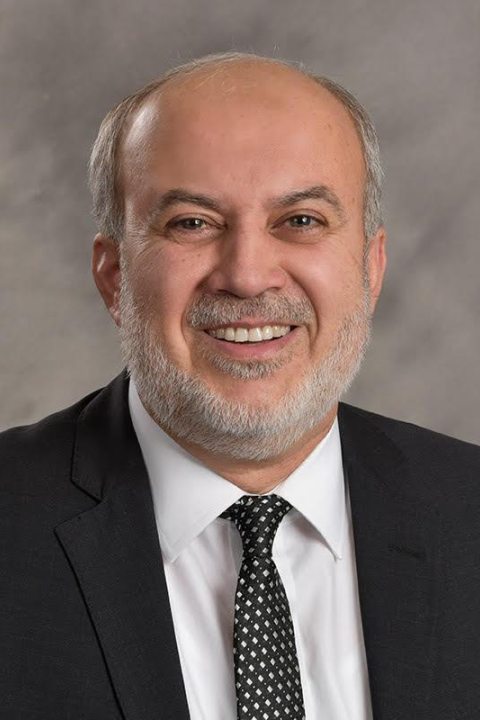
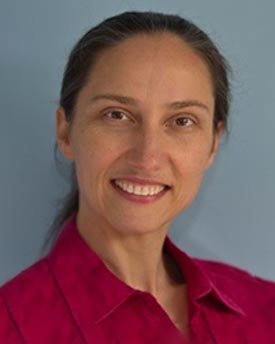
Ashraf Attia is a Professor of Marketing and Chair of the Marketing and Management Department at the School of Business, State University of New York at Oswego. He holds a B.A. from Cairo University, an MBA from The American University in Cairo, and a Ph.D. and MA from Old Dominion University. His research focuses on sales training evaluation, cross-cultural marketing ethics, and electronic marketing, with notable contributions to understanding social media's impact on behavioral change in political and economic contexts. Dr. Attia teaches courses such as Consumer Behavior and E-Marketing. His work has been recognized with awards including the 2016 President's Award for Scholarly Activity and the Best Paper Award (2005) from the Journal of Personal Selling & Sales Management. His research spans diverse fields, including the effects of dietary supplements on poultry productivity, structural analysis of materials, and the role of social media in global uprisings like Algeria and Sudan. Education: B.A., Cairo University MBA, The American University in Cairo MA and Ph.D., Old Dominion University His publications explore interdisciplinary themes, from marketing ethics to agricultural science, reflecting his broad academic interests. He actively engages in advising students and contributes to grants focusing on sales training and marketing strategies.
Muskan Chawla is an Assistant Professor in the Accounting and Information Systems Division at the Sauder School of Business, University of British Columbia. She holds a PhD in Accounting from UCLA Anderson School of Management, an MSc in Finance (Distinction) from LSE, and a BCom (Honors) from Shri Ram College of Commerce. Her research focuses on how corporate disclosures influence innovation, supply chains, and intangible assets. Key themes include intellectual property management, information asymmetry in supply chains, and climate risk mitigation through transparency. Her education includes: BCom (Delhi University) MSc Financial Economics (GIPE) MSc Finance (LSE) PhD (UCLA) Research interests span disclosure strategies, innovation measurement in pharmaceuticals, and the role of information opacity in climate risks. Recent work examines employee satisfaction in knowledge-intensive firms and how patent expirations affect corporate disclosures. She teaches courses like Introduction to Financial Accounting at UBC Sauder. Her articles analyze real-world impacts of disclosure dissemination on innovation efficiency and the interplay between organizational capital and brand capital. Empirical findings emphasize the importance of public information environments in mitigating supply chain disruptions caused by climate events. No scientific awards are listed, though her work has been featured in prominent journals. Teaching and advising roles include guiding MBA/Executive MBA students at UCLA and UBC. Current affiliations include the Sauder School of Business, with no mention of labs or teams beyond her academic division.
Professor Andrea Buraschi is a Chair in Finance at the Department of Finance, Business School, Imperial College London. Previously, he served as a Visiting Professor of Finance at The University of Chicago Booth School of Business (2011–2013), and held roles at London Business School and Columbia University. He earned his PhD in Financial Economics and Econometrics from The University of Chicago. His research focuses on five key areas: Economic Uncertainty and Differences in Beliefs, Term Structure and Derivative Markets, Hedge Fund Performance, General Equilibrium and Networks, and Portfolio Management. Additional interests span Banking, Applied Economics, Economic Theory, and Applied Mathematics. Educational Background: PhD in Financial Economics and Econometrics (University of Chicago) His publications appear in top-tier journals such as The Journal of Finance and Review of Financial Studies . Notable research includes analyzing monetary policy’s impact on treasury risk, dynamic networks in asset pricing, and correlation risk in hedge fund returns. Scientific Awards: Multiple accolades including the GARP Award (2013), NYSE Euronext Award (2012), and WFA Award (1999). He has received teaching excellence awards at London Business School and Imperial College London, emphasizing innovation in pedagogy.
Dr. Reihaneh Bidar is a Lecturer in Business Information Systems at the University of Queensland (UQ) Business School, part of the Faculty of Business, Economics, and Law. She is also an Associate Investigator at the Automated Decision-Making and Society (ADM+S) Centre. She holds a PhD from Queensland University of Technology’s School of Information Systems. Her research focuses on how organizations manage AI, automation, and digital integration, particularly the role of human-AI hybrids in work redesign. She emphasizes mitigating negative consequences of emerging technologies while enhancing organizational readiness for AI adoption. Her teaching spans undergraduate and postgraduate Information Systems programs, including courses on Business Analytics, Enterprise Architecture, IoT Systems, and Mobile App Development. She has developed and coordinated courses that bridge theory and practice for both bachelor’s and master’s students. Dr. Bidar’s work addresses challenges in digital collaboration and value co-creation in online networks. Notable contributions include a thought-leadership report with SAP Institute for Digital Government, which classified tasks based on risk levels to redesign public sector work. These approaches were adopted by the NSW Department of Planning, Housing, and Infrastructure for invoice processing. Her research interests further explore digital collaboration dynamics, crowdsourcing challenges, and service innovation. She collaborates with industry to translate academic insights into actionable strategies for inclusive AI and sustainable digital practices.
Michael J. Boskin is the Tully M. Friedman Professor of Economics at Stanford University and Senior Fellow at both the Hoover Institution and the Stanford Institute for Economic Policy Research (SIEPR). He is also a Research Associate at the National Bureau of Economic Research. His distinguished career includes serving as Chairman of the President's Council of Economic Advisers from 1989 to 1993, where his leadership was rated among the five most respected federal agencies by the Council for Excellence in Government. He chaired the influential Commission on the Consumer Price Index, transforming how government agencies worldwide measure inflation, GDP, and productivity. Dr. Boskin received his B.A. with highest honors and the Chancellor's Award as outstanding undergraduate in 1967 from the University of California at Berkeley, where he also earned his M.A. in 1968 and Ph.D. in Economics in 1971. His academic appointments at Stanford span from Assistant Professor (1971-1975) to his current position as Professor, with additional teaching experience at Harvard and Yale. Internationally recognized for his research, Dr. Boskin specializes in world economic growth, tax and budget theory and policy, Social Security systems, U.S. saving and consumption patterns, and the implications of changing technology and demography on capital, labor, and product markets. His work bridges theoretical economics with practical policy applications, particularly in the areas of inflation measurement and economic statistics. His chairmanship of the Commission on the Consumer Price Index led to transformative changes in how government statistical agencies worldwide measure inflation, GDP, and productivity. Dr. Boskin's scholarly output shows consistent focus on economic measurement, fiscal policy, and international economic relations. His recent publications demonstrate particular expertise in consumer price index methodology, US-China economic relations, and fiscal policy for economic growth. The trajectory of his research reveals an evolution from foundational work on tax policy and Social Security to broader analyses of global economic systems and measurement challenges. Dr. Boskin has received numerous prestigious awards throughout his career: Stanford's Distinguished Teaching Award (1988) National Association of Business Economists' Abramson Award for outstanding research (1987) Medal of the President of the Italian Republic (1991) for contributions to global economic understanding Adam Smith Prize (1998) for outstanding contributions to economics Department Citation & Chancellor's Award for Outstanding Undergraduate Thesis (1967) Public Servant of the Year Award from the University of California Alumni Association (1990) As an advisor to governments and businesses globally, Dr. Boskin serves on several corporate and philanthropic boards of directors. His extensive public service includes membership on the Governor's Council of Economic Advisors, Advisory Board of the U.S. Department of Commerce, Commission on the 21st Century Economy, and multiple advisory panels for the Congressional Budget Office. He has advised numerous government bodies including the Joint Committee on Taxation, Senate Finance Committee, and U.S. Department of the Treasury. Dr. Boskin is currently Master's Program Advisor to Matthew Fenlon and teaches courses including Introduction to Financial Decision-Making (ECON 43) and Public Economics and Environmental Economics Seminar (ECON 341). Dr. Boskin's influence extends through his leadership roles at Stanford's Center for Economic Policy Research (which he directed from 1981-1988) and his ongoing affiliation with the Hoover Institution. His work with the International Atlantic Economic Society, where he served as President from 2005-2006, demonstrates his commitment to fostering global economic dialogue. His research collaborations, particularly with colleagues like Lawrence J. Lau, have produced influential analyses of comparative economic performance among major industrialized nations.
Christopher S. Armstrong is the Joan E. Horngren Professor of Accounting at the Stanford Graduate School of Business, where he has held this position since 2022. Previously, he was the EY Professor of Accounting at the Wharton School of the University of Pennsylvania (2018–2022) and held various faculty roles there from 2007 to 2022. He earned a BS in Commerce from the University of Virginia (1999), an MPA in Accounting from the University of Texas at Austin (2000), and a PhD in Accounting from Stanford University (2008). His research focuses on corporate governance, executive compensation, contracting, incentives, and the use of accounting information in capital markets. Notable contributions include studies on debt contract design, CEO incentives, tax planning strategies, and the efficacy of shareholder voting. He serves on the editorial board of the Journal of Accounting and Economics and is editor of The Accounting Review . Armstrong has received numerous awards, including the Charles and Melissa Froland Faculty Fellow (2022–23) and multiple Best Dissertation Supervisor Awards. His work frequently addresses how corporate governance structures and financial reporting practices influence managerial behavior and firm outcomes.
Dr Nicholas Dacre is an Associate Professor of Project Management and Director of the Advanced Project Management Research Centre (APROM) at the University of Southampton Business School . He holds a PhD from the University of Warwick and is a Fellow of the Chartered Association for Project Management (FAPM) . His research focuses on Artificial Intelligence in Project Management, Agile Methodologies, and Innovation-Sustainability-Technology convergence in complex projects . Dr Dacre leads interdisciplinary research initiatives funded by bodies like Innovate UK and the ESRC. Education: PhD (Warwick Business School), MSc. Professional roles include Chair of the British Academy of Management’s Project Management SIG and Committee Member of the APM Wessex Branch. Research Interests: AI-driven decision-making in project environments Agile methodologies in dynamic project settings Neurodiversity in project management professions Dynamic Conditions for Project Success framework Collaborations: Partnerships with organizations like BBC, National Highways, Siemens, and DEFRA. Currently co-leads a neurodiversity research project exploring barriers/enablers in project management roles. Awards: SFHEA (Senior Fellowship of HEA), Blackboard Awards nominations (2022). Teaching: Convenor of the MSc Project Management programme, integrating industry standards from PMI/APM. Student testimonials highlight his innovative teaching methods and real-world case studies.
Stefan Zeisberger is an Associate Professor of FinTech and Experimental Finance at the University of Zurich's Department of Finance, with a secondary affiliation as Professor at Radboud University. His research focuses on behavioral finance, experimental finance, FinTech, risk perception, and decision making. His publications frequently explore investor behavior, market anomalies, and experimental methodologies. Recent works (2023-2024) investigate cryptocurrency arbitrage, impact investing, and nonstandard errors in financial research.
Olga Kolokolova holds the position of Professor and Chair in Finance at Lancaster University's Management School, Department of Accounting and Finance. Previously, she served as Assistant Professor at Warwick Business School and has secured research funding from institutions including the National Stock Exchange of India, INQUIRE UK, and the U.S. Commodity Futures Trading Commission. Her research examines market microstructure with emphasis on regulatory impacts, high-frequency trading dynamics, and liquidity provision mechanisms. She has developed influential work on hedge fund behavior, financial regulation effects, and market quality in derivatives and fixed income markets. Recent publications explore market electronification effects, liquidity during stress periods, and regulatory reforms like the Volcker Rule. Analysis of her scholarly output reveals consistent focus on three interconnected themes: 1) Market design implications of financial regulation, 2) Technological impacts on trading strategies and liquidity, and 3) Hedge fund activities across asset classes. Her methodological approach combines empirical market analysis with innovative measurement techniques. No scientific awards are documented in available materials. Kolokolova regularly presents at major finance conferences including American Finance Association and Western Finance Association meetings. She serves as a member of the Centre for Financial Econometrics, Asset Markets and Macroeconomic Policy research group.
Ryan Henry is an Assistant Professor in the Department of Computer Science at the University of Calgary. His research focuses on applied cryptography, emphasizing the development of secure systems that prioritize user privacy. His work spans designing privacy-enhancing technologies, implementing cryptographic protocols, and analyzing number-theoretic attacks on cryptographic assumptions. He also explores theoretical aspects of cryptographic efficiency and practical deployment challenges. While specific educational background details are not provided in the text, his research contributions highlight expertise in cryptography, secure systems, and privacy-preserving technologies. His work has addressed topics such as Private Information Retrieval (PIR), secure messaging, and blockchain privacy. Key research interests include: Secure Multiparty Computation Privacy-Preserving Data Access Efficient Cryptographic Protocols Zero-Knowledge Proofs IoT Security Cryptocurrency and CBDC Design His recent publications emphasize advancements in distributed systems security, privacy in recommendation systems, and cryptographic efficiency. Notable contributions include the Grotto and Duoram frameworks for secure computation, and proposals for Canadian CBDC frameworks. Despite extensive research output, no scientific awards or grants are explicitly mentioned in the provided text. Collaborations and lab affiliations are not detailed, though his work suggests involvement in interdisciplinary projects on privacy and security technologies.
Professor Paolo Volpin holds the rank of Professor of Finance at Bayes Business School, part of City St George's, University of London. He is a Research Fellow at the Centre for Economic Policy Research (CEPR) and a Research Associate at the European Corporate Governance Institute (ECGI). Prior to his current position, he served as an Associate Professor at the London Business School. His research focuses on corporate finance and governance, with notable contributions to understanding mergers & acquisitions, financial reporting impacts, labor market dynamics, and the political economy of financial systems. Volpin earned a PhD in Economics from Harvard University and a Doctorate in Political Economy from Bocconi University. His work has been published in top-tier journals including the American Economic Review, Journal of Finance, and Journal of Financial Economics. He has been recognized with multiple awards for his research in corporate governance and finance. His recent studies explore topics such as the interplay between financial crises and right-wing populism, the role of labor protection laws in corporate leverage decisions, and how institutional debt holders influence governance structures. Volpin’s interdisciplinary approach bridges finance, labor economics, and political science, offering insights into systemic risks and policy implications. Professional contributions include directorship at the European Finance Association (2010–2013) and active participation in shaping academic and policy discourse through his affiliations. His research agenda emphasizes the societal and economic consequences of financial policies, making him a leading voice in global corporate finance studies.
Dr. Daisy Chou is an Associate Professor at the School of Economics, Finance and Marketing at RMIT University, Melbourne, Australia. Previously, she held academic roles at the University of Otago (New Zealand), University of Bath (UK), and La Trobe University (Australia). She earned her Ph.D. in Economics from Queen's University Belfast, UK. Her research focuses on corporate governance, executive compensation, board behavior, and M&A activities in Asian and U.S. markets. She has published widely in top journals such as the Journal of Financial and Quantitative Analysis and Journal of Corporate Finance . Her work explores topics like executive pay disparity, board meeting attendance impacts, and institutional overconfidence effects. Recent studies include analysis of FinTech innovations and corporate governance practices in emerging markets. Dr. Chou is actively engaged in supervising research projects on CSR, climate risk, corporate sustainability, and global financial market dynamics.
Marcus Botacin is an Assistant Professor in the Department of Computer Science & Engineering at Texas A&M University (TAMU), USA. Previously, he held positions as Visiting Assistant Professor (2022-2024) and Lecturer at the Federal University of Paraná (Brazil). His research focuses on malware analysis, hardware-assisted security, and antivirus technology. He earned his Ph.D. in Computer Science from UFPR (2021), M.Sc. from UNICAMP (2017), and B.Sc. in Computer Engineering from UNICAMP (2015). Education: Ph.D., Computer Science, Federal University of Paraná, Brazil (2021) M.Sc., Computer Science, University of Campinas, Brazil (2017) B.Sc., Computer Engineering, University of Campinas, Brazil (2015) Research Interests: Botacin's work addresses challenges in malware detection (static/dynamic methods, sandboxing), hardware-enhanced security mechanisms (e.g., branch monitoring), and antivirus internals. He emphasizes practical solutions and ethical considerations in cybersecurity, advocating for culturally aware threat models (e.g., Brazilian financial malware studies). Publications & Trends: His recent work explores adversarial ML attacks on malware detectors, HPC-based detection frameworks, and automated malware generation risks. He frequently publishes in top venues like ACM CCS, USENIX Security, and IEEE TDSC. Awards: Top-3 Best Ph.D. Thesis in Computer Security (Brazilian Computer Society, 2022) Best PhD Thesis Award from UFPR (2022) MLSec Evasion Challenge 1st place (2021/2020) Advising & Grants: Supervises 15+ students at TAMU and leads NSF-funded projects (e.g., $523K grant for HPC malware detection frameworks). Serves on 21+ conference program committees and reviews for over 50 journals. Lab & Projects: Develops Corvus (public malware analysis sandbox) and explores hardware-accelerated AV solutions like Terminator and HEAVEN.
Lizhi Liu is an Assistant Professor at the McDonough School of Business, Georgetown University, and a faculty affiliate in the Department of Government. Her research lies at the intersection of political economy, digital economy, and Chinese politics, with a special focus on e-commerce development and institutional innovation in China. Her research interests include: Political economy of development Digital economy and platform governance Chinese politics and authoritarian resilience Rural development through digital inclusion Private provision of law and institutional evolution Data politics and global digital governance Lizhi Liu's recent publications explore the transformative role of e-commerce in China, analyzing how digital platforms catalyze economic growth, reshape legal institutions, and reconfigure state-society relations. Her work combines rigorous empirical methods with deep contextual understanding of Chinese political economy, often drawing on large-scale data from customs, e-commerce platforms, and national surveys. A recurring theme is how market actors and digital technologies generate institutional change even under authoritarian rule. Her research has been published in leading journals such as the American Economic Review: Insights and Minnesota Law Review , and addresses critical questions about development, governance, and technology. Scientific awards: 2019 Best Dissertation Award in the area of Information Technology and Politics, American Political Science Association (APSA) Liu is currently working on a book manuscript investigating the political economy of e-commerce in China, an earlier draft of which won the APSA award. While no formal advisees are listed, her role as an assistant professor suggests she mentors students in political economy and related fields. She is affiliated with both business and government departments, reflecting the interdisciplinary nature of her work. Lizhi Liu's research contributes to understanding how digital technologies are reshaping economic and political institutions in non-democratic contexts, with broader implications for development theory and global digital governance.
Philip Kelly is a Professor in the Department of Geography at York University's Faculty of Environmental and Urban Change, where he also serves as Associate Dean for Research, Graduate & Global Affairs. He holds a PhD in Geography from the University of British Columbia, an MA from McGill University, and a BA (Hons) in Geography from Oxford University. His academic work centers on migration, transnationalism, and economic geography, with a focus on the Filipino diaspora in Canada and Southeast Asia. PhD in Geography, University of British Columbia MA in Geography, McGill University BA (Hons) in Geography, Oxford University Professor Kelly’s research explores the intersections of migration, labor, and social justice, particularly in urban labor markets. His work investigates transnational economic practices, caregiver programs, and intergenerational mobility among immigrant families. He emphasizes community-engaged research, collaborating with organizations such as Gabriela-Ontario and Migrante-Canada. His recent publications reflect a strong focus on labor migration, gender, and urban change. Articles analyze topics such as the Live-In Caregiver Program, Filipino youth transitions, and migrant labor in global fisheries. The research spans disciplines including geography, sociology, migration studies, and development, with recurring themes of inequality, integration, and transnational networks. He has been recognized with the Canadian Association of Geographers' Julian M. Szeicz Award. His ongoing SSHRC-funded projects include studies on Canada-Philippines transnational economies and labor relations in global fishing industries. Philip Kelly supervises graduate students in Geography and contributes to curriculum development through community partnerships, such as the PASSOC Project with the Toronto Catholic District School Board. He has co-authored influential texts including Economic Geography: A Contemporary Introduction and edited volumes on labor and capital mobilities in Asia. He is affiliated with the York Centre for Asian Research and leads collaborative research involving institutions in Canada, the Philippines, and the United States. His work bridges academic scholarship with community mobilization and policy engagement.