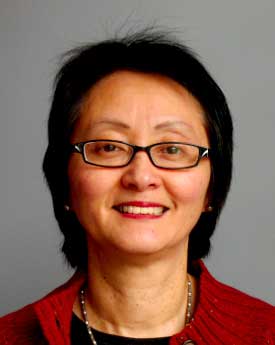
Miloš N. Mladenović is an Associate Professor at the Spatial Planning and Transportation Engineering Group , affiliated with the Department of Built Environment under the School of Engineering at Aalto University. He also serves as a Vice Dean and leads the MSc program Sustainable Urban Mobility Transitions . His work bridges academic research and practical policy, with a focus on governance and ethical dimensions of emerging mobility technologies. Education: BSc in Transport Engineering, University of Belgrade MSc and PhD in Civil Engineering, Virginia Tech His research centers on: Societal Impact of Emerging Mobility Technologies , such as Mobility as a Service and automated vehicles Decision-Support Systems for urban transport planning Sustainable Transportation and accessibility frameworks Ethics in Transport Policy , including projects like EVA-HEL (electric scooters) and BATS (mobility solutions) Analysis of his recent publications shows: Development of open-source models for urban transport equity Focus on cultural governance in Finland Interdisciplinary approaches combining social sciences and engineering Scientific Recognition: 2024 Moshe Givoni Prize from Transport Reviews 2024 Linkki Pin Permit award Academic Leadership: Editorial Board Member, European Transport Research Review (2019-2024) Organizing Chair, Aalto University Summer School on Transportation (ASTRA) His work connects directly with the United Nations Sustainable Development Goals for sustainable cities and climate action.
Dr Kutoma Wakunuma is an Associate Professor in Information Systems at the School of Computer Science and Informatics, De Montfort University (DMU), UK. She is actively involved in research, teaching, and leadership, serving as Module Leader, Programme Leader for MSc Computing, and Deputy Subject Group Leader. She is affiliated with the Centre for Computing and Social Responsibility (CCSR) and holds a PhD in Information Communication Technologies for Development and Gender from Coventry University. PhD in Information Communication Technologies for Development and Gender, Coventry University, UK Post-Graduate Certificate in Higher Education (PGCert. Teaching), De Montfort University, UK MA in Women’s Studies (Challenges in Management and Decision-Making), Lancaster University, UK HND in Management Information Systems, Zambia Institute of Management Her research focuses on the societal impacts of technology, particularly in the Global South. Key areas include ICT for Development (ICT4D) , ethics in emerging technologies , gender and technology , Responsible Research and Innovation (RRI) , and AI governance in Africa . She explores how digitalisation affects development, equity, and sustainability, with a strong emphasis on the UN Sustainable Development Goals. Her recent publications reflect a growing focus on ethical AI, digital platforms, and the gig economy in Africa. Themes include gendered AI design , responsible innovation , digital governance , and stakeholder engagement . Her work often bridges technical systems with ethical and social justice concerns, particularly in underrepresented regions. Dr Wakunuma has received numerous awards and recognitions, including the Initiativkreis Ruhrgebiet Fellowship for outstanding research, UN World Summit Award, and DAAD Scholarships. She has also been a recipient of EU and UKRI/GCRF research funding. DMU award on Exploring Sustainable Development in Ahmedabad, India, 2019 Coventry University PhD full Studentship, 2007 Open Society Institute scholarship, Oxford Internet Institute, 2006 UN World Summit on the Information Society Award, 2005 DAAD Scholarships (2004, 2000) Initiativkreis Ruhrgebiet Fellowship (Honoured for outstanding research), 2002 International Federation for Information Processing (IFIP) Award, 2000 She is an active PhD supervisor and examiner, mentoring students on topics such as identity theft in Nigeria, e-voting, digital SMEs in South Africa, and feminist critiques of techno-capitalism. She has served as a Principal Investigator and Senior Researcher on major EU-funded projects including RRING, SATORI, CONSIDER, and ETICA. She is also a Visiting Lecturer and PhD Supervisor at Stockholm University, an Editorial Board Member for the Journal of Responsible Technology, and an ethics advisor for the European Commission. Dr Wakunuma is affiliated with the Centre for Computing and Social Responsibility (CCSR), where she contributes to interdisciplinary research on technology ethics and governance. She leads and participates in teams focused on responsible innovation, digital inclusion, and sustainable technology development, particularly in African contexts.
Reinhard Prügl is a Professor and Head of the Institute for Family Business at WU Wien (Vienna University of Economics and Business). He holds a doctorate from WU Wien and conducted postdoctoral research at MIT Sloan School of Management. Previously, he held a chaired professorship at Zeppelin University where he established the Friedrichshafen Institute for Family Entrepreneurship. His research focuses on the intersection of management, entrepreneurship, and strategy with emphasis on: Leadership and generational succession in family firms Family governance structures Innovation and marketing in family business contexts Identity and reputation management His publications demonstrate strong thematic consistency in family business dynamics while methodologically evolving from qualitative case studies (2000s) to experimental designs and cross-cultural comparisons (2020s). Research frequently addresses paradox resolution and crisis management in family enterprises. Awards & Honors: Best Paper Awards from IFERA, EURAM, AMA, and WU Wien Rudolf-Sallinger-Preis for doctoral dissertation Ehrenpreis for leadership in family business research Teaches courses on Family Business Management, Leadership, and Marketing at WU Wien. Leads research projects including comparative studies on family firm reputation across Germany, India, and the United States.
Andreas Weber is an Associate Professor at the University of Twente's Digital Society Institute , specializing in the Knowledge, Transformation & Society (KiTeS) research group . His work examines the long-term historical and global relationship between Science, Technology, and Society , with particular focus on colonial histories of natural history, chemistry, and sustainability , as well as computational technologies for contextualizing digitized archives . He leads the HAICu project (2023–2029) on digital cultural heritage and coordinates STS PhD training for the Netherlands Graduate Research School (2019–2024). MA & PhD in History (2005 & 2012), Leiden University Assistant Professor (2017–2023), University of Twente Andreas' research integrates digital humanities with colonial science history , emphasizing global histories of minerals , digital humanism , and AI's societal context . His 15 most recent publications (2016–2025) explore topics like colonial bias in natural history collections , FAIR data implementation , and semantic annotation of handwritten archives , spanning disciplines from history of science to computer science and museum studies . He has received 7 scientific awards , including multiple Best Teacher Awards (2020–2023) and the IEEE eScience Best Poster Award (2018). Andreas supervises PhD and postdoctoral projects while engaging in media commentary on colonial heritage issues and co-organizing international conferences like Hydrogen Pasts and Futures (2024).
Dr. Stevan Rudinac is a Researcher at the University of Amsterdam's Faculty of Economics and Business , Section Business Analytics . His work focuses on interactive learning systems and multimodal data analysis, particularly in urban contexts and multimedia modeling. Education: PhD in Multimedia and Information Retrieval from Delft University of Technology (2013). Research Interests: Stevan specializes in multimedia modeling , hypergraph learning , and interactive video search . He develops frameworks for scalable analysis of social networks, urban imagery, and large multimodal datasets, bridging machine learning with practical applications in city planning and financial social media. Recent Trends: His 2024-2025 publications highlight large language model optimization , diffusion model evaluation , and dynamic graph embedding for meme stocks. Collaborative projects include the CASTLE 2024 dataset and Exquisitor , a system for 100 million image exploration. Labs & Teams: He contributes to the Business Analytics group at UvA, collaborating with Prof. Marcel Worring and Dr. Björn Þór Jónsson. He co-organized the UrbanMM'21 workshop and participates in ACM Multimedia and MMM conferences.
Dr Stefano Pagliari is Senior Lecturer in the Department of International Politics at City St George’s, University of London, where he has taught since July 2013. Previously he was Fellow in International Political Economy in the International Relations Department at the London School of Economics and a Visiting Scholar at Columbia University’s Initiative for Policy Dialogue. Research Focus Pagliari’s scholarship sits at the intersection of international political economy and the political economy of financial regulation . His work dissects how financial industry lobbying shapes rules governing OTC derivatives, hedge funds, rating agencies and banking; how EU-US diplomacy calibrates cross-border standards; and how institutions such as the Financial Stability Board and IOSCO orchestrate global governance. Key Themes in Recent Publications Across more than 35 peer-reviewed articles and chapters since 2009, three dominant threads emerge: the mechanisms through which non-financial corporations ally with Wall Street in regulatory battles; the diffusion of financialization into firms’ policy preferences via asset ownership; the post-crisis redesign of international standards and the political contestation surrounding implementation. These studies rely on innovative text-reuse and network-analytic methods to trace lobbying coalitions and policy feedback loops. Teaching & Doctoral Supervision At City he teaches undergraduate modules on Governance and Economic Diplomacy and postgraduate courses on International Financial Institutions and Economic Diplomacy . He welcomes doctoral researchers working on the politics of international money and finance, the regulatory policymaking process, and global financial governance.
Oscar Jerome Stewart is an Assistant Professor of Management at the University of San Francisco's School of Management. He holds a PhD in Organizational Science from UNC Charlotte (2016) and a BA in Finance and African American Studies from the University of Minnesota. His academic leadership roles include Co-Lead of the Racial and Social Justice in the Business Community Impact Area (2023–present), President of the Management Faculty of Color Association (2024), and Director of the Dr. Shawn Long Organizational Science Institute at UNC Charlotte (2021–2024). His research focuses on critical management theory, equity, diversity, and inclusion, and corporate misconduct. Recent work addresses anti-Black performative allyship in academia, carceral public safety discourse, and nonprofit resilience strategies. Stewart's scholarly contributions span organizational ethics, social justice in education, and corporate responsibility. He has published in journals like Organization , Frontiers in Psychology , and Organization & Environment . His awards include the Fritz Roethlisberger Memorial Award (2024) and the SOM Full-time Faculty Outstanding Citizenship Award (2024). His teaching emphasizes critical pedagogy and privilege awareness. He previously taught at San Francisco State University and the College of Charleston. Education: PhD in Organizational Science, UNC Charlotte (2016); BA in Finance and African American Studies, University of Minnesota Key Appointments: Co-Lead, Racial and Social Justice Impact Area (2023–present) President, Management Faculty of Color Association (2024) Director, Dr. Shawn Long Institute (2021–2024) Awards: USF Ignatian Colleagues Program Fellow (2024–2025) Fritz Roethlisberger Memorial Award (2024) His research agenda intersects with his commitment to racial equity, evident in projects on corporate misconduct and anti-racist pedagogy. He has advised initiatives to diversify organizational science graduate programs and co-authored works on environmental justice in management studies. Outside academia, Stewart rehabilitates troubled dogs and practices bouldering.
Renée B. Adams is a Professor of Finance at the Saïd Business School, University of Oxford. She holds a PhD in Economics from the University of Chicago and an MS in Mathematics from Stanford University. Her research focuses on corporate governance, bank governance, and gender diversity in leadership, with a policy-oriented approach informed by interdisciplinary methods including psychological and legal frameworks. She has published in top journals such as the Journal of Finance and Review of Financial Studies, and her work has been covered by global media including the Financial Times and Economist. Adams has held academic positions at institutions like the Stockholm School of Economics and University of New South Wales, and serves as a Fellow of the European Corporate Governance Institute. She co-founded AFFECT, the American Finance Association’s committee for women in finance, and currently chairs it. Her recent grants include support from Swedish foundations like Riksbankens Jubileumsfond and Jan Wallanders och Tom Hedelius Foundation. Her research highlights governance mechanisms in boards, central banks, and the role of gender in leadership decisions. She has explored legal and cultural factors influencing corporate governance globally, with a focus on gender diversity policies and their impacts on organizational outcomes.
Alan M. Stahl is a Professor and Curator of Numismatics at Princeton University's Firestone Library, affiliated with the Art & Archaeology Department. He holds a Ph.D. from the University of Pennsylvania (1977) and has taught at institutions including the University of Michigan and Rice University. His research focuses on medieval coinage, Venetian economic history, and the intersection of numismatics with broader historical narratives. Stahl's major works include Zecca: The Mint of Venice in the Middle Ages and The Venetian Tornesello , alongside co-editing the Book of Michael Rhodes series. He co-directs the Michael of Rhodes Project, exploring medieval maritime manuscripts. Recent work examines the nexus of wealth and power in medieval Venice through interdisciplinary approaches. Key projects include analysis of Antioch's coinage transition from Byzantine to Islamic rule, Venetian colonial monetary systems, and collaborative archaeological studies in the Mediterranean. His research bridges numismatic analysis with economic, social, and cultural history, utilizing both traditional and digital methodologies. Education: Ph.D., University of Pennsylvania (1977) Affiliations: Princeton University Library, Art & Archaeology Department Key Projects: Michael of Rhodes Project, Byzantine coinage studies, FLAME dataset analysis
Jing Yang is a full Professor and Director of MS CS Program in the Computer Science Department at the University of North Carolina at Charlotte (UNCC). She has been actively involved in data visualization and visual analytics research since joining UNCC in 2005 after completing her PhD at Worcester Polytechnic Institute. Dr. Yang earned her Bachelor's degrees in Engineering Mechanics and Computer Science from TsingHua University in 1997 and completed her Ph.D. in Computer Science from Worcester Polytechnic Institute in May 2005 under advisors Matthew O. Ward and Elke A. Rundensteiner. Her research focuses on developing visual analytics techniques for abstract data including multidimensional data, time-oriented data, networks, hierarchies, text documents, and trajectory data. She conducts design studies for application domains such as sports, bioinformatics, finance, network security, and health, while exploring fundamental visualization topics like interactions, insight management, clustering-based approaches, and animations. Her recent work emphasizes sports analytics, urban data, and multivariate time series visual analytics. Analysis of Dr. Yang's publication record reveals a strong focus on practical applications of visualization techniques across diverse domains. Her work consistently bridges theoretical visualization frameworks with real-world data challenges, particularly in transportation (taxi trajectories), sports (tennis match analysis), financial transactions, and bioinformatics. The publications demonstrate an evolution from foundational visualization techniques to increasingly sophisticated domain-specific applications. Dr. Yang has secured substantial research funding from NSF, EPA, DHS, and industry partners including Google and Bank of America. Her grants portfolio includes significant projects like TrajAnalytics (NSF, $200,950), Visualizing Event Dynamics (NSF EAGER, $75,317), and Visualizing High Dimensional Categorical Datasets (Google Faculty Research Award, $60,000), among others totaling over $4 million in research support. As an educator, Dr. Yang has taught numerous courses including Visual Analytics, Information Visualization, and Database Design. She directs the Charlotte Visualization Center and has mentored numerous students through research projects. Her collaborative approach is evident in her extensive co-authorship network spanning multiple institutions and disciplines. Current research directions include narrative animation for streaming text visualization and advanced techniques for exploring high-dimensional categorical datasets.
Kai Barron is a Research Fellow at the WZB Berlin Social Science Center, affiliated with the Berlin School of Economics. He holds a PhD in Economics from University College London (UCL), following an MRes and MSc in Economics from UCL and a B.Soc.Sc. (Hons) in Economics from the University of Cape Town. His research focuses on behavioral and experimental economics, exploring topics such as belief formation, narratives, and discrimination. He also examines economic disparities in the Global South, with studies on child development and the psychological foundations of discrimination. Research interests span cognitive foundations of economic decisions, narratives' influence on persuasion, and applications in understanding mental models and discrimination. His recent work includes studies on alcohol policy impacts in South Africa and experiments on children's social behaviors. Kai has been involved with the CRC Rationality & Competition and contributed to collaborative projects like the 'Your Contribution Squared' initiative for Ukraine aid. He has published in top journals such as the American Economic Review, Management Science, and the Review of Economics and Statistics. His research is highlighted by interdisciplinary collaborations, including work on violence reduction, medical adherence, and gender bias in hiring. Kai actively participates in academic networks and promotes evidence-based policy through platforms like VoxDev and Bluesky.
Kai Gehring is a Professor for Political Economy and Sustainable Development at the Department of Economics, University of Bern, and a member of the interdisciplinary Wyss Academy for Nature in Bern. He is also a research professor associated with the ifo Institute in Munich. His academic affiliations include CESifo, the European Development Network (EUDN), the Development Economics Committee of the German Economic Association, and the Globalization and Development (GlaD) group. His educational background includes a Ph.D. in Economics from the University of Göttingen (with co-supervision from Heidelberg University), where his supervisors were Axel Dreher and Stephan Klasen, and he graduated summa cum laude . He earned his Diplom (equivalent to M.Sc.) in Business Administration with electives in Economics from the University of Mannheim, and previously studied at the University of Canterbury in New Zealand. Kai Gehring’s research focuses on political economy, development, and public economics. He develops theoretical frameworks grounded in economics and related disciplines and tests them using modern econometric methods, often leveraging novel administrative, geographical, and historical data. His work emphasizes the role of culture, norms, and history in shaping institutional outcomes in both developed and developing countries. Key research themes include development cooperation and aid effectiveness, the political economy of international organizations (such as the IMF, World Bank, and EU), and the origins and consequences of group identities and horizontal inequalities in conflict and power distribution. His current research projects explore narratives on nature, climate change, and migration using natural language processing and media data; analyze resource extraction and pollution through satellite imagery and machine learning; and investigate propaganda and conflict. Although no recent publications are listed in the provided text, his methodological approach combines theory, rigorous empirical analysis, and innovative data sources across political economy and development. Ambizione Grant from the Swiss National Science Foundation Kai Gehring has supervised various research initiatives, including the "Minister Project," a citizen-science effort to compile comprehensive data on African government members’ regional and linguistic origins to study governance and development. He has received research funding through the Ambizione Grant and leads interdisciplinary collaborations with institutions such as the Wyss Academy and ifo Institute. His teaching experience spans the University of Mannheim, Heidelberg University, University of Applied Sciences Kaiserslautern, and the University of Zurich. He leads the "Minister Project," which engages global contributors to collect data on African ministers’ birth regions and native languages. This initiative aims to build a robust dataset to analyze how ethnic and linguistic diversity affects government formation and policy outcomes. The project promotes open, collaborative research and acknowledges contributors on its website, offering incentives such as Amazon vouchers and an iPad.
Dr Ngai-Ling Sum is a leading Honorary Researcher at Lancaster University 's School of Social Sciences. She co-directs the Cultural Political Economy Research Centre (CPERC) and serves as Programme Director for the MA in Globalization and the Information Age: Post-Disciplinary Perspectives. Her work bridges the regulation approach with post-structuralist insights, pioneering the concept of cultural political economy as both a methodology and field of study. Her research spans global governance , transnational business governance , corporate social responsibility , and the cultural political economy of competitiveness . She focuses on Asia , particularly the Pearl River Delta region, and comparative studies of BRIC countries . Her empirical work examines post-crisis developments in Asia, funded by major grants including the EU Framework Six 'Priority 7' Programme (2004-7), ESRC Seminar Series (2007-9), and British Academy BARDA Award (2008-10). Recent publications analyze the intersection of geopolitics and geoeconomics , notably China's 'One Belt One Road' imaginary and triple economic bubbles. Her 2013 book Towards a Cultural Political Economy (co-authored with Bob Jessop) extends her theoretical framework. She contributes to editorial boards of Pacific Review and Kasarinlan journals. Scientific Awards Gunnar Myrdal Prize (2007) for co-authored book Beyond the Regulation Approach Dr Sum's supervision interests include Cultural Political Economy , International Political Economy , and Globalization and Transnational Politics . Her work has been recognized for integrating critical policy studies with discourses of domination and metagovernance frameworks.
Leo Wanner is a prominent Professor at Universitat Pompeu Fabra's Department of Information and Communication Technologies, specializing in Natural Language Processing. With a research career spanning over three decades, he has made significant contributions to computational linguistics, particularly in natural language generation, collocations, and hate speech detection. He has served as editor for multiple editions of the International Conference on Computational Linguistics (COLING) including the 2025 edition. Wanner's research interests encompass a wide range of topics in computational linguistics, with recent work focusing on hate speech detection, multilingual processing, and the capabilities of large language models. His work bridges theoretical linguistics with practical applications, addressing challenges in lexical semantics, syntax, and discourse analysis. Notably, he has pioneered research in collocation processing and has contributed to the development of frameworks for analyzing thematic progression in texts. His publication record demonstrates consistent productivity with significant contributions across multiple subfields. Recent work shows a strong focus on contemporary challenges in NLP, particularly hate speech detection and the capabilities of large language models. His research often takes a multilingual perspective, addressing challenges across different language families including Romance and Slavic languages. Wanner has led significant research projects including the development of FORGe, a multilingual deep sentence generator based on the Meaning-Text Theory, which achieved top performance in the WebNLG challenge. His work on multilingual surface realization has established important benchmarks in the field through shared tasks that have engaged researchers worldwide. As an academic leader, Wanner has mentored numerous researchers and contributed to building research infrastructure through corpus development and annotation schema design. His work on collocation resources, thematic progression analysis, and hate speech detection frameworks has provided valuable resources for the broader NLP community.
Ding Fan is an Assistant Professor and Master's Supervisor at the School of Art and Media , Tongji University . Holding a PhD in Engineering (Architecture), he serves as Deputy Director of Academic Development Department and leads the "Urban-Rural Communication and Development Strategy" research team. His work bridges architecture with communication studies through interdisciplinary urban research. Education : Tongji University (B.Arch 2011, M.Arch 2014, PhD 2019), with visiting studies at Polytechnic Institute of Madrid (2012-2013) and Columbia University (2017-2018) Research Interests : Urban-rural communication systems, Media-space interactions, Urban cultural studies, Waterfront regeneration theory, Crossmedia urban analysis, City branding strategies His publications focus on urban transformation through media-theoretical frameworks, with 50+ works in journals like Residential Science & Technology and Urban Planning . Notable monographs include Water-City Symbiosis and Globalization and Localization . He received multiple awards including National Natural Science Foundation Youth Project and Shanghai Super Postdoctoral Incentive Plan. As academic service, he reviews for national science funds and serves on editorial boards of Urban and Rural Communication and Global Contemporary Media Theory . His recent 2024 curriculum on "Media, City and Crossdisciplinary Communication" earned national first-class course recognition. Current projects examine media-architectural intersections in urban regeneration processes.