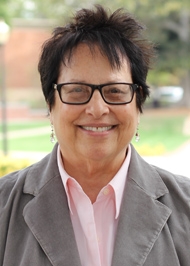
Matthew Potolsky is Professor of English at the University of Utah, specializing in nineteenth-century literature and literary theory. His career spans from 1998 Lecturer at Harvard University to current University Professorship. He earned a BA in Comparative Literature and Philosophy (1990), followed by MA and PhD in Comparative Literature (1992, 1997) from UC Irvine. Chair of English Department (2013-2016) University Professor (2014-2016) Research focuses on Decadence , Mimesis , Finance-Aesthetics intersections , and Government Secrecy . His work traces connections between financialization and decadent aesthetics, revealing how economic cycles influence artistic production. Key themes include: Decadent anti-realist literary movements Finance capital's cultural impact Decadent counterpublic formations Victorian aesthetic education debates Sublime aesthetics in national security Cosmopolitanism in literary communities Recent publications analyze: Decadent style as financialization rhetoric Reintroduction of verisimilitude theory Decadent responses to financial crises Mimetic labor in artistic production Decadent cosmopolitan counterpublics Historical parallels between financialization and literary decadence
Sean Cao serves as Associate Professor (with tenure) at the Robert H. Smith School of Business, University of Maryland, where he is Director and Co-founder of the AI Initiative for Capital Market Research. He also holds an affiliation as professor at Harvard Business School's D 3 Institute. His academic journey began with a Ph.D. from the University of Illinois at Urbana-Champaign. Dr. Cao's research focuses on the intersection of artificial intelligence and capital markets, with particular expertise in how machine learning transforms financial analysis, corporate disclosure practices, and investment decision-making. His work examines the evolving relationship between human analysts and AI systems, blockchain applications in financial reporting, and the strategic adaptation of corporate communications for machine readership. He has pioneered research on the "AI divide" among investor groups and developed frameworks for human-AI collaborative stock analysis. His publication portfolio spans top journals including Journal of Financial Economics, Review of Financial Studies, Journal of Accounting Research, and Management Science. The research demonstrates consistent thematic progression toward increasingly sophisticated AI applications in finance, with recent work exploring distributed ledger technologies for auditing, machine learning for extracting private information from disclosures, and the economics of greenwashing in ESG funds. His studies frequently combine textual analysis with traditional financial metrics to uncover novel market insights. Fama-DFA Prize from Journal of Financial Economics for best paper in capital markets and asset pricing Michael J. Brennan Award from Review of Financial Studies Deloitte Initiative for AI and Learning award for developing trustworthy AI for social equity PanAgora Asset Management's Dr. Richard A. Crowell Memorial Prize Multiple best paper awards from Midwest Finance Association, Global AI Finance Conference, and Asian Finance Association Dr. Cao has delivered over 200 invited research talks at major institutions including the Central Bank of Japan, Central Bank of Thailand, and U.S. Securities and Exchange Commission. He serves as Guest Associate Editor for Management Science and has co-chaired Review of Financial Studies conferences on FinTech and Machine Learning. His educational initiatives include a widely adopted free AI textbook for finance and accounting that has been implemented at universities worldwide including Indiana University, UT Dallas, and University of Minnesota. As Director of the AI Initiative for Capital Market Research, Dr. Cao leads a multidisciplinary team exploring practical AI applications in finance. The initiative has secured significant funding including a $150,000 grant from GRF CPAs & Advisors. His research group maintains strong industry connections through partnerships with regulatory bodies, financial institutions, and technology companies, facilitating the translation of academic research into practical financial applications.
Karl Gustafsson is a Professor at Stockholm University within the Department of Economic History and International Relations. His work bridges security studies , collective memory , and digital research methods in international relations. Current Role: Professor of International Relations, Stockholm University Previous Positions: Post-Doc at Lund University, Researcher at Swedish Institute of International Affairs Visiting Appointments: University of Tokyo, Osaka University, Keio University, Academia Sinica, Nordic Institute of Asian Studies Research Focus: Karl specializes in memory politics , ontological security , and anxiety-driven international dynamics , particularly in Sino-Japanese relations and digital platforms . His studies explore how historical narratives and online memory construction influence state identity and policy. Awards & Grants: Recipient of the Wang Gungwu Prize (2014) and Stockholm University Association’s award (2011). Holds Swedish Research Council and Marianne & Marcus Wallenberg Foundation grants for projects on apologies in international politics and digital memory in East Asia . Publications: His work appears in journals such as International Studies Quarterly , European Journal of International Relations , and Memory Studies , addressing topics like narrative power in East Asia, anxiety’s role in policy change , and digital humanities applications in IR.
Professor Matthew Treherne is a leading scholar in Italian literature at the University of Leeds, where he holds the position of Professor of Italian Literature in the School of Languages, Cultures and Societies within the Faculty of Arts, Humanities and Cultures. He currently serves as Pro-Dean for Research and Innovation, and co-directs the Leeds Centre for Dante Studies. His research bridges medieval and Renaissance literature with contemporary issues such as finance, ecology, and technology. PhD in Italian Literature, University of Cambridge (2007) Diploma in Management Studies, Judge Business School, University of Cambridge (2000) M.Phil in European Literature (Distinction), University of Cambridge (1999) BA in Modern and Medieval Languages (First-class), University of Cambridge (1997) Matthew Treherne's research focuses on Dante and late-medieval religious culture, with a strong emphasis on the liturgical imagination and theological discourse in poetry. He explores how Dante’s work can inform modern debates on the ecological crisis, financialisation, and time. His interdisciplinary approach integrates theology, philosophy, and cultural studies. He leads the project The Cultural Life of Money and Finance , which investigates how the humanities can shape financial futures. His recent publications include Dante’s ‘Commedia’ and the Liturgical Imagination and co-edited volumes on Dante’s theology. His recent scholarly articles and chapters show a consistent engagement with Dante’s theological and poetic structures, Tasso’s religious poetry, and the role of art and liturgy in early modern culture. Themes such as sacramentality, time, vision, and interdisciplinarity recur across his work, reflecting a deep commitment to understanding literature as a living, ethically engaged practice. University Teaching Fellowship Developmental University Teaching Fellowship Faculty of Arts Development Teaching Prize Treherne has supervised numerous PhD students and fosters research-led teaching, notably through projects like Discover Dante and the Leeds Dante Podcast . He has led major research initiatives, including the AHRC-funded Dante and Late Medieval Florence , and collaborates widely across disciplines and institutions. He is also active in public engagement, contributing to BBC Radio 4’s In Our Time and curating podcast series such as Conversations on Dante and Arts and Humanities Futures . He co-leads the Cultural Life of Money and Finance project with Invisible Flock, blending humanities research with creative practice.
Dr. Damien Charrieras is an Associate Professor at the School of Creative Media , City University of Hong Kong, where he serves as Program Leader for the Master of Art in Creative Media and deputy program leader for the PhD in Creative Media. His work bridges cultural studies, new media theory, and the intersection of financial technologies with artistic practices through the ACIM Laboratory for Interventions in Speculative Finance . Doctoral research on digital artists' trajectories in Montreal FRQSC Postdoctoral Fellowship at McGill University Research spans game engine design , datafication of creativity , blockchain in art , and post-anthropocentric creative processes . With over HK$3.14M in grants as Principal Investigator, he explores situated digital creativity in urban contexts, critical worldbuilding pedagogy , and the mediation of technical systems in cultural production. His publications in Cities , Organized Sound , and Human Relations analyze the reconfiguration of artistic practices through software infrastructures and automation paradigms. Scientific awards include: FRQSC Postdoctoral Fellowship
Rachel Rudinger is an Assistant Professor at the University of Maryland, affiliated with the Department of Computer Science and the University of Maryland Institute for Advanced Computer Studies (UMIACS). Her research focuses on Natural Language Processing (NLP), Machine Learning, and AI ethics, particularly addressing sociocultural biases and fairness in large language models (LLMs). She holds a PhD from Johns Hopkins University (2019) and a B.S. from Yale University (2013). Rudinger's work explores equitable cultural alignment in AI systems, common ground misalignment in dialog systems, and the mutual influence of gender and occupation in LLMs. She received the NSF CAREER Award in 2024 for her project on robust, fair, and culturally aware commonsense reasoning. Her recent publications investigate empathy gaps in LLMs, synthetic data effectiveness in disaster response, and bias measurement techniques across domains. As an advisor, she guides seven PhD students including Christabel Acquaye and Haozhe An. Her research spans diverse topics from legal language analysis to maternal health question answering, reflecting her commitment to interdisciplinary AI ethics. She actively contributes to workshops on commonsense representation and serves as a reviewer for top conferences in NLP and AI.
Alexey Vladimirovich Vdovin is a Professor and Senior Research Fellow at the National Research University Higher School of Economics (HSE), working within the Faculty of Humanities and School of Philological Sciences. He began his tenure at HSE in 2012 and has accumulated 15 years of scientific and teaching experience. His academic journey includes a Doctor of Philology degree from HSE (2023), a PhD from the University of Tartu (2011), and his initial degree in 'Russian language and literature' from Vyatka State Humanitarian University (2007). He has held significant roles including Deputy Dean for Science at the Faculty of Humanities (2018-2020) and serves on numerous academic councils and committees. Vdovin's educational background demonstrates both depth and international perspective. After completing his undergraduate studies at Vyatka State Humanitarian University in 2007, he pursued doctoral studies at the University of Tartu, where he earned his PhD in 2011 with a dissertation on 'The concept of 'chapter of literature' in Russian criticism of the 1830-1860s.' His academic development has been enriched by numerous international experiences, including visiting researcher positions at Selwyn College, University of Cambridge (2019), Jordan Center at New York University (2017), and multiple research stays at Humboldt University in Berlin through the Aurora Erasmus Mundus program. Professor Vdovin's research focuses on Russian intellectual history, the history of ideas, the Russian Empire, Russian literature of the 19th century, and nationalism studies. His work particularly examines the formation of the Russian literary canon, representations of peasants in literature, and the relationship between literature and society. He has authored approximately 80 articles and 4 monographs on 19th-century Russian literature, culture, and criticism, with works on major figures like Turgenev, Dostoevsky, Tolstoy, Goncharov, Belinsky, Chernyshevsky, Dobrolyubov, and Nekrasov. His recent book 'Monsters at the Threshold: Dracula, Frankenstein, Viy and Other Literary Monsters' (2024) demonstrates his expanding interest in literary archetypes and cultural phenomena. Vdovin has received numerous awards and recognitions for his scholarly work, including the Moscow Government Prize for young scientists (2017), multiple 'Best Teacher' awards (2013-2015, 2017-2024), and recognition as a winner of HSE's competition for best Russian-language scientific works (2022, 2024). He has also received various letters of gratitude from HSE administration, the Faculty of Humanities, and the School of Philology for his contributions to academic life. As an advisor, Vdovin has supervised numerous student research projects, including Smirnova T.V.'s 2014 master's thesis on 'Representation of 'Russianness' and 'Otherness' in Russian essays of the 1840s.' He has also served as a curator for HSE's Personnel Reserve Program at the School of Philological Sciences and has been actively involved in dissertation councils. His research has been supported by significant grants, including a 2024-2025 Russian Science Foundation grant 'The Genre of 'Peasant Life Story' in Russian Literature Before 1861: Poetics, Plots, Socio-Cultural Functions' (No 24-28-00184) and a 2018-2020 RFBR grant on 'State and Literary Institutions: From Peter I's Reforms to the 'Great Reforms.' Professor Vdovin is actively engaged in academic communities beyond HSE, serving as editor-in-chief of the HSE preprint series 'Literary Studies' and participating in the Big Project 'Literature and Society: An Experience of Sociocultural Description.' He is also involved in public scholarship, frequently giving public lectures through platforms like 'Arzamas,' 'Postnauka,' and 'Stradarium,' and appearing on the 'Observer' television program (Culture channel). Since 2015, he has been a mentor at Maya Kucherskaya's Creative Writing School, bridging academic scholarship with creative practice.
Saori N. Katada is a Professor of International Relations at the University of Southern California (USC). She specializes in geoeconomics, Japanese foreign policy, international political economy, regionalism, and Indo-Pacific relations. Her research emphasizes Japan’s strategic engagement in global and regional financial governance, including its responses to crises like the 1997 Asian financial crisis and the 2008 Great Recession. Her academic contributions include seminal works such as Japan’s New Regional Reality: Geoeconomic Strategy in the Asia-Pacific (2020) and Taming Japan’s Deflation (2018). She has held leadership roles at USC, including multiple terms as Director of the International Relations Program and Graduate Director. Katada’s awards include a National Endowment for the Humanities Fellowship and recognition for teaching excellence. Her recent research explores China-Japan competition in infrastructure diplomacy, the role of geoeconomics in Indo-Pacific stability, and the evolution of regional financial architectures. She serves on editorial boards, including Review of International Political Economy , and has contributed to policy debates on monetary policy, trade agreements, and developmentalist ideas.
Lauren M.E. Goodlad is a Professor of English and Comparative Literature at Rutgers University, serving as Chair of Critical AI @ Rutgers and Editor of the journal Critical AI . She holds affiliations with the Center for Cultural Analysis (CCA), Rutgers British Studies Center, and Rutgers Center for Cognitive Science. Her research bridges 19th-century studies and critical AI, emphasizing 'critical AI literacies' and ethical AI development. Goodlad has held roles like Associate Chair of English and membership in Rutgers' AI Advisory Council and CASS (Cyberinfrastructure for Science, Engineering & Society). Her education includes a BSILR from Cornell University, MA in English from NYU, and PhD in English from Columbia University. Notable grants include NEH funding for global AI workshops ('Unboxing AI'), an NSF planning grant on teaching writing with AI, and an upcoming Global Humanities Institute on Design Justice AI. Research interests span Victorian literature, genre theory, television studies, and AI's sociocultural impacts. Awards include University of Illinois' Kathryn Paul Professorial Scholar and Provost Fellow for Undergraduate Education. Current projects include a book on 19th-century fiction's ontological influence and collaborations on AI ethics frameworks. Publications include The Victorian Geopolitical Aesthetic (Oxford, 2015), co-edited special issues on Mad Men and Victorian Internationalisms , and recent critical AI essays in Critical AI and New Literary History . She advocates for AI development aligned with public interest through pedagogical innovation and interdisciplinary collaboration.
Mark Aleksanyan is a Professor of Accounting and Finance at the University of Glasgow's Adam Smith Business School, serving as Associate Head of the Accounting and Finance subject group since 2004. He holds a PhD in Accounting and Finance from the University of Glasgow (2004), an MPhil in International Finance (2000), and a bachelor’s degree in Mathematical Economics from Yerevan State University (1997). Prior to academia, he worked as a financial analyst, economist at the Armenian Ministry of Finance, and assistant to the Prime Minister of Armenia (1996–1999). Research Interests Focuses on relationships between market actors (sell-side/buy-side analysts, investor relations officers), equity valuation, corporate reporting, and empirical accounting. His work explores technology’s impact (e.g., generative AI) on financial information practices and regulatory frameworks like MiFID II. Current projects include analyzing the role of state visits in cross-border M&A and media effects on insider trading. Grants & Funding Received grants totaling over £100k from bodies like the Institute of Chartered Accountants of Scotland (2019), the Foreign and Commonwealth Office (2018), and the Adam Smith Research Foundation (2010). Teaching Teaches Financial Analysis & Equity Valuation (MSc), Financial Statement Analysis & Valuation (BSc), and PhD masterclasses. Previously instructed International Corporate Finance and MBA courses. Editorial Roles Serves as Associate Editor for Qualitative Research in Financial Markets and on editorial boards of Review of Business and Economics Studies and Behavioral Research .
Prof. Martin Messner is a University Professor at the University of Innsbruck, leading the Controlling Institute within the Department of Organization and Learning. His work focuses on management accounting, performance measurement, and the intersection of accounting practices with organizational behavior. He holds editorial leadership roles, including Editor-in-Chief of Accounting, Organizations and Society (2021–present) and previously served on the Management Accounting Research editorial board (2015–2019). Prior to his current position, he was an Assistant Professor at HEC Paris (2006–2011). Research Interests: His research explores performance measurement systems, ethics in management control, and the evolving roles of accounting in organizational narratives and governance. He investigates topics like algorithmic decision-making, narrative reporting, and entrepreneurial governance structures. Professional Activities: Member of the European Accounting Association’s Publications Committee Co-organizer of the MASOP Workshops (2008–2023) His publications span academic journals and edited volumes, addressing themes such as zero-based budgeting, data scientist identities, and the ethical implications of control systems. He actively bridges theoretical and practical accounting issues through interdisciplinary collaboration.
Sherry B. Ortner is a Distinguished Research Professor of Anthropology at UCLA, specializing in cultural and social theory, feminist theory, and media studies. She holds degrees from Bryn Mawr College (A.B.), University of Chicago (M.A., Ph.D.). Her research spans Sherpa ethnography in Nepal, U.S. social class dynamics, and independent film critique. She has been awarded the J.I. Staley Prize, Retzius Medal, and MacArthur Fellowship. Ortner’s work interrogates late capitalism, neoliberalism, and cultural production, particularly through independent film movements. Her shift from Himalayan studies to U.S. cultural analysis reflects a focus on global and local power structures. She has held academic positions at Berkeley, Columbia, and the University of Michigan before joining UCLA in 2004. Key Research Themes : Feminist theory, media anthropology, class and capitalism, cultural critique. Awards : American Academy of Arts and Sciences membership, Guggenheim and NEH fellowships. Her publications include Not Hollywood (2013), New Jersey Dreaming (2003), and Life and Death on Mt. Everest (2000). Ortner’s recent work critiques patriarchal structures and neoliberalism’s cultural impacts. She is a foundational voice in contemporary anthropological theory.
Dr. Maud Borie is a Senior Lecturer in Environment, Science & Society at King’s College London’s Department of Geography, within the School of Global Affairs. Her work bridges Human Geography and Science and Technology Studies (STS), focusing on biodiversity governance, environmental policy, and green finance. She holds a PhD from the University of East Anglia and has held visiting fellowships at Harvard Kennedy School. Borie’s research explores the politics of environmental knowledge and its societal implications, including nature-based solutions and green finance mechanisms. She has contributed to global initiatives like the Intergovernmental Platform on Biodiversity and Ecosystem Services (IPBES) and co-founded the Mediterranean Alliance for Wetlands. Her recent projects include analyzing green finance’s reliance on scientific legitimacy and mapping resilience strategies in cities. She teaches courses on environmental policy, qualitative methods, and geographies of financialization. Borie has been awarded grants for interdisciplinary projects such as ‘deep listening with machines for equitable environmental futures’ and ‘forestscapes’ immersive soundscapes. Her research outputs span over 18 peer-reviewed articles, with topics ranging from climate change framing to urban resilience in the Global South. Awards: Planetary-scale interpretation (2023), Rethinking environmental policy (2022), Forestscapes collaboration (2023) Grants: Creative Collaboration Seed Fund (2023), EU/PEARL disaster resilience projects Labs/Teams: KingsCAT (Social Media Research), Political Ecology, Biodiversity & Ecosystem Services (PEBES) group
Professor Khaled Hussainey is a Professor of Accounting at Bangor Business School, appointed in April 2024. He previously held academic roles at Portsmouth, Plymouth, Stirling, Manchester, and Ain Shams Universities. With over 25 years of teaching experience, his research focuses on corporate narrative reporting, XBRL, and sustainability. He has published over 200 peer-reviewed articles and secured grants from ESRC, Qatar National Research Foundation, and others. His qualifications include a Ph.D. in Accounting & Finance from the University of Manchester (2004), an M.Sc. from the University of Birmingham (2000), and a B.Com. from Ain Shams University (1994). He has supervised 56 PhD and 7 DBA theses. Research interests include corporate governance, earnings management, Islamic accounting, and big data. He serves as Co-Editor of the Journal of Financial Reporting and Accounting and Editor of the International Journal of Emerging Markets . His work has been recognized in Stanford University's Top 2% Researchers list (2023). Grants include £60,000 from ESRC (2005), $120,000 from Qatar NFR (2014), and £48,412 from the British Council (2019). He has held visiting professorships at King Khalid University, Tunis University, and others. He actively participates in international conferences and serves as an external assessor for promotions and research funds globally. His recent articles address sustainability reporting, FinTech disclosure, and climate governance. He emphasizes interdisciplinary research linking accounting practices with technological and environmental trends.
Marianne Nordli Hansen is a Professor at the Department of Sociology and Human Geography , University of Oslo. With a career spanning decades, her research focuses on social stratification , class and inequality , labor market conditions , economic inequality , and elites . She has taught courses like Sociological Theory (SOS4001), Theory Specialization in Sociology (SOS4011), and Inequality: Class, Gender and Ethnicity (SOS4100). Education: MA in Sociology (University of Oslo, 1984), Dr. philos in Sociology (University of Oslo, 1996) Positions: Associate Professor (ISS, UiO, 1996), Professor (ISS, UiO, 1999) Her research explores wealth accumulation , intergenerational mobility , social networks , and educational policy . Key collaborators include Professor Olav Korsnes and Associate Professor Johannes Hjellbrekke at the University of Bergen. Current projects focus on social inequality in Norway , with publications analyzing elite professions, wealth distribution, and class-based educational disparities. She has contributed to significant works on Nordic welfare models and public sector impacts on segregation and equality.