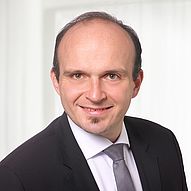
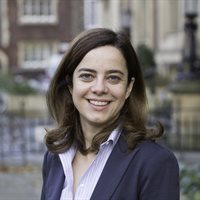
Stephan Golla is a full-time Professor of Business & Management at the Fulda University of Applied Sciences. His academic focus spans Corporate Management and Entrepreneurship, with an emphasis on venture capital dynamics, entrepreneurial orientation, and lean startup methodologies. He contributes extensively to research in technology commercialization and social identity in entrepreneurship. Ph.D. in Business & Management (2009): Empirical thesis on Corporate Venture Capital M.Sc. in Business & Management (2000): Majors in Banking, Mechanical Engineering, and Innovation Management Golla's research explores intersections between social identity and entrepreneurial performance, startup finance, and innovation ecosystems. His recent publications analyze how founders' identities influence business outcomes and the evolution of entrepreneurial finance frameworks. His awards include the 2018 Sauer Foundation Best Paper Award in Social Entrepreneurship and the 2010 Vice Chancellor’s Award for Excellence at the University of Western Sydney. He has taught courses in Start-up Management, Innovation & Technology Management, and International Management. 2018: Best Paper Award (Social Entrepreneurship) 2010: Vice Chancellor’s Award for Excellence
Alfred Taudes is a Full Professor at the Department of Information Systems and Operations, Institute for Production Management, Vienna University of Economics and Business (WU Vienna). He holds a doctoral degree and a Habilitation from WU Vienna in Business Administration and Management Information Systems, and a Magister degree from Vienna University. He has held assistant professorships at WU and visiting professorships at Augsburg, Münster, Essen, and Tsukuba University, Japan. He joined WU permanently in 1993 and served as head of the Department of Information Systems and Operations from 2010 to 2016. His research spans Operations and Supply Chain Management , Marketing Engineering , Knowledge Management , and the impact of Big Data and Blockchain on production systems. Using Complexity Science and Cryptoeconomics , he investigates digital production, integrated value chains, and market designs. He teaches undergraduate and graduate courses including Operations Strategy, Data Science, and IT seminars in WU’s International Supply Chain Master program, and has also taught at Japanese universities. His recent publications focus on blockchain privacy (e.g., CoinJoin analysis), CBDCs, MiCAR regulation, decentralized federated learning, and digital custody, reflecting a strong trend toward cryptoeconomics and blockchain-based systems in operations and finance. These works appear in top journals and conferences in information systems, security, and operations research. Cooperation Officer of the Year 2013/14 Distinguished Paper Award WI 2009 VHB Best Paper Award Nomination VHB Best Paper Award Dr. Wolfgang Houska - Recognition Award Alfred Taudes has coordinated major research projects such as the WWTF-project “Integrated Demand and Supply Chain Management” and the Special Research Area Adaptive Models in Economics and Management Science. He currently leads the research group on Cryptoeconomics at WU and chairs the scientific board of the Austrian Internet Offensive . His leadership extends to project management in initiatives like the Austrian Blockchain Center and research on decentralized finance and digital assets. He is actively involved in academic service, including organizing conferences like DEXA 2022, serving on editorial boards, and advising on research policy. His lab and research group focus on blockchain applications, digital transformation in operations, and the societal implications of big data.
Arun Rai serves as Regents’ Professor and Howard S. Starks Distinguished Chair at Georgia State University's Robinson College of Business, where he co-founded and directs the Center for Digital Innovation. His career spans interdisciplinary research bridging information systems with societal impact through industry-university collaborations across global sectors. His educational foundation includes: Ph.D. from Kent State University MBA from Clarion University of Pennsylvania M.S. from Birla Institute of Technology & Science Rai's research explores digital innovation , AI governance , and societal impacts of technology through investigations of platform ecosystems, supply chain transformation, and digital solutions for poverty and health disparities. His work uniquely connects technical systems design with behavioral and organizational outcomes across contexts from rural India to global corporations. Recent publications (2023-2025) reveal intensifying focus on AI-human collaboration , digital risk assessment , and platform governance tensions , with growing emphasis on healthcare applications and equity implications. The trajectory shows evolution from organizational IT adoption toward complex sociotechnical systems addressing global challenges. His scientific recognition includes: Fellow of the Association for Information Systems Distinguished Fellow of the INFORMS Information Systems Society LEO Award for Lifetime Exceptional Achievement Rai has mentored over 60 doctoral students (30+ as chair) with alumni now holding leadership positions globally. His research attracts major funding from Apollo Hospitals, China Mobile, IBM, Intel, UPS, and federal agencies, enabling real-world implementations like the Global Supply Chain Solutions Program during UPS's digital transformation. Current initiatives focus on generative AI in education and healthcare IT policy impacts. As director of the Center for Digital Innovation, he cultivates cross-sector partnerships advancing digital transformation through collaborative research on AI governance, platform ecosystems, and societal impact measurement.
Douglas Laney is an Adjunct Clinical Assistant Professor of Accountancy at the University of Illinois at Urbana-Champaign's Gies College of Business, where he teaches courses in infonomics and business analytics. He also serves as the Data & Analytics Strategy Innovation Fellow at West Monroe Partners, advising leaders on data-driven value creation. Laney holds a BS in Liberal Arts & Sciences from the University of Illinois (1986). His research focuses on infonomics, data valuation, and strategic data use. He authored the seminal book Infonomics: How to Monetize, Manage, and Measure Information as an Asset for Competitive Advantage and pioneered the field of infonomics. Laney's work spans academic, corporate, and public-sector applications, including high-profile collaborations with Highways England and Mars Inc. Key achievements include three Gartner Annual Thought Leadership Awards and contributions to data monetization frameworks. His recent articles address flawed supply chain metrics, digital transformation, and data's role as a strategic asset. Laney frequently publishes in Forbes and industry journals, emphasizing actionable insights for C-suite executives.
Adam Lebovitz is an Assistant Professor of Humanities at the University of Florida. He holds a Ph.D. and J.D. from Harvard University, and a B.A. from the University of Chicago. His research focuses on 18th-century constitutional thought, political theory, and the intellectual exchanges between America, Britain, and France during the Revolutionary period. He has held fellowships at institutions including the University of Cambridge, the Max Planck Institute, and Harvard Law School. Lebovitz’s current projects include a monograph on republican dictatorship in the Atlantic world and a critical edition of a French Revolution manuscript possibly authored by Thomas Paine. His work examines how classical models of governance influenced modern revolutions, particularly the transformation of 'dictatorship' from a republican tool to a symbol of tyranny. His research has been recognized with prestigious awards, including the Leo Strauss Prize and the Montreal Political Theory Manuscript Award. Education: Ph.D., Harvard University (2018) J.D., Harvard Law School (2012, magna cum laude) B.A., University of Chicago (2006) Lebovitz’s publications span journals like the William and Mary Quarterly and American Journal of Legal History , analyzing topics ranging from financial crises in Whig thought to the legal history of revolutionary rights. His forthcoming book, Dictatorship in the Age of Revolution , reinterprets the role of emergency powers in shaping modern republican systems.
Cynthia Horne is a Professor in the Political Science Department at Western Washington University, where she has been since 2006. Her research focuses on Transitional Justice, Post-Soviet Politics & Economics, and International & Comparative Political Economy. She holds a Ph.D. from the University of Washington and an M.S. in Foreign Service from Georgetown University. Prior to academia, she worked in international development with the U.S. Agency for International Development and the European Bank for Reconstruction and Development, focusing on banking and financial reforms in the Former Soviet Union. Research Highlights: Analysis of lustration policies and their impact on democratization in post-communist states. Fieldwork Experience: Extensive engagement in Hungary, Indonesia, Poland, and Romania. Teaching & Advising: Teaches courses on International Political Economy, Globalization, and Comparative Political Economy. Serves as faculty advisor for joint majors in Political Science/Economics and Philosophy, Politics & Economics. Advises students considering professional Master’s programs in international relations. Research Trends: Her work examines how states address historical injustices post-authoritarian transitions, with a focus on lustration mechanisms, institutional trust, and policy effectiveness. Recent studies explore informal justice mechanisms in Eastern Europe and the temporal dynamics of transitional justice measures. Grants & Collaborations: Conducted research during a 2012-2013 sabbatical as a visiting scholar at the University of Bucharest and the Center for the Study of Democracy in Bulgaria. No specific grants mentioned, but her work is supported by institutional affiliations and academic collaborations. Labs/Teams: Engaged in interdisciplinary projects with political economists and legal scholars focused on transitional justice, though no dedicated lab is explicitly noted.
Prof. Zoltán Károly Lakner is a Professor at the Hungarian University of Agriculture and Life Sciences, affiliated with the Department of Agricultural and Food Economics. His research focuses on applying dynamic systems theory, econometrics, and artificial intelligence to analyze food supply networks, agricultural policy, and socio-economic systems in Africa and Central Asia. Key areas include big-data modeling of complex systems, game-theory applications, and open-source intelligence tools in innovation policy. He leads the SafeConsume H2020 project, developing strategies to mitigate foodborne illness risks through consumer education and prototype tools. His work spans food policy analysis, climate change impacts on agriculture, and ethical food consumption behaviors. Education details not explicitly provided in text. Research interests emphasize quantitative methods in agricultural economics, econometrics-driven policy analysis, and interdisciplinary approaches to global food challenges. Recent publications explore bioenergy expansion effects, water tax policy implications, and post-Paris Agreement green finance trends. No scientific awards explicitly stated in the text. Grants include the Horizon 2020 SafeConsume project. Active in advising and mentoring, though specific student names are not listed. Affiliated with the Szént István Campus in Gödöllő, contributing to institutional research and policy initiatives.
Prof. Dr. Andreas Igl is a BDO Endowed Professor for Digital Data Analysis and Audit Support at the Faculty of Applied Computer Science at Deggendorf Institute of Technology. He holds a Dr. rer. pol. (summa cum laude) from the University of Regensburg and has extensive experience in banking supervision, risk management, and digital auditing. His research focuses on digital forensics, financial auditing, and crisis management in banking systems. Affiliations: BDO Foundation Laboratory, Deggendorf Institute of Technology Previous Roles: Lecturer at Deutsche Bundesbank's University of Applied Sciences (2017–2024), Partner at 1 PLUS i GmbH (2013–2016), Research Assistant at University of Regensburg (2009–2011) Teaching: Derivatives in Banking, Risk Management lectures and tutorials. Office hours in K-Building Room K204 on Fridays 14:00–15:00 (by appointment).
Hala O. Altamimi is an Assistant Professor at the School of Public Affairs and Administration (SPAA), University of Kansas. Her research focuses on public and nonprofit management, emphasizing organizational behavior, decision-making, and performance measurement systems. She holds a notable grant from the Institute of Humane Studies for her dissertation and has earned prestigious awards including the Best Doctoral Student Award at AYSPS, Emerging Scholar Award (ARNOVA), and Equity and Inclusion Award (APPAM). Her work examines the interplay between organizational structures, financial practices, and operational outcomes in nonprofits and public sectors. Key themes include overhead spending norms, performance auditing effectiveness, and flexible labor arrangements' impacts on organizational resilience. Altamimi's research challenges conventional donor assumptions while advancing accountability frameworks in public institutions. Altamimi's academic contributions span scholarly articles addressing centralization-decentralization dynamics, nonprofit starvation cycles, and budget cut resilience. Her awards reflect recognition for both scholarly excellence and commitment to diversity/inclusion in academic and professional communities.
Dr Christine Guo is a Senior Lecturer at Birkbeck Business School, University of London, with expertise in Financial Economics. She holds a PhD from Imperial College London and has taught at the University of Newcastle. Her research focuses on market microstructure, asset pricing, stochastic differential equations, and inflation targeting. Notably, her paper Constructing Asset Pricing Models with Specific Factor Loadings won the ABACUS Best Paper Award. Dr Guo supervises PhD students and teaches modules like Financial Management (ACCA-accredited) and Introduction to Accounting. She has published extensively in top journals including Abacus , European Journal of Finance , and Pacific Basin Finance Journal . Education: PhD in Economics, Imperial College London MSc in Economics and Financial Economics, University of Nottingham BSc in Economics and Econometrics, University of Nottingham Research Interests: Dr Guo’s work bridges theoretical and applied finance, with emphasis on: - Quantitative financial modeling - Market efficiency and regulatory frameworks - Inflation dynamics and monetary policy - ESG transparency and firm valuation Recent Publications Trends: Her articles analyze market structure (e.g., ETFs, multilateral trading facilities), Chinese financial markets, and ESG impacts. Methodologically, she applies stochastic models and spatial econometrics. Awards: ABACUS Best Paper Award (2012) for groundbreaking asset pricing methodology critiques Supervision & Teaching: Supervised 4 doctoral researchers (e.g., Stella Zhixin Xu on urban sustainability). Teaches BUMN145S5 (Financial Management) and BUMN131H4 (Accounting). Actively engages in PhD mentorship. Labs/Teams: Collaborates with interdisciplinary teams on financial regulation and ESG metrics through her research network.
George K. Danns is a Professor of Sociology in the Department of Sociology and Human Services at the University of North Georgia, Gainesville Campus. Holding a PhD from SUNY Stony Brook, he has received prestigious awards including the Ford Foundation Fellowship and Complete College Georgia Champion Award. His leadership roles include Chair of UNG Faculty Senate (2015-2016), former Dean of Social Sciences at the University of Guyana, and Senior Fulbright Fellow at the University of Michigan. Ph.D. in Sociology, State University of New York at Stony Brook M.A. in Sociology, State University of New York at Stony Brook B. Soc. Sc. in Social Sciences (Distinction), University of Guyana Dr. Danns specializes in Caribbean socio-political dynamics with emphasis on Guyana, examining race/ethnic relations, political leadership, national security, and community development. His research explores intersections of identity, class, and power in postcolonial contexts, addressing critical issues like environmental disasters, homicide patterns, youth vulnerability, and gender disparities. His fieldwork combines theoretical rigor with practical applications for policy development. His 15 most recent publications (2014-2020) reveal three dominant thematic clusters: Caribbean political economy (35%), diaspora/identity studies (30%), and entrepreneurship/financial literacy (35%). The work demonstrates consistent focus on Guyana while expanding to broader Latin American and Caribbean contexts, with increasing attention to youth entrepreneurship and financial inclusion in developing economies since 2017. Ford Foundation Fellowship for Doctoral Research in Latin America and the Caribbean Complete College Georgia Champion Award (2016) Senior Fulbright Fellowship Dr. Danns has mentored students through diverse sociology courses while securing consultancy grants from major international organizations including UNICEF, UNFPA, USAID, IADB, OAS, and PAHO. His funded research focuses on social policy development, with particular emphasis on youth programs, gender initiatives, and national security frameworks for Caribbean governments. As former Director of the Center for Economic & Social Research & Action (CESRA) at the University of Guyana, he led multidisciplinary teams conducting critical studies on suicide prevention, military roles in national security, and environmental disaster response. His current UNG affiliation involves collaborative research networks addressing regional social challenges through the Sociology and Human Services department.
Edmund Russell is a Professor of History and David M. Roderick Professor of Technology and Social Change at Carnegie Mellon University's Dietrich College of Humanities and Social Sciences. He joined the university in 2019, drawn by its interdisciplinary ethos. His research bridges environmental history, technology history, and American history, with a focus on coevolutionary dynamics, warfare, and capitalism. He holds a B.A. in English (with distinction and highest honors) from Stanford University and a Ph.D. in biology from the University of Michigan (1993). His work synthesizes historical methodologies with biological principles, particularly ecology, evolution, and neuroscience. Russell has authored influential books such as Greyhound Nation: A Coevolutionary History of England, 1200–1900 (2018) and Evolutionary History (2011). He leads a digital project on telegraph history ( https://telegraph.library.cmu.edu/ ). His honors include a Guggenheim Fellowship, presidency of the American Society for Environmental History, and the National Science Foundation CAREER Award. Russell’s current projects include a history of the U.S. transcontinental telegraph and exploring coevolutionary frameworks in environmental policy. He is actively involved in academic leadership, having served as Vice President for Research at the American Historical Association and as a Distinguished Lecturer for the Organization of American Historians.
Toni Whited is a Professor of Economics at the University of Michigan's Department of Economics, within the College of Literature, Science, and the Arts (LSA). She holds a Ph.D. from Princeton University and has held prior academic positions at the University of Wisconsin, the University of Rochester, and the Ross School of Business. Her research focuses on corporate finance, structural estimation, and corporate investment. She has been recognized with prestigious awards including the Jensen Prize and Brattle Prize. As editor-in-chief of the Journal of Financial Economics, she actively shapes financial economics discourse. Her work integrates structural econometric methods to analyze corporate finance decisions, monetary policy transmission, and the real effects of financial policies. Notable projects include studies on tax impacts on corporate leverage, central bank digital currencies (CBDC), and the role of relative performance evaluation in strategic competition. Whited emphasizes reproducibility in economic research and advocates for rigorous empirical methodologies. Her academic contributions span over three decades, with a strong emphasis on bridging theoretical models and real-world policy implications. She has advised on financial regulatory frameworks and contributed to foundational debates in empirical finance. Whited's current research explores topics such as CBDC effects on banking systems and the interplay between equity market misvaluation and corporate policies.
Emilia Vann Yaroson is a Lecturer in Operations and Supply Chain Management at the Sheffield University Management School (The University of Sheffield). She holds a PhD in Operations and Information Management from the University of Bradford, an MSc in Business and Financial Economics from the University of Greenwich, and a PgCHE (Postgraduate Certificate in Higher Education). Her research focuses on leveraging emerging technologies (AI, blockchain, cloud computing, digital twins) to enhance supply chain resilience and sustainability, particularly aligned with UN SDGs related to healthcare access, environmental protection, and poverty reduction. Research Interests Pharmaceutical supply chains and resilience strategies Circular economy integration in supply chains Impact of Industry 4.0/5.0 technologies on sustainable operations Healthcare operations and quality improvement Artificial intelligence-driven decision-making in supply chains Teaching She teaches operations management, supply chain analytics, and related modules across undergraduate and postgraduate programs, including executive education. Her teaching aligns with the school’s Triple Crown accreditation, positioning it among global elite management schools. Research Group She is part of the Operations Management and Decision Sciences group, contributing to interdisciplinary projects on supply chain innovation and sustainability. Her work bridges theoretical frameworks (e.g., Complex Adaptive Systems) with practical applications in healthcare and manufacturing sectors.
Maria Correia is a faculty member in the Department of Accounting at the London School of Economics and Political Science, where she teaches AC416 Topics in Financial Reporting and maintains office hours by appointment. Her research focuses on credit markets, default prediction, business groups, and corporate governance, with publications in leading accounting and finance journals. Her research examines: Credit risk assessment methodologies and bankruptcy prediction models Corporate governance structures within business groups Impact of accounting standards on corporate investment decisions Regulatory effects on disclosure credibility in emerging financial platforms Dr. Correia's recent publications demonstrate a consistent focus on financial distress prediction, corporate governance mechanisms, and regulatory impacts in accounting. Her work combines empirical finance with accounting theory to address practical challenges in credit markets and corporate reporting. She has received numerous honors including: 2022 Excellence in Refereeing Award (Journal of Accounting Research) 2020 Best Referee Award (Review of Accounting Studies) LSE Excellence in Education Awards (2018, 2019) Best Paper Award at Review of Accounting Studies Conference (2011) Multiple doctoral fellowships at Stanford Graduate School of Business Her research has been supported by grants from London Business School (RAMD Awards 2009-2013, 2013-2015) and the Portuguese Foundation for Science and Technology (2013). She serves on editorial boards of Accounting Review, Journal of Business Finance & Accounting, and Review of Accounting Studies, while acting as Associate Editor for Accounting and Business Research and European Accounting Review.