Kwamie Dunbar is a tenured Professor of Finance at WPI and currently serves as the Interim Dean of The Business School and Director of the FinTech Program. He holds a PhD in Financial Economics from Fordham University, an MS in Mathematics from Fairfield University, an MBA in Economics and Finance from Sacred Heart University, and a BS from the University of the West Indies. His research focuses on FinTech innovation, cryptocurrency markets, blockchain assets for social good, and the impact of environmental policies on investment. He has published in leading journals such as Quantitative Finance , Economic Modelling , and International Review of Financial Analysis , with notable contributions to topics like CBDC implications, climate finance, and DeFi governance. Dr. Dunbar actively engages with industry through collaborations with Fortune 500 companies and serves on editorial boards for journals like Heliyon and I-Science . His work aligns with UN Sustainable Development Goals 4 (Quality Education), 7 (Clean Energy), 9 (Innovation), 11 (Sustainable Cities), 12 (Responsible Consumption), and 13 (Climate Action). Professional affiliations include the American Finance Association, Eastern Finance Association, and Financial Management Association. He has received media attention for insights on cryptocurrency in retirement portfolios and WPI’s pioneering FinTech programs.
Stacy-Ann Elvy is the Martin Luther King Jr. Professor of Law and Martin Luther King, Jr. Hall Research Scholar at the University of California, Davis School of Law (King Hall). Her work bridges commercial law, privacy, and technology, focusing on legal frameworks for emerging technologies like the Internet of Things (IoT). She holds leadership roles in academic organizations, including the AALS Section on Commercial and Consumer Law, and has advised bodies like the American Law Institute and UNESCO. Education: J.D., Harvard Law School B.S., Cornell University Her research explores privacy in IoT, data governance, and human rights implications of technology. Notable works include A Commercial Law of Privacy and Security for the Internet of Things (2021) and an upcoming Cambridge Handbook on Commercial Law and Technology (2024). She has been recognized with awards such as the Otto L. Walter Distinguished Writing Award (2019) and the Rising Legal Star Award (2016). Key Contributions: Advised the American Law Institute’s Principles for a Data Economy Expert contributor to UNESCO’s Inclusive Policy Lab on IoT Peer review editor for technology law sections of leading journals Executive committee member, AALS Commercial & Consumer Law Section Her scholarship emphasizes regulatory modernization for digital ecosystems, advocating for consumer protection, data security, and equitable technology integration. Current projects address algorithmic transparency, automated decision systems, and cross-border privacy frameworks.
Ben Pollard is an Assistant Teaching Professor of Physics at Worcester Polytechnic Institute (WPI). He holds a PhD in Physics from the University of Colorado Boulder (2017), an MS in Physics from the same institution (2014), and a BA in Physics and Computer Science from Pomona College (2011). His research focuses on improving teaching and learning in physics laboratory courses, emphasizing measurement uncertainty, experimental skills, and student epistemological development. He is also a core organizer of The Access Network , a community-driven initiative promoting diversity, equity, inclusion, and social justice in STEM. Previously, he served as a postdoctoral researcher in Prof. Heather Lewandowski's Physics Education Research group at CU Boulder. Education: PhD, Physics, University of Colorado Boulder (2017) MS, Physics, University of Colorado Boulder (2014) BA, Physics & Computer Science, Pomona College (2011) Research Interests: Dr. Pollard explores pedagogical strategies for enhancing laboratory education, including curriculum design, assessment development, and fostering inclusive STEM environments. His work addresses measurement uncertainty concepts, interdisciplinary course alignment, and near-peer mentorship programs. He employs mixed-methods approaches, such as clustering algorithms and natural language processing, to analyze student learning outcomes. Grants & Community Work: Recipient of Planning Grants for DEIJ initiatives at WPI Core organizer of The Access Network Emergency Fund (2021) Labs & Collaborations: Collaborated with the Physics Education Research group at CU Boulder. Active in The Access Network, focusing on financial support systems and leadership development for marginalized STEM students.
Suvi Jokila is a Postdoctoral Research Fellow and Docent at the Department of Education, University of Turku. Her research focuses on internationalisation of higher education, international student mobility, and socio-spatial justice. She leads the Academy of Finland-funded 'Shadows' project examining youth mobility in regional cities, participates in the Erasmus+ 'Inclusion+' project addressing student mobility challenges, and co-leads the 'Primary Schools Amidst Rural Transition' study analyzing rural education history. Academic Roles: Postdoctoral Research Fellow, Docent Key Projects: Shadows (2021-), Inclusion+ (2023-2026), ENIS Network (COST Action) Teaching: Comparative and International Education, Master's thesis supervision in EdLearn program Her research explores pandemic impacts on international students, socio-spatial mobility, and privatization in education. She co-authored over 30 peer-reviewed articles on topics like pandemic-induced educational shifts, rural school transitions, and global mobility equity. Current work emphasizes policy analysis and ethnographic methods to address educational justice challenges.
Dr. Abdul Razeed is an Academic Director (Teaching Quality) and Senior Lecturer at the University of Sydney Business School. He chairs the University of Sydney Sub-Committee and leads the Sydney Southeast Asia Centre's curriculum. His research focuses on technology's impact on organizational reporting, environmental disclosures, and superannuation systems. He holds a PhD from the University of Sydney and has authored/co-authored books like Excel VBA for Business and Accounting (2018). Razeed has received the 2022 Beta Gamma Sigma Academic of the Year and co-authored award-winning papers, including the 2021 Best Paper in Economic Papers . He teaches courses like BUSS1030 and ACCT6014, and his grants include studies on grade inflation and corporate social responsibility during crises. Education: Diploma in Mental Health (TAFE) Bachelor of Commerce (Honours), Murdoch University Graduate Certificate in University Teaching, Melbourne Graduate Certificate in Data Analytics & Cyber Security, Griffith University Master of Education, University of Wollongong PhD in Accounting, University of Sydney Senior Fellow of the Higher Education Academy (SFHEA) Member of the Australian Computer Society (MACS) Research Interests: Abdul’s work bridges technology’s role in reporting practices, environmental accountability, and retirement system reforms. His studies on superannuation savings and grade inflation have attracted media coverage (e.g., ABC, Sydney Morning Herald). He emphasizes interdisciplinary approaches, particularly in teaching creativity and pandemic-era pedagogical innovation. Grants & Media: $16,000 Education Innovation Grant (2016) for tech-enabled accounting curriculum 2021 Special Research Fund ($7,807) on semiotics in CSR skepticism 2021 AFAANZ Grant ($3,284) on grade inflation Media features in ABC, Radio National, The Project (Channel 10), and VICE Labs/Teams: Involved in the Sydney Southeast Asia Centre and the Co-Design Research Group’s management education initiatives.
Heather Horst is Professor of Design Anthropology at the Sydney School of Architecture, Design and Planning , University of Sydney. She holds additional affiliations as an Honorary Research Fellow at the Centre for Digital Anthropology, University College London, and as Adjunct Professor at the Institute for Culture and Society, Western Sydney University. PhD (University of London), MA (California), BA (Minnesota) Her research explores material culture , mobility studies , and the mediation of social relations through technology, homes, and clothing. Current projects include the ARC Discovery Project Fashioning Fiji (2020-2025) and a $2.9M ACIAR initiative on mobile financial services in Laos and Cambodia (2022-2026). In recognition of her contributions, Heather was elected Fellow of the Academy of the Humanities, Australia (2023) . She has supervised 11 PhD students to completion and co-developed the HOMAGO framework for informal learning environments, now widely adopted in afterschool programs globally.
Dr. Jamiu Adetola Odugbesan is a Lecturer in the Department of Business Entrepreneurship & Finance at the Royal Docks School of Business and Law, University of East London. He holds a PhD in Business Management and has over a decade of teaching experience. His research focuses on sustainable management, development economics, and corporate social responsibility, with over 30 publications in reputable journals. Dr. Odugbesan's qualifications include a PhD, MSc, and BSc. His teaching includes modules like EC6006 Data Analytics and Business Intelligence. His research emphasizes practical impacts, engaging policymakers and industry leaders to drive sustainable practices and economic development policies. Notable projects include studying green talent management, teleophthalmology adoption, and Nigeria's agricultural competitiveness. His work bridges academia and real-world challenges, integrating research into teaching to foster critical thinking among students. Current research themes include artificial intelligence in talent management, climate change sensitivity in Sub-Saharan Africa, and financial inclusion's role in sustainable development. Dr. Odugbesan actively collaborates across disciplines, addressing global issues like environmental policy, urbanization effects, and healthcare innovation. His contributions aim to create equitable and sustainable solutions for communities and organizations.
Carsten Herbes is Professor for International Management, Sustainability and Renewable Energies at Nürtingen-Geislingen University of Applied Sciences since March 2012. He concurrently serves as Director of the Institute for International Research on Sustainable Management and Renewable Energy (ISR), leading research on global renewable transitions and sustainable business models since April 2013. Education: Ph.D. in Business Administration from European University Viadrina, Frankfurt (Oder) (2005–2006) Master's degree (Diplom-Kaufmann) in Business Administration and Japanese Studies from Mannheim/Heidelberg Universities (1993–1998) Research Student at Hitotsubashi University, Graduate School of Commerce, Japan (1997–1998) His research centers on sustainable business practices with emphasis on consumer behavior in renewable energy adoption and eco-packaging. Key interests include biogas systems, voluntary green markets, and cross-cultural sustainability challenges, particularly examining how policy frameworks shape market dynamics and consumer perceptions in Germany and developing economies like Senegal. Recent work reveals critical gaps between provider strategies and consumer expectations in sustainable product markets. Current publications (2021–2024) demonstrate a clear trajectory toward understanding decision-making in sustainable packaging and renewable heating solutions, utilizing mixed methods including Discrete Choice Experiments and qualitative social practice analysis. His work consistently bridges academic theory with industry applications across energy and environmental sectors. Professional engagements include Deputy Chairmanship of Barmenia Insurance's sustainability advisory board, membership in B.A.U.M.'s scientific committee, participation in the German Energy Agency's biogaspartner project, and affiliation with the German Association for Social Science Research on Japan. He regularly reviews for Energy Policy, Journal of Cleaner Production, and other high-impact sustainability journals. As ISR Director, he oversees research teams focused on renewable energy transitions and sustainable management, with projects like GeBindE analyzing nutrient management from biogas plants. His industry background at NAWARO BioEnergie (as CFO/board member) and Roland Berger informs applied research addressing real-world energy market challenges.
Vegard Johansen is a Professor and Deputy Head of Research at the Department of Education and Lifelong Learning , Norwegian University of Science and Technology (NTNU). His work focuses on entrepreneurship education, student health (sickness presence/absence), and educational outcomes in secondary schools. Co-leader of research groups EPSET (Entrepreneurship in primary/secondary education) and LiS (Life in School) Key projects: PoMP (2022–), ExpEd (2019–), ICEE (2015–2018), and SOFAC (2009–2014) Research Interests : Entrepreneurship education in compulsory and upper secondary schools Student health behaviors (sickness presence/absence) Quantitative and mixed-methods research Gender differences in educational outcomes Impact of project-based learning on motivation and performance Teaching : Courses on research methods, master thesis supervision, and entrepreneurship in teacher education. Collaborates with institutions across Europe on educational innovation projects. No scientific awards mentioned.
Christopher Reddick, Ph.D. , is a Professor in Public Administration at the University of Texas at San Antonio (UTSA), affiliated with the College for Health, Community and Policy (HCAP) . His research bridges information technology and public administration, focusing on e-government, emergency management, and ethics in public organizations. Education Ph.D. in Politics, University of Sheffield, UK M.B.A. in Agricultural Economics and Business, University of Guelph, Canada M.A. in Political Studies, University of Guelph, Canada B.A. in Political Science and Economics (Double Major Honors), University of Guelph, Canada Reddick's research explores ethical leadership frameworks, digital inequality, and organizational ethics culture. His recent work develops multi-dimensional models for public sector ethics management and examines digital divide factors affecting small business owners and older adults in minority-majority communities. His publications span journals like Public Integrity , Public Organization Review , and Public Administration Review , emphasizing empirical validation through structural equation modeling of national survey data. Key themes include compliance-integrity ethics frameworks and ROI analysis of higher education. Scientific Awards Highly Commended Papers, Emerald Publishing (2018) dg.o Conference Best Paper Award, Digital Government Society (2016) Reddick holds a CERTIFIED FINANCIAL PLANNER (TM) certification, integrating financial expertise with governance studies. Current projects focus on expanding ethical leadership models in public organizations and analyzing digital engagement disparities.
Bela Stantic is a Professor at Griffith University's School of Information and Communication Technology, where he founded and directs the Big Data and Smart Analytics Lab . With a PhD from Griffith University, his academic appointments include Head of School (2015-2019) and Deputy Head of School (2013-2015). He remains an active member of the Institute for Integrated and Intelligent Systems since 2005. Research Focus: Professor Stantic specializes in Big Data Analytics, particularly in social media sentiment analysis and complex data management. His interdisciplinary work spans tourism analytics, environmental monitoring, cryptocurrency forecasting, and AI ethics. Key applications include disaster response systems, aquaculture optimization, and sustainable infrastructure. Publication Trends: Recent articles (2023-2025) demonstrate strong emphasis on AI-driven solutions: 40% focus on time-series forecasting and cryptocurrency prediction, 30% on computer vision/LiDAR applications, and 30% on social media analytics for tourism and public policy. Machine learning integration across environmental and financial domains is a consistent theme. Grants & Projects: Secured 24 funded projects totaling ~$1.8M AUD, including: Automated seagrass monitoring ($403K, 2023-2025) NSW flood impact analysis via social media (2022) Offshore aquaculture welfare systems ($466K, 2022-2026) COVID-19 pandemic behavior tracking (2020) Student Advising: Supervised 15+ doctoral students to completion in areas like 3D data extraction, social media mobility tracking, and stream-processing engines. Currently mentoring PhD candidates on multimodal sentiment analysis and real-time recommendation systems.
Martin Chorzempa is a Senior Fellow at the Florence School of Transnational Governance , European University Institute, and concurrently a Senior Fellow at the Peterson Institute for International Economics . His work bridges the disciplines of economics, technology, and policy, with a sharp focus on how digital innovation is reshaping global finance. Education: Master of Public Administration in International Development, Harvard Kennedy School of Government (2017) Research Interests: Chorzempa’s research lies at the intersection of financial technology , digital currencies , and international economics . He has extensively studied China’s fintech ecosystem , central bank digital currencies (CBDCs) , and the geopolitical implications of digital finance. His work also explores AI governance , export controls , and foreign investment screening mechanisms in the context of national security. Publications & Recognition: His book "The Cashless Revolution: China's Reinvention of Money" (2022) was named one of the best economics books of 2022 by the Financial Times . He is a frequent contributor to Wall Street Journal , New York Times , Financial Times , Foreign Affairs , and other leading outlets. Grants & Fellowships: Fulbright Scholar in Germany Luce Scholar at Peking University's China Center for Economic Research Affiliations: Peterson Institute for International Economics China Finance 40 Forum (former)
Beate Bowien-Jansen is a Scientific Associate at the German Institute for Adult Education – Leibniz Centre for Lifelong Learning , focusing on adult education research and practice. Her work emphasizes financial literacy , basic education , and the digitalization of learning processes , with a particular interest in integrating low-literacy individuals into educational frameworks. Education: Part-time B.A. in Educational Science (2009–2015, Fernuniversität Hagen) Part-time M.A. in Education and Media eEducation (2016–present, Fernuniversität Hagen) Bowien-Jansen's research explores digital tools for financial literacy (e.g., the MONETTO gamified learning platform) and collaborative strategies for professionalizing educators. She has contributed to understanding how augmented reality , workplace learning , and multiplier networks can enhance basic education access and effectiveness. Her publications, including anthologies and peer-reviewed articles, examine work-oriented basic education , interdisciplinary collaborations , and gamification in adult learning . She has co-edited study materials on financial literacy and participated in projects like CurVe II, linking debt counseling to broader educational transitions. Scientific Contributions: Co-development of MONETTO, a financial literacy game Analysis of augmented reality applications for low-literacy learners Framework for workplace-based basic education programs Investigation of multiplier strategies in literacy outreach Evaluation of North Rhine-Westphalia's Alphanetz coordination center Integration of financial literacy with consumer education Bowien-Jansen collaborates extensively with colleagues like Michael Tröster and Eleni Mania, contributing to both practical guides and theoretical advancements in adult education. Her work bridges academic research with actionable strategies for policymakers and practitioners.
Carey K. Morewedge serves as Professor of Marketing and Chair of the Department of Marketing at Boston University's Questrom School of Business, where he holds the Everett W. Lord Distinguished Faculty Scholar title. His academic leadership spans departmental administration and research direction in consumer psychology and decision science. Education: PhD in Social Psychology, Harvard University (2006) BA, University of Massachusetts at Amherst (2000) Morewedge's research examines psychological biases in valuation processes across physical goods, money, and emerging technologies. His work reveals how cognitive distortions affect consumer decisions regarding digital goods and artificial intelligence, with particular focus on medical AI adoption and psychological ownership mechanisms. He pioneers experimental methods to demonstrate how humans misjudge algorithmic outputs due to self-serving biases, and develops interventions to improve judgment quality through debiasing training. His publication portfolio shows clear evolution toward human-AI interaction research, with 12 of 15 most recent articles addressing algorithm acceptance, bias correction, and medical AI. This shift reflects growing scholarly and industry interest in AI-human collaboration, while maintaining foundational work in cognitive biases and consumer psychology. Scientific Awards: Wegner Theoretical Innovation Prize (Society for Personality and Social Psychology) Best Paper Award (Journal of Consumer Research) MSI Scholar designation New York Times Idea of the Year Poets and Quants Top 40 Under 40 Professors Everett W. Lord Distinguished Faculty Scholar Morewedge secures substantial research funding exceeding $2.4 million from diverse sources, supporting his investigations into consumer-AI interaction. His industry collaborations with Pinterest, Merck, and IARPA translate academic insights into practical applications. He actively mentors doctoral students and presents research at major institutions including Stanford, Harvard, and Johns Hopkins, while leading the Marketing Department's strategic direction through curriculum development and faculty recruitment. His research program operates through interdisciplinary collaborations with medical centers and technology institutes, notably the AI and Health Working Group at Johns Hopkins Medical Center and Boston University's Digital Business Institute. These partnerships facilitate real-world testing of behavioral interventions in healthcare and technology contexts.
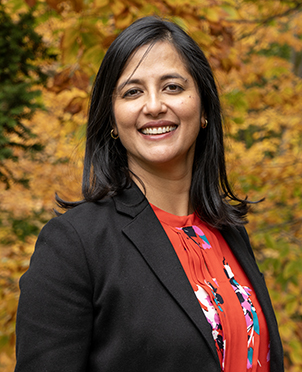
Ishani Tewari serves as Chair & Associate Professor in the School of Business and Computer Science at Curry College in Milton, Massachusetts. She joined Curry College as an Assistant Professor in 2016 and was promoted to Associate Professor in 2020. Her academic home is within the Department of Business & Computer Science, where she teaches and conducts research at the intersection of economics, business, and policy. Education: Ph.D. in Economics, Brown University (2012) M.A. in Economics, Brown University (2007) B.Sc. in Nuclear Engineering & Economics, Massachusetts Institute of Technology (2003) Ishani Tewari is an applied microeconomist whose research spans two primary streams: development economics with a focus on gender issues and banking and finance . Her work frequently examines economic growth patterns, financial development impacts, and labor market dynamics, particularly in emerging economies. She has conducted significant research on China's economic development, Indian manufacturing policy, and U.S. financial markets. Tewari is known for her rigorous empirical approach that combines economic theory with real-world data to address pressing policy questions. Her scholarly output shows a clear trajectory from early work on U.S. financial markets toward increasing focus on emerging economies, particularly India and China. While her earliest publications examined U.S. mortgage markets and financial deregulation, her more recent work investigates gender dynamics in electoral outcomes, durable goods adoption in China, and service sector globalization. This evolution reflects a growing interest in the interplay between economic development, gender, and policy interventions in non-Western contexts. Scientific Awards: Excellence In Research Award, Curry College (2020) Research Track Release Time awards (2017, 2019, 2020) Joint Committee on Release Time awards (2018, 2019) Whitebox Research Grant, Yale University ($8,000, 2015) Kauffman Foundation Dissertation Fellowship ($25,000, 2011) As an educator, Tewari has secured multiple research release time awards that have supported her scholarly work. She serves as a referee for prestigious journals including Journal of Human Resources, Marketing Science, World Bank Economic Review, and Journal of Development Economics. Her teaching portfolio spans undergraduate and graduate levels, with courses in Principles of Macroeconomics, Principles of Microeconomics, Financial Markets and Institutions, and Strategic Managerial Economics for MBA students. Tewari is particularly noted for her innovative approach to integrating current events into economics education through her website audioecon.com, which provides curated podcast resources for economics instructors. Tewari maintains an active research agenda through her personal website and Google Sites platform, where she shares her publications, teaching resources, and current projects. Her work bridges academic research with practical classroom application, creating valuable resources for both scholars and educators in the economics field.