

Professor Peter Feldhütter is a faculty member at the Department of Finance, Copenhagen Business School (CBS), where he has held the position since 2017. He earned his PhD from CBS and previously worked at the London Business School. His research focuses on fixed income markets, particularly examining how prices are influenced by illiquidity, credit risk, and supply-demand imbalances. Notable contributions include studies on U.S. corporate bond market liquidity and credit spread dynamics. Key research areas include empirical asset pricing, credit risk, fixed income analysis, and liquidity risk. He has authored influential papers such as The Myth of the Credit Spread Puzzle and Corporate Bond Liquidity Before and After the Subprime Crisis . Received awards: Jack Treynor Prize, Wharton’s Outstanding Paper Award, and Nykredit’s Talented Researcher Award. External advisory roles: Legal advice for NTC Parent, Shell, and FourWorld Capital Management; academic advising for Copenhagen Economics. Teaching: External faculty at London Business School and University College London. His recent work explores ESG investing’s impact on capital structure and pricing of sustainability-linked bonds. Ongoing projects include studies on financial market liquidity and corporate bond valuation frameworks.
جستجوی استاد راهنمای دانشگاهی
برای مسیر پژوهشیتان، استاد راهنما، استاد دانشگاه و پژوهشگر مناسب را پیدا کنید و با آنها ارتباط بگیرید.
نمایش ۱-۱۵ از ۹۷ استاد راهنما
اطلاعات پروفایلها از صفحات عمومی دانشگاهها گرفته شده و ممکن است بهروز نباشد.

Yang Chengمشاهده پروفایل
دانشیار
Yang Cheng is an Associate Professor at the Department of Materials and Production, Aalborg University, Denmark. He holds a PhD in Mechanical Engineering from the same institution (2011), focusing on manufacturing strategy and network dynamics. His research spans supply chain management, sustainability, and global operations, with a focus on integrating technology and environmental policies into manufacturing systems. He leads or participates in high-impact projects like MAASive (2024–2026) and the Sino-Danish Center Research Project (2011–present), addressing resilience in value networks and global operations innovation. Research Interests: Supply Chain Management & Integration Sustainability & Green Technologies Manufacturing Strategy & Networks Technology Policy & Digitalization Global Operations & Cross-Border Collaboration Recent Work Trends: Prof. Cheng's 2025 articles emphasize blockchain in sustainable supply chains, green technology investments under carbon policies, and digitalization's ethical implications. His 2024 research explores smart factories, EU battery regulations, and robotization in manufacturing. These studies blend quantitative models with case-based analysis to address real-world challenges. Awards: 2024 Emerald Literati Awards – Outstanding Reviewer Advising & Grants: As PI for multiple Global Operations Management PhD programs (2019–2025), he guides research on digital transformation and university-industry collaboration. His projects receive funding from Danish and international grants, focusing on innovation and resilience in manufacturing networks. Labs/Teams: Collaborates with the Center for Industrial Production at Aalborg University and engages in international partnerships through the Sino-Danish Center. Active editorial roles include Production Planning & Control and Journal of Manufacturing Technology Management .

Kristian Miltersen is a Professor at the Department of Finance and Center for Financial Frictions (FRIC) at Copenhagen Business School (CBS). He holds expertise in capital structure optimization, real options valuation, commodity derivatives, and structured financial products. His research bridges theoretical finance with practical applications in corporate finance and asset pricing. After earning his PhD in 1992 on continuous-time interest rate models, Miltersen has expanded into dynamic capital structure modeling and real options. His landmark 1997 Journal of Finance paper on LIBOR Market models critiques the Black-76 formula's limitations for fixed income derivatives. His work spans commodity derivatives, foreign exchange instruments, and R&D investment dynamics, all rooted in theoretical frameworks. Recent research focuses on dynamic debt policies, second mortgages' valuation, tax-driven corporate cash holdings, and state-contingent capital budgeting. He co-authored influential papers on callable debt renegotiations and the interaction between financing and investment decisions under varying industry structures. Teaching includes elite courses on asset pricing, energy markets, and capital structure. As program director for CBS' Advanced Economics and Finance MSc, he shapes advanced academic programs. Outside academia, he serves as an expert witness and consultant for Analysis Group, advising on financial litigation and complex economic issues. His over 40 publications since 1989 reflect deep engagement with financial modeling, spanning interest rate guarantees, commodity price dynamics, and corporate debt optimization. Current research continues exploring financial frictions' impact on corporate policy and market structures.
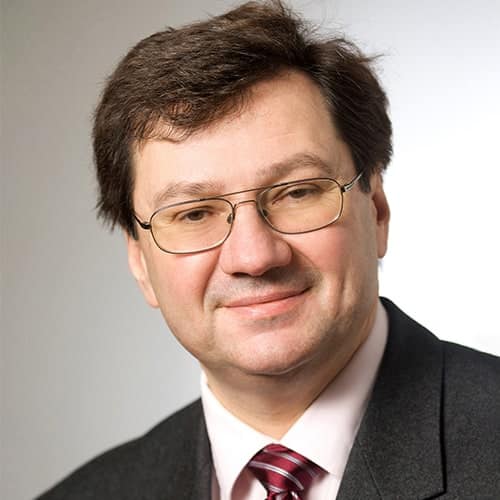
Alfred Taudes is a Full Professor at the Department of Information Systems and Operations, Institute for Production Management, Vienna University of Economics and Business (WU Vienna). He holds a doctoral degree and a Habilitation from WU Vienna in Business Administration and Management Information Systems, and a Magister degree from Vienna University. He has held assistant professorships at WU and visiting professorships at Augsburg, Münster, Essen, and Tsukuba University, Japan. He joined WU permanently in 1993 and served as head of the Department of Information Systems and Operations from 2010 to 2016. His research spans Operations and Supply Chain Management , Marketing Engineering , Knowledge Management , and the impact of Big Data and Blockchain on production systems. Using Complexity Science and Cryptoeconomics , he investigates digital production, integrated value chains, and market designs. He teaches undergraduate and graduate courses including Operations Strategy, Data Science, and IT seminars in WU’s International Supply Chain Master program, and has also taught at Japanese universities. His recent publications focus on blockchain privacy (e.g., CoinJoin analysis), CBDCs, MiCAR regulation, decentralized federated learning, and digital custody, reflecting a strong trend toward cryptoeconomics and blockchain-based systems in operations and finance. These works appear in top journals and conferences in information systems, security, and operations research. Cooperation Officer of the Year 2013/14 Distinguished Paper Award WI 2009 VHB Best Paper Award Nomination VHB Best Paper Award Dr. Wolfgang Houska - Recognition Award Alfred Taudes has coordinated major research projects such as the WWTF-project “Integrated Demand and Supply Chain Management” and the Special Research Area Adaptive Models in Economics and Management Science. He currently leads the research group on Cryptoeconomics at WU and chairs the scientific board of the Austrian Internet Offensive . His leadership extends to project management in initiatives like the Austrian Blockchain Center and research on decentralized finance and digital assets. He is actively involved in academic service, including organizing conferences like DEXA 2022, serving on editorial boards, and advising on research policy. His lab and research group focus on blockchain applications, digital transformation in operations, and the societal implications of big data.

Sara Shafieeمشاهده پروفایل
پژوهشگر
- Product Configuration Systems
- Manufacturing Engineering
- Artificial Intelligence Applications
- +۵ مورد دیگر
Sara Shafiee is a Senior Researcher at the Department of Civil and Mechanical Engineering , Technical University of Denmark (DTU) . She specializes in product configuration systems, manufacturing engineering, and AI-driven innovation. Her work bridges technical systems with organizational agility, emphasizing sustainability and customer-centric design. External Roles: Founder & CEO of DivERS (Jan 2021–) External Lecturer at Copenhagen Business School (2022–2024) Senior Business Consultant at Haldor Topsoe AS (2017–2019) Research Focus: Her work addresses challenges in product configuration systems, generative AI applications, and sustainable construction. Key themes include: Optimal product design through recommendation systems Agile methodologies in knowledge-intensive development Environmental impact monitoring via configurators Publications Trends (2023–2025): Recent work explores AI-driven manufacturing optimization, consumer-centric innovation strategies, and the integration of environmental monitoring into design systems. High-impact areas include generative AI applications (13K+ downloads) and modular construction configurators. Awards: Agnes & Betzy Award (2025) Nordic Women in Tech Leadership Award (2022) Best Digital Startup (Venture Cup Denmark, 2021) Innovation Fund Denmark Role Model (2018) Advising & Grants: Supervised PhD projects on recommendation systems and configurator design. Lead PI of the RECODE project (DFF Grant DKK 10M+, 2024–2027) focusing on deep learning for engineer-to-order systems. Labs & Teams: Core member of DTU’s Design and Manufacturing Systems group, collaborating with industry partners like Haldor Topsoe and DivERS to develop scalable configurator solutions.

Arijit Khanمشاهده پروفایل
دانشیار
- Graph Neural Networks
- Blockchain
- Data Management
- +۵ مورد دیگر
Arijit Khan is an Associate Professor in the Department of Computer Science at Aalborg University, Denmark. He leads the Data Engineering, Science and Systems group and is affiliated with the Technical Faculty of IT and Design. His research focuses on Graph Neural Networks , Blockchain , Data Management , and AI interpretability . He is the Principal Investigator (PI) of a major project on Data Management, Fundamental Algorithms, and Machine Learning for Emerging Problems in Large Networks (2022–2027). Research Interests : Graph Data Management & Machine Learning Blockchain Transaction Analysis Large Language Model + Knowledge Graph Synergies Healthcare AI (e.g., ICU glucose prediction) Explainable AI for Graph Neural Networks Research Trends : His publications emphasize neuro-symbolic systems , uncertain graph analysis , and AI-driven blockchain insights . Recent work bridges large language models with knowledge graphs and explores GPU performance optimization via shader code analysis. Awards & Grants : No explicit awards listed, but his active research grants include a 5-year project on large network analysis with interdisciplinary applications in life and health sciences. Funding emphasizes algorithmic innovation and data science integration. Labs/Teams : Head of the Data Engineering, Science and Systems research group, focusing on AI for societal impact ('AI for the People') and scalable graph data systems. Collaborations span blockchain analytics, healthcare informatics, and GPU architecture design.
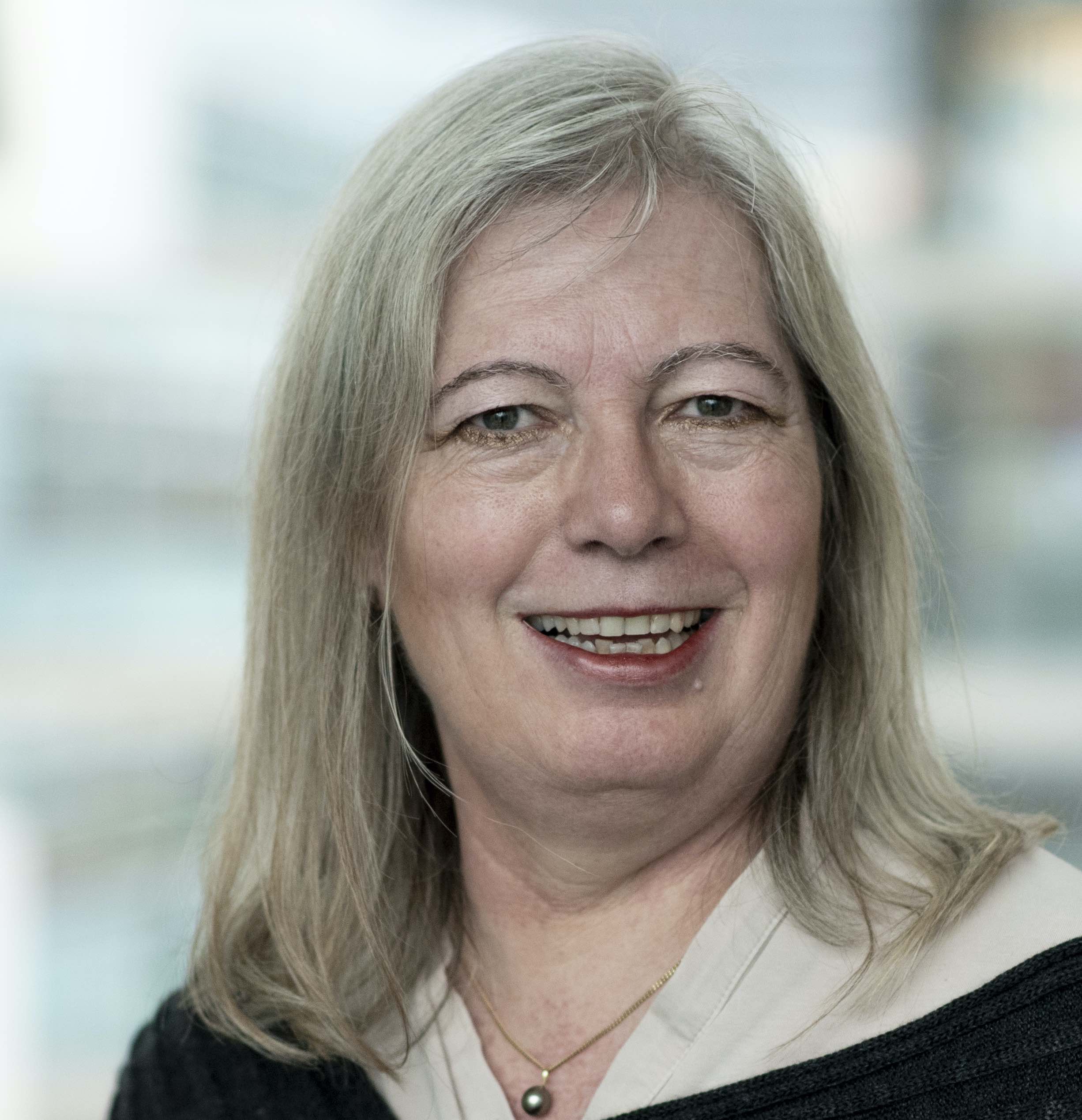
- Cooperative and Human Aspects of Software Engineering
- Continuous Software Engineering (CSE)
- Use Orientation in Software Engineering
- +۷ مورد دیگر
Yvonne Dittrich is a Professor at the IT University of Copenhagen (ITU), affiliated with the Software Development Group. She holds an adjunct professorship at IIT Mandi, India, and has held roles at institutions in Sweden, Canada, and the U.S. Her research focuses on cooperative and human aspects of software engineering, including Continuous Software Engineering (CSE), use-oriented design, and end-user development (EUD). She has led projects like SAIA-Farm (sustainable irrigation via satellite analytics) and contributed to frameworks like 'Cooperative Method Development.' **Education**: PhD in Computer Science (Hamburg University, 1997), M.Sc. from TU Darmstadt. **Research Interests**: She pioneers methods bridging software engineering with human-centric practices, emphasizing sustainability and participatory design. Her work addresses challenges in global software development, agile methodologies, and software ecosystems. **Awards**: TAT-Förderpreis (1989), Best Paper Award (2018), Distinguished Reviewer recognition (2018). **Grants & Leadership**: Led projects funded by the Danish Innovation Fund, EU, and others. Served on editorial boards for IEEE Transactions on Software Engineering and Journal of Systems and Software. **Labs/Teams**: Collaborates with labs in Denmark, India, and Canada on interdisciplinary projects, including smart irrigation systems and fintech ESG data commons.

- Wind Turbine Engineering
- Offshore Wind Turbines Engineering
- Offshore Wind Farms Engineering
- +۳ مورد دیگر
Athanasios Kolios serves as Professor and Head of the Structural Integrity and Loads Assessment section within the Department of Wind and Energy Systems at the Technical University of Denmark (DTU). His work focuses on advancing wind energy technology through structural analysis, materials science, and system optimization for both onshore and offshore applications. His primary research domains include wind turbine structural integrity, offshore wind farm layout optimization, and structural health monitoring systems. He investigates critical challenges in operation and maintenance strategies, techno-economic metrics for wind projects, and materials behavior under dynamic loading conditions. His fingerprint analysis reveals dominant expertise in Wind Turbine Engineering (100%), Offshore Wind Turbines Engineering (45%), and Offshore Wind Farms Engineering (36%). Recent publications demonstrate strong emphasis on data-driven approaches for wind energy systems, including structural optimization algorithms, virtual sensing techniques, and techno-economic assessments of offshore projects. His work consistently bridges theoretical engineering principles with practical industry applications, particularly in Brazilian and European offshore wind contexts. Scientific Awards: No scientific awards were documented in the provided information Professor Kolios actively supervises five PhD candidates across major research initiatives while mentoring Master's students in structural wind energy applications. His research portfolio includes six significant projects addressing critical industry needs: PhD Supervision: Chopard (anomaly interpretation), Piovesan (risk-based technology qualification), Yildirim (floating turbine uncertainty), Rodrigues Faria (autonomous operation), Al-Hagri (offshore structure maintenance) Master's Supervision: Rushil S. Mahajan (monopile buckling analysis) Current Projects: Decision support systems, life cycle cost modeling, floating wind turbine modeling, autonomous operation frameworks, sustainable offshore structure design As section head at DTU Wind and Energy Systems, he leads an internationally collaborative research group focused on structural integrity assessment, load prediction methodologies, and materials innovation for next-generation wind turbines. The team maintains strong industry partnerships and contributes to global wind energy standards development through participation in initiatives like ISSC.

Peter Sestoft is a Professor at the IT University of Copenhagen (ITU), leading the Computer Science Department since 2017. His primary roles include academic leadership, research in programming languages and software engineering, and teaching. He holds a PhD in Computer Science from the University of Copenhagen (1991) and has held academic positions at institutions like the Royal Veterinary and Agricultural University and the Technical University of Denmark before joining ITU in 1999. His research focuses on programming languages, functional and managed object-oriented languages, parallel programming, compilers, and spreadsheet implementation technologies. He has developed influential tools like the C5 Generic Collection Library for C# and Moscow ML, a Standard ML implementation. His work on Funcalc and Corecalc advanced spreadsheet technology with user-defined functions and efficient recalculation algorithms. Key contributions include over 30 publications, including books on programming language concepts and Java/C# syntax. He has led major research projects such as 'Popular Parallel Programming' (P3) and 'Probabli' for actuarial calculations. His academic service includes roles on national grant committees and international conference organizing committees. Notable advising includes PhD students like Andrzej Wasowski (ITU Professor) and David Christiansen (Director of Haskell Foundation). His work has been recognized through grants exceeding 25 million DKK and collaborations with institutions like Microsoft Research and Harvard University.

Irena Vodenska is Professor of Finance and Director of Finance Programs at Boston University’s Metropolitan College, Department of Administrative Sciences. She holds a PhD in statistical finance and an MA in economics from Boston University, an MBA from Vanderbilt University, and a BS in computer information systems from the University of Belgrade. She is also a Chartered Financial Analyst (CFA) charter holder. Her research is at the intersection of finance, complexity science, and artificial intelligence, focusing on systemic risk modeling, ESG investments, and financial network dynamics. She has led major interdisciplinary research projects funded by the National Science Foundation, the European Commission, and the U.S. Army Research Office. PhD, Statistical Finance – Boston University MA, Economics – Boston University MBA – Owen Graduate School of Management, Vanderbilt University BS, Computer Information Systems – University of Belgrade Dr. Vodenska’s research interests include network theory in finance, systemic risk propagation, AI-powered ESG analysis, cryptocurrency price forecasting, and financial regulation. She employs big data, machine learning, and natural language processing to analyze financial news, market dynamics, and corporate sustainability. Her work investigates how climate disinformation spreads via social networks and influences public policy and governance. The recent articles highlight a consistent focus on modeling financial and economic systems using network science and AI. Trends include systemic stress testing, sentiment analysis in financial markets, cascading failures, and the interplay between macroeconomic indicators and financial networks. Her work spans econophysics, behavioral finance, public health economics, and ethical AI in fintech. National Science Foundation (NSF) research grant (2023) NSF EAGER Award (2014–2015) European Commission FET Open Grant (2012–2014) U.S. Army Research Office (ARO) Grant (2020–2021) MEXT Post-K Computer Grant, Japan (2016–2019) Alexander Hamilton Fulbright Fellowship (1994) Owen Graduate School Fellowship (1995–1996) Dr. Vodenska teaches core finance courses such as Investment Analysis and Portfolio Management, Derivatives Securities, and Financial Regulation and Ethics. She co-developed the MET AD 678 course with Professor Tamar Frankel from BU Law, emphasizing real-world case studies and ethical decision-making. Her research grants have supported innovative work in systemic risk modeling, AI for ESG, and financial network stability. She is actively involved in mentoring, conference organization, and editorial roles in leading journals. She is a key organizer of the International School and Conference on Network Science (NetSci) and the Big Data in Economics, Science, and Technology (BEST) Conference. Her lab and research team focus on complexity in financial systems, bringing together economists, physicists, computer scientists, and data analysts to study global financial stability and sustainability.

Martin Elsman is a full-time Professor in the Programming Languages and Theory of Computation section at the Department of Computer Science, University of Copenhagen (DIKU). He serves as head of the PLTC section and head of studies for the BSc education in Computer Science and Economics. Elsman is also an active maintainer of several software tools including the MLKit and SMLtoJs. Joined DIKU in 2012 after 4 years at SimCorp (2008-2012) and previous Associate Professorship at IT University of Copenhagen (2003-2008). Co-developer of Futhark, TAIL APL compiler, SMLtoJs, and SMLserver. Education: M.Sc. in Engineering, Technical University of Denmark Ph.D. in Computer Science, University of Copenhagen (DIKU), supervised by Mads Tofte. Research Interests: Elsman works on programming language design and implementation, with a focus on functional programming, module systems, domain-specific languages for financial contracts, region-based memory management, compilation techniques for parallelism, program optimization, and static type systems. His work spans both theoretical and applied domains, including blockchain-based financial contract execution, web technology, and GPU programming using functional languages. Publication Trends: His recent articles focus on functional programming, array programming, parallelism, and memory management. Topics include region inference, type systems for data-parallelism, program optimization techniques, and domain-specific compilation for financial and quantum computing. He frequently collaborates with Troels Henriksen and others on tools like Futhark and MLKit.

- Cybersecurity
- Network Security
- Machine Learning
- +۵ مورد دیگر
Jens Myrup Pedersen is a Professor at Aalborg University's Department of Electronic Systems within The Technical Faculty of IT and Design. He is affiliated with the Cyber Security Group and focuses on improving digital wellbeing through cybersecurity research. His primary research interests include botnets, network security, machine learning applications in cybersecurity, and cybersecurity education. He leads or participates in projects such as Cyber Safe Robotics , AI:SECURITY , and GAMESS , addressing topics like AI-driven security, gamification in education, and secure software development. Pedersen has contributed to over 235 publications since 2003, emphasizing cybersecurity threats, network analysis, and educational methodologies. His work extends to cybersecurity training platforms like Haaukins and The Privacy Universe , designed to enhance user awareness through gamification. Pedersen collaborates internationally, engaging in initiatives like the European Cyber Security Challenge and cybersecurity hackathons. He holds roles in professional organizations such as the Danish Cybersecurity Board and the IDA association. Recent research highlights include NLP security ethics, OT cyber resilience, and cryptocurrency forecasting tools. His projects often bridge academia and industry, focusing on real-world impact through student-driven projects and cross-disciplinary collaborations.

Julian Antony Quick is a Researcher at the Department of Wind and Energy Systems within the Technical University of Denmark . His work focuses on wind farm optimization, energy management, and market-driven renewable energy systems. Active research in wind farm control and market integration Specializes in hybrid power plant design and uncertainty quantification Contributes to UN Sustainable Development Goals through wind energy research His research explores advanced optimization techniques for wind resource assessment, turbine design, and revenue maximization in electricity markets. Key areas include: Compressed air energy storage integration Wind farm layout optimization Surrogate-based system modeling Dynamic energy management strategies While not explicitly listed, his collaborative projects suggest active involvement in PhD supervision and industry partnerships across Europe. His recent publications demonstrate a strong focus on translating technical advances into economic benefits through: Market-aware wind farm design Data-driven flow control Hybrid system efficiency improvements SDG-aligned sustainable energy solutions

Yan Zhaoمشاهده پروفایل
دانشیار
Yan Zhao is an Associate Professor in the Department of Computer Science at Aalborg University, Denmark, affiliated with The Technical Faculty of IT and Design. His research focuses on data engineering, science, and systems, with a particular emphasis on anomaly detection, machine learning, and spatio-temporal data analysis. He holds a Ph.D. in Computer Science (specific education details not explicitly provided). Research Interests: Dr. Zhao's work spans anomaly detection, autoencoders, attention mechanisms, preference learning, multivariate time series, and computational efficiency. His research often integrates machine learning with real-world applications in spatial crowdsourcing, trajectory analysis, and data privacy. Publications: With 72+ publications, his recent work emphasizes spatio-temporal prediction frameworks, federated learning, and efficient time series analysis. Notable contributions include frameworks for continuous learning on streaming data and privacy-preserving clustering in spatial crowdsourcing. Grants & Supervision: He has supervised one Ph.D. student and actively contributes to research grants focusing on data engineering and smart systems. His work bridges theoretical advancements with practical applications in transportation, social networks, and IoT.
Kasper Hornbæk is a Professor at the Department of Computer Science, University of Copenhagen, specializing in Human-Centred Computing. He conducts research in human-computer interaction (HCI), usability, eye tracking, visualization, and software engineering. Primary Fields: Human-Computer Interaction, Usability Research, Eye Tracking, Visualization, Software Engineering Recent Collaborations: International (country/territory-level) partnerships in HCI and AI Research Outputs: 228 publications focusing on multimodal interaction, VR, and causal modeling His work explores audio-tactile integration, theoretical frameworks in HCI, and principles for user interface design through empirical studies and meta-analyses. Recent projects include heartbeat resonance interfaces and critiques of experimental methodology. Contact: kash@di.ku.dk | Research Website