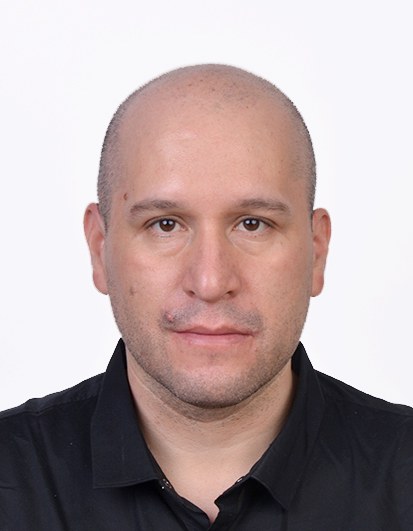
Dr. Edgar Landinez Borda is a researcher at the Jülich Supercomputing Center (JSC) , Forschungszentrum Jülich GmbH. His work focuses on high-performance computing (HPC), quantum physics, and statistical physics, with a strong emphasis on quantum Monte Carlo methods and electronic structure theory. Research Areas: Quantum Monte Carlo simulations, machine learning integration in quantum physics, and computational modeling of many-body systems. Key Contributions: Development and optimization of quantum Monte Carlo software (e.g., QMCPACK), charge density prediction models, and finite-size extrapolation techniques. Collaborations: Engaged in open-source quantum chemistry library projects like TREXIO. His recent publications highlight advancements in quantum simulation accuracy, machine learning applications for many-body systems, and scalable computational methods for materials science.
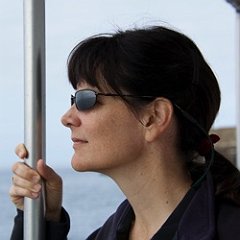
Kathleen Fisher is a Professor in the Computer Science Department at Tufts University. Previously, she held positions as a Principal Member of the Technical Staff at AT&T Labs Research, a Consulting Faculty Member at Stanford University, and a program manager at DARPA where she started and managed the HACMS and PPAML programs. Professor Fisher's research focuses on advancing programming language theory and practice, with particular emphasis on domain-specific languages for managing ad hoc data. Her main contributions include the Hancock system for efficiently building signatures from massive transaction streams and the PADS system for managing ad hoc data. Recently, she has been exploring synergies between machine learning and programming languages, and applying programming language advances to build more secure systems. The Fisher Lab specifically focuses on using programming language techniques such as domain-specific languages, program synthesis, and formal methods to make it easier, safer, and faster to ingest untrusted or ill-formed data. Analysis of her recent publications reveals a consistent focus on formal verification, parser technology, bidirectional transformations, and domain-specific language design. Her work spans theoretical foundations while maintaining practical applications in data management and security. A notable trend in her research is the application of programming language techniques to solve real-world data challenges, particularly in handling unstructured or ill-formed data. Her scientific recognition includes: ACM Fellow Professor Fisher has held significant leadership roles in the programming languages community, including serving as program chair for FOOL, ICFP, CUFP, and OOPSLA, and as General Chair for ICFP 2015. She was past Chair of the ACM Special Interest Group in Programming Languages (SIGPLAN), past Co-Chair of CRA's Committee on the Status of Women (CRA-W), and has served as an editor for the Journal of Functional Programming and as an Associate Editor for TOPLAS. She has also been active in mentoring through PLMW (Programming Languages Mentoring Workshop), focusing on topics like work/life balance, career options, and time management. Her laboratory work centers on creating tools and techniques that bridge the gap between theoretical programming language research and practical data management challenges, with particular emphasis on making data ingestion safer and more efficient.
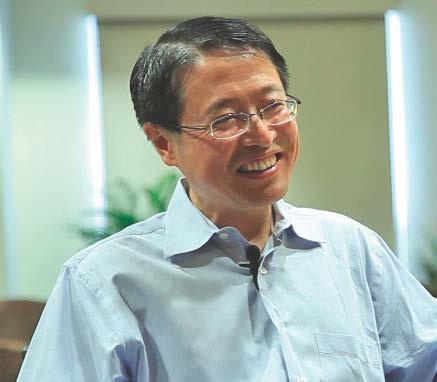
Dr. Samuel Shen is a Distinguished Professor at the Department of Mathematics and Statistics , San Diego State University (SDSU) and a Visiting Research Mathematician at Scripps Institution of Oceanography, UCSD. He co-founded the SDSU Big Data Analytics (BDA) MS Program and currently serves as Co-Director of the Center for Climate and Sustainability Studies . Previously, he was McCalla Professor at the University of Alberta and President of CAIMS . B.Sc. in Engineering Mechanics (1982) from East China Engineering Institute M.A. (1985) and Ph.D. (1987) in Applied Mathematics from University of Wisconsin-Madison His research spans three major areas: Climate Informatics : Developed Spectral Optimal Averaging (SOA) and Ensemble Canonical Correlation Analysis (ECCA) for climate uncertainty quantification Data Science : Created US Climate Prediction Center's operational prediction tools and filed a US patent on spectral optimal gridding Nonlinear Wave Dynamics : Advanced theoretical understanding of stochastic differential equations for climate modeling Recent publications focus on 4D climate visualization , heat stress mitigation , AI democratization in climate science , and cloud-aerosol interactions . His work has secured major grants including: $2.7M NSF AI Institute grant (2023) $1.9M California Climate Action grant (2023) $2.1M NSF EaSM-3 grant (2014) Scientific accolades include: Arthur Beaumont Distinguished Service Award (CAIMS) US National Research Council Senior Fellowship Chinese Academy of Sciences Well-known Overseas Scholar He leads the SDSU Climate Informatics Lab (founded 2006) and has been featured in New York Times , NASA Top Story , and Nature Geoscience press releases.
Alexander Wilkie is a Full Professor at Charles University, Faculty of Mathematics and Physics (MFF), Department of Software and Computer Science Education. He has been affiliated with Charles University since 2008 and leads the computer graphics branch of the CGG research group. Position: Full Professor, Head of Computer Graphics Branch (CGG) Location: Mala Strana Room 425, Prague 1 Research interests include Predictive Rendering , Spectral Rendering , Fluorescence Effects , Polarization Modeling , and 3D Printing Optimization . His work focuses on creating physically accurate rendering techniques that predict real-world material appearances, particularly for fluorescent and polarizing surfaces. Recent publications highlight advancements in constrained spectral uplifting , fluorescence handling , and sky/atmosphere modeling . These works are published in venues like Computer Graphics Forum , SIGGRAPH , and Optics Express . Professional roles include membership in ACM SIGGRAPH and IEEE , reviewer for journals/conferences like Computer Graphics Forum (CGF) , and local organizer of EGSR 2011 . Labs and teams: Wilkie is part of the CGG research group , where members present ongoing work at seminars and collaborate on projects like the ART: Advanced Rendering Toolkit and DISTRO (Horizon 2020 grant).
Dr. Vesna Marinković is an Associate Professor at the Department of Computer Science, Faculty of Mathematics, University of Belgrade. She is actively involved in teaching courses such as Computer Graphics, Algorithms and Data Structures, Database Programming, and Construction and Analysis of Algorithms (both undergraduate and Master's level). Her research focuses on automated reasoning in geometry and coherent logic. Education: Graduated from Faculty of Mathematics, University of Belgrade (2006, GPA 9.45/10) PhD in Computer Science (2015): Automated solving of construction problems in geometry under Professor Predrag Janičić Her research combines formal theorem proving with automated reasoning, particularly applied to geometric construction problems. She has developed systems like ArgoTriCS for automated triangle construction and contributed to coherent logic frameworks for readable proofs. Her work also extends to algorithm design and educational tools for teaching computational geometry. Recent publications highlight her focus on geometric problem-solving automation, including methods for Wernick's list of problems and constructibility classes in triangle location. Her work bridges theoretical mathematics with practical algorithm implementation. Academic Affiliations: Member of ARGO (Automated Reasoning GrOup) Department of Computer Science, Faculty of Mathematics, University of Belgrade She teaches courses at both undergraduate and graduate levels, including Computer Graphics , Algorithms and Data Structures , and Construction and Analysis of Algorithms . Her teaching emphasizes practical implementation and theoretical foundations.
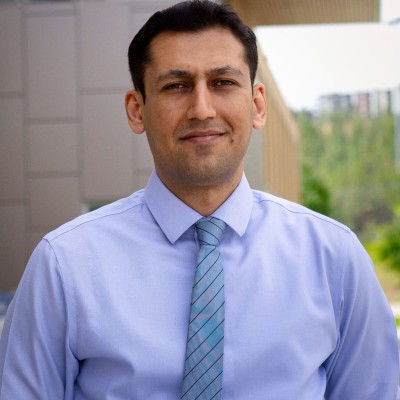
Mohammad Arjmand is an Assistant Professor at the University of British Columbia's Okanagan campus (UBCO) within the School of Engineering, Faculty of Applied Science. He holds the prestigious position of Canada Research Chair (Tier 2) in Advanced Materials and Polymer Engineering and serves as the Lead of the Plastic Recycling Research Cluster at UBCO. Recognized as a leading and award-winning researcher in nanotechnology and polymer engineering, Dr. Arjmand has established himself as a significant contributor to his field despite being early in his academic career. Canada Research Chair (Tier 2) in Advanced Materials and Polymer Engineering Lead of Plastic Recycling Research Cluster (PRRC) at UBCO Graduate student supervisor Dr. Arjmand's research expertise spans multiple educational milestones including a PhD in Chemical/Polymer Engineering from the University of Calgary, an MSc from Sharif University of Technology in Iran, and a BSc in Chemical Engineering from Shiraz University, Iran. His postdoctoral training includes positions at the University of Toronto and the University of Calgary, along with guest research at IPF in Dresden, Germany. His primary research focuses on the synthesis and engineering of multifunctional nanomaterials including carbon nanotubes, graphene, graphene quantum dots, metal-organic frameworks, and MXenes. He specializes in developing polymer nanocomposites through various techniques such as molding, 3D printing, electrospinning, and creating hydrogels and aerogels. These materials exhibit enhanced physical properties including electrical conductivity, magnetic response, electromagnetic interference shielding, sensing capabilities, wastewater treatment potential, mechanical strength, thermal stability, and corrosion resistance. His work bridges fundamental materials science with practical applications in environmental sustainability, particularly through his leadership in the Plastic Recycling Research Cluster. Dr. Arjmand's publication record demonstrates significant scholarly impact with over 150 journal papers, 6 journal-featured cover photos, 2 filed patents, and 107 conference proceedings/abstracts/presentations as of 2022. His recent work (2022-2024) shows a strong trend toward sustainable materials development, with particular emphasis on plastic recycling technologies, advanced wastewater treatment solutions using novel nanomaterials, and the development of multifunctional aerogels with diverse applications. His research increasingly integrates circular economy principles with advanced materials engineering. Dr. Arjmand has received numerous prestigious awards recognizing his contributions to the field: Canadian Society of Chemical Engineering (CSChE) Innovation Award (2022) Polymeric Materials: Science and Engineering (PMSE) Young Investigator Award (2022) Polymer Processing Society Early Career Award (2021) Faculty Emerging Academic Award (2021-2022) Faculty Research Excellence Award (2020-2021) As a graduate student supervisor, Dr. Arjmand mentors the next generation of materials scientists and engineers through his Nanomaterials and Polymer Nanocomposites Laboratory (NPNL). His research program attracts significant funding from various sources supporting his work in advanced materials development and plastic recycling initiatives. His leadership of the Plastic Recycling Research Cluster demonstrates his commitment to addressing pressing environmental challenges through innovative materials solutions. Dr. Arjmand leads the Nanomaterials and Polymer Nanocomposites Laboratory (NPNL) at UBCO, which serves as the hub for his research activities. The lab focuses on synthesizing advanced nanomaterials and developing polymer nanocomposites with enhanced properties for various applications. As the Lead of the Plastic Recycling Research Cluster, he coordinates interdisciplinary research efforts focused on sustainable plastic waste management and circular economy solutions.
N Park is an Associate Professor of Computer Science at Oklahoma State University, where he has been affiliated since 2004. His research focuses on blockchain technology, distributed computing systems, cybersecurity, and performance modeling of decentralized networks. He has contributed extensively to the development of blockchain protocols, including innovative models for NFT chains, hybrid chains, and real-time blockchain systems. His work often addresses scalability, security, and efficiency through queueing theory and distributed systems design. Key research areas include blockchain consensus mechanisms (e.g., PoS and PoW comparisons), IoT security for drones, and optimization of systems like Hyperledger Fabric and Ethereum. He has published over 139 scholarly works, with notable contributions to blockchain interoperability, transaction prioritization, and on-off chain data management. His recent projects include ReBAS (a redactable blockchain for IoT drones) and performance models for NFT chains. In teaching, he instructs courses such as Computer Organization and Architecture, Operating Systems, and advanced topics in computer systems. He has also advised doctoral and master's students through dissertation and thesis courses. His grant-funded work includes the GenCyber Cowboy Teacher Cybersecurity Academy (2023–2025), highlighting his commitment to cybersecurity education. Dr. Park collaborates widely, with co-authors from academia and industry. His interdisciplinary approach bridges theoretical computer science with practical applications in distributed systems, making him a leading figure in blockchain and systems research.
Huaicheng Li is an Assistant Professor in the Department of Computer Science at Virginia Tech, affiliated with the College of Engineering. He leads the MoatLab research group, focusing on operating systems, storage systems, memory systems, and systems architecture. His work emphasizes performance optimization, resource efficiency, and programmability for modern hardware. Education: Ph.D. in Computer Science (University of Chicago, 2020), M.S. (University of Chicago, 2018), and B.S. in Computer Science and Technology (Wuhan University, China, 2013). Research interests include: Co-designing software/hardware stacks for low latency and high throughput Offloaded/disaggregated systems for resource efficiency Systems support for emerging hardware like CXL Key awards include the NSF CAREER Award (2024) and Google Research Scholar Award (2025), with publications in top conferences like ASPLOS, SOSP, and FAST. Recent work explores CXL memory pooling (Pond), tiered memory management, and SSD optimization. Advising includes 10+ PhD/Master’s students. Teaching roles include courses like Advanced Linux Kernel Programming and Operating Systems. Research is supported by NSF, Samsung, and Google grants. MoatLab develops open-source tools such as Pond, IODA, and LeapIO, emphasizing practical system implementation and benchmarking.
Serap Şahin is an Assistant Professor in the Computer Engineering Department at Izmir Institute of Technology. She holds a B.S. (1987), M.Sc. (1989), and Ph.D. (2006) in Computer Engineering from Ege University. Her academic career began in 2002 after working at Arkas Holding as an Information Systems Coordinator, where she managed transportation and logistics systems. She completed a postdoctoral fellowship at the European Commission’s Joint Research Center (2010) focusing on Next Generation Network Security, supported by TUBITAK. Her research interests span cybersecurity, information systems security, cryptology, and cloud computing security. Notable contributions include studies on social network privacy, blockchain applications, forensic data analysis, and homomorphic encryption systems like EDU-VOTING. She has published widely in journals such as the International Journal of Information Security Science and Turkish Journal of Electrical Engineering and Computer Sciences. Key achievements include a TUBITAK Postdoctoral Fellowship (2010) and leadership in projects like “Homomorphic Cryptosystem Based Electronic Election System Solution” funded by BAP. Her work bridges theoretical cryptography with practical applications in secure communication, data privacy, and network security.
Marc Snir is a Professor at the University of Illinois’s Siebel School of Computing and Data Science. He has led significant research contributions in high-performance parallel computing, including work on the Message Passing Interface (MPI) and IBM’s SP scalable parallel system. As Department Head from 2001–2007, he oversaw the transition to the Siebel Center and expanded the department’s capabilities. He later served as the first director of the Illinois Informatics Institute, chief software architect for the Blue Waters supercomputer, and co-director of the Universal Parallel Computing Research Center (UPCRC). His research focuses on parallel computing systems, fault resilience, and I/O optimizations. He has been recognized with the 2014 Distinguished Alumni Service Award. His work spans exascale computing, distributed systems, and machine learning applications in HPC. He has contributed to projects like Argo (an exascale OS/runtime), Aluminum (a GPU-aware communication library), and LCI (Lightweight Communication Interface). His research emphasizes improving scalability, energy efficiency, and reliability in high-performance systems. He has advised numerous students (names not listed here) and led teams in advancing HPC tools and methodologies. His involvement in initiatives like UPCRC and the Blue Waters project underscores his commitment to bridging theoretical research and practical applications in computing.
Dr. Annette Osprey is a Computational Scientist affiliated with the National Centre for Atmospheric Science (NCAS) and the Department of Meteorology at the University of Reading . Her research focuses on performance modeling , climate modeling , and high-performance computing (HPC) . She leads projects like INSPECT and contributes to advancing computational efficiency in atmospheric and oceanographic studies. Key areas include optimizing climate models (e.g., FAMOUS) and addressing challenges in parallel filesystems and multi-core architectures. Her work spans oceanography (Southern Ocean dynamics) and atmospheric science (ozone-circulation feedbacks), with publications in journals like Journal of Geophysical Research and Nature Climate Change . She holds office HP 111 in the Harry Pitt building and can be reached at a.osprey@reading.ac.uk .
Hossein Abroshan is a Senior Lecturer at Anglia Ruskin University (ARU), affiliated with the Faculty of Science and Engineering's Computing and Information Science department. He holds roles as Course Director for the MSc Cyber Security program and Director of the Cyber Security, Networking, and Applications Research Group (CNA). With over 25 years of experience across academia and industry, his expertise spans cybersecurity, AI, and cyberpsychology, supported by certifications like CISM and ISO27001 Lead Auditor. Education includes a PhD in Cyber Security (Business Economics) from Ghent University, Belgium, alongside postgraduate certificates in Learning & Teaching and Psychology. His research focuses on human factors in cybersecurity, phishing resilience, and AI-driven threat detection, with interdisciplinary interests in IIoT/OT security and digital sustainability. Recent research grants include leadership in projects like SIROCCO (AI-based windfarm security) and OTRAND (ransomware detection in OT networks), totaling over £90k in funding. He contributes to global initiatives such as the European Data Experts Group (GEDE) and IEEE editorial boards. Publications emphasize behavioral cybersecurity, hybrid encryption, and sustainable ICT practices.
Xiaofei Zhang is an Associate Professor in the Department of Computer Science at the University of Memphis. His research focuses on developing efficient algorithms and toolkits for scalable data management, including graph databases and distributed computing systems. Dr. Zhang holds a PhD in Computer Science and Engineering from The Hong Kong University of Science and Technology (2013). Before joining the University of Memphis, he was a postdoctoral research fellow at the University of Waterloo's Cheriton School of Computer Science, and held postdoctoral positions at the Chinese University of Hong Kong and HKUST in 2014 and 2015. His research interests span novel storage models, query optimization (both exact and approximate), and distributed/parallel computing theory. Key areas include graph data management, query acceleration, and scalable systems for large-scale datasets. He has contributed to tools like Hu-fu for secure spatial queries and frameworks for graph sparsification using deep reinforcement learning. Recent work emphasizes machine learning integration in data management, such as reinforcement learning strategies for order fulfillment and quality-diversity optimization techniques. Dr. Zhang's publications address challenges in distributed systems, probabilistic data processing, and efficient query execution over large graphs. No scientific awards have been explicitly listed. His advising and grant activities are not detailed in the provided text, though his research indicates active involvement in collaborative projects. His work contributes to both theoretical advancements and practical systems for modern data management challenges.
Peter Honeyman is a retired Professor affiliated with the University of Michigan. His academic lineage traces back to Princeton University where he earned a PhD in 1980 under advisor Jeffrey David Ullman. His research focuses on distributed systems, cybersecurity, and data storage, with notable contributions to file systems (NFS, Grid storage), medical device security, and hardware vulnerability analysis. He has pioneered work on acoustic attacks against MEMS sensors and malware in clinical environments. Education: PhD in Computer Science, Princeton University (1980). Advisor: Jeffrey David Ullman. Research interests: Cybersecurity (medical devices, embedded systems), distributed file systems, data replication, and reliability engineering. His work bridges theoretical computer science with practical applications in high-performance computing and clinical systems. Publications span acoustic sensor attacks, Grid storage architectures, and malware analysis in healthcare. He has contributed to standards like NFSv4 and pNFS, advancing scalable distributed storage solutions. Labs/Teams: Associated with the Center for Information Technology Integration (CITI) at the University of Michigan. His research group explores secure distributed systems and IoT security challenges.
Dawson Engler is an Associate Professor of Computer Science and Electrical Engineering at Stanford University. He holds a PhD from MIT (1998) and is affiliated with the School of Engineering. His research focuses on developing software systems and uncovering underlying principles, with a strong emphasis on static analysis, symbolic execution, and bug detection in real-world systems. Engler co-founded Coverity, a company commercializing static analysis tools, and has made significant contributions to operating systems, including the Exokernel project. Education: PhD in Computer Science, MIT (1998) Research Interests: Engler’s work bridges theoretical and applied computer science, emphasizing practical systems and security. Key areas include static analysis for bug detection, symbolic execution for test generation, and secure compiler extensions. His contributions span operating systems, compiler design, and software reliability, with a focus on real-world applications. Awards: ACM Grace Hopper Award (2008) SIGOPS Mark Weiser Award (2006) Best Paper Awards at OSDI (2008, 2004, 2000) Advising & Grants: Engler advises students including Cristian Cadar, Daniel Dunbar, and Junfeng Yang. His work has been supported by grants focused on improving software reliability and security. He co-founded Coverity, which commercialized static analysis tools, demonstrating the practical impact of his research. Labs & Collaborations: His research group at Stanford explores cutting-edge methods in software analysis and security, collaborating with industry on tools like Klee and EXE for automated bug detection.