معرفی
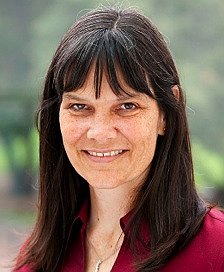
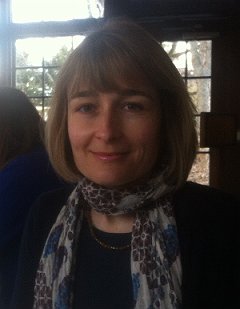
Kathleen Fisher is a Professor in the Computer Science Department at Tufts University. Previously, she held positions as a Principal Member of the Technical Staff at AT&T Labs Research, a Consulting Faculty Member at Stanford University, and a program manager at DARPA where she started and managed the HACMS and PPAML programs.
Professor Fisher's research focuses on advancing programming language theory and practice, with particular emphasis on domain-specific languages for managing ad hoc data. Her main contributions include the Hancock system for efficiently building signatures from massive transaction streams and the PADS system for managing ad hoc data. Recently, she has been exploring synergies between machine learning and programming languages, and applying programming language advances to build more secure systems. The Fisher Lab specifically focuses on using programming language techniques such as domain-specific languages, program synthesis, and formal methods to make it easier, safer, and faster to ingest untrusted or ill-formed data.
Analysis of her recent publications reveals a consistent focus on formal verification, parser technology, bidirectional transformations, and domain-specific language design. Her work spans theoretical foundations while maintaining practical applications in data management and security. A notable trend in her research is the application of programming language techniques to solve real-world data challenges, particularly in handling unstructured or ill-formed data.
Her scientific recognition includes:
- ACM Fellow
Professor Fisher has held significant leadership roles in the programming languages community, including serving as program chair for FOOL, ICFP, CUFP, and OOPSLA, and as General Chair for ICFP 2015. She was past Chair of the ACM Special Interest Group in Programming Languages (SIGPLAN), past Co-Chair of CRA's Committee on the Status of Women (CRA-W), and has served as an editor for the Journal of Functional Programming and as an Associate Editor for TOPLAS. She has also been active in mentoring through PLMW (Programming Languages Mentoring Workshop), focusing on topics like work/life balance, career options, and time management.
Her laboratory work centers on creating tools and techniques that bridge the gap between theoretical programming language research and practical data management challenges, with particular emphasis on making data ingestion safer and more efficient.