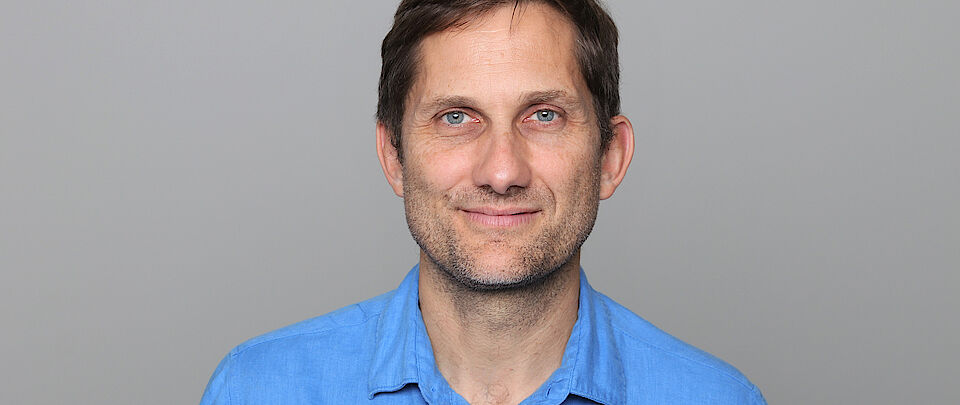
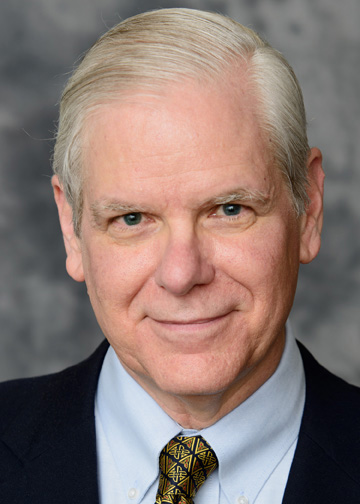
Helen Rees is Professor of Ethnomusicology at UCLA and Director of the World Music Center, specializing in Chinese musical traditions with emphasis on southwest China's ethnic minorities, ritual practices, and intellectual property frameworks within intangible cultural heritage policies. Her academic foundation includes: B.A. in Chinese, Oxford University, 1987 M.A. in Chinese, Oxford University, 1991 Ph.D. in Music, University of Pittsburgh, 1994 Diploma in flute teaching, Royal College of Music, London Diploma in baroque flute performance, Trinity College, London Diploma in recorder teaching and performance, Trinity College, London Rees's research integrates fieldwork from southwest China and Shanghai to examine tourism's impact on musical traditions, organology (instrument studies), and transnational transmission of Asian musics. Recent scholarship critically engages East Asia's intangible cultural heritage policies and material culture frameworks, reflecting deep interdisciplinary connections between musicology, anthropology, and legal studies. Her publication trajectory reveals consistent focus on Naxi musical traditions and evolving methodological approaches—from historical analysis in Echoes of History (2000) to contemporary multimedia projects like the award-winning documentary Playing the Flute in Shanghai (2021) and the cross-cultural edited volume Instrumental Lives (2024), demonstrating expanding scope from regional studies to pan-Asian material culture networks. Through the World Music Center, Rees bridges academic research and public engagement by facilitating international cultural exchanges at venues including the Smithsonian Folklife Festival, while maintaining active performance practice in Chinese flutes and recorder as integral to her scholarly methodology.
Prof. Dr. Beat Hintermann is a Professor of Public Finance at the University of Basel's Faculty of Business and Economics (WWZ). His research focuses on public sector economics with particular emphasis on climate policy and mobility behavior. Hintermann leads empirical research using GPS tracking data to study transportation choices and the effectiveness of pricing mechanisms to encourage sustainable mobility options. His research interests span several interconnected areas: public sector economics, climate policy design, transportation economics, and environmental economics. He investigates how pricing mechanisms can influence individual behavior to reduce environmental externalities, with special attention to sustainable mobility solutions like e-biking. His work often combines economic theory with rich empirical analysis of real-world data, particularly examining the intersection of environmental policy and individual decision-making. Hintermann's recent publications reveal a strong focus on empirical mobility studies, particularly through the MOBIS dataset that tracks mobility behavior in Switzerland. His research shows how transport pricing can effectively promote e-biking and reduce negative externalities. He has also conducted significant work on carbon pricing mechanisms, emissions trading systems, and the impacts of climate policies on economic behavior. His work during the pandemic period examining mobility changes provides valuable insights into how external shocks affect transportation choices. Hintermann's research methodology is characterized by rigorous empirical analysis, often employing field experiments and large-scale GPS tracking data to measure behavioral responses to policy interventions. His work on Pigovian transport pricing represents an important contribution to understanding how economic instruments can be designed to address environmental externalities in the transportation sector. As part of the University of Basel's Faculty of Business and Economics, Hintermann contributes to research centers focused on sustainable development and environmental economics. His work bridges academic research with practical policy applications, providing evidence-based insights for policymakers designing effective environmental and transportation policies.
Junfei Li is an Assistant Professor in the School of Mechanical Engineering at Purdue University. His research focuses on advanced acoustic technologies, including acoustic tweezers, acoustofluidics, metamaterials, and underwater communication systems. He specializes in multiphysics wave propagation, noise control, and energy harvesting. Li's work bridges fundamental science and engineering applications in biomedical devices, sustainable energy, and advanced materials. Research Interests: Acoustic tweezers for microscale manipulation Design of metamaterials for acoustic control Ultrasound and underwater communication systems Energy-efficient noise mitigation strategies His recent publications emphasize innovations in acoustic metasurfaces, nonreciprocal sound propagation, and biomedical acoustic applications. Li’s research has implications for improving medical imaging, energy sustainability, and next-generation acoustic devices. Awards & Recognition: None explicitly listed in the provided materials. Advising & Grants: No student advisees or grant information specified in the text.
Scott Hopkins is a Professor in the Department of Chemistry at the University of Waterloo, specializing in Physical Chemistry. His research integrates machine learning with experimental techniques to study ion mobility, mass spectrometry, and spectroscopic analysis. He directs the Hopkins Laboratory, focusing on computational predictions of chemical behaviors and molecular interactions. His work addresses fundamental questions in gas-phase chemistry, cluster formation, and analytical method development. Research interests span physical chemistry, computational modeling, and analytical instrumentation, with a strong emphasis on developing predictive tools for complex chemical systems. Recent investigations explore ion-solvent dynamics, fragmentation mechanisms, and machine-learning applications for spectral interpretation.
Professor Peter Y. K. Cheung is a Professor of Digital Systems at Imperial College London, holding dual affiliations within the Department of Electrical and Electronic Engineering and the Dyson School of Design Engineering. His work focuses on reconfigurable systems, FPGA architectures, and high-level synthesis tools. He co-founded one of the UK's leading FPGA research groups with Professor Wayne Luk, addressing challenges in variability mitigation, reliability, and application-specific FPGA deployments. His research spans Field-Programmable Gate Arrays (FPGAs) Reconfigurable computing Neural network acceleration Cryptographic protocols Embedded systems He has pioneered techniques such as logic shrinkage for FPGA-based neural networks and developed frameworks like LUTNet for efficient inference. His contributions also include fault-tolerant FPGA designs and methodologies for distributed computation protocols. Key collaborations include work with the Department of Computing on FPGA-based AI acceleration and cybersecurity applications. His recent work explores edge computing, secure decentralized systems, and pandemic modeling using adaptive control strategies. Notable projects include the DSCS protocol for secure distributed computation, acceleration of gravitational wave detection algorithms, and energy-efficient CNN implementations. His research bridges hardware-software co-design with real-world applications in healthcare, finance, and aerospace.
Erkki Ikonen is a Professor of Measurement Science and Technology at Aalto University since 1995, with a joint appointment at VTT Technical Research Centre of Finland Ltd since 2005. His roles include membership in the Board of Directors of EURAMET, Chairmanship of the EMPIR Committee (2016–2021), and Vice President Technical of the CIE (2015–2019). He holds M.Sc. and Dr.Sc.Tech. degrees from Helsinki University of Technology (now part of Aalto University). His research focuses on optical measurements, particularly in metrology of complex micro/nanostructures, aerosol analysis, and photovoltaic characterization. He has supervised 35 doctoral students and authored over 190 peer-reviewed publications. Key contributions include advanced reflectometry techniques, field-deployable sensors, and international metrology standards. Education: M.Sc. (Tech.), Helsinki University of Technology, 1982 Dr.Sc.Tech., Helsinki University of Technology, 1988 Awards: Working Community Award 2008 (Helsinki University of Technology) Grants/Advising: 35 supervised doctoral theses; active in international metrology programs like EMPIR. Labs/Teams: Metrology Research Institute at Aalto University.
Andrew Yonelinas is a Professor in the Department of Psychology at the University of California, Davis, where he directs the Human Memory Lab. He holds additional leadership roles as Associate Director of the Center for Mind and Brain and is an affiliated faculty member with the UC Davis Center for Neuroscience. His research bridges cognitive psychology and neuroscience to investigate fundamental memory mechanisms and their neural substrates. His educational background includes a Ph.D. in Experimental Psychology from McMaster University (1995) and a B.S. in Cognitive Science from the University of Toronto (1990). These foundational studies established his expertise in experimental methodologies and cognitive theory. Yonelinas specializes in dual-process models of memory, distinguishing between recollection (detailed contextual retrieval) and familiarity (vague recognition). His lab employs process dissociation, remember/know procedures, and ROC modeling alongside neuroimaging (fMRI, ERP) and clinical studies with amnesic and Alzheimer's patients. Recent work expands into auditory working memory, multisensory integration, and the impact of mental illness on cognitive processes, revealing hippocampal roles across memory systems. His research consistently addresses how memory fails in clinical conditions while developing unified theoretical frameworks. Analysis of his 2024-2025 publications shows a strong focus on memory mechanisms across sensory modalities, with increasing emphasis on clinical applications. Key trends include hippocampal contributions to visual/auditory working memory, EEG-based biomarkers for mental illness, and the interplay between schema knowledge and memory distortion in aging populations. His work demonstrates methodological innovation through model-based EEG phenotyping and multisite clinical collaborations. His scientific recognition includes: American Psychological Society’s Shahin Hashtroudi Memorial Award University of California Chancellor’s Fellow Award European Brain and Behavior Society International Lecture Award Yonelinas actively shapes his field through editorial roles at top journals including Proceedings of the National Academy of Sciences and Journal of Experimental Psychology, while serving as a grant reviewer for NIH, NSF, and international funding bodies. His Human Memory Lab trains next-generation researchers in memory theory and methodology, with recent projects examining stress effects on memory precision and neural mechanisms of action slips. The Human Memory Lab operates within UC Davis's neuroscience ecosystem, collaborating closely with the Center for Mind and Brain on projects involving clinical populations and neuroimaging. Current initiatives include the CNTRACS Consortium for EEG standardization in mental illness and investigations into how stress modulates memory binding through hippocampal mechanisms.
Ares J. Rosakis is the Theodore von Kármán Professor of Aeronautics and Mechanical Engineering at the California Institute of Technology (Caltech), where he served as Chair of the Division of Engineering and Applied Science from 2009-2015 and previously as Director of the Graduate Aerospace Laboratories (GALCIT). He has held numerous prestigious visiting professorships including at Nanyang Technological University, Northwestern University, Columbia University, Oxford University, and École Normale Supérieure in Paris. Rosakis earned his B.A. and M.A. in Engineering Science from Oxford University in 1978, followed by his Sc.M. (1980) and Ph.D. (1982) in Engineering (Solid Mechanics) from Brown University. He joined Caltech as an Assistant Professor in 1982, was promoted to Associate Professor in 1988, and to full Professor in 1993. In 2004, he was named the Theodore von Kármán Professor, one of Caltech's most distinguished named chairs. Rosakis is globally recognized as the foremost expert in dynamic failure mechanics of solid materials. His pioneering contributions span the dynamic failure of metals, composites, and interfaces. He invented Coherent Gradient Sensing (CGS) interferometry, a novel optical method sensitive to gradients of optical path differences that has been widely adopted in fracture mechanics and thin film stress measurements. His research encompasses dynamic shear-dominated rupture of heterogeneous materials, rupture mechanics of crustal earthquakes (where he experimentally discovered 'intersonic' or 'supershear' ruptures), and reliability of thin films and in-situ wafer level metrology. His work bridges engineering science, materials mechanics, and geophysics with remarkable interdisciplinary impact. His recent publications demonstrate a strong focus on earthquake mechanics and laboratory simulations of seismic events, particularly supershear earthquake ruptures. The research connects fundamental fracture mechanics with real-world geophysical phenomena, revealing how laboratory-scale experiments can illuminate the physics of large-scale earthquakes. His work has established critical links between theoretical models, experimental observations, and geological field evidence. Rosakis has received numerous prestigious awards including: 2024 Foreign Member of the Royal Society, UK 2023 Honorary PhD from National Technical University of Athens 2023 Honorary Degree of Doctor of Engineering from University of Illinois 2021 Zdeněk P. Bažant Medal for Failure and Damage Prevention 2018 Timoshenko Medal from ASME 2016 Elected to the National Academy of Sciences 2011 Elected to the National Academy of Engineering Throughout his distinguished career at Caltech, Rosakis has mentored numerous graduate students and postdoctoral researchers, many of whom have become leaders in their fields. His research has been continuously supported by major grants from the National Science Foundation, Department of Energy, and other federal agencies, focusing on dynamic fracture, earthquake mechanics, and advanced optical measurement techniques. He has served on numerous editorial boards and advisory committees for major scientific organizations. At Caltech, Rosakis leads research in the Graduate Aerospace Laboratories (GALCIT), where he has established world-class experimental facilities for studying dynamic fracture and earthquake mechanics. His laboratory features high-speed imaging systems capable of millions of frames per second, infrared diagnostics for temperature field measurements, and specialized equipment for simulating earthquake ruptures at laboratory scale. His research group combines experimental, theoretical, and computational approaches to address fundamental questions in solid mechanics and their applications to geophysics and materials engineering.
Professor Nicole Metje is a Professor of Infrastructure Monitoring at the Department of Civil Engineering, University of Birmingham, and Director of the National Buried Infrastructure Facility. She also serves as Co-director of the Institute of Quantum Technology. Her research focuses on quantum sensing, geotechnical engineering, and infrastructure monitoring, with a particular emphasis on buried infrastructure detection and sustainable urban development. Education: PhD in Civil Engineering (University of Birmingham, 2001); Dipl.-Ing. in Civil Engineering (Hannover University, Germany, 1998). Key roles and affiliations include membership in EPSRC Infrastructure Strategic Advisory Team, Chartered Institution of Civil Engineering Surveyors, and international advisory boards for Hong Kong Polytechnic University. She has authored/co-authored over 50 journal papers and a textbook on tunnel construction. Research areas include quantum sensor applications for buried asset detection, geophysical soil properties, and sensor development for infrastructure monitoring. She leads projects such as UKCRIC National Buried Infrastructure Facility and Quantum Technology Hub in Sensors and Metrology. Awards and fellowships include FICE, FCInstCES, CEng, FHEA, and multiple committee memberships in national/international bodies. Teaching includes MSc courses on underground construction and geotechnical engineering. She supervises doctoral research on quantum sensors, soil-structure interactions, and sustainable infrastructure.
James R. Fienup is the Robert E. Hopkins Professor of Optics at the University of Rochester's Institute of Optics, with additional appointments as Distinguished Scientist at the Laboratory for Laser Energetics, Professor at the Center for Visual Science, Professor of Electrical and Computer Engineering, and Affiliated Faculty at the Goergen Institute for Data Science and Artificial Intelligence. His office is located at Wilmot 410, 275 Hutchison Rd., Rochester, NY. Education PhD in Applied Physics from Stanford University (1975) MS in Applied Physics from Stanford University (1972) BA in Physics & Mathematics (magna cum laude) from Holy Cross College (1970) Research Focus Professor Fienup's research specializes in imaging science , with emphasis on phase retrieval algorithms, unconventional imaging techniques, and wavefront sensing. His work spans computational methods for image reconstruction, sparse-aperture systems, and synthetic-aperture imaging. Recent innovations include applying machine learning to wavefront control and developing advanced digital holography techniques for 3D imaging through atmospheric turbulence. Publication Trends His recent articles (2018-2024) demonstrate a strong focus on computational imaging techniques, particularly phase retrieval algorithms applied to optical metrology and wavefront correction. Key themes include multi-plane digital holography, coronagraphic wavefront control for astronomical applications, machine learning-enhanced sensing, and novel approaches for segmented-aperture systems. His work consistently bridges theoretical optics with practical instrumentation challenges. Awards and Honors Lifetime Achievement Award, Hajim School of Engineering (2019) Emmett N. Leith Medal, Optical Society of America (2013) National Academy of Engineering Member (2012) Distinguished Visiting Scientist, JPL (2009) Fellow of OSA and SPIE International Prize in Optics (1983) Rudolf Kingslake Medal (1979) NSF Graduate Fellow (1970-1972) Professional Activities Professor Fienup has served as Editor-in-Chief of the Journal of the Optical Society of America A (1998-2003) and held editorial roles at Applied Optics and Optics Letters . He consults for NASA (James Webb Space Telescope, Hubble), national laboratories, and aerospace companies, and holds five patents in optical systems design.
David Armitage is the Lloyd C. Blankfein Professor of History at Harvard University, where he serves as Chair of the Committee on Degrees in Social Studies and teaches intellectual history and international history. He also holds affiliations with the Harvard Department of Government, Harvard Law School, and is an Honorary Professor at the University of Sydney and Queen's University Belfast. Previously, he chaired Harvard's Department of History (2012-14, 2015-16) and taught at Columbia University for eleven years before joining Harvard in 2004. Armitage was born in Britain and educated at the University of Cambridge and Princeton University. His academic journey includes: Undergraduate studies at University of Cambridge PhD at Princeton University Teaching position at Columbia University (1993-2004) Professorship at Harvard University (2004-present) Honorary positions at University of Sydney, Queen's University Belfast, and St Catharine's College, Cambridge Professor Armitage specializes in intellectual history, international history, and global history, with particular expertise in the history of political thought, empires, and international law. His scholarly approach emphasizes the longue durée perspective, seeking to understand historical phenomena across extended time periods rather than narrow chronological frames. He has been a leading voice in advocating for historians to engage with "big history" that spans centuries, arguing that contemporary challenges like climate change and economic inequality require historical understanding that transcends the short-term thinking prevalent in modern politics and policy. His extensive publication record demonstrates consistent engagement with foundational texts and concepts in political theory, declarations of independence, civil wars, and oceanic history. Armitage's work shows a clear trajectory toward increasingly global and interdisciplinary approaches, connecting intellectual history with legal, political, and environmental frameworks. His scholarship bridges early modern and contemporary history, examining how historical concepts continue to shape modern international relations and political thought. Armitage's significant contributions to historical scholarship have been recognized with prestigious awards: Caird Medal from the National Maritime Museum (2006) for "conspicuously important work ... of a nature that involves communicating with the public" Walter Channing Cabot Fellow from Harvard (2008) for "achievements and scholarly eminence in the fields of literature, history or art" LittD from Cambridge University (2015), the university's highest degree, for "distinction by some original contribution to the advancement of science or of learning" As an advisor and mentor, Armitage has guided numerous graduate students through doctoral programs at Harvard and previously at Columbia. His scholarly leadership extends to co-editing two major book series with Cambridge University Press ( Ideas in Context and Cambridge Oceanic Histories ), serving on the Steering Committee of the Center for Early Modern Political Thought at the Folger Shakespeare Library, and contributing to various academic organizations. His work has attracted significant research funding supporting his global historical investigations. Professor Armitage is deeply involved in collaborative scholarly initiatives, particularly through his work with the Harvard Academy for International and Area Studies, where he serves as a Senior Scholar. His research often involves interdisciplinary teams examining oceanic histories, international law, and global political thought. He has been instrumental in developing the "Cambridge Oceanic Histories" series, which brings together scholars from multiple disciplines to explore the historical significance of oceans as connective spaces rather than barriers.
Prof. Dr. Sebastian Büttner is an Associate Professor at the Institute of Sociology within the Friedrich-Alexander University Erlangen-Nuremberg (FAU) and since September 2024, he serves as the scientific project manager of the Transfer Unit Science Communication at the Berlin-Brandenburg Academy of Sciences and Humanities (BBAW) . His academic career includes acting professorships at the University of Kassel, Freie Universität Berlin, and University of Duisburg-Essen. Research Interests : Sociological theory and cultural sociology Sociology of knowledge and science Political sociology of expertise and policy European integration and transnationalization Regionalization processes in Europe Academic Training : 2024: Außerplanmäßiger Professor at FAU 2017: Habilitation in Sociology at FAU 2010: Doctorate (Dr. rer. pol.) at BIGSSS 2004: Diploma in Sociology at University of Bamberg Collaborations and Projects : He is an associate editor of Culture, Practice & Europeanization , co-organizer of the German-French working group 'Governing European Mobilities', and member of the interdisciplinary group 'Conflict Management in Europe'. He led DFG-funded projects on EU professionalism and co-edited works on Europeanization and controversial expertise.
Dr. Rodney Weber is a Professor in the School of Earth & Atmospheric Sciences at Georgia Institute of Technology, part of the College of Sciences. His research focuses on atmospheric aerosols, urban air quality, and particle formation mechanisms. He holds a Ph.D. (1995) and M.S. (1991) in Mechanical Engineering from the University of Minnesota, and a B.S. (1987) from the University of Waterloo. Key research interests include atmospheric aerosol sources and processing, new particle formation via homogeneous nucleation, and aerosol growth processes. He develops novel instrumentation, such as the Particle Into Liquid Sampler (PILS), and leads field studies like the ALPACA project in Fairbanks, Alaska. His work bridges laboratory experiments and real-world atmospheric measurements. Dr. Weber has received awards including the Cullen-Peck Faculty Fellow Award (2007), Whitby Award (2005), and NASA Global Change Fellowship. His recent publications (2024–2025) address biomass burning plumes, urban pollution dynamics, and aerosol chemistry in cold climates. He collaborates on global initiatives like the NASA Atmospheric Tomography (ATom) mission and FIREX-AQ campaigns. His lab (ES&T 2107/2115) focuses on aerosol optical properties, reactive oxygen species in particulate matter, and the health effects of pollution. Research highlights include quantifying sulfur chemistry in Fairbanks and assessing oxidative potential of PM2.5 in urban environments.
Mike Willis is an Associate Professor of Cryospheric Science, Geodesy & Remote Sensing at the Department of Geosciences, Virginia Tech's College of Science. His research focuses on advancing remote sensing techniques to study Earth's cryosphere, coastal environments, and natural hazards. He leads projects on glacial dynamics, sea level rise impacts, landslide monitoring, and the application of GNSS and InSAR technologies. His work combines field instrumentation (e.g., OrangePi-GNSS systems) with satellite data analysis to address climate and geohazard challenges in polar regions and coastal communities. Education background: Not explicitly stated in provided text. Research interests include cryospheric science, geodetic monitoring, and environmental remote sensing applications. His lab group maintains a dedicated website at https://sites.google.com/view/4datvt/ . Key research themes include: Glacier and ice shelf mass balance Coastal vulnerability to sea level rise Disaster monitoring using GNSS-IR and InSAR High-resolution digital terrain modeling Recent projects highlight work in Greenland (landslide monitoring, sea level measurements), the Pacific Northwest (subduction zone hazards), and the Dominican Republic (coastal inundation modeling). His interdisciplinary approach bridges geophysical observations with computational geospatial analysis.
Dr. Alister Smith is a Reader (Associate Professor) in Geotechnics at Loughborough University, where he directs the £1M National Engineered Slope Simulator (NESS) – the world’s first climate-controlled facility testing clay slope deterioration. His £6.7M research portfolio addresses geotechnical infrastructure resilience under climate change. Innovations include acoustic emission (AE) landslide early warning systems deployed across five continents, with the Community Slope SAFE project recognized in REF2021. Current work includes the RAINDROP doctoral training cluster on infrastructure prognosis and the £4.9M EPSRC ACHILLES programme on climate impacts. Awards: Philip Leverhulme Prize, ICE Thomas Telford Premium (twice), and Hawley Award for Engineering Innovation. He serves on the Lilly Fellows Program Board and edits for the International Journal of Christianity and Education.