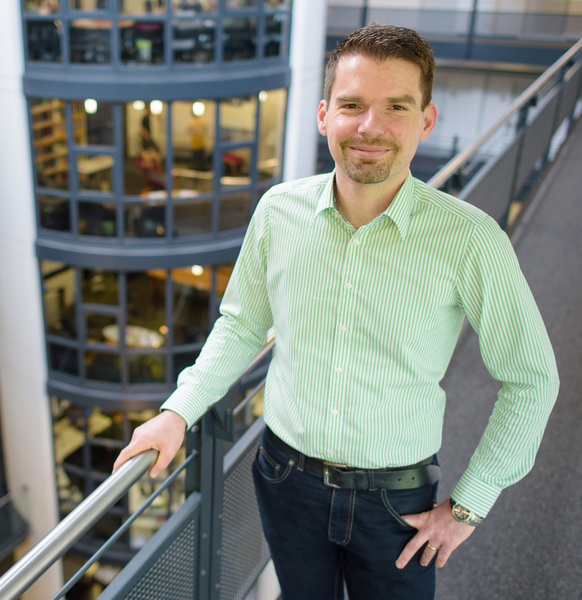
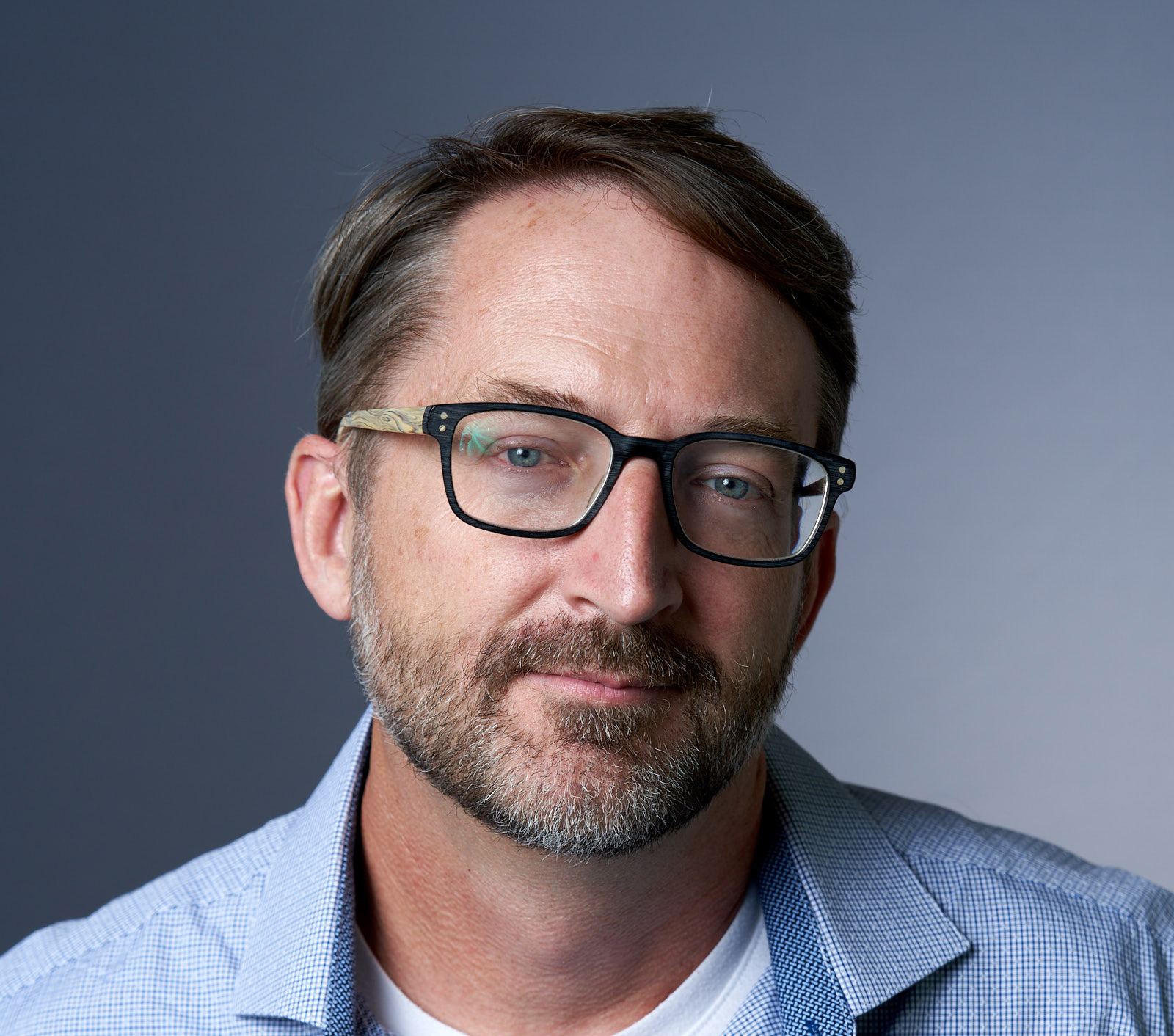
Ryan Heuser is an Assistant Professor in Digital Humanities at the University of Cambridge, specializing in computational approaches to literary and intellectual history, prosody, and artificial intelligence's impact on language. His work bridges data science, machine learning, and literary studies through digital methodologies. Doctoral training in Eighteenth-Century British Literature, Stanford University (2019) Founding member & Associate Research Director, Stanford Literary Lab Junior Research Fellow, King’s College Cambridge (2019-2022) Research interests span computational modeling of semantic revolutions, large-scale literary field analysis, and the intersection of digital methods with historical and intellectual studies. His book Explorations in the Digital History of Ideas (2023) co-edited with Peter de Bolla exemplifies this approach. Recent publications focus on historical semantics, metrical analysis, and digital mapping of emotions in literature, reflecting his interdisciplinary expertise in natural language processing, network theory, and literary data visualization. Currently leads teaching initiatives at Cambridge Digital Humanities and contributes to computational projects exploring textual rhythms and large language models.
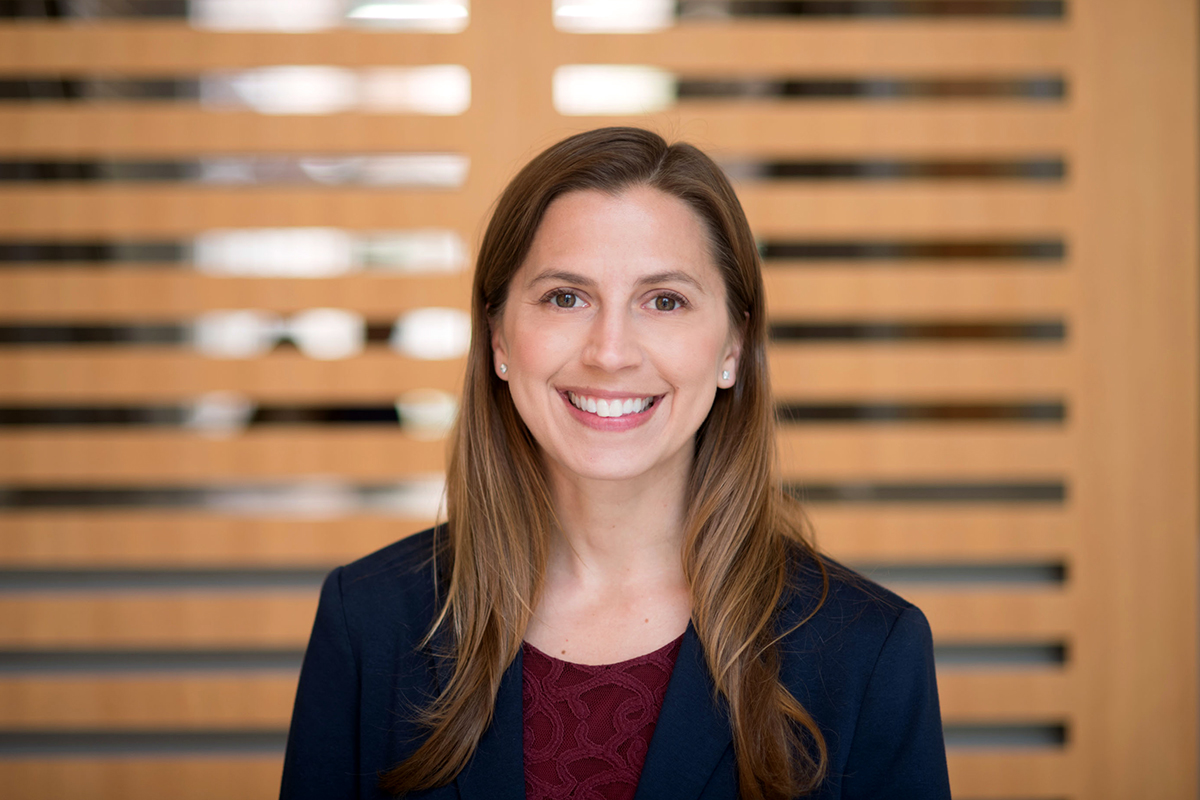
Jean Oh is a Researcher at the Robotics Institute of Carnegie Mellon University (CMU) , leading the interdisciplinary Bot Intelligence Group (BIG) . Her work focuses on developing persistent robots that co-exist and collaborate with humans in shared environments, emphasizing continuous improvement through training, exploration, and human interaction. Education: Ph.D. in Language and Information Technologies, CMU M.S. in Computer Science, Columbia University B.S. in Biotechnology, Yonsei University Oh's research integrates vision, language, and planning systems in robotics, with applications in human-robot teaming , self-driving cars , disaster response , eldercare , and creative robotics . She has pioneered projects like socially-compliant robot navigation in human crowds and AI-driven robotic painting systems. Recent publication trends highlight her work in vision-language planning , social navigation , computational creativity , and human-robot collaboration . Notable contributions include the StyleCLIPDraw algorithm for text-to-art generation and Social-PatteRNN for human-like trajectory prediction. Scientific Awards: Best Paper Award in Cognitive Robotics (ICRA'18, ICRA'15) Best Systems Paper Finalist (HRI'25) Best Oral Paper Finalist (Humanoids'24) Best Paper in Entertainment (IROS'24) Argoverse Challenge Winner (CVPR'24) Best Student Paper (AIAA'24) Best Demo Finalist (RoboSoft'24) Oh mentors a diverse team of PhD, MS, and undergraduate students from CMU departments including Robotics, Computer Science, and Mechanical Engineering. Her research is funded by US Army Research Lab , DiDi Chuxing , and DARPA , with collaborations across industry and academia .
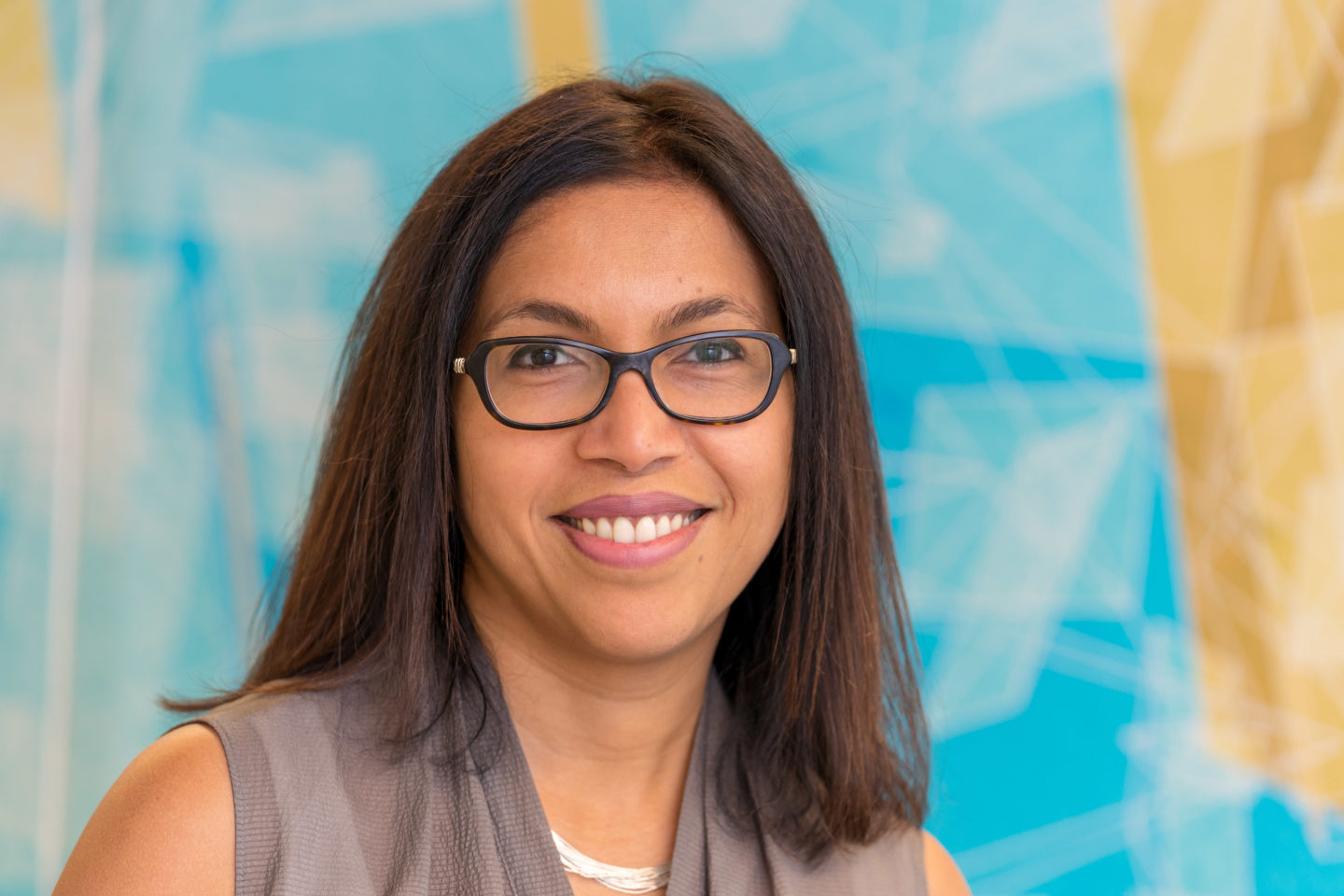
Boris Hanin is an Associate Professor at Princeton University's Department of Operations Research and Financial Engineering (ORFE) and Associated Faculty at the Program in Applied and Computational Mathematics (PACM). Prior to Princeton, he held academic positions at Texas A&M University (Assistant Professor of Mathematics), MIT (NSF Postdoctoral Fellow), and Northwestern University (PhD in Mathematics under Steve Zelditch). He works part-time at Foundry, an AI/computing startup, leading the Foundry Institute. PhD in Mathematics, Northwestern University NSF Postdoctoral Fellowship, MIT Mathematics Associate Professor, Princeton ORFE Part-Time Leader, Foundry Institute His research spans machine learning, probability theory, and mathematical physics, focusing on neural network theory (approximation power, optimization guarantees), random matrix theory, and spectral asymptotics. He has made foundational contributions to understanding gradient behavior, initialization, and infinite-width limits in deep learning. Boris has supervised numerous PhD students and postdocs, with former members securing prestigious positions at Harvard, MIT, and Huawei. He serves as Associate Editor for journals like Pure and Applied Analysis and Mathematics of Operations Research , and has taught short courses at Oxford, Luxembourg, and Tor Vergata on statistical physics of neural networks and deep learning theory. 2024 Sloan Fellowship in Mathematics NSF CAREER grant DMS-2143754 NSF grant DMS-2133806 His research group collaborates on topics including hyperparameter transfer, architecture-aware scaling, and spectral analysis of random waves and neural networks. He actively contributes to theoretical machine learning through foundational publications in venues like Probability Theory and Related Fields , Journal of Machine Learning Research , and Communications in Mathematical Physics .
Christian Theobalt is a Professor of Computer Science at Saarland University and Scientific Director of the Visual Computing and Artificial Intelligence Department at the Max Planck Institute for Informatics . He leads the Saarbruecken Center for Visual Computing as a strategic partnership between Google and MPI. PhD in Computer Science (2005) from MPI-INF/Saarland University Postdoctoral Researcher at MPI (2005-2007) Visiting Assistant Professor at Stanford (2007-2009) His research focuses on the intersection of Computer Graphics, Computer Vision, and Artificial Intelligence , with specializations in: 3D/4D Human Reconstruction Neural Rendering Performance Capture Geometric Deep Learning Volumetric Video Quantum Visual Computing Recent article trends show emphasis on: Quantum computing applications in visual reconstruction Neural rendering with radiance fields Human motion capture from egocentric views Gesture-language interaction modeling Multi-modal scene understanding Real-time free-viewpoint rendering Scientific Awards : Fellow of EUROGRAPHICS (2022) CVPR Best Student Paper Honorable Mention (2020) ERC Consolidator Grant (2017) Karl Heinz Beckurts Award (2017) Busy Beaver Teaching Award (2016) ERC Starting Grant (2013) Advising over 50 students and researchers including: Current researchers: Viktor Rudnev, Linjie Lyu, Mohit Mendiratta Postdocs: Kwang In Kim, Kiran Varanasi Alumni: Franziska Mueller (Google), Dushyant Mehta (Qualcomm), Ayush Tewari (MIT) Grants include ERC grants, Google Glass Research Award, and multiple industry partnerships. His lab maintains cutting-edge facilities with: Multi-camera capture systems Quantum annealing infrastructure HDR radiance field technology GPU clusters for AI research Time-of-flight imaging systems Event camera arrays
Chua Tat Seng is a Professor at the School of Computing, National University of Singapore (NUS), holding the KITHCT Chair Professorship since 2009. He serves as co-Director of the NExT++ Center, a joint research center between NUS and Tsinghua University focused on Extreme Search. His academic career spans over three decades at NUS, where he has held various leadership positions including Acting Dean of the School of Computing (1998-2000) and Acting Head of the Department of Information Systems & Computer Science (1996-1998). Professor Chua's research spans unstructured data analytics , multimedia information retrieval , recommendation and conversation systems , and emerging applications in e-commerce and fintech . He established the Lab for Media Search (LMS) at the School of Computing and has been instrumental in advancing multimodal learning and search technologies. His work bridges theoretical foundations with practical applications, particularly in developing trustable AI systems for real-world deployment. His recent publications demonstrate a strong focus on large language models for recommendation systems , multimodal learning , and generative AI applications . The research trends show increasing emphasis on LLM-based recommendation, multimodal understanding, and addressing fundamental challenges in AI reliability, fairness, and efficiency. His work spans theoretical advancements in representation learning to practical applications in e-commerce, finance, and healthcare domains. ACM SIGMM Technical Achievement Award 2015 Multiple Best Paper Awards across ACM Multimedia, IEEE Transactions, and MMM conferences (2007-2020) Professor Chua has supervised 37 PhD students since 2004, establishing himself as a dedicated mentor in the academic community. His research has been supported by substantial grants including NExT++ ($12 million), Base Metals Price Forecasting ($200,000), and Multilingual Multimodal Knowledge Graph ($500,000). He maintains active collaborations with Tsinghua University, University of Southampton, and industry partners like Four Elements Capital and Singapore Press Holdings. As co-Director of the NExT++ Center, he leads a major research initiative focused on Web Intelligence and User Empowerment. His visiting professorships at Tsinghua University (2017-present) and Zhejiang University (2021-present) reflect his international impact in the field of multimedia and AI research.
Kristen Grauman is a Full Professor in the Department of Computer Science at the University of Texas at Austin, where she leads the UT Computer Vision Group. Her research focuses on computer vision and machine learning, with applications in visual recognition, video analysis, and multi-modal perception. She received her B.A. from Boston College and her Ph.D. from MIT. Her research interests span visual recognition, image and video search, video analysis, first-person vision, embodied and multi-modal perception, and interactive machine learning. She has made significant contributions to the field, particularly in developing algorithms for understanding visual content and human activities from video, including foundational work on the Pyramid Match Kernel and relative attributes. Her recent publications reveal a strong emphasis on egocentric (first-person) vision, audio-visual learning, and view-invariant representations. There is a clear trajectory toward multi-modal integration (vision, audio, language) and real-world applications in instructional videos, human activity understanding, and embodied AI systems. She has received numerous awards including: AAAI Fellow (2019) J. K. Aggarwal Prize, International Association for Pattern Recognition (2018) Helmholtz Prize (2017) UT Austin Academy of Distinguished Teachers (2017) Best Paper Award, Asian Conference on Computer Vision (2016) Presidential Early Career Award for Scientists and Engineers (2014) Computers and Thought Award, International Joint Conferences on Artificial Intelligence (2013) Pattern Analysis and Machine Intelligence Young Researcher Award (2013) Alfred P. Sloan Research Fellow (2012) Marr Prize (2011) Prof. Grauman serves as Associate Editor-in-Chief for the IEEE Transactions on Pattern Analysis and Machine Intelligence. She has secured substantial research funding including the Presidential Early Career Award, NSF grants, and industry partnerships. Her advising has produced numerous influential publications and students who are now leaders in computer vision. She leads the UT Computer Vision Group, which collaborates closely with the Electrical and Computer Engineering Department. The group is pioneering large-scale egocentric video research through projects like Ego4D and Ego-Exo4D, focusing on real-world applications in human activity understanding, audio-visual perception, and interactive systems.
Nadia Figueroa is the Shalini and Rajeev Misra Presidential Assistant Professor in the Mechanical Engineering and Applied Mechanics (MEAM) Department at the University of Pennsylvania. She holds secondary appointments in Computer and Information Science (CIS) and Electrical and Systems Engineering (ESE), and is a core faculty member at the GRASP Lab. Prior to Penn, she was a Postdoctoral Associate at MIT’s CSAIL and earned her PhD in Robotics from EPFL under Prof. Aude Billard. Her research focuses on physical and perceptual adaptive intelligence for robots, enabling fluid collaboration with humans in dynamic environments. Key applications include robot learning from demonstration , human-robot co-manipulation , safe navigation in human-centric spaces , and rehabilitation robotics . Her work integrates machine learning control theory artificial intelligence biomechanics psychology with guarantees of stability, safety, and robustness . Recent publications highlight advancements in reactive collision avoidance dynamical system learning intent estimation EEG-driven assistive control origami-based reconfigurable robots across platforms like autonomous vehicles and humanoid robots. She has authored a 2022 textbook on dynamical systems for robot control and received the Presidential Assistant Professorship at Penn.
Colin Raffel , currently an Associate Professor at the University of Toronto and Associate Research Director at the Vector Institute , is a leading researcher in machine learning and natural language processing . His career spans roles at Hugging Face (Faculty Researcher), Google Brain (Senior Research Scientist), and UNC Chapel Hill (Assistant Professor). Education: PhD in Electrical Engineering (Columbia), MA in Music/Science (Stanford), BA in Mathematics (Oberlin) Key affiliations: Google Brain (2016-2020), Hugging Face (2021-present), Vector Institute (2023-present) His research focuses on language model development , attention mechanisms , efficient machine learning , and music information retrieval . Recent work explores model merging , parameter-efficient fine-tuning , and data-constrained language models . Teaching : Has instructed courses at University of Toronto and UNC Chapel Hill on Neural Networks , Deep Learning , and Information Theory . Academic service includes organizing ICLR workshops and serving as Senior Area Chair for NeurIPS and EMNLP . Notable awards : NSF CAREER (2022), Caspar Bowden Award (2023), NeurIPS Outstanding Paper (2023) Key contributions : Core developer of WT5 , Git-Theta , and mir_eval software
Xingxing Zuo is an Assistant Professor (tenure-track) in the Robotics Department at MBZUAI. He holds a PhD from Zhejiang University (2021) and a Bachelor’s from UESTC (2016). Previously, he was a Postdoctoral Scholar at Caltech (2024–2025), a Postdoc at ETH Zurich (2019–2021), and held visiting roles at TU Munich, University of Delaware, and University of Technology Sydney. His research focuses on robotics, 3D computer vision, and embodied AI, with emphasis on robot-human collaboration, state estimation, and sensor fusion. Educations: PhD in Robotics, Zhejiang University (2021, with honors) Bachelor’s in Computer Science, University of Electronic Science and Technology of China (2016, with honors) Research Highlights: Develops novel methods for LiDAR-camera-inertial fusion, neural radiance fields, and radar-cameras systems Pioneered techniques like Flying Co-Stereo (long-range aerial mapping) and FMGS (vision-language embedded 3D splatting) Focuses on real-time SLAM, robust depth estimation, and photorealistic scene reconstruction Awards & Recognition: Best Paper Finalist at ICRA 2021 (CodeVIO) Oral Presentation at ICCV 2021 (MBA-VO) Recipient of Google Visiting Faculty Researcher (2023) Grants & Labs: Organized Thermal Infrared in Robotics workshop at ICRA 2025 Leads research on embodied AI and multi-sensor SLAM systems Develops open-source tools like LIC-Fusion and Coco-LIC frameworks
Tanzeem Choudhury is a Professor at the Jacobs Technion-Cornell Institute at Cornell Tech, specializing in Information Sciences. She co-founded HealthRhythms Inc. and directs the People-Aware Computing lab, focusing on machine learning for human activity and social network analysis. Her work pioneered the 'Reality Mining' field, leveraging mobile sensors to model social interactions. Choudhury holds a Ph.D. from MIT's Media Lab and B.S. in Electrical Engineering from the University of Rochester. Her research spans wearable tech, mental health interventions, and ubiquitous computing. Notable projects include affective touch wearables for anxiety reduction, stress detection systems (e.g., StressSense), and the BeWell app for well-being monitoring. Choudhury has been recognized as an ACM Fellow and SIGCHI Academy member, with impactful contributions to healthcare technology and sensor-based behavioral analysis. Current lab initiatives include developing closed-loop interventions for mental health, equity-driven sensing systems, and exploring AI integration in psychotherapy. She advises PhD students on topics like digital biomarkers, burnout detection in healthcare workers, and smartphone-based mental health assessment. Education: Ph.D. in Media Arts & Sciences (MIT), M.S. (MIT Media Lab), B.S. in Electrical Engineering (University of Rochester) Lab Team: Includes PhD candidates (Dan Adler, Yiran Zhao) and researchers focusing on health AI, wearable devices, and clinical applications. Major Awards: ACM Fellowship (2020), SIGCHI Academy (2018), Best Paper Awards at Ubicomp and MobileHCI conferences. Key Projects: OptoBeat (skin-tone calibrated blood oxygen sensor), EmotionCheck (anxiety intervention), and Affective Touch devices.
Maja J Matarić is the Chan Soon-Shiong Chaired and Distinguished Professor of Computer Science at the University of Southern California's Viterbi School of Engineering, with courtesy appointments in Neuroscience and Pediatrics. She serves as founding director of the USC Robotics and Autonomous Systems Center, co-director of the USC Robotics Research Lab, and Principal Scientist at Google DeepMind. Previously, she held leadership roles as USC's interim Vice President of Research (2020-2021) and Vice Dean for Research (2006-2019). Her educational background includes: PhD in Computer Science and Artificial Intelligence from MIT (1994) MS in Computer Science from MIT (1990) BS in Computer Science from University of Kansas (1987) Matarić pioneers Socially Assistive Robotics (SAR) , a field her lab named, focusing on human-robot interaction that provides assistance through social rather than physical support. Her research targets critical health and wellness challenges including post-stroke rehabilitation, autism spectrum disorder therapy, cognitive exercises for Alzheimer's patients, ADHD academic support, and mental health interventions. She develops systems modeling user engagement, personality, and motivation, with extensive real-world deployments in schools, rehabilitation centers, and homes. Analysis of her recent publications reveals dominant themes in cognitive health robotics (2025 CHI paper on LLM-powered elder care), pediatric assistive technology (2025 IDC speech therapy review), and adaptive preference modeling (2025 HRI contrastive learning work). Her research consistently bridges machine learning with human-centered design for vulnerable populations. Major scientific recognition includes: ACM Athena Lecturer Award (2024) ACM Eugene L. Lawler Humanitarian Award (2024) ACM Fellow (2020) Presidential Mentoring Award (2011) Multiple society fellowships (AAAS, IEEE, AAAI) As a dedicated mentor, Matarić has championed underrepresented groups through CRA-W, placing numerous women in faculty positions. She leads USC Viterbi's K-12 STEM Outreach Program serving low-income Los Angeles schools and authored The Robotics Prime for student education. Her research has secured significant funding enabling real-world technology transfer, with documented impact in rehabilitation centers and homes through deployable SAR systems. Her Robotics Research Lab at USC drives innovation in embodied AI, with current projects spanning LLM-integrated elder care robots, ADHD academic companions, and autism therapy systems. The lab emphasizes co-design with end-users and rigorous real-world validation across diverse populations.
Shweta Shinde is an Assistant Professor in the Department of Computer Science at ETH Zurich where she leads the Secure & Trustworthy Systems (SECTRS) research group. She is also a member of the Institute of Information Security and the ZISC Center at ETH Zurich. Her work bridges theoretical foundations with practical implementations in hardware and system security. Dr. Shinde's research focuses on the intersection of trusted computing, system security, and program analysis. Her group investigates both foundational aspects of security to protect phones, servers, and accelerators, as well as practical aspects of realizing these solutions through large-scale system building. Her work spans hardware security primitives, trusted execution environments, confidential computing, and secure system design across multiple platforms including mobile devices, cloud infrastructure, and blockchain systems. Her publication record demonstrates significant impact in the field, with numerous papers in top security venues including IEEE S&P, USENIX Security, CCS, and NDSS. Her research has uncovered critical vulnerabilities in major hardware security technologies like Intel SGX and AMD SEV-SNP while also proposing novel frameworks for building more secure systems. The work spans multiple domains including hardware security, cloud security, mobile security, and blockchain security, with a consistent thread of identifying and addressing fundamental security challenges in trusted computing. Among her notable achievements are multiple best paper awards including at SysTEX 2025 and nominations at DATE 2025, a Distinguished Paper Award at IEEE S&P 2024, and recognition as a Most Innovative Research Pwnie Award Nominee in 2024. Her work on WeSee received particular attention for breaking AMD SEV-SNP through novel interrupt-based attacks. Dr. Shinde actively mentors PhD students including Mark Kuhne, Supraja Sridhara, Mélisande Zonta-Roudes, Benedict Schlüter, Andrin Bertschi, and others. She teaches courses on Systems Security, Information Security Lab, Seminar on Systems Security, and Current Topics in Information Security at ETH Zurich. Her service to the community includes extensive program committee work for major security conferences including Oakland (S&P), NDSS, USENIX Security, and CCS, where she has served as track co-chair and program co-chair for several workshops.
Romain Lopez is an Assistant Professor of Computer Science and Biology at New York University, with a joint appointment in the Courant Institute of Mathematical Sciences and the Department of Biology. He will be joining NYU in September 2025, bringing expertise at the intersection of machine learning and computational biology. Prior to joining NYU, he was a Postdoctoral Fellow at Genentech and Stanford Medicine from 2021 to 2025, working with Jonathan Pritchard and Aviv Regev. Dr. Lopez received his educational training at prestigious institutions: PhD in Computer Science (2021) from the University of California, Berkeley, advised by Mike Jordan and Nir Yosef M.S. in Applied Mathematics (2016) from École polytechnique, Palaiseau, France Dr. Lopez's research focuses on developing machine learning methods to understand biological systems at the cellular level. His work bridges computational techniques with biological applications, particularly in single-cell and spatial omics analysis. He pioneered probabilistic approaches for single-cell analysis with scVI and co-developed scvi-tools, now widely adopted tools in the field. His research spans deep generative models, causal inference, perturbation modeling, and representation learning for biological data. His publication record demonstrates a consistent trajectory of innovation in computational biology, with recent work focusing on spatial biology, disentangled representations of cellular perturbations, and causal modeling of cellular responses. He has made significant contributions to the field of single-cell analysis, developing methods that help scientists interpret complex cellular data and predict how cells respond to various perturbations. Dr. Lopez has received numerous honors and awards for his research: Best Paper Award from the ICML Workshop on AI for Science (2024) Best Paper Award Honorable Mention from the AAAI Conference on Artificial Intelligence (2021) Best Student Poster Award from the ICML Workshop on Computational Biology (2019) UC Berkeley EECS Departmental Graduate Fellowship (2016) Carnot Foundation Fellowship (2016) Monahan Foundation Fellowship (2016) French National Defence Medal, Bronze Echelon (2014) At NYU, Dr. Lopez will lead the Biological Machine Learning group, which develops probabilistic machine learning methods to uncover biological mechanisms governing cellular behavior and disease. His lab focuses on creating tools that transform complex cellular data into biological insights, with applications in understanding cancer, immune responses, and fundamental cellular processes. His work has significant implications for precision medicine and drug discovery.
Steven Jackson is a Professor of Information Science and Science and Technology Studies at Cornell University's Bowers College of Computing and Information Science, with additional graduate field appointments in Communication and Public Affairs. Since July 2023, he has served as Vice-Provost for Academic Innovation at Cornell, and previously held leadership positions as Chair of Information Science and Dean of William Keeton House. His work bridges academic research with significant institutional leadership in higher education innovation. Dr. Jackson's research focuses on critical intersections of technology, society, and the environment, with three primary strands: technology ethics, law and policy; maintenance, repair and sustainability; and technology, inequality and global development. His work draws from American pragmatism, political economy, and science and technology studies, integrating methods from sociology, anthropology, philosophy, and media studies. He is particularly interested in how computing practices meet social and material worlds, with implications for infrastructure, collaboration, sustainability, and cultural practice. His recent publications reveal a strong emphasis on repair as both theoretical concept and practical methodology, exploring 'ordinary hope' as a framework for technological engagement and examining unmaking as a necessary counterpart to design. The research spans diverse geographical contexts from the global North to South, addressing caste dynamics in computing, digital authoritarianism, and infrastructure challenges in developing contexts. Dr. Jackson has received significant recognition including an NSF CAREER award and more than twenty paper awards at leading computing and information science venues. His research has been supported by major organizations including the U.S. National Science Foundation, Social Science Research Council, Ford Foundation, Sloan Foundation, World Bank, Intel Research, Atkinson Center for Sustainability, and the Canadian Social Science and Humanities Research Council. As an advisor, Dr. Jackson has mentored numerous graduate students who have gone on to prominent positions at institutions worldwide. He currently advises Jen Liu, Amy Cheatle, Daniel Mwesigwa, Johan Michalove, and Ritik Batra, while his former students include Palashi Vaghela (Assistant Professor at Simon Fraser University), Samir Passi (Responsible AI Researcher at Microsoft), Maggie Jack (Assistant Professor at NYU), and Ranjit Singh (Senior Researcher at Data and Society). Dr. Jackson convenes the Computing On Earth Lab, an experimental collaboration bringing together social scientists, humanists, artists, and engineers to rethink the material and planetary foundations of computing. The lab reflects his commitment to interdisciplinary approaches that address computing's environmental impacts and sustainability challenges.
Prof. Matthias Nießner is a Professor at the Technical University of Munich, leading the Visual Computing Lab. His research intersects computer graphics, vision, and AI, focusing on 3D reconstruction, semantic understanding, and AI-driven video synthesis. He holds a PhD from the University of Erlangen-Nuremberg (2013) and was a Visiting Assistant Professor at Stanford University (2013–2017). Notable awards include the ERC Starting Grant (2018), Nvidia Professorship Award, and Eurographics Young Researcher Award (2019). His work has been featured in mainstream media and led to startups like Synthesia Inc. Research spans Gaussian splatting, neural radiance fields, and generative AI for 3D avatars. Over 150 publications include SIGGRAPH, CVPR, and ECCV, with best paper awards. Projects like Face2Face and ScanNet have driven innovation in facial reenactment and 3D scene datasets. Education: PhD in Computer Science, University of Erlangen-Nuremberg (2013) Diploma in Computer Science, University of Erlangen-Nuremberg (2010) Research Interests: 3D digitization, neural rendering, generative AI, non-rigid reconstruction, and applications in AR/VR. Awards: ERC Starting Grant (2018) Nvidia Professorship Award (2018) Google Faculty Award (2018) SIGGRAPH Best Emerging Tech Award (2016) Grants: Over €1.5M from ERC and industry partnerships. Labs/Teams: Visual Computing Lab at TUM and Synthesia Inc. (co-founder). Key projects include ScanNet (large 3D indoor dataset), Face2Face (real-time facial reenactment), and Gaussian-based 3D avatars. Current work focuses on diffusion models, neural radiance fields, and AI-generated media detection.