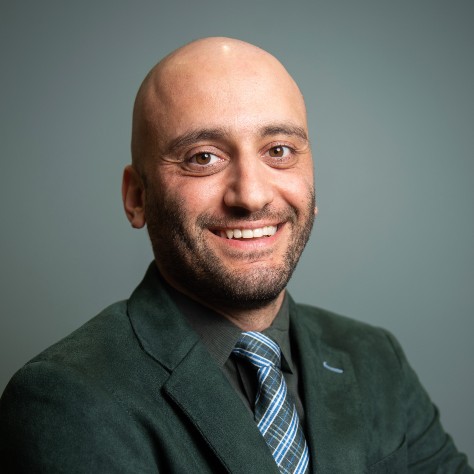
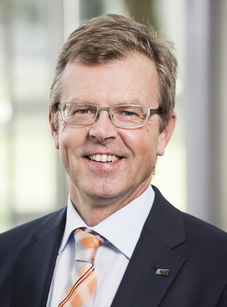
Borja Herraiz is a Project Leader at Dr. Lüchinger+Meyer in Zurich, Switzerland, and an external lecturer at ETH Zurich's Chair of Structural Mechanics and Monitoring since 2021. He holds a Diploma in Civil Engineering from the Technical University of Madrid (2011) and a PhD from ETH Zurich (2016), focusing on robustness of flat slab structures under column failure scenarios. Affiliations: ETH Zurich (external lecturer), Dr. Lüchinger+Meyer (project leader) His research emphasizes structural robustness, UHPFRC (Ultra-High-Performance Fiber Reinforced Concrete) applications, and rehabilitation of existing structures. Key projects include strengthening historic buildings with UHPFRC and developing analytical models for reinforced concrete slabs. He contributes to standards through CEN/TC250/WG6 (Eurocodes) and SIA Guideline 2052 (UHPFRC). Recent publications span UHPFRC-based solutions, slab dynamics, and failure scenario modeling, reflecting expertise in structural engineering and material innovation.
Mehran Tehrani is Associate Professor of Structural Engineering and holder of the Callaway Golf Endowed Chair at UC San Diego's Jacobs School of Engineering. His research develops multifunctional composites through advanced manufacturing, with funding from NSF, NASA, AFRL, ONR, and industry partners. Research Thrusts: 1) Automated fiber placement of thermoplastic composites, 2) Nanocarbon-enhanced conductors for aerospace/energy, 3) Sustainable additive manufacturing of recyclable graphite structures. His group employs multiscale characterization to optimize material interfaces. Notable Innovations: HiP-enabled 3D printed PEEK composites; interlaminar CNT sheets enhancing CFRP properties; solvent-free carbon nanocomposites; upcycled carbon fiber materials. Methods include laser-assisted AFP, reactive extrusion AM, and multiaxial printing. Leadership: Chair of the American Society for Composites Design & Manufacturing Division. Former positions at University of Texas at Austin and University of New Mexico. Education: Ph.D. in Engineering Mechanics, Virginia Tech (2012); M.Sc. in Mechanical Engineering, University of New Mexico (2009); B.Sc. in Mechanical Engineering, Sharif University of Technology (2007).
Dr. Ahmad Mojiri is a Senior Research Fellow in Sustainability at RMIT University's Research & Innovation Capability department. His research focuses on thermal energy storage systems, renewable energy integration, and sustainable cooling technologies. He specializes in optimizing thermal storage materials and systems for applications like data centers, residential energy systems, and industrial processes. Mojiri has supervised multiple projects addressing thermal management challenges, including improving phase change material performance and developing hybrid solar-thermal systems. His work spans experimental investigations into high-temperature storage using recycled materials and theoretical modeling of heat transfer dynamics in scroll compressors. Key research interests include solar energy conversion, optical physics, and interdisciplinary engineering solutions for energy efficiency. Mojiri has contributed to over 20 peer-reviewed articles since 2014, focusing on thermal storage innovation and sustainable energy systems design. Current supervision topics include thermal conductivity enhancement of PCMs, spray-cooled data center cooling, and green hydrogen generation thermal management. He collaborates extensively on projects aiming to decarbonize energy systems through advanced thermal storage and renewable integration strategies.
Prof. Walid Ben-Ameur is a Professor at Telecom SudParis, affiliated with the SAMOVAR laboratory. His research focuses on Operations Research, Network Optimization, and Algorithmic Game Theory. He has contributed significantly to areas such as combinatorial optimization, robust network design, and mathematical programming. His work includes advancements in polyhedral combinatorics, stochastic games, and distributed computing frameworks. Recent studies explore strategic investments in social networks, robust routing algorithms, and the theoretical foundations of optimization under uncertainty. While no scientific awards are explicitly mentioned, his prolific publication record highlights impactful contributions to the field. His research often bridges theoretical insights with practical applications in telecommunications and distributed systems. Key research interests include the design of efficient algorithms for network infrastructure, optimization under uncertainty, and game-theoretic models for distributed systems. His articles frequently address challenges in robust network design, opinion dynamics in social networks, and the computational aspects of combinatorial problems. Prof. Ben-Ameur collaborates extensively, with notable contributions to journals like Operations Research Letters, SIAM Journal on Optimization, and Networks. His work often intersects with telecommunications, as evidenced by studies on fiber cable network design and traffic engineering. He has also explored advanced topics such as multipolar robust optimization and the application of game theory to distributed computing environments.
Jørgen Asbøll Kepler serves as an Associate Professor in the Solid and Computational Mechanics section of the Department of Materials and Production at the Faculty of Engineering and Science, Aalborg University, Denmark. His office is located at Fibigerstræde 16, 3205, 9220 Aalborg Øst, with direct contact via email jk@mp.aau.dk and phone +4599409297. He maintains an active ORCID profile (0000-0002-3681-1521) and is engaged in both teaching and research within composite structural engineering. Kepler's research centers on solid mechanics and computational modeling of composite materials, with emphasis on wind turbine blade production, sandwich structure integrity, and fabric draping processes. Key interests include failure analysis under impact loading, flexural rigidity measurement, and manufacturing optimization for glass fiber composites. His work bridges theoretical mechanics with industrial applications, particularly leveraging computer simulation for structural performance validation in renewable energy systems. Recent publications (2021-2023) reveal a concentrated focus on draping process innovation for wind turbine blades, utilizing virtual prototyping and MATLAB-based tools to optimize manufacturing parameters. Themes consistently address material behavior during production, structural testing methodologies, and computational solutions for composite layup challenges—highlighting his niche in translating mechanical theory into practical production engineering advancements. Scientific Awards: No scientific awards, prizes, or fellowships are documented in the provided text. Kepler has participated in 11 research projects (5 completed, 6 active) since 2002, primarily funded through academic grants. Notable projects include failure/fatigue analysis of sandwich structures under impact loading, local effect studies in composite loading conditions, and integrated design of lightweight composites. Collaborators consistently feature O. T. Thomsen, E. Bozhevolnaya, and J. Jakobsen. The text specifies no student advising relationships or formal grant amounts. He operates within the Solid and Computational Mechanics research group at Aalborg University, focusing on experimental validation (e.g., bias extension tests) and computational modeling of composite structures. The team specializes in wind turbine blade manufacturing challenges, with recent work targeting draping course optimization and structural performance prediction for advanced laminates.
Khoi Nguyen is a Lecturer in Geotechnical Engineering at the University of South Australia (UniSA STEM) , with a focus on soil mechanics and climate change impacts on infrastructure. His research spans Discrete Element Method (DEM) simulations for granular materials, expansive soil behavior , and climate-resilient geotechnical design . Recent work includes DEM studies on particle shape effects on soil stability, TMI mapping for predicting soil suction changes under climate scenarios, and innovative retaining wall systems (PT-MSEW) to improve structural performance. He collaborates on multi-institutional projects related to geosynthetic reinforcement and soil-vegetation-atmosphere interaction modeling . His contributions appear in Geotechnique , Journal of Rock Mechanics and Geotechnical Engineering , and conference proceedings for the International Conference on Soil Mechanics and Transportation Geotechnics . He is actively involved in supervising research projects and exploring solutions for climate-adaptive infrastructure in Australia.
Dr. Sorabh Chhabra is a Postdoctoral Research Fellow at the University of Exeter and a key member of the Department of Physics and Astronomy . His work focuses on the European Research Council (ERC)-funded BIFROST project, which aims to advance high-spectral dispersion interferometry at the Very Large Telescope Interferometer (VLTI). Current Role: Research Fellow in Instrumentation and Interferometry Projects: BIFROST, Asgard, MIRC-X/MYSTIC, CHARA Array upgrades Expertise: Adaptive Optics, Turbulence Simulation, Photonic Design His research spans the development of advanced optical systems for exoplanet detection, including vortex fiber nulling and kernel nulling techniques using photonic lanterns. He has contributed to the design of spectrographs and pre-injection optics for interferometers, with a particular focus on expanding observational capabilities from Y to L band wavelengths at the VLTI. Dr. Chhabra’s work also includes the creation of simulation tools for atmospheric turbulence and the construction of laboratory instruments like the SIMULATOR system, which replicates large-scale telescope performance for testing purposes. His publications highlight technical innovations in fiber injection modules, dual-field calibration units, and precise orbital parameter determination for binary and multiple star systems such as WR 137, WR 138, and HD 284163. His collaborations span institutions like the CHARA Array and IGO, Pune , where he tested real-time adaptive optics calibration on 2m-class telescopes. Future work includes integrating the Asgard Instrument Suite and enhancing multi-band interferometric capabilities.
Ігор Миколайович Сметанін is a Senior Lecturer at Zaporizhzhia National Technical University, where he has been active since 2001. He is affiliated with the Faculty of Information Security and Electronic Communications, specifically working in the Department of Radio Engineering and Telecommunications. With expertise spanning telecommunications, mobile networks, and information systems, Dr. Smetanin has established himself as a notable researcher in Ukraine's technical academic community. Dr. Smetanin received his higher education from Krasnodar Higher Military Command and Engineering School of Missile Forces, specializing in Aviation and Rocket and Space Engineering in 1988. His diploma specialty was 0511 'Automated Control Systems,' providing him with a strong foundation for his subsequent work in telecommunications and network systems. Dr. Smetanin's primary research interests focus on mobile communication equipment , overload in communication systems , fiber optic systems , and information protection systems . His work bridges theoretical telecommunications concepts with practical applications in cellular networks. He has developed innovative methods for predicting network congestion, optimizing subscriber grouping, and improving the realism of mobility models in cellular environments. His research demonstrates a consistent focus on enhancing network efficiency and reliability through advanced modeling techniques and system design. Analysis of Dr. Smetanin's publication record reveals a strong focus on cellular network optimization, with particular emphasis on managing local overloads and predicting network congestion. His research evolved from fundamental studies of GSM network traffic parameters to more sophisticated models incorporating attractor theory and behavioral analysis of subscriber movement. Recent work shows increasing integration of machine learning approaches and hybrid methods for network management, reflecting broader trends in telecommunications research toward data-driven optimization techniques. Dr. Smetanin has been granted five patents related to telecommunications technologies, demonstrating the practical applicability of his research. His patent portfolio includes methods for predicting local congestion in cellular networks, increasing forecasting accuracy, and information transmission in optical communication systems. As an educator, Dr. Smetanin teaches a comprehensive range of subjects including 'Methods and means of information protection,' 'Planning and design of information networks,' 'Infocommunication technologies,' and 'Mobile communication systems.' His teaching reflects his research expertise, providing students with both theoretical knowledge and practical skills in modern telecommunications systems.
Juan Pablo Escobedo-Diaz is a Senior Lecturer in the School of Engineering and Information Technology (SEIT) at UNSW Canberra. He obtained his doctoral degree in Mechanical Engineering at Washington State University. Prior to his current academic appointment, he held research positions at the Institute for Shock Physics (Washington State University) and Los Alamos National Laboratory. His main research interests center on the dynamic behaviour of materials under extreme conditions, particularly high pressure and high strain rate. His focus has been on investigating the effects of microstructural features on the dynamic fracture behaviour of metals and metallic alloys. He has published extensively in the fields of Shock Physics and Materials Science. His research group includes Research Associate Dr. Hongxu Wang, PhD students Md. Ashraful Islam, Md. Abdul Kader, Ali A.H. Ameri, and Jianshen Wang, as well as Undergrad Honours student John S. Lauria. Dr. Escobedo-Diaz is an active member of The Metals, Minerals and Materials Society (TMS), the American Physical Society (APS), the Society for Experimental Mechanics (SEM), and the Materials Research Society (MRS). He serves as a regular reviewer for journals including the Journal of Applied Physics, Metallurgical and Materials Transactions, the International Journal of Solids and Structures, and Materials Characterization. His recent publications demonstrate a strong focus on materials under extreme conditions, with particular emphasis on bio-inspired structures, 3D printing technologies, and the mechanical response of materials to impact and shock loading. His work spans theoretical, experimental, and computational approaches to understanding material behavior. Dr. Escobedo-Diaz teaches courses including Electronic and Mechanical Design, Engineering Materials and Chemistry, Firepower and Protection - Materials, Impact Dynamics, and Mechanical Design. He also serves as Senior thesis panel chair for Impact-related projects.
George N. Rouskas is a Professor and the Interim Department Head in the Department of Computer Science at North Carolina State University. He also serves as Director for Faculty Advancement and leads the Optical Networks and Systems Laboratory. Ph.D. in Computer Science from Georgia Institute of Technology (1994) M.S. in Computer Science from Georgia Institute of Technology (1991) B.S. in Computer Engineering from National Technical University of Athens (1989) Rouskas specializes in high-performance networking, optical networks, and network design optimization. His work focuses on routing and spectrum allocation algorithms, network virtualization, and scalable solutions for internet infrastructure. Recent publications highlight advancements in symmetry-free spectrum allocation, parallel implementations for optical networks, and network design decomposition techniques. Key themes include resource management, algorithm design, and computational efficiency. Scientific Awards IEEE Fellow (2012) IBM Faculty Award (2007) NSF CAREER Award (1997) IEEE ONTC Outstanding Technical Achievement Award (2023) Alumni Outstanding Research Award (2003) Rouskas has advised 25 PhD and 12 Masters students. His research has received funding from the National Science Foundation, Department of Energy, and industry partners like Cisco and SAS. He actively contributes to academic leadership through editorial roles and conference chairmanships.
Dr. Hadi Noori is an Assistant Professor of Engineering in the Division of Physical and Computational Sciences at the University of Pittsburgh. His work bridges mechanical design, materials science and advanced manufacturing, with a strong emphasis on additive manufacturing and the mechanics of dissimilar-material interfaces. Education: Ph.D. in Mechanical Engineering, McMaster University M.S. in Materials Engineering, University of Tehran B.S. in Materials Engineering, Ferdowsi University of Mashhad and Sharif University of Technology Research Interests: Dr. Noori’s research centers on additive manufacturing processes (particularly fused-filament fabrication), fracture and delamination mechanics of polymer–metal laminates, and multi-objective optimization using Bayesian techniques. He explores how processing parameters, material composition and structural design interact to enhance mechanical performance, lightweighting and reliability of multifunctional components. Recent scholarly output spans experimental investigations of interlayer adhesion in 3-D printed PLA and PLA-carbon-fiber composites, microwave-assisted toughening of polymer–copper composites, robotic-arm-based additive manufacturing systems, and creep behavior of magnesium-matrix composites. Overall, the work contributes to the growing knowledge base on process-structure-property relationships in advanced manufacturing. Scientific Awards: No awards are listed in the provided text. Funding & Advising: No specific grants or student advisees are mentioned in the supplied information. Laboratory & Teams: Dr. Noori directs activities within the Laboratory for Advanced Manufacturing and Materials Characterization, as indicated by his associated webpage lrcentre.com . Details on team size or collaborators are not provided.
Halim Kusumaatmaja is an Honorary Visiting Professor in the Department of Physics at Durham University. He is actively involved in theoretical and computational research at the intersection of physics, chemistry, engineering, and biology. His work is closely associated with the Durham Centre for Soft Matter, the Biophysical Sciences Institute, and the SOFI CDT, reflecting his interdisciplinary approach to scientific problems. Professor Kusumaatmaja's research spans multiple areas of soft matter and biophysics, with particular focus on wetting phenomena on structured surfaces, membrane biophysics, liquid-liquid phase separation, multi-stable elastic structures, crystallography on curved surfaces, the Lattice Boltzmann Method, and energy landscape exploration. His work combines theoretical modeling with computational techniques to address fundamental questions in fluid mechanics and biological systems. He has developed novel approaches for computing free energy landscapes of continuum models, which has applications across various soft matter systems. His recent publications (2021-2025) demonstrate a strong trend toward interdisciplinary research that bridges traditional boundaries between physics, biology, and computational science. His work spans from fundamental studies of wetting and capillary phenomena to applications in biological systems like stress granule condensates and membrane biophysics. Notably, he has recently expanded into quantum computing applications for classical physics problems, showing his ability to adapt to emerging computational paradigms. His research consistently focuses on understanding complex energy landscapes, interfacial phenomena, and the mechanical properties of soft materials. Professor Kusumaatmaja has supervised PhD students including Ke Sun and Listra Ginting, and actively welcomes talented undergraduates, PhD students, postdocs, and visitors to join his research group. He has secured funding through various prestigious fellowships including EPSRC, Leverhulme Early Career, Marie Curie, Newton, and Royal Commission for the Exhibition of 1851 fellowships, demonstrating his ability to attract competitive research funding. His research group operates at the forefront of computational soft matter physics, utilizing advanced simulation techniques to tackle problems ranging from fundamental wetting phenomena to biological membrane interactions. The group maintains strong collaborations with experimental colleagues, ensuring that theoretical predictions can be validated against real-world observations. Professor Kusumaatmaja is also a co-author of the authoritative text 'The Lattice Boltzmann Method: Principles and Practice' (Springer, 2017), which has become a standard reference in the field.
Prof. Dr.-Ing. Volker Schulze is a faculty member at the Institute of Production Science (wbk) within the Karlsruhe Institute of Technology (KIT) , serving as Spokesperson for the Circular Economy and Environmental Technologies topic. His research focuses on advanced manufacturing technologies, including additive manufacturing, laser processing, and tool wear prediction. Key research areas: Additive Manufacturing (L-PBF), Residual Stress Analysis, Gear Skiving, Multi-Scale Modeling Utilizes hybrid modeling approaches combining finite element simulations, machine learning, and experimental validation Publications (2025–2024) address cutting-edge topics: optimizing AlSi10Mg and AISI 4140 materials, real-time tool monitoring, and surface integrity analysis. His work bridges computational modeling with industrial applications. Scientific Award: Spokesperson for Sparkassen-Environment-Prize (2025)
Zhenyu "James" Kong is the Ralph H. Bogle Professor in the Department of Industrial and Systems Engineering at Virginia Tech's College of Engineering. With over 20 years of academic experience, he has established himself as a leading researcher in manufacturing systems engineering with a focus on smart manufacturing technologies. Dr. Kong received his Ph.D. in Industrial and Systems Engineering from the University of Wisconsin-Madison in 2004, following Master's and Bachelor's degrees in Mechanical Engineering from Harbin Institute of Technology in China. His academic career includes professorial positions at Virginia Tech since 2006 and previously at Oklahoma State University. His research focuses on the intersection of machine learning, cyber-physical systems, and manufacturing engineering. Specifically, he investigates real-time sensing, advanced analytics, and process monitoring/control for smart manufacturing systems. His work on modeling, synthesis, and diagnosis for large and complex manufacturing systems has significantly advanced the field of additive manufacturing quality control, with particular emphasis on applying deep learning techniques to defect detection and process optimization. Dr. Kong's research has been supported by major funding agencies including the Department of Defense, National Science Foundation, Department of Energy, and Office of Naval Research. His publications demonstrate a consistent focus on applying machine learning to solve practical manufacturing challenges, particularly in additive manufacturing quality control and process monitoring. Fellow of Institute of Industrial and Systems Engineers (IISE), 2020 Dean's Award for Excellence in Research, College of Engineering, Virginia Tech, 2019 Multiple Best Paper Awards from IISE Transactions and INFORMS conferences (2015-2020) APM Outstanding Faculty Award, Virginia Tech, 2018 Halliburton Outstanding Faculty Award, Oklahoma State University, 2013 As an educator, Dr. Kong has taught courses including Advanced Topics in Manufacturing Systems Engineering, Sensing and Data Analytics for Complex Systems, and Statistical Quality Control. He leads the SMART Lab at Virginia Tech, where his research group develops innovative solutions for manufacturing challenges using cutting-edge data analytics and machine learning techniques. His research has been featured multiple times in ISE Magazine, highlighting its practical significance and impact on manufacturing industry practices.
Lu Ruan is an Adjunct Associate Professor at Azusa Pacific University's Department of Computer Science. Her work focuses on Internet structure, interdomain routing, and network survivability. She holds a Ph.D. and M.S. in Computer Science from the University of Minnesota-Twin Cities (2001 and 1999) and a B.E. from Tsinghua University (1996). Her research explores network efficiency, peering ecosystems, and survivable optical systems. Notable contributions include machine learning approaches for AS graph analysis and dynamic routing protocols. She received the NSF CAREER Award and serves as a Senior Member of IEEE. Education: Ph.D., Computer Science, University of Minnesota-Twin Cities, 2001 M.S., Computer Science, University of Minnesota-Twin Cities, 1999 B.E., Computer Science, Tsinghua University, Beijing, China, 1996 Dr. Ruan has contributed to major conferences like ICCCN, where she co-chaired the Optical and Backbone Networks track in 2010. Her publications span topics from WDM network protection schemes to machine learning-driven network inference. Current work emphasizes resilient optical infrastructure and interdomain routing optimization. Awards: NSF CAREER Award Senior Member of IEEE Her research portfolio includes grants focused on survivable multipath routing and spectrum allocation strategies in optical networks. Collaborations involve designing efficient p-cycle protection mechanisms and hybrid wireless-optical architectures.