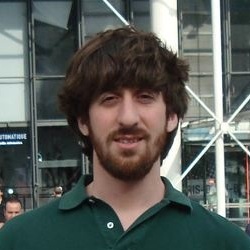
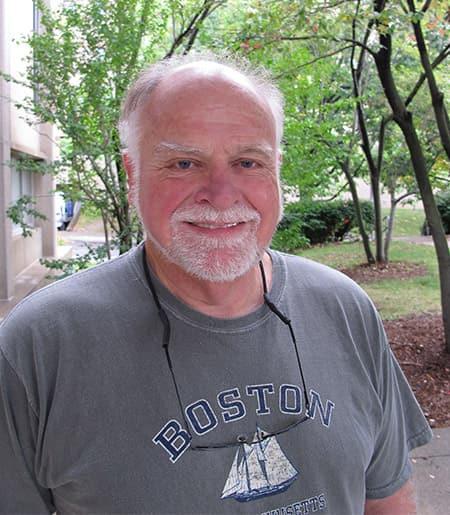
Jinhyung Park is an Associate Professor in the Department of Mathematical Sciences at KAIST, Daejeon, Korea. He obtained his Ph.D. from KAIST in 2014 under Prof. Sijong Kwak and was mentored as a CMC Fellow at KIAS (2014–2019). His research focuses on Algebraic Geometry , particularly syzygies of algebraic varieties , secant varieties , and positivity of line bundles . Education: Ph.D., KAIST (2014); MS/BS, KAIST and University of Chicago (2002/2001). Research Interests: His work explores geometric properties of projective manifolds, singularities in algebraic geometry, and applications of Okounkov bodies to divisors and syzygies. Recent trends include Castelnuovo-Mumford regularity bounds (e.g., for threefolds with rational singularities) and subadditivity of Okounkov bodies in fiber spaces. Teaching: Courses include Matrix Groups, Algebraic Geometry, and Calculus. He previously taught at Sogang University and Purdue University. Professional Affiliations: Member of the Korean Mathematical Society, American Mathematical Society, and other international societies. Organized the 8th East Asia Number Theory Conference at KAIST (2019).
Professor Jelena Grbic is a distinguished mathematician serving as Professor of Mathematics within the School of Mathematical Sciences at the University of Southampton since 2012. Her academic journey began with a B.Sc. in Mathematics from the University of Belgrade, Serbia in 1997, followed by a Ph.D. in Algebraic Topology from the University of Aberdeen in 2004. Prior to her current position, she held academic appointments at the University of Manchester (2007-2012) as Lecturer and Senior Lecturer, and at the University of Aberdeen (2004-2006) as Lecturer. Professor Grbic's research spans multiple interconnected domains of pure mathematics, with a primary focus on modern homotopy theory, particularly unstable homotopy theory, and its applications across topology, algebra, and geometry. Her work centers on decompositions and exponent problems in homotopy theory, homotopy aspects of Toric Topology, Hopf algebras, and geometric problems related to cobordisms and string topology. This research bridges abstract mathematical theory with potential applications in data science and computational topology. Analysis of her recent publications (2020-2025) reveals a consistent research trajectory in algebraic topology with increasing interdisciplinary connections. Her work demonstrates sophisticated mathematical techniques applied to complex topological structures, particularly moment-angle complexes and polyhedral products. Notably, her 2022 paper 'Aspects of topological approaches for data science' indicates growing interest in applying topological methods to contemporary data analysis problems, suggesting an expanding research horizon beyond pure mathematics. Professor Grbic actively supervises PhD students, including current student Salvatore Elia in Mathematical Sciences, and teaches modules covering algebraic topology and homotopy theory. She serves as a reviewer for prestigious journals including Homology, Homotopy and Application (2019), Transactions of the London Mathematical Society (2021), and The LMS Newsletter (2017), contributing to the scholarly community through peer review and academic service.
Dr. Niranjan Ramachandran is a Professor of Mathematics at the University of Maryland, College Park, specializing in the deep structural connections between Arithmetic Geometry and Number Theory. His work centers on motives, zeta functions, and algebraic cycles, with significant contributions to foundational conjectures in modern mathematics. His primary research domains include: Arithmetic Geometry Algebraic Geometry Number Theory Motives Zeta Functions Cohomology K-theory Prof. Ramachandran's research explores the intricate relationships between algebraic cycles, special values of L-functions, and motivic cohomology, advancing understanding of the Birch and Swinnerton-Dyer conjecture, Artin-Tate conjecture, and higher Euler characteristics through innovative approaches to zeta functions and motivic complexes. Analysis of his 15 most recent publications reveals sustained focus on zeta function special values (2023), derived categories of elliptic curves (2022), and Artin-Tate conjecture proofs (2022), with recurring themes in fiber integration of gerbes (2020), higher Euler characteristics (2016), and motivic measure exponentiation (2014). His work consistently bridges abstract motivic frameworks with concrete arithmetic problems. No scientific awards were documented in the provided materials. Information regarding academic advising, Ph.D. students, or research grants was not specified in the available text.
Steven Sivek is a Reader in Pure Mathematics at Imperial College London, affiliated with the Geometry group within the Department of Mathematics. His research focuses on contact and symplectic geometry, knot theory, gauge theory, and low-dimensional topology. He has taught courses on contact geometry, symplectic geometry, mapping class groups, and Morse theory at institutions including Imperial College London, Harvard University, and the University of Bonn. His work includes advanced topics such as Floer homology, Legendrian knots, and the interplay between contact structures and 3-manifolds. Sivek's contributions bridge geometric topology with algebraic structures, addressing questions about knot invariants, representation varieties, and topological field theories. His courses emphasize foundational texts and advanced research topics, such as the classification of tight contact structures, Morse theory applications, and symplectic fiber bundles. He has organized seminars on mapping class groups and taught graduate-level material on advanced geometry and topology. Sivek's research has been published in numerous high-impact papers, exploring themes like Khovanov homology, instanton Floer homology, and the geometry of 3- and 4-manifolds. His academic profile reflects a commitment to both teaching and cutting-edge research, with a focus on geometric and topological questions that intersect algebraic and differential structures.
Georgios Dimitroglou Rizell is a Senior Lecturer in the Department of Mathematics at Uppsala University, Sweden, where he also serves as Head of the Department since 2020. His academic work is centered at the Ångström Laboratory, where he conducts research in symplectic and contact topology. He maintains dual affiliations with both the Department of Mathematics and the Center for Geometry and Physics at Uppsala University. Dr. Dimitroglou Rizell earned his PhD from Uppsala University in 2012 under the supervision of Tobias Ekholm. Following his doctoral studies, he held postdoctoral positions at the Université Libre de Bruxelles (2012-2013), Université Paris-Sud (2013-2014), and the University of Cambridge (2014-2015), all supported by prestigious fellowships from the Knut & Alice Wallenberg Foundation. He returned to Uppsala University as a researcher (2015-2017) and Assistant Lecturer (2017-2021) before being promoted to Senior Lecturer in 2021. His research primarily focuses on symplectic and contact topology, with special emphasis on understanding and classifying Lagrangian and Legendrian submanifolds. His work employs advanced mathematical techniques including pseudoholomorphic curves, pseudoholomorphic foliations, Symplectic Field Theory, and Floer homology. His investigations span a broad range of topics within geometric topology, from the classification of Lagrangians near the Whitney immersion to the study of Legendrian submanifolds and their invariants. His research has significant implications for understanding the geometric structures underlying classical mechanics and quantum physics. His recent publications (2020-2025) demonstrate a consistent focus on Lagrangian and Legendrian submanifolds, with particular attention to their classification, invariants, and interactions with symplectic structures. A notable trend is the development of new techniques for studying C^0-limits of Legendrians, exact Lagrangians in various settings, and the geometric generation of Fukaya categories. His collaborative work with researchers like Michael Sullivan, Roman Golovko, and others has produced significant advances in Floer theory and symplectic field theory. Scientific Awards Wallenberg Scholar (2023-2028, KAW 2023.0294) Wallenberg Academy Fellow (extension 2022-2027, KAW 2021.0191) Wallenberg Scholar (2022-2023, KAW 2021.0300) Wallenberg Academy Fellow (2017-2021, KAW 2016.0198) As Head of the Department of Mathematics, Dr. Dimitroglou Rizell oversees academic programs and research initiatives. His leadership is supported by significant funding from the Knut & Alice Wallenberg Foundation, which has awarded him multiple prestigious fellowships throughout his career. These grants have enabled his research in symplectic geometry and supported collaborative projects with international mathematicians. Dr. Dimitroglou Rizell is actively involved in the Center for Geometry and Physics at Uppsala University, where he collaborates with researchers across mathematical disciplines. His work intersects with theoretical physics, particularly in areas related to geometric quantization and the mathematical foundations of quantum mechanics. He participates in seminar series and reading groups focused on symplectic topology and its applications.
Professor Laurentiu Paunescu is a faculty member in the School of Mathematics and Statistics at the University of Sydney . His research focuses on Real and Complex Singularities , Stratifications , and Real and Complex Algebraic Geometry , with particular interest in geometric criteria for ignoring higher-order terms in analytic maps and blow-analytic equivalence. University: University of Sydney School: School of Mathematics and Statistics Academic Rank: Professor Email: laurentiu.paunescu@sydney.edu.au, laurent@maths.usyd.edu.au Address: F07 - Carslaw Building, The University of Sydney Paunescu's research aligns with the University of Sydney's Understanding the Universe and Fundamental Laws of Nature strengths. He investigates topological invariance under bi-Lipschitz homeomorphisms, Lipschitz stratification, and connections between real and complex Milnor fibers. His work often involves collaborations with researchers like S. Koike, A. Parusiński, and M. Tibar. Recent publications (2024–2019) emphasize Lipschitz geometry (e.g., directional bundles, stratification), cohomology of hypersurface singularities , and polynomial function finiteness . Notable collaborations include studies on vanishing cohomology , clustered polar curves , and CAD construction validity . Grants from DVC Research and ARC Discovery Projects support his work. He supervises research students in areas like O-minimal Geometry and contributes to Metric Spaces (Advanced) teaching. Paunescu co-edits workshops such as the Australian-Japanese Real and Complex Singularities Workshop , advancing international collaboration in singularity theory.
Dima Arinkin is a Professor in the Department of Mathematics at the University of Wisconsin–Madison, specializing in algebraic geometry with significant contributions to geometric representation theory and mathematical physics. His research focuses on: Geometric Langlands Program: Developing frameworks connecting automorphic forms and Galois representations through geometric methods Moduli Spaces: Analyzing spaces of algebraic connections, Higgs bundles, and their compactifications D-modules: Studying systems of linear differential equations via algebraic geometry Integrable Systems: Investigating geometric structures in soliton theory and Painlevé equations Irregular Singularities: Exploring connections with irregular behavior on algebraic curves Analysis of his publications (2008-2016) reveals consistent advancement in geometric Langlands through derived algebraic geometry techniques, particularly in relating singular support of sheaves to automorphic forms and establishing oper structures for connections. No scientific awards are documented in the provided materials. No information regarding student advisement or research grants appears in the source texts.
James E. West is a Professor in the Department of Mathematics at Cornell University, affiliated with the College of Arts and Sciences. He holds a Ph.D. from Louisiana State University (1967). His research focuses on geometric topology, infinite-dimensional topology, and the symmetries of manifolds, particularly exploring Hilbert cube manifolds, function spaces, and equivariant homeomorphisms. He has contributed to understanding stabilization processes in topology and the interplay between finite and infinite-dimensional structures. His teaching includes advanced courses such as MATH 4500 (Matrix Groups), MATH 4900 (Supervised Research), and MATH 4901 (Supervised Reading), alongside foundational courses like MATH 2220 (Multivariable Calculus). His work bridges pure mathematics with applications in transformation groups and representation theory. West has published extensively on topics including fixed point sets, compact group actions, and fibration theory. His research emphasizes the control of homeomorphism theories and the classification of topological spaces with complex symmetries.
Zsolt Patakfalvi is an Associate Professor at École Polytechnique Fédérale de Lausanne (EPFL), holding positions in the School of Basic Sciences (SB) within the Department of Mathematics (MATH). He is affiliated with the Chair of Algebraic Geometry (CAG) and the Section of Mathematics for Engineers (SMA-ENS). Additionally, he serves as Director of SMA-GE and holds roles in academic governance bodies like the Conference of Section Directors (CDS) and SB Faculty Management. His research focuses on Algebraic Geometry, particularly in birational geometry, positive characteristic methods, moduli theory, and mixed characteristic algebra. He explores topics such as Hodge theory, singularities, and applications to arithmetic geometry. Notable contributions include work on the minimal model program, test ideals, and counterexamples to classical conjectures in positive characteristics. He supervises doctoral students in areas like algebraic geometry and commutative algebra, including Jefferson Baudin, Léo Navarro Chafloque, and Linus Rösler. His past advisees include Emelie Arvidsson and Quentin Posva. Patakfalvi’s publications frequently address foundational questions in geometry, with recent work extending into perfectoid spaces and globally-regular varieties. He coordinates courses such as 'Algebra III - Rings and Fields' and 'Perfectoid spaces' at EPFL, reflecting his commitment to both research and education. His academic service includes managing educational programs within SB-SMA and contributing to institutional decision-making through CDS membership.
Prof. Dr. Wolfgang Steimle is a Professor at the Institute of Mathematics within the Faculty of Mathematics, Natural Sciences and Technology at the University of Augsburg, Germany. He serves as the Erasmus representative for the Institute and is a core member of the Differential Geometry research team, collaborating with Professors Bernhard Hanke and Peter Quast. His office is located in space 3020 (L1) with contact email wolfgang.steimle@math.uni-augsburg.de. Steimle completed his academic training at the University of Münster, earning a diploma (Master's equivalent) in 2007 with thesis "Whitehead-Torsion und Faserungen" and a PhD in 2010 under Tom Farrell and Wolfgang Lück with dissertation "Obstructions to Stably Fibering Manifolds". His research centers on Differential Geometry and Algebraic Topology , with primary focus on manifold classification , automorphisms of manifolds , Algebraic K- and L-theory , and positive scalar curvature . He bridges abstract homotopy theory with geometric applications, particularly through cobordism categories, Waldhausen K-theory, and the assembly map. His work connects higher category theory with classical manifold problems, yielding insights into metric spaces and curvature constraints. Analysis of his recent publications reveals a dominant trend in applying stable infinity-categories to geometric topology, with significant contributions to Hermitian K-theory and the topology of positive scalar curvature metrics. His research consistently integrates algebraic techniques with differential geometric structures, advancing understanding of manifold automorphisms and classification. As an educator, Steimle has taught extensively across all levels, including Bachelor courses in Linear Algebra and Topology, Master lectures in Algebraic Topology and K-Theory, and specialized seminars on Lie Groups, Reflection Groups, and Cobordism Categories. He has supervised doctoral researchers including Georg Frenck, Helge Frerichs, Andreas Huber, and Lukas Schönlinner within the Differential Geometry group.
Prof. Dr. Thomas Schick is a Professor of Mathematics at the Mathematical Institute of the University of Göttingen, leading the vibrant research group in Topology and Geometry. His work focuses on areas such as index theory, K-theory of C*-algebras, and geometry and analysis. He is a core member of the Research Training Group 2491 'Fourier Analysis and Spectral Theory', serving as its speaker, and has supervised numerous doctoral students in topics ranging from persistent cohomology to spectral engineering. His academic journey includes a PhD from Johannes Gutenberg University Mainz (1996) under Wolfgang Lück, followed by postdoctoral positions at the University of Münster and Penn State University before joining Göttingen in 2001. He has held visiting roles at institutions worldwide. Prof. Schick is an Ordentliches Mitglied of the Göttingen Academy of Sciences, a Fellow of the American Mathematical Society, and leads the Scientific Advisory Board of the Mathematisches Forschungsinstitut Oberwolfach. He edits several high-impact journals, including Annales Mathématiques Blaise Pascal and the Bulletin of the Iranian Mathematical Society. His research interests span topological and geometric analysis, with recent work exploring scalar curvature rigidity, T-duality, and coarse geometry. He regularly teaches advanced courses and seminars, including 'Index Theory and Theorems' and 'Topological Data Analysis', and actively mentors students through the RTG program.
Florian Strunk is a Professor in the Department of Mathematics at the University of Regensburg, working within the Faculty of Mathematics. His office is located in room M219 (phone: +49 941 943 2768) and his contact email is florian.strunk@ur.de. Dr. Strunk's research spans several interconnected areas of modern mathematics, with primary focus on Algebraic Geometry, Arithmetic Geometry, and Homotopy Theory. He has developed specialized expertise in Algebraic K-Theory, Motivic Homotopy Theory, and Derived Algebraic Geometry. His scholarly work bridges classical algebraic geometry with contemporary homotopy-theoretic methodologies, advancing our understanding of structural properties of algebraic varieties and schemes. His publication record demonstrates consistent contributions to Algebraic K-Theory and motivic homotopy theory, with significant work on descent properties, connectivity in motivic contexts, and algebraic cycles. His collaborative research with prominent mathematicians like Moritz Kerz and Georg Tamme has appeared in top-tier journals including Inventiones Mathematicae and Compositio Mathematica. As an educator, Dr. Strunk teaches across the mathematics curriculum, from foundational undergraduate courses to advanced graduate seminars. His teaching portfolio includes Algebraic Geometry I and II, Mathematics of Machine Learning, Introduction to Quantum Computing Mathematics, and specialized seminars on Algebraic K-Theory. He has developed comprehensive lecture notes for several courses, reflecting his commitment to effective pedagogy.
Timothy J. Muldoon is a Professor in the Department of Biomedical Engineering at the University of Arkansas, where he has been since 2012. He holds joint appointments in the (ENGR)-Engineering and (BMEG)-Biomedical Engineering programs. B.S. in Biomedical Engineering from Johns Hopkins University (2002) Ph.D. in Bioengineering from Rice University (2009) M.D. from Baylor College of Medicine (2010) Dr. Muldoon leads the Translational Biophotonics and Imaging Laboratory, focusing on multimodal microendoscopy , multiphoton imaging , and light sheet microscopy for cancer detection and treatment monitoring. His work bridges optical spectroscopy , nanotechnology , and microfluidics to develop novel diagnostic tools. Current research includes optical methods for assessing chemoradiotherapy response in colorectal cancer, metabolic imaging of tumor organoids , and point-of-care blood analysis systems . His publications (30+ peer-reviewed articles) and NIH-funded projects demonstrate clinical translation of optical biopsy technologies. National Institutes of Health Academic Research Enhancement Award (R15) - Cancer Imaging NIH Early Career Reviewer Program (2016) Burroughs Wellcome Collaborative Research Grant (2012) Dr. Muldoon teaches advanced courses in Biomedical Microscopy (BMEG 5504) and Biomedical Instrumentation (BMEG 2904), emphasizing optical techniques and physiological measurements . He has received multiple teaching and service awards at the University of Arkansas.
Mark Haskins is a Professor of Mathematics at Duke University, affiliated with the Trinity College of Arts & Sciences. He holds a Ph.D. from the University of Texas at Austin (2000) and has held academic positions at institutions including the University of Bath and Imperial College London. His research focuses on differential geometry, special holonomy metrics, and geometric flows, particularly G₂-holonomy manifolds and Laplacian flow solitons. He is a Fellow of the Learned Society of Wales (2014). Research interests include Riemannian geometry, Einstein manifolds, and geometric analysis. Notable contributions involve constructing G₂-manifolds from asymptotically conical Calabi-Yau 3-folds and studying solitons in Laplacian flow. He has led grants from the Simons Foundation (2016–2024) and organized programs like the 2024 Special Geometric Structures and Analysis at MSRI. Teaching includes courses like Real Analysis II and Smooth Manifolds. He mentors students, including Yijia Liu and Anuk Dayaprema, and collaborates with researchers like Nordström and Foscolo. Professional activities include roles as Director of Graduate Studies at Duke and service in academic leadership.
Sebastian Goette is a Professor at the Mathematical Institute of the University of Freiburg, where he serves in the Department of Pure Mathematics. His office is located in Room 339 at Ernst-Zermelo-Straße 1, D-79104 Freiburg, Germany. He teaches courses including Differential Geometry, Algebraic Topology, and Mathematics, with office hours held on Wednesdays from 13:00 to 14:00. Professor Goette's research interests center on differential geometry, with particular focus on special holonomy, G2-manifolds, scalar curvature, and topological invariants. His work bridges pure mathematics with applications in mathematical physics, particularly in areas related to string theory and gauge theory. He employs advanced techniques from algebraic topology, spectral geometry, and Riemannian geometry to investigate the structure of manifolds and their classification. Analysis of his recent publications reveals a strong emphasis on the geometry and topology of 7-manifolds with special holonomy, particularly G2-structures. His research spans both theoretical developments in invariant theory and concrete classification results for specific manifolds. The work often involves sophisticated interactions between analysis, topology, and geometry, with applications to mathematical physics. Professor Goette is actively involved in multiple research collaborations, including the Simons Collaboration on Special Holonomy in Geometry, Analysis and Physics, the Research Training Group Cohomological Methods in Geometry, and the DFG Priority Programme Geometry at infinity, where he leads project 04 on Secondary invariants of foliations. He is scheduled to take a sabbatical in summer 2025.