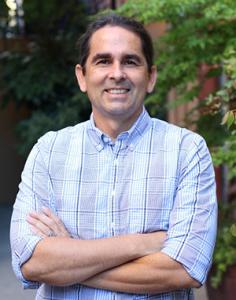
Kai Gehring is a Professor for Political Economy and Sustainable Development at the Department of Economics, University of Bern, and a member of the interdisciplinary Wyss Academy for Nature in Bern. He is also a research professor associated with the ifo Institute in Munich. His academic affiliations include CESifo, the European Development Network (EUDN), the Development Economics Committee of the German Economic Association, and the Globalization and Development (GlaD) group. His educational background includes a Ph.D. in Economics from the University of Göttingen (with co-supervision from Heidelberg University), where his supervisors were Axel Dreher and Stephan Klasen, and he graduated summa cum laude . He earned his Diplom (equivalent to M.Sc.) in Business Administration with electives in Economics from the University of Mannheim, and previously studied at the University of Canterbury in New Zealand. Kai Gehring’s research focuses on political economy, development, and public economics. He develops theoretical frameworks grounded in economics and related disciplines and tests them using modern econometric methods, often leveraging novel administrative, geographical, and historical data. His work emphasizes the role of culture, norms, and history in shaping institutional outcomes in both developed and developing countries. Key research themes include development cooperation and aid effectiveness, the political economy of international organizations (such as the IMF, World Bank, and EU), and the origins and consequences of group identities and horizontal inequalities in conflict and power distribution. His current research projects explore narratives on nature, climate change, and migration using natural language processing and media data; analyze resource extraction and pollution through satellite imagery and machine learning; and investigate propaganda and conflict. Although no recent publications are listed in the provided text, his methodological approach combines theory, rigorous empirical analysis, and innovative data sources across political economy and development. Ambizione Grant from the Swiss National Science Foundation Kai Gehring has supervised various research initiatives, including the "Minister Project," a citizen-science effort to compile comprehensive data on African government members’ regional and linguistic origins to study governance and development. He has received research funding through the Ambizione Grant and leads interdisciplinary collaborations with institutions such as the Wyss Academy and ifo Institute. His teaching experience spans the University of Mannheim, Heidelberg University, University of Applied Sciences Kaiserslautern, and the University of Zurich. He leads the "Minister Project," which engages global contributors to collect data on African ministers’ birth regions and native languages. This initiative aims to build a robust dataset to analyze how ethnic and linguistic diversity affects government formation and policy outcomes. The project promotes open, collaborative research and acknowledges contributors on its website, offering incentives such as Amazon vouchers and an iPad.