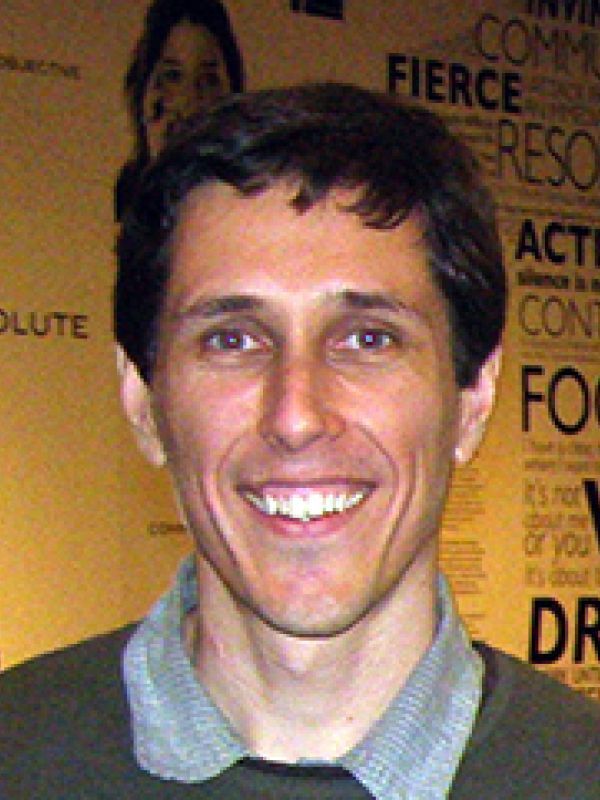
Maria Brbic is an Assistant Professor of Computer Science at EPFL, previously a postdoctoral researcher at Stanford University under Jure Leskovec. Her research focuses on developing machine learning methods for biological and biomedical applications, particularly representation learning of high-dimensional datasets, open-world semi-supervised learning, and single-cell genomics. Her work includes the STELLAR method for spatial cell type discovery (Nature Methods 2022), the ORCA framework for open-world learning (ICLR 2022), and contributions to the Fly Cell Atlas (Science 2022). She is involved in the Chan Zuckerberg Biohub and Neuro-omics projects. She received the University of Zagreb's best thesis award, was recognized as a MIT Rising Star in EECS, and won the Basel Computational Biology Conference best poster award. Her research bridges computer science with cutting-edge biomedical discovery.
Marcos Gridi-Papp is a Professor in the Department of Biological Sciences at University of the Pacific, specializing in the study of acoustic communication systems in animals. His research investigates the interplay between hearing, vocal anatomy, and communication behavior, with a focus on frogs and crickets. He also teaches courses related to biological sciences and advises biology and pre-dental majors. PhD in Integrative Biology, University of Texas, Austin (2003) MS in Ecology, State University of Campinas, Brazil (1997) BS in Biological Sciences, State University of Campinas, Brazil (1994) Gridi-Papp's research explores how anatomical structures influence vocal performance and auditory sensitivity. His lab investigates: Laryngeal morphology and vocal control in túngara frogs Auditory tuning mechanisms and ultrasound sensitivity Environmental impacts on communication strategies Physiological and behavioral adaptations in vocal systems Signal complexity evolution and middle ear mechanics Eustachian tube control and acoustic reflexes Recent research trends focus on: Bioacoustic adaptations in amphibians Behavioral responses to environmental changes Anatomical constraints on vocalization Acoustic signal optimization Frequency modulation mechanisms Multi-component call structures His lab offers research opportunities in anatomy, electrophysiology, animal behavior, and computational methods, supporting students with credit hours and technical training.
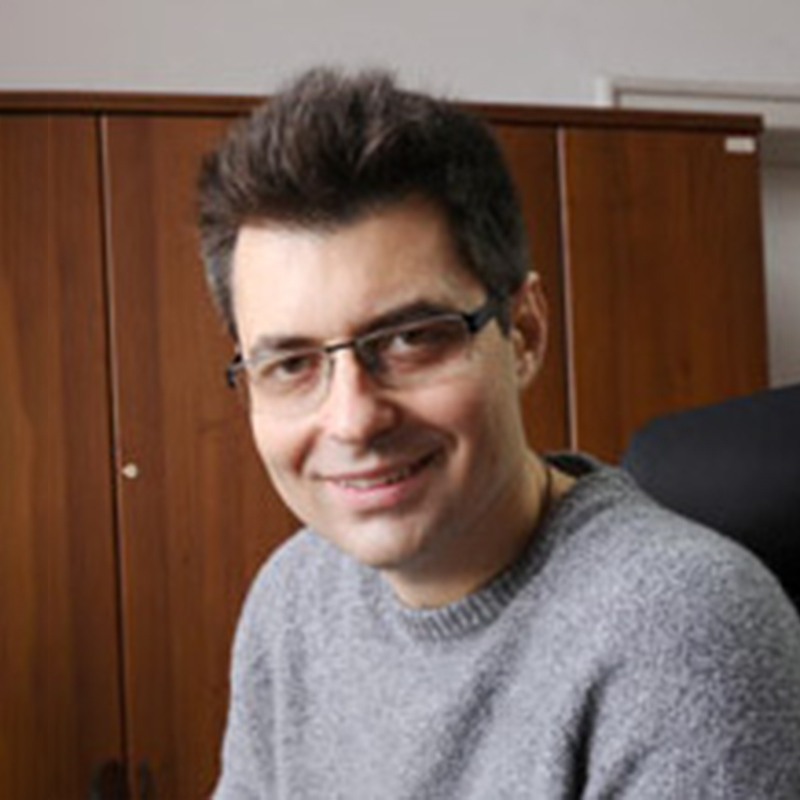
Paul Shipley is an Associate Professor in the Department of Chemistry within the Irving K. Barber Faculty of Science at the University of British Columbia Okanagan. He also serves as Associate Dean of the College of Graduate Studies. His research focuses on natural products chemistry, metabolomics, and NMR-based analysis of medicinal plants and bacteria to investigate chemical differences between species and samples. His work has applications in discovering biological activities, optimizing natural health product formulation, identifying adulterated products, and classifying species by their chemistry. Dr. Shipley's educational background includes: PhD from the University of Washington Dr. Shipley's research centers on organic chemistry and natural products biosynthesis, with particular emphasis on the biochemistry of secondary metabolism in plants and bacteria. His laboratory develops and applies nuclear magnetic resonance (NMR) metabolomics approaches to define the complex chemistry of medicinal plants, which traditionally has been challenging due to the estimated 30,000 distinct phytochemicals present in an average plant tissue. His work bridges analytical chemistry, plant biochemistry, and statistical analysis to create robust methods for species differentiation and chemical profiling. Specifically, his lab investigates NMR-based chemical approaches for medicinal plant analysis across various species, comparing results with LC/MS metabolomic analysis and chromatographic separation methods. They develop statistical tools to discriminate between true and false positives in significance analysis and optimize NMR experiments for best discrimination between sample types, with applications in hawthorn chemotaxonomy, cranberry analysis, and other medicinal plant studies. Dr. Shipley's recent publications demonstrate a strong focus on NMR-based metabolomics applied to plant chemistry, particularly for species identification and quality control of natural health products. His work spans multiple plant genera including Crataegus (hawthorn), Vaccinium (cranberry), and Artemisia (sagebrush), with consistent methodological development in statistical analysis and NMR techniques. A notable trend is the application of machine learning algorithms to refine metabolomic data interpretation and the development of robust models for distinguishing between closely related plant species and varieties. His research program has contributed significantly to: Development of new NMR-based approaches for plant metabolome analysis Creation of statistical tools for metabolomic data refinement Chemotaxonomic studies of medicinal plants with pharmacological relevance Identification of cardioprotective compounds in hawthorn species As a graduate student supervisor in the Department of Chemistry, Dr. Shipley mentors students in organic chemistry, natural products biosynthesis, and analytical methodology development. His research program involves multiple funding sources supporting NMR metabolomics instrumentation, plant collection and analysis fieldwork, statistical methodology development, and collaborative studies with pharmacology and botanical researchers. Dr. Shipley leads a research laboratory focused on NMR-based metabolomics of medicinal plants and bacteria. His team develops advanced statistical and methodological tools for model improvement in metabolomic analysis, with particular expertise in distinguishing between closely related plant species and varieties. The lab collaborates across disciplines, integrating chemical analysis with biological activity studies to connect phytochemical profiles with potential pharmacological relevance, particularly in cardioprotective compounds found in hawthorn and urinary tract health applications of cranberry compounds.
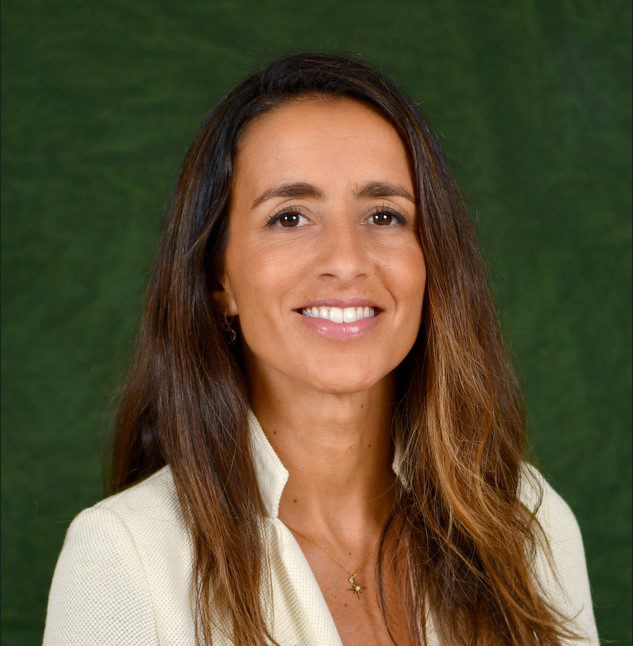
Lisa Kaltenegger serves as Associate Professor in the Department of Astronomy within Cornell University's College of Arts and Sciences, and is the Founding Director of the Carl Sagan Institute (CSI). Her interdisciplinary work bridges astrophysics and astrobiology, focusing on modeling habitable worlds and developing techniques to detect life beyond Earth. She maintains affiliations as Research Associate at Harvard-Smithsonian Center for Astrophysics and the American Museum of Natural History. Her research centers on exoplanet atmospheric modeling , biosignature detection , and habitable zone characterization . Kaltenegger pioneered methods for analyzing light fingerprints of alien worlds, creating evolutionary spectra of Earth through geological time to identify life indicators. Her work with NASA's TESS mission and JWST's NIRISS instrument drives observational strategies for future telescopes. She leads the CSI's development of a forensic toolkit for life detection across diverse planetary environments. Notable publications trends show increasing focus on machine learning applications for exoplanet characterization, temporal biosignatures through Earth's evolutionary history, and specialized detection techniques for challenging environments like volcanic exoplanets and icy worlds. Recent work emphasizes practical observational strategies for JWST and future missions. Award highlights include: Heinz Maier-Leibnitz Prize for Physics (Germany) Doppler Prize for Innovation in Science (Austria) Beatrice Tinsley Lecturer (Royal Astronomical Society of New Zealand) IAU Invited Discourse lecture at General Assembly Selection as pioneering woman scientist by Annual Reviews Kaltenegger mentors numerous graduate students in exoplanet research, with current advisees including Li, Payne, and Gomes-Barrientos. She serves on NASA senior review panels and NSF's Astronomy and Astrophysics Advisory Committee, securing significant research funding for exoplanet science. As CSI Director, she leads interdisciplinary teams developing spectral libraries and observational frameworks for life detection. Her upcoming book 'Alien Earths' (April 2024) synthesizes decades of research on finding life in the cosmos, reflecting her commitment to science communication through IMAX films, TED talks, and public lectures reaching six continents.
Dr. Roberto Puch-Solis is a Principal Investigator at the Leverhulme Research Centre for Forensic Science , affiliated with the University of Dundee . His work focuses on probabilistic decision support systems, forensic statistics, and computational methods in forensic analysis. Expertise: Forensic genetics, DNA profiling, gas chromatography-mass spectrometry (GCMS), convolutional neural networks (CNNs), and Y-STR mutation modeling. Key Contributions: Development of open-access software ( MUCalc ), segmentation datasets for firearm analysis, and ground truth datasets for drug profiling. Collaborations: Active in interdisciplinary networks, with partnerships in digital forensics, analytical chemistry, and machine learning. Research Trends: Recent work integrates deep learning for forensic image analysis (e.g., shoeprint matching, cartridge case segmentation) and statistical frameworks for DNA evidence interpretation. Applications span firearms identification, drug quantification, and crime scene reconstruction. Activities: Delivered invited talks on probabilistic systems, served as an external examiner, and participated in neural network training workshops.
Dr. Torsten Sattler is a computer vision researcher at RWTH Aachen University, Germany, specializing in image-based localization and 3D scene reconstruction. His work focuses on developing efficient algorithms for camera pose estimation relative to large 3D models, with significant contributions to mobile localization systems and scalable reconstruction techniques. His primary research interests include: Image-based localization and pose estimation Large-scale 3D scene reconstruction Structure-from-Motion techniques Efficient correspondence search algorithms Mobile vision applications Point cloud processing and rendering Dr. Sattler's publication record shows a clear progression from fundamental algorithm improvements to practical systems for real-world applications. His research demonstrates particular expertise in optimizing RANSAC implementations, developing direct 2D-to-3D matching techniques, and creating memory-efficient solutions for mobile devices. The trend in his work moves toward increasingly complex systems that address practical challenges in urban-scale localization and reconstruction. Award: Best Paper Award at the ICCV Workshop on Big Data in 3D Computer Vision (2013) Dr. Sattler has maintained strong collaborations with researchers including Bastian Leibe and Leif Kobbelt. His work bridges theoretical computer vision with practical applications in augmented reality, robotics, and mobile navigation systems, often providing publicly available source code and project pages to support reproducibility and further research.
Dr James Shucksmith is a Senior Lecturer in Water Engineering at the School of Mechanical, Aerospace and Civil Engineering, University of Sheffield. After completing his undergraduate degree and PhD at the same department, he joined the academic staff in 2010 following a KTP associate role with Yorkshire Water. His research focuses on urban flooding hydrodynamics, water quality modeling, and sustainable drainage systems. Co-director of EPSRC Centre for Doctoral Training in Water Infrastructure and Resilience Current projects: Real Time Abstraction Management (with Severn Trent Water), Centaur FloodInteract Research interests include: Urban flood hydrodynamics and drainage-surface flow interactions Water quality forecasting tools for surface water abstraction Development of local real-time control systems for urban drainage Experimental validation of flood models using PIV measurements His publications (2010-2025) cover topics like contaminant transport in flooded sewer systems, longitudinal dispersion modeling, and real-time control optimization. Recent work focuses on data-driven approaches for Cryptosporidium prediction and E. coli forecasting.
Romain Raveaux is an Associate Professor at the LIFAT Computer Science Laboratory, University of Tours, affiliated with Polytech Tours. His research focuses on Image Analysis, Machine Learning, Structural Pattern Recognition, Graph Matching, Graph Neural Networks, Discrete Optimization, Reinforcement Learning, and Transfer Learning . Email: romain.raveaux@gmail.com , romain.raveaux@laposte.net Address: 64 av. Jean Portalis, Tours, France, 37200 Phone: +33 (0)2 47 36 14 27 Research Interests Graph Matching and Neural Networks Discrete Optimization for Pattern Recognition Transfer Learning in Graph-Based Models Historical Document Analysis Scientific Trends His recent work bridges Graph Neural Networks with Mixed-Integer Programming , focusing on Image Semantic Segmentation and Graph Cycle Detection . Earlier studies emphasize Genetic Algorithms for graph classification and Graph Edit Distance optimization in pattern recognition.
Marko Djordjevic is an Associate Professor at the Faculty of Biology, University of Belgrade. His research spans computational biology of infectious diseases, bacterial immune systems (CRISPR/Cas and restriction-modification systems), and quantitative understanding of infection progression with applications to SARS-CoV-2 and computational physics of quark-gluon plasma. Diploma in Physics, Faculty of Physics, University of Belgrade, Serbia. PhD in Biophysics and Bioinformatics, Department of Physics, Columbia University, USA. Postdoctoral training at the Mathematical Biosciences Institute, Ohio State University, USA. Djordjevic's research focuses on nonlinear regulatory dynamics of bacterial immune systems, their role in horizontal gene transfer, and modeling infection progression under social mitigation measures. His secondary interest in computational physics examines quark-gluon plasma dynamics via high-p⊥ observables and tomography. His recent publications address CRISPR/Cas regulation, restriction-modification systems, and SARS-CoV-2 transmissibility drivers. Grants from the Serbian Ministry of Science, Science Fund of Serbia, EU Marie Curie IRG, and Swiss National Science Foundation support his work.
University of North Carolina at CharlotteUnited States
Valentina Cecchi is Associate Professor of Electrical and Computer Engineering and Associate Director of the same department at the University of North Carolina at Charlotte (UNC Charlotte), where she has been a faculty member since 2010. She previously served as Graduate Program Director and Associate Chair of the department from 2019 to 2024. Education background: Ph.D. in Electrical Engineering, Drexel University, Philadelphia, PA Research interests center on electric power systems modeling and analysis, with particular emphasis on optimization of transmission and distribution system planning and operation, grid-enhancing technologies, dynamic line rating of transmission lines, and the integration of renewable and distributed energy resources. Her work spans power system protection, resilience, data-driven analytics, and pedagogical innovation in power engineering education. A consistent thread in her recent publications (2023-2025) is the application of advanced analytics and machine learning to improve real-time monitoring, protection, and restoration of active distribution networks. A complementary focus is the development and evaluation of modern educational methodologies to prepare students for emerging challenges in power and energy systems. Scientific awards: William States Lee College of Engineering Graduate Teaching Excellence Award (2022) Advising & grants narrative: While specific PhD/Master’s students are not listed in the provided text, Dr. Cecchi’s service as Graduate Program Director and her active publication record with student co-authors suggest significant mentoring activity. She has led NSF-supported curriculum updates and educational research efforts, and her work on distribution system resilience, renewable integration, and protection coordination has been funded by multiple agencies and industry partners. Laboratory & teams: Dr. Cecchi is affiliated with the EPIC building (Energy Production and Infrastructure Center) at UNC Charlotte, specifically office 1224, and contributes to the university’s power and energy systems research infrastructure.
Heather J. McAuslane is Professor in the Department of Entomology and Nematology at the University of Florida , where she also serves as Associate Dean in the College of Agricultural and Life Sciences . Her research focuses on plant-insect interactions and chemical ecology , particularly for pests affecting Florida’s horticultural and agricultural systems. Academic Rank: Professor University: University of Florida School: College of Agricultural and Life Sciences Department: Entomology and Nematology Department McAuslane’s work addresses insect pest management for species such as Calpodes ethlius (larger canna leafroller), Parasitoids and Predators of oleander caterpillars, and the Bemisia tabaci whitefly vector. She emphasizes biological control , cultural management , and chemical ecology in her publications. Her research often integrates host plant resistance , insect behavior , and sustainable pest control strategies. Her recent articles (2017–2025) span topics including leaf-rolling Lepidoptera , whitefly-transmitted plant viruses , and insect-plant interactions . These works appear in the Featured Creatures series and journals like Florida Entomologist and Environmental Entomology , with keywords such as Entomology , Agricultural Sciences , and Ecology , and sub-fields like Insect Pest Management , Lepidopteran Biology , and Vector-Borne Plant Pathogens . She co-authored the Better Mentorship, Better Student Experience series (2024), highlighting her commitment to academic mentorship . Her publications frequently address practical control methods for pests impacting crops like canna, oleander, and tomato, including parasitism , pathogen-induced mortality , and chemical control .
Susanne Jauhiainen is a Postdoctoral Researcher affiliated with the Faculty of Information Technology at the University of Jyväskylä . Her work primarily focuses on applying machine learning and data science techniques to interdisciplinary problems in sports science and health informatics. Research Themes : Machine Learning, Sports Injury Prediction, Student Well-Being Analytics Key Collaborations : Computational Data Science Research Group, with partners in health science and spectral imaging domains Her recent publications highlight predictive modeling applications in sports injury detection, cluster analysis techniques, and educational data mining. Jauhiainen's work emphasizes the practical implementation of advanced analytics to solve real-world problems across multiple domains. She contributes to open-access research dissemination and participates in multidisciplinary teaching initiatives that integrate digital well-being data analysis.
Dr. Xiaojiang Chen is a Professor at the University of Southern California, holding appointments in the Departments of Biological Sciences and Chemistry. He is also the Director of the Center of Excellence in NanoBiophysics and a member of the Norris Cancer Center. Dr. Chen earned his Ph.D. in Biochemistry and Molecular Biology from the University of California, Davis, and completed postdoctoral training at Harvard University. His research spans cancer biology, immunology, virology, and structural biology, focusing on DNA replication/repair enzymes, APOBEC deaminases, and viral oncoproteins. Cancer Biology: Investigates DNA-modifying enzymes in genomic instability and tumor suppression. Immunology: Studies APOBEC3G and CR2-C3d interactions in antiviral defense. Virology: Analyzes HIV, HPV, and SARS-CoV-2 protein structures for therapeutic targets. Nanobiophysics: Develops protein nanoparticles for gene delivery. His recent publications highlight structural insights into APOBEC3G/3H and Polθ, with implications for cancer therapy and HIV restriction. He has received prestigious awards including AAAS Fellowship and Howard Hughes Medical Institute support. Scientific Awards: AAAS Fellow (2017) American Cancer Society Young Investigator (2003) Howard Hughes Medical Institute Junior Faculty Award (2000) Grants: NIH R01 grants on DNA repair and APOBEC3G structure-function.
Thomas Nagler is a Professor at the Department of Statistics, Faculty of Mathematics, Computer Science and Statistics at Ludwig Maximilian University of Munich (LMU Munich). He also serves as a principal investigator at the Munich Center for Machine Learning (MCML), where he leads research at the intersection of mathematical statistics and machine learning. Nagler received his academic training at Technical University of Munich (TU Munich), earning a BSc in Mathematics (2009-2012), followed by an MSc in Mathematical Finance (2012-2014), and ultimately a PhD in Mathematical Statistics (2014-2018). Prior to his current position at LMU Munich, he held assistant professor positions at TU Delft (2021-2022) and Leiden University (2019-2021). Professor Nagler's research focuses on developing novel statistical methods with theoretical guarantees and scalable algorithms. His work spans high-dimensional dependence modeling, particularly using vine copulas, statistical machine learning, time series and functional data analysis, and statistical computing. He emphasizes creating methods that can be practically implemented and applied to solve real-world problems across diverse domains. An analysis of Nagler's recent publications reveals a strong emphasis on vine copula methodology, uncertainty quantification in machine learning, and applications to climate science and epidemiology. His work bridges theoretical statistics with practical implementation, often resulting in open-source software tools that make advanced statistical methods accessible to practitioners. The interdisciplinary nature of his research is evident in collaborations spanning climate modeling, healthcare, and finance. While specific awards are not detailed in the available information, Nagler's research impact is evident through his significant contributions to statistical methodology and his active engagement with the research community through open-source software development. As a principal investigator at MCML and Professor at LMU Munich, Nagler leads a research group focused on advancing statistical methodology for complex data analysis. His GitHub profile indicates active collaboration with students and researchers, with several followers from LMU Munich and other institutions. His research program appears to be well-funded through the MCML and university resources, supporting both methodological development and application-focused projects. Nagler maintains strong ties with the computational statistics community through his leadership of the VineCopula and pyvinecopulib projects, which provide essential tools for dependence modeling. His work with the Munich Center for Machine Learning positions him at the forefront of interdisciplinary research combining statistical theory with practical machine learning applications.
James Schnable serves as the Charles O. Gardner Professor of Agronomy in the Department of Agronomy and Horticulture at the University of Nebraska-Lincoln. His research integrates genomic, phenomic, and environmental data to advance crop breeding methodologies for maize and sorghum, with particular emphasis on climate-resilient varieties. Dr. Schnable's research program spans plant genomics , high-throughput phenomics , and quantitative genetics , focusing on genetic dissection of nitrogen use efficiency, photosynthetic traits, and stress tolerance mechanisms. His laboratory pioneers UAV- and satellite-based phenotyping systems, machine learning applications for image analysis, and genomic prediction models that bridge genotype-phenotype gaps under variable environmental conditions. Key innovations include nighttime fluorescence phenotyping to reduce environmental noise and spectral feature extraction for accelerated trait assessment. Analysis of his 2021-2025 publications reveals consistent leadership in genotype-environment interaction studies and computational phenotyping , with dominant themes including transcription factor binding site variation explaining heritability, nonphotochemical quenching kinetics in stress responses, and scalable satellite-based yield prediction methods. His work frequently employs the Genomes to Fields Initiative infrastructure for multi-state field validation. Charles O. Gardner Professorship Dr. Schnable directs an active research program involving advanced sensor networks, genomic selection pipelines, and multi-institutional field trials. His team develops computational frameworks like PlantSegNet for 3D plant reconstruction and SPARC-LoRa for agricultural IoT applications. While specific grant details aren't provided in source materials, his extensive publication record in high-impact journals indicates sustained funding from major agricultural research programs. The laboratory maintains cutting-edge phenotyping infrastructure including UAV fleets, hyperspectral imaging systems, and gas sensor networks for early stress detection. Current projects focus on nitrogen-responsive growth trajectories, chilling tolerance mechanisms in panicoid grasses, and gut microbiome interactions with grain composition, reflecting an integrative approach from molecular mechanisms to field performance.