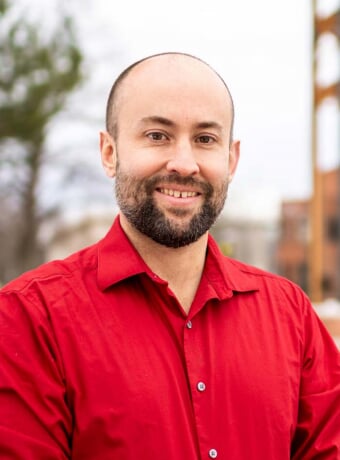
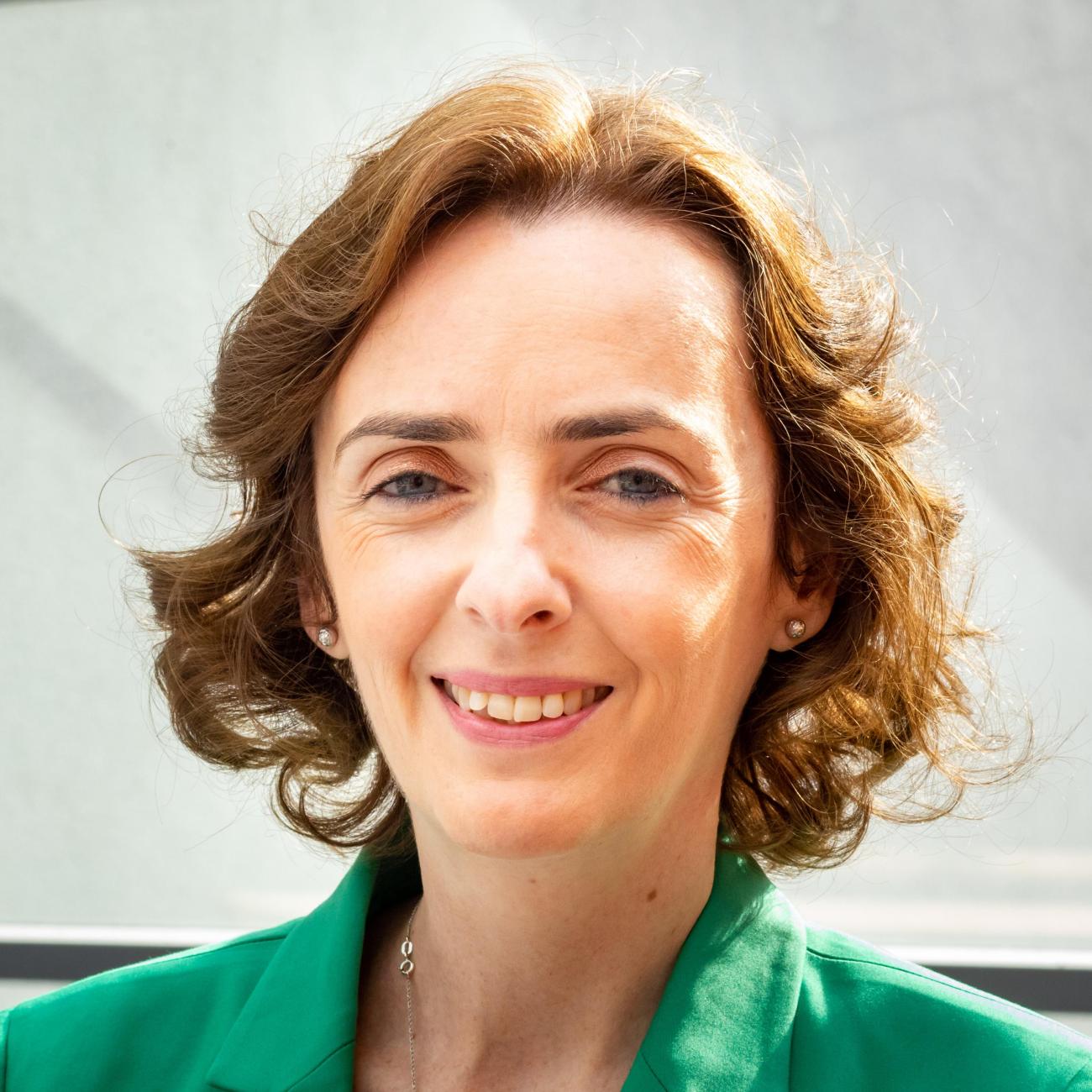
Dr. Meng-Hua Hsieh is Associate Professor of Marketing at Kent State University. Her research examines psychological drivers behind consumer choices, particularly in health contexts and prosocial behaviors. Research Focus: Investigates how maximization tendencies and fear appeals influence health decisions. Recent work explores VR applications in consumer research. Awards: Summer Research Appointment (2024, 2022) Dean's Distinguished Scholar Runner-up (2020)
Dr. Catherine Goodall is an Associate Professor at Kent State University where she conducts research in health communication and media effects. She holds a PhD and BA from The Ohio State University. Her office is located on the Kent campus and she can be reached at cgoodall@kent.edu or 330-672-1243. Her research examines: Media portrayals of health issues Substance use messaging (alcohol/tobacco) Unconscious message processing Persuasion mechanisms in public campaigns Health communication measurement methodologies Her publications demonstrate consistent focus on media effects, health policy communication, and cross-cultural message processing. Recent work explores alcohol policy support mechanisms, science communication during health crises, and political misinformation correction. She teaches courses in health communication, media effects, persuasion, and public communication campaigns. Personal website: https://twitter.com/KSUmediaprof
Maria Diehl, Ph.D., is a Professor in the Department of Psychological Sciences at Kansas State University, affiliated with the College of Arts and Sciences. She directs the Diehl Lab, focusing on neural circuits governing fear, avoidance, and resilience. Her work employs rodent models combined with optogenetics, single-unit recordings, and behavioral paradigms. Research emphasizes understanding how social interactions influence fear circuits and behavioral resilience post-trauma, with implications for PTSD. Key areas include neural mechanisms of active avoidance, sex differences in stress responses, and compulsive behavior models. Publications span 2015–2025, highlighting contributions to fear circuitry, prefrontal cortex dynamics, and social context effects. Her lab trains undergraduates in surgical techniques, data interpretation, and critical thinking. Collaborations include institutions like NIH-funded projects on compulsive behavior circuits. No scientific awards are explicitly listed, but her extensive grants and lab operations suggest external funding support. She advises students through experimental neuroscience training and maintains an active Google Scholar profile and Twitter presence (@DrDiehl_Neuro).
Dr. Joon Jin Song is a Professor of Statistical Science at Baylor University. His work focuses on Bayesian methods, spatial statistics, and their applications in environmental science, biostatistics, and public health. He holds a Ph.D. from Texas A&M University (2004), an M.S. from Kyungpook National University (1999), and a B.S. from Yeungnam University (1997). His research integrates advanced statistical techniques to address challenges in spatial data analysis, including rainfall estimation, disease mapping, and environmental monitoring. Notable projects include Bayesian correction for misclassification in count data and radar-rain gauge merging for high-resolution precipitation estimation. He has also contributed to studies on crime fear reduction through spatio-temporal modeling and public health surveillance during the COVID-19 pandemic. Dr. Song's publications span computational statistics, environmental modeling, and health informatics. His methodologies emphasize robustness to measurement error, high-dimensional data, and spatial dependencies. Collaborations include interdisciplinary work in meteorology, epidemiology, and bioinformatics.
Charlis Raineki is an Assistant Professor in the Department of Psychology at Brock University, within the Faculty of Social Sciences. They hold a PhD from the Federal University of Rio Grande do Sul. Their research focuses on understanding how adverse early-life experiences, particularly prenatal alcohol exposure and early-life adversity, impact neurodevelopmental trajectories and increase vulnerability to mental health disorders such as depression and anxiety. Key research areas include neuroimmune mechanisms, stress regulation, and translational interventions to ameliorate adversity-related deficits. Education: PhD in Neuroscience from Federal University of Rio Grande do Sul, Brazil. Research Interests Neurobiological mechanisms of early-life adversity Impact of prenatal alcohol exposure on neurodevelopment Neuroimmune interactions in psychopathology Developmental effects of stress and caregiving environments Translational strategies for intervention and prevention Publications span topics such as immune dysregulation linked to neurodevelopmental delays, neurobehavioral effects of maltreatment, and the role of corticosterone in stress-related behaviors. Recent work explores the compounding effects of prenatal alcohol exposure and early-life adversity, with a focus on translational models. Lab Culture The Raineki Lab emphasizes equity, diversity, and inclusion, recruiting undergraduate and graduate students for projects in behavioral and cognitive neuroscience. They prioritize fostering an environment where diverse perspectives drive scientific innovation.
Yi-Fang Chiu is an Associate Professor in the Department of Speech, Language & Hearing Sciences at Saint Louis University's Doisy College of Health Sciences. Her research focuses on speech physiology in motor speech disorders, speech production and intelligibility, effects of aging/neurological diseases on speech/voice, and acoustic/aerodynamic measures. She holds a Ph.D. in Speech and Hearing Sciences from Indiana University, an M.A. from Indiana University, and a B.A. in Foreign Language and Literature from National Chung Cheng University. Her research explores speech deficits in Parkinson’s disease and dementia, investigating how cognitive-motor interactions, gait dynamics, and neuroimaging correlate with disease progression. Recent work emphasizes dual-task gait analysis as a prognostic tool for cognitive decline in Parkinson’s, linking brain morphology (e.g., cortical thickness) to motor-cognitive performance. She also studies speech perception challenges in listeners with mild dementia, analyzing how noise impacts word recognition and speech intelligibility. Key contributions include identifying neural correlates of fear-of-falling avoidance behavior in Parkinson’s via mobile neuroimaging and demonstrating interlimb asymmetry in gait as a predictive biomarker. Her work bridges clinical speech pathology with neuroimaging, advancing understanding of neurodegenerative impacts on communication and mobility. No scientific awards are explicitly listed in available texts, but her prolific publication record reflects active engagement in interdisciplinary research. Grants and lab activities are not detailed here, but her affiliations suggest involvement in collaborative studies on neurological speech disorders. Her academic profile underscores a focus on translational research to improve clinical outcomes for patients with motor speech and cognitive-communication disorders.
John McCartney serves as an Adjunct Professor at George Mason University's Department of Criminology, Law and Society, teaching courses such as CRIM 462 (Law Enforcement and Homeland Security) and CRIM 230 (Intro to Homeland Security). A former U.S. Army Infantry and Military Intelligence Officer with extensive experience in Iraq and the Pacific Command, he transitioned to the Intelligence Community, working at agencies like the National Counterterrorism Center and the National Geospatial-Intelligence Agency. His research focuses on intelligence integration between law enforcement and the Intelligence Community, transnational organized crime, and the global impact of illicit networks. McCartney currently balances roles as a paramedic with Suffolk, VA Fire and Rescue and as president of OIS Global LLC, a security consulting firm. Education: McCartney holds an MPA and BS in Criminal Justice from Florida Gulf Coast University. His professional affiliations include George Mason University and OIS Global LLC. Though no formal academic awards are listed, his work bridges military, intelligence, and civilian sectors, emphasizing practical security solutions. Research interests prominently feature cognitive vulnerability models (e.g., 'looming vulnerability'), anxiety disorders, and threat perception, as evidenced by his extensive publication record in clinical and cognitive psychology. His articles explore topics like cognitive distortions, therapeutic interventions, and the relationship between neuroticism and sleep quality.
Dr. Gary P. Dohanich is Professor of Science & Engineering at Tulane University's School of Science & Engineering, located in Percival Stern Hall. His research program investigates the influences of ovarian/adrenal steroids and biological sex on behavior using rodent models. Early work focused on estrogen-acetylcholine interactions in reproductive behaviors, followed by studies on learning/memory modulation. Recent research explores sex differences in learning/behavior and their relationship to anxiety. Research interests include: Hormonal regulation of cognitive function Neurobiological basis of sex differences Stress-anxiety interactions in learning Psychopharmacological interventions Neuroendocrine mechanisms of memory Publications predominantly examine behavioral endocrinology with rodent models, showing consistent focus on hormone-behavior interactions across development. Recent articles emphasize translational applications for stress-related disorders. Previously mentored graduate/undergraduate students but currently focuses on educational activities including new course development and teaching methodology innovation. Teaches courses in Behavioral Endocrinology, Psychopharmacology, Professional Issues in Psychology, College Teaching Pedagogy/Practicum, and Stress & Trauma.
Dr. Ben Seyd is a Senior Lecturer in Politics at the University of Kent , where he serves as Director of Studies and Associate Editor at the Journal of Trust Research . His research focuses on public opinion, political trust, democratic processes, electoral behavior, and institutional design. Key Research Themes : Political trust dynamics during crises (e.g., pandemic compliance) Legitimacy of public institutions and agencies Electoral reform preferences and democratic engagement Psychological drivers of supranationalism and Brexit preferences Recent Publications : 2024 monograph Trust: How Citizens View Political Institutions (Oxford University Press) 2025 Parliamentary Affairs study on pandemic information source trust 2024 Public Understanding of Science article on scientific expert trust Teaching : Core modules in British politics, political behavior, and public opinion, including POLI6005 and POLI6006. Supervision : Active PhD supervisor in political trust, electoral choice, and comparative politics. Contact : b.j.seyd@kent.ac.uk | Personal Website
Michael Kleiman is an Associate Professor in the Department of Sociology & Interdisciplinary Social Sciences at the University of South Florida (USF), within the College of Arts and Sciences. He has held this position since 1982 and previously served as Department Chair (1985–1989) and Director of Graduate Studies (1994–1997). His research focuses on medical sociology, social psychology, and quantitative methods, with notable work on healthcare access, aging populations, and fear of crime. Dr. Kleiman received his Ph.D. in Sociology from Pennsylvania State University (1979), following a B.A. from Tulane University (1973). His educational background includes advanced training in medical sociology, as reflected in his dissertation on emergency room utilization. He has taught courses ranging from introductory sociology to specialized topics like medical sociology and online pedagogy. Kleiman is a certified online educator and has developed courses aligned with Quality Matters standards, emphasizing innovative teaching methods. Research interests span medical sociology (e.g., healthcare access disparities, emergency room use), social psychology (e.g., fear of crime among the elderly), and education (e.g., political efficacy in youth). His work bridges theory and practice, addressing policy implications for aging populations and healthcare systems. Over 30 years, he has published extensively in journals like Review of Religious Research , Social Forces , and International Journal of Health Services , often collaborating with students. He has secured grants from the National Institutes of Health and regional councils, focusing on healthcare access and hurricane shelter planning. Kleiman has reviewed for top journals including American Sociological Review and Social Problems , and served on editorial boards such as International Journal of Aging & Human Development . He has advised numerous honors theses and doctoral committees, mentoring students in sociological research. His service includes roles in university committees on teaching, library resources, and computer infrastructure. Kleiman’s interdisciplinary approach integrates quantitative methodologies with societal issues, contributing to both academic discourse and public policy.
Erik Malte Müller serves as University Professor and Head of the Differential Psychology and Personality Research group at the Department of Personality and Diagnostics, Faculty of Psychology, Philipps University of Marburg. He also acts as Spokesperson for Graduate School 2271 "Breaking Expectations", overseeing doctoral training in psychological science. His research spans personality psychology and neuroscience, focusing on the neurobiological basis of neuroticism and anxiety, brain-heart coupling mechanisms, individual differences in expectation processing, fear conditioning/extinction paradigms, and personality manifestations during sleep/dream states. He actively addresses replication challenges and theoretical crises in psychological methodology through empirical investigation. As leader of the Müller Group, Professor Müller directs a research team investigating intraindividual regulatory processes and interindividual personality differences. His consultation hours (Tuesdays 11:30-12:30) support academic engagement within the university's psychological research community.
James Howard is Assistant Professor of Psychology at Brandeis University, affiliated with the Volen National Center for Complex Systems. His research examines how the human brain constructs outcome expectations to guide decision-making. Research focuses on chemosensory rewards, using neuroimaging and non-invasive brain stimulation to study associative learning mechanisms. Investigations analyze functional network coordination supporting learning processes and how network perturbations affect decision guidance. Recent publications investigate orbitofrontal cortex functions in reward processing, identity-specific reward coding, and sensory prediction errors. Studies combine behavioral paradigms with neuroimaging and stimulation techniques to establish causal relationships.
Jeffrey Wall is an Associate Professor of Management Information Systems & Analytics at the College of Business, Michigan Technological University. He holds a PhD in Information Systems from the University of North Carolina at Greensboro, along with an MS in Public Administration (minor in IS) from Brigham Young University and a BA in Organizational Communication from the University of Utah. His research focuses on AI/ML applications in finance/accounting, simplification of AI workflows, information security behavior, and power dynamics. He has developed proprietary e-commerce systems and an ERP system, and currently oversees two open-source software projects with student collaboration. Teaching interests include business process automation, AI for business, systems analysis, and programming for analytics. Dr. Wall’s work emphasizes entrepreneurship and the practical application of technology in small businesses. His research spans behavioral aspects of information security, organizational policy compliance, and cross-cultural privacy behaviors. He has authored over 15 peer-reviewed articles on topics ranging from fear appeals in security messaging to collaborative theorizing in academic research. His projects often bridge theory and practice, particularly through student-led open-source initiatives.
Professor Pamela Gallagher is a Full Professor of Psychology and Deputy Dean of the Faculty of Science and Health at Dublin City University . As founding Head of the School of Psychology (2019-2025), she leads international research on living well with illness, disability and technology , focusing on cancer survivorship, amputation/prosthetics, and assistive technology. Her work bridges clinical, health, and rehabilitation psychology through the Dublin Psychoprosthetics Research Group ( www.psychoprosthetics.ie ). Education : B.A. (Mod.) in Psychology (First Class Honours) from Trinity College Dublin Postgraduate Diploma in Statistics and Ph.D. in Psychology from Trinity College Dublin Postgraduate Certificate (2004) and Graduate Diploma (2004) in Third Level Education and Learning from Dublin Institute of Technology Research Trends span psychosocial adaptation to chronic conditions, with recent work on cancer screening behaviors , prosthetic embodiment , and smart home technology for aging populations . Earlier studies established foundational psychoprosthetics frameworks including the Trinity Amputation and Prosthesis Experience Scales (TAPES-R) . Teaching includes modules in Psychological Measurement, Health Psychology, Illness/Disability Psychology, and academic publishing strategies. Labs & Teams : Leads the Dublin Psychoprosthetics Group , collaborates with international networks in oncology, prosthetics, and assistive technology research.
Silvia Stroe is an Assistant Professor of Entrepreneurship and Innovation at the University of St. Gallen (HSG), affiliated with the Global Center for Entrepreneurship and Innovation (GCEI) within the School of Management. Previously, she held positions at the Polytechnical University of Milan, including roles as an Assistant Professor and Postdoctoral Researcher in Entrepreneurship. Her research focuses on emotional and cognitive processes in entrepreneurship, particularly the psychological aspects of entrepreneurial finance and venture creation. She holds a Doctor of Science in Management and Entrepreneurship from Hanken School of Economics (2017), alongside advanced degrees in Finance and Corporate Development from Aalto University, the University of Cologne, and an undergraduate degree from the University of Mannheim. Stroe’s teaching spans entrepreneurship education at both Bachelor’s and Master’s levels, including courses on new venture creation, startup practices, and creativity in entrepreneurship. Her work emphasizes practical application, such as consultancy projects for social startups and leadership development in innovation contexts. Her research has been recognized with prestigious awards, including the 2016 ACERE Best Quantitative Paper Award and the 2015 ICSB Doctoral Student Award. Her studies explore topics like passion’s dual regulatory effects on fear of failure, equity crowdfunding dynamics, and crisis-era resource acquisition strategies. She employs innovative methodologies like eye-tracking and facial expression analysis to understand entrepreneurial behavior. Stroe’s career reflects a commitment to bridging academic research with real-world entrepreneurial challenges, contributing to both theoretical advancements and practical insights for startups and managers.