Dr. Eng. Paweł Albrechtowicz is a Lecturer at the Department of Electrical Engineering within the Faculty of Electrical and Computer Engineering at Cracow University of Technology. His research focuses on power systems, transformers, phase-shifting transformers, and short circuit analysis. Key research areas: Power systems reliability, Renewable energy integration, Active power losses, Transmission line thermal behavior Recent publications demonstrate expertise in phase-shifting transformer applications for power flow control, thermal analysis of cables under fault conditions, and renewable energy system performance. Collaborations include researchers like Smugała Dariusz, Rozegnał Bartosz, and Cisek Piotr. No explicit scientific awards are documented in the provided materials.
Dr. Eng. Bartosz Piotr Woszczyna is a Lecturer at the Department of Electrical Engineering within the Faculty of Electrical and Computer Engineering at Cracow University of Technology. His research focuses on optimizing electrical traction systems and power electronics, with emphasis on real-world applications in urban transportation infrastructure. Research Interests: His work spans power quality, semiconductor technologies, and electromagnetic compatibility in traction systems. Primary areas include: Switching loss reduction in multilevel inverters Harmonics analysis in tramway power grids SiC transistor applications for high-efficiency converters Load variability modeling in traction substations EMC solutions for power electronics Voltage stability in on-board vehicle networks Publication Trends: His 14 recent publications demonstrate consistent focus on empirical solutions for tram traction systems. Dominant themes include experimental validation of SiC-based converters, measurement of harmonic distortions in traction networks, and optimization of substation load distribution. Collaborative works frequently address practical engineering challenges in urban rail transport.
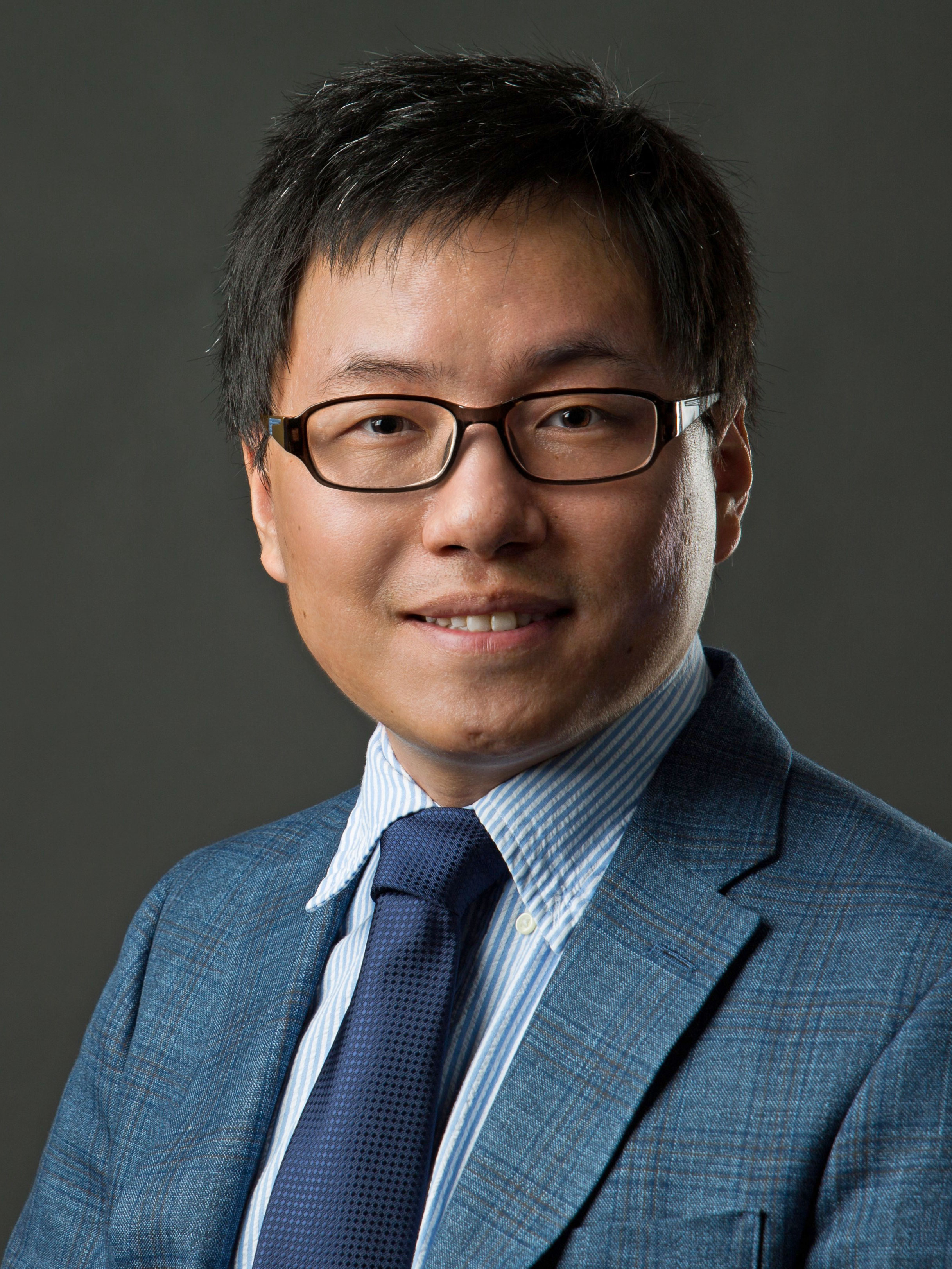
Xiaolin Xu is an Associate Professor in the Department of Electrical and Computer Engineering at Northeastern University. His research focuses on hardware and AI security, machine learning privacy, and energy-efficient deep learning. He earned a PhD from the University of Massachusetts Amherst and completed postdoctoral work at the Florida Institute for Cybersecurity Research. Education PhD, Electrical and Computer Engineering, University of Massachusetts Amherst, 2016 M.S., B.E., University of Electronic Science and Technology of China Research Interests : His work spans secure hardware design, AI model protection, and embedded systems security. Notable projects include securing FPGA-based ML accelerators and developing defenses against adversarial attacks. Recent Article Trends : Recent publications emphasize robustness in neural architectures, secure multi-party computation, and lightweight graph-based models for edge devices. Grants & Awards 2025 DAC Under-40 Innovators Award NSF CAREER Award (2023) Multiple NSF grants for hardware security research Advising : Supervises PhD students including Shijin Duan and Jiaxing, focusing on ML security and hardware-software co-design.
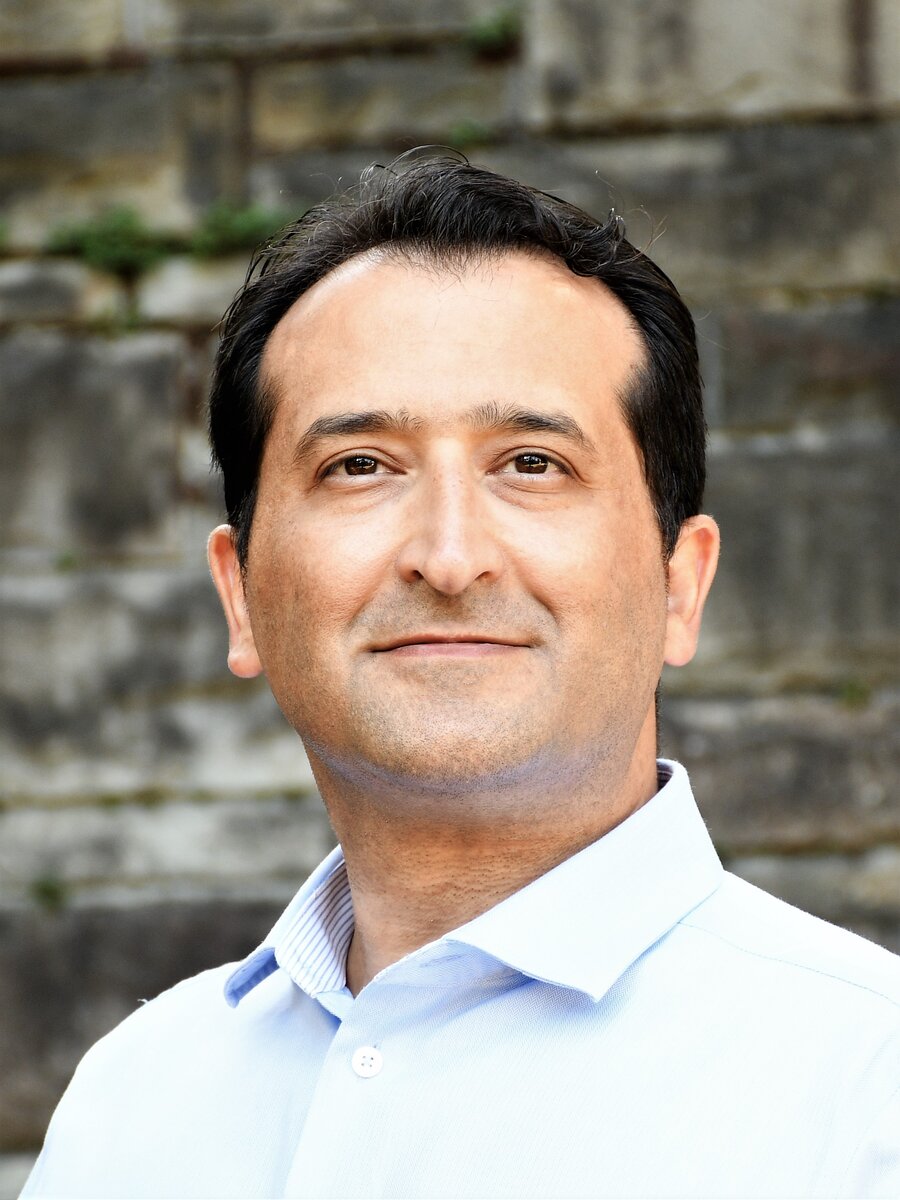
Jose Matas Alcala is an Associate Professor in the Department of Electrical Engineering at the Barcelona East School of Engineering (EEBE), Universitat Politècnica de Catalunya (UPC). He leads research activities within the EPIC (Energy Processing and Integrated Circuits) research group, focusing on power electronics, microgrids, and renewable energy integration. Dr. Matas Alcala earned his PhD from Universitat Politècnica de Catalunya and holds degrees as Telecommunications Engineer and Technical Telecommunications Engineer with specialization in Electronic Equipment. His research focuses on advanced control strategies for power systems, particularly in the areas of microgrid operation, grid synchronization techniques, and protection systems for networks with distributed energy resources. His work addresses critical challenges in renewable energy integration, including voltage and frequency stability, harmonic distortion management, and cyber-resilient control architectures. Dr. Matas Alcala has made significant contributions to synchronization algorithms like SOGI-FLL and droop control methods that enable reliable operation of modern power systems with high penetration of renewable sources. His publication record demonstrates consistent output in top-tier journals including IEEE Transactions on Power Electronics, IEEE Transactions on Industrial Electronics, and IEEE Transactions on Smart Grid. His recent work shows increasing focus on cyber-physical security of power systems, advanced control for DC microgrids, and energy management strategies for emerging applications like 5G infrastructure and satellite power systems. Dr. Matas Alcala has received recognition for his research contributions: Best Paper Award at the VI Iberoamerican Congress of Smart Cities Best Paper Award at the 2023 International Conference on Predictive Control of Electrical Drives and Power Electronics (PRECEDE 2023) He has supervised multiple doctoral students whose research has advanced power calculation algorithms, synchronization techniques, and fault protection methods for modern power systems. His research has been supported by competitive projects from national and regional funding agencies, including the Spanish State Research Agency and the Catalan Government's Research and Innovation Plan. As a core member of the EPIC research group, Dr. Matas Alcala collaborates extensively with researchers across UPC and international institutions. His work often involves interdisciplinary teams addressing the technical and regulatory challenges of modernizing electrical infrastructure for sustainable energy futures.
Chengnian Sun is an Associate Professor in Software Engineering and Programming Languages at the University of Waterloo, Canada. His research spans program reduction, software testing, and compiler-related technologies, with a focus on developing practical tools for debugging and testing. Dr. Sun's research interests center on Software Engineering and Programming Languages , particularly in program reduction techniques, compiler testing, and software security. His work bridges theoretical foundations with practical applications, developing frameworks like Perses and Latra that have become influential in the software engineering community. His research demonstrates a consistent evolution from basic program reduction techniques to incorporating modern approaches like LLMs for compiler testing. His recent publications show a strong trend toward language-agnostic transformation frameworks and practical debugging tools , with increasing emphasis on security applications and integration of AI techniques. The research spans both theoretical foundations and practical implementations, with several tools developed becoming widely used in the software engineering community. Dr. Sun has served on program committees for major software engineering conferences including ASE, ICSE, ESEC/FSE, and ISSTA, demonstrating his standing in the research community. His extensive publication record shows consistent high-impact contributions across multiple venues, with particular emphasis on program reduction and compiler testing techniques. His work has led to the development of several influential tools including Perses (syntax-guided program reduction), Latra (template-based transformation framework), and AddressWatcher (memory leak localization). These tools have been widely adopted in both academic and industrial settings for debugging and testing purposes.
Gholamreza Alirezaei is a Senior Lecturer and Principal Research Scientist at RWTH Aachen University's Faculty of Electrical Engineering and Information Technology, where he holds a position at the Chair for Communications Engineering. He also regularly teaches courses at the Technical University of Munich (TUM). With extensive experience in both theoretical and practical problem-solving, Dr. Alirezaei specializes in Applied Mathematics, Communications Engineering, and Information Processing. Dr. Alirezaei's research spans multiple cutting-edge domains including Data Science, Machine Learning, and Artificial Intelligence; Molecular Communications, Bio-Inspired Systems, and Massive Sensor Systems; Information Theory and Signal Processing; and Detection, Estimation and Classification Theory. His work combines theoretical rigor with practical applications, particularly in extreme environments and sensor networks. His research has gained significant recognition, with numerous awards and publications in top-tier venues. His scientific contributions have been honored with prestigious awards including the Vodafone Young-Researcher Prize, ITG-Literature Prize, and Friedrich-Wilhelm-Prize. He has also received multiple best paper awards for his conference presentations on topics ranging from wireless power systems to sensor networks and communication theory. Dr. Alirezaei has secured substantial research funding through various projects with DFG, BMBF, and EU funding programs. His leadership extends to organizing international conferences and workshops, including the IEEE International Conference on Wireless for Space and Extreme Environments (WiSEE) and workshops on Massive Intelligent Sensor Systems (MISS).
Stanislaw Gubanski is a Professor at the Electrical Engineering department of Chalmers University of Technology, specializing in high voltage engineering and electrical insulation systems. His research spans multiple areas including polymer nanocomposites, power systems, and diagnostic methods for electrical equipment. His research interests focus on High Voltage Engineering , Electrical Insulation , Dielectric Materials , Polymer Nanocomposites , Power Systems , Partial Discharge Analysis , Electrical Treeing , and HVDC Cable Insulation . His work addresses critical challenges in electrical infrastructure reliability, particularly in transmission systems and insulation technologies. Analysis of his recent publications (2019-2024) reveals a strong focus on HVDC cable insulation systems, electrical treeing phenomena, and diagnostic methods for power equipment. His research spans both fundamental material science investigations and practical applications in power grid reliability, with field studies conducted in multiple countries including Ethiopia, Australia, Malaysia, Sri Lanka, and the UK. His scientific contributions include patented innovations in polyolefin compositions for high voltage cables and novel diagnostic methods for insulation systems. His work on voltage stabilizers and polymer compositions has practical applications in next-generation cable technologies. Professor Gubanski has extensive experience in power transformer diagnostics, surface potential decay analysis, and electrical tree formation mechanisms. His international collaborations reflect the global relevance of his research in electrical insulation systems and high voltage engineering.
Bruce DeBruhl is an Associate Professor in the Computer Science and Software Engineering Department at California Polytechnic State University (Cal Poly San Luis Obispo). He is affiliated with the Computer Engineering Program and focuses on research areas including wireless security, cyber-physical systems, automotive security, and privacy engineering. His teaching portfolio includes courses such as Intro to Computer Security, Privacy Engineering, Network Security, and Hardware Security. Dr. DeBruhl holds a PhD and MS in Electrical and Computer Engineering from Carnegie Mellon University Silicon Valley (under Patrick Tague) and a BS in Electrical Engineering from Kettering University. His research explores cutting-edge topics like jamming defense algorithms for OFDM systems, security in autonomous vehicle platoons, and privacy-preserving vehicular communication protocols. Recent work includes developing interleaving algorithms to resist jamming attacks, analyzing adversarial strategies in vehicular networks, and creating educational frameworks to introduce privacy concepts to computing students. His publications span prestigious venues like IEEE WiSec, ACM SIGCSE, and Digital Humanities conferences. Though no scientific awards are explicitly listed, his prolific publication record (over 20 papers since 2010) and active involvement in cybersecurity education indicate significant contributions to the field. Current projects include vehicular radio tracking, collaborative autonomous vehicle security testing, and pedagogical innovation in CS education.
Kanad Basu is an Assistant Professor in the Department of Electrical & Computer Engineering at the University of Texas at Dallas (UTD), affiliated with the Erik Jonsson School of Engineering and Computer Science. He holds the title of Fellow, Eugene McDermott Distinguished Professor. Previously, he worked at IBM and Synopsys, and was an Assistant Research Professor at New York University. His research focuses on hardware security, AI hardware, quantum computing, and VLSI testing. Basu has authored over 130 peer-reviewed publications, 2 patents, and received the Best Paper Award at the 2011 International Conference on VLSI Design. Education: PhD and MS in Computer Engineering from the University of Florida (2012), BE in Electronics and Telecommunication Engineering from Jadavpur University, India (2007). Research Interests: His work spans hardware security (e.g., side-channel attacks, hardware Trojans), functional safety in automotive systems, quantum computing EDA tools, and AI-driven verification techniques. Recent projects include secure assertion generation using LLMs, radiation hardening for edge AI, and quantum circuit equivalence checking. Recent Achievements: Won NSF CAREER Award (2025), served on TPC for IEEE DATE 2026 and IEEE Quantum Week 2026, and led the TIES lab to win NSF CAREER funding. His lab has produced over 15 PhD graduates, many now in industry roles at Intel, NXP, and Oak Ridge National Lab. Awards: Includes NSF CAREER (2025), IEEE Top Picks (2024/2023), and Blavatnik nomination (2019). Academic service roles include associate editorships for IEEE Design & Test and IET Computers. Lab & Collaborations: The Trustworthy & Intelligent Embedded Systems (TIES) lab collaborates with NSF CHEST and TxACE. Ongoing projects involve quantum simulation frameworks (QuaSi), secure DNN acceleration (MENDNet), and radiation-aware functional safety.
Monday Ikhide is an Assistant Professor (Academic) at the CEES School of The Environment, Staffordshire University. He serves as the course director for Building Services degree Apprenticeships and teaches modules in Building Services Electrics and Intelligent Built Environment. His research focuses on protection systems for AC/DC grids, low-voltage DC distribution (LVDC), renewable energy integration, and smart infrastructure. Ikhide holds a Doctorate in Electrical & Electronic Engineering from Staffordshire University (2018), with postgraduate certificates in Technology-Assisted Learning and Research Skills. Education: Doctorate in DC Line Protection for HVDC Transmission (2018) MSc (Distinction) in Electrical Engineering Systems (2012) Postgraduate Certificates in Research Methods (2015) and Technology-Assisted Learning (2017) Research Interests: His work addresses critical challenges in DC grid protection, energy efficiency in buildings, and smart city infrastructure. Innovations include a novel time-domain protection algorithm based on traveling waves, supported by a £86,000 grant from General Electric Grid Solutions. This algorithm aims to enhance fault detection in DC grids, addressing a major barrier to their widespread adoption. Publications Trends: Recent articles focus on HVDC grid protection strategies, traveling wave-based methodologies, and energy optimization in built environments. Key contributions include wavelet transform applications, transient analysis, and backup protection systems for DC grids. Awards: BEST PAPER AWARD (2019) for contributions to power electronics research. Grants & Advising: Secured £86k grant from GE Grid Solutions. Actively supervises PhD students in DC grid protection and accepts applications for research in energy efficiency, smart cities, and LVDC systems. Collaborates on UN Sustainable Development Goals related to energy and infrastructure. Labs/Teams: Engaged in cross-disciplinary projects at Staffordshire University, focusing on smart grids, renewable integration, and intelligent building systems.
Jacques Pasquier is a Professor in the Department of Informatics at the University of Fribourg, Switzerland, and Head of the Software Engineering Group. His academic affiliation falls under the Interfaculty Informatics unit, emphasizing interdisciplinary research and education in computer science. His research and teaching focus on software engineering, cybersecurity, IoT systems, and agile methodologies. Research interests include IoT security, blockchain applications in decentralized networks, and privacy-preserving technologies. He has contributed to frameworks for secure IoT middleware, lightweight communication protocols, and trusted execution environments. His work bridges theoretical advancements with practical implementations, such as the ImputeGAP library for time series imputation and the Universal Explorer for Web of Things interoperability. Publications span topics like secure IoT infrastructure, blockchain-enabled LPWAN systems, and agile development metrics. His articles often address challenges in privacy, scalability, and resilience within distributed systems. While no specific awards are mentioned, his prolific publication record highlights sustained contributions to computer science and engineering. Led the Software Engineering Group, focusing on advancing methodologies for modern software systems. Collaborates on projects involving industry and academic partners to address real-world challenges in IoT and cybersecurity.
Assoc. Prof. Peter Schartner is an Associate Professor at the Department of Artificial Intelligence and Cybersecurity, Alpen-Adria-Universität Klagenfurt. He also serves as the Data Protection Officer, overseeing institutional compliance with data privacy regulations. His research focuses on cybersecurity, cryptography, and secure communication systems, with particular emphasis on automotive cybersecurity, quantum-resistant protocols, and secure exam environments. His work spans hardware security for embedded systems, privacy-preserving healthcare technologies, and IoT community-based security models. Notable contributions include developing the Secure Exam Environment (SEE) for online testing, cryptographic authentication methods, and quantum nonce mechanisms. He actively collaborates with the Trust Center to advance interdisciplinary security solutions. Research interests include: Cryptology, Digital Signatures, Information Security, Secure E-Business, and Cybersecurity in distributed systems. His projects often address practical challenges like functional safety in automotive control units and privacy in smart city technologies.
Alejandro Cabrera Aldaya is an Assistant Professor at the Computing Sciences Department within the Faculty of Information Technology and Communication Sciences at Tampere University. His research unit is NISEC (Networked Information Systems and Security). He specializes in information security, cryptography, and side-channel attacks. His work focuses on hardware-software vulnerabilities in cryptographic implementations, with an emphasis on embedded systems and real-world cryptographic libraries like Mozilla's NSS. Key research areas include side-channel analysis (SPA, DPA, timing attacks), microarchitecture exploitation (cache-timing, port contention), and algorithmic vulnerabilities in cryptographic primitives such as RSA, ECDSA, and AES. His publications demonstrate expertise in both theoretical cryptanalysis and practical exploitation techniques. His articles reveal a trend toward analyzing implementation-level flaws in widely used cryptographic algorithms and libraries, with a focus on single-trace attacks, memory tampering, and CPU resource contention vulnerabilities. He has contributed to understanding vulnerabilities in modular inversion, projective coordinates usage, and binary GCD algorithms. No scientific awards are explicitly listed in the provided information. Research is centered in the NISEC research unit, though specific labs or teams are not detailed. His work involves collaborations on hardware-software co-design security and embedded system protection mechanisms.
Dr. Zihao Wang is a Lecturer at the School of Aerospace, Mechanical and Mechatronic Engineering , University of Sydney. His research focuses on autonomous systems, particularly Unmanned Aerial Vehicles (UAVs) for agricultural pest control, with extensions into biomedical microfluidics and satellite technology. He holds a PhD (2021) on Intelligent UAVs for Pest Bird Control and a Bachelor of Engineering (Honours Class 1, 2014). Research Focus Dr. Wang’s work integrates aerospace engineering, biomimetics, and autonomous systems to solve real-world challenges. Primary domains include: Development of UAV-based bird deterrent systems using psychological warfare tactics Biomedical microfluidic platforms for thrombosis modeling Satellite attitude estimation and fault recovery systems Robotic aerial manipulation and perching mechanisms Publications Overview His multidisciplinary publications span UAV applications in agriculture (bird psychology, swarm systems), aerospace (satellite control, magnetorquers), and biomedical engineering (microfluidic thrombosis models). Recent work shows increasing convergence of autonomous systems with healthcare technology. Grants and Advising Grant (2022): Accelerating Australia's Space Innovation: Enhancements to the VR Flight Simulator (James N Kirby Foundation) Current Student : Advising Lucien on 3D Printing Molding Equipment for Pan-Space Specialty Environments Media Recognition Featured in The Newcastle Herald , Wine Australia , and Daily Democrat for pioneering UAV-based bird control solutions in vineyards.
Dr. Ramesh Bonu is a Postdoctoral Research Fellow at the School of Electrical Engineering and Computer Science. He holds a B.Tech. from Jawaharlal Nehru Technological University, an M.Tech. from National Institute of Technology Shillong (where he received Institute and President’s Gold Medals), and a PhD from Indian Institute of Technology Kharagpur. His research focuses on renewable energy systems, DC microgrids, power distribution networks, and fault ride-through mechanisms for solar PV systems. He has organized two IEEE international conferences and secured grants from IEEE PES Singapore and the Joint UK-India Clean Energy Centre. His work emphasizes resilient power systems, energy storage integration, and adaptive control strategies for microgrids. Recent contributions include novel frameworks for overhead power distribution resilience and adaptive voltage support schemes for microgrids. His research bridges theoretical advancements with practical hardware-in-loop validation, ensuring real-world applicability. Awards: Institute Gold Medal, President’s Gold Medal, IEEE Travel Grant, UK-India Exchange Grant Grants: Supported by DST India and EPSRC UK Bonu’s lab focuses on smart grid technologies, with ongoing projects on distributed energy resources and grid stability under fault conditions. His collaborative work with international institutions underscores a commitment to global energy sustainability challenges.