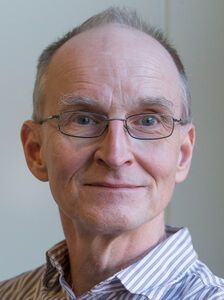
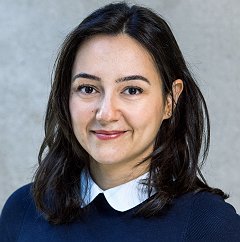
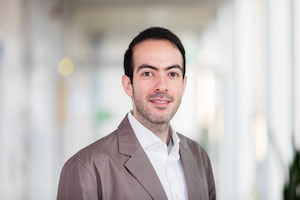
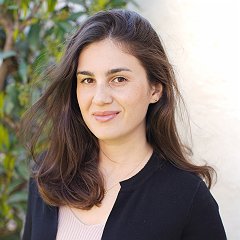
Anders Blomdell is a Professor in the Department of Control Engineering at the Faculty of Engineering, Lund University. His work bridges theoretical control systems with practical applications in real-time, embedded, and cloud-based environments. He is actively involved in research projects focusing on autonomous systems, industrial automation, and networked control. His research interests include Control Systems , Real-Time and Embedded Systems , Networked Control , Industrial Automation , Robotics , and Cloud-Controlled Systems . These areas reflect his focus on scalable, adaptive, and secure control solutions for complex, interconnected systems. The recent publications highlight a strong trend toward event-based control , large-scale optimization , autonomous adaptation , and secure cloud integration . His work often combines control theory with computer science, particularly in distributed and real-time settings, showing a consistent effort to address challenges in latency, scalability, and robustness. Scientific Awards: Advising and Grants: While specific students are not listed, Anders Blomdell leads and participates in major research initiatives such as WASP, ELLIIT, and the Nordic University Hub on Industrial Internet of Things (HI2OT). These projects involve significant funding and collaboration with industry and academia, indicating active mentorship and leadership in training next-generation researchers. Labs and Teams: He is associated with RobotLab LTH and contributes to the development of tools like TrueTime and LabComm , which are widely used in real-time and networked control research. His work supports both academic and industrial innovation in automation and intelligent systems.
Florian Amann is a Professor and Chair of Engineering Geology and Hydrogeology at RWTH Aachen University. His research focuses on geomechanics, geothermal energy systems, rock mechanics, and underground storage solutions. Key areas include salt cavern hydrogen storage, fracture mechanics in crystalline rocks, and geotechnical challenges in tunneling and mining. He leads projects at the BedrettoLab and Grimsel Test Site, investigating fault activation, reservoir engineering, and long-term clay behavior for deep geological disposal. His work addresses energy transition needs and sustainable use of subsurface resources. His recent studies explore the interplay between thermal-mechanical processes in geothermal reservoirs, induced seismicity during hydraulic stimulation, and the impact of burial history on clay properties. He collaborates on multi-scale characterization of rock masses and TBM performance metrics for tunneling in complex geologies. Research outputs emphasize practical applications for renewable energy storage and hazard mitigation in alpine regions. Amann's expertise spans experimental and numerical modeling, with contributions to fault zone dynamics, excavation damage zones, and the reuse of abandoned mines. His team employs advanced geophysical techniques like 3D seismic imaging and microseismic monitoring to advance understanding of subsurface processes.
UnivProf. Dr. Jens Grabowski is a full professor at the Institute of Computer Science at Georg-August-Universität Göttingen, leading the Software Engineering for Distributed Systems group. His primary roles include teaching advanced courses on software engineering, software testing, and parallel computing, as well as supervising practical internships in these domains. His research focuses on software engineering methodologies, cloud computing architectures, static analysis tools, and model-driven approaches to system design. Education details are not explicitly listed, but his academic position implies a PhD in Computer Science. His work spans both theoretical contributions (e.g., defect prediction models, developer behavior studies) and applied systems (e.g., cloud resource management frameworks, testing tool development). He is actively involved in open-source software research, particularly analyzing Apache projects and Python ecosystems. Key research themes include: Model-driven cloud orchestration using standards like TOSCA and OCCI Static analysis tool evaluation and warning management Empirical studies on software evolution and developer practices Simulation-based approaches for system validation His recent publications (2021-2025) demonstrate sustained contributions to cloud computing infrastructure, static analysis tool efficacy, and software testing methodologies. Notable frameworks developed include MoDMaCAO for cloud application management and the SmartShark ecosystem for mining software repositories. Grants and advising activities are not explicitly detailed in the provided texts, but his leadership in multiple research groups implies significant involvement in academic funding and PhD supervision. He maintains collaborations in distributed systems, cloud computing, and software engineering education.
Michael Pehl is an Associate Professor at the Chair of Security in Information Technology at Technische Universität München (TUM), where he leads the Hardware-Intrinsic Security research group. His work focuses on Physical Unclonable Functions (PUFs), side-channel analysis, and secure hardware design. His primary research interests include Physical Unclonable Functions, Hardware Security, Side-Channel Analysis, Fault Injection Attacks, Post-Quantum Cryptography, Secure Hardware Design, and Trusted Electronics. Pehl has developed significant expertise in PUF security mechanisms, with particular emphasis on countermeasures against side-channel attacks and entropy optimization in security primitives. His recent publications demonstrate strong trends in hardware security, particularly in PUF architectures (oscillator-based, resistor-based, memristor-based), side-channel countermeasures, and entropy analysis. The research spans both theoretical foundations and practical implementations for secure embedded systems. Kurt-Fischer Prize (2013) Outstanding Reviewer Award at ICASSP 2022 Outstanding Reviewer Award at DATE 2024 Pehl has secured substantial research funding through multiple high-profile projects including STAMPS-PLUS (DFG), Edu4Chip (EU), APRIORI (BMBF), and VE-FIDES (BMBF). He serves as an Associated Editor for IEEE Transactions on Information Forensics & Security and has held leadership roles in major conferences including Program Co-Chair of COSADE 2023. His research group actively collaborates with industry partners and contributes to TUM's Center of Competence for Design of Electronic Circuits and Systems (DECS). Pehl's laboratory focuses on Hardware-Intrinsic Security research, with specialized facilities for PUF evaluation, side-channel analysis, and fault injection testing. The team develops innovative security primitives for embedded systems and IoT devices, with particular emphasis on post-quantum security solutions.
Michael Tempelmeier is a researcher at the Chair of Information Security, Technical University of Munich (TUM), specializing in hardware security and cryptographic implementations. His work focuses on authenticated encryption, lightweight cryptography (NIST LWC/CAESAR), and the development of evaluation frameworks for cryptographic hardware. He actively contributes to teaching, holding the Zertifikat Hochschullehre der Bayerischen Universitäten and leading courses like Angewandte Kryptologie and SmartCard Projektpraktikum . Tempelmeier's research centers on optimizing and securing cryptographic implementations for embedded systems. Key areas include: Design of hardware APIs for lightweight cryptography Side-channel and fault-attack countermeasures Trusted hardware gateways for IoT devices Efficient benchmarking methodologies for cryptographic hardware His publications demonstrate consistent focus on hardware vulnerabilities, cryptographic efficiency, and standardized evaluation frameworks. He maintains active involvement in tool development (e.g., MaskVer for detecting flawed masking implementations) and contributes to major projects like the Hardware API for Lightweight Cryptography. No awards or direct student supervision are mentioned in the provided text.
Burcu Kulahcioglu Ozkan is an Assistant Professor at Delft University of Technology (TU Delft), Netherlands, where she leads the FORSE (Lightweight Formal Methods for Software Engineering) lab and co-directs Ripple's UBRI blockchain research initiative. Her research bridges formal methods and software engineering to enhance reliability in concurrent/distributed systems, blockchain, and software testing. Research Focus: Her work spans model checking, fuzzing, concurrency debugging, and distributed systems verification. Key interests include developing automated tools for testing blockchain implementations, randomized testing methodologies, and fault injection techniques. She integrates runtime data with AI to improve software quality through the TU Delft-JetBrains AI4SE collaboration. Recent Publication Trends: Her 15 most recent articles emphasize fuzzing techniques (e.g., model-guided fuzzing), blockchain consensus testing (Ripple, Byzantine fault tolerance), concurrency bug analysis (Kotlin Coroutines), and graph database verification. Work consistently applies formal methods to real-world distributed systems. Awards & Honors: Amazon Research Award (2023) for coverage-directed testing of distributed systems Stellar Academic Research Grant (2023) for blockchain fault injection Best Software Science Paper at ICGT'25 for graph database fuzzing Students & Funding: Advises PhD/Master's students (e.g., Melchior Oudemans, Levin Winter) on distributed systems testing. Research supported by Amazon, Stellar Development Foundation, and Ripple. Leads teams in FORSE lab and UBRI blockchain projects. Leadership: Regularly serves on PCs for ICSE, OOPSLA, CAV; keynote speaker at FORTE'25; co-chairs workshops (e.g., DEBT'25). Develops open-source tools like DSTest for concurrency testing.
Professor Ulf Schlichtmann holds the Chair of Design Automation at Technische Universität München's School of Computation, Information and Technology. His research specializes in electronic design automation (EDA) methodologies for complex integrated circuits, with recent focus on optical networks-on-chip, microfluidic biochips, and neuromorphic computing architectures. Research interests span hardware design automation, photonic network optimization, fault-tolerant systems, and AI-assisted hardware generation. Recent innovations include wavelength-routed optical NoCs, 3D-printed microfluidics, and LLM-enhanced HDL design tools that advance hardware efficiency and reliability. Publications demonstrate consistent breakthroughs in cross-domain optimization, with applications spanning from high-performance computing to biomedical microdevices. Laboratory leadership includes coordination of international degree programs and industry collaborations.
Dr. Alireza Hakamian is a Researcher at the Department of Informatics, University of Hamburg, affiliated with the SWK Team within the Research groups. His work focuses on resilience engineering, microservices architecture, and systems simulation. Notable contributions include the development of MiSim, a simulator for resilience assessment of microservice-based systems, and TQPropRefiner, a tool for specifying and refining transient software quality properties. His research explores chaos engineering practices, transient behavior analysis, and container orchestration techniques (e.g., Kubernetes). He emphasizes integrating real-world container environments into simulation frameworks for more authentic resilience testing. Expert interviews and industry insights underpin his work on transient behavior management in distributed systems. Key tools and methodologies developed include the DiSpel Cockpit for resilience scenario verification and the TransVis visualization system. His work bridges theoretical software design principles with practical implementation challenges in cloud-native systems.
Lukas Pirl is a researcher at the Hasso Plattner Institute (HPI), University of Potsdam, working within the Department of Operating Systems and Middleware. His research focuses on dependability, fault tolerance, and experimental assessments of distributed systems with particular applications in railway technology and IoT systems. His research interests span multiple domains including: Dependability and fault tolerance architectures & protocols Experimental assessments using software fault injection Environmentally aware computing and information management Symmetric peer-to-peer systems and storage operating systems Railway digitalization and safety-critical systems Lukas's recent publications demonstrate a strong focus on applying distributed systems research to railway technology. His work spans from digital train control systems (FlexiDug project) to railway crossing safety (Digital St. Andrew's Cross), and from blockchain applications in railway systems (RailChain, ZugChain) to IoT testing methodologies. A significant portion of his research involves using SUMO for railway simulations and developing test automation frameworks for railway components, showing an evolution from general distributed systems research toward specialized applications in critical infrastructure. He has co-supervised numerous Master's theses at HPI, working with students on topics ranging from railway simulation architectures to blockchain implementations for railway systems. His teaching activities include serving as a teaching assistant for courses on distributed systems, embedded operating systems, and trends in operating systems across multiple semesters. Lukas is actively involved in several major research projects: FlexiDug : Investigating reuse of rail infrastructures in former brown coal mining areas, focusing on software architectures for dependable digital train control and signaling systems RailChain : Exploring distributed ledger technologies for the railway sector with focus on timing predictability and resource constraints DiAK : Digitalization of railway crossings for increased safety through bridging V2X and C-V2X technologies Rail2X : Investigating vehicle-to-everything technologies for the railway sector with focus on wireless technology assessments
Maël Gay is a Researcher affiliated with the University of Stuttgart at its Hardware-Oriented Computer Science department. His work focuses on cryptographic hardware security, specializing in side-channel analysis, fault injection attacks, and masking schemes. Role: Researcher Department: Hardware-Oriented Computer Science University: University of Stuttgart Research Interests : Maël investigates vulnerabilities in cryptographic hardware through empirical analysis, with recent work on CRYSTALS-Kyber implementations, neural network applications for leakage detection, and robust error-detection masking schemes. His research combines formal methods with practical testing frameworks like TVLA. Publications : His work spans post-quantum cryptography (2025), side-channel countermeasures (2024), and automated fault attack methodologies (2019), often involving collaborations with Ilia Polian and Tarick Welling. Education : Holds a Dr. rer. nat. (Doctorate in Natural Sciences). Labs/Teams : Affiliated with the Hardware-Oriented Computer Science (HoCoS) group at the University of Stuttgart.
Nargiz Humbatova is a PostDoc researcher at the Faculty of Informatics, Università della Svizzera italiana (USI) in Lugano, Switzerland. Her academic work focuses on the intersection of software testing and deep learning systems, addressing critical challenges in ensuring the reliability and robustness of AI-powered applications. Her research interests span several key areas in software engineering for AI systems: Mutation Testing methodologies specifically designed for deep learning systems Software Testing techniques for evaluating and improving deep neural networks Deep Learning Systems Testing approaches that account for unique characteristics of neural networks Real fault modeling and injection techniques for AI systems Test suite optimization for neural network validation Nargiz's publication record reveals a consistent focus on developing practical testing frameworks for deep learning systems. Her work demonstrates a progression from foundational taxonomies of faults in deep learning systems (2020) to more sophisticated mutation testing frameworks (2021-2025) that incorporate real-world fault models. A notable trend in her research is the emphasis on using actual faults found in production systems rather than synthetic mutations, which increases the practical relevance of her testing approaches. Her recent work extends into specialized domains like deep reinforcement learning testing (2025) and spectral analysis of neural activation patterns (2024). Nargiz has demonstrated strong leadership in the academic community through her service roles: Co-chair of Mutation 2025 workshop Committee member for ASE 2025 Student Research Competition Program Committee member for SANER 2025 Tool Demo Track Artifact Evaluation Committee member for ISSTA 2024 Organizing Committee member for SSBSE 2024 Research Papers Her research has practical implications for industries deploying deep learning systems, particularly in safety-critical domains where thorough testing is essential. Her focus on real faults rather than synthetic mutations makes her approaches particularly valuable for practitioners seeking to validate the reliability of their AI systems.
Atif Memon is a Professor in the Department of Computer Science at the University of Maryland, College Park (UMCP), where he has been a faculty member since 2001, progressing from Assistant Professor to Associate Professor and finally to Professor in 2015. He is also a Professor at the Institute for Advanced Computer Studies at UMCP. Dr. Memon founded and heads the Event Driven Software Lab (EDSL), where his research focuses on design, development, quality assurance, and maintenance of event-driven software applications. Dr. Memon received his Ph.D. in Computer Science from the University of Pittsburgh in 2001, with a dissertation titled "A Comprehensive Framework for Testing Graphical User Interfaces." His advisors were Martha Pollack and Mary Lou Soffa. Prior to his Ph.D., he earned an M.S. in Computer Science from King Fahd University of Petroleum and Minerals in Saudi Arabia (1995) and a B.C.S. in Computer Science from the University of Karachi (1991). Dr. Memon's research primarily focuses on software testing, particularly for event-driven systems. He is renowned for designing and developing GUITAR, a model-based GUI testing framework that operates on Android, iPhone, Java Swing, .NET, Java SWT, and web systems. His work extends to Community Event-based Testing (COMET), a community infrastructure for event-based testing researchers. His research interests include: Automated GUI and mobile application testing Model-based software testing techniques Event-driven software quality assurance Testing methodologies for emerging technologies Test automation and script maintenance Flaky tests and test reliability Dr. Memon's recent publications demonstrate a strong focus on practical applications of software testing, particularly in mobile environments. His work bridges theoretical testing concepts with real-world implementation challenges, with significant contributions to GUI test automation, mobile application testing, and test script maintenance. The trend in his recent work shows increasing emphasis on mobile platforms, security testing, and addressing the challenges of flaky tests in continuous integration environments. His research spans both academic innovation and practical industry applications, as evidenced by his collaborations with companies like Google, Apple, and others. Among his notable achievements, Dr. Memon received the Best Paper Award at SECURWARE 2014 for his work on "N-Gram Based User Behavioral Model for Continuous User Authentication" and a retrospective award for the most influential paper among the papers of 2003 Working Conference on Reverse Engineering. Dr. Memon currently advises six PhD students at Maryland on various aspects of testing event-driven software systems, and so far six students have completed their doctoral thesis work under his guidance. His research has been supported by significant funding from agencies including DARPA, NSF, NIH, and NSA for projects such as "Vetting Android Applications for Security Using Graphical User Interface Logic," "COMET - Community Event-based Testing," "Algorithms and Software for the Assembly of Metagenomic Data," and "Research in Science and Public Policy for the U.S. National Security Agency." As the founder and head of the Event Driven Software Lab (EDSL), Dr. Memon leads a team focused on advancing the state of the art in testing event-driven software applications. The lab has developed several influential tools and frameworks, most notably GUITAR, which has been widely adopted in both academic and industrial settings. Dr. Memon has also been instrumental in developing community infrastructure for testing researchers through COMET, enabling uniformity in experimentation and benchmarking in event-driven software testing.
Amin Alipour serves as a Professor in the Computer Science department at the University of Houston, where he leads research at the intersection of software engineering and artificial intelligence. His professional profile spans multiple prestigious academic platforms including ASE, ESEC/FSE, and ISSTA conferences, with continuous contributions from 2014 through projected 2025 publications. Dr. Alipour's research program centers on software testing and program analysis, with particular expertise in mutation testing and neural code intelligence. His recent work has pivoted toward examining security vulnerabilities in large language models for code, including trojan attacks and model poisoning techniques. His scholarly contributions demonstrate how program simplification techniques can enhance our understanding of neural code intelligence models, while his work on software fuzzing has improved input generation methodologies for vulnerability detection. Analysis of Dr. Alipour's publication history reveals a strategic evolution from foundational software testing techniques toward cutting-edge AI-assisted software engineering. His early work focused on mutation testing and fault injection in IoT systems, while his most recent publications investigate the security implications of AI-generated code and methods for improving model calibration. This trajectory reflects the broader shift in software engineering research toward understanding and securing AI-assisted development environments. Dr. Alipour maintains active service to the academic community through multiple leadership roles, including Workshops Co-Chair for SPLASH 2023-2024, committee membership across numerous top-tier conferences, and session chair positions for specialized workshops on mutation testing and neural program models. His GitHub presence (alipourm) with over 100 repositories demonstrates practical engagement with software testing tools and educational resources.
Cyrille Artho is an Associate Professor at KTH Royal Institute of Technology in the School of Computer Science and Communication, Department of EECS/TCS (Theoretical Computer Science). He joined KTH in August 2016 after working as a Senior Researcher at the National Institute of Advanced Industrial Science and Technology (AIST) in Tokyo and Osaka from April 2007 to July 2016. Prior to that, he was a Postdoctoral Researcher at the National Institute of Informatics in Tokyo. He completed his Ph.D. at ETH Zurich, where his thesis focused on finding multi-threading faults beyond data races. Dr. Artho's research focuses on software verification and engineering, particularly in concurrent and networked software systems. His work spans model-based testing, software model checking, and the development of verification tools. He has made significant contributions to the Java PathFinder ecosystem, developing the net-iocache extension for networked software and the Modbat model-based testing framework. His recent work has expanded into smart contracts, blockchain technology, and formal verification of distributed systems. Dr. Artho has published over 100 papers in top software engineering conferences and journals. His most recent publications demonstrate a continued focus on verification techniques, with increasing attention to smart contracts and formal methods for distributed systems. His work shows a consistent trajectory from foundational research on concurrency verification to practical applications in modern distributed systems. ACM SIGSOFT Distinguished Paper Award (2015) QRS 2015 best paper award Best tool (competition winner) at SBST 2015 Most influential ASWEC paper award (awarded in 2013) Dr. Artho is actively involved in the academic community as a committee member, session chair, and workshop organizer for major conferences including ASE, ICSE, ISSTA, and FM. He is also a member of the management group for the KTH Center for Cyber Defense and Information Security, reflecting his contributions to security-related research.
Yan Lei is a Professor at the School of Big Data & Software Engineering, Chongqing University, China, specializing in software quality improvement through advanced fault localization, program repair, and testing methodologies. His research bridges software engineering with data science to address challenges in deep learning systems and hardware description language (HDL) programs, evidenced by extensive publications in CCF-A venues including ASE, FSE, and TSE. Dr. Lei obtained his Ph.D. under Prof. Xiaoguang Mao at Chongqing University and conducted research at UC Davis with Prof. Zhendong Su. His educational background informs his interdisciplinary approach to software engineering challenges. His research focuses on three interconnected pillars: Fault Localization and Program Repair: Developing deep learning and metamorphic techniques for precise bug identification and automated repair Data Science for SE: Applying representation learning and contrastive methods to software testing challenges Testing Deep Learning Systems: Addressing API misuses and error-handling bugs in neural network applications Analysis of his 2023-2024 publications reveals a strategic shift toward multi-fault scenarios and cross-framework solutions, with increasing emphasis on hardware-aware testing and compilation error repair. His work consistently integrates generative models and semantic learning to overcome data imbalance issues. His scientific recognition includes: ACM SIGSOFT Distinguished Paper Award for coincidental correctness detection research at ASE 2024 IEEE TCSE Distinguished Paper Award for flaky test prediction at SANER 2024 Dr. Lei directs significant research initiatives including a National Natural Science Foundation project (2023-2026) on multi-fault program repair and previously led a foundational fault localization study (2017-2019). His teaching portfolio spans undergraduate software testing and graduate courses for international students, reflecting commitment to pedagogy. Current projects like Data Fusion for Smart Megalopolis demonstrate applied research impact in Chongqing's technological development.