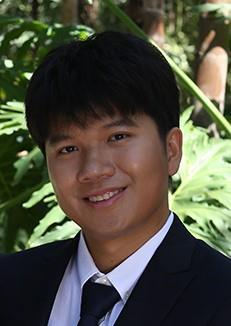
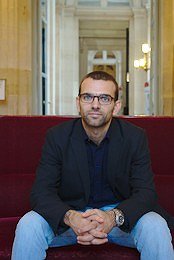
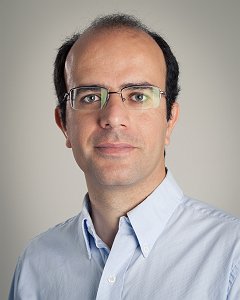
Muhammad Yahya is a researcher at Nanjing University of Aeronautics and Astronautics with affiliations to institutions like Universiti Malaysia Terengganu and Norwegian University of Life Sciences. His work bridges optical network-on-chip (ONoC) and cybersecurity domains. H-index: 21 Total citations: 1,400+ Research Interests: Focus on photonic interconnects for manycore processors, heuristic optimization algorithms for crosstalk reduction, and security vulnerabilities in optical networks. Key projects include: Designing non-blocking optical switches with reduced power consumption Developing DPA-resistant cryptographic architectures for lightweight ciphers Creating heuristic fusion mapping algorithms combining PSO and SA Publication Trends: Recent articles (2018-2023) demonstrate expertise in optical router design , fault analysis of encryption protocols, and machine learning applications to network optimization. Technical Contributions: Invented the PSO_SA algorithm for crosstalk optimization, HoneyComb ROS reconfigurable switches, and two-domain MATLAB frameworks for computational mathematics.
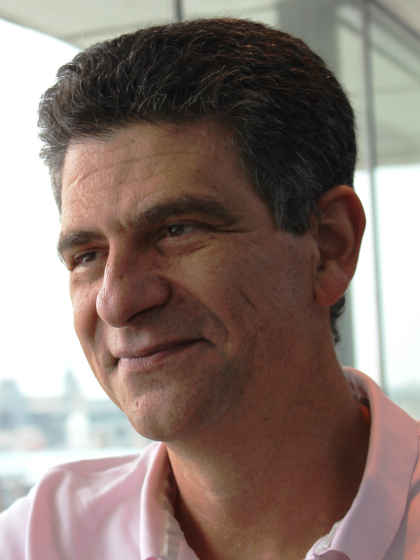
Professor Jennifer Seberry is a renowned academic in computer science and mathematics, affiliated with the University of Wollongong's School of Computer Science and Software Engineering. She holds the rank of Professor and has made significant contributions to cryptography, computer security, and combinatorial design theory. Her research focuses on Hadamard matrices, orthogonal designs, and their applications in coding theory and cryptographic systems. She has supervised over 30 PhD students and authored/co-authored numerous papers and books in her field. Education: B.Sc. (1966), M.Sc. (1969), PhD (1971) from Australian universities Key Roles: Director, Centre for Computer Security Research at UOW Former Head of Computer Science at University College, ADFA Editor of multiple journals, including Designs, Codes and Cryptography Awards & Memberships: Fellow of Australian Computer Society (FACS), IEEE (SMIEEE), and Institute of Combinatorics Recipient of numerous grants and research awards Research Highlights: Her work spans cryptographic algorithms, secure protocols, and combinatorial matrices. Notable contributions include advancements in Hadamard matrix constructions and applications to secure communication systems. She pioneered the AUSCRYPT/ASIACRYPT conference series and has advised on national security protocols. Labs & Teams: Leads the Centre for Computer Security Research, collaborating on projects in cybersecurity, cryptographic protocol design, and secure distributed systems.
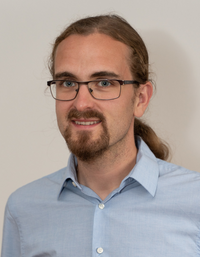
Ihsen Alouani is a Senior Lecturer at Queen's University Belfast's School of Electronics, Electrical Engineering and Computer Science. His research focuses on trustworthy intelligent systems, emphasizing machine learning security, user data privacy, fairness, and environmental impact. He actively supervises PhD students and leads projects like TR1419ECS (Trustworthy Distributed Brain-inspired Systems) and TR1272ECS (TruDetect). Key research areas include adversarial machine learning, hardware security, neuromorphic systems, and approximate computing. Notable contributions include defensive approximation techniques, entropy-based adversarial patch removal, and voltage-scaling for security enhancement. He has received the 2024 Outstanding TPC Member Award at DAC. Projects: 3 active projects (Trustworthy Distributed Brain-inspired Systems, TruDetect, NIO New Deal Cyber Bid) Activities: Keynote talks on ML trustworthiness, invited presentations on neuromorphic computing, and workshop organization Labs/Teams: Collaborates on neuromorphic security, hardware trojan detection, and federated learning Publications span adversarial attacks, defense mechanisms, and neuromorphic architectures, with over 67 research outputs from 2016–2025. His work bridges theoretical security frameworks with hardware implementations for real-world resilience.
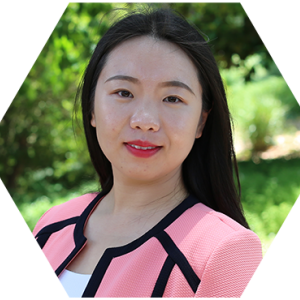
Dr. Ranesh Naha is a Senior Lecturer in the School of Information Systems at Queensland University of Technology (QUT). His academic focus lies in distributed computing, cybersecurity, and emerging technologies like Fog/Edge Computing, IoT, and Blockchain. He holds a PhD from the University of Tasmania. Research interests include Fog Computing architectures, cybersecurity solutions for IoT systems, blockchain applications in distributed environments, and edge intelligence. He has published extensively in top-tier journals/conferences, with notable works on automated medical services during pandemics, coral reef surveillance via machine learning, and AI-driven financial market analysis. Current: Senior Lecturer at QUT PhD: University of Tasmania Active supervision of postgraduate research students
Dr. Ayesha Khalid is a Senior Lecturer in the School of Electronics, Electrical Engineering and Computer Science at Queen’s University Belfast (QUB), leading research in post-quantum cryptography within the Centre for Secure Information Technologies (CSIT). She holds a PhD from RWTH Aachen University (Germany), supported by a DAAD scholarship. Her expertise focuses on secure, efficient hardware/software implementations of lattice-based cryptography for embedded systems and IoT devices. Key research contributions include developing timing-attack resilient Gaussian samplers, lightweight post-quantum schemes for constrained environments, and hybrid quantum-safe communication protocols. She has led EU H2020 projects (SAFECrypto) and Innovate UK initiatives (AQuaSec), and collaborates with institutions like Rolls-Royce and Purdue University. Her work addresses vulnerabilities in cryptographic hardware through side-channel analysis and fault injection countermeasures. Dr. Khalid is an IEEE Senior Member, IACR member, and serves on technical committees for conferences like VLSI-SoC and ISCAS. Awards include the EEECS Teaching Fellowship (2017). She actively contributes to standards development and has delivered tutorials at FPL 2022 and Schloss Dagstuhl seminars. Her research bridges theoretical cryptography with practical implementation challenges in the quantum era. Education: PhD (Magna Cum Laude) in Applied Cryptography from RWTH Aachen University Key Projects: EPSRC UK Quantum Communications Hub, Rolls-Royce Cyber Security Collaboration Expertise: FPGA-based cryptographic accelerators, post-quantum algorithm hardening, and secure embedded systems design
Zhi Zhang is a Lecturer in the Department of Computer Science and Software Engineering at the University of Western Australia (UWA), affiliated with the UWA Defence and Security Institute. Prior to this role, he worked as a Research Scientist at CSIRO’s Data61. He holds a PhD in Computer Science from the University of New South Wales, focusing on 'Software-only Rowhammer Attacks and Countermeasures.' His research expertise spans system security, rowhammer exploits, adversarial AI, and federated learning security. He has contributed to UN Sustainable Development Goals related to education and innovation. His research focuses on hardware-software co-design vulnerabilities, including rowhammer-based attacks, adversarial machine learning defenses, and data poisoning in federated learning. Notable areas of contribution include interrupt side-channel attacks, thermal event exploitation, and model unlearning mechanisms. He has published extensively in top-tier journals/conferences like IEEE Transactions on Information Forensics and Security, and has received Distinguished Paper Awards in 2023 and 2024. Education: PhD in Computer Science (UNSW, 2021) Key Research Areas: Rowhammer Exploits & Mitigations Adversarial Attacks on DNNs Federated Learning Security Interrupt-Based Side Channels His work bridges theoretical computer security with practical system implementations, addressing critical vulnerabilities in modern architectures. Collaborations span academia and industry, with impactful contributions to hardware-software security domains.
Yingjie Lao is an Associate Professor at Tufts University in the Department of Electrical and Computer Engineering with a secondary appointment in Computer Science. He holds a B.S. from Zhejiang University (2009) and a Ph.D. from the University of Minnesota (2015). Before Tufts, he was an Associate Professor at Clemson University and an IC Design Scientist at Broadcom. Research Focus: Trusted AI, hardware security, electronic design automation, VLSI architectures for machine learning, cryptographic systems, and healthcare applications. Awards: NSF CAREER Award, IEEE VLSI Prize Paper Award, ISLPED Best Paper Award, and 2023 Best Associate Editor Award (IEEE Transactions on VLSI). Grants: NSF-funded projects on photonic PUFs, secure EV operations, and privacy-preserving ML inference. Advising: Mentored students including Antian Wang, Azi Famili, Joseph Clements, Weihang Tan, and Jianchi Sun. Labs/Teams: Leads research in AI security, hardware security, and VLSI systems, with a focus on photonic PUFs and secure ML accelerators. His work spans interdisciplinary areas, integrating hardware design with AI security, healthcare, and cryptography. Recent projects include NSF-funded research on optoelectronic hardware security and privacy-preserving neural networks.
Georgi Gaydadjiev is a Professor in Innovative Computer Architecture at the University of Groningen's Faculty of Science and Engineering. Previously, he held roles including Chair Professor at TU Delft and Chalmers University of Technology, and served as VP of Dataflow Software Engineering at Maxeler Technologies. He holds a PhD from TU Delft and has over 35 years of industry and academic experience, focusing on reconfigurable computing, high-performance systems, and energy-efficient architectures. His research spans embedded systems, fault tolerance, and scalable architectures. Education: MSc Electrical Engineering (TU Delft), PhD (TU Delft), studies at Voenmeh (Baltic State Technical University). Research interests include reconfigurable computing, advanced architectures, parallel systems, and HPC. He leads projects funded by EU, Google, and Swedish Research Councils, addressing exascale computing and customized hardware. His work has been recognized with awards like the CES Design Showcase (1999) and best paper awards at ICS'10 and WiSTP'07. He advises PhD students and oversees labs like Maxeler IoT-Labs BV, focusing on deploying dataflow technology beyond data centers.
Maël Gay is a Researcher affiliated with the University of Stuttgart at its Hardware-Oriented Computer Science department. His work focuses on cryptographic hardware security, specializing in side-channel analysis, fault injection attacks, and masking schemes. Role: Researcher Department: Hardware-Oriented Computer Science University: University of Stuttgart Research Interests : Maël investigates vulnerabilities in cryptographic hardware through empirical analysis, with recent work on CRYSTALS-Kyber implementations, neural network applications for leakage detection, and robust error-detection masking schemes. His research combines formal methods with practical testing frameworks like TVLA. Publications : His work spans post-quantum cryptography (2025), side-channel countermeasures (2024), and automated fault attack methodologies (2019), often involving collaborations with Ilia Polian and Tarick Welling. Education : Holds a Dr. rer. nat. (Doctorate in Natural Sciences). Labs/Teams : Affiliated with the Hardware-Oriented Computer Science (HoCoS) group at the University of Stuttgart.
Sayandeep Saha is an Assistant Professor in the Department of Computer Science and Engineering at Indian Institute of Technology Bombay. His research focuses on Hardware Security and Cryptography, with emphasis on Fault Attacks, Side-Channel Attacks, and Post-Quantum Cryptography. He leads the SHarC research group and actively collaborates with international institutions. Education: PhD in Computer Science and Engineering from Indian Institute of Technology Kharagpur Postdoctoral Experience: NTU Singapore (2022-2023), UCLouvain Belgium (2023-2024) His research explores hardware vulnerabilities in cryptographic systems, covering: Fault Attacks on Symmetric and Post-Quantum Cryptosystems Side-Channel Analysis of Power/EM Radiation Microarchitectural Attacks (Spectre/Meltdown variants) Countermeasure Development and Formal Verification Recent research trends include Rowhammer attacks, randomized cache designs, and fault propagation in cryptographic circuits. His work has been recognized in top conferences like ICCAD, USENIX Security, and CHES. Awards: Top Picks in Hardware and Embedded Security 2024 (EUROCRYPT 2020 paper) He is currently hiring Project Research Assistants for the RISC-V-based SISHAM project and supervises PhD students in hardware security research.
Francesco Delli Priscoli is a Full Professor at Sapienza University of Rome's Department of Computer, Control, and Management Engineering (DIAG) within the Faculty of Engineering. He has served at the university since 1991 after completing his PhD in Systems Engineering at the same institution in 1991. His academic career includes teaching multiple advanced courses including Automatic Controls, Control of Communication and Energy Networks, and Control of Multi-Agent Autonomous Systems. Graduated with honors in Electronic Engineering from Sapienza University of Rome (1986) PhD in Systems Engineering from Sapienza University of Rome (1991) Worked at Telespazio (Rome) from 1986-1991 Professor Delli Priscoli's research focuses on multi-agent systems , intelligent learning techniques , quality of experience management , and decision support systems applied across healthcare, telecommunications, energy systems, and critical infrastructure. His work bridges theoretical control methodologies with practical implementations in real-world systems. His recent publications demonstrate a strong trend toward applying reinforcement learning and deep learning techniques to solve complex control problems across diverse domains including satellite communications, healthcare diagnostics, energy networks, and cybersecurity. The interdisciplinary nature of his work spans telecommunications, energy systems, healthcare technology, and critical infrastructure protection. Associate Editor of Control Engineering Practice Member of IFAC Technical Committee 'Networked Systems' Co-founder of CRAT research consortium Responsible for over 40 EU-funded projects (4th-8th Framework Programs and Horizon 2020) Professor Delli Priscoli has supervised numerous research projects and doctoral students through the Network Control Laboratory at Sapienza University. He has managed more than 40 EU-funded projects across multiple framework programs and ESA initiatives, supervising approximately 15 researchers, PhD students, and collaborators. His work with the CRAT consortium has led to the creation of the ARES2T spin-off company to commercialize research outcomes. His research has been supported by substantial funding from European Union programs including Horizon 2020 projects such as 5G ALLSTAR, SESAME, and 5G SOLUTIONS. He leads the Network Control Laboratory at Sapienza University of Rome, which serves as the primary research hub for his work on control systems, network management, and multi-agent systems. The laboratory collaborates extensively with major European ICT companies through EU-funded research projects. The CRAT consortium (Consorzio per la Ricerca in Automazione e Telecomunicazioni), which he co-founded, facilitates university-industry collaboration on European and national research initiatives.
Christian Dietrich is a Professor at the Technische Universität Hamburg (TUHH) in the Operating System Group (OSG) . His research focuses on Operating Systems , Real-Time Systems , and Embedded Systems , with specific interests in Software Fault Tolerance , Memory Management , and Software Variability . Projects: ParPerOS (Parallel Persistency OS), ATLAS (Adaptable Thread-Level Address Spaces), CLASSY-FI (Cross-Layer Fault Injection), AHA (Automated Hardware Abstraction), CADOS (Configurability-Aware OS) Supervised Theses: 10+ completed theses on topics like io_uring Integration , Heterogeneous Multi-Core , Virtual Memory Primitives , and Fault Injection His recent publications (2022-2024) address Heterogeneous Computing , Virtual Memory Interfaces , and Crash-Consistent Systems . He received awards including USENIX ATC 2017 Best Paper , RTAS 2015 Best Paper , and ISORC 2022 Outstanding Paper .
Fan Zhang is an Assistant Professor at the Woodruff School of Mechanical Engineering at the Georgia Institute of Technology , specializing in cybersecurity of nuclear facilities , data analytics for fault detection , and nuclear systems modeling . She leads the iFAN Lab and collaborates internationally with organizations like the IAEA and DOE Office of International Nuclear Security . Education : Ph.D. in Nuclear Engineering (University of Tennessee, Knoxville, 2019), M.S. in Statistics (University of Tennessee, Knoxville, 2019), M.S. in Nuclear Engineering (North China Electric Power University, 2016), B.S. in Nuclear Engineering (North China Electric Power University, 2013). Her research focuses on cybersecurity , instrumentation & control , autonomous systems , and AI-driven nuclear diagnostics . She develops testbeds combining simulators and physical components for cybersecurity and process health management studies. Recent publications highlight her work on robot-assisted nuclear monitoring , radiation localization , and digital twin security , reflecting cross-disciplinary expertise in cyber-physical systems , ML robustness , and industrial threat mitigation . Scientific Awards : Ted Quinn Early Career Award (2021), Smoky Mountain Data Challenge Best Paper (2019), ANS Graduate Scholarships (2018-2020), UT Extraordinary Professional Promise Award (2018), Alpha Nu Sigma Honor Society (2017). Contact: fan.zhang@me.gatech.edu | Office: Boggs 371, Georgia Tech
Pierre-Evariste Dagand is a CNRS Researcher at IRIF, Université de Paris, where he is a member of the Proofs, Programs, and Systems group. His research focuses on enhancing the safety of systems software through the application of domain-specific languages and formal verification techniques, particularly leveraging interactive theorem provers. His research interests span several areas of computer science, including: Formal Methods : Using rigorous mathematical techniques to verify software and hardware systems Programming Languages : Designing and implementing languages with a focus on safety and correctness Compilers : Developing verified compilers for domain-specific languages and synchronous languages Type Theory : Exploring dependent types and their applications in verification Operating Systems : Contributing to the design of systems for multicore architectures Cryptography : Creating high-throughput cryptographic implementations via formal methods Dagand's publications demonstrate a consistent focus on formal verification and theorem proving applied to practical systems. His work frequently involves the Coq proof assistant and addresses challenges in compilers, cryptography, and systems programming. Recent trends include the development of tools for secure cryptographic implementations (e.g., Usuba and Tornado) and formal models for intermittent computing. He has advised numerous students in internships, working on projects related to formal methods, compilers, and cryptography. These internships have contributed to various research outputs and tools. Dagand is part of the Proofs, Programs, and Systems group at IRIF, which focuses on foundational aspects of computer science and their application to software verification and language design.
Amin Alipour serves as a Professor in the Computer Science department at the University of Houston, where he leads research at the intersection of software engineering and artificial intelligence. His professional profile spans multiple prestigious academic platforms including ASE, ESEC/FSE, and ISSTA conferences, with continuous contributions from 2014 through projected 2025 publications. Dr. Alipour's research program centers on software testing and program analysis, with particular expertise in mutation testing and neural code intelligence. His recent work has pivoted toward examining security vulnerabilities in large language models for code, including trojan attacks and model poisoning techniques. His scholarly contributions demonstrate how program simplification techniques can enhance our understanding of neural code intelligence models, while his work on software fuzzing has improved input generation methodologies for vulnerability detection. Analysis of Dr. Alipour's publication history reveals a strategic evolution from foundational software testing techniques toward cutting-edge AI-assisted software engineering. His early work focused on mutation testing and fault injection in IoT systems, while his most recent publications investigate the security implications of AI-generated code and methods for improving model calibration. This trajectory reflects the broader shift in software engineering research toward understanding and securing AI-assisted development environments. Dr. Alipour maintains active service to the academic community through multiple leadership roles, including Workshops Co-Chair for SPLASH 2023-2024, committee membership across numerous top-tier conferences, and session chair positions for specialized workshops on mutation testing and neural program models. His GitHub presence (alipourm) with over 100 repositories demonstrates practical engagement with software testing tools and educational resources.